




21700 vs 18650 Battery: Comparison and How to Choose the Best Quality
As a lithium battery manufacturer working closely with OEMs, system integrators, and procurement teams across Europe and North America, I’ve seen a clear shift in recent years: more B2B buyers are actively specifying 21700 batteries at the design stage, not just evaluating them as an alternative to 18650 cells.
This shift is not driven by trends or marketing—it is driven by engineering efficiency, total cost of ownership, and regulatory reliability.
However, many buyers still approach the 21700 battery with fragmented information:
-
Some only know it is “bigger than 18650”
-
Some assume “higher capacity automatically means better”
-
Others struggle to evaluate what “best quality” actually means in a B2B context
This article is written to close that gap.
I will answer three core questions in depth:
-
What does a 21700 battery really mean from an engineering and procurement perspective?
-
Are 18650 and 21700 batteries truly interchangeable—or not?
-
What defines the best quality 21700 battery for professional applications?
Beyond these questions, I will also break down real-world applications, performance data, selection logic, and common buyer mistakes, so this guide genuinely helps you make better decisions—not just rank in search results.
Table of Contents
- What Does 21700 Battery Mean?
- Are 18650 and 21700 Batteries the Same?
- What Is the Best Quality 21700 Battery?
- Typical B2B Applications
- Procurement and Supplier Evaluation
- FAQ
1. What Does 21700 Battery Mean?
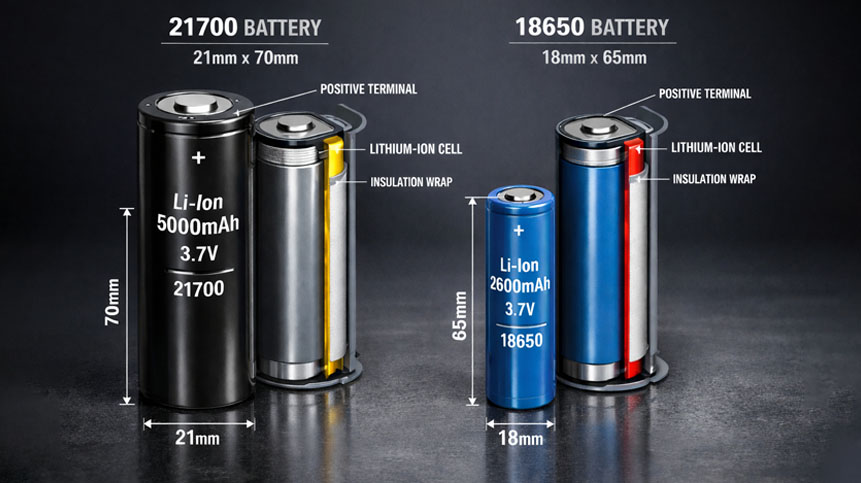
The term 21700 battery follows the standardized cylindrical cell naming convention used in the lithium-ion industry. The number describes the physical dimensions of the cell:
- 21 – Diameter in millimeters
- 70 – Length in millimeters
This format was developed to overcome the physical and electrical limitations of the widely used 18650 cell. By increasing the volume of active material while improving thermal surface area, the 21700 format enables higher capacity, higher current capability, and improved pack-level efficiency.
In practice, “21700” represents a design philosophy shift in lithium-ion technology:
-
Fewer cells per battery pack
-
Higher energy per cell
-
Improved thermal and electrical efficiency at the system level
This is why many OEMs no longer ask “Is 21700 bigger?”
They ask instead: “Does 21700 allow us to redesign the entire power system more efficiently?”
Why the Industry Moved Beyond 18650
As energy storage systems, electric mobility, and high-power industrial equipment evolved, OEMs faced limitations with 18650-based designs:
- Too many cells required to reach target energy
- Higher assembly complexity and labor cost
- Thermal bottlenecks at higher discharge rates
The 21700 battery format addresses these issues by delivering more energy per cell while maintaining a cylindrical form factor that is proven, scalable, and automation-friendly.
Why the 21700 Format Was Introduced
The 21700 format was developed to address several limitations that became increasingly evident with 18650-based systems:
-
Pack Complexity
-
Large battery packs built from 18650 cells require hundreds or thousands of weld points
-
Each weld is a potential failure point
-
-
Energy Density Ceiling
-
Incremental chemistry improvements could no longer compensate for limited cell volume
-
-
Thermal Management Constraints
-
High-current applications exposed heat dissipation limits in dense 18650 arrays
-
By increasing the cell volume, the 21700 format allows manufacturers to:
-
Use thicker electrodes
-
Improve internal current paths
-
Optimize heat dissipation across the cell body
The result is higher usable energy, not just higher nominal capacity.
What 21700 Means for B2B Buyers
For enterprise buyers, “21700” should signal:
-
Lower system-level failure risk
-
Simpler battery pack architecture
-
Better scalability for future product generations
In regulated industries—especially medical and industrial equipment—this system-level reliability is often more valuable than marginal gains in cell capacity.
2. Are 18650 and 21700 Batteries the Same?
Short Answer: No
Professional Answer: They Solve Different Design Problems
Although both are cylindrical lithium-ion cells, 18650 and 21700 batteries are not the same in performance, design implications, or application suitability.
Physical and Electrical Comparison
| Parameter | 18650 Battery | 21700 Battery |
|---|---|---|
| Diameter | 18 mm | 21 mm |
| Length | 65 mm | 70 mm |
| Typical Capacity | 2500–3500 mAh | 4000–6000 mAh |
| Energy Density | Lower | Higher |
| Pack-Level Cell Count | Higher | Lower |
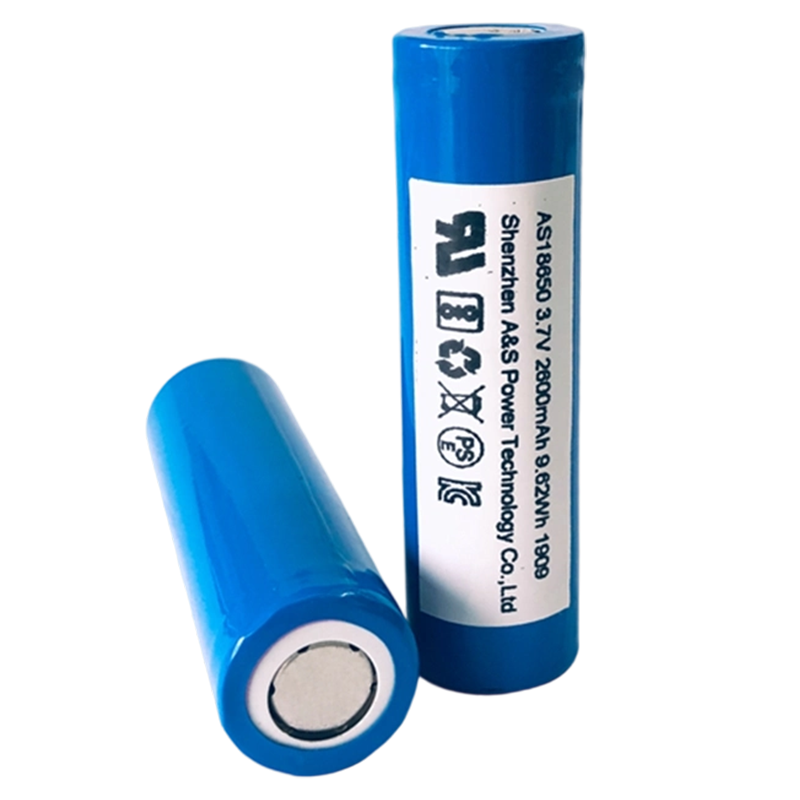 |
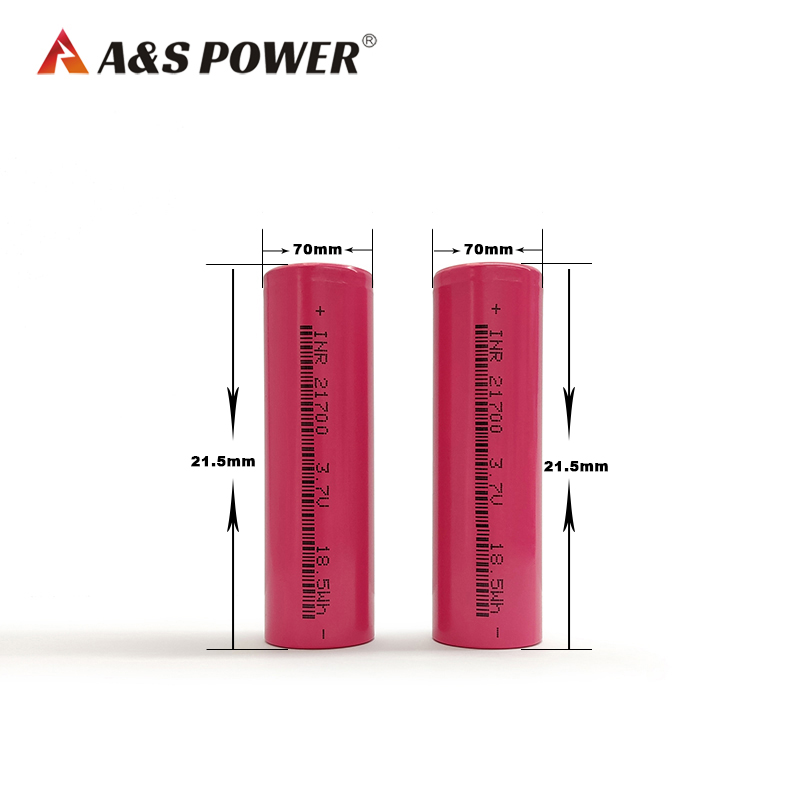 |
Pack-Level Impact for OEMs
From a B2B system design perspective, the most important difference is not the cell itself, but how the cell affects the overall battery pack architecture.
- Fewer cells reduce BMS balancing complexity
- Lower interconnection resistance improves efficiency
- Reduced assembly steps lower long-term defect rates
On paper, this looks like a simple scaling issue.
In practice, it changes everything about pack design.
Pack-Level Efficiency: The Hidden Difference
When comparing 18650 and 21700 batteries, professional buyers should focus less on single-cell specs and more on pack-level efficiency:
-
Fewer cells → fewer welds
-
Fewer welds → lower internal resistance
-
Lower resistance → less heat under load
-
Less heat → longer cycle life and safer operation
For high-reliability systems, this cascade effect is often the decisive factor.
Thermal Behavior Under Load
In high-discharge or continuous-load applications, 21700 batteries generally demonstrate:
-
More stable temperature rise
-
Slower thermal accumulation
-
Better compatibility with passive cooling designs
This makes them particularly suitable for:
-
Medical mobility equipment
-
Industrial automation
-
Energy storage modules with long duty cycles
Why Some OEMs Still Choose 18650
Despite these advantages, 18650 batteries are not obsolete. They remain relevant where:
-
Space constraints are extremely tight
-
Legacy designs cannot be retooled
-
Lower upfront tooling cost is critical
The key is not to ask “Which is better?”
But rather: “Which format aligns with our system priorities and lifecycle goals?”
3. What Is the Best Quality 21700 Battery?
This is the most commercially important question — and the most misunderstood. There is no single “best” 21700 battery for all applications. Quality must be evaluated based on consistency, reliability, and suitability for your specific use case.
“Best Quality” Is Not a Marketing Term
In consumer markets, “best quality” often means:
-
Highest advertised capacity
-
Famous brand name
In B2B markets, quality is defined very differently.
From our experience supplying OEM customers, the best quality 21700 battery is one that delivers:
-
Predictable performance
-
Long-term consistency
-
Full compliance and traceability
Key Indicators of High-Quality 21700 Batteries
| Quality Factor | Why It Matters for B2B Buyers |
|---|---|
| Capacity Consistency | Ensures predictable runtime and simplifies system calibration |
| Internal Resistance Control | Reduces heat generation and improves parallel/series balancing |
| Formation & Aging Process | Prevents early-life capacity drop in the field |
| Traceability | Critical for audits, warranty analysis, and regulatory compliance |
| Cycle Life at Partial DoD | Reflects real-world industrial usage patterns |
1. Cell Consistency
High-quality 21700 batteries show:
-
Minimal capacity deviation
-
Tight internal resistance (IR) distribution
-
Stable voltage curves across batches
For battery packs, consistency is often more important than absolute capacity.
2. Cycle Life Under Real Conditions
Marketing cycle life numbers are often measured under ideal lab conditions.
Professional buyers should ask:
-
At what discharge rate was the cycle life tested?
-
At what temperature?
-
With what depth of discharge?
A realistic benchmark for quality 21700 cells is:
-
800–1500 cycles depending on chemistry and operating profile
3. Chemistry Selection Based on Application
There is no single “best” chemistry:
-
NMC: balanced energy density and cycle life
-
NCA: higher energy density, stricter thermal management
-
LFP (in 21700 format): lower energy density, excellent safety and longevity
The best quality choice depends on risk tolerance and use environment, not just specs.
Why “Top Brand Cells” Are Not Always the Best Choice
Many B2B buyers assume that selecting a globally known cell brand automatically guarantees quality. In reality, the best quality 21700 battery is determined by:
- Batch consistency, not brand name
- Matching between cells in the same pack
- Supplier willingness to share test data and SPC reports
21700 Batteries Applications: Detailed, Practical Breakdown
Medical Devices (Regulated, Reliability-Driven)
Typical Devices
- Portable patient monitors
- Infusion and syringe pumps
- Emergency diagnostic equipment
Why 21700 Works Well
- Longer runtime reduces charging frequency
- Fewer cells simplify safety validation
- Better thermal stability improves compliance with IEC 62133 and ISO 13485 expectations
Key Buyer Concern
- Traceability and long-term supply stability
Industrial Equipment (Durability and Load Stability)
Typical Devices
- AGVs and AMRs
- Industrial controllers
- Backup power units
Why 21700 Works Well
- High discharge capability
- Better heat handling under continuous load
- Lower maintenance due to fewer interconnections
Key Buyer Concern
- Cycle life under real industrial duty cycles
Energy Storage & Backup Systems
Typical Devices
- Modular ESS
- UPS systems
- Distributed energy nodes
Why 21700 Works Well
- Higher energy per module
- Improved packing efficiency
- Easier scalability
Key Buyer Concern
- Long-term degradation behavior and safety certification
In these applications, 21700 battery packs provide a balance of energy density, thermal stability, and manufacturability that aligns with long-term product lifecycles.
Performance Data and Industry Benchmarks
| Metric | 21700 Battery | 18650 Battery |
|---|---|---|
| Energy Density | 260–280 Wh/kg | 240–260 Wh/kg |
| Typical Cycle Life | 1000+ cycles | 800+ cycles |
| Thermal Stability | Higher | Moderate |
| Pack Complexity | Lower | Higher |
Procurement and Supplier Evaluation Strategy
When sourcing 21700 batteries for B2B use, I recommend evaluating suppliers using a system-level approach:
- Can the supplier support long-term production consistency?
- Do they offer custom battery pack integration?
- Is full test data available at cell and pack level?
For further technical background, you may also refer to:
Frequently Asked Questions
Is a 21700 battery safer than an 18650?
With proper BMS and pack design, 21700 batteries generally offer better thermal stability at the system level.
What certifications should a 21700 battery have for B2B use?
UN38.3, IEC 62133, UL standards, and ISO 13485 for medical applications.
Are 21700 batteries more expensive?
Per cell, yes. At the system level, total cost can be lower.
What is the typical MOQ for custom 21700 battery packs?
Usually 100–500 units, depending on configuration and certification requirements.
How do I verify long-term quality from a supplier?
Request batch consistency data, cycle life reports, and traceability documentation.
Choosing the right 21700 battery is a system decision, not a component decision.
Early collaboration with a qualified battery manufacturer can significantly reduce development risk, certification delays, and long-term operating cost.
Related 21700 Battery Products Case
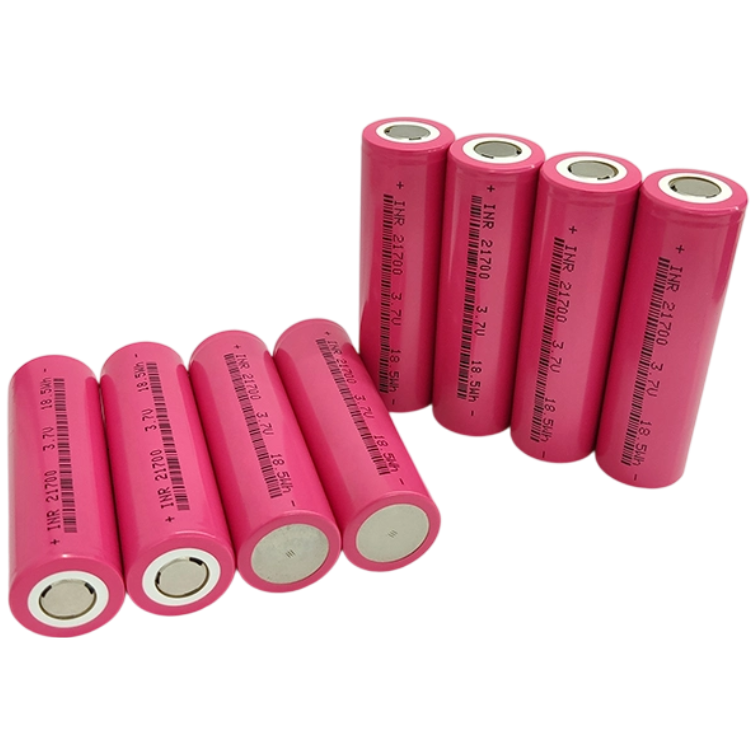
AS21700 3.7V 5000mAh Cell
- High-energy density 21700 cells
- UN38.3/WERCS certified
- Designed for portable medical devices
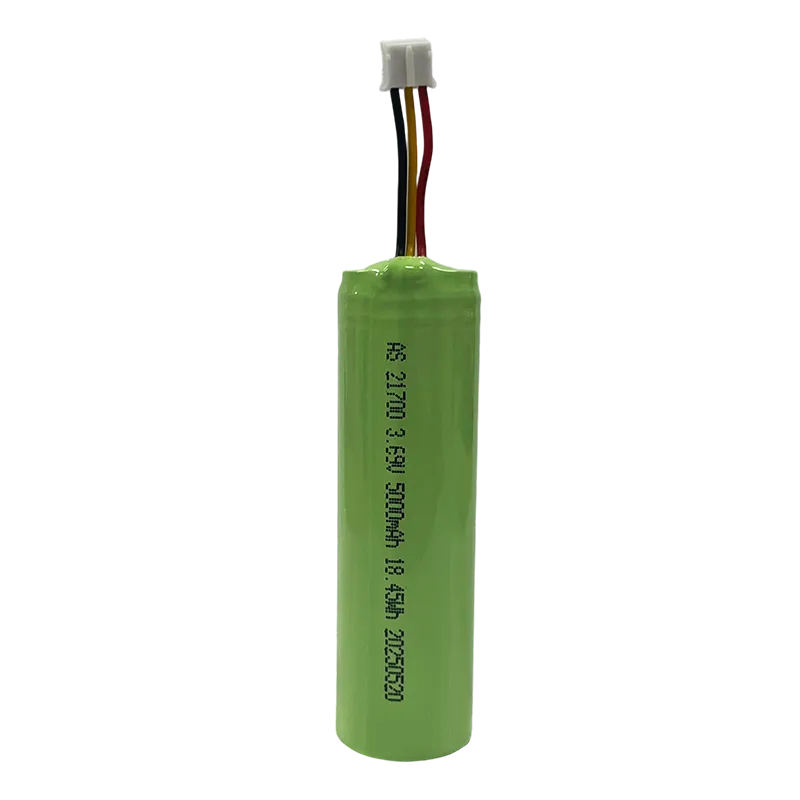
AS21700 3.69v 18.45Wh 5000mAh Li-Ion Battery
- Continuous discharge up to 5000mA
- Custom BMS supported
- Industrial power tools application

AS21700 3.7v 9600mAh 1S2P
- Stable voltage output
- Overcharge & short-circuit protection
- Used in diagnostic equipment
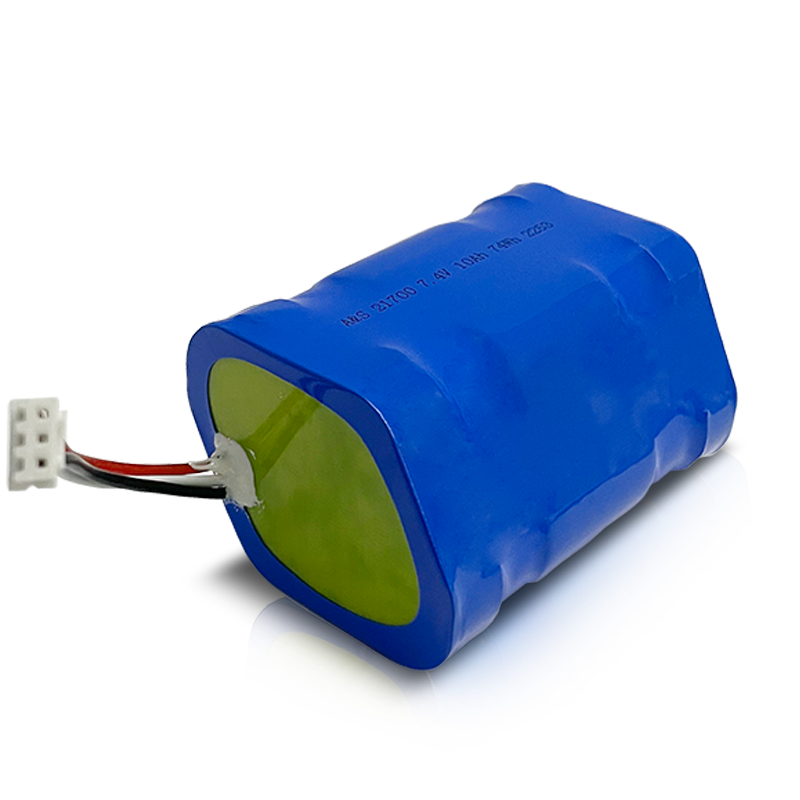
21700 7.4V 10Ah 74Wh Lithium Ion Battery Pack
- CB/UN38.3 Certified
- Safe and durable power batteries
- Medical Devices & Industrial Sector
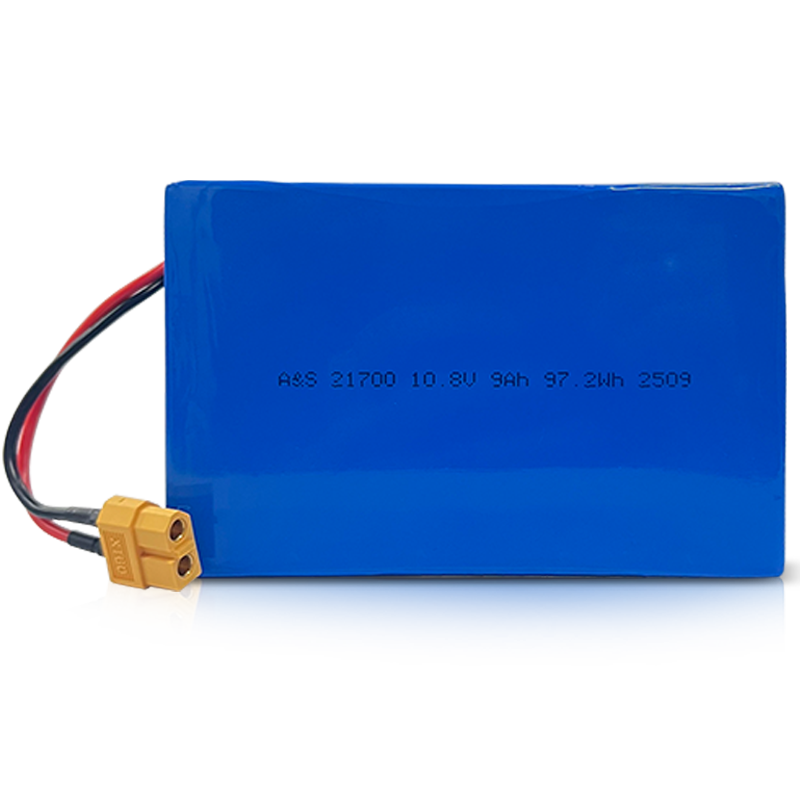
AS21700 10.8V 9Ah Lithium Ion Battery Pack
- High cycle life cells
- Compact lithium battery pack
- Safe and stable voltage battery solution
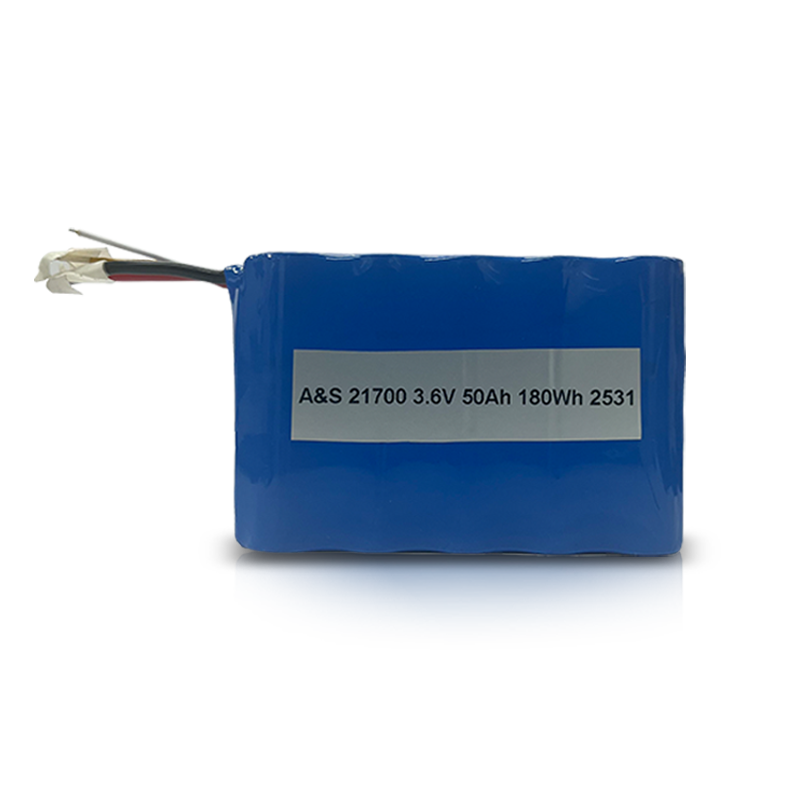
AS21700 3.6v 50Ah 1S10P Lithium Ion Battery Pack
- High-capacity lithium battery pack
- High-current output design
- OEM / ODM supported
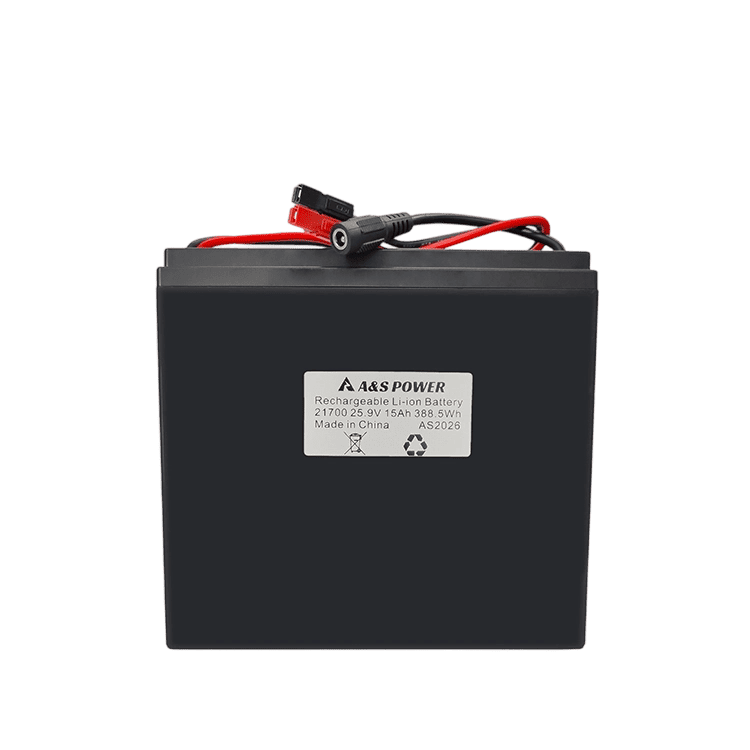
AS21700 25.9V 15Ah 388.5Wh
- Long cycle life chemistry
- Low self-discharge rate
- Backup & micro energy storage
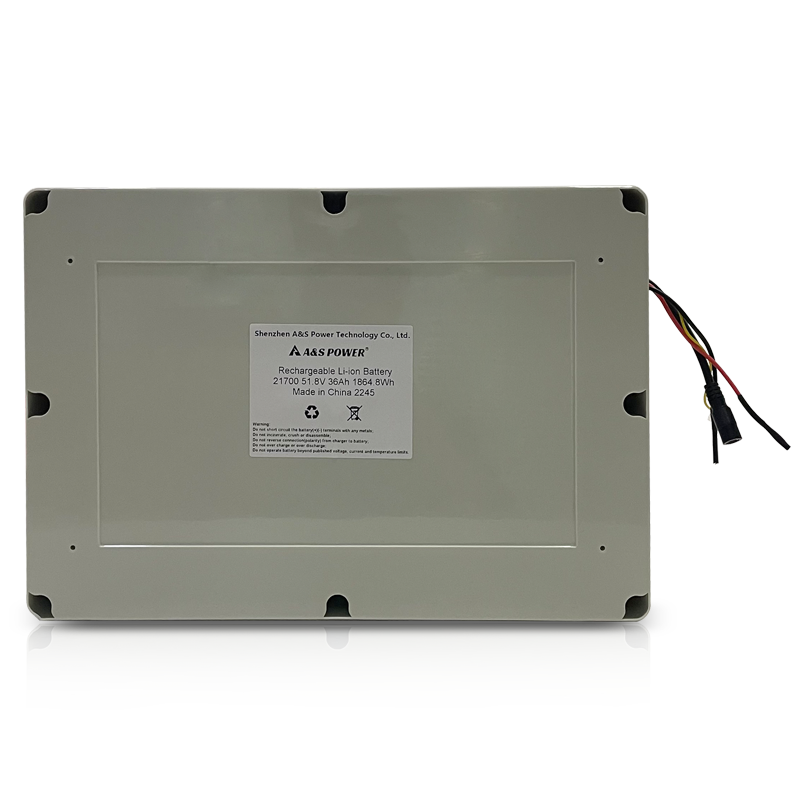
AS21700 51.8V 36Ah 1864.8Wh
- Voltage & capacity customizable
- Large-capacity power battery packs
- High-efficiency lithium battery systems
-

 May.2026.09.17Meet A&S Power at KES 2026 in Seoul – Custom Lithium Battery SolutionsLearn More
 -
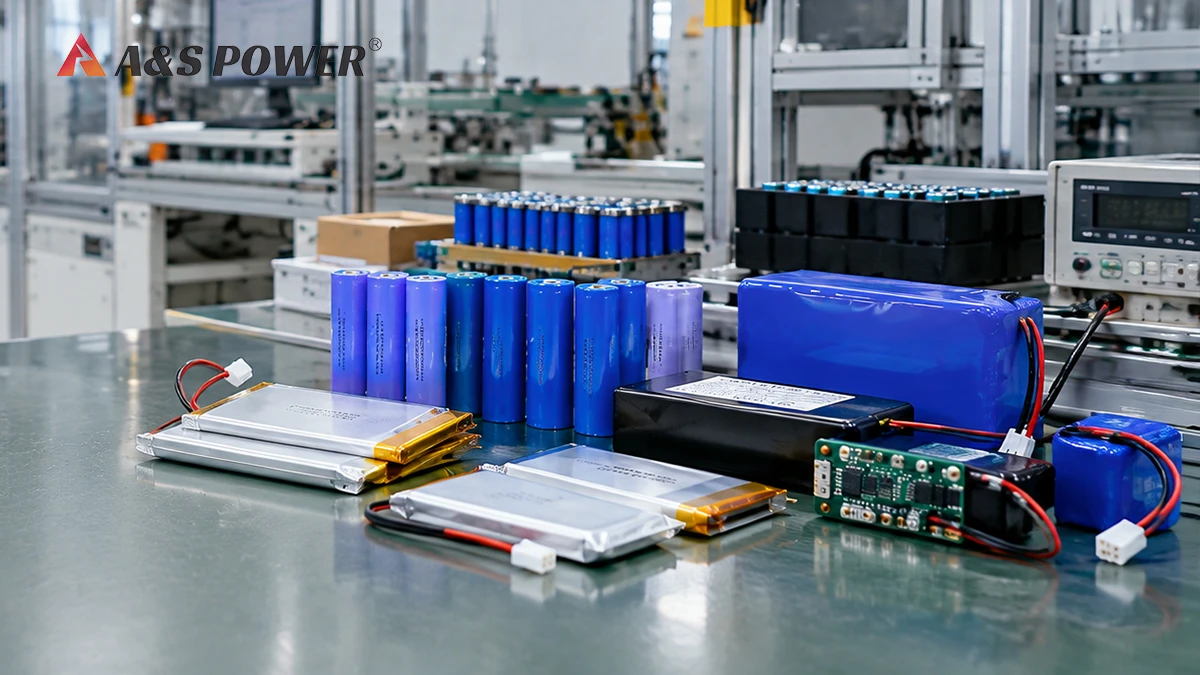 May.2026.09.16How to Choose a Custom Lithium Battery Manufacturer in China: A Buyer's GuideLearn More
 -
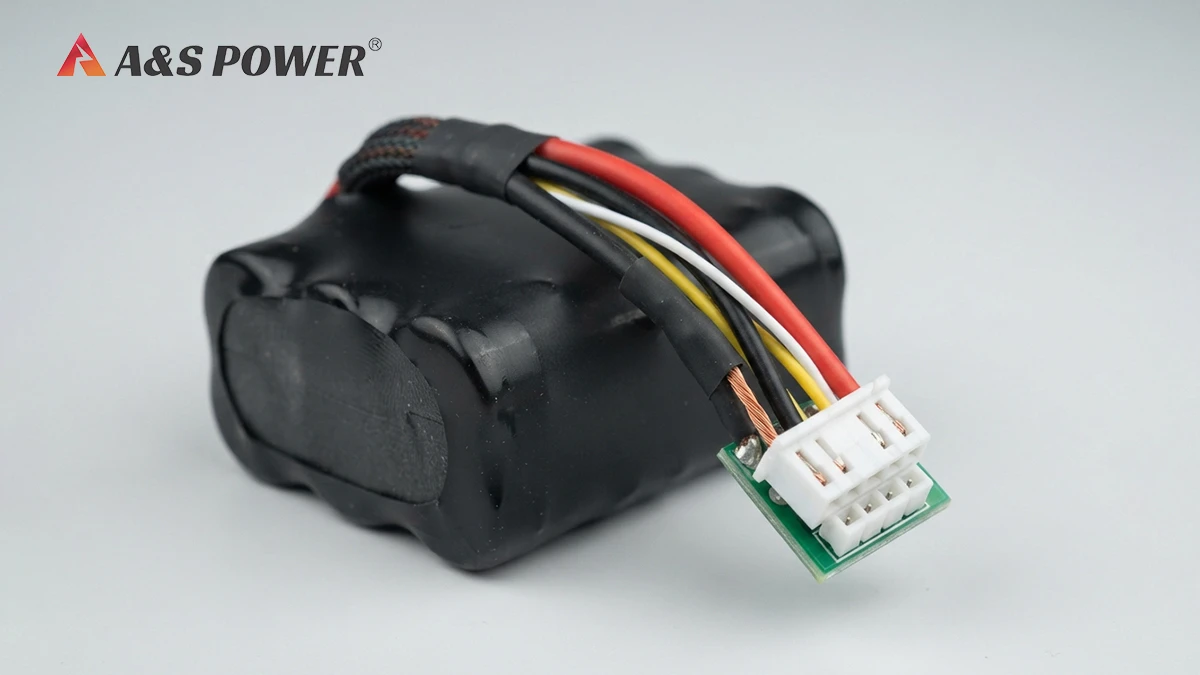 May.2026.09.15Can VHR-4N Connectors Work With 14 AWG Battery Wires?Learn More
 -
 May.2026.09.14Who Pays UL Battery Certification Maintenance Fees?Learn More
 -
 May.2026.09.11PTC vs PCM: Why Use Both in Lithium Battery Protection?Learn More