




Sodium Batteries and Lithium-Ion Batteries: Low-End Substitutes or Strategic Complements?
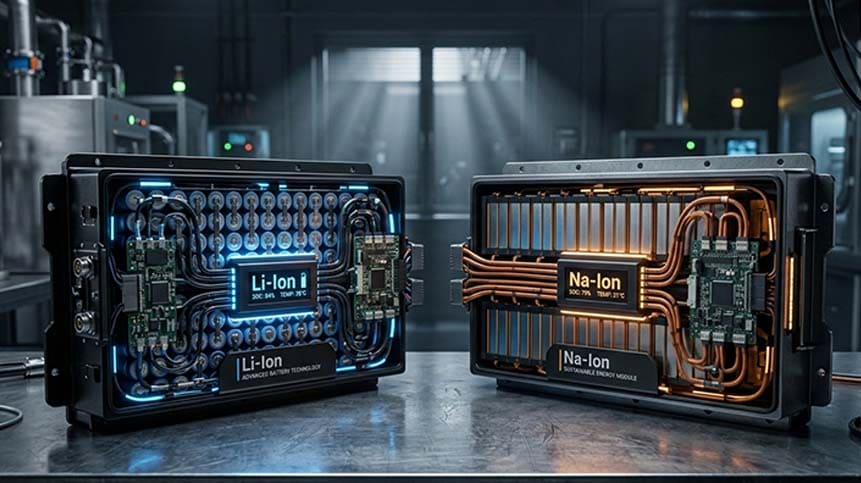
Sodium-ion batteries are not low-end substitutes for lithium-ion batteries.
They are emerging as complementary technologies optimized for different use cases.
Lithium-ion remains dominant in high energy density applications such as long-range electric vehicles.
Sodium-ion excels in cost-sensitive, stationary storage, cold-climate, and short-range mobility applications.
The future energy ecosystem is not “Lithium vs Sodium.”
It is “Lithium AND Sodium.”
Why Sodium Batteries Were Initially Seen as “Low-End Substitutes”
When sodium-ion technology re-entered commercial discussion around 2020–2022, it was widely perceived as a cheaper but inferior alternative to lithium-ion. This perception was shaped by three structural realities.
1.1 Resource Abundance and Cost Narrative
Sodium is approximately 2–3% of the Earth’s crust and is widely distributed globally. Lithium is significantly less abundant and geographically concentrated in regions such as:
-
Chile
-
Australia
-
Argentina
-
China
Lithium price volatility between 2021 and 2023 demonstrated how supply constraints can rapidly affect battery pricing.
Sodium-ion batteries offer cost advantages because:
-
Sodium salts are inexpensive and widely available.
-
Aluminum can be used as the anode current collector (lithium-ion requires copper).
-
Raw material geopolitical exposure is significantly lower.
However, material cost is not equal to system cost. Early sodium batteries lacked economies of scale.
1.2 Energy Density Gap
Energy density remains the most critical differentiator.
Typical ranges (cell level):
|
Chemistry
|
Energy Density (Wh/kg)
|
|---|---|
|
Sodium-ion (current gen)
|
100–160
|
|
LFP (Lithium Iron Phosphate)
|
160–220
|
|
NMC (Nickel Manganese Cobalt)
|
200–280
|
For long-range EVs (600 km+), higher energy density translates directly into reduced pack weight and improved efficiency.
This single metric drove the early “low-end substitute” label.
1.3 Immature Industrial Ecosystem
Lithium-ion has 30+ years of supply chain optimization.
Sodium-ion only began meaningful commercialization in the early 2020s.
Scale effects matter:
-
Manufacturing yield
-
Equipment compatibility
-
Standardization
-
BMS optimization
-
Bankability for grid projects
Without scale, sodium’s theoretical cost advantage could not be realized.
Why That View Is Outdated: Sodium’s Distinct Technical Strengths
As we evaluate real-world deployment data and chemistry evolution, it becomes clear sodium-ion is not simply “weaker lithium.”
It is optimized differently.
2.1 Superior Low-Temperature Performance
Sodium-ion batteries typically demonstrate better ion mobility at low temperatures.
Performance comparisons in -20°C environments show:
-
Lithium LFP capacity retention may drop to ~60–70%.
-
Sodium-ion systems often retain 80%+ depending on formulation.
This makes sodium highly attractive for:
-
Northern climate EV fleets
-
Telecom towers in cold regions
-
Outdoor energy storage systems
Cold performance reduces the need for expensive heating systems.
2.2 Fast Charging Capability
Due to sodium’s electrochemical characteristics and reduced risk of lithium plating, sodium-ion batteries show promising fast-charge tolerance.
While lithium-ion fast charging can lead to:
-
Lithium dendrite formation
-
Reduced cycle life
-
Thermal risk
Sodium chemistries demonstrate higher tolerance under certain conditions.
This makes them suitable for:
-
Urban micro-mobility
-
Delivery fleets
-
Grid peak shifting
2.3 Safety Profile
Most sodium-ion batteries use:
-
Non-flammable or less reactive materials
-
Iron-based cathodes
-
Lower thermal runaway risk compared to high-nickel chemistries
Although LFP is already considered safe, sodium further reduces:
-
Combustion risk
-
Thermal propagation intensity
Safety is critical for:
-
Densely populated urban storage
-
Residential backup
-
Indoor telecom installations
Complementary Roles in Real-World Applications
The market segmentation is now becoming structurally clear.
3.1 Grid-Level Energy Storage: Sodium’s Natural Domain
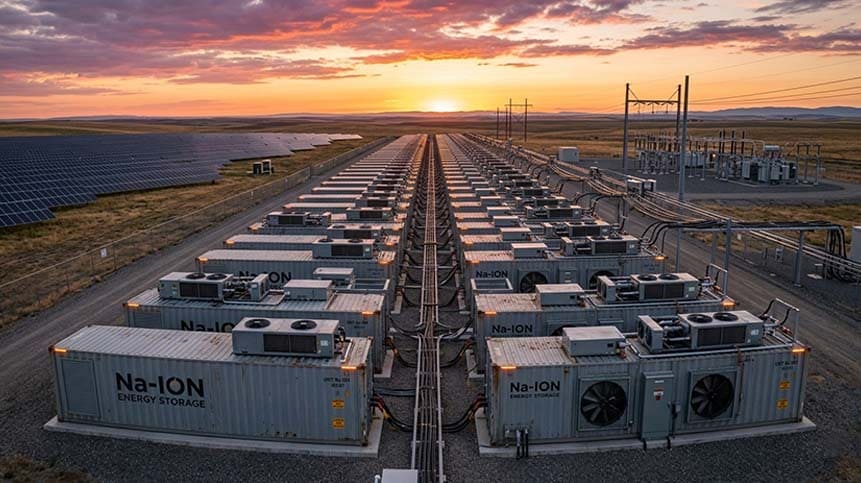
Stationary storage prioritizes:
-
Cost per kWh
-
Cycle life
-
Safety
-
Thermal tolerance
It does NOT prioritize weight.
For solar and wind farms:
-
Energy density is secondary.
-
Lifetime levelized cost of storage (LCOS) is primary.
In hybrid systems:
-
Lithium provides high-power response (frequency regulation).
-
Sodium provides long-duration energy shifting.
This division of labor optimizes both CAPEX and OPEX.
3.2 Electric Vehicles: Market Segmentation
High-End EVs
Long-range EVs require:
-
High gravimetric energy density
-
Compact pack design
-
Lightweight structures
Lithium-ion (LFP or NMC) remains dominant.
Urban EVs and Commercial Vehicles
Applications such as:
-
Micro-cars
-
Urban commuters
-
Delivery vans
-
Low-speed logistics vehicles
Prioritize:
-
Lower cost
-
Cold-weather performance
-
Fast turnaround charging
Here sodium becomes highly competitive.
Hybrid Battery Architectures
Some development concepts include:
-
Sodium pack for cold-start and auxiliary loads
-
Lithium pack for propulsion
This hybrid model improves resilience and cost control.
3.3 Two-Wheelers and Lead-Acid Replacement
Lead-acid batteries dominate:
-
E-bikes
-
Scooters
-
Backup power
-
Telecom base stations
Problems with lead-acid:
-
300–500 cycle life
-
Heavy weight
-
Environmental toxicity
Sodium-ion offers:
-
1500–3000+ cycle life
-
Improved cold performance
-
Reduced maintenance
At a price point approaching advanced lead-acid systems, sodium becomes a leapfrog technology.
Data Comparison: Technical Overview
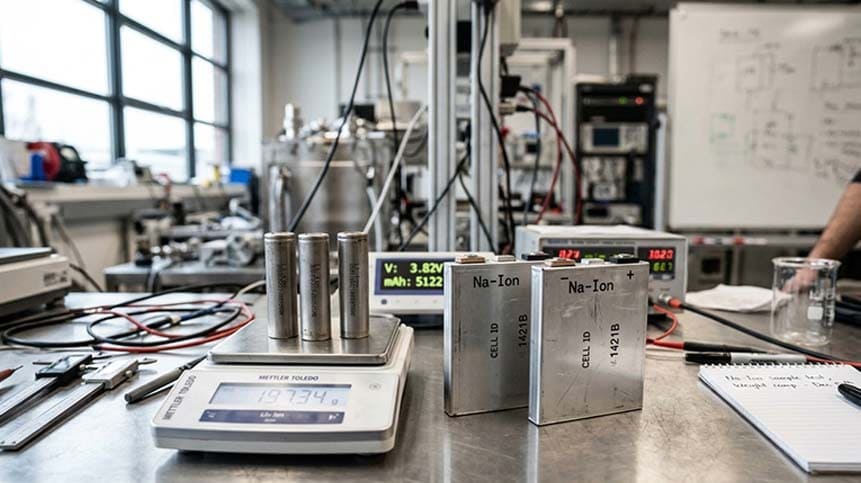
|
Parameter
|
Sodium-Ion
|
Lithium-Ion (LFP)
|
|---|---|---|
|
Energy Density
|
100–160 Wh/kg
|
160–220 Wh/kg
|
|
Cycle Life
|
2000–5000 cycles
|
3000–6000 cycles
|
|
Low Temp Performance
|
Strong
|
Moderate
|
|
Raw Material Risk
|
Low
|
Moderate–High
|
|
Cost Volatility
|
Lower
|
Higher historically
|
|
Application Focus
|
Stationary, short-range
|
EV, high-density
|
Note: Values vary by manufacturer and chemistry optimization.
Supply Chain and Geopolitical Implications
Lithium supply concentration creates:
-
Price volatility
-
Trade exposure
-
Strategic vulnerability
Sodium’s global distribution enhances:
-
Resource sovereignty
-
Localized manufacturing
-
Reduced mineral dependency risk
For governments and utility-scale buyers, diversification is strategic, not just technical.
Strategic Conclusion: Not Replacement, But Portfolio Expansion
From my industry perspective, the framing of sodium as a “low-end substitute” misunderstands battery economics.
Battery chemistry selection is application-specific optimization.
Lithium-ion remains optimal for:
-
High energy density mobility
-
Premium EV markets
-
Compact energy systems
Sodium-ion is optimal for:
-
Stationary storage
-
Cost-sensitive mobility
-
Cold-climate infrastructure
-
Lead-acid replacement markets
The future energy market is diversified chemistry deployment.
FAQ
Q1: Are sodium-ion batteries cheaper than lithium-ion?
They have lower raw material costs and reduced supply risk, but system cost depends on scale. As production increases, sodium cost advantages become more significant in stationary storage.
Q2: Can sodium batteries replace lithium in EVs?
Not in long-range premium EVs. However, they are competitive in short-range, urban, and commercial vehicles.
Q3: Do sodium batteries last longer?
Cycle life is comparable to LFP lithium batteries in many designs, especially for stationary applications.
Q4: Are sodium batteries safer?
Generally, they show strong thermal stability and reduced fire risk compared to high-nickel lithium chemistries.
-

 May.2026.09.17Meet A&S Power at KES 2026 in Seoul – Custom Lithium Battery SolutionsLearn More
 -
 May.2026.09.16How to Choose a Custom Lithium Battery Manufacturer in China: A Buyer's GuideLearn More
 -
 May.2026.09.15Can VHR-4N Connectors Work With 14 AWG Battery Wires?Learn More
 -
 May.2026.09.14Who Pays UL Battery Certification Maintenance Fees?Learn More
 -
 May.2026.09.11PTC vs PCM: Why Use Both in Lithium Battery Protection?Learn More