




Chinese Scientists Develop Organic Pouch Cell Battery That Works from -70°C to 80°C
A New Milestone in Next-Generation Battery Technology
The global battery industry is entering a new era. As demand grows for safer, lighter, more flexible, and more temperature-resistant energy storage systems, researchers worldwide are searching for alternatives to traditional lithium-ion battery chemistry.
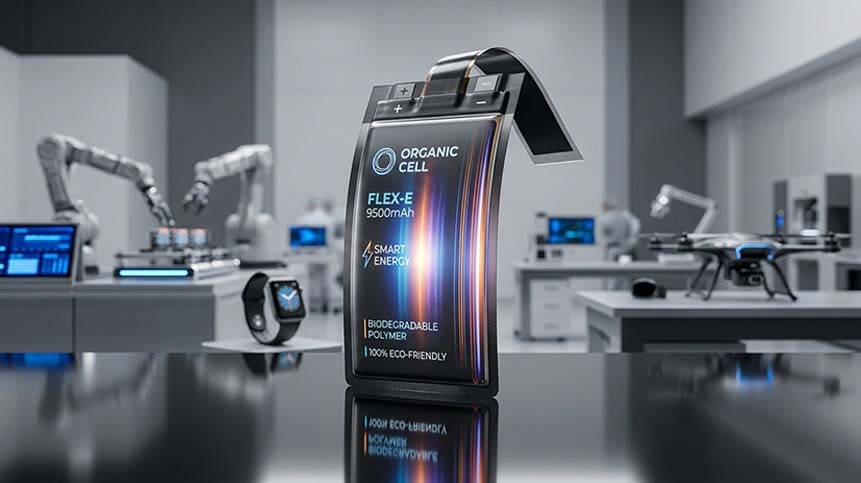
Recently, a joint research team from Tianjin University and South China University of Technology announced a major breakthrough: an organic pouch cell battery capable of stable operation from an ultra-low temperature of -70°C up to 80°C.
Even more impressive, the battery reportedly achieves an energy density exceeding 250 Wh/kg, while also passing rigorous nail penetration safety testing without thermal runaway or fire.
The research, published in Nature in February 2026, is attracting global attention because it addresses several long-standing challenges in battery engineering simultaneously:
- Extreme temperature performance
- Improved safety
- Flexible structure
- Reduced dependence on critical metals
- Competitive energy density
- Potential for sustainable manufacturing
For industries such as wearable electronics, medical devices, aerospace systems, drones, robotics, and polar exploration equipment, this development could become highly significant over the next decade.
Why Traditional Lithium-Ion Batteries Still Have Limitations
Dependence on Nickel and Cobalt
Most commercial lithium-ion batteries today rely heavily on inorganic cathode materials containing nickel, cobalt, or manganese.
While these materials deliver high energy density, they also introduce major concerns:
| Challenge | Industry Impact |
|---|---|
| Cobalt supply concentration | Supply chain risk |
| Rising raw material costs | Increased battery pricing |
| Thermal instability | Safety concerns |
| Environmental pressure | Sustainability issues |
| Limited flexibility | Difficult for wearable devices |
Battery manufacturers worldwide are therefore investing heavily in alternative chemistries that can reduce dependency on scarce metals while improving safety and operational flexibility.
According to the International Energy Agency (IEA), global battery demand could increase more than sixfold by 2035 due to electric vehicles, energy storage systems, and portable electronics. This rapid expansion makes material diversification increasingly important.
What Makes Organic Batteries Different?
Understanding Organic Electrode Materials
Unlike conventional lithium-ion batteries that use inorganic crystalline cathodes, organic batteries use carbon-based molecular structures.
These organic materials offer several theoretical advantages:
| Organic Battery Advantage | Potential Benefit |
|---|---|
| Molecular tunability | Easier performance optimization |
| Mechanical flexibility | Bendable electronics |
| Lightweight structure | Portable devices |
| Abundant raw materials | Better sustainability |
| Lower environmental burden | Reduced mining dependence |
However, organic batteries historically suffered from several major problems:
- Poor conductivity
- Low practical energy density
- Fast capacity fading
- Weak high-loading performance
- Limited commercial viability
This is why most organic battery concepts remained at the laboratory stage for years.
The Key Breakthrough: PBFDO Conductive Polymer
How the Research Team Solved the Bottleneck
The Chinese research team developed a novel n-type conductive polymer called PBFDO.
According to the published findings, the researchers optimized the “synergistic transport” of both:
- Electrons
- Lithium ions
Inside the cathode structure.
This optimization is particularly important because battery performance depends heavily on how efficiently electrons and ions move through electrode materials.
The researchers achieved three critical improvements simultaneously:
| Technical Achievement | Importance |
|---|---|
| High electronic conductivity | Faster charge transfer |
| Rapid lithium-ion diffusion | Improved low-temperature performance |
| High specific capacity | Greater energy density |
In practical battery engineering, balancing all three properties at once is extremely difficult.
That is why this development has gained substantial attention from battery scientists worldwide.
Energy Density Surpasses Commercial LFP Batteries
Why 250 Wh/kg Matters
One of the most discussed aspects of this research is the reported energy density exceeding 250 Wh/kg.
For context:
| Battery Chemistry | Typical Energy Density |
|---|---|
| Lead-acid | 30–50 Wh/kg |
| Nickel-metal hydride | 60–120 Wh/kg |
| LFP battery | 120–220 Wh/kg |
| NMC lithium-ion | 200–300 Wh/kg |
| New organic pouch cell | 250+ Wh/kg |
This means the new battery potentially outperforms many commercial lithium iron phosphate (LFP) batteries in terms of energy density.
That is especially notable because LFP batteries are already considered highly safe and durable.
If future commercial validation confirms these figures under mass-production conditions, organic batteries may become far more competitive than previously expected.
Ultra-Wide Temperature Operation Changes the Game
Why -70°C to 80°C Is Extraordinary
Conventional lithium-ion batteries struggle in extreme temperatures.
Typical operating ranges are approximately:
| Battery Type | Typical Operating Range |
|---|---|
| Standard lithium-ion | -20°C to 60°C |
| Consumer electronics battery | 0°C to 45°C |
| Automotive battery | -30°C to 55°C |
| New organic pouch cell | -70°C to 80°C |
Low temperatures usually slow lithium-ion diffusion dramatically, reducing power output and charging efficiency.
High temperatures, meanwhile, increase the risk of:
- Thermal runaway
- Electrolyte decomposition
- Capacity degradation
- Internal short circuits
The ability to maintain stable operation across such a wide temperature range could open entirely new application scenarios.
Potential Real-World Applications
1. Polar Exploration Equipment
Scientific expeditions in Antarctica and Arctic environments require batteries capable of surviving ultra-low temperatures.
Conventional battery systems often require external heating systems, which add weight and complexity.
A battery functioning directly at -70°C could significantly simplify equipment design.
2. High-Altitude Drones
Drone batteries lose efficiency rapidly in cold, high-altitude environments.
Wide-temperature batteries could improve:
- Flight duration
- Stability
- Safety margins
- Payload capability
This is particularly relevant for industrial inspection drones and military reconnaissance platforms.
3. Wearable Electronics
Flexible organic batteries may be ideal for:
- Smart clothing
- Medical wearables
- Flexible sensors
- Skin-contact electronics
The reported mechanical durability under bending and compression is especially valuable for next-generation wearable products.
4. Medical Devices
The medical device sector increasingly requires compact, lightweight, and highly reliable battery systems.
Applications may include:
- Portable monitoring devices
- Emergency equipment
- Remote healthcare systems
- Wearable therapeutic devices
For medical OEM manufacturers, battery flexibility and safety certification are becoming critical purchasing factors.
Companies specializing in custom lithium battery pack manufacturing may closely monitor this technology as commercialization progresses.
Safety Performance: Passing the Nail Penetration Test
Why This Test Matters
Battery safety remains one of the industry's biggest concerns.
The nail penetration test is widely regarded as one of the harshest abuse tests for lithium batteries.
In this test, a metal nail penetrates the cell to simulate severe internal short circuits.
Many conventional lithium-ion cells can experience:
- Thermal runaway
- Smoke
- Fire
- Explosion
According to the researchers, the new pouch cell passed the test without:
- Fire
- Thermal runaway
- Structural deformation
This result is highly important because safety concerns remain a major obstacle for emerging battery chemistries.
Flexibility Could Become a Competitive Advantage
Organic Batteries vs Rigid Battery Architectures
Traditional cylindrical cells such as 18650 or 21700 formats are mechanically rigid.
Flexible electronics require batteries capable of:
- Bending
- Twisting
- Compression resistance
- Thin-profile integration
The researchers reported that the electrodes retained full capacity even after repeated bending and stretching.
This characteristic could accelerate adoption in industries including:
- Smart textiles
- Flexible displays
- Biomedical electronics
- Portable military equipment
Challenges Before Commercialization
Laboratory Success Does Not Guarantee Mass Production
Although the research is highly promising, several challenges still remain before commercial deployment becomes realistic.
Manufacturing Scalability
Laboratory-scale materials often behave differently during industrial production.
Scaling conductive polymer manufacturing while maintaining consistency may prove difficult.
Long-Term Cycle Life
The published information focuses primarily on temperature performance and safety.
However, commercial customers also need verification regarding:
- Cycle life
- Calendar aging
- Fast charging durability
- High-rate discharge stability
Supply Chain Development
New battery materials require:
- Supplier ecosystems
- Processing equipment
- Certification pathways
- Recycling infrastructure
These systems take years to mature.
Industry Impact and Market Outlook
Why the Global Battery Industry Is Watching Closely
The battery sector is actively exploring alternatives beyond traditional lithium-ion chemistry.
Major trends include:
| Emerging Battery Direction | Industry Goal |
|---|---|
| Solid-state batteries | Higher safety |
| Sodium-ion batteries | Lower cost |
| Organic batteries | Sustainability + flexibility |
| Silicon-anode batteries | Higher energy density |
| Lithium-sulfur batteries | Ultra-high capacity |
Organic batteries may carve out a particularly strong niche in:
- Flexible electronics
- Medical technology
- Aerospace systems
- Extreme environment devices
Rather than immediately replacing mainstream EV batteries.
How This Research Aligns with Global Sustainability Goals
Reduced Dependence on Critical Metals
Global policymakers increasingly emphasize sustainable battery supply chains.
Organizations such as the U.S. Department of Energy and the European Commission
Organic electrode systems could potentially help reduce reliance on:
- Cobalt mining
- Nickel extraction
- Resource-intensive refining
This aligns with broader ESG and carbon reduction objectives across the electronics and automotive sectors.
Expert Perspective: Why This Announcement Matters
From my perspective within the battery industry, the most important aspect of this breakthrough is not only the impressive temperature range.
What truly stands out is the combination of multiple advantages achieved simultaneously:
- High energy density
- Wide temperature tolerance
- Mechanical flexibility
- Strong safety performance
- Reduced critical metal dependence
In battery engineering, improving one parameter often worsens another.
Achieving balance across all these areas is extremely difficult.
That is why this research deserves serious attention from battery manufacturers, OEM engineers, and technology investors.
What This Means for OEM Battery Buyers
Future Opportunities for Custom Battery Design
OEM companies in industries such as:
- Medical devices
- Smart wearables
- Industrial robotics
- Portable instrumentation
- Aerospace electronics
are increasingly demanding customized battery solutions capable of operating under harsh environmental conditions.
If organic pouch cell technology reaches commercial maturity, future custom battery packs may become:
- Lighter
- Safer
- More flexible
- More temperature-resistant
- More environmentally sustainable
Battery solution providers may eventually integrate organic pouch cells into specialized applications requiring advanced flexibility and environmental resistance.
Conclusion
The development of an organic pouch cell battery operating from -70°C to 80°C represents one of the most intriguing battery technology announcements of 2026.
While commercialization challenges remain, the research demonstrates that organic battery systems are rapidly evolving from theoretical concepts toward practical high-performance energy storage solutions.
With energy density exceeding 250 Wh/kg, strong safety performance, and exceptional flexibility, this technology could become particularly valuable for wearable electronics, aerospace systems, medical devices, and extreme-environment applications.
As the global battery industry continues searching for safer, greener, and more adaptable energy storage technologies, organic batteries may emerge as a highly important segment of next-generation battery innovation.
FAQ
What is an organic pouch cell battery?
An organic pouch cell battery uses carbon-based organic electrode materials instead of traditional inorganic cathodes containing metals such as cobalt or nickel. These batteries aim to improve sustainability, flexibility, and safety.
Why is the -70°C to 80°C operating range important?
Most lithium-ion batteries experience severe performance degradation in extreme temperatures. A battery capable of operating reliably from -70°C to 80°C could support aerospace, polar exploration, military, and industrial applications.
Is this battery commercially available now?
No. The technology is still in the research and early commercialization stage. The research team has indicated plans to develop pilot production lines for future industrial applications.
What does 250 Wh/kg mean?
Wh/kg refers to energy density — how much energy a battery can store relative to its weight. Higher energy density generally means longer runtime and lighter battery systems.
Why is the nail penetration test significant?
The nail penetration test evaluates battery safety during severe internal short circuits. Passing this test without fire or thermal runaway indicates strong structural and thermal stability.
Could organic batteries replace lithium-ion batteries?
Organic batteries may not completely replace conventional lithium-ion systems immediately. However, they could become highly competitive in specialized applications requiring flexibility, safety, sustainability, and extreme-temperature performance.
-

 May.2026.09.17Meet A&S Power at KES 2026 in Seoul – Custom Lithium Battery SolutionsLearn More
 -
 May.2026.09.16How to Choose a Custom Lithium Battery Manufacturer in China: A Buyer's GuideLearn More
 -
 May.2026.09.15Can VHR-4N Connectors Work With 14 AWG Battery Wires?Learn More
 -
 May.2026.09.14Who Pays UL Battery Certification Maintenance Fees?Learn More
 -
 May.2026.09.11PTC vs PCM: Why Use Both in Lithium Battery Protection?Learn More