




How to Dispose of Lithium Ion Batteries Safely Guide
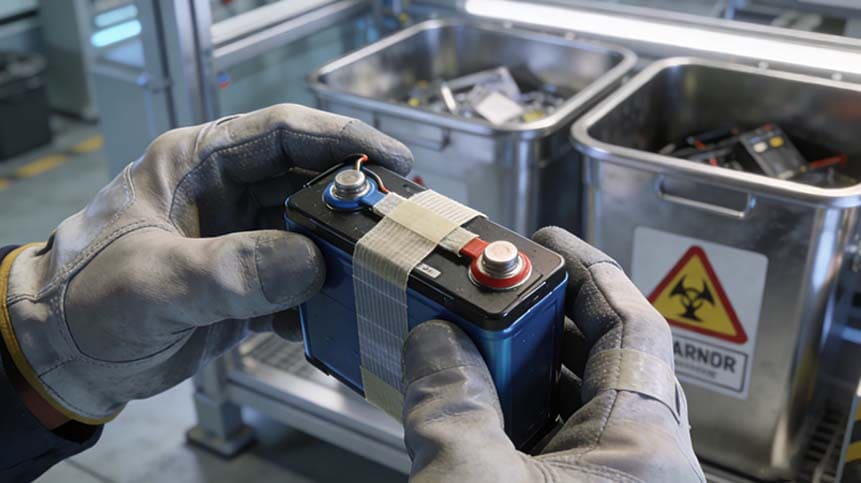
Proper disposal of lithium-ion batteries is not only crucial for environmental protection — it’s a legal safety requirement in many regions. Lithium-ion batteries are used in everything from smartphones to electric vehicles, and if thrown in the trash they can cause fires, toxic leaks, and hazardous waste problems.
Here, from expert guidance by the EPA and safety organizations, I explain exactly how to dispose, why it matters, and what steps you must take — whether you’re an individual, business, or recycler.
Why Proper Disposal Matters
Lithium-ion Batteries Are Hazardous if Disposed Improperly
Unlike alkaline batteries, lithium-ion cells contain flammable electrolytes and stored energy. If they are crushed, punctured, or mixed with regular trash, they can ignite unexpectedly — often days later during transport or at disposal facilities.
Improper disposal also wastes valuable materials such as cobalt, nickel, and lithium — metals considered critical for future clean energy tech. Recycling preserves these and reduces mining needs.
Step-by-Step: How to Dispose of Your Lithium Ion Batteries
1. Identify the Battery Type
First, check your battery or device for chemistry markings like Li-ion or Lithium-Ion. Not all rechargeable batteries use this chemistry — but when they do, treat them with special care.
2. Do NOT Throw in Trash or Regular Recycling
According to the U.S. Environmental Protection Agency (EPA):
-
Do not place lithium-ion batteries in household trash.
-
Do not put them in curbside recycling bins.
-
These actions risk fire at waste facilities and transportation trucks.
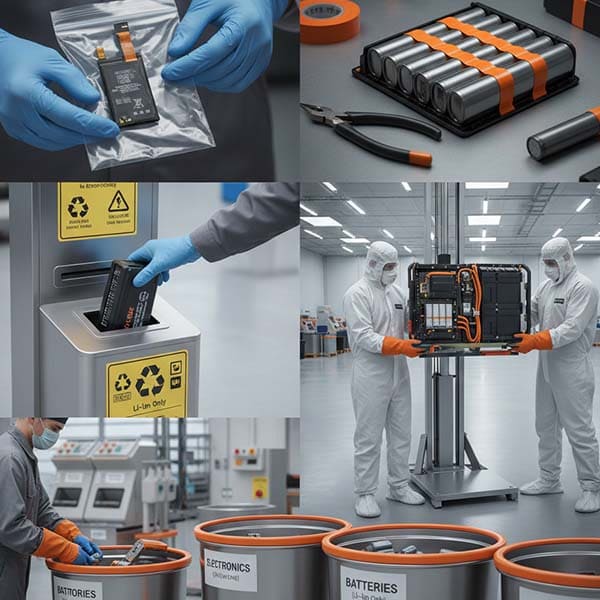
3. Prepare Batteries Safely
To reduce fire risk before drop-off:
| Preparation Step | Why It Matters |
|---|---|
| Cover terminals with non-conductive tape | Prevents short-circuiting |
| Place each battery in a separate plastic bag | Stops contact between cells |
| Do not expose to extreme heat | Minimizes thermal runaway |
These simple steps are recommended across EPA guidance and battery safety resources.
4. Find a Certified Recycling or Disposal Facility
Depending on where you live, options include:
-
Electronics retail take-back programs
-
Household hazardous waste (HHW) centers
-
Certified battery recyclers
-
Manufacturer take-back programs (especially for recalls)
Many retailers partner with programs like Call2Recycle to collect batteries.
5. Handle Damaged or Swollen Batteries With Extra Care
If your battery is swollen or damaged, do not attempt to open or mechanically neutralize it yourself — this can trigger violent ignition. Instead, seek specialized handling or contact your local fire department’s non-emergency line for advice. (Safety guidance from hazardous waste professionals consistently stresses this precaution).
Recycling — What Happens to Your Batteries
Why Recycling is Preferred Over Disposal
Recycling lithium-ion batteries:
-
Recovers critical materials (nickel, cobalt, lithium)
-
Reduces mining impacts
-
Minimizes environmental contamination
-
Supports circular economy goals
The Recycling Process (Simplified Overview)
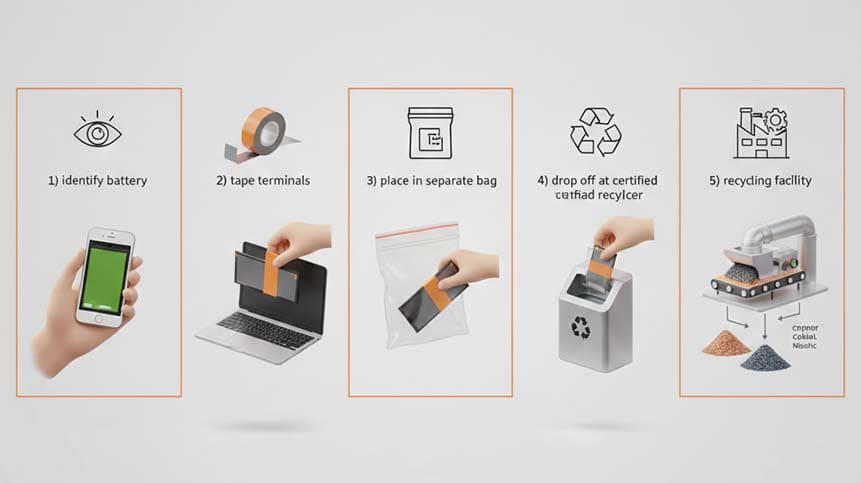
Most recycling operations follow steps like:
-
Collection & sorting
-
Discharge of remaining electrical charge
-
Shredding & materials separation
-
Extraction of metals via smelting or leaching
Recovered materials can be integrated into new battery production.
Regulatory Landscape & Compliance
Lithium Ion Battery Disposal Laws
-
In many U.S. states, disposal of lithium batteries in regular waste is banned and can lead to fines.
-
Some regions are expanding take-back and recycling requirements for manufacturers (e.g., upcoming laws requiring EV battery recycling plans).
Table — Disposal Options by Battery Type
| Battery Type | Can Be Recycled? | Safe Disposal Method |
|---|---|---|
| Small consumer Li-ion (phones, laptops) | Yes | Take to electronics recycler |
| Power tool batteries | Yes | Retail drop-off or recycler |
| Electric vehicle batteries | Yes, specialized | Manufacturer or certified recycler |
| Recalled batteries | Yes | Contact HHW or manufacturer |
FAQ — Most Common Questions About Lithium Ion Battery Disposal
Q1: Can I throw a lithium battery in the trash?
A: No — it is unsafe and often illegal due to fire hazards and toxic material risks.
Q2: How should I prepare the battery for recycling?
A: Tape the terminals and bag it separately to prevent short-circuiting and fires.
Q3: Where can I recycle old lithium-ion batteries?
A: Many electronics stores and certified recyclers accept them. Use resources like Call2Recycle or local municipal HHW programs.
Q4: What about damaged or swollen batteries?
A: Contact local hazardous waste specialists — damaged cells can be extremely dangerous.
References
Conclusion
As a consumer or business owner, never underestimate how dangerous improper battery disposal can be. By preparing batteries safely, using certified recycling facilities, and following regulations, you protect people, property, and our environment — and at the same time create an opportunity for valuable material recovery.
Take action today: locate a recycler, prepare your batteries properly, and submit them for disposal or recycling. Your responsible approach helps prevent fires, supports sustainability, and aligns with emerging legal expectations.
-

 May.2026.09.24Optimal Li-Polymer Battery Charge Voltage ExplainedLearn More
 -
 May.2026.09.24Optimal LiFePO4 Charge Voltage Explained: 12V, 24V and 48VLearn More
 -
 May.2026.09.22Can All Lithium Batteries Be Recharged?Learn More
 -
 May.2026.09.21UN3480 vs UN3481: Lithium-Ion Battery Shipping GuideLearn More
 -
 May.2026.09.2121700 Battery Specifications: Capacity, Size, Voltage, and UsesLearn More