




LCO vs NCM Batteries: Which Lithium-Ion Chemistry Performs Better?
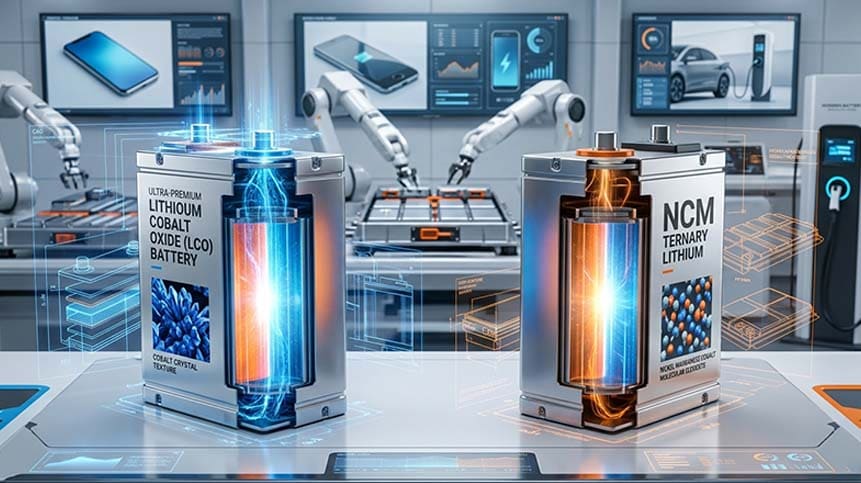
Comparative Analysis of Lithium Cobalt Oxide (LCO) and NCM (Ternary) Batteries
As lithium-ion battery technology continues evolving in 2026, two chemistries remain highly influential across global markets: Lithium Cobalt Oxide (LCO) and Nickel Cobalt Manganese (NCM), also known as ternary lithium batteries.
From smartphones and laptops to electric vehicles and industrial electronics, these battery chemistries power billions of devices worldwide. However, choosing between LCO and NCM is not simply about selecting the “better” battery. The decision depends heavily on application requirements, including:
- Energy density
- Cycle life
- Fast charging capability
- Safety
- Weight
- Cost stability
- Operating temperature
- Long-term reliability
In our experience as a custom lithium battery manufacturer serving OEM and industrial customers, the real-world difference between LCO and NCM usually comes down to one core trade-off:
- LCO prioritizes maximum compact energy storage.
- NCM focuses on balanced performance across multiple dimensions.
This article provides a professional and data-driven comparison of LCO and NCM batteries while also helping buyers, engineers, and sourcing managers understand which chemistry best fits their products and projects.
What Is an LCO Battery?
Lithium Cobalt Oxide (LCO) batteries were among the earliest commercially successful lithium-ion chemistries. Their cathode primarily uses cobalt oxide, which enables very high volumetric energy density.
Main Characteristics of LCO Batteries
- Extremely high volumetric energy density
- Stable voltage platform
- Lightweight and compact
- Moderate cycle life
- Relatively poor thermal stability
- High cobalt dependency
- Higher production cost
Because of these characteristics, LCO batteries became dominant in compact consumer electronics where space is extremely limited.
Typical Applications of LCO Batteries
- Smartphones
- Tablets
- Laptops
- Cameras
- Portable medical electronics
- Wearable electronics
Even in 2026, LCO remains a critical chemistry in premium compact electronics due to its unmatched space efficiency.
What Is an NCM Battery?
NCM batteries use a cathode made from Nickel, Cobalt, and Manganese. By adjusting the ratio of these three metals, manufacturers can fine-tune performance characteristics.
Popular NCM formulations include:
- NCM111
- NCM523
- NCM622
- NCM811
Higher nickel content generally increases energy density, while manganese improves stability and cobalt enhances structural integrity.
Main Characteristics of NCM Batteries
- High gravimetric energy density
- Better cycle life than LCO
- Improved thermal stability
- Lower cobalt usage
- Strong fast charging capability
- Excellent flexibility for EV applications
Because of this balanced performance profile, NCM has become one of the most important battery chemistries in electric vehicles and high-performance portable electronics.
LCO vs NCM Battery Comparison Table
| Feature | LCO Battery | NCM Battery |
|---|---|---|
| Full Name | Lithium Cobalt Oxide | Nickel Cobalt Manganese |
| Energy Density | Very high volumetric density | Very high gravimetric density |
| Cycle Life | 500–800 cycles | 1,000–2,000 cycles |
| Thermal Stability | Lower | Moderate |
| Fast Charging | Limited | Better |
| Cobalt Content | Very high | Lower |
| Cost | Higher | Moderately high |
| Safety | Lower thermal safety | Better overall balance |
| Typical Applications | Smartphones, laptops | EVs, power tools, energy systems |
| Low Temperature Performance | Moderate | Better |
| Weight Efficiency | Moderate | Excellent |
| Market Trend | Stable niche demand | Rapid global growth |
Energy Density Comparison
Why LCO Dominates Compact Electronics
LCO batteries are famous for their exceptional volumetric energy density.
This means they can store a large amount of energy in a very small physical space. In devices such as smartphones and ultrathin laptops, every millimeter matters.
For manufacturers designing compact products, LCO still offers a major advantage.
Why NCM Leads Electric Vehicles
NCM batteries excel in gravimetric energy density, meaning they provide more energy per kilogram.
This becomes extremely important in:
- Electric vehicles
- Drones
- Robotics
- Aerospace systems
- Portable industrial devices
Reducing battery weight directly improves driving range and system efficiency.
For example, high-nickel NCM811 batteries significantly improve EV range while reducing total battery pack weight.
Cycle Life and Durability
LCO Cycle Life Limitations
One major weakness of LCO chemistry is its relatively short cycle life.
Repeated charging and discharging gradually destabilize the cobalt oxide structure, especially under:
- High voltage
- Fast charging
- Elevated temperature
Most LCO batteries typically achieve:
- Approximately 500–800 cycles
This limitation makes LCO less suitable for long-life industrial or automotive applications.
NCM Offers Longer Operational Life
NCM batteries generally deliver:
- 1,000–2,000 cycles depending on formulation
Advanced thermal management and BMS optimization can further extend lifespan.
This longer cycle life is one reason why NCM has become dominant in:
- Electric vehicles
- Energy storage systems
- Industrial robotics
- Medical equipment
Safety Comparison Between LCO and NCM
Safety remains one of the most important factors in lithium battery selection.
Thermal Risks of LCO Batteries
LCO batteries are more prone to thermal runaway under extreme conditions.
At high temperatures or overcharge conditions:
- Structural decomposition may occur
- Oxygen release can accelerate combustion
- Internal gas generation increases pressure risk
Because of this, LCO batteries require:
- Strict voltage control
- Quality protection circuits
- Advanced thermal protection
NCM Provides Better Safety Balance
NCM batteries are not perfectly safe, especially high-nickel versions, but they generally provide improved thermal stability compared with traditional LCO cells.
Modern EV-grade NCM systems rely heavily on:
- Intelligent BMS systems
- Thermal monitoring
- Cell balancing
- Multi-layer protection architecture
These improvements significantly reduce operational risks.
Cost Analysis and Raw Material Challenges
Why LCO Batteries Are Expensive
Cobalt remains one of the most expensive and volatile battery raw materials globally.
LCO batteries contain a very high percentage of cobalt, making them vulnerable to:
- Supply chain instability
- Mining constraints
- Geopolitical risks
- Price fluctuations
In recent years, cobalt price volatility has strongly affected battery manufacturing costs.
NCM Reduces Cobalt Dependency
One of NCM’s biggest advantages is reduced cobalt usage.
For example:
- NCM811 contains significantly more nickel and much less cobalt than traditional chemistries.
This approach helps manufacturers:
- Lower costs
- Reduce raw material risk
- Improve scalability for EV production
As global EV demand continues growing, low-cobalt strategies are becoming increasingly important.
Fast Charging Performance
LCO Fast Charging Limitations
LCO batteries tend to degrade faster during high-voltage fast charging.
Aggressive charging can accelerate:
- Electrolyte breakdown
- Cathode instability
- Capacity loss
This makes LCO less ideal for ultra-fast charging applications.
NCM Performs Better in High-Power Systems
NCM batteries generally support:
- Higher discharge rates
- Faster charging speeds
- Better low-temperature operation
This is one reason why NCM dominates:
- Electric vehicles
- High-power tools
- Performance electronics
Modern fast-charging EV infrastructure strongly favors advanced NCM battery systems.
Market Trends in 2026
LCO Market Position
Although EV batteries receive most industry attention, LCO still maintains strong demand in premium electronics.
Industry demand remains stable because compact electronic devices continue requiring:
- Thin battery profiles
- High voltage platforms
- Maximum space efficiency
NCM Continues Rapid Expansion
NCM has become one of the pillars of the global EV industry.
Major automotive manufacturers continue investing heavily in:
- High-nickel NCM
- Advanced cathode engineering
- Thermal optimization
- Cobalt reduction strategies
The growth of EV adoption worldwide directly drives NCM battery demand.
Data Comparison Table
| Parameter | LCO | NCM |
|---|---|---|
| Typical Energy Density | 150–200 Wh/kg | 180–280 Wh/kg |
| Typical Voltage | 3.6–3.7V | 3.6–3.7V |
| Cycle Life | 500–800 | 1,000–2,000 |
| Fast Charging Capability | Moderate | High |
| Thermal Stability | Lower | Moderate |
| Major Application | Consumer electronics | EVs & energy systems |
| Relative Cost | High | Medium-High |
| Main Advantage | Compact size | Balanced performance |
| Main Weakness | Safety & lifespan | Thermal management complexity |
Which Battery Chemistry Is Better?
The answer depends entirely on application requirements.
Choose LCO If You Need |
Choose NCM If You Need |
|
|
In real-world OEM projects, we often see customers selecting NCM for industrial and transportation applications, while LCO remains preferred for ultra-compact consumer electronics.
Future Development Trends
Future of LCO Batteries |
Future of NCM Batteries |
|
LCO technology is still evolving through:
Some next-generation LCO systems now target operating voltages above 4.45V to push energy density even further. |
NCM development continues focusing on:
Advanced NCM chemistries are expected to remain central to EV battery production for years ahead. |
Conclusion
LCO and NCM batteries are not direct replacements for each other. Instead, they serve different technological priorities.
LCO remains the leader in compact, high-energy consumer electronics where space efficiency is critical.
NCM has become the preferred chemistry for electric vehicles and high-performance energy systems because it delivers a more balanced combination of:
- Energy density
- Safety
- Lifespan
- Fast charging
- Cost control
As the lithium battery industry continues advancing, both chemistries will likely coexist and evolve together rather than compete for a single dominant position.
For OEM brands and industrial buyers, understanding these differences is essential when selecting the right battery solution for long-term product success.
FAQ
What does LCO stand for in lithium batteries?
LCO stands for Lithium Cobalt Oxide, a lithium-ion battery chemistry known for very high energy density and compact size.
What does NCM mean in batteries?
NCM refers to Nickel Cobalt Manganese lithium-ion batteries, also called ternary lithium batteries.
Which battery is safer, LCO or NCM?
NCM batteries generally offer better thermal stability and longer lifespan compared with traditional LCO batteries.
Why are NCM batteries widely used in EVs?
NCM batteries provide an excellent balance between:
- Energy density
- Weight efficiency
- Fast charging
- Cycle life
- Cost
This makes them ideal for electric vehicles.
Why is cobalt reduction important?
Reducing cobalt helps lower battery costs and minimizes supply chain risks because cobalt is expensive and subject to market volatility.
Are LCO batteries still used in 2026?
Yes. LCO batteries remain widely used in smartphones, laptops, cameras, and compact consumer electronics.
-

 May.2026.09.17Meet A&S Power at KES 2026 in Seoul – Custom Lithium Battery SolutionsLearn More
 -
 May.2026.09.16How to Choose a Custom Lithium Battery Manufacturer in China: A Buyer's GuideLearn More
 -
 May.2026.09.15Can VHR-4N Connectors Work With 14 AWG Battery Wires?Learn More
 -
 May.2026.09.14Who Pays UL Battery Certification Maintenance Fees?Learn More
 -
 May.2026.09.11PTC vs PCM: Why Use Both in Lithium Battery Protection?Learn More