




IEC 62133 Rechargeable LiPo Battery for Medical Devices Guide
Introduction
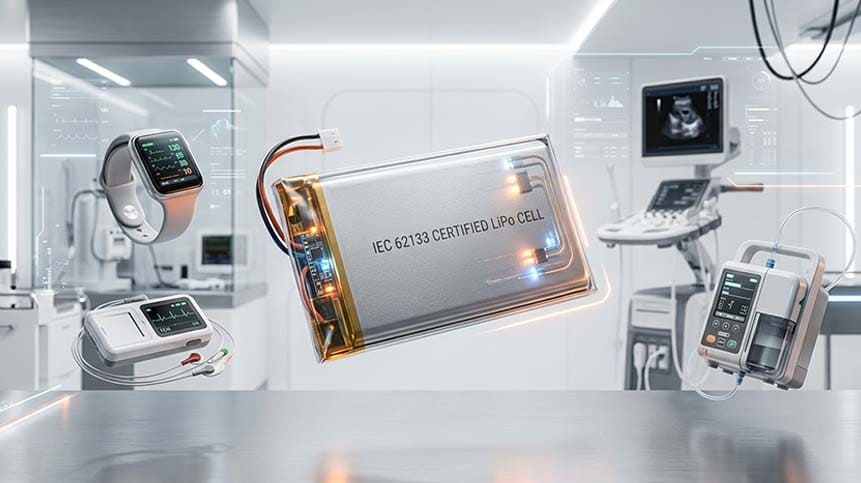
As medical devices become smaller, smarter, and increasingly portable, the demand for safe rechargeable battery technology continues to grow. From portable ultrasound systems and infusion pumps to wearable monitoring equipment and hearing aids, lithium polymer batteries now power many critical healthcare applications.
In our experience working with OEM medical device manufacturers, battery safety certification is no longer optional. Regulatory compliance directly affects market access, product reliability, and long-term brand reputation. Among global battery safety standards, IEC 62133 has become one of the most important certifications for rechargeable lithium batteries used in medical electronics.
In this guide, we explain how IEC 62133 rechargeable LiPo batteries work in medical devices, why the certification matters, what tests are required, and how OEMs can choose the right battery pack supplier for healthcare applications.
We also explore real-world battery design considerations, safety architecture, transportation regulations, and future technology trends shaping the medical battery industry.
What Is IEC 62133?
IEC 62133 is an international safety standard developed by the International Electrotechnical Commission (IEC) for rechargeable lithium-ion and nickel battery systems used in portable electronic equipment.
The current mainstream version is:
- IEC 62133-2:2017 for lithium battery systems
This standard defines safety requirements and testing procedures for rechargeable lithium-ion and lithium polymer cells and battery packs.
For medical device manufacturers, IEC 62133 certification demonstrates that a battery has passed rigorous evaluations for:
- Electrical safety
- Mechanical reliability
- Thermal stability
- Abuse resistance
- Transportation durability
- Overcharge protection
- Short-circuit protection
Today, many healthcare OEMs require IEC 62133 compliance before approving a battery supplier.
Why IEC 62133 Matters for Medical Devices
Medical equipment operates in environments where failure is unacceptable. Battery malfunction may lead to device shutdown, inaccurate monitoring, interrupted treatment, or patient safety risks.
That is why IEC 62133-certified rechargeable LiPo batteries are widely preferred in medical applications.
Enhanced Patient Safety
Medical devices often remain in direct contact with patients for extended periods. Certified batteries reduce risks associated with:
- Overheating
- Thermal runaway
- Leakage
- Fire hazards
- Internal short circuits
Global Market Access
IEC 62133 certification is widely recognized across:
- Europe
- Asia
- North America
- Middle East healthcare markets
OEM Reliability Standards
Hospitals and healthcare distributors increasingly prioritize long lifecycle batteries with stable performance.
Certified battery packs help OEMs achieve:
- Lower failure rates
- Better product consistency
- Reduced warranty claims
- Higher customer trust
What Is a Rechargeable LiPo Battery?
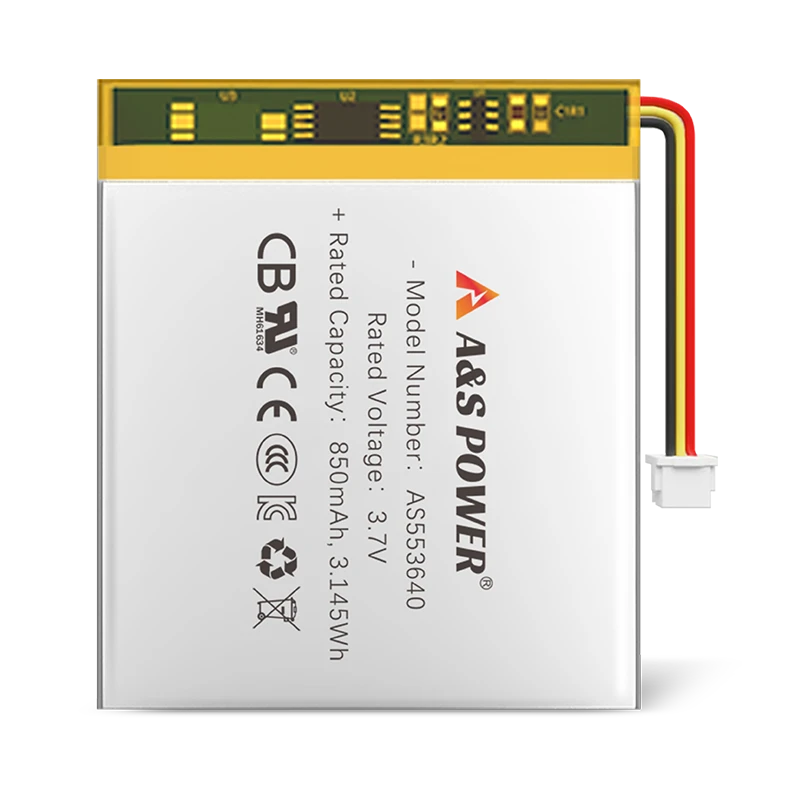
A lithium polymer (LiPo) battery is a rechargeable lithium-ion battery that uses polymer electrolytes instead of traditional liquid electrolytes.
Compared with cylindrical lithium-ion cells, LiPo batteries offer:
| Feature | LiPo Battery Advantage |
|---|---|
| Shape Flexibility | Ultra-thin and custom sizes |
| Weight | Lightweight structure |
| Energy Density | High energy storage |
| Design Freedom | Easier integration into compact devices |
| Rechargeability | Hundreds of charge cycles |
| Compactness | Ideal for wearable devices |
Medical Devices Commonly Using IEC 62133 LiPo Batteries
Portable Diagnostic Equipment
- Portable ultrasound systems
- ECG monitors
- Blood analyzers
- Handheld scanners
These devices require stable voltage output and long runtime.
Wearable Medical Devices
Wearable healthcare products demand compact battery solutions with high safety levels.
- Continuous glucose monitors
- Smart health patches
- Remote patient monitoring devices
- Wearable ECG trackers
Home Healthcare Equipment
Home-use medical electronics are growing rapidly due to aging populations and telemedicine adoption.
- Portable oxygen concentrators
- Sleep apnea equipment
- Electronic thermometers
- Infusion pumps
Hearing Assistance Devices
- Hearing aids
- Cochlear accessories
- Audio medical wearables
Core IEC 62133 Battery Safety Tests
| Test Item | Purpose |
|---|---|
| Overcharge Test | Prevent unsafe charging |
| External Short Circuit | Verify protection system response |
| Thermal Abuse | Evaluate high-temperature stability |
| Crush Test | Assess mechanical resistance |
| Forced Discharge | Simulate abnormal usage |
| Vibration Test | Evaluate transportation durability |
| Drop Test | Assess physical integrity |
| Charging System Evaluation | Verify charger compatibility |
Key Design Requirements for Medical Device LiPo Batteries
Battery Management System (BMS)
Medical battery packs normally include a protection circuit module (PCM/BMS) that controls:
- Overcharge protection
- Over-discharge protection
- Overcurrent protection
- Temperature monitoring
- Cell balancing
Temperature Stability
| Operating Environment | Typical Requirement |
|---|---|
| Charging Temperature | 0°C to 45°C |
| Discharge Temperature | -20°C to 60°C |
| Storage Temperature | -20°C to 35°C |
Low Swelling Characteristics
Battery swelling is a major concern in compact medical electronics.
High-quality LiPo cells use stable electrolyte chemistry, optimized pouch design, and advanced sealing technologies to minimize swelling risks during long-term operation.
Long Cycle Life
- 500–1000+ cycles
- Low capacity degradation
- Stable voltage curves
IEC 62133 vs Other Medical Battery Certifications
| Certification | Purpose |
|---|---|
| IEC 62133 | Rechargeable battery safety |
| UN38.3 | Transportation safety |
| UL 2054 | Battery pack safety |
| CE Marking | EU market compliance |
| RoHS | Hazardous substance restriction |
| IEC 60601 | Medical electrical equipment safety |
Challenges in Designing Medical Device Battery Packs
Space Constraints
Modern healthcare products continue shrinking in size.
Engineers often face difficult tradeoffs between runtime, battery size, weight, and thermal management.
High Reliability Expectations
- Stable manufacturing quality
- Tight cell consistency
- Low defect rates
- Traceable production systems
Regulatory Complexity
| Region | Common Requirements |
|---|---|
| Europe | CE + IEC 62133 |
| United States | UL + FCC + UN38.3 |
| Japan | PSE |
| South Korea | KC Certification |
How OEMs Choose a Medical Battery Manufacturer
1. Certification Capability
- IEC 62133 reports
- UN38.3 reports
- MSDS documentation
- UL certifications when applicable
2. Custom Engineering Support
- Custom connectors
- Smart BMS systems
- Flexible cable assemblies
- Ultra-thin battery design
3. Cell Quality Consistency
- Cell matching
- Internal resistance consistency
- Automated manufacturing
- Aging process control
4. Traceability Systems
- Barcode tracking
- MES systems
- Batch traceability
- Incoming material inspection
5. Long-Term Supply Stability
- Long lifecycle product availability
- Stable raw material sourcing
- Continuous technical support
Battery Capacity Selection for Medical Devices
| Device Type | Typical Battery Capacity |
|---|---|
| Wearable Monitor | 300–1000mAh |
| Portable ECG Device | 2000–5000mAh |
| Portable Ultrasound | 5000–20000mAh |
| Infusion Pump | 1500–6000mAh |
Future Trends in Medical LiPo Battery Technology
Higher Energy Density
- Smaller devices
- Longer runtime
- Reduced weight
Fast Charging Technology
- Rapid charging algorithms
- Smart thermal control
- Enhanced cycle protection
Smarter Battery Monitoring
- Real-time diagnostics
- Bluetooth monitoring
- Cloud-based battery analytics
- Predictive maintenance
Safer Battery Chemistry
- Solid-state batteries
- Improved separators
- Safer electrolyte materials
Real-World Example: Portable Patient Monitoring Device
| Parameter | Example Requirement |
|---|---|
| Battery Type | LiPo Battery |
| Nominal Voltage | 7.4V |
| Capacity | 5000mAh |
| Certification | IEC 62133 + UN38.3 |
| Runtime | 8–12 Hours |
| Protection | PCM + NTC Sensor |
| Charging | Smart CC/CV Charging |
Best Practices for Safe Medical Battery Integration
Use Certified Cells
Only use cells from qualified manufacturers with verified testing documentation.
Optimize Thermal Design
- Heat dissipation
- Airflow
- Thermal insulation
Validate Charging Systems
- Charging ICs
- Voltage thresholds
- Current limits
- Temperature feedback systems
Perform Lifecycle Testing
- Charge/discharge cycling
- Environmental testing
- Transportation simulation
- Aging analysis
Conclusion
IEC 62133 rechargeable LiPo batteries have become a critical foundation for modern portable medical devices. As healthcare electronics continue evolving toward smarter, smaller, and more mobile solutions, battery safety and certification requirements will only become more demanding.
For medical OEMs, choosing the right battery partner involves much more than capacity and price. Long-term reliability, certification support, engineering capability, and manufacturing consistency are equally important.
In our experience, successful medical battery projects are built on three core principles:
- Safety-first engineering
- Regulatory compliance
- Stable long-term performance
By selecting IEC 62133-certified lithium polymer battery solutions, medical device manufacturers can improve product reliability, support global market access, and strengthen patient safety standards.
FAQ
What is IEC 62133 certification for batteries?
IEC 62133 is an international safety standard for rechargeable lithium-ion and nickel batteries used in portable electronic products.
Are LiPo batteries safe for medical devices?
Yes. High-quality LiPo batteries with proper BMS protection and IEC 62133 certification are widely used in portable medical equipment and wearable healthcare devices.
What is the difference between IEC 62133 and UN38.3?
IEC 62133 focuses on operational battery safety, while UN38.3 focuses on transportation safety testing for lithium batteries.
Why do medical devices use lithium polymer batteries?
LiPo batteries offer lightweight design, high energy density, flexible shapes, and rechargeable performance, making them ideal for compact medical electronics.
Can medical battery packs be customized?
Yes. OEM battery manufacturers can customize voltage, capacity, shape, connectors, PCM/BMS systems, and cable assemblies according to medical device requirements.
How long do medical LiPo batteries last?
Most medical-grade LiPo batteries support 500–1000+ charge cycles depending on operating conditions, charging methods, and battery quality.
-

 May.2026.09.17Meet A&S Power at KES 2026 in Seoul – Custom Lithium Battery SolutionsLearn More
 -
 May.2026.09.16How to Choose a Custom Lithium Battery Manufacturer in China: A Buyer's GuideLearn More
 -
 May.2026.09.15Can VHR-4N Connectors Work With 14 AWG Battery Wires?Learn More
 -
 May.2026.09.14Who Pays UL Battery Certification Maintenance Fees?Learn More
 -
 May.2026.09.11PTC vs PCM: Why Use Both in Lithium Battery Protection?Learn More