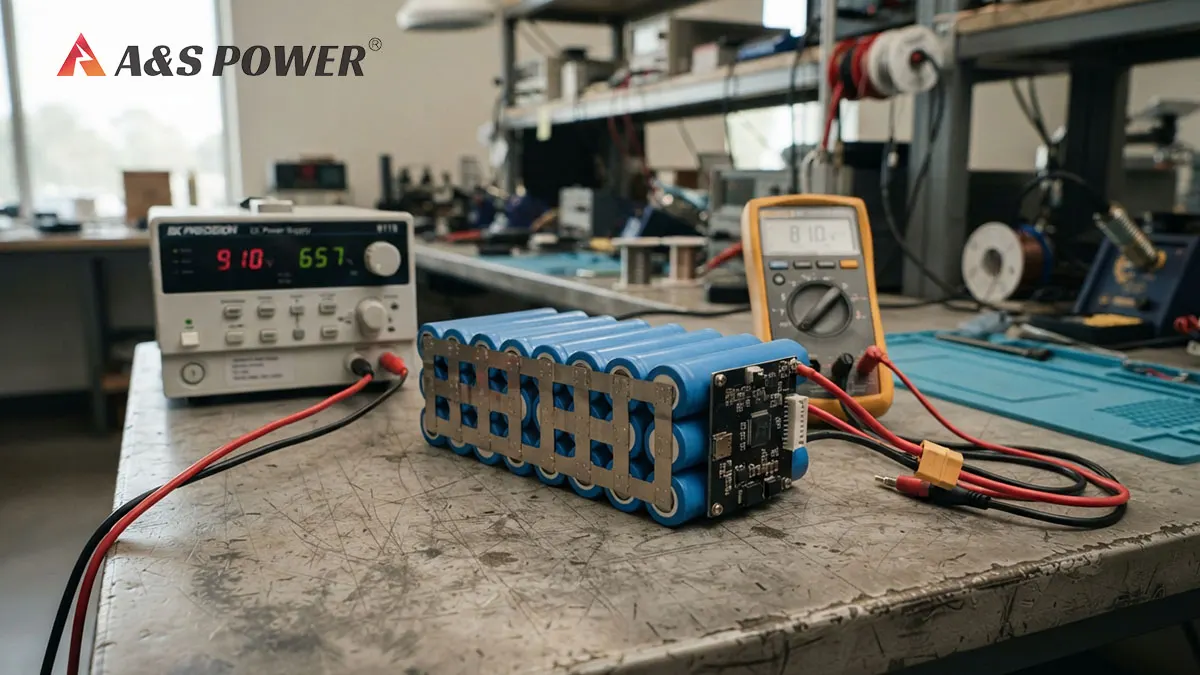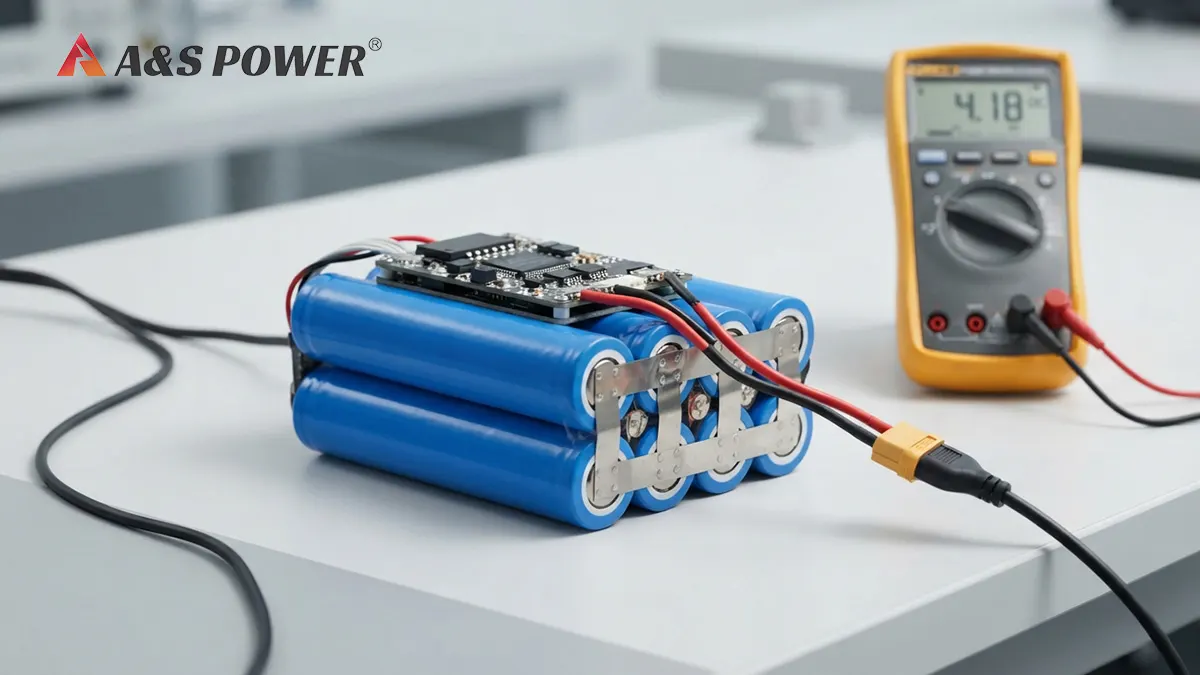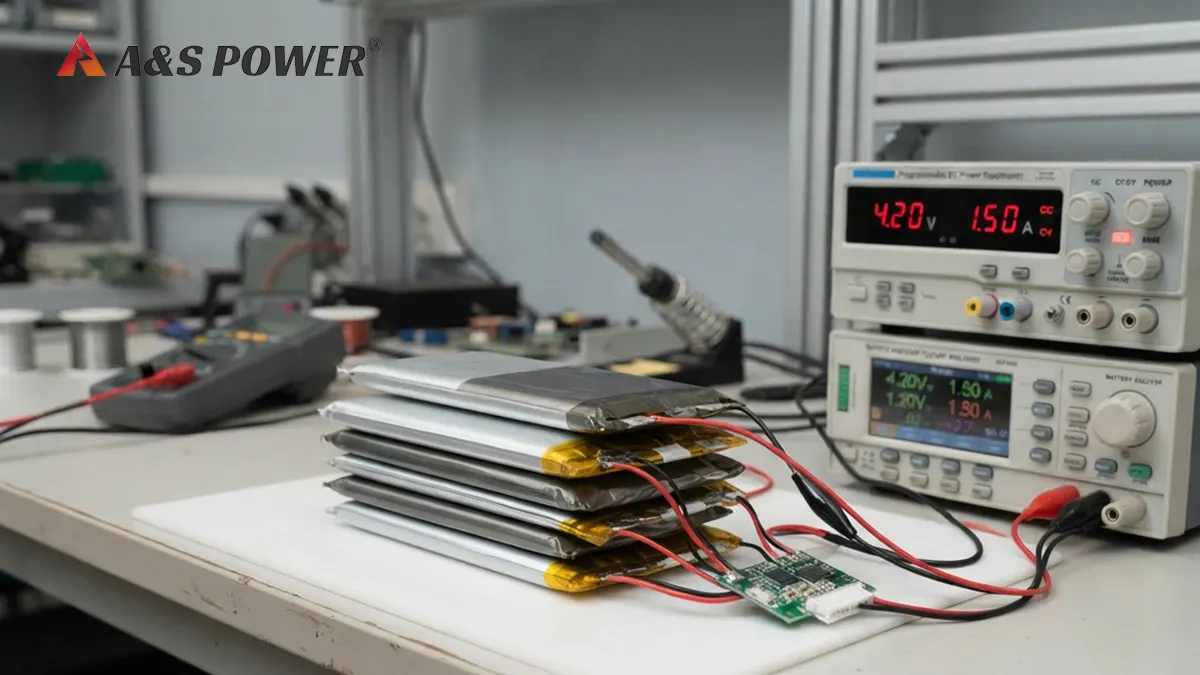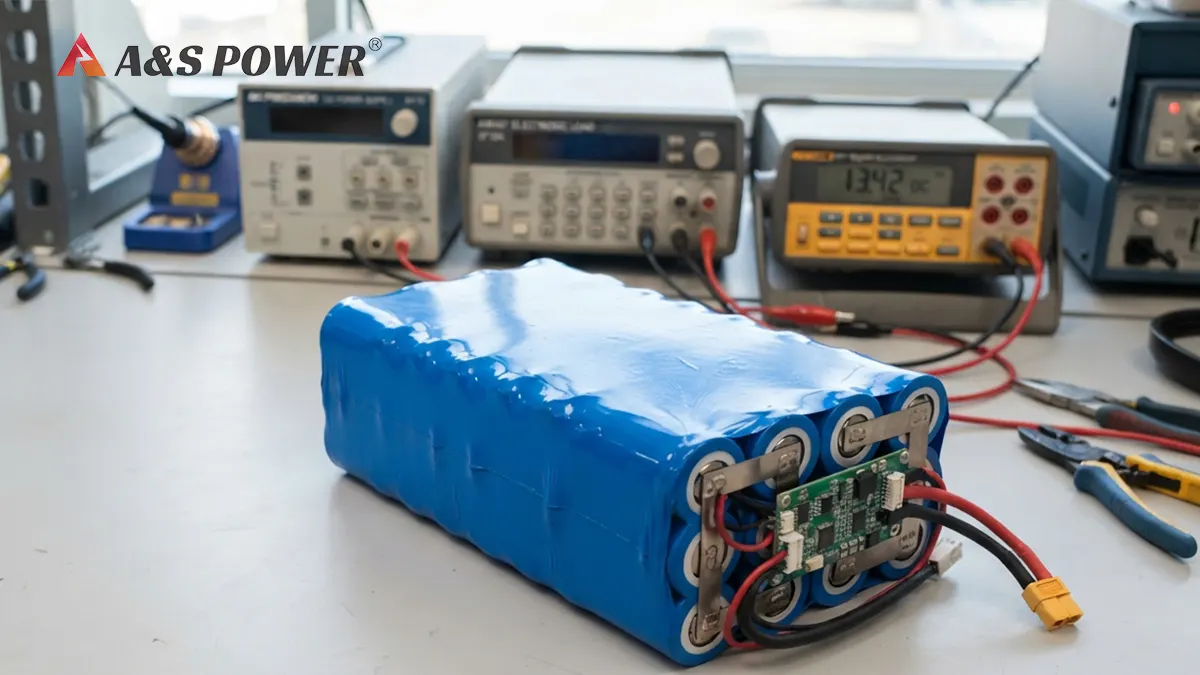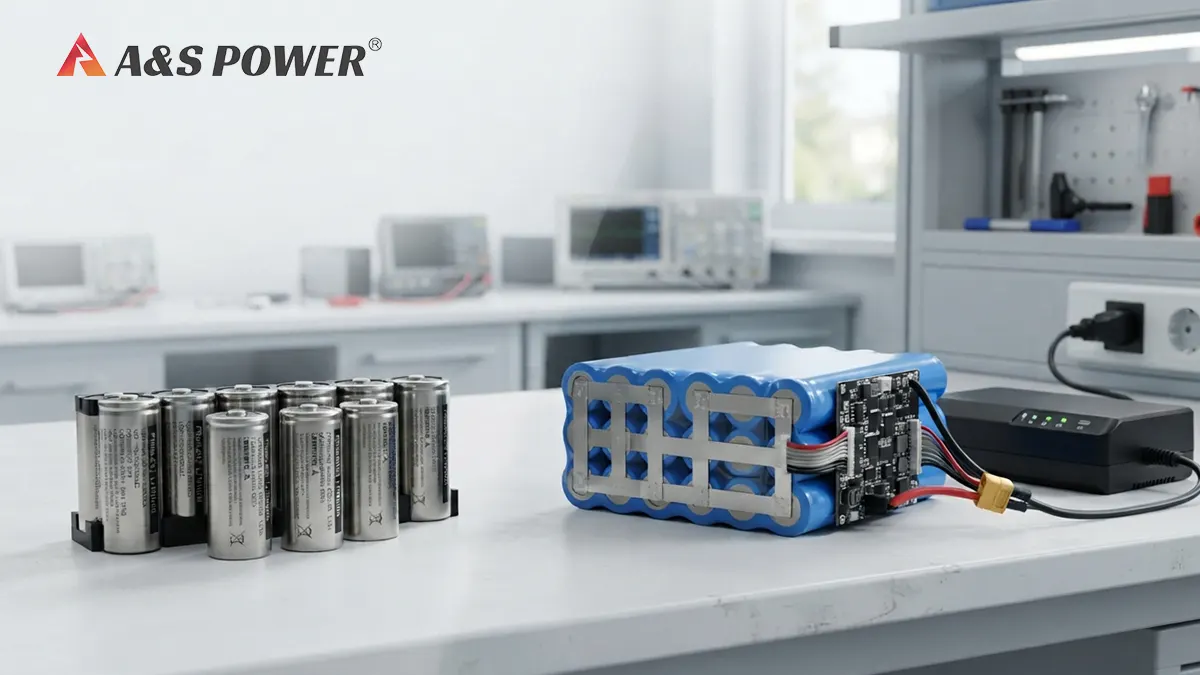


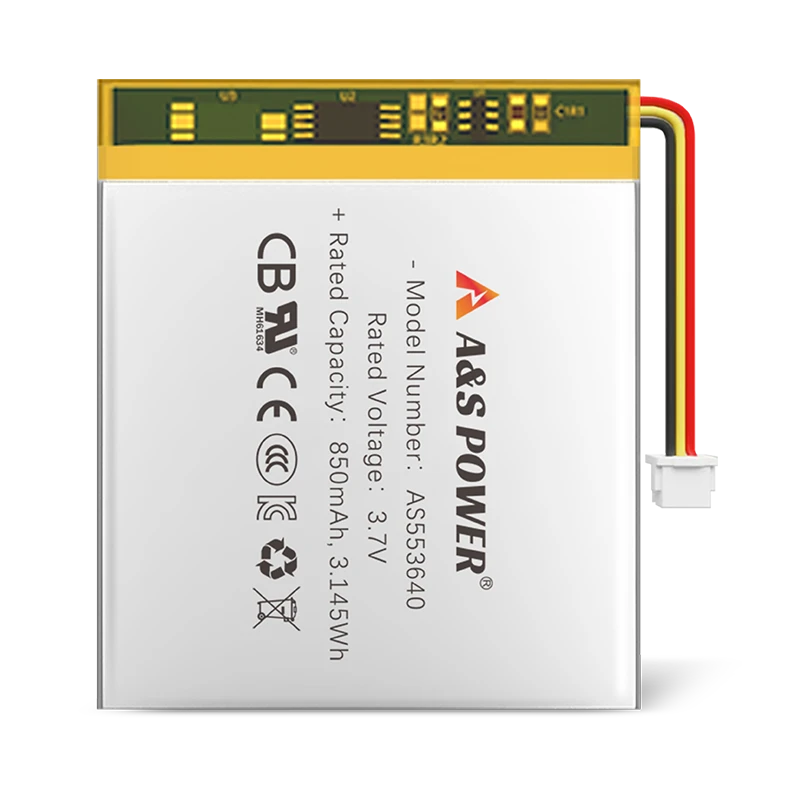
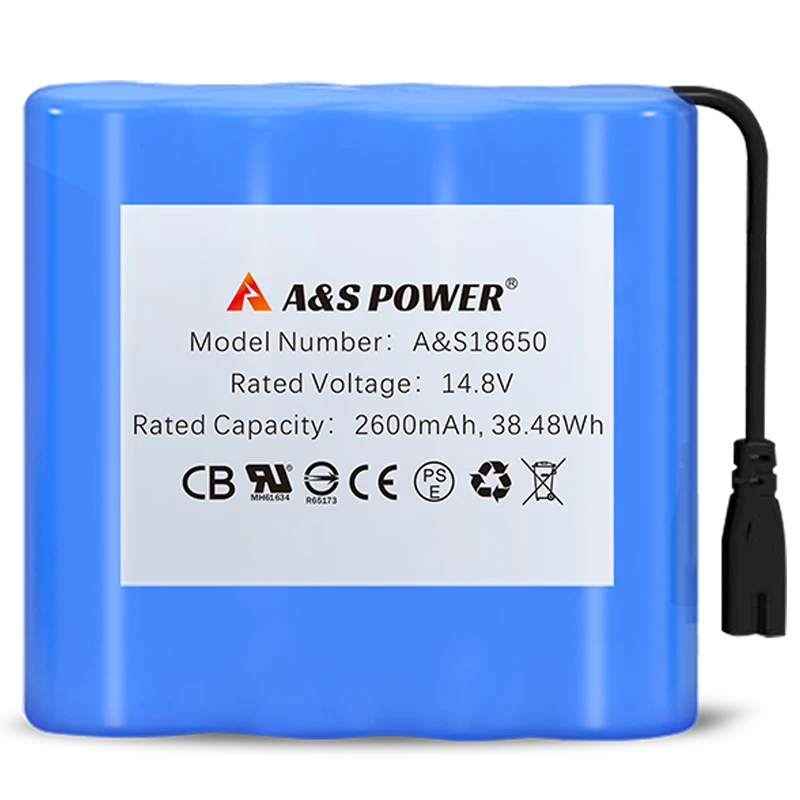
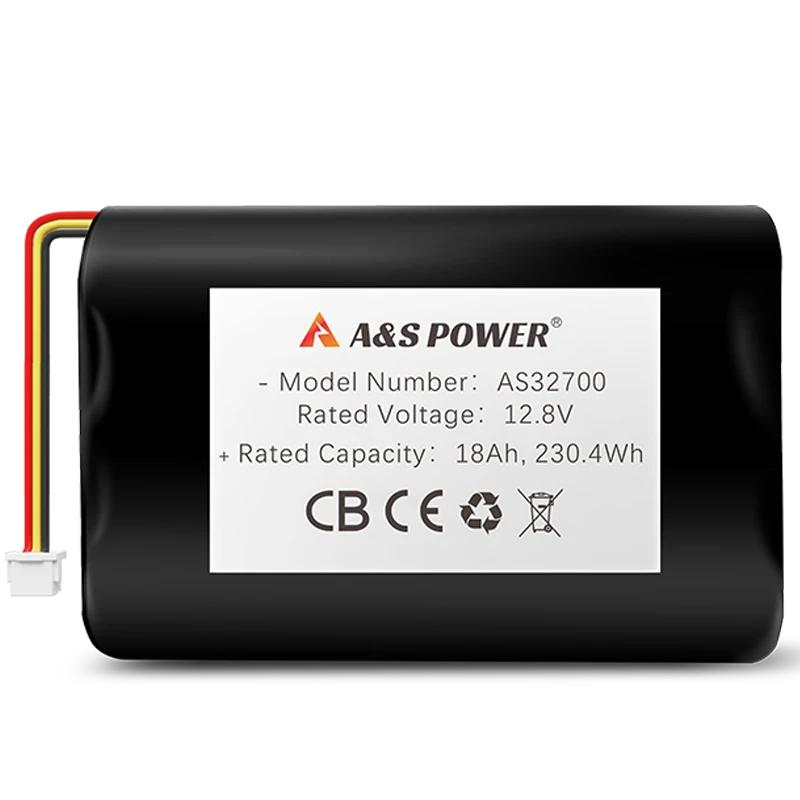


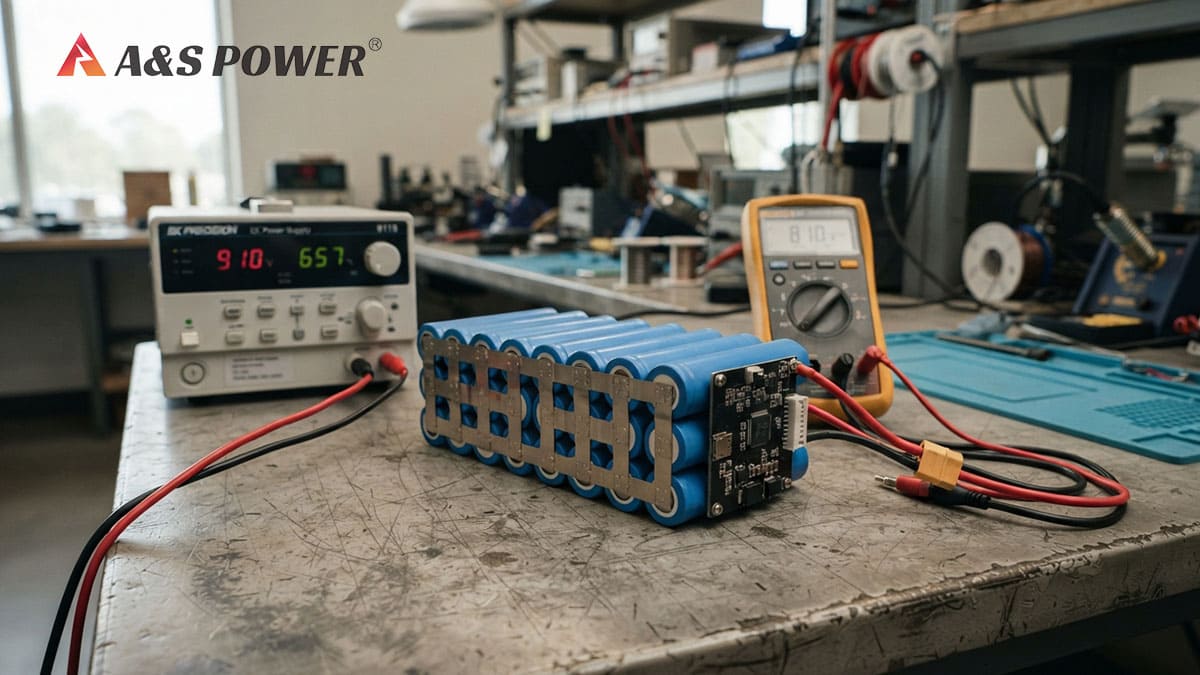
The safest way to charge a standard 3.6V or 3.7V nominal 18650 lithium-ion cell is to use a dedicated lithium-ion CC/CV charger matched to the cell manufacturer's specifications. For a conventional 4.2V-per-cell lithium-ion chemistry, charging normally begins with constant current (CC) and transitions to constant voltage (CV) when the cell reaches approximately 4.2V. The charging current and temperature must remain within the limits specified by the particular cell datasheet.
I would not treat “18650” as a complete charging specification. The 18650 designation describes the cell's physical format—approximately 18 mm in diameter and 65 mm long—not its exact chemistry, charge voltage, capacity, or permissible charging current.
That distinction is important. Some 18650-format cells use different chemistries or charging limits, so I always verify the cell datasheet before selecting a charger.
What Is an 18650 Lithium-Ion Battery?
An 18650 battery is a cylindrical rechargeable cell with a nominal physical size of approximately 18 × 65 mm. The format is widely used in portable electronics, power tools, industrial equipment, medical devices, battery packs, and other energy-storage applications.
For conventional lithium-ion cells, the nominal voltage is commonly around 3.6–3.7V, while the full-charge voltage is typically 4.2V per cell. However, these values should never be assumed solely from the 18650 label.
For example, an A&S Power 18650 battery pack rated at 22.2V uses a 6S2P configuration. Six cells are connected in series, so the maximum charge voltage is 6 × 4.2V = 25.2V. The pack specification also lists a 0–45°C charging range.
This illustrates an important engineering principle: the charging requirements depend on the cell chemistry and battery configuration, not simply the word “18650.”
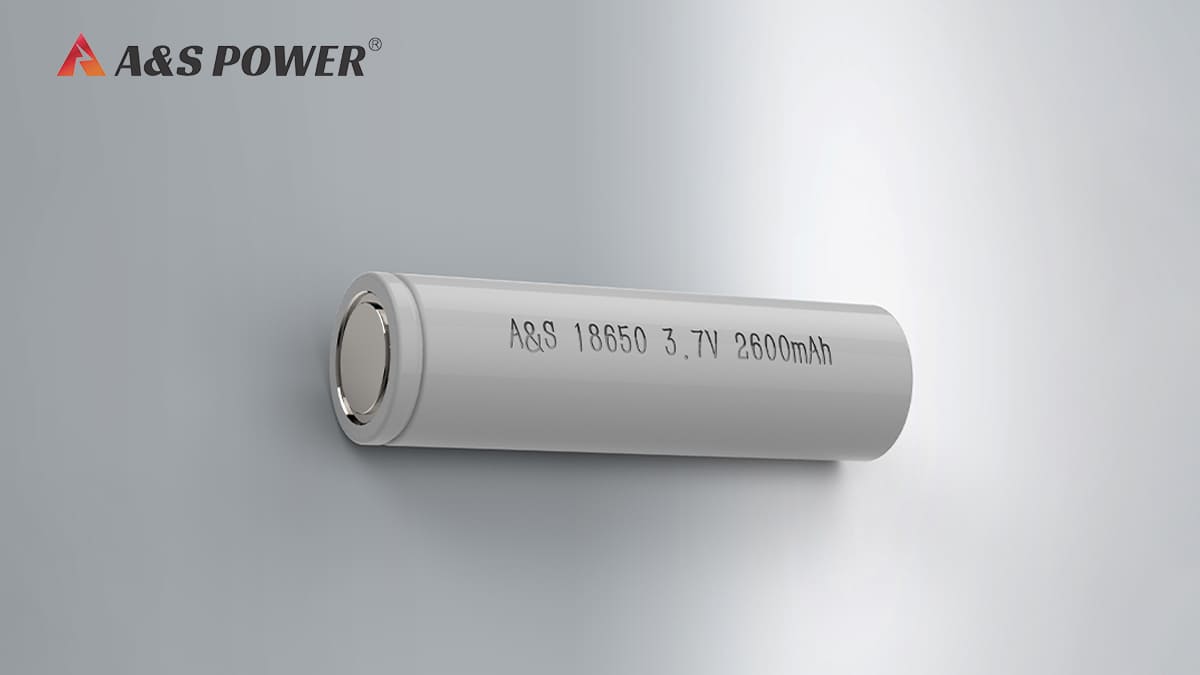
What Voltage Should I Use to Charge an 18650 Battery?
For a standard 4.2V lithium-ion cell, the maximum charging voltage is generally 4.2V per cell.
A cell labeled 3.7V does not mean that you should charge it with a 3.7V charger. The 3.7V figure normally represents nominal voltage, while 4.2V is the typical upper charging voltage for conventional lithium-ion chemistry.
A manufacturer specification for an INR-18650 cell, for example, specifies a 4.2V maximum charge voltage and requires the charging current to remain within the cell's specified limit.
| Battery Configuration | Nominal Voltage* | Typical Full-Charge Voltage* |
|---|---|---|
| 1S | 3.6–3.7V | 4.2V |
| 2S | 7.2–7.4V | 8.4V |
| 3S | 10.8–11.1V | 12.6V |
| 4S | 14.4–14.8V | 16.8V |
| 5S | 18.0–18.5V | 21.0V |
| 6S | 21.6–22.2V | 25.2V |
| 7S | 25.2–25.9V | 29.4V |
*Values shown are typical for conventional 4.2V-per-cell lithium-ion chemistry. Always follow the actual battery specification.
As a real A&S Power example, our 11.1V 3S3P 18650 battery pack specifies a 12.6V charge voltage, while our 18.5V 5S2P pack specifies 21.0V.
How Does CC/CV Charging Work?
When I explain lithium-ion charging to customers, I usually start with the CC/CV charging profile, because it is the foundation of safe charging.
Constant Current: CC
During the first stage, the charger supplies a controlled constant current to the battery. Cell voltage gradually increases as the battery stores energy.
The exact current depends on the cell manufacturer's specification. A commonly referenced charging rate for many lithium-ion applications is around 0.5C, but this should not be treated as a universal rule. Some cells are designed for higher charging rates, while others require lower current.
For example, if a 2,500mAh cell has a specified 0.5C standard charging rate:
The correct value, however, is always the manufacturer's specified charging current.
Constant Voltage: CV
When the cell reaches its specified upper voltage—typically 4.2V for a conventional Li-ion cell—the charger changes to constant-voltage operation.
The charger holds the voltage while the charging current gradually decreases.
This CC/CV charging process is widely used for lithium-ion charging. Battery University describes the same basic process: constant current brings the cell toward its voltage limit, followed by constant-voltage charging while current tapers down.
A properly designed charger then terminates charging according to its programmed current threshold and cell specifications.
How Much Current Should I Use to Charge an 18650?
There is no single charging current that is safe for every 18650 cell.
This is one of the areas where I recommend avoiding generic online charging rules.
For example, two 18650 cells can have different capacities, electrode designs, internal resistance, and maximum charging-current specifications. A 2,500mAh cell and a 3,500mAh cell should not automatically be assumed to have the same charging-current limit.
The basic relationship is:
For a 3,000mAh cell:
- 0.2C = 0.6A
- 0.5C = 1.5A
- 1C = 3.0A
But these are calculations, not recommendations. The datasheet determines the allowable current.
A&S Power's own 18650 packs demonstrate this variation. Our 22.2V 4000mAh 6S2P pack specifies an 800mA standard charge current and 4.0A maximum charge current, while another 18.5V 5000mAh 5S2P pack specifies 1000mA standard charging and 2500mA maximum continuous charging.
This is why charger selection should be based on the complete battery specification rather than capacity alone.
What Temperature Is Safe for Charging an 18650?
Temperature is another critical charging parameter.
Many conventional lithium-ion battery specifications define a charging range beginning around 0°C, with an upper limit commonly around 45°C, although the actual range varies by cell design.
For example, A&S Power specifies 0–45°C charging for several 18650 battery packs.
I recommend avoiding charging a battery that is unusually hot, physically damaged, swollen, leaking, or otherwise abnormal.
Charging lithium-ion cells outside their specified temperature range can increase degradation and safety risks. The University of Illinois battery-safety guidance also recommends using chargers designed for the battery chemistry and avoiding overcharge and over-discharge conditions.
A practical rule is simple: if a battery becomes unexpectedly hot during normal charging, stop charging and investigate the cause rather than treating the temperature as normal.
Can I Charge an 18650 With a USB or 5V Power Supply?
Not directly.
A standard USB power source may provide 5V, but a conventional single-cell lithium-ion 18650 normally requires a controlled charging system that regulates both voltage and current.
Connecting a 5V supply directly to a single 4.2V lithium-ion cell does not provide the required CC/CV charging control and can result in overcharging.
A proper charging circuit should control:
- Maximum charging voltage
- Charging current
- Charge termination
- Battery temperature where applicable
- Reverse polarity
- Short-circuit and abnormal conditions where supported
For this reason, I recommend using a charger or charging circuit specifically designed for the battery chemistry and configuration.
What Role Does a BMS Play in 18650 Battery Packs?
For a multi-cell 18650 battery pack, the BMS (Battery Management System) or appropriate protection circuit can provide important monitoring and protection functions.
Depending on the design, these may include:
- Overcharge protection
- Over-discharge protection
- Over-current protection
- Short-circuit protection
- Cell balancing
- Temperature monitoring
However, I would not describe a BMS as a replacement for a correctly designed charger.
The charger, battery cells, protection circuit, wiring, connector, and pack configuration all need to work together.
This becomes particularly important for series-connected packs. A 6S battery is not simply a “22.2V battery” that can be charged with an arbitrary 25V supply. The charger and protection architecture must be designed for the specific six-cell series configuration.
How Should I Charge a Multi-Cell 18650 Battery Pack?
For a professionally manufactured battery pack, I recommend using the charger specified for that exact pack.
For example, A&S Power's 22.2V 4000mAh 6S2P pack specifies a 25.2V maximum charge voltage, while its 7.4V 10400mAh 2S4P pack specifies 8.4V charge voltage.
The difference comes directly from the number of cells in series.
Parallel cells increase capacity while keeping the same cell voltage, whereas series cells increase voltage.
Series connection → increases voltage
Parallel connection → increases capacity/current capability
When designing an OEM battery pack, I also consider the BMS configuration, charger specification, cell matching, connector, cable size, temperature sensing, mechanical structure, and application load.
For companies developing equipment that requires a custom configuration, our custom lithium-ion battery solutions cover customized voltage, capacity, dimensions, connectors, and BMS/protection requirements.
Common 18650 Charging Mistakes I Recommend Avoiding
From a battery-engineering perspective, the most important mistakes are usually straightforward:
1. Using the wrong charger voltage
A charger must match the battery chemistry and series configuration.
2. Charging above the specified voltage
For conventional 4.2V lithium-ion cells, exceeding the specified upper charge voltage can permanently damage the cell and create a serious safety risk. The Analog Devices technical guidance on lithium-ion battery operation and charging explains why lithium-ion charging voltage requires tight control.
3. Assuming every 18650 is identical
The 18650 format does not define chemistry, capacity, charging current, or protection configuration.
4. Charging damaged cells
I would not attempt to recharge cells showing swelling, leakage, deformation, damaged insulation, corrosion, or other abnormal conditions.
5. Mixing unsuitable cells
In a multi-cell pack, cells should be appropriately matched and the pack should be designed for the intended cell type and configuration.
6. Ignoring temperature
A charger should not be used as a way to force a battery through abnormal thermal conditions.
18650 Charging Safety Checklist
Before charging an 18650 lithium-ion battery, I recommend checking these points:
| Check | What to Confirm |
|---|---|
| Battery chemistry | Confirm from datasheet or manufacturer |
| Nominal voltage | Confirm cell/pack configuration |
| Full-charge voltage | Typically 4.2V/cell for conventional Li-ion |
| Charging current | Follow cell or pack specification |
| Charger type | Use a dedicated Li-ion CC/CV charger |
| Series configuration | Match charger voltage to S count |
| BMS/protection | Confirm compatibility for battery pack |
| Temperature | Stay within specified charging range |
| Physical condition | No swelling, leakage, deformation, or damaged wrap |
| Polarity | Confirm positive and negative connections |
| Charging environment | Keep dry, ventilated, and free from combustible materials |
Why Proper Charging Matters for OEM 18650 Battery Packs
For individual consumers, safe charging often comes down to choosing the correct charger.
For OEM applications, the engineering problem is much broader.
When we develop an 18650 battery pack at A&S Power, I look at the cell specification together with the required voltage, capacity, charging current, discharge current, operating temperature, dimensions, connector, protection circuit, and application.
For example, our 18.5V 5000mAh 5S2P 18650 battery pack specifies 21.0V charging voltage and a 0–45°C charging range.
For a different application, our 25.2V 10.5Ah 7S3P 18650 battery pack uses a different series configuration and therefore a different charge voltage.
This is why a battery pack should be treated as an engineered power system rather than simply a group of individual cells.
Conclusion
Charging an 18650 lithium-ion battery safely starts with one principle: know the exact battery you are charging.
For conventional 4.2V lithium-ion cells, a correctly designed CC/CV charging process, appropriate charging current, controlled temperature, compatible protection circuitry, and the correct charger are the fundamental requirements.
I do not recommend relying on the “18650” label alone. The cell chemistry, datasheet, series/parallel configuration, charging current, maximum charge voltage, and temperature limits should all be confirmed before charging.
For OEM applications, the same principle becomes even more important. A properly engineered 18650 battery pack needs coordinated cell selection, electrical design, BMS/protection, charger matching, thermal considerations, mechanical construction, and validation.
If your application requires a specific voltage, capacity, size, connector, or protection configuration, A&S Power provides custom lithium-ion battery pack OEM/ODM solutions for industrial and commercial applications.
Frequently Asked Questions
For a conventional 4.2V-per-cell lithium-ion 18650, the typical maximum charge voltage is 4.2V. Always confirm the exact voltage in the cell manufacturer's datasheet before charging.
No. For many conventional lithium-ion 18650 cells, 3.6–3.7V is the nominal voltage, while the full-charge voltage is typically 4.2V.
No. A USB power supply should not be connected directly to a lithium-ion cell. A proper charging circuit is required to regulate current and voltage using the appropriate charging profile.
Charging time depends on capacity, charging current, starting state of charge, cell chemistry, and charger termination settings. It should be calculated from the actual battery and charger specifications rather than assuming a fixed time.
Yes, but the charger must be designed for the complete series configuration, and the battery pack should use appropriate protection and balancing circuitry where required. For a conventional 6S Li-ion pack, the typical full-charge voltage is 25.2V.
No. Different 18650 cells and packs can have different chemistry, voltage, capacity, charging-current limits, and configurations. The charger must match the specific battery.
Stop charging and allow the situation to be assessed safely. Do not continue charging a battery that develops abnormal heat, swelling, leakage, odor, or other visible abnormalities.
A single protected cell may use an integrated protection circuit, while multi-cell battery packs commonly require a battery-management/protection architecture appropriate to the pack design. The exact requirement depends on the battery configuration and application.