



Introduction
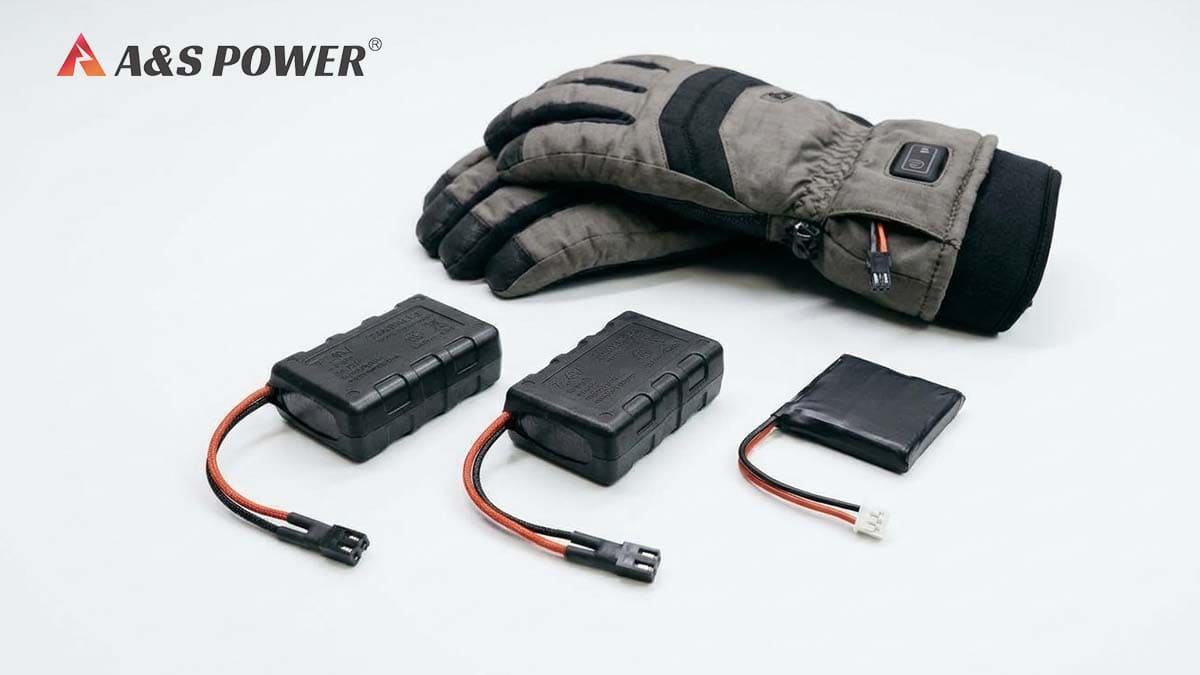
Heated gloves are designed to provide additional warmth in cold environments, but their performance depends on more than the heating elements and glove materials. The battery determines how much electrical energy is available, how consistently power can be delivered, and how comfortably the complete product can be worn.
For brands developing heated gloves, ski gloves, heated glove liners, motorcycle gloves, or work gloves, choosing the right battery is an important part of product engineering. A battery that is too large may affect comfort, while an undersized pack may not provide the required heating duration. Incorrect voltage, unsuitable connectors, or inadequate protection can also cause compatibility and reliability problems.
At A&S Power, we approach battery customization by considering the application, electrical requirements, mechanical space, and protection design together. A custom heated gloves battery should be developed around the complete heating system rather than selected by capacity alone.
This guide explains the main technical considerations for OEM heated glove battery development, including battery chemistry, voltage, capacity, runtime, connectors, safety, and manufacturing requirements.
Quick Answer: What Is a Custom Heated Gloves Battery?
A custom heated gloves battery is a rechargeable battery pack designed to meet the electrical, dimensional, and operating requirements of a heated glove system. It can be customized by voltage, capacity, cell configuration, dimensions, connector, cable length, protection circuit, and enclosure.
Rechargeable lithium-ion and lithium-polymer batteries are commonly used in heated gloves because they can provide useful energy in relatively compact packages. The appropriate design depends on the heater's power consumption, required runtime, available space, operating conditions, and charging system.
For example, commercially available heated glove products use 7.4V battery packs with capacities around 2,000–3,000mAh. These examples demonstrate existing product designs, not a universal specification for every heated glove.
1. Why Battery Customization Matters for Heated Gloves
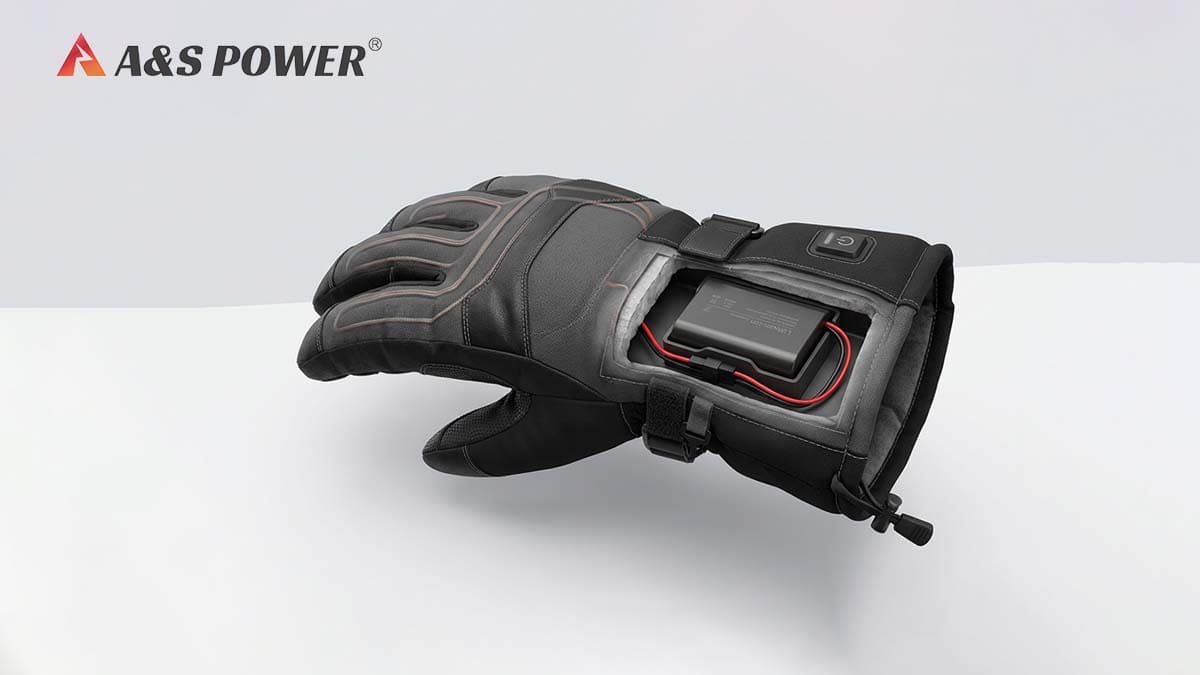
A heated glove is a compact electrical system in which the battery, heating elements, wiring, controller, and protective materials must work together.
Unlike a heated jacket, a glove has limited space around the wrist and cuff. Additional battery weight can affect movement, grip, and wearing comfort. At the same time, the battery must supply enough energy to support the intended heating levels.
A properly specified custom battery pack can help address four important requirements.
Compact Size and Comfortable Weight
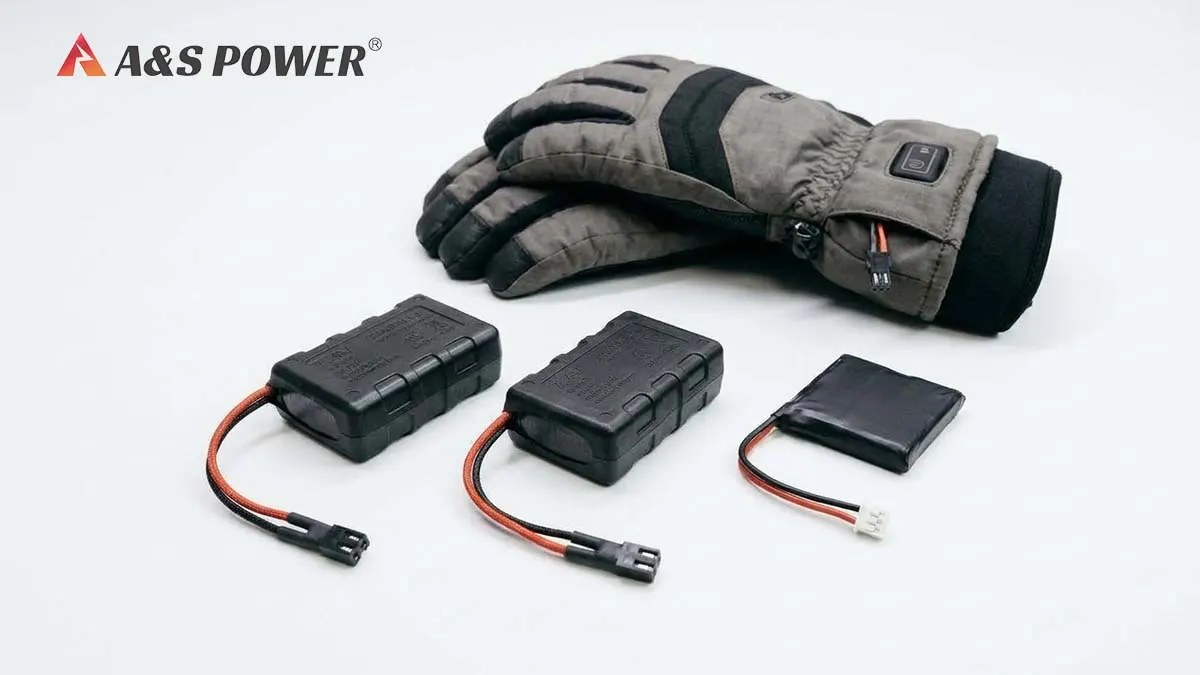
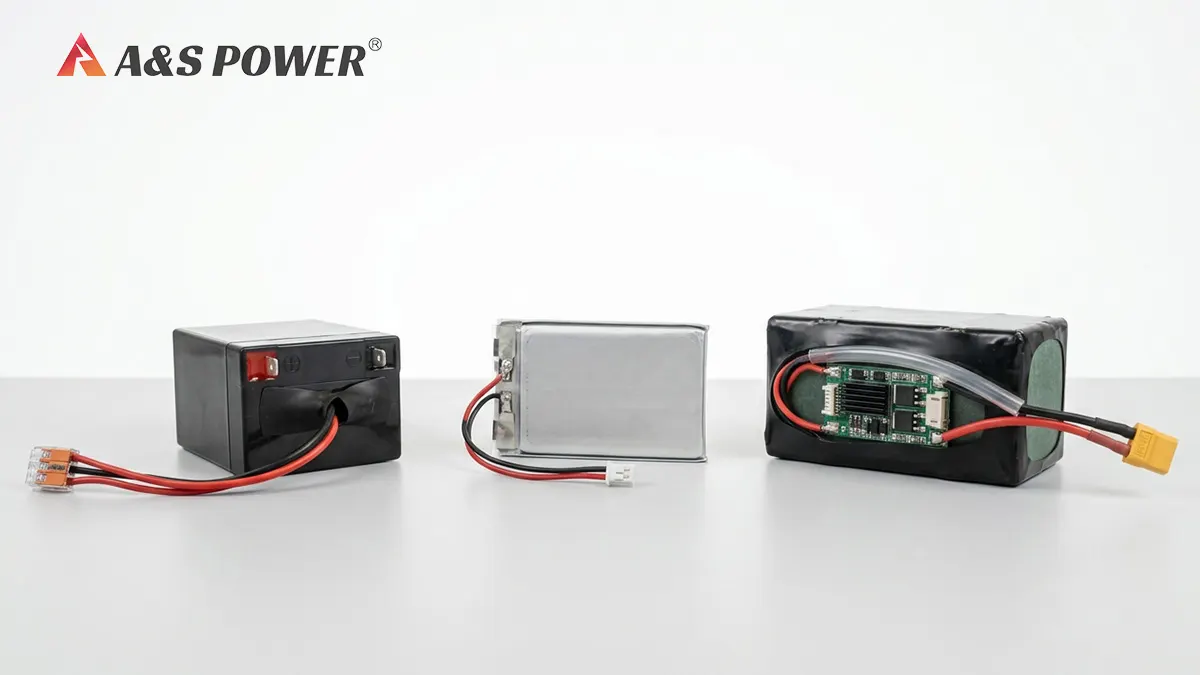
The battery compartment must accommodate the battery without creating excessive pressure or restricting wrist movement. A thin lithium-polymer pouch pack may suit some compact designs, while a protected battery pack using other lithium-ion cell formats may be more appropriate for different mechanical requirements.
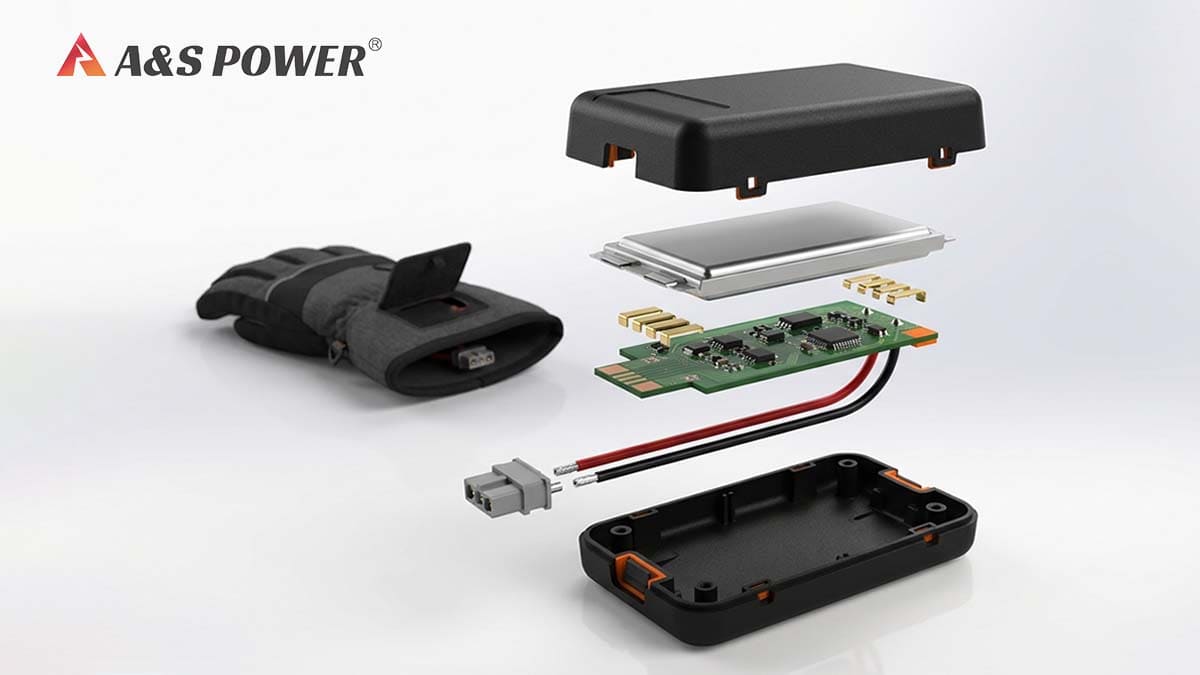
The final dimensions depend on cell selection, protection electronics, insulation, wiring, connectors, and housing. Cell dimensions alone do not represent the finished battery pack size.
Consistent Power Delivery
Heating elements require electrical power to generate warmth. If the battery voltage falls significantly under load, the heating output may change depending on the controller and heater design.
The battery must therefore support the system's continuous current requirements, including any startup or transient loads specified by the design team.
Suitable Operating Performance in Cold Conditions
Heated gloves are often used in environments where ambient temperatures are below freezing. Low temperatures can increase internal resistance and temporarily reduce the energy available from a lithium battery.
The battery, protection circuit, wiring, and enclosure should be evaluated under the actual intended operating conditions. The battery's approved discharge-temperature range must be distinguished from its charging-temperature range.
Product-Specific Compatibility
A replacement battery is not automatically compatible simply because it fits inside the glove. Voltage, polarity, connector pinout, current rating, charging method, and protection behavior must all match the intended system.
For OEM manufacturers, establishing these requirements before mass production helps reduce redesign and compatibility risks.
2. Choosing the Right Battery Chemistry
Two common options for heated glove battery development are lithium-ion and lithium-polymer batteries. The best choice depends on the complete product specification rather than the chemistry name alone.
Lithium-Ion Battery Packs
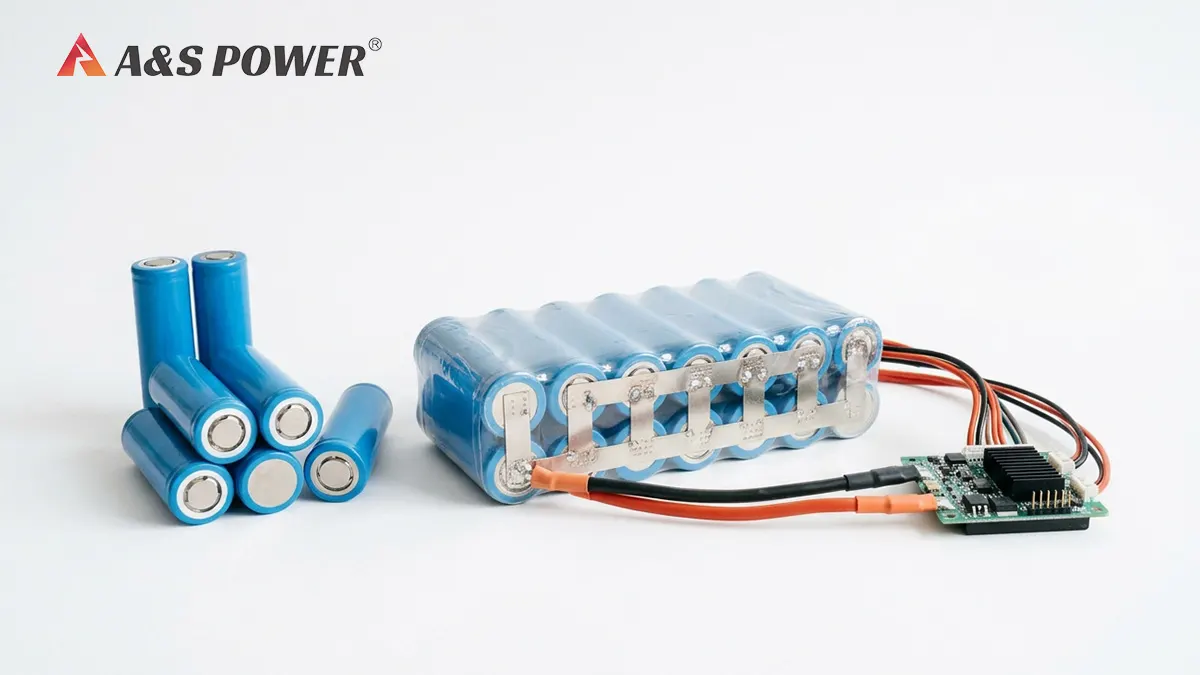
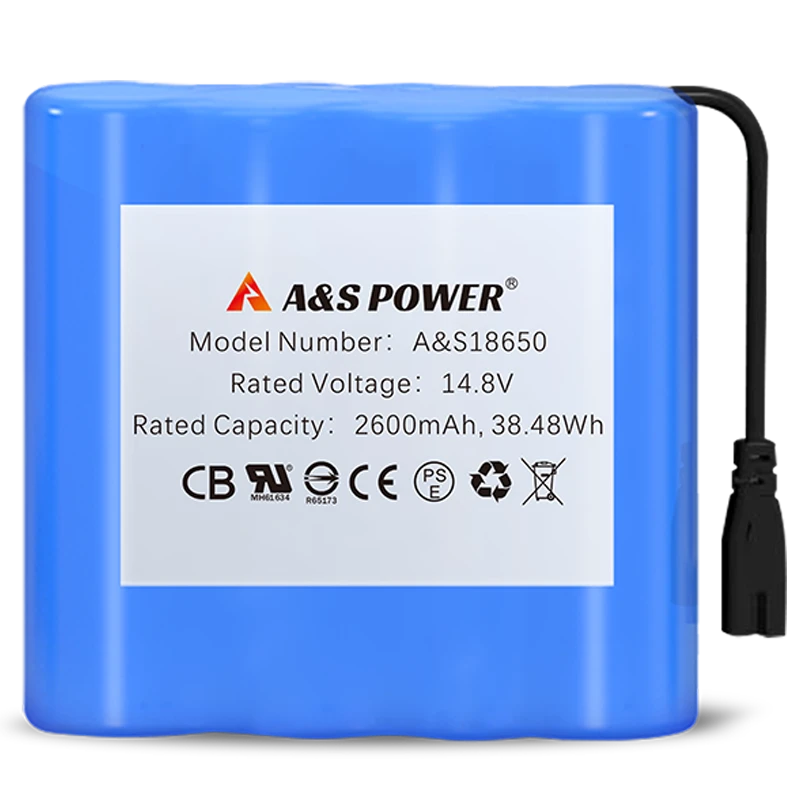
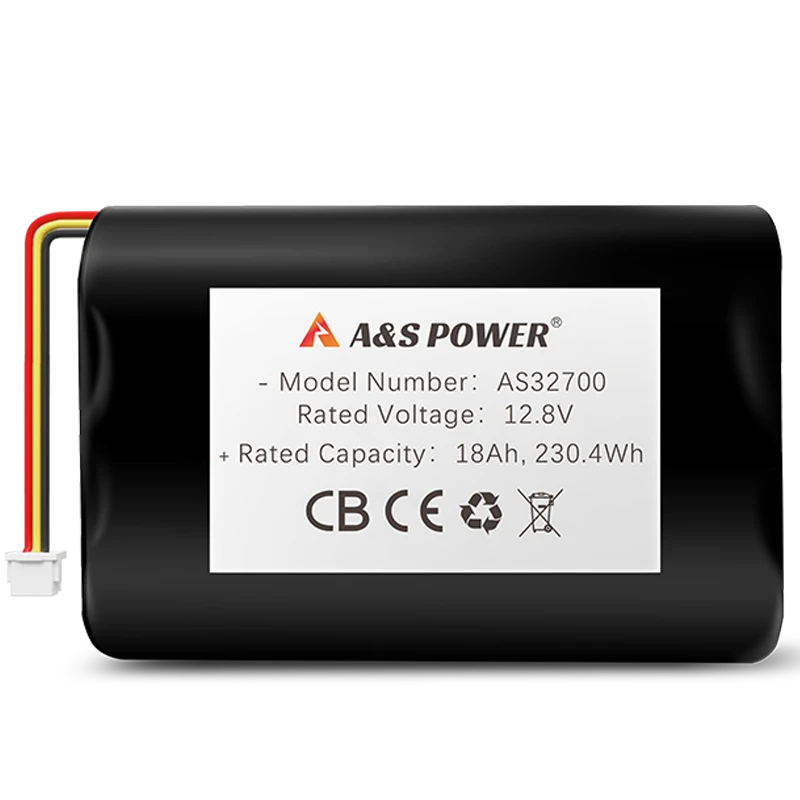
Lithium-ion battery packs are widely used in rechargeable consumer and industrial products. Depending on the cell format and configuration, they can provide a practical balance of energy capacity, power delivery, and pack design flexibility.
For heated gloves, the engineering team should evaluate:
- Required nominal and maximum charging voltage.
- Continuous and peak discharge current.
- Battery dimensions and weight.
- Low-temperature discharge performance.
- Protection circuit requirements.
- Charger compatibility and applicable safety standards.
The term lithium-ion covers different cell chemistries and formats. Their voltage limits, thermal characteristics, and performance are not interchangeable.
Lithium-Polymer Battery Packs
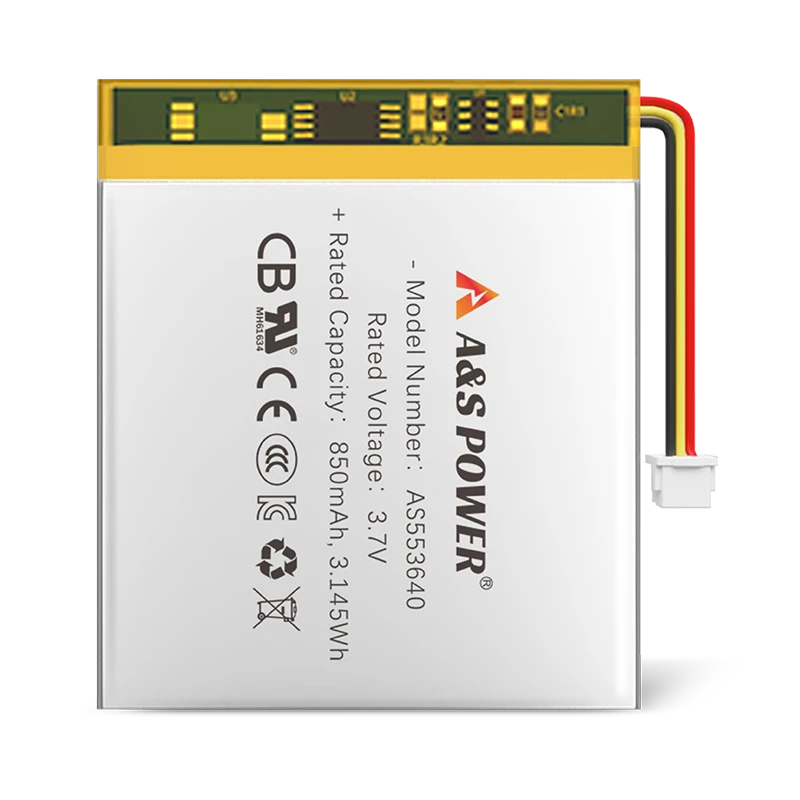
Lithium-polymer pouch cells are often considered when a product requires a thin or unusually shaped battery. Their form factor can be useful for compact glove cuffs and wearable heating products.
However, a pouch cell is not automatically lighter, safer, or more energy-dense than every alternative. Performance depends on the actual cell design, materials, construction, and operating conditions.
The finished pack also needs appropriate mechanical protection against crushing, bending, puncture, and damage from repeated use.
For projects requiring a tailored form factor, explore A&S Power's custom lithium battery pack solutions.
3. How to Select Battery Voltage and Capacity
Voltage and capacity are two of the most important specifications when developing a custom heated gloves battery.
Voltage must match the electrical system, while capacity determines the nominal amount of stored charge. Neither parameter should be selected independently of the heater's power demand.
Common Voltage Options
A 7.4V nominal battery pack is used in a number of commercial heated glove products. It is commonly associated with a two-cell series configuration using cells with a nominal voltage of approximately 3.6–3.7V each.
A 7.4V pack is not suitable for every heated glove. Some systems use different voltage architectures, and the heater controller must be designed for the selected pack's actual voltage range.
Understanding Battery Capacity
Capacity is usually expressed in milliamp-hours (mAh) or amp-hours (Ah). For comparing energy storage across different voltages, watt-hours (Wh) are generally more informative.
For example, a 7.4V, 2,600mAh battery has a nominal energy of:
This is a mathematical calculation based on nominal specifications, not a guarantee of usable energy or operating duration.
Representative Commercial Specifications
The following table summarizes published examples from heated glove and heated glove liner products. These figures are reference points for engineering discussions, not A&S Power product specifications.
| Commercial example | Nominal voltage | Capacity | Nominal energy | Published runtime |
|---|---|---|---|---|
| Milwaukee heated glove battery | 7.4V | 2,000mAh | 14.8Wh, calculated | Up to 8 hours on low; up to 2 hours on high for specified gloves |
| Klein Tools heated glove liner | 7.4V | 3,000mAh | 22.2Wh | Approximately 3 hours on high and 9 hours on low |
| Karbon/Heatfit replacement battery | 7.4V | 2,600mAh | 19.24Wh | Approximately 3 hours on high, 4 hours on medium, and 7 hours on low |
These examples show why capacity alone cannot predict runtime. Different heater power levels, controller designs, insulation, and operating conditions can produce different results even when battery specifications appear similar.
4. How to Estimate Heated Gloves Battery Runtime
Runtime is a frequent concern for both product developers and end users. During OEM development, I recommend starting with the heater's electrical power consumption rather than estimating duration from capacity alone.
Consider an illustrative design using a 7.4V, 2,600mAh battery.
- Nominal energy: 19.24Wh.
- Assumed average heater-system power: 4W.
- Assumed usable fraction of nominal energy: 85%.
Estimated usable energy:
Estimated runtime:
This is an engineering estimate, not a tested performance claim. The 85% usable-energy assumption is illustrative and must be validated for the actual pack and system.
Real runtime may be shorter because of cold temperatures, voltage cutoff, battery aging, wiring losses, control behavior, and changes in heater power. If the gloves use several heating levels, each level should be tested separately.
5. Key Customization Options for OEM Heated Glove Battery Packs
For manufacturers developing their own heated glove products, customization should cover both electrical and mechanical requirements.
Battery Dimensions and Form Factor
The battery must fit within the designated compartment while allowing space for wiring, insulation, protective materials, and assembly tolerances.
Before finalizing the battery design, confirm the available length, width, thickness, and cable-exit position. If the glove cuff has a curved or tapered pocket, the usable internal space may differ from the external dimensions.
Connectors and Cable Length
The connector must match the glove's electrical interface. Pin configuration, polarity, contact rating, wire gauge, and cable length should be specified and verified.
A connector that looks physically similar to the original may still have a different pinout or electrical rating. For this reason, connector drawings or samples are preferable to visual matching alone.
Protection Circuit and Battery Management
A suitable protection circuit can help protect a battery against defined abnormal operating conditions.
Depending on the pack design, protection functions may include:
- Overcharge protection.
- Over-discharge protection.
- Overcurrent protection.
- Short-circuit protection.
- Temperature monitoring or temperature-based cutoff, where specified.
Protection thresholds must be matched to the selected cells, heater load, charger, and operating conditions. A protection circuit does not eliminate the need for appropriate mechanical design, thermal evaluation, and system-level testing.
Branding and Production Requirements
OEM projects may also require custom labels, packaging, cable assemblies, housing, and production documentation.
A&S Power's custom battery solutions cover configurable battery chemistry, electrical specifications, mechanical integration, connectors, and protection design. The final scope should be confirmed against the requirements of each project.
6. Battery Safety, Charging, and Cold-Weather Use
Safety must be considered throughout product development, not added after the battery has been selected.
Match the Charger to the Battery
The charger must be compatible with the battery chemistry, series configuration, charging voltage, and permitted charging current. A charger designed for a different battery pack should not be assumed compatible.
Charging lithium batteries below their permitted temperature range can cause damage, depending on cell chemistry and design. The product should follow the cell manufacturer's specified charging limits and any applicable temperature-monitoring requirements.
For additional guidance, consult the official Health Canada lithium-ion battery safety recommendations, which cover charging, storage, handling, and damaged batteries.
Evaluate Low-Temperature Performance
Cold conditions can temporarily reduce available capacity and increase voltage drop under load. This can affect heating output and cause a protection circuit to disconnect the load earlier than expected.
For products intended for winter sports or outdoor work, battery testing should reproduce realistic temperatures, discharge loads, and operating cycles.
Do not assume that a battery approved for low-temperature discharge can also be charged at the same temperature.
Confirm Applicable Certifications and Transport Requirements
The required compliance pathway depends on the destination market, battery design, product category, and shipping method.
Depending on the project, relevant requirements may include battery safety standards, applicable product-level requirements, and UN 38.3 testing for lithium battery transport. Certification or test documentation for one battery model does not automatically cover every customized design.
The United Nations provides the official Manual of Tests and Criteria, including Revision 8 and Amendment 1, which contains the transport testing framework relevant to lithium batteries. Buyers should confirm the applicable edition, test summary, and documentation for the actual battery configuration.
A&S Power maintains a battery certification resource where buyers can review listed certification information. Specific certificates, test reports, and their applicability should be verified for the proposed battery configuration before purchase or shipment.
7. How to Develop a Custom Heated Gloves Battery with A&S Power
A practical OEM process begins with the heating system's requirements and then moves through battery design, validation, and production planning.
Step 1: Define the Electrical Requirements
Provide the heater's nominal voltage, rated power or current, maximum current, operating modes, and target runtime. If available, share the heater specifications and controller documentation.
Step 2: Confirm Mechanical Constraints
Specify the maximum battery dimensions, weight target, battery pocket design, cable exit, and connector type. A physical sample or dimensioned drawing can help clarify fit.
Step 3: Select the Cell and Pack Configuration
The engineering team can evaluate suitable lithium-ion or lithium-polymer options based on energy requirements, current demand, space limitations, and environmental conditions.
Step 4: Define Protection and Charging
Confirm the required protection functions, charging interface, temperature limits, and any monitoring or control features. These decisions should be coordinated with the glove electronics.
Step 5: Validate the Complete System
Testing should cover electrical performance, charging behavior, runtime at each heating level, temperature response, connector reliability, and mechanical fit. Additional tests should be defined according to the product's intended use and applicable standards.
Step 6: Review Compliance and Mass Production
Before production, confirm the approved battery configuration, quality requirements, labeling, packaging, documentation, and applicable certification or transport requirements.
To discuss a project, visit A&S Power and provide the required voltage, capacity, dimensions, connector, target runtime, and estimated order quantity.
Conclusion
A custom heated gloves battery must balance energy capacity, weight, physical dimensions, electrical output, cold-weather performance, and safety. A larger capacity may extend operating time, but it can also increase the battery's size or weight. Likewise, selecting the correct voltage does not guarantee compatibility unless the connector, charging system, heater load, and protection design are also matched.
For OEM and ODM buyers, the most effective approach is to define the complete application before selecting the battery. By evaluating electrical, mechanical, and operating requirements together, product teams can make better-informed decisions and reduce avoidable design changes.
A&S Power provides customized lithium battery pack solutions for different application requirements. For heated gloves projects, the final design should be based on verified specifications and validated through appropriate testing.
Looking for a Custom Heated Gloves Battery?
Share your voltage, capacity, heater power, battery dimensions, connector requirements, target runtime, and estimated order quantity with A&S Power. Our team can review your project requirements and evaluate suitable battery pack configurations.
Discuss Your Custom Battery ProjectFrequently Asked Questions
1. What battery is best for heated gloves?
The best battery depends on the heater's voltage, power consumption, required runtime, available space, and operating environment. Lithium-ion and lithium-polymer packs are both potential options. The correct choice should be confirmed against the complete system specification.
2. What voltage do heated gloves usually use?
Some commercial heated gloves use 7.4V nominal battery packs, including products with 2,000–3,000mAh capacities. Other designs may use different voltages. Always match the battery to the glove manufacturer's electrical requirements.
3. How long does a heated gloves battery last?
Runtime depends on usable battery energy and average system power. Published examples range from a few hours on high heat to longer periods on low heat. Actual performance varies with temperature, battery condition, controller behavior, and heating settings.
4. Can I customize the battery capacity for heated gloves?
Yes, capacity can potentially be customized, provided the selected cells and pack configuration meet the available space, current, charging, protection, and weight requirements. Increasing capacity may require a larger or heavier battery pack.
5. Are lithium-polymer batteries suitable for heated gloves?
Lithium-polymer pouch cells can be suitable when a thin or compact form factor is important. Their suitability depends on the required energy, current, mechanical protection, operating temperature, and pack design. They still require appropriate charging and protection arrangements.
6. Can I use a different battery with my heated gloves?
Not without verifying compatibility. The replacement must match the required voltage, connector pinout, polarity, charging method, current capability, dimensions, and protection requirements. A similar-looking connector does not prove electrical compatibility.
7. What protection features should a heated glove battery have?
Depending on the design, the battery may require overcharge, over-discharge, overcurrent, and short-circuit protection. Temperature monitoring or cutoff may also be needed. The protection design should be validated against the selected cells, charger, heater, and applicable safety requirements.
8. What information is needed for a custom heated gloves battery quote?
A manufacturer will generally need the target voltage and capacity, heater power or current, battery dimensions, weight target, connector and cable requirements, charging method, operating-temperature range, required certifications, estimated order quantity, and target runtime. Drawings, electrical specifications, and samples can help accelerate technical evaluation.