



Introduction
A battery pack is made by connecting multiple individual cells to achieve the required voltage, capacity, and power output. However, selecting cells with the same model number and rated capacity does not automatically guarantee that they will perform identically.
Even cells produced to the same specifications can have measurable differences in open-circuit voltage (OCV), actual capacity, internal resistance, and other electrical characteristics. When these cells are assembled into a battery pack without appropriate screening, the differences can affect how the pack charges, discharges, and delivers power.
This is why battery cell matching is an important step in battery pack manufacturing. By measuring key electrical parameters and grouping cells with similar characteristics, manufacturers can improve consistency between the cells used in the same pack.
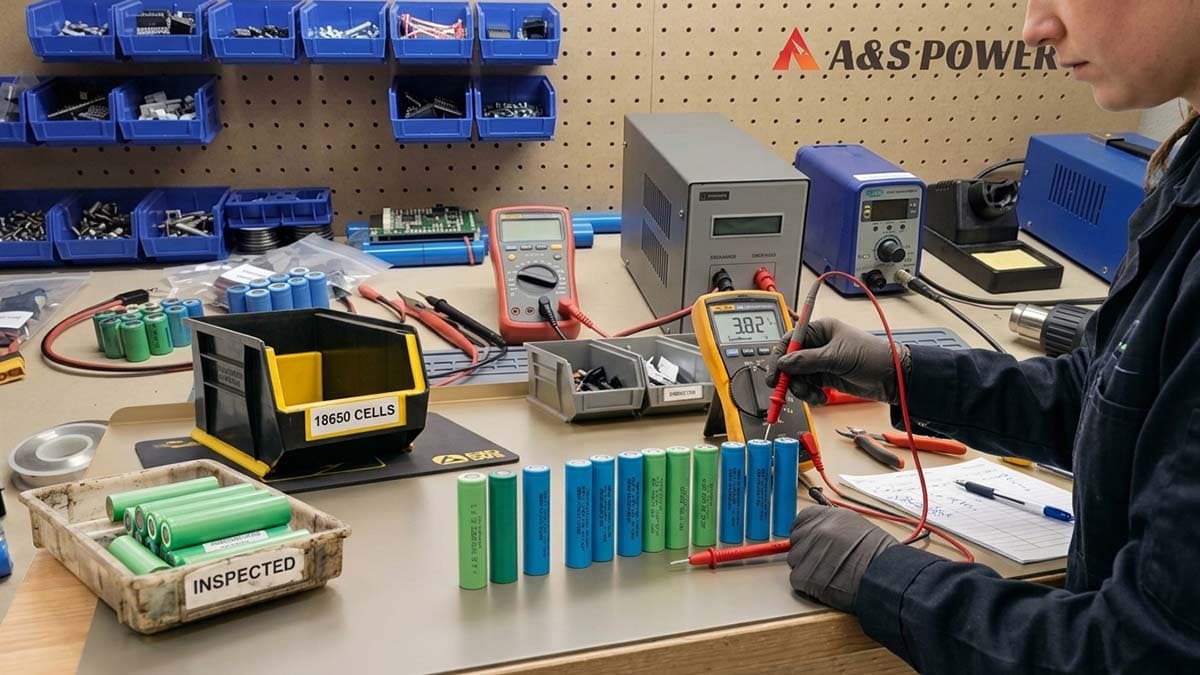
At A&S Power, cell matching is understood as a practical manufacturing requirement: cells should be tested and selected according to their voltage, OCV, capacity, and internal resistance before being assembled into a battery pack.
This article explains why cell matching matters, which parameters manufacturers evaluate, and how proper matching differs from battery management system (BMS) balancing. For a broader overview of battery pack design and manufacturing, see this guide to rechargeable lithium-ion battery pack manufacturing.
Quick Answer: Why Do Battery Packs Need Cell Matching?
Battery packs need cell matching because individual cells can differ in voltage, usable capacity, and internal resistance, even when they share the same nominal specifications.
During manufacturing, cells are tested and screened so that those with sufficiently similar characteristics can be grouped together. This helps reduce initial cell-to-cell variation, improve usable pack capacity and load consistency, and reduce the likelihood that one cell will reach its operating voltage limit significantly earlier than the others.
The main parameters considered during cell matching include:
- Open-circuit voltage (OCV): Helps assess the cell's voltage state and, under appropriate conditions, its state of charge.
- Measured voltage: Helps identify differences in electrical condition and initial charge state.
- Actual capacity: Indicates how much charge a cell can deliver under specified test conditions.
- Internal resistance: Helps assess voltage drop and heat generation under load.
The exact matching criteria depend on the cell chemistry, cell model, pack configuration, operating current, and application requirements. There is no single voltage, capacity, or resistance tolerance that applies to every battery pack.
1. What Is Battery Cell Matching?
Battery cell matching is the process of testing, grading, and grouping individual cells so that the cells assembled into a battery pack have similar electrical characteristics.
During cell production, small variations can arise from manufacturing processes and material differences. Storage conditions and previous usage can also affect cell characteristics. Consequently, two cells with the same nominal voltage and rated capacity may not deliver exactly the same performance.
Cell matching helps identify these differences before pack assembly.
For example, a lithium-ion battery pack designed for a specific voltage and capacity may require several cells connected in series, parallel, or a series-parallel combination. The cells must work together within the electrical and thermal limits of the complete pack.
If one cell has substantially lower actual capacity than the others in a series string, it may reach its lower voltage limit earlier during discharge. If one cell has higher internal resistance, its voltage may drop more under load, and it may generate more heat for a given current through that cell.
Selecting cells with similar measured characteristics helps reduce these differences from the beginning.
However, cell matching does not mean that every cell must have exactly identical measurements. Perfectly identical cells are not a realistic manufacturing assumption. The objective is to meet defined acceptance criteria and keep differences within limits appropriate for the application.
2. Why Is Cell Matching Important for Battery Pack Performance?
2.1 It Helps Improve Usable Battery Capacity
One of the main reasons for matching cells is to make better use of the capacity available in a battery pack.
In a series-connected battery pack, the same current passes through each cell in the series string. If the cells have different capacities, the cell with the lowest usable capacity may reach its discharge limit before the other cells.
For example, imagine a series string containing cells with similar voltage characteristics but noticeably different actual capacities. During discharge, the lower-capacity cell may reach its minimum permitted voltage while the remaining cells still have usable energy.
The BMS may then stop discharging the pack to prevent the weaker cell from being overdischarged. As a result, some of the energy remaining in the other cells cannot be used in that discharge cycle.
Matching cells with similar actual capacities helps reduce this type of mismatch. Renesas explains the relationship between cell balancing and usable capacity in its technical application note on cell balancing in multi-cell lithium-ion battery packs.
It is important to distinguish nominal capacity from measured capacity. A label showing the same rated capacity does not prove that two cells have the same usable capacity under identical test conditions. Learn more about why actual battery capacity differs from rated capacity.
2.2 It Helps Reduce Voltage Imbalance
Voltage consistency is another important consideration in battery pack manufacturing.
Open-circuit voltage is measured when a cell is not supplying or receiving current and has been allowed to rest under specified conditions. For lithium-ion cells, OCV can provide information about the cell's state of charge, although the relationship depends on the chemistry and the voltage curve.
If cells are assembled with substantially different initial charge states, their voltages may differ at the beginning of operation. In a series-connected pack, individual cell voltages must remain within their permitted operating ranges even when the total pack voltage appears acceptable.
During charging, one cell may reach its upper voltage limit before the others. During discharge, another cell may reach its lower voltage limit first. Either condition can cause the BMS to stop charging or discharging before the pack's full potential is used.
Checking voltage and OCV before assembly helps manufacturers identify initial differences and select cells that are more suitable for grouping.
However, similar OCV readings alone do not establish that two cells have equal capacity or health. OCV should be evaluated alongside other relevant measurements.
2.3 It Helps Control Voltage Drop and Heat Under Load
Internal resistance affects how a cell responds when current flows through it.
When a cell delivers current, its terminal voltage generally falls below its open-circuit voltage. A simplified approximation of the resistive voltage drop is:
Voltage drop ≈ Current × Internal resistance
For a given current, a cell with higher internal resistance generally experiences a greater resistive voltage drop. Resistive heating also increases with current and resistance, although actual cell heating depends on additional electrochemical and operating factors.
In a series-connected pack, a higher-resistance cell may experience a larger voltage drop than its neighbors. Under some operating conditions, this can cause that cell to reach a voltage protection threshold earlier.
In parallel-connected groups, differences in cell resistance can also influence how current is shared between cells. Cells with lower resistance may carry a greater share of the current under otherwise comparable conditions.
Matching internal resistance helps reduce these differences and supports more consistent electrical behavior. For a more detailed explanation of resistance, voltage drop, and related measurements, see A&S Power's article on battery performance metrics and basic parameters.
Resistance measurements must be compared carefully. The result depends on the measurement method, test conditions, temperature, state of charge, and contact resistance. Resistance values obtained using different methods are not necessarily directly comparable.
2.4 It Supports More Consistent Charging and Discharging
A battery pack is a system of interacting cells rather than a collection of completely independent energy sources.
When cells have significantly different capacities or electrical characteristics, their voltage responses during charging and discharging can diverge. This can lead to earlier protection events and reduce the amount of energy the pack can deliver within its specified operating limits.
Cell matching reduces initial differences and gives the BMS a more consistent set of cells to monitor and manage.
It does not eliminate every possible imbalance. Cells can still age at different rates because of temperature differences, loading conditions, self-discharge, and other factors. Nevertheless, appropriate matching provides a better starting point for the pack's operating life.
2.5 It Helps Support Long-Term Pack Consistency
Battery cells change as they age. Capacity can decline, and internal resistance can increase over repeated use. These changes do not necessarily occur at the same rate in every cell.
When cells already have substantial differences at the beginning of service, those differences may contribute to uneven pack behavior as the battery ages.
Selecting cells with similar initial characteristics helps reduce one source of variation. It cannot guarantee a specific cycle life or prevent all future imbalance, because long-term performance also depends on cell quality, pack design, operating temperature, charge and discharge rates, depth of discharge, and BMS settings.
For OEM battery projects, cell matching should therefore be considered part of a broader quality-control process rather than a substitute for proper pack design and validation.
3. Which Parameters Are Tested During Battery Cell Matching?
Cell matching relies on measurable electrical characteristics. The appropriate test procedure and acceptance limits depend on the cell type and the requirements of the finished battery pack.
3.1 Open-Circuit Voltage (OCV)
OCV is the voltage measured across a cell when no external charging or discharging current is flowing, after an appropriate rest period.
It helps assess the cell's electrical state and can provide an indication of state of charge when interpreted in the context of the cell chemistry and its OCV-versus-SOC relationship.
For meaningful comparison, cells should be measured under consistent conditions. A voltage reading taken immediately after charging may differ from a reading taken after the cell has rested.
OCV is useful for identifying initial voltage differences, but it should not be treated as a direct measurement of capacity. Cells with similar OCV values can still have different capacities or internal resistance.
3.2 Cell Voltage
Cell voltage is a fundamental measurement used to check the electrical condition of each cell.
Before assembly, voltage measurements can help identify cells that do not meet the required acceptance criteria or that differ from other candidate cells.
Voltage and OCV are related concepts, but they are not interchangeable in every measurement situation. A voltage reading taken under load or during charging is influenced by current and the cell's internal behavior, while OCV is measured under no-load conditions after a suitable rest period.
Using a consistent procedure helps manufacturers make more meaningful comparisons between cells.
3.3 Actual Capacity
Capacity is typically expressed in ampere-hours (Ah) or milliampere-hours (mAh). It describes the amount of charge a cell delivers under specified test conditions.
Actual capacity is commonly evaluated through a controlled charge-discharge test. The measured result depends on factors such as discharge current, temperature, charge procedure, and cutoff voltage.
Cells with the same rated capacity may produce different measured results. Comparing cells under consistent test conditions helps identify those with similar usable capacity.
This is particularly important for packs containing cells in series, because the usable capacity of a series string can be limited by the cell that reaches its operating limit first.
3.4 Internal Resistance
Internal resistance indicates how strongly a cell opposes current flow, although the measured value depends on the test method and timescale.
A resistance test can help distinguish cells that may respond differently under load. When the measurement method is consistent, comparing resistance values helps manufacturers group cells with similar electrical characteristics.
For example, a cell with noticeably higher resistance than the other cells in a candidate group may experience greater voltage drop under the same current.
However, there is no universal internal-resistance threshold that is suitable for every cell. Acceptance criteria should be based on the cell manufacturer's specifications, the measurement method, and the battery pack's operating requirements.
4. How Does the Battery Cell Matching Process Work?
A typical cell matching workflow includes several related manufacturing steps. The precise sequence and test requirements vary by battery design.
Step 1: Confirm Cell Specifications
Before matching begins, the manufacturer confirms the required cell model, chemistry, nominal voltage, rated capacity, and other applicable specifications.
Cells should be suitable for the intended battery configuration and operating conditions. Matching cells that are fundamentally unsuitable for the application does not make them suitable.
Step 2: Measure Key Electrical Parameters
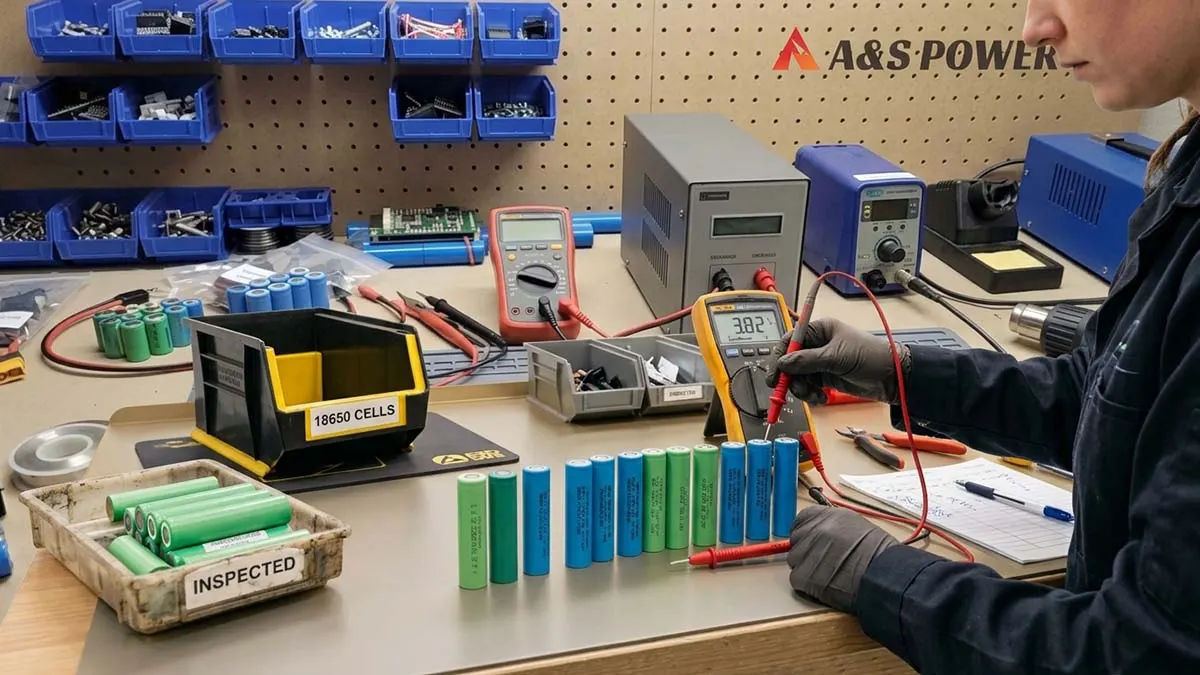
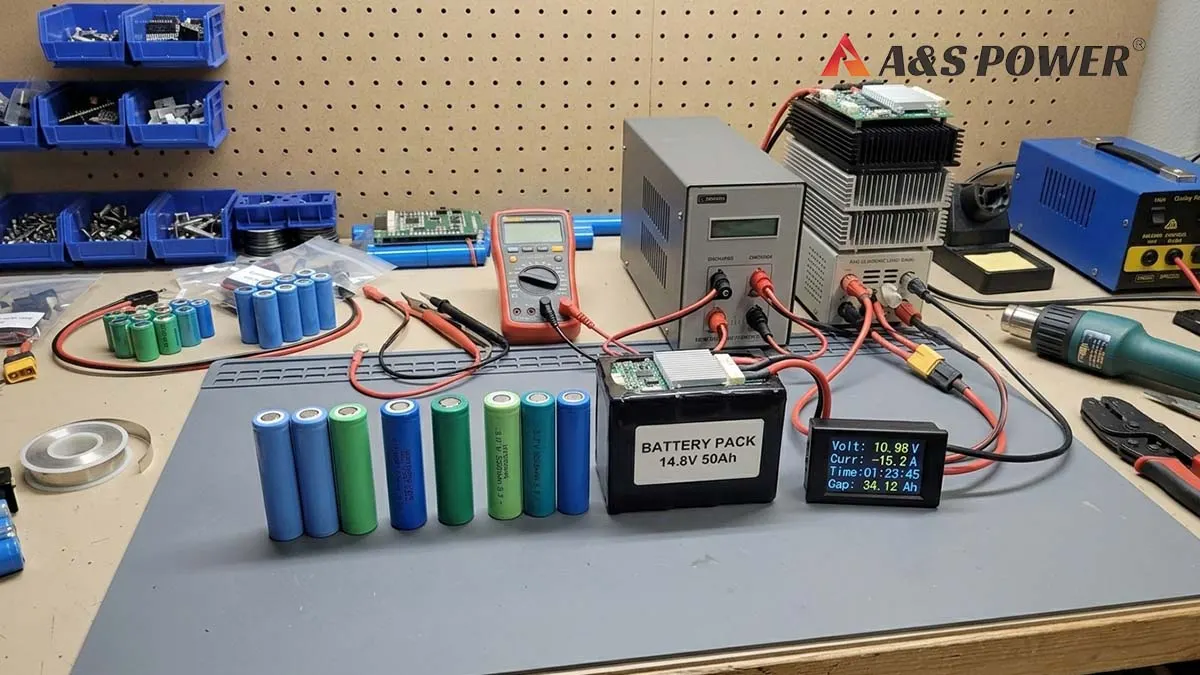
Candidate cells are tested for relevant characteristics, including OCV, voltage, capacity, and internal resistance.
Measurements should be performed using appropriate procedures and consistent conditions so that differences between cells can be evaluated reliably.
Not every parameter is measured using the same test method. Capacity testing, for example, normally requires a controlled charge-discharge process, whereas voltage measurement can be performed much more quickly.
Step 3: Screen and Grade the Cells
The test results are compared with the defined acceptance criteria.
Cells that fail the applicable requirements should not be grouped into a battery pack simply because their measurements are similar to those of other cells. Matching involves both checking that cells are acceptable individually and determining whether their characteristics are sufficiently consistent as a group.
Step 4: Group Cells With Similar Characteristics
Suitable cells are sorted into groups according to their measured characteristics.
The aim is to select cells whose voltage state, actual capacity, and internal resistance are sufficiently close for the intended pack design.
The matching criteria may differ for high-current applications, energy-storage systems, portable electronics, and other battery-powered equipment. The required limits should be established through engineering evaluation rather than assumed to be universal.
Step 5: Assemble and Test the Battery Pack
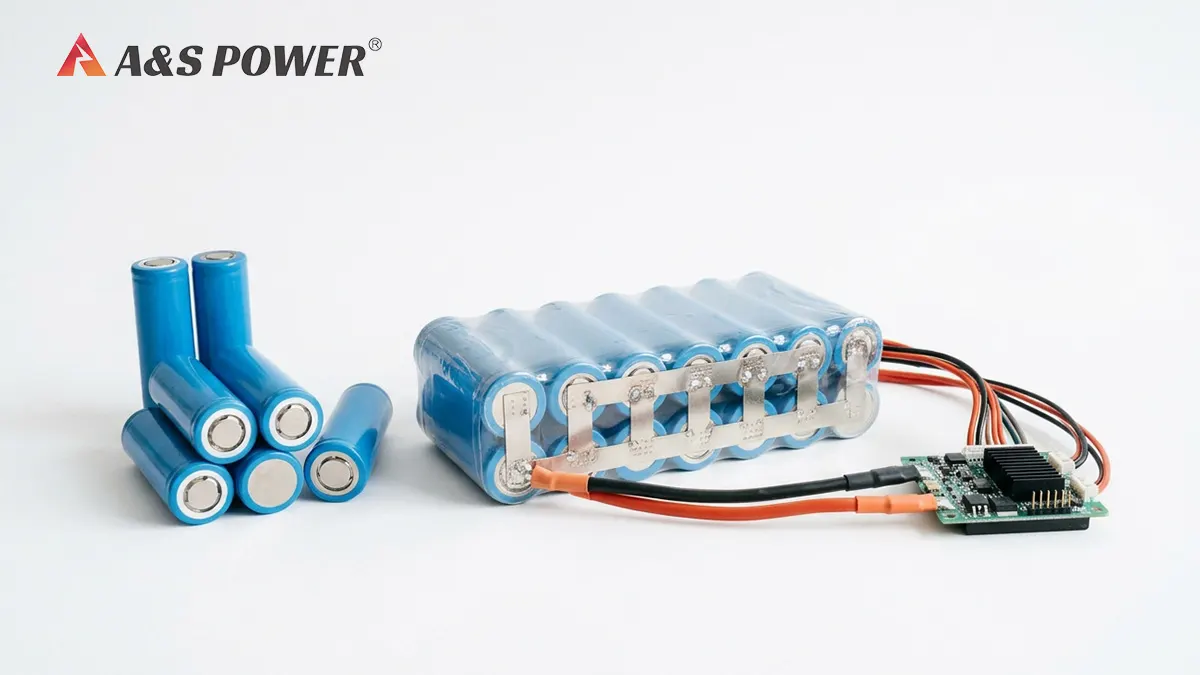
After matching, the selected cells are assembled according to the pack design, including the required series and parallel configuration.
The finished pack should undergo the applicable inspections and electrical tests. Depending on the design, these may include checks of pack voltage, protection functions, capacity, and behavior under the specified load.
Cell matching is an important upstream quality-control step, but it does not replace finished-pack testing.
5. What Happens If Battery Cells Are Not Properly Matched?
The effects depend on the degree of mismatch, the cell chemistry, the pack configuration, and how the battery is used.
Potential consequences include:
- Reduced usable capacity: In a series string, a lower-capacity cell may reach its discharge limit before the others.
- Earlier charging or discharging cutoff: A cell may reach an upper or lower voltage threshold before the rest of the string.
- Uneven current sharing: In parallel groups, resistance differences can affect how current is distributed between cells.
- Inconsistent voltage response: Cells may show different voltage drops under the same operating conditions.
- Uneven aging: Cells operating under different electrical or thermal stresses may deteriorate at different rates.
These are possible outcomes, not inevitable results of every small difference between cells. The significance of a mismatch must be assessed against the cell specifications, pack architecture, BMS design, and application requirements.
For battery manufacturers and OEM customers, screening cells before assembly is a practical way to reduce avoidable variation and improve the consistency of the finished product.
6. Battery Cell Matching vs. Cell Balancing: What Is the Difference?
Cell matching and cell balancing are related, but they address different stages and problems.
Cell matching takes place during manufacturing. It involves measuring and selecting cells with sufficiently similar characteristics before they are assembled into a pack.
Cell balancing is a function used in certain multi-cell battery systems to manage differences in cell state of charge, commonly by controlling individual cell voltages during charging or other operating conditions. Balancing is typically managed by the BMS or associated battery-monitoring circuitry.
For example, a BMS with a balancing function may reduce a state-of-charge difference between series-connected cells. However, balancing does not restore lost capacity to a degraded cell or eliminate its excessive internal resistance.
If one cell has substantially less capacity than the others, equalizing the cells' state of charge does not make their actual capacities identical.
For this reason, cell balancing should not be regarded as a replacement for cell matching. Matching helps establish consistency before assembly, while balancing can help manage certain differences that develop or remain during operation.
Not all battery packs use the same balancing strategy. Whether balancing is included, and how it operates, depends on the battery chemistry, series count, BMS design, and application requirements. Renesas provides further background in its technical resource on cell balancing in lithium-ion battery systems.
7. Why Cell Matching Matters for Custom OEM Battery Packs
For a custom battery pack, cell matching should be considered alongside voltage, capacity, discharge current, dimensions, thermal requirements, and protection design.
A pack designed for a compact electronic device may have different priorities from a high-current industrial battery or a larger energy-storage system. Consequently, the matching criteria should reflect the actual operating requirements instead of relying on a single standard for every project.
For OEM and ODM customers, useful questions to discuss with a battery manufacturer include:
- Which cell model and chemistry will be used?
- Which electrical parameters are measured before assembly?
- How are cell acceptance and matching criteria established?
- Are voltage, capacity, and internal-resistance measurements performed under consistent conditions?
- What finished-pack tests are required for the intended application?
- How are cell selection, pack configuration, and protection requirements coordinated during design?
At A&S Power, custom battery development involves selecting an appropriate battery configuration for the customer's product requirements. Cell matching is one of the manufacturing considerations that supports consistent battery pack performance.
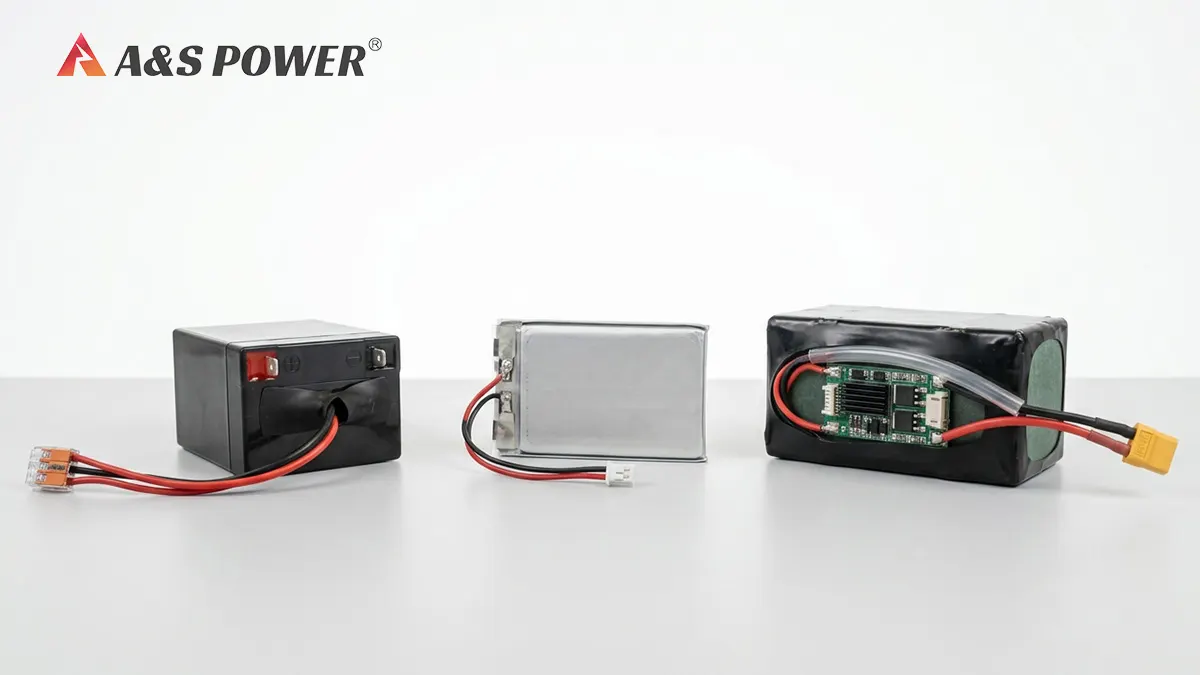
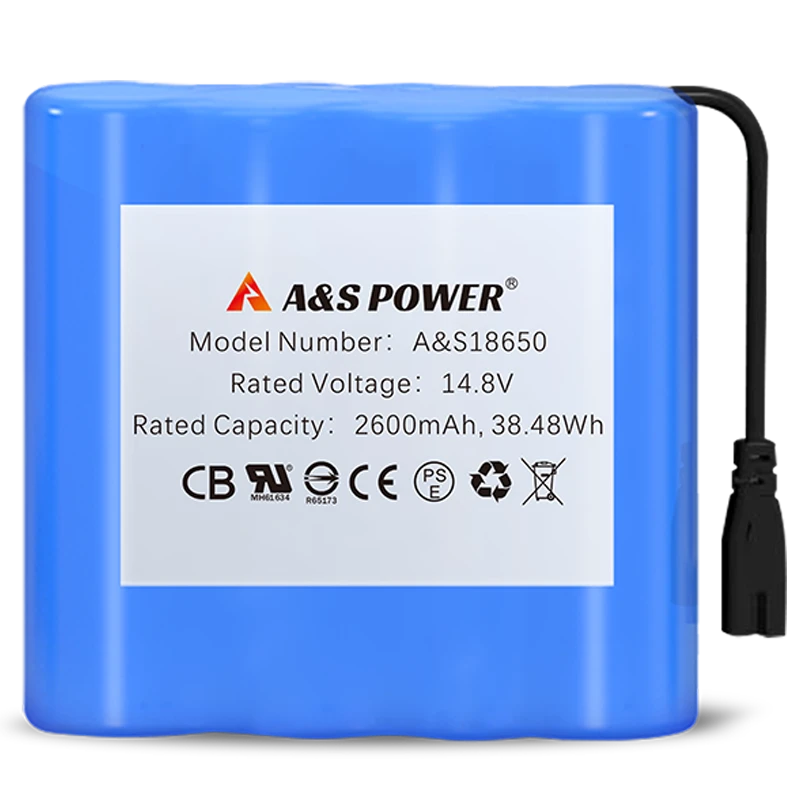
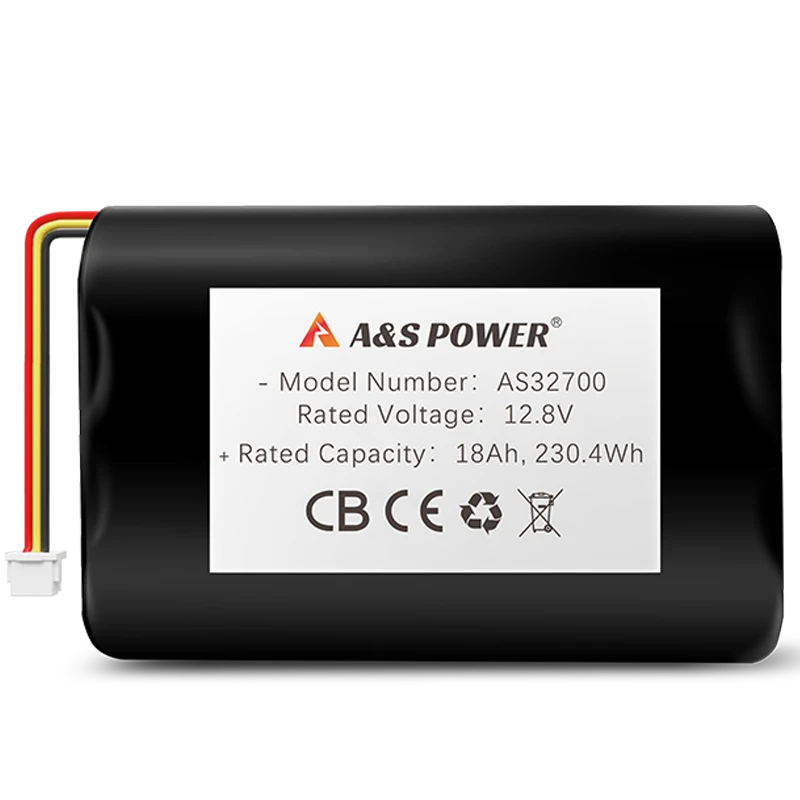
For projects involving custom lithium-ion, lithium-polymer, or LiFePO4 battery packs, customers can discuss the required voltage, capacity, operating current, dimensions, and application conditions with the engineering team before finalizing the design. Explore A&S Power's custom lithium battery pack solutions to learn more about OEM and ODM design options.
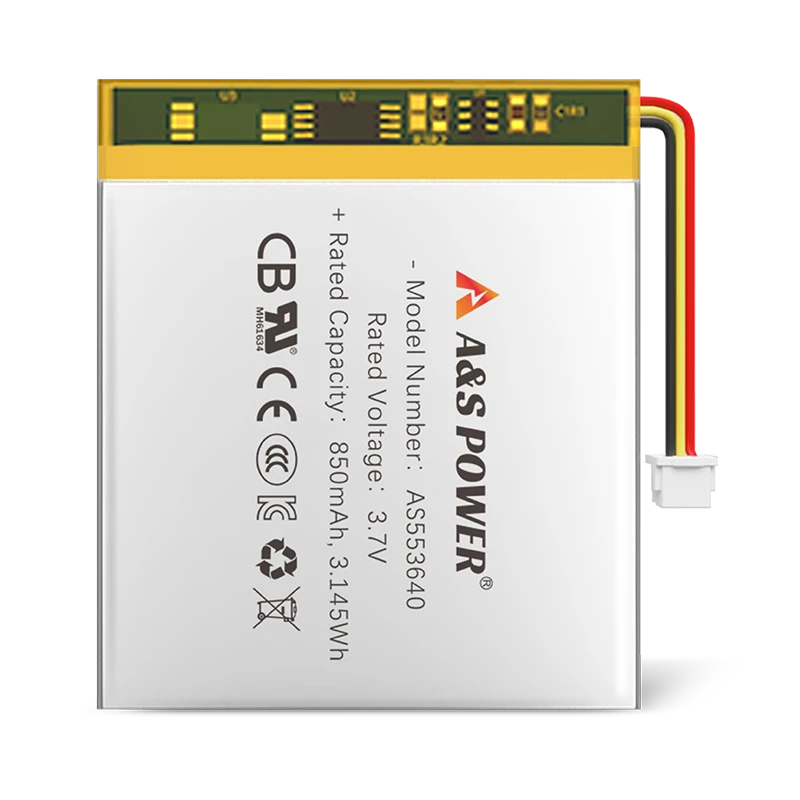
For pouch-cell applications that require specific shapes, dimensions, voltage, capacity, and connectors, you can also review A&S Power's custom lithium-polymer battery solutions.
Planning a custom battery pack?
Share your voltage, capacity, operating current, dimensions, and application requirements with A&S Power to discuss a suitable battery solution.
Explore custom battery solutions or contact the team through the company's official website.
Conclusion
Battery cell matching is necessary because individual cells with the same nominal specifications can still differ in voltage, actual capacity, and internal resistance.
By measuring OCV, voltage, capacity, and internal resistance before assembly, manufacturers can identify unsuitable cells and group compatible cells together. This helps reduce initial variation, improve usable capacity and load consistency, and support more predictable battery pack behavior.
However, matching is not a guarantee that every cell will age identically, nor does it replace BMS protection, cell balancing where applicable, or finished-pack testing. Reliable battery pack manufacturing depends on combining appropriate cell selection with sound electrical design, protection measures, and application-specific validation.
For OEM battery projects, asking how cells are tested and matched is an important step toward understanding the quality-control process behind the finished battery pack.
Frequently Asked Questions (FAQ)
1. Why do battery packs need cell matching?
Battery packs need cell matching because individual cells can have different actual capacities, voltage states, and internal resistance. Selecting cells with similar characteristics helps reduce initial variation and supports more consistent pack performance.
2. Which parameters are used for battery cell matching?
Common parameters include open-circuit voltage (OCV), cell voltage, measured capacity, and internal resistance. The exact parameters and acceptance criteria depend on the cell model, battery configuration, and application.
3. Does the same rated capacity mean that two cells are identical?
No. Rated capacity is a specified value, while actual measured capacity depends on the individual cell and the test conditions. Two cells with the same rated capacity may deliver different measured capacities and may respond differently under load.
4. Can cells with the same voltage be connected directly into a battery pack?
Matching voltage alone is not sufficient to establish that cells are suitable for the same pack. Capacity, internal resistance, cell model, chemistry, condition, and pack requirements must also be considered. Cell selection and assembly should follow an appropriate engineering procedure.
5. What is the difference between cell matching and cell balancing?
Cell matching is the process of testing and selecting cells with similar characteristics before assembly. Cell balancing manages certain differences in the state of charge or voltage of cells within a battery system. Balancing cannot restore lost capacity or correct every underlying cell mismatch.
6. Does cell matching improve battery pack life?
Appropriate cell matching can reduce initial differences that contribute to uneven operating conditions. However, it cannot guarantee a particular cycle life. Cell quality, temperature, charging and discharging conditions, BMS design, and other factors also affect battery life.
7. Is cell matching necessary for both series and parallel battery packs?
Matching is relevant to both configurations, although the effects of mismatch differ. In series strings, capacity and voltage differences can cause one cell to reach its operating limits earlier. In parallel groups, differences in internal resistance and voltage can affect current sharing. The matching criteria should reflect the actual pack design.
8. Can a BMS replace cell matching?
No. A BMS provides monitoring and protection functions and may include cell balancing. These functions do not eliminate the need to select suitable cells before assembly. A BMS cannot restore a cell's lost capacity or make a high-resistance cell electrically identical to the others.