


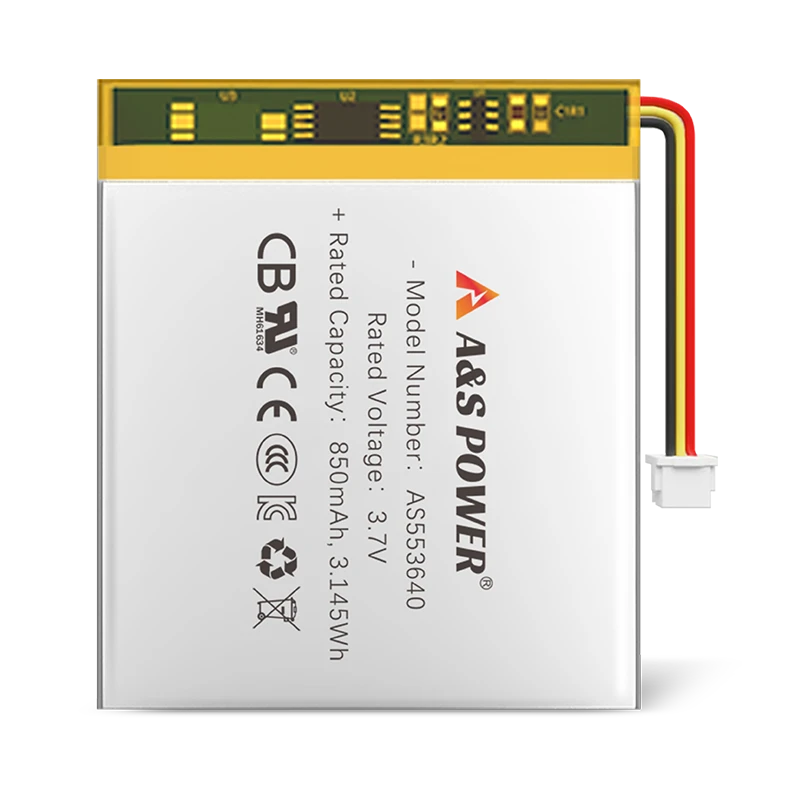
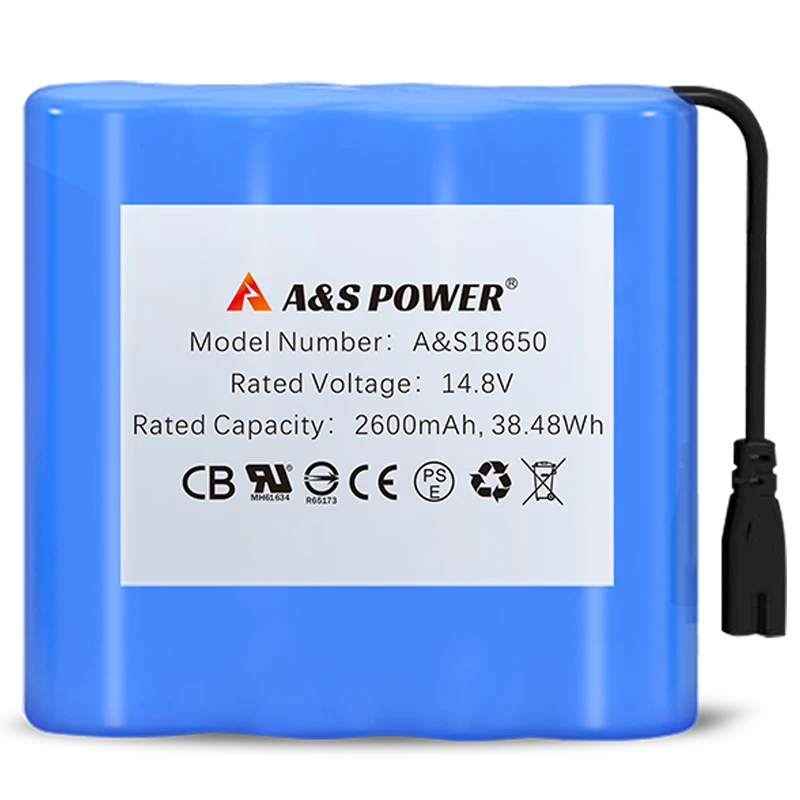
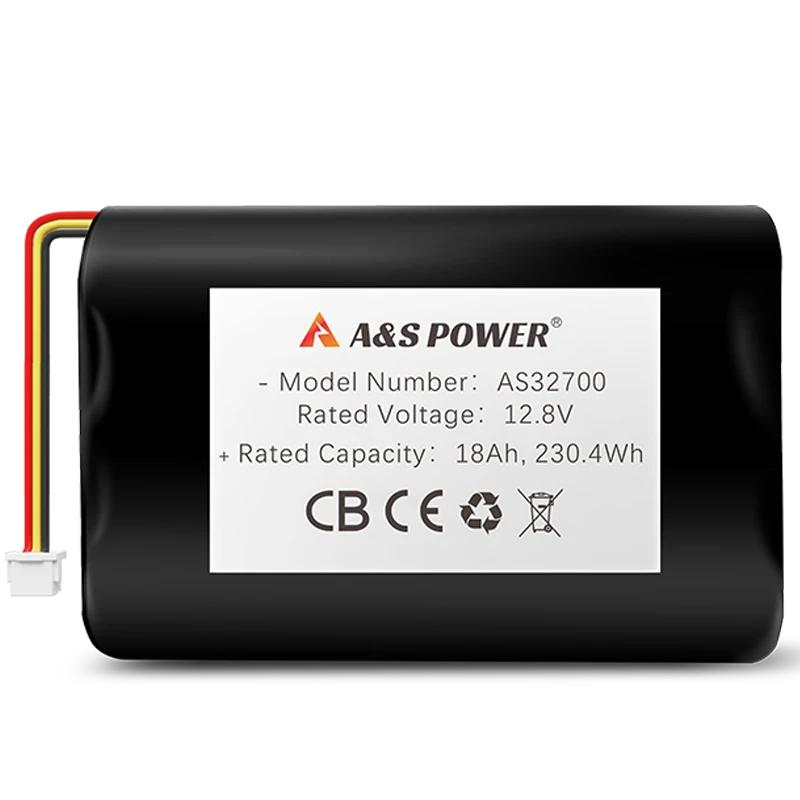


Custom GPS Devices LiPo Battery: Compact 502030 3.7V 240mAh Power Solution
Quick Answer:
Custom GPS devices LiPo battery solutions provide compact size, stable 3.7V output, lightweight construction, and flexible customization for GPS trackers and IoT devices.
What battery is best for GPS devices?
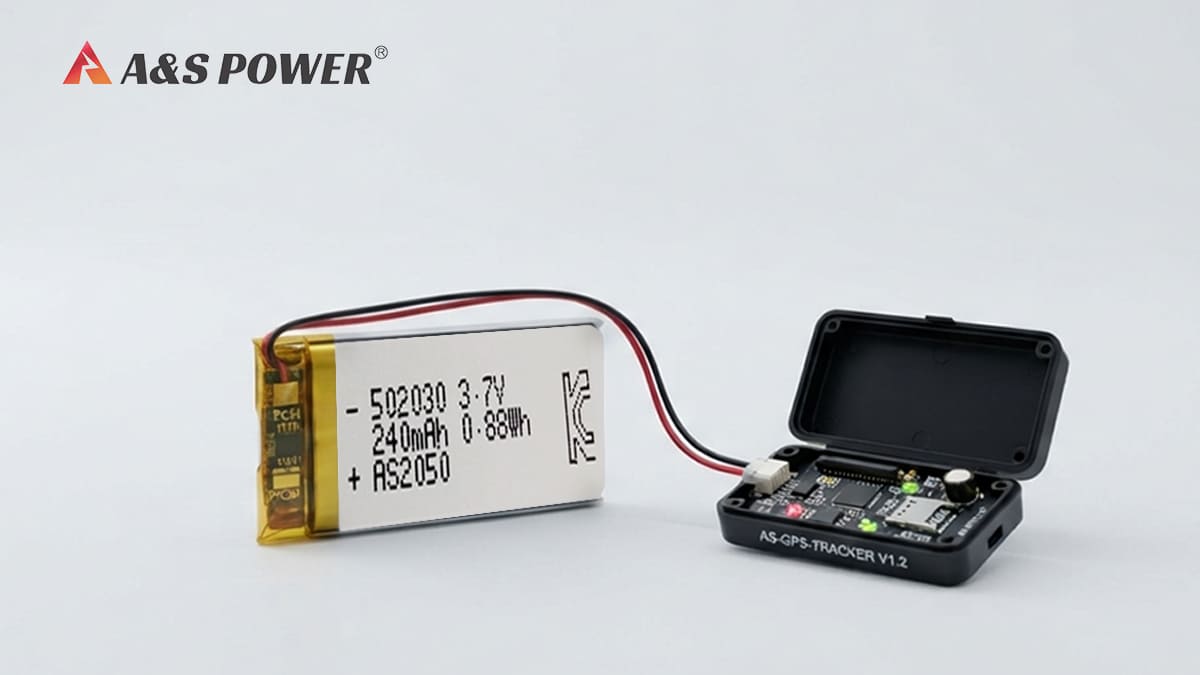
A customized lithium polymer (LiPo) battery is one of the best battery solutions for compact GPS devices because it provides a lightweight design, compact size, stable 3.7V output, high energy efficiency, and flexible customization options. The AS502030 3.7V 240mAh LiPo battery is a compact rechargeable battery solution suitable for GPS trackers, wearable devices, and IoT applications where space efficiency and reliability are important.
Introduction
Why Custom LiPo Batteries Matter for Modern GPS Devices
As GPS tracking technology continues to expand into logistics, personal tracking, smart wearables, asset monitoring, and industrial IoT applications, battery performance has become one of the most important factors affecting device reliability.
From my experience working with OEM customers developing compact electronic products, the battery is not simply a power source — it is an essential component that directly influences product size, operating time, safety, and user experience.
For small GPS devices, manufacturers often face strict space limitations while requiring stable voltage output, lightweight construction, and long standby performance. Traditional cylindrical batteries may not always fit these compact designs, which is why lithium polymer (LiPo) batteries have become a preferred solution for many GPS tracking applications.
A customized GPS devices LiPo battery allows engineers to optimize battery dimensions, capacity, connector design, protection circuits, and electrical performance according to the actual device requirements.
One example is the AS502030 3.7V 240mAh LiPo battery, a compact lithium polymer cell designed for applications requiring small size and reliable energy output. This battery provides a practical solution for mini GPS trackers, wearable tracking devices, wireless monitoring equipment, and other portable electronics.
What Is a Custom GPS Devices LiPo Battery?
A custom GPS devices LiPo battery is a rechargeable lithium polymer battery specifically designed for GPS-based electronic products.
Unlike standard batteries with fixed dimensions, custom LiPo batteries can be developed according to the customer's product structure, including:
- Customized battery dimensions
- Different capacity requirements
- Special connector options
- Customized PCM/BMS protection
- Flexible wiring solutions
- Customized voltage configurations
GPS devices usually integrate multiple power-consuming components, including:
- GPS/GNSS positioning modules
- Cellular communication modules (4G/LTE/NB-IoT)
- Bluetooth or Wi-Fi modules
- Microcontrollers
- Sensors
- Data storage systems
Because these components require stable power management, selecting the correct battery design is critical.
A properly engineered LiPo battery helps GPS devices achieve:
| Requirement | Battery Solution |
|---|---|
| Limited internal space | Thin and flexible LiPo structure |
| Long standby time | Optimized capacity design |
| Stable voltage output | High-quality lithium polymer chemistry |
| Portable design | Lightweight battery construction |
| Product integration | Custom connector and PCM options |
Why Choose LiPo Battery Technology for GPS Tracking Devices?
1. Compact Size for Mini GPS Device Designs
One of the biggest advantages of lithium polymer batteries is their flexible packaging structure.
GPS trackers are becoming increasingly smaller. Products such as:
- Personal location trackers
- Pet GPS collars
- Smart luggage trackers
- Vehicle monitoring devices
- Wearable safety devices
require batteries that occupy minimal internal space.
The AS502030 LiPo battery adopts a compact form factor suitable for space-limited applications.
According to the product specification, the battery provides:
| Parameter | AS502030 Specification |
|---|---|
| Battery Type | Lithium Polymer Battery |
| Nominal Voltage | 3.7V |
| Capacity | 240mAh |
| Energy | Approximately 0.88Wh |
| Weight | About 6g |
| Size | Around 5 × 20 × 23mm |
| Impedance | ≤30mΩ |
| Charging Voltage | 4.2V |
For GPS product designers, this compact size provides more flexibility when designing smaller enclosures without sacrificing rechargeable performance.
2. Stable 3.7V Output for GPS Electronics
Most compact GPS tracking devices operate using a single-cell lithium battery architecture.
A 3.7V LiPo battery provides:
- Stable nominal voltage
- High energy efficiency
- Rechargeable capability
- Compatibility with common power management ICs
During GPS operation, the device frequently switches between different power states:
- Searching satellite signals
- Data transmission
- Standby mode
- Sleep mode
A stable battery voltage helps prevent unexpected shutdowns and improves overall device reliability.
GPS receiver power consumption can vary significantly depending on positioning frequency, communication activity, and operating conditions. Therefore, battery selection needs to consider both peak current demand and standby requirements.
AS502030 3.7V 240mAh LiPo Battery for GPS Applications
The AS502030 3.7V 240mAh LiPo battery is a representative compact battery solution for small electronic devices requiring reliable rechargeable power.
Although originally used across various compact consumer electronics, its characteristics also make it suitable for GPS-related applications where space efficiency and stable power output are important.
Product details:
| Feature | Description | AS502030 3.7V 240mAh Lithium Polymer Batteries (0.88Wh) |
|---|---|---|
| Model | AS502030 | 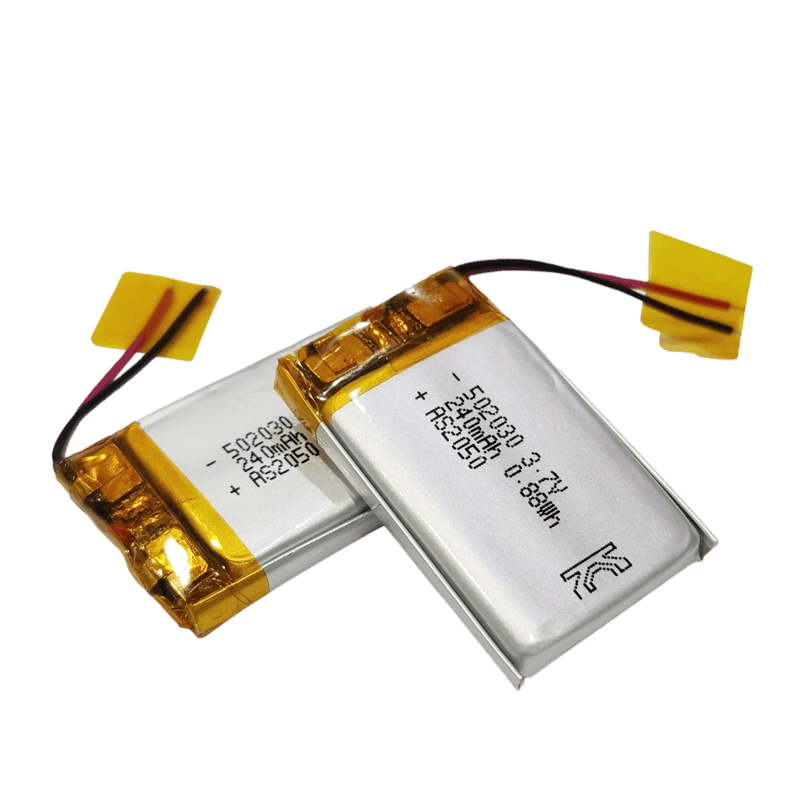 |
| Chemistry | Lithium Polymer | |
| Voltage | 3.7V | |
| Capacity | 240mAh | |
| Energy | 0.88Wh | |
| Weight | Approx. 6g | |
| Protection | Optional PCM protection | |
| Certification | UL / CE / WERCS related certifications | |
| Customization | Wire, connector, PCM available |
Specification of 502030 3.7V 240mah lipo battery:
| Item | Rating | Note | |
| Nominal Capacity | 240mAh | Discharge:0.2CmA cut off Voltage:3V for cell |
|
| Nominal Voltage | 3.7V | Discharge:0.2CmA cut off Voltage:3V for cell |
|
| Discharge Cut-off Voltage | 3.00V | ||
| Charge Current | 48mA | Standard Charge | |
| Charge Voltage | 4.2V | ||
| Max. Charge Voltage | 4.23V | ||
| Storage humidity | < 75%RH | Hyometer | |
| Fast Charge current | 240mA | 1.0CmA | |
| Fast Discharge Current | 240mA | 1.0CmA | |
| Operating Temperature |
Charge | 0~+45ºC | Can be operated at max Altitude 3000m and 8%~90% humidity. |
| Discharge | -10~+50ºC | Get more than 50% discharge capacity (typical) in -15°C or +55°C. | |
| Storage Temperature |
less than 1 month | -10~+45ºC | Recommended storage temp: 20ºC,at the shipment state. |
| less than 3 months | -10~+35ºC | ||
For OEM GPS manufacturers, the battery can be customized according to:
- Device housing limitations
- Required operating hours
- Charging system design
- Connector position
- Safety requirements
This customization capability is especially important for GPS products because different industries have completely different battery requirements.
For example:
- A pet tracker may prioritize lightweight design.
- A vehicle tracker may require longer standby time.
- An industrial monitoring device may require stronger environmental reliability.
Key Battery Design Considerations for Custom GPS Devices
When developing a GPS tracking product, battery selection requires more than simply choosing a battery with a suitable capacity. Engineers need to evaluate the complete power system, including GPS module consumption, communication frequency, standby requirements, operating environment, and product dimensions.
In my experience supporting OEM battery projects, many GPS device manufacturers initially focus on increasing capacity. However, a larger battery does not always create a better product. The correct approach is to balance energy capacity, battery size, weight, safety, and device usage scenarios.
Modern GPS trackers typically operate in multiple power modes:
- Sleep Mode – The device consumes very low current while waiting for scheduled activities.
- GPS Positioning Mode – The GNSS module activates and requires higher current.
- Communication Mode – Cellular, Bluetooth, or LoRa communication increases power demand.
- Charging Mode – The battery management system controls safe charging.
The battery must support these changing conditions without excessive voltage drop.
Research on low-power GPS tracking systems shows that optimizing hardware and software power management is essential for extending operating time, especially in battery-powered tracking applications.
How to Select the Right LiPo Battery Capacity for GPS Trackers?
Battery capacity directly affects GPS device operating time. However, the required capacity depends on how frequently the tracker communicates.
For example:
- A personal safety tracker sending location data every few minutes requires more energy.
- An asset tracker reporting several times per day can operate much longer with the same battery capacity.
- A wearable GPS device requires a balance between lightweight design and runtime.
A simple battery life estimation formula is:
Operating Time (hours) ≈ Battery Capacity (mAh) × Battery Voltage × Efficiency ÷ Average Power Consumption
For a 3.7V 240mAh LiPo battery:
| Parameter | Value |
|---|---|
| Nominal Voltage | 3.7V |
| Capacity | 240mAh |
| Energy | Approximately 0.88Wh |
| Suitable Device Type | Mini GPS trackers, wearable devices, IoT sensors |
| Design Priority | Compact size and lightweight integration |
The actual runtime depends on:
- GPS activation frequency
- Cellular transmission interval
- Firmware optimization
- Temperature conditions
- Charging efficiency
GPS tracker battery life is highly influenced by reporting frequency and communication settings rather than battery capacity alone.
Battery Capacity Comparison for Different GPS Applications
| GPS Application | Typical Battery Requirement | Recommended Battery Approach |
|---|---|---|
| Personal GPS Tracker | Small size, lightweight | 100-500mAh LiPo |
| Pet GPS Collar | Lightweight + waterproof design | 300-1000mAh custom LiPo |
| Smart Wearable Tracker | Ultra-thin structure | Customized thin LiPo |
| Asset Tracking Device | Long standby time | Higher capacity LiPo pack |
| Industrial GPS Monitor | Reliability and durability | Custom LiPo with protection circuit |
Advantages of Using Custom LiPo Battery Packs for GPS Devices
Flexible Battery Dimensions for Product Integration
One major advantage of lithium polymer technology is its design flexibility.
Unlike standard cylindrical lithium-ion cells, LiPo batteries use pouch packaging, allowing manufacturers to customize:
- Length
- Width
- Thickness
- Shape
- Wire position
- Connector location
This flexibility is especially valuable for GPS products where internal space is limited.
For example, a wearable GPS tracker may require a battery only a few millimeters thick, while an industrial tracking device may need a larger capacity battery with additional protection features.
The flexible structure of LiPo batteries makes them widely used in compact tracking and IoT products where space optimization is important.
Integrated Protection Circuit for Improved Safety
A professional GPS battery solution should include appropriate protection design.
A customized LiPo battery pack can integrate a PCM (Protection Circuit Module) or BMS according to application requirements.
Protection functions may include:
| Protection Function | Purpose |
|---|---|
| Overcharge Protection | Prevents charging beyond safe voltage |
| Over-discharge Protection | Prevents excessive battery depletion |
| Over-current Protection | Protects against abnormal current conditions |
| Short Circuit Protection | Improves user safety |
| Temperature Monitoring | Supports safer operation |
For commercial GPS devices, especially products deployed outdoors or used continuously, battery safety is a critical design consideration.
Why AS502030 3.7V 240mAh LiPo Battery Is Suitable for Compact GPS Devices
The AS502030 3.7V 240mAh LiPo battery represents a compact rechargeable power option for small electronic applications.
Its compact structure makes it suitable for GPS-related products where designers need:
- Small footprint
- Low weight
- Stable voltage output
- Rechargeable operation
- OEM customization capability
Product specifications:
| Specification | AS502030 3.7V 240mAh LiPo Battery |
|---|---|
| Battery Chemistry | Lithium Polymer |
| Nominal Voltage | 3.7V |
| Capacity | 240mAh |
| Energy | 0.88Wh |
| Dimensions | 5 × 20 × 30mm class |
| Battery Weight | Approx. lightweight pouch design |
| Charging Voltage | 4.2V |
| Application | GPS tracker, wearable, IoT device |
| Custom Options | Connector, wire length, PCM, label |
Product page:
https://www.szaspower.com/products/li-polymer-battery/as502030-3-7v-240mah-li-po-battery-ul-ce-wercs-certified.html
Custom GPS Battery Manufacturing Process
At A&S Power, I approach GPS battery projects from an OEM engineering perspective rather than simply supplying standard cells.
A typical customization process includes:
1. Application Requirement Analysis
Before battery development, we evaluate:
- Device dimensions
- Required runtime
- Charging method
- Operating environment
- Peak current demand
- Communication frequency
This helps determine the most suitable battery configuration.
2. Battery Structure Design
Based on customer requirements, we customize:
- Cell size
- Capacity
- Voltage
- Connector type
- Protection circuit
- Cable specification
For example, a GPS wearable may require an ultra-small battery, while an industrial tracker may need a larger capacity pack.
3. Testing and Quality Control
Reliable GPS battery solutions require strict testing procedures, including:
| Test Item | Purpose |
|---|---|
| Capacity Testing | Verify actual battery performance |
| Cycle Testing | Evaluate charging durability |
| Safety Testing | Confirm protection performance |
| Voltage Testing | Ensure stable output |
| Aging Testing | Analyze long-term reliability |
A professional battery manufacturer should provide documentation and compliance support according to customer market requirements.
Why Choose A&S Power as Your Custom GPS Devices LiPo Battery Partner?
When selecting a battery supplier for GPS tracking products, manufacturers need more than a battery cell supplier. They need an engineering partner who understands product integration, safety requirements, and mass production reliability.
At A&S Power, we focus on providing OEM and ODM lithium battery solutions for GPS devices, wearable electronics, medical equipment, IoT products, and portable electronic systems. Our experience covers customized lithium polymer batteries, Li-ion battery packs, and LiFePO4 solutions for different industries.
From the initial battery concept to prototype development and final production, our engineering team helps customers optimize:
- Battery dimensions
- Voltage configuration
- Capacity selection
- Protection circuit design
- Connector and cable customization
- Production consistency
A&S Power has more than 15 years of lithium battery manufacturing experience, with products supporting applications including GPS devices, smart wearable products, medical devices, and industrial electronics.
For OEM GPS manufacturers, this means a smoother development process and a battery solution designed around the actual product requirements.
Future Trends of LiPo Batteries in GPS and IoT Tracking Devices
The GPS tracking industry is moving toward smaller, smarter, and more connected devices.
Several trends are influencing battery design:
1. Smaller GPS Devices Require Higher Energy Density
Future GPS products will continue becoming smaller.
Examples include:
- Smart pet tracking devices
- Children's safety trackers
- Wearable location devices
- Smart luggage trackers
- Healthcare monitoring devices
- Industrial asset tracking systems
These products require batteries that provide sufficient energy without increasing product size.
Lithium polymer batteries are expected to remain an important solution because they allow manufacturers to customize battery shapes and sizes according to product requirements.
2. Longer Standby Time Through Intelligent Power Management
Modern GPS devices increasingly combine:
- GNSS positioning
- LTE-M / NB-IoT communication
- Bluetooth Low Energy
- Sensor monitoring
- Cloud connectivity
Because communication modules consume significant energy, battery efficiency has become a key design factor.
Future GPS battery systems will rely on:
- Low-power chips
- Optimized firmware
- Smart charging management
- Higher efficiency battery cells
The battery and electronic design must work together to achieve longer operating time.
Conclusion
Choosing the Right Custom GPS Devices LiPo Battery Solution
Choosing the right battery is essential for improving the reliability, operating time, and overall performance of modern GPS tracking devices. A custom GPS devices LiPo battery provides manufacturers with the advantages of compact size, lightweight design, stable voltage output, and flexible integration options that standard battery solutions cannot always achieve.
The AS502030 3.7V 240mAh LiPo battery demonstrates how a compact lithium polymer battery can support space-limited applications such as GPS trackers, wearable devices, and IoT monitoring equipment. With customized options including connectors, protection circuits, and battery configurations, OEM manufacturers can develop battery solutions that match their specific product requirements.
As an experienced lithium battery manufacturer, A&S Power helps customers design and produce customized LiPo battery solutions for various electronic applications. By combining battery engineering expertise, quality control, and OEM manufacturing capabilities, we support businesses in creating safer, more reliable, and more efficient GPS-powered products.
FAQ
Q1: What type of battery is best for GPS tracking devices?
A lithium polymer (LiPo) battery is one of the most suitable choices for compact GPS tracking devices because it provides lightweight construction, flexible size customization, stable voltage output, and rechargeable capability.
For small GPS trackers, batteries such as the AS502030 3.7V 240mAh LiPo battery can provide a compact power solution.
Q2: Why choose a custom LiPo battery instead of a standard battery?
A custom LiPo battery allows manufacturers to optimize:
- Battery size
- Capacity
- Connector design
- Wire length
- Protection circuit
- Voltage configuration
This is especially important for GPS devices because product designs often have strict internal space limitations.
Q3: How long can a 3.7V 240mAh LiPo battery power a GPS device?
The operating time depends on:
- GPS activation frequency
- Communication method
- Device firmware
- Average current consumption
A low-power GPS tracker operating mainly in standby mode can achieve significantly longer runtime than a device continuously transmitting location data.
Battery life should always be calculated based on actual device power consumption.
Q4: Can the AS502030 LiPo battery be customized?
Yes. For OEM applications, customization options may include:
- Wire length
- Connector type
- PCM protection board
- Battery label
- Packaging requirements
Customized solutions help manufacturers integrate the battery into different GPS device structures.
Q5: What certifications are important for GPS device batteries?
Depending on the target market, GPS battery products may require certifications and compliance documentation such as:
- UN38.3 transportation testing
- IEC 62133 safety requirements
- UL certification
- CE compliance
- RoHS requirements
Certification requirements depend on the final application and sales region.
-

 May.2026.09.24Optimal Li-Polymer Battery Charge Voltage ExplainedLearn More
 -
 May.2026.09.24Optimal LiFePO4 Charge Voltage Explained: 12V, 24V and 48VLearn More
 -
 May.2026.09.22Can All Lithium Batteries Be Recharged?Learn More
 -
 May.2026.09.21UN3480 vs UN3481: Lithium-Ion Battery Shipping GuideLearn More
 -
 May.2026.09.2121700 Battery Specifications: Capacity, Size, Voltage, and UsesLearn More