



Quick Answer
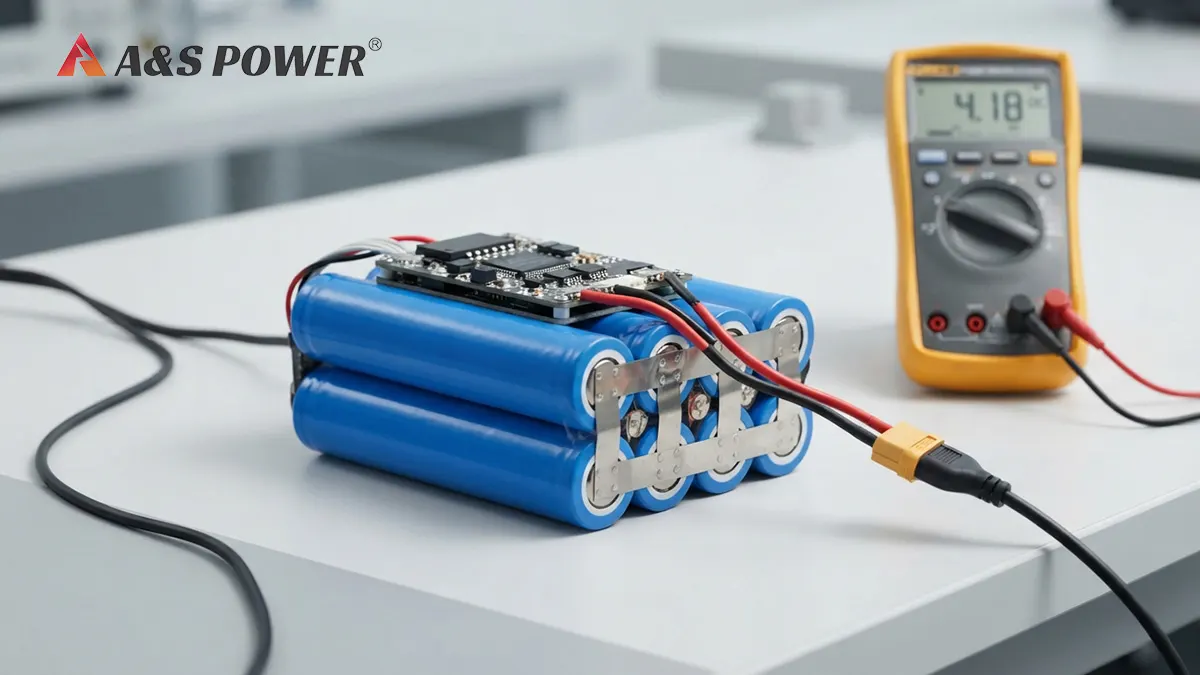
For a conventional lithium-ion cell with a nominal voltage around 3.6–3.7V, the most common full-charge voltage is 4.20V per cell. However, 4.20V should not be treated as a universal charging voltage for every lithium-ion battery.
The correct charge voltage depends on the cell chemistry, electrode materials, manufacturer specification, battery construction, and protection system. Some lithium-ion cells are designed for approximately 4.10V, 4.20V, 4.25V, or 4.35V per cell. A higher voltage can increase usable capacity, but exceeding the cell manufacturer's specified limit can accelerate degradation and create serious safety risks.
In practical battery engineering, I recommend starting with the cell manufacturer's maximum charge voltage, then designing the charger, BMS, protection circuit, and series configuration around that specification.
What Is the Optimal Lithium-Ion Battery Charge Voltage?
The optimal lithium-ion battery charge voltage is the specified maximum charging voltage of the particular cell chemistry and model, not simply the nominal voltage printed on the battery.
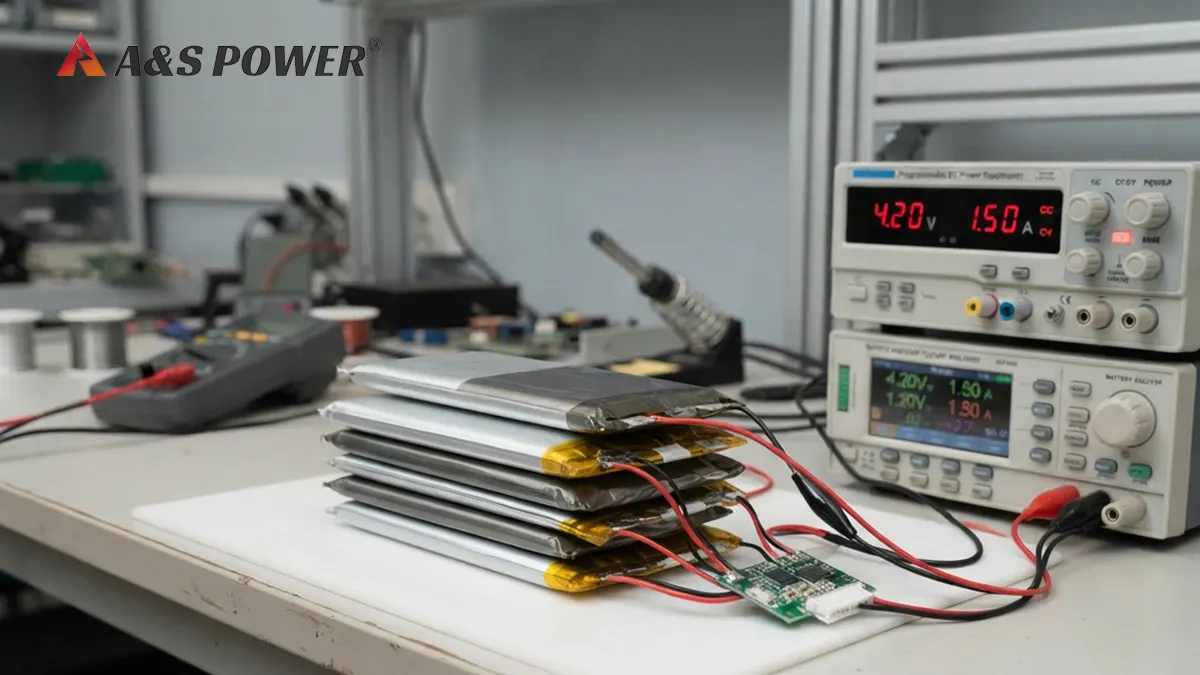
For many conventional 3.6V or 3.7V nominal lithium-ion cells, this value is 4.20V per cell. The charging process normally uses a constant-current/constant-voltage (CC/CV) profile: the charger initially supplies controlled current, then holds the cell at its specified voltage while the charging current gradually decreases.
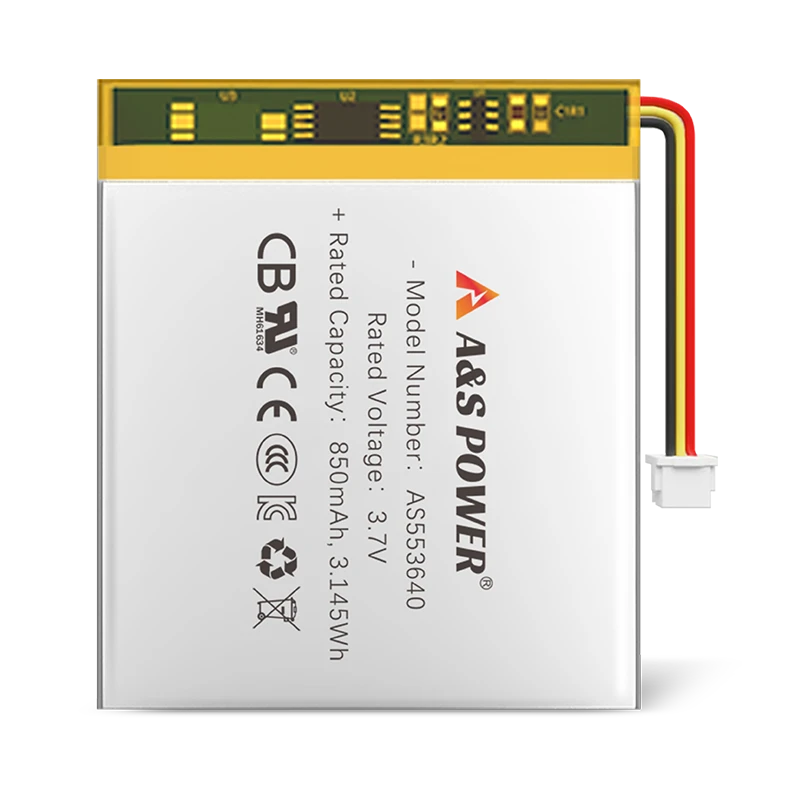
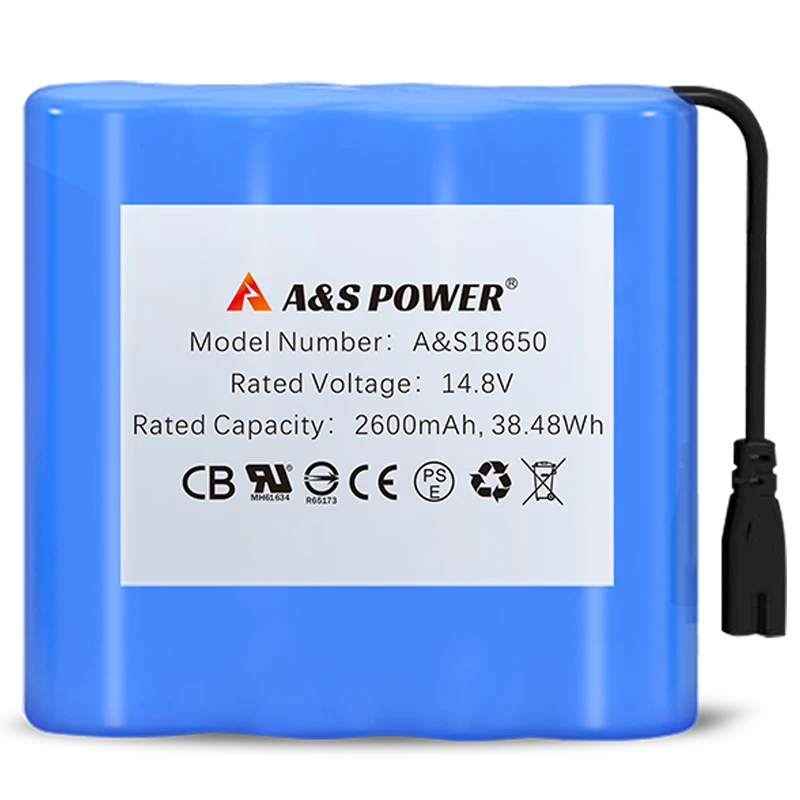
For example, an A&S Power 18650 battery specification lists a 3.7V nominal voltage and 4.20V charge voltage, with a standard charge current of 520mA for the referenced 2600mAh pack.
But other A&S Power 18650 and 21700 cell specifications use a 4.25V maximum charge voltage, demonstrating why engineers should never select a charger only from the nominal 3.6V or 3.7V rating.
This distinction becomes especially important when designing an OEM battery pack .
Nominal Voltage vs. Maximum Charge Voltage
One of the most common mistakes I see in battery discussions is treating nominal voltage and charge voltage as the same specification.
They are not.
| Specification | Typical Li-ion Example | Meaning |
|---|---|---|
| Nominal voltage | 3.6–3.7V | Approximate operating voltage used to describe the cell |
| Full-charge voltage | 4.20V | Common maximum charging voltage |
| Higher-voltage Li-ion | Up to about 4.35V or other specified values | Requires a compatible cell and charging system |
| Discharge cutoff | Often around 2.5–3.0V | Depends on cell specification |
| Pack voltage | Cell voltage × cells in series | Depends on series configuration |
The nominal voltage represents the approximate voltage used to classify the cell. The charge voltage is the upper voltage limit that the charging system must control.
This is why a 3.7V lithium-ion battery is not charged with a 3.7V charger. A conventional 3.7V nominal Li-ion cell typically requires a charger capable of reaching its specified full-charge voltage, commonly 4.20V.
Why 4.20V Is So Common for Lithium-Ion Batteries
Most conventional lithium-ion batteries used in portable electronics and many industrial applications are designed around a 4.20V maximum charge voltage.
Battery University reports that most conventional Li-ion cells charge to 4.20V/cell, although some chemistries use different voltage thresholds.
The 4.20V value is therefore a useful reference point, but it should be understood as a common engineering standard rather than a universal rule.
At A&S Power, for example, our published battery specifications include 4.20V charging for several conventional 18650 configurations, while other cell models specify 4.25V.
For an OEM project, I would therefore use this design sequence:
That sequence is much more reliable than starting with a generic “3.7V battery = 4.2V charger” assumption.
4.20V vs. 4.35V Lithium-Ion Battery Charging
Some lithium-ion cells are specifically engineered for higher charging voltages.
A 4.35V cell is not simply a standard 4.20V cell that should be charged to a higher voltage. The cell itself must be designed and qualified for that operating window.
Richtek's lithium-ion battery documentation identifies 4.20V and 4.35V as common charging-voltage options and notes that the maximum charging voltage depends on the battery's electrochemical materials.
| Charging Voltage | Typical Application | Main Consideration |
|---|---|---|
| 4.10V/cell | Life-oriented charging strategies | Lower energy storage but potentially reduced voltage stress |
| 4.20V/cell | Conventional Li-ion | Common balance between capacity and service life |
| 4.25V/cell | Certain high-voltage cell designs | Must follow cell specification |
| 4.35V/cell | High-voltage Li-ion cells | Requires compatible cell, charger and protection system |
The important point is that higher charge voltage does not automatically mean better battery performance.
A higher upper voltage can increase stored capacity, but it also increases electrochemical stress. Battery University summarizes this capacity-versus-life trade-off and reports that reducing the upper charge voltage can extend cycle life while reducing available capacity.
For a commercial product, the correct target is therefore not simply the highest possible voltage. It is the voltage specified and validated for the selected cell.
How CC/CV Charging Works
Lithium-ion batteries are normally charged using a constant-current/constant-voltage (CC/CV) charging profile.
Stage 1: Constant Current
During the first stage, the charger supplies a controlled charging current while the battery voltage rises.
For example, if a battery is specified for a 0.5C charging rate, a 2,000mAh battery would have a nominal 1,000mA charging current under that particular condition.
The actual permitted charge current must always come from the cell or battery specification.
Stage 2: Constant Voltage
Once the battery reaches its specified maximum charge voltage, the charger transitions to constant-voltage operation.
For a conventional 4.20V cell, the charger holds approximately 4.20V while the charging current gradually decreases.
Research on lithium-ion charging has also shown why the CC/CV process matters for battery degradation. Charging protocol and current rate can influence capacity fade and lithium plating behavior, particularly under aggressive charging conditions.
Stage 3: Charge Termination
The charging process terminates when the current falls to the specified termination threshold.
The exact termination current is not universal. It depends on the cell, charger IC, battery-management system, and manufacturer's charging specification.
Therefore, I would not recommend designing a battery charger around a generic termination value without checking the cell datasheet.
How to Calculate Charge Voltage for a Series Lithium-Ion Battery Pack
For cells connected in series, the required maximum pack charging voltage is generally based on the number of series-connected cells multiplied by the specified maximum voltage per cell.
For a conventional 4.20V-per-cell battery:
| Battery Configuration | Nominal Voltage* | Maximum Charge Voltage |
|---|---|---|
| 1S | 3.7V | 4.20V |
| 2S | 7.4V | 8.40V |
| 3S | 11.1V | 12.60V |
| 4S | 14.8V | 16.80V |
| 5S | 18.5V | 21.00V |
| 6S | 22.2V | 25.20V |
| 7S | 25.9V | 29.40V |
| 8S | 29.6V | 33.60V |
*Nominal voltage varies slightly depending on the cell specification.
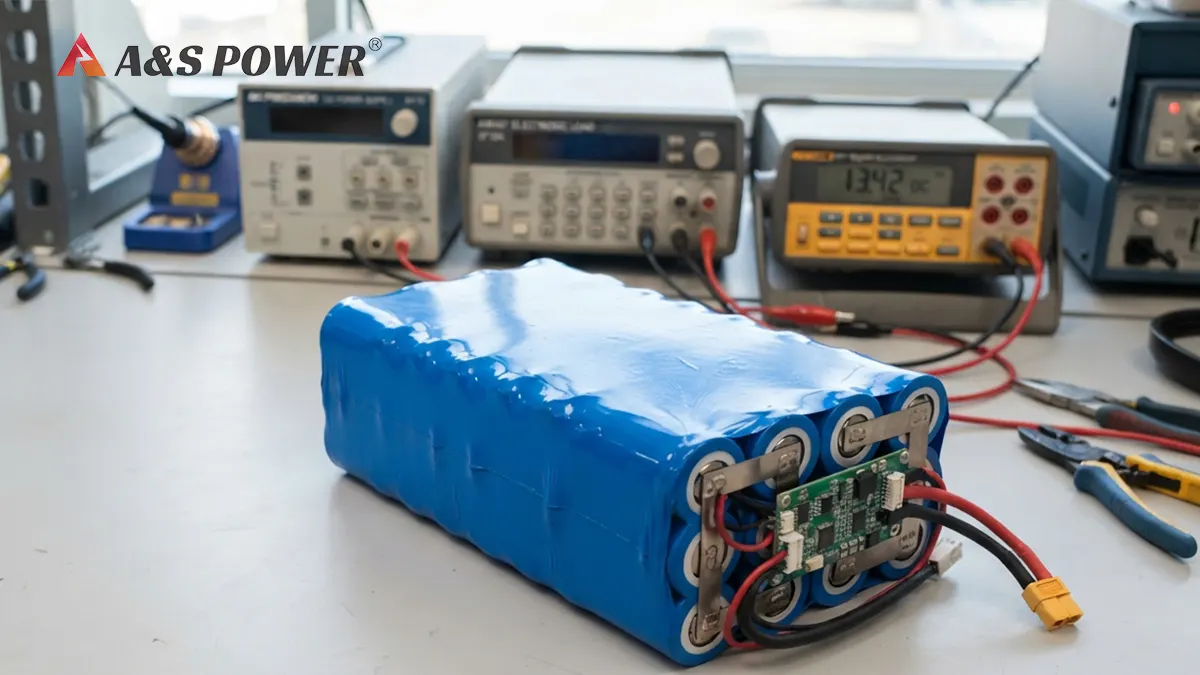
A&S Power's published battery data provides real examples of this relationship. Its 7.4V 2S1P 18650 battery pack specifies an 8.4V charge voltage, while its 11.1V 3S configuration specifies 12.6V, and a 22.2V 6S2P pack specifies 25.2V.
This is one reason series configuration should be considered during the earliest stages of OEM battery design rather than after the charger has already been selected.
Does Lowering the Charge Voltage Extend Lithium-Ion Battery Life?
Potentially, yes.
A lower upper-charge voltage generally reduces the time a lithium-ion cell spends at high voltage, which can reduce voltage-related stress.
Battery University presents data showing a trade-off between maximum charge voltage, available energy and cycle life. Its referenced estimates show approximately 300–500 cycles at 4.20V/cell compared with longer estimated cycle ranges at lower charge-voltage limits, although actual results vary significantly with chemistry, temperature, depth of discharge, charging rate and cell design.
That means there is no single “best” voltage for every application.
For a medical device, industrial monitoring system or other product where long service life is more important than maximum runtime, an engineering team may evaluate a lower charge-voltage strategy.
For a portable consumer product where maximum energy density is critical, the cell manufacturer's full specified charge voltage may be more appropriate.
The correct choice depends on the application requirements.
What Happens If You Charge a Li-Ion Battery Above Its Specified Voltage?
Charging above the manufacturer's specified voltage can cause accelerated degradation and, in severe cases, create safety hazards.
For a cell designed around 4.20V, exceeding its specified upper limit is not an acceptable method for obtaining additional capacity.
Battery University notes that charging a Li-ion cell beyond its intended voltage can increase stress and may lead to metallic lithium plating and other undesirable reactions.
This is why the charging system should not rely solely on software.
A properly designed battery pack may incorporate:
- Battery-management circuitry
- Overcharge protection
- Over-discharge protection
- Overcurrent protection
- Short-circuit protection
- Temperature monitoring
- Cell balancing for applicable series configurations
At A&S Power, our custom battery-pack engineering process includes BMS design and protection functions such as overcharge, over-discharge, overcurrent and short-circuit protection.
How Temperature Affects Lithium-Ion Charging
Charge voltage cannot be considered independently from temperature.
Lithium-ion cells have specified charging-temperature ranges, and charging outside the manufacturer's permitted range can affect both safety and battery life.
For example, an A&S Power 18650 specification lists a charging operating range of 0°C to +45°C for the referenced battery.
Another A&S Power 7.4V 2S1P battery specification similarly lists charging from 0°C to +45°C, while its discharge range extends lower and higher.
This illustrates an important engineering principle:
A charger that has the correct voltage but ignores temperature limitations is not necessarily a correctly designed charging system.
How I Determine the Correct Charge Voltage for an OEM Battery
When I work through a custom lithium-ion battery project, I would not select the charging voltage from nominal voltage alone.
I normally evaluate these parameters together:
- Cell chemistry and model
- Nominal voltage
- Maximum charge voltage
- Recommended charging current
- Charge termination current
- Charging temperature range
- Series/parallel configuration
- BMS and overcharge protection
- Application operating conditions
- Required certification and regulatory requirements
For example, if an OEM product requires a 22.2V nominal battery, the engineering team must determine the actual cell configuration first. A typical 6S Li-ion configuration using cells specified for 4.20V maximum charging would require approximately 25.2V at full charge.
However, if the selected cells have a different maximum charge voltage, the charger and protection thresholds must be redesigned accordingly.
This is where a custom battery manufacturer can contribute more than simply assembling cells.
A&S Power provides customization of battery chemistry, voltage, capacity, series/parallel configuration, connectors and other electrical and mechanical requirements as part of its OEM/ODM battery-pack development process .
Key Takeaways
The optimal lithium-ion battery charge voltage can be summarized in five practical points:
- 4.20V per cell is common, but it is not universal.
- Nominal voltage and maximum charge voltage are different specifications.
- 4.35V charging requires a cell specifically designed for that voltage.
- Series battery-pack charge voltage depends on the number of cells in series and the specified cell charge voltage.
- The charger, BMS, temperature monitoring and cell specifications must be designed as one system.
For OEM applications, I strongly recommend using the selected cell manufacturer's datasheet as the primary reference instead of relying on generic Li-ion voltage charts.
If you are developing a custom battery pack, the charge-voltage requirement should be established before finalizing the charger and BMS architecture.
FAQ: Lithium-Ion Battery Charge Voltage
1. What is the normal charge voltage for a 3.7V lithium-ion battery?
For many conventional 3.7V nominal lithium-ion cells, the maximum charge voltage is 4.20V per cell. However, the exact value must be confirmed from the specific cell datasheet.
2. Can I charge a 3.7V lithium-ion battery with a 4.2V charger?
A 4.20V charging target is commonly used for conventional 3.7V nominal Li-ion cells. However, the charger must also provide the correct charging current and termination behavior for that battery.
3. Is 4.35V better than 4.20V for lithium-ion batteries?
Not necessarily. A 4.35V charge voltage can provide more usable capacity for cells designed for that voltage, but it also requires compatible cell chemistry and charging electronics. A 4.35V charger should not be used with a conventional 4.20V cell.
4. What is the full charge voltage of a 2S lithium-ion battery?
If each cell is specified for a 4.20V maximum charge voltage, a 2S battery has a maximum charging voltage of 8.40V.
5. What is the full charge voltage of a 3S lithium-ion battery?
For a conventional 4.20V-per-cell Li-ion configuration, a 3S battery has a maximum charging voltage of 12.60V.
6. Does charging to a lower voltage make a lithium-ion battery last longer?
It can. Lowering the upper charge-voltage limit can reduce high-voltage stress and may extend cycle life, but it also reduces the amount of energy available from each charge. The actual result depends on cell chemistry, temperature, charging rate and operating conditions.
7. Does a BMS determine the correct charging voltage?
The BMS can provide protection and monitoring functions, but it should not be used as a substitute for selecting the correct cell and charger. The charging system must be designed around the cell manufacturer's specified voltage, current and temperature limits.
8. How do I choose the right charge voltage for a custom lithium battery pack?
Start with the exact cell model and datasheet. Confirm the maximum charge voltage, charging current, temperature range and series configuration, then select or design a compatible charger and BMS. For OEM projects, the complete battery system should be validated before mass production.
A&S Power OEM Battery Engineering Perspective
At A&S Power, we treat charge voltage as one part of the complete battery-system design rather than an isolated specification.
Our custom lithium battery pack solution covers cell selection, electrical design, series/parallel configuration, BMS design and mechanical integration for OEM and ODM applications.
For projects requiring a specific voltage and capacity, our custom lithium-ion battery manufacturing service supports customized voltage, capacity, dimensions, operating current and battery-pack configurations.
For a real-world reference, our 18650 lithium-ion battery pack specifications show how nominal voltage, charge voltage, charge current, operating temperature and protection-related parameters are specified together rather than independently.
For OEM battery development, that system-level approach is important because the correct charging voltage is ultimately determined by the cell chemistry, battery configuration, charger, BMS and application requirements working together.
Need a Custom Lithium-Ion Battery Pack?
If your application requires a specific voltage, capacity, size, connector, BMS, charging current or series/parallel configuration, our engineering team can evaluate the battery requirements and develop a customized OEM/ODM solution.
Get Custom Battery Solution