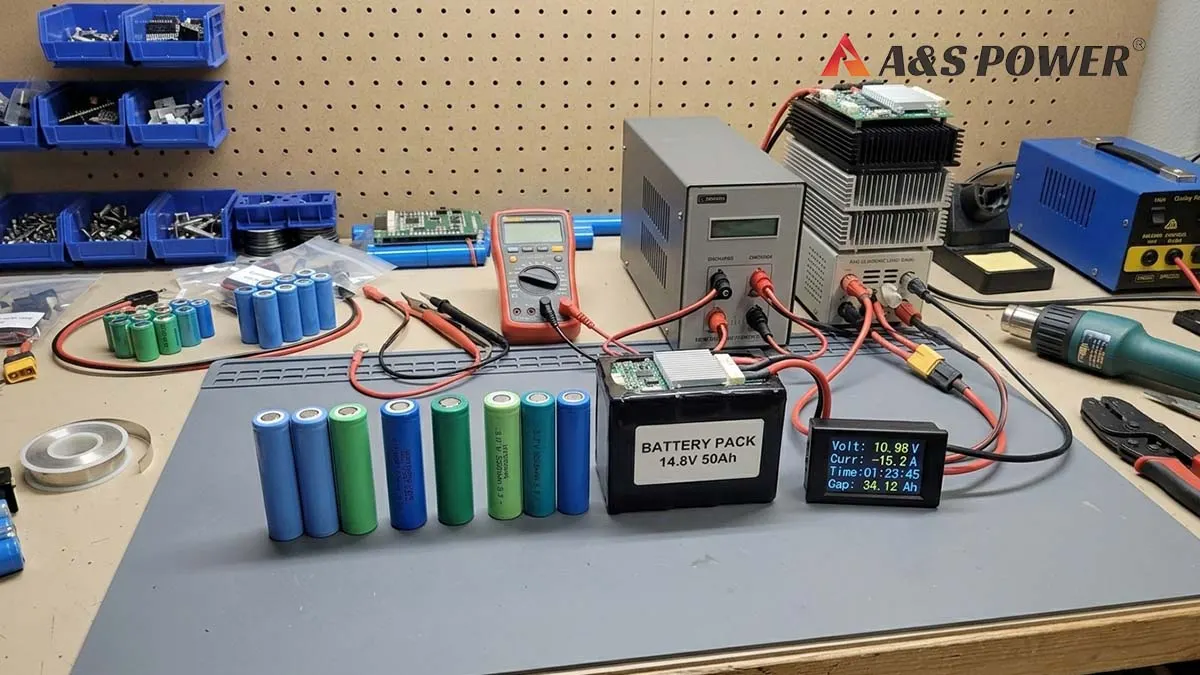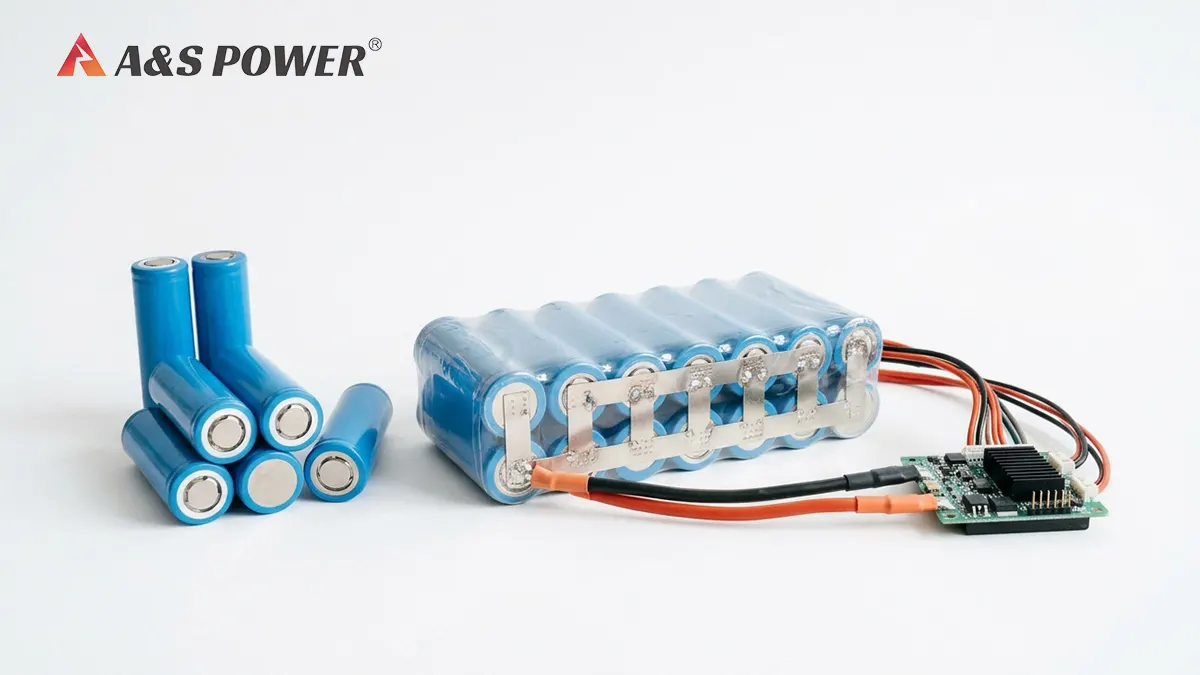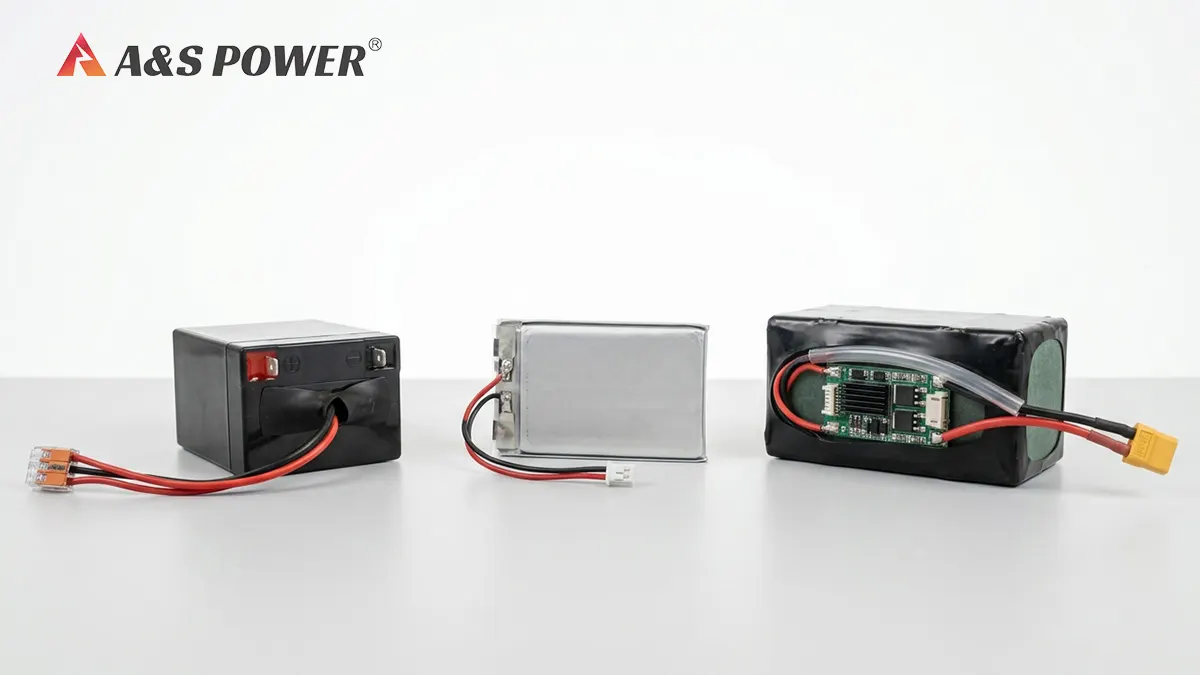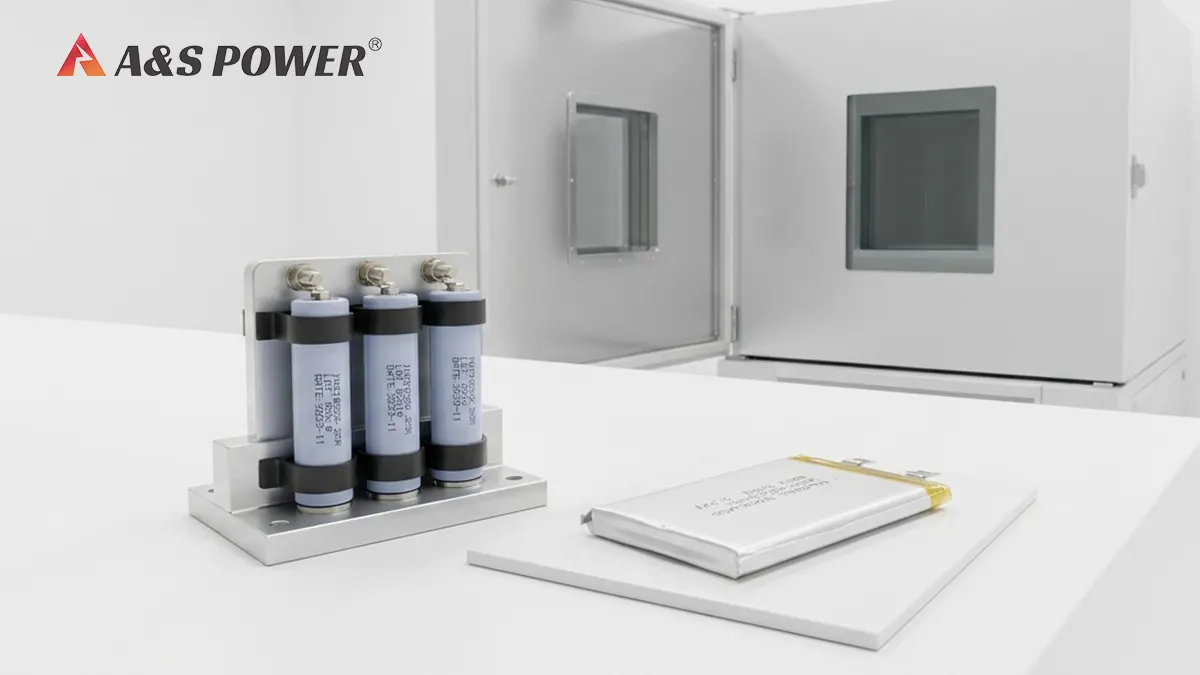




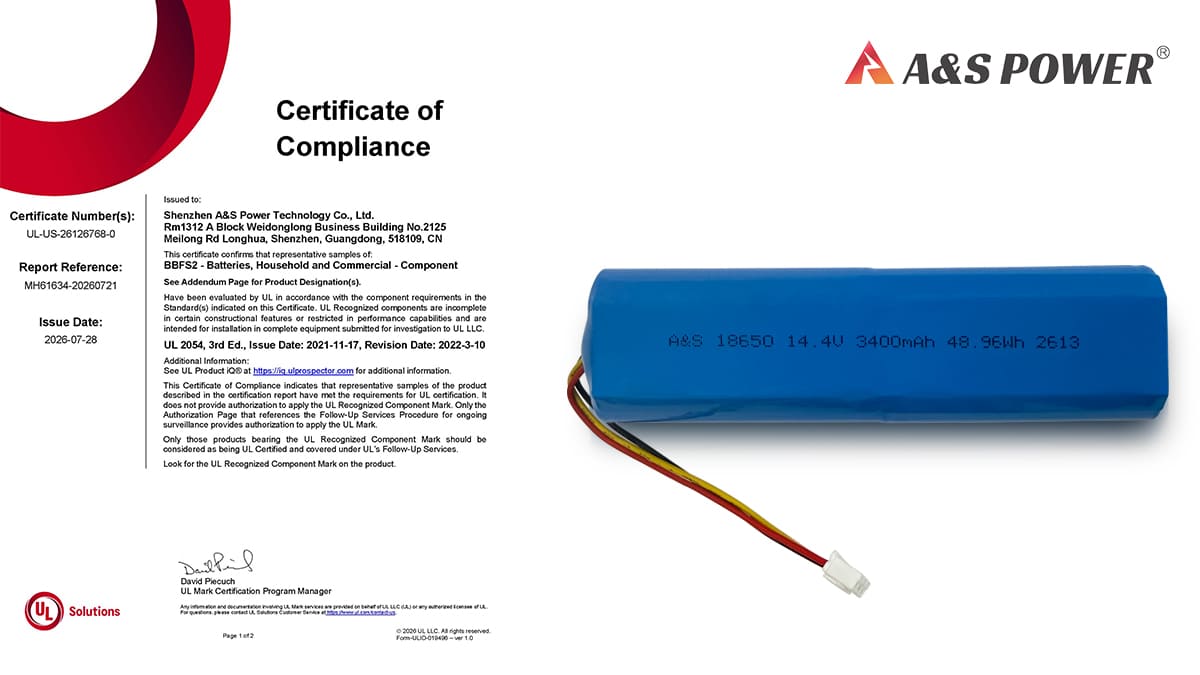
A&S Power has added UL 2054 compliance documentation for its A&S 18650 rechargeable lithium-ion battery with a rated capacity of 3400mAh. The Certificate of Compliance was issued on July 28, 2026, references UL 2054, 3rd Edition, and identifies the applicable battery as a UL Recognized Component. This documentation provides additional safety and qualification information for OEM customers evaluating rechargeable 18650 lithium-ion battery solutions.
Introduction
When I evaluate a lithium-ion battery for an OEM or ODM project, I do not look at voltage and capacity alone. Battery safety documentation, certification scope, cell configuration, protection design, mechanical requirements, and the intended end product all need to be considered together.
This is especially important when rechargeable 18650 lithium-ion batteries are being integrated into commercial or industrial equipment. A battery may have the required electrical specifications, but OEM engineering and procurement teams may also need supporting documentation during supplier qualification and product development.
A&S Power has recently added a new UL Certificate of Compliance for its A&S 18650 rechargeable lithium-ion battery with a rated capacity of 3400mAh.
The certificate was issued on July 28, 2026, with certificate number UL-US-26126768-0 and report reference MH61634-20260721. The referenced standard is UL 2054, 3rd Edition.
Importantly, the certificate identifies the applicable battery as a UL Recognized Component. For this reason, I recommend that OEM customers review the exact certification scope and conditions of acceptability together with their specific battery configuration and final product requirements.
UL 2054 Certification Details
The following information is taken directly from the Certificate of Compliance provided for the A&S 18650 rechargeable lithium-ion battery.
| Certification Item | Details |
|---|---|
| Certification Body | UL Solutions |
| Certificate Type | Certificate of Compliance |
| Certificate Number | UL-US-26126768-0 |
| Report Reference | MH61634-20260721 |
| Issue Date | July 28, 2026 |
| Applicable Standard | UL 2054, 3rd Edition |
| Product Type | Rechargeable Li-ion Battery |
| Model | A&S 18650 ** |
| Rated Capacity | 3400mAh |
| UL Status | UL Recognized Component |
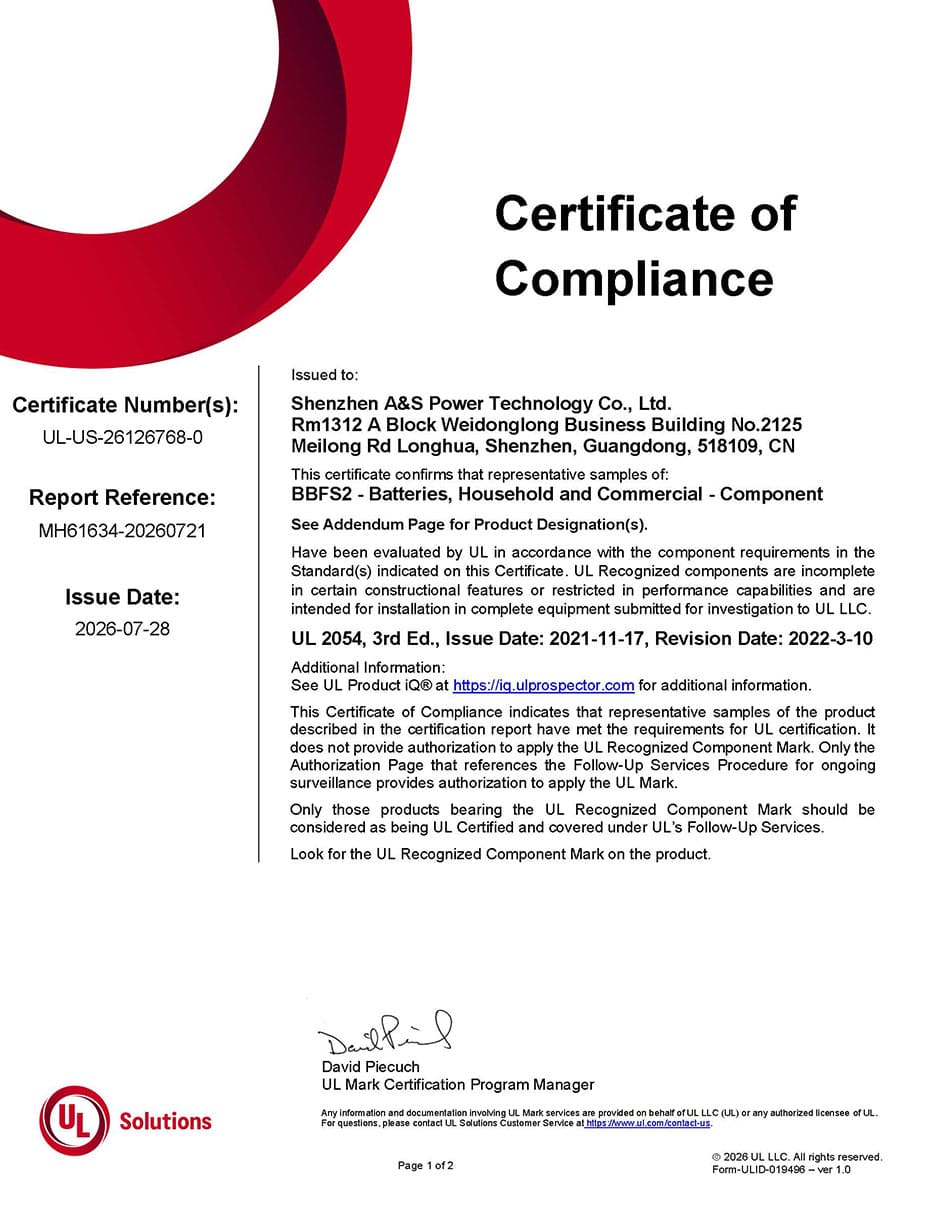
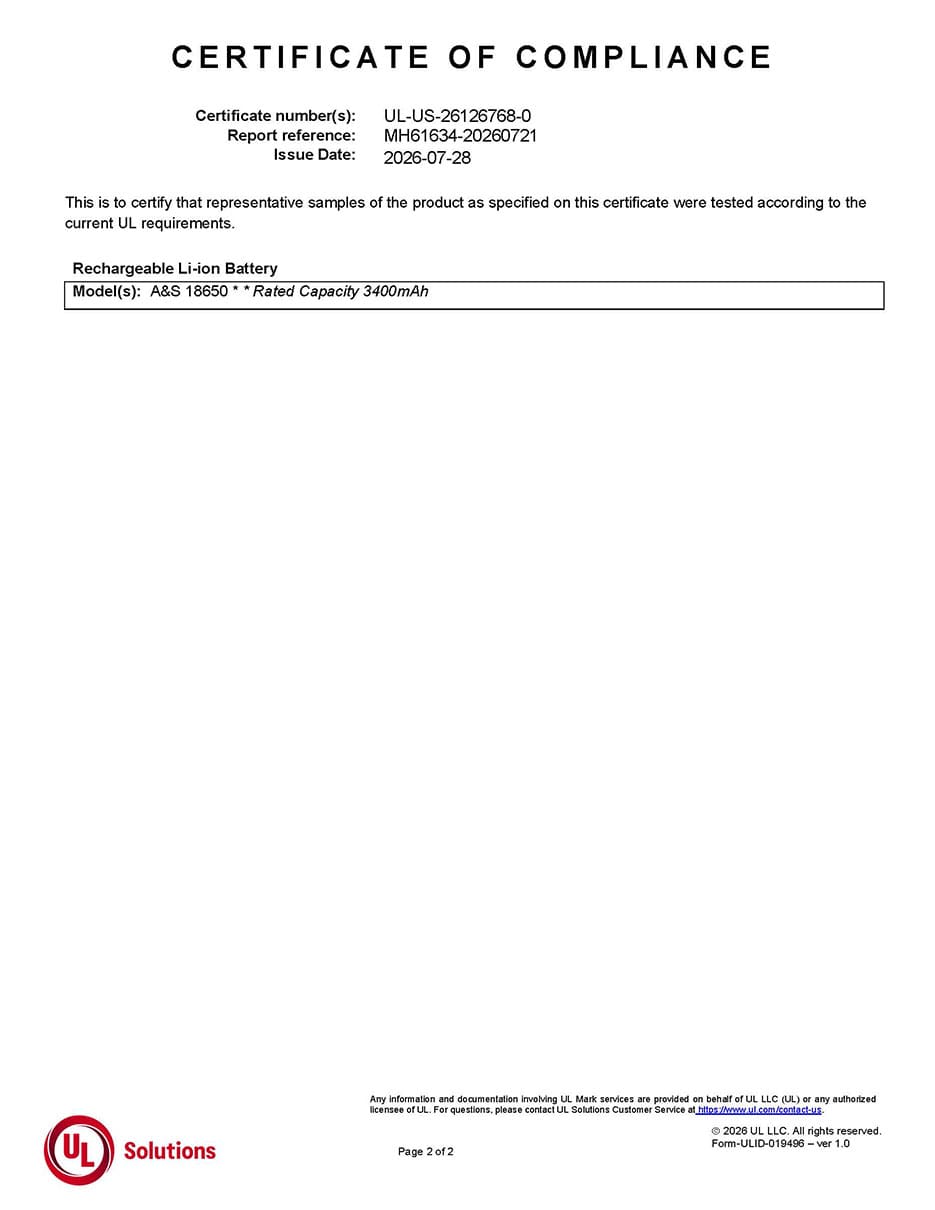
The certificate identifies the applicable battery as a UL Recognized Component. Battery-level recognition should not automatically be interpreted as certification of every finished product or battery configuration in which the component may be used. OEM customers should confirm the applicable UL scope, conditions of acceptability, battery configuration, and end-product requirements before final product approval.
What Is UL 2054?
UL 2054 is the Standard for Household and Commercial Batteries. It addresses applicable portable primary and secondary batteries used as power sources in products, including rechargeable battery systems.
The purpose of the standard is to address battery-related safety considerations and reduce risks associated with conditions such as fire or explosion when applicable batteries are used in products.
For battery manufacturers and OEM customers, an important point is that UL 2054 should be considered within the context of the complete product. A battery-level evaluation does not automatically replace the standards and certification requirements that may apply to the finished equipment.
For the official standard information, see: UL 2054 – Household and Commercial Batteries .
What Does UL Recognized Component Mean?
One of the most important details in this certification is the UL Recognized Component designation.
I would distinguish this status from describing a complete finished product simply as “UL Certified.” Component recognition is intended for components that are evaluated for use as part of larger products or systems that may have their own applicable certification requirements.
This distinction matters to OEM battery customers because the battery may become one component inside a larger electronic or electrical product.
Depending on the application, rechargeable 18650 batteries may be integrated into products such as:
- Portable electronic equipment
- Industrial electronic equipment
- Battery-powered instruments
- Monitoring equipment
- IoT equipment
- Customized lithium-ion battery packs
- Other rechargeable electronic products
The final compliance requirements depend on the complete product, its construction, intended application, operating conditions, and applicable standards. Therefore, I recommend reviewing the battery certification together with the final product certification pathway.
A&S 18650 3400mAh Rechargeable Li-ion Battery
The UL documentation identifies the applicable battery as an A&S 18650 rechargeable lithium-ion battery with a rated capacity of 3400mAh.
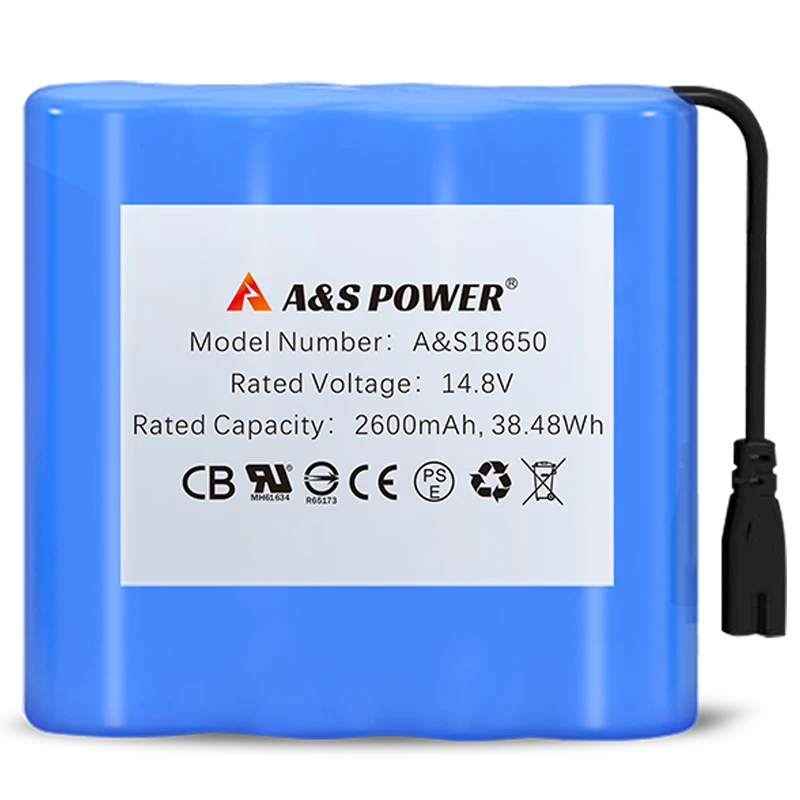
This 18650 battery platform can also be used as the basis for rechargeable lithium-ion battery pack solutions. The corresponding A&S Power product is a 14.4V 3400mAh 4S1P lithium-ion battery pack designed around the 18650 platform.
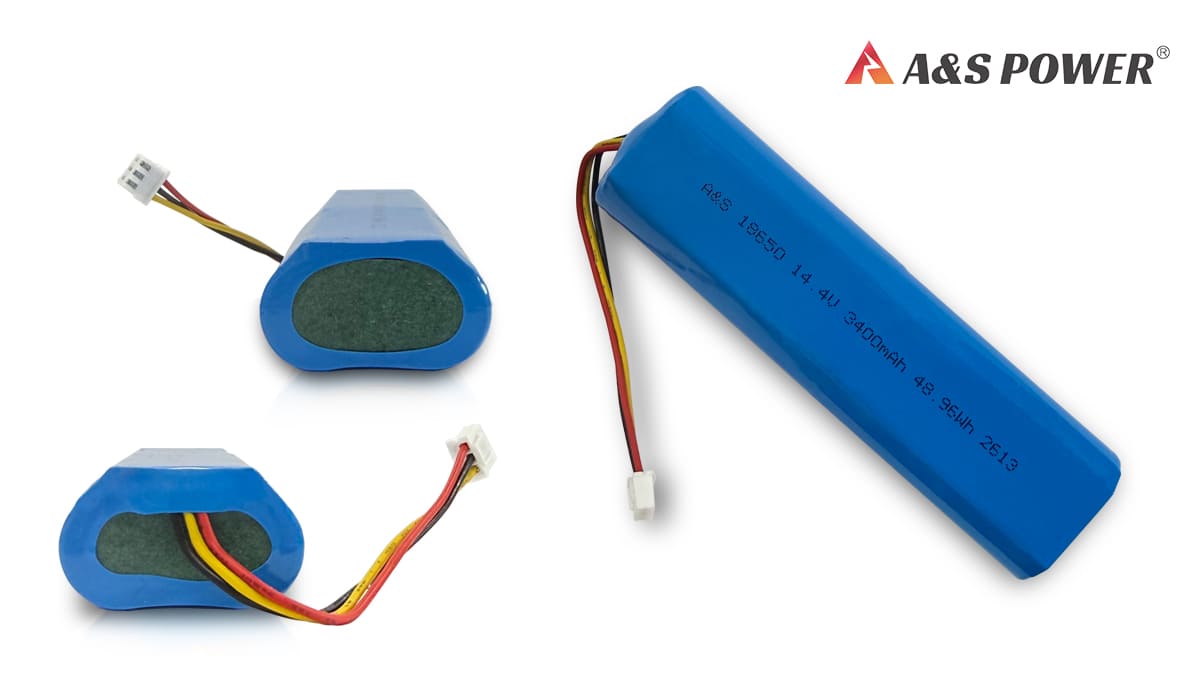
| Product Parameter | Specification |
|---|---|
| Battery Chemistry | Lithium-ion |
| Cell Format | 18650 |
| Configuration | 4S1P |
| Nominal Voltage | 14.4V |
| Capacity | 3400mAh |
| Nominal Energy | 48.96Wh |
| Dimensions | 22 × 38 × 314mm |
| Standard Charge Current | 680mA |
| Standard Charge Voltage | 16.8V |
| Continuous Discharge | 1700mA |
| Maximum Continuous Discharge | 3000mA |
| Charge Temperature | 0°C to +45°C |
| Discharge Temperature | -20°C to +60°C |
According to the product specification, the 14.4V battery pack uses a 4S1P configuration and provides a nominal energy of:
14.4V × 3.4Ah = 48.96Wh
For complete electrical and mechanical specifications, see the dedicated product page: 18650 14.4V 3400mAh Rechargeable Lithium-ion Battery Pack .
Why UL 2054 Documentation Matters for OEM Battery Projects
1. Supporting Battery Supplier Qualification
When I work with OEM customers, certification and test documentation are often part of the supplier qualification process. Engineering, quality, and procurement teams may need to review several documents before approving a battery supplier.
Typical evaluation information can include:
- Battery electrical specifications
- Cell information
- Safety documentation
- Certification documents
- Test reports
- Protection circuit information
- Mechanical specifications
- Production and quality-control information
2. Supporting Product Development
Certification information can also be useful during the engineering stage. When I compare battery solutions for an OEM project, I consider certification alongside voltage, capacity, dimensions, discharge performance, protection requirements, and operating temperature.
| Evaluation Factor | Why It Matters |
|---|---|
| Nominal Voltage | Must match the device power architecture. |
| Capacity | Determines the available battery energy. |
| Cell Format | Affects mechanical design and available space. |
| Protection Circuit | Supports battery safety and system integration. |
| Certification Documentation | Supports supplier qualification and compliance review. |
| Dimensions | Determines whether the battery fits the enclosure. |
| Operating Temperature | Must match the application's environmental conditions. |
| Customization Capability | Determines suitability for OEM production requirements. |
3. Supporting End-Product Evaluation
Certification requirements vary according to the destination market, battery configuration, and finished product.
A battery used in an industrial device may have different compliance considerations from a battery integrated into a medical device, consumer electronic product, communication device, or IoT product.
For this reason, I recommend confirming the complete compliance pathway during the early stages of product development instead of waiting until the battery design is finalized.
14.4V 3400mAh 4S1P Lithium-ion Battery Pack
The corresponding A&S Power product is a 14.4V 3400mAh 4S1P rechargeable lithium-ion battery pack. Four 18650 cells are connected in series in the 4S1P configuration, producing a nominal pack voltage of 14.4V.
The nominal energy of the pack is approximately 48.96Wh, calculated from the nominal voltage and rated capacity:
14.4V × 3.4Ah = 48.96Wh
The product page also specifies a standard charge voltage of 16.8V and provides detailed information about charging, discharge, temperature, dimensions, and other electrical characteristics.
View the Corresponding Battery Pack
This 14.4V 3400mAh battery pack is designed for applications requiring a compact rechargeable lithium-ion power source. A&S Power can also customize voltage, capacity, dimensions, connectors, wiring, and protection configurations for OEM projects.
View ProductCertification Scope Should Be Checked Before Final Product Approval
This is an important point that I always recommend OEM customers consider.
A battery-level certification or component recognition does not automatically certify the complete electronic device in which the battery is installed.
Before moving into mass production, I recommend checking:
- The exact battery model covered by the certificate.
- The battery configuration and electrical ratings.
- The applicable certification standard and edition.
- The certificate and report reference numbers.
- Any conditions of acceptability.
- The intended end-product application.
- Additional standards applicable to the finished product.
- Transportation requirements for the final lithium battery configuration.
This approach helps avoid a common misunderstanding: assuming that a battery-level certification automatically replaces the compliance requirements of the finished product.
UL 2054 and UN 38.3: Different Battery Requirements
UL 2054 and UN 38.3 should not be treated as interchangeable certifications.
| Documentation | Main Purpose | Typical OEM Consideration |
|---|---|---|
| UL 2054 | Applicable battery safety requirements | Battery and product safety qualification |
| UN 38.3 | Lithium battery transportation testing | Transportation and shipping compliance |
| IEC 62133 | Safety requirements for portable secondary cells and batteries | Applicable portable battery safety evaluation |
Depending on the battery chemistry, configuration, destination market, and end application, an OEM project may require more than one type of documentation.
A&S Power supports battery projects involving applicable certification and compliance documentation, including UL, IEC 62133, CB, CE, KC, PSE, CCC, UN 38.3, RoHS, WERCS, and other requirements depending on the battery design and target market.
View A&S Power Battery Certification Information
I recommend customers use our certification center together with the individual product page. The product page provides the battery's electrical and mechanical specifications, while the certification center provides a broader overview of available certification documentation.
You can view the A&S Power certification resources here:
A&S Power's Approach to OEM Battery Compliance
At A&S Power, I view certification as part of the engineering process rather than simply a marketing label.
A typical OEM battery development process can be summarized as:
Application → Voltage → Capacity → Dimensions → Cell Selection → Protection → Certification → Testing → Production
Certification requirements should therefore be considered during the design stage. Changing the cell chemistry, number of cells, battery configuration, protection circuit, enclosure, or intended application may affect the compliance requirements of the final battery solution.
Our OEM and ODM battery development process focuses on matching the battery design with the customer's actual application. Depending on the project, we can support customization of voltage, capacity, dimensions, connectors, wiring, protection circuits, and battery-pack configurations.
Frequently Asked Questions
The A&S 18650 rechargeable lithium-ion battery is covered by a UL Certificate of Compliance referencing UL 2054, 3rd Edition. The certificate identifies the applicable battery as a UL Recognized Component. Customers should review the certificate scope and conditions of acceptability for their specific application.
UL 2054 is the UL Standard for Household and Commercial Batteries. It addresses applicable portable primary and secondary batteries used as power sources in products, including rechargeable battery systems.
The UL documentation identifies the A&S 18650 rechargeable lithium-ion battery with a rated capacity of 3400mAh.
The Certificate of Compliance number is UL-US-26126768-0, with report reference MH61634-20260721.
The UL Certificate of Compliance was issued on July 28, 2026.
The corresponding A&S Power product is a 14.4V 3400mAh 4S1P lithium-ion battery pack. The UL documentation should be reviewed to determine the exact certification scope applicable to the complete pack configuration and intended end product. A battery component recognition should not automatically be interpreted as certification of every finished product using that component.
No. UL 2054 and UN 38.3 address different requirements. UL 2054 concerns applicable battery safety requirements, while UN 38.3 relates to lithium battery transportation testing.
Yes. A&S Power provides OEM and ODM lithium battery customization, including voltage, capacity, dimensions, connectors, wiring, protection circuits, and battery-pack configurations. Certification requirements can be evaluated according to the final battery design and target market.
Conclusion
For me, the value of this new UL documentation is not simply the presence of a UL mark. The more useful point for OEM customers is the availability of traceable certification information for an identified rechargeable 18650 lithium-ion battery platform.
The new Certificate of Compliance, UL-US-26126768-0, references UL 2054, 3rd Edition, identifies an A&S 18650 rechargeable lithium-ion battery rated at 3400mAh, and was issued on July 28, 2026.
For OEM customers, this documentation provides another piece of technical and compliance information that can be considered during battery supplier qualification and product development.
At the same time, I recommend reviewing the exact certification scope, battery configuration, conditions of acceptability, and final-product requirements before treating the documentation as approval for a complete finished device.
If you are developing a custom 18650 lithium-ion battery pack and need specific voltage, capacity, dimensions, protection, connector, or certification requirements, A&S Power can support your project from battery selection and engineering through prototype development and production.