



Introduction
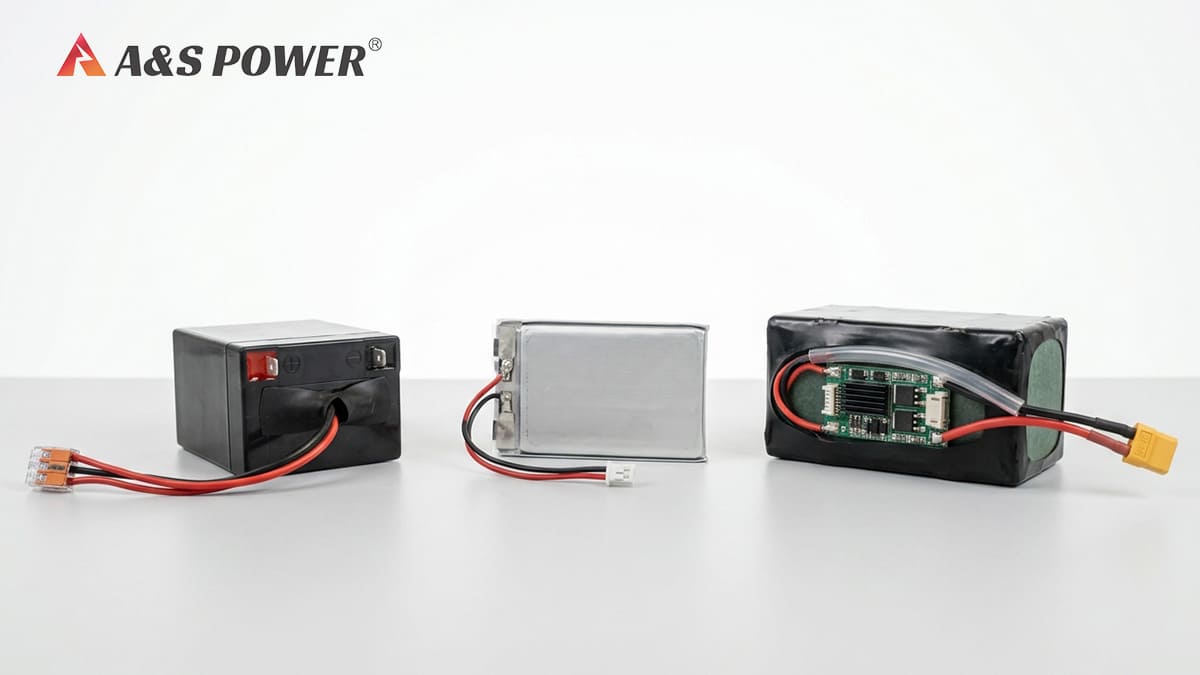
Small 12 volt batteries are widely used in portable electronics, security equipment, industrial instruments, backup power systems, and other devices that require a compact DC power source. As electronic products become smaller and more integrated, manufacturers increasingly need batteries that deliver sufficient energy without taking up excessive space or adding unnecessary weight.
However, choosing a small 12V battery involves more than checking its voltage rating. Battery chemistry, capacity, discharge current, charging requirements, operating temperature, physical dimensions, and protection circuitry all influence how well a battery performs in its intended application.
At A&S Power, we approach battery selection from an application-engineering perspective. The right battery is not necessarily the one with the highest capacity or the smallest dimensions. It is the one that meets the device's electrical requirements, fits its enclosure, operates within the required environmental conditions, and satisfies applicable safety and transportation requirements.
In this guide, I will explain the main types of small 12 volt batteries, their defining features, how to compare their specifications, and what OEM buyers should consider when developing a custom battery pack.
Quick Answer: What Is a Small 12 Volt Battery?
A small 12 volt battery is a compact power source designed to provide approximately 12V nominal output for electronic equipment, portable devices, backup systems, or other applications. It may use lithium-ion, lithium polymer (LiPo), lithium iron phosphate (LiFePO4), lead-acid, or other battery chemistries.
Rechargeable lithium battery packs commonly achieve a voltage near 12V by connecting multiple cells in series. For example, a three-cell lithium-ion pack using cells rated at 3.6V nominal has a nominal pack voltage of 10.8V, while a four-cell lithium iron phosphate pack using cells rated at 3.2V nominal provides 12.8V.
Key point: A battery marketed for a 12V application does not necessarily have an exact 12.0V nominal voltage. Its complete operating voltage range must be compatible with the device it powers.
Key Takeaways
- Small 12V batteries are available in several chemistries, each with different voltage characteristics, energy density, and charging requirements.
- Lithium-ion and LiPo batteries are useful when low weight, compact dimensions, or flexible packaging are priorities.
- LiFePO4 offers a different balance of thermal characteristics, voltage, and cycle-life potential.
- Capacity in ampere-hours (Ah) alone does not determine runtime; voltage, usable energy, load current, and operating conditions also matter.
- Battery management and protection circuitry must match the selected cells and application.
- OEM battery selection should begin with the device's voltage range, current demand, available space, charging method, and safety requirements.
1. What Are the Main Types of Small 12 Volt Batteries?
Not all small 12 volt batteries use the same technology. The chemistry determines important characteristics such as nominal cell voltage, charging limits, energy storage, discharge behavior, and protection requirements.
1.1 Lithium-Ion Batteries
Lithium-ion batteries are commonly selected for compact electronic equipment because they offer a useful combination of energy density, rechargeable performance, and design flexibility.
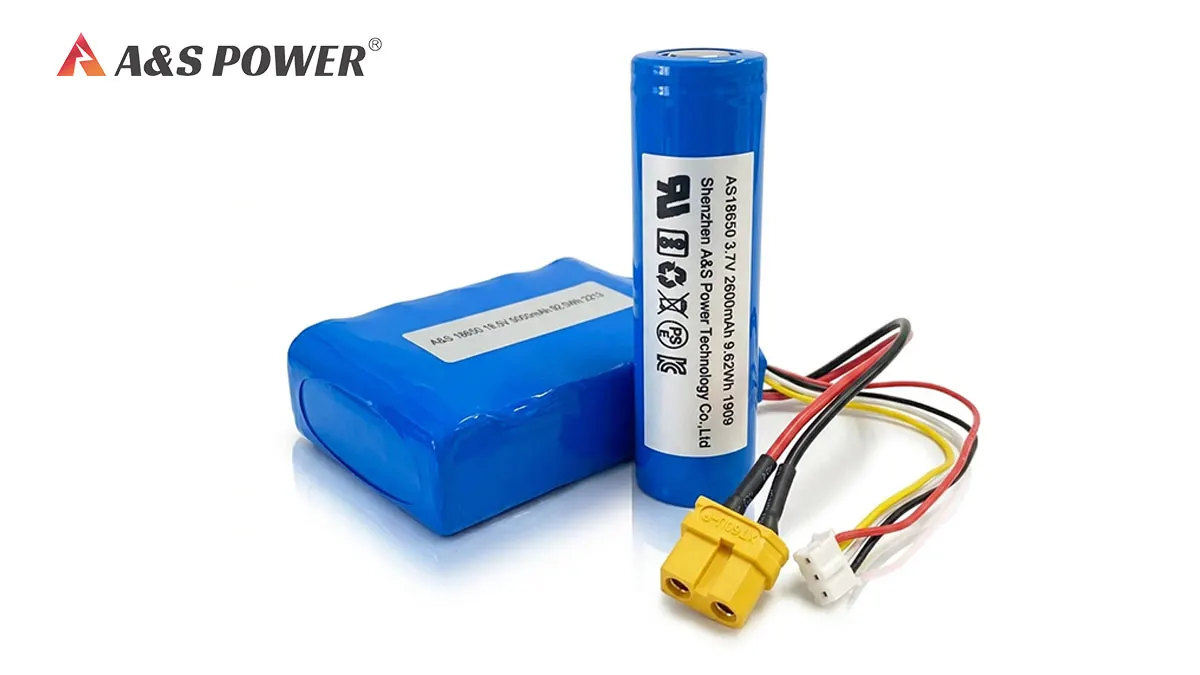
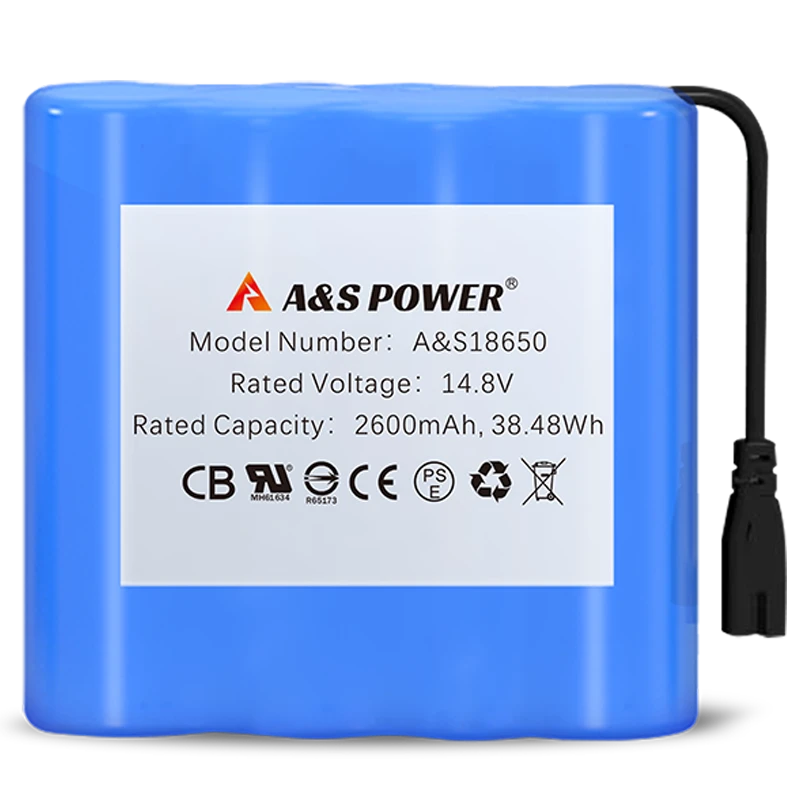
Many lithium-ion cells have a nominal voltage of approximately 3.6V or 3.7V, depending on the cell design and manufacturer. A three-cell series configuration therefore typically provides 10.8V or 11.1V nominal, respectively. Four cells in series provide approximately 14.4V or 14.8V nominal.
These configurations are not interchangeable with every device labeled 12V. The complete voltage range, including the fully charged condition, must remain within the equipment manufacturer's limits.
Common applications include:
- Portable testing and measurement equipment
- Compact industrial electronics
- Communication and monitoring devices
- Robotics and automation equipment
- Custom rechargeable battery packs
For a lithium-ion pack, the design must account for cell balancing where required, overcharge and over-discharge protection, discharge current, and thermal conditions.
1.2 Lithium Polymer (LiPo) Batteries
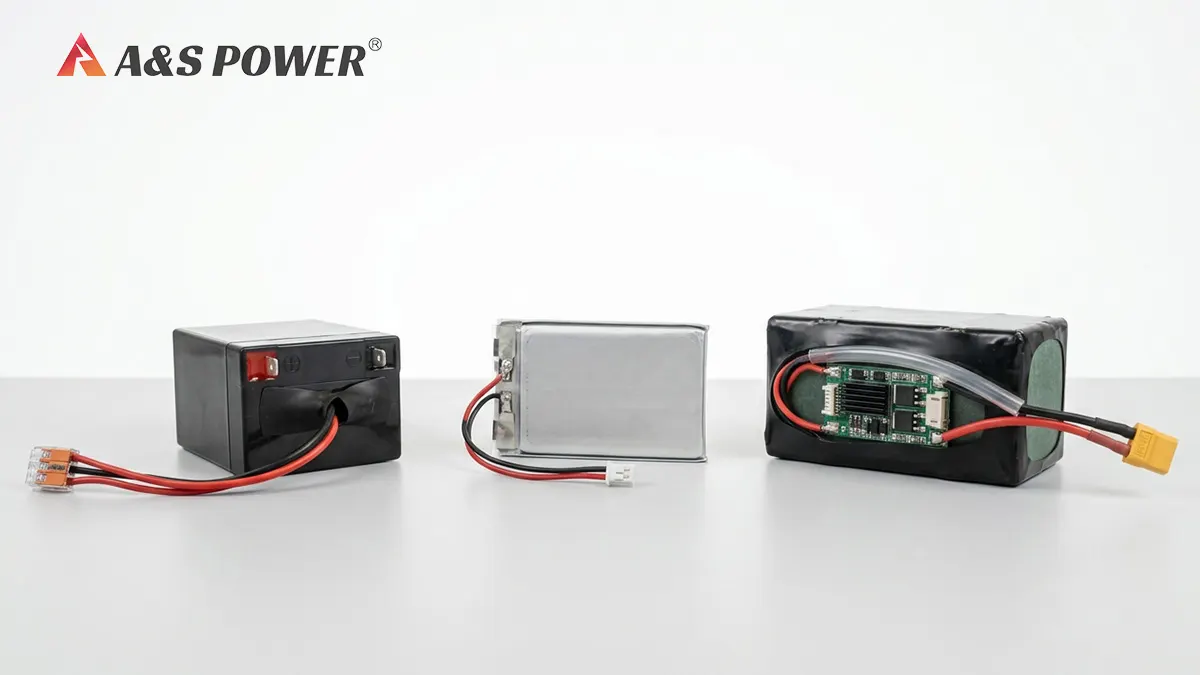
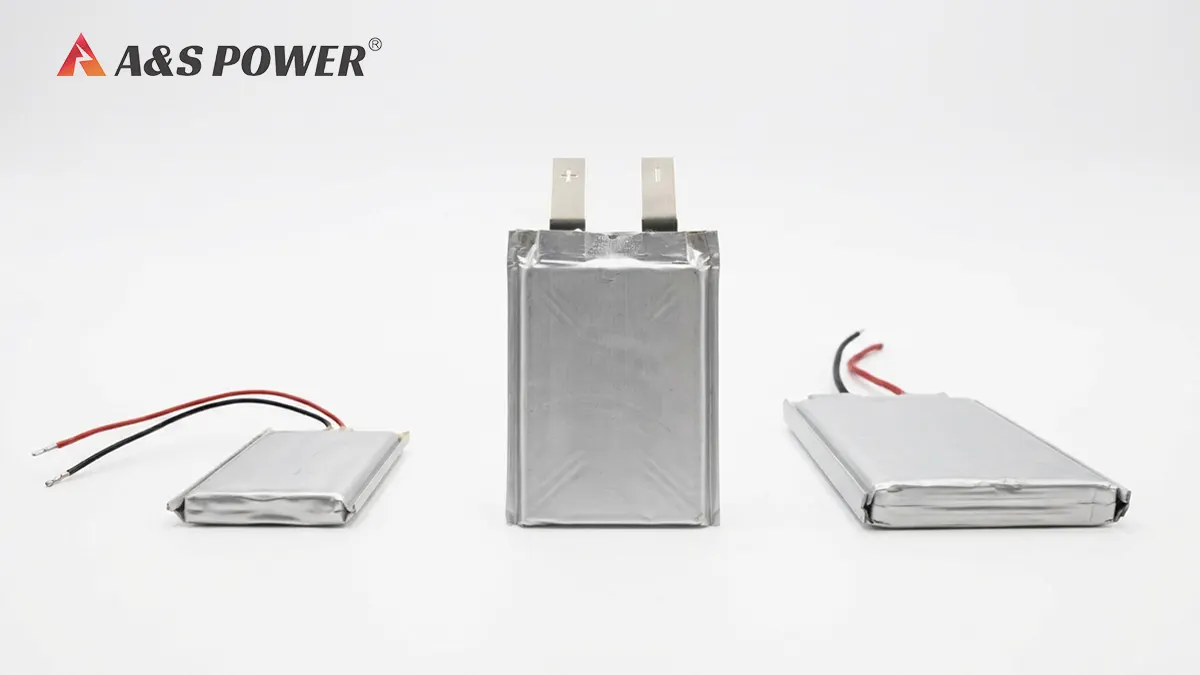
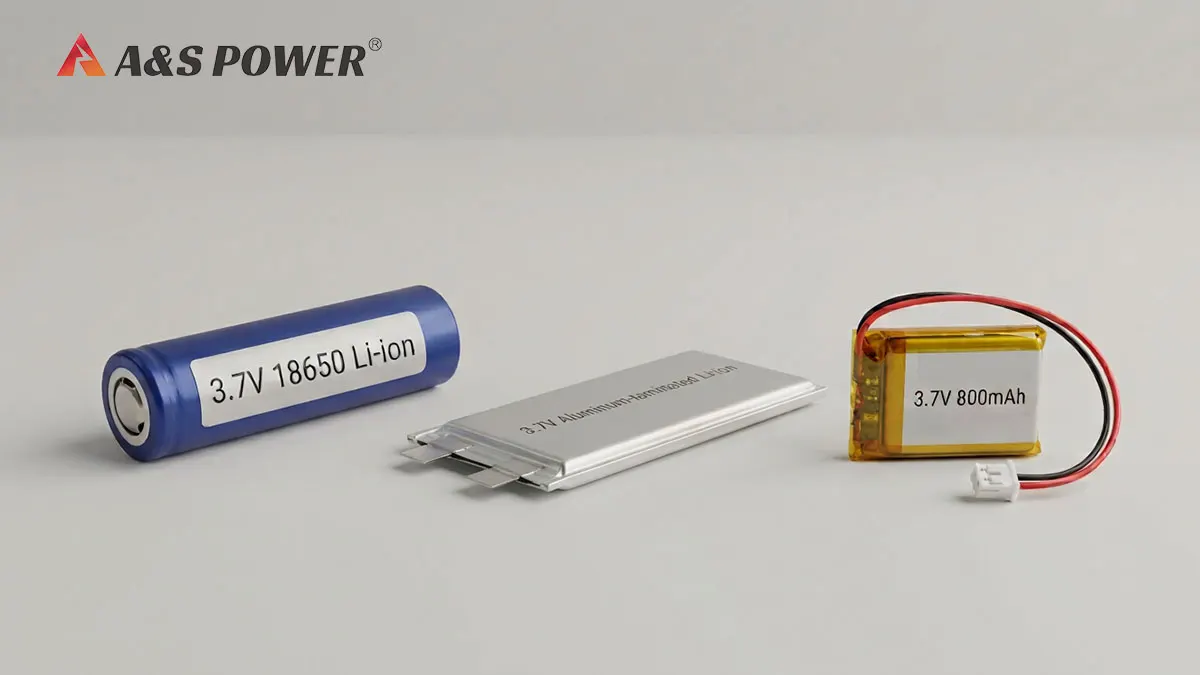
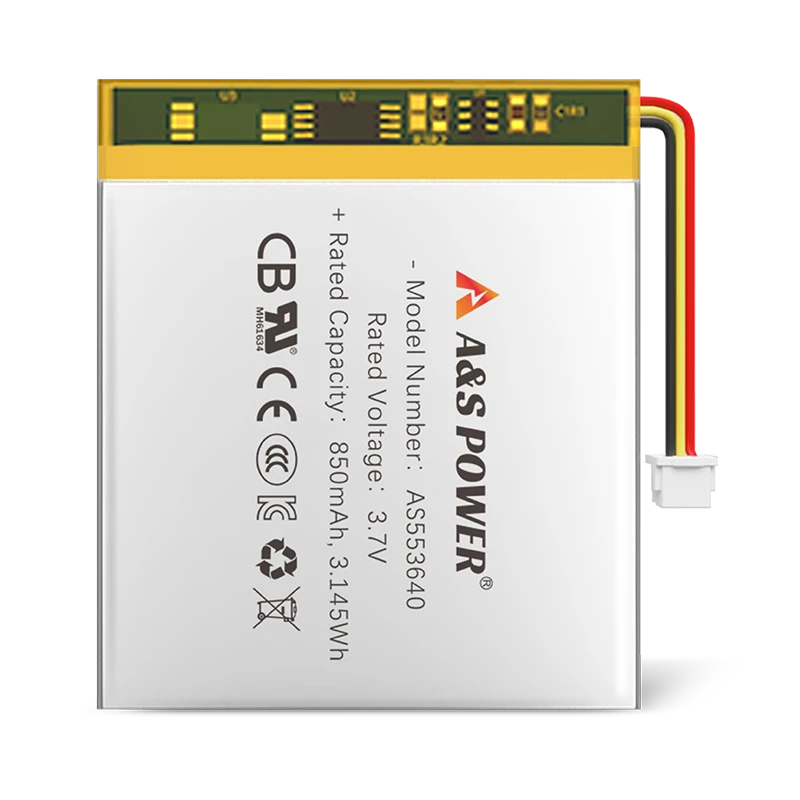
Lithium polymer batteries are a form of lithium-based rechargeable battery technology often supplied in pouch-cell formats. Their flexible packaging allows engineers to develop battery packs with customized length, width, thickness, and overall geometry.
This can be particularly useful when a conventional cylindrical battery arrangement cannot fit inside the product enclosure.
Typical applications include:
- Handheld electronic devices
- Portable medical and monitoring equipment
- Smart devices and compact instruments
- Space-constrained industrial products
- Custom electronics requiring a thin battery profile
LiPo should not automatically be treated as a different voltage class from conventional lithium-ion batteries. The nominal voltage and charging limits depend on the specific cell chemistry and design.
For OEM projects, the principal advantage is often packaging flexibility rather than a guaranteed improvement in cycle life or energy density. These performance characteristics must be evaluated against the selected cell specifications.
1.3 Lithium Iron Phosphate (LiFePO4) Batteries
LiFePO4 is a lithium-ion battery chemistry that uses lithium iron phosphate as its cathode material. Its nominal cell voltage is commonly around 3.2V.
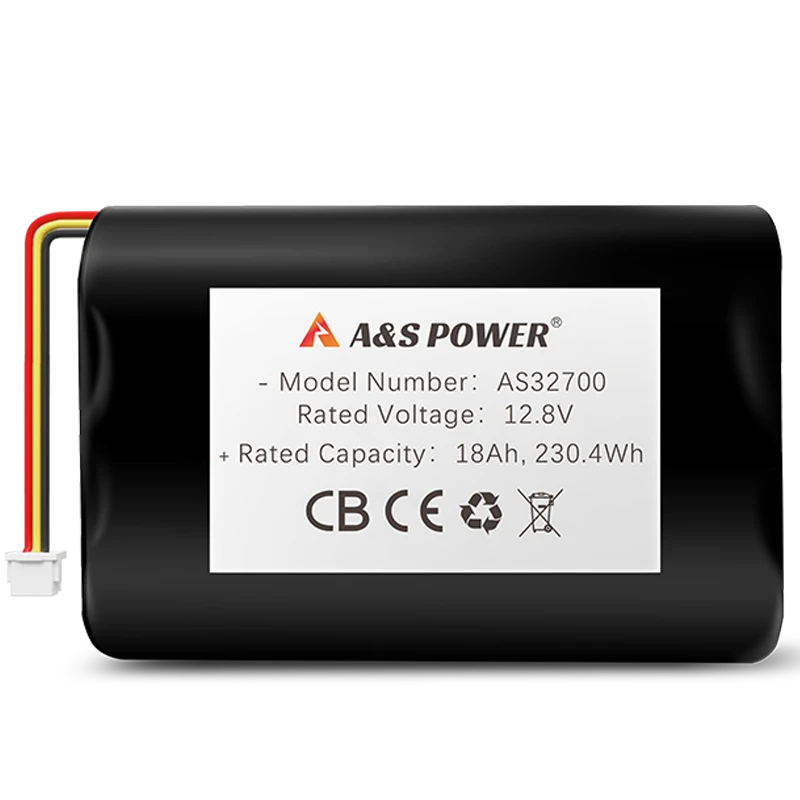
A four-cell series configuration therefore provides a nominal voltage of approximately 12.8V, making it a common architecture for rechargeable 12V-class battery systems.
LiFePO4 is often considered for applications where thermal stability, cycle-life potential, and repeated charging and discharging are important.
Examples include:
- Stationary backup power
- Solar energy storage
- Certain portable power systems
- Industrial equipment
- Selected low-speed mobility and auxiliary power applications
LiFePO4 is not automatically suitable for every 12V device. Its voltage range, charging profile, discharge-current capability, and physical dimensions must still match the application.
1.4 Sealed Lead-Acid Batteries
Sealed lead-acid batteries, including AGM and gel types, remain relevant in backup systems and equipment designed around established lead-acid battery formats.
A conventional 12V lead-acid battery typically contains six cells connected in series. Its nominal voltage is approximately 12V, but its actual terminal voltage changes with charge state, load, temperature, and charging conditions.
Advantages include established supply chains and compatibility with many existing devices. Limitations can include greater weight and bulk compared with lithium alternatives of similar nominal energy.
Lead-acid batteries may be appropriate when a product already uses a compatible charging system and the additional size and weight are acceptable.
2. Small 12 Volt Battery Specifications Compared
The following table compares common battery technologies using representative nominal cell voltages and configurations. These are general technical reference values, not guaranteed specifications for every commercial battery.
| Battery Type | Typical Nominal Cell Voltage | Example Configuration | Approximate Nominal Pack Voltage | Main Consideration |
|---|---|---|---|---|
| Lithium-ion | 3.6V | 3 cells in series | 10.8V | Energy density and voltage compatibility |
| Lithium-ion | 3.7V | 3 cells in series | 11.1V | Confirm full-charge voltage and device limits |
| LiPo pouch cell | Often 3.7V nominal, depending on chemistry | 3 cells in series | 11.1V | Thin or customized packaging |
| LiFePO4 | 3.2V | 4 cells in series | 12.8V | Chemistry-specific charging and protection |
| Lead-acid | Approximately 2V per cell | 6 cells in series | 12V | Weight, charging profile, and discharge depth |
Important: The table shows nominal voltage, not the complete operating voltage range. A battery's fully charged voltage can be substantially higher than its nominal voltage. Always check the cell datasheet and the equipment's allowable input voltage before selecting a configuration.
3. Understanding Capacity, Energy, and Runtime
Capacity is one of the most frequently compared specifications when purchasing a small 12 volt battery. However, it is easy to misinterpret.
3.1 What Does Battery Capacity Mean?
Battery capacity is commonly expressed in ampere-hours (Ah) or milliampere-hours (mAh).
- 1Ah equals 1,000mAh.
- 2Ah equals 2,000mAh.
- 5Ah equals 5,000mAh.
A higher Ah rating generally indicates that a battery can deliver more charge over a specified test period under defined conditions. It does not, by itself, tell you the total energy stored or guarantee a particular operating time.
3.2 How Do You Calculate Battery Energy?
For a first-order estimate, nominal energy in watt-hours (Wh) can be calculated using:
Consider three illustrative battery packs:
| Example Battery | Nominal Voltage | Capacity | Approximate Nominal Energy |
|---|---|---|---|
| Pack A | 11.1V | 2Ah | 22.2Wh |
| Pack B | 12.8V | 2Ah | 25.6Wh |
| Pack C | 11.1V | 4Ah | 44.4Wh |
These values are calculated from the stated nominal voltage and capacity. They are not measured usable-energy figures.
The comparison shows why capacity should not be evaluated independently of voltage. Pack B has the same Ah rating as Pack A but a higher nominal energy rating.
3.3 How Long Can a Small 12V Battery Run a Device?
A simplified runtime estimate is:
Suppose a device consumes an average of 6W and the battery delivers 18Wh of usable energy under the actual operating conditions.
18Wh ÷ 6W = 3 hours.
This is an engineering estimate, not a guarantee. Actual runtime depends on discharge rate, conversion losses, temperature, battery age, cutoff voltage, and the device's changing power demand.
For further information about rechargeable battery selection, contact A&S Power to discuss the voltage, capacity, and packaging requirements of your application.
4. Important Features to Evaluate Before Buying
4.1 Physical Size and Weight
A compact battery must fit within the available enclosure while leaving sufficient room for wiring, connectors, insulation, protection circuitry, and mechanical support.
For OEM products, the usable battery space is often smaller than the total enclosure volume suggests.
LiPo pouch cells can provide flexibility for thin or irregular spaces, while cylindrical cells may suit designs that benefit from standardized cell formats.
Battery dimensions should be confirmed against the actual drawing and manufacturing tolerances rather than estimated from a nominal capacity rating.
4.2 Continuous and Peak Discharge Current
A battery's discharge-current capability determines whether it can support the device's electrical load.
Continuous current and peak current are different specifications. A motor, radio transmitter, or other device may draw a short surge during startup even if its average consumption is relatively low.
When evaluating a battery, check:
- Continuous discharge-current rating
- Peak current and permitted pulse duration
- Voltage drop under load
- Cell and protection-circuit current limits
- Wire and connector current ratings
A battery with sufficient energy capacity may still be unsuitable if its discharge capability is too low.
4.3 Battery Management and Protection
A lithium battery pack may incorporate a battery management system (BMS) or protection circuit module (PCM), depending on its design.
Protection functions can include overcharge protection, over-discharge protection, overcurrent protection, and short-circuit protection. Temperature monitoring or temperature-dependent charging control may also be appropriate for particular applications.
Not every battery pack includes every function. Protection thresholds, recovery behavior, and current limits must be verified against the actual circuit specification.
Protection electronics reduce certain risks but do not replace correct cell selection, mechanical protection, thermal design, or a compatible charger.
4.4 Charging Requirements
Charging voltage and current depend on battery chemistry, series-cell count, and the manufacturer's charging specification.
A charger designed for a three-cell conventional lithium-ion pack should not automatically be used with a four-cell LiFePO4 pack. Their voltage limits and charging profiles differ.
For a custom battery project, I recommend confirming the charging method early in the design process. This avoids compatibility problems after the enclosure, circuit board, and power adapter have already been finalized.
4.5 Cycle Life and Operating Temperature
Cycle life describes how a battery's capacity changes over repeated charge and discharge cycles under defined test conditions.
There is no single cycle-life figure that applies to every small 12V battery. Results depend on chemistry, cell design, depth of discharge, temperature, charging rate, discharge rate, and the manufacturer's end-of-life criteria.
Operating temperature also affects performance. Low temperatures can reduce available capacity and increase voltage drop. High temperatures can accelerate degradation and increase safety risks.
For this reason, product specifications should distinguish charging temperature, discharging temperature, and storage temperature rather than combining them into one broad range.
5. Common Applications of Small 12 Volt Batteries
Small 12V battery systems serve a wide range of electronic and industrial applications.
Portable instruments: Compact battery packs power handheld meters, inspection devices, and testing equipment where weight and enclosure size matter.
Security and backup systems: Alarm panels, monitoring equipment, and emergency devices may use small rechargeable batteries to provide backup power. The battery must be compatible with the system's charging circuit and standby requirements.
Industrial electronics: Controllers, sensors, communication modules, and other equipment may need a dedicated battery supply or backup source.
Medical and monitoring equipment: Battery selection should account for the device's electrical requirements, intended environment, applicable regulatory requirements, and risk-management process.
Smart devices and custom electronics: LiPo pouch cells can be useful where conventional cylindrical cells cannot meet thickness or shape constraints.
The best battery for each application depends on actual power demand, available space, expected runtime, charging frequency, and required service life.
6. How to Choose the Right Small 12V Battery
For engineering teams and procurement professionals, I recommend evaluating the following factors in order.
- Confirm the voltage range. Identify the minimum and maximum input voltages the device can accept, including startup and transient conditions.
- Calculate energy requirements. Estimate average power consumption and required operating time. Include conversion losses and a practical reserve.
- Determine current demand. Record continuous load current and any startup or pulse-current requirements.
- Define mechanical constraints. Specify maximum length, width, thickness, weight, connector location, and mounting method.
- Select the chemistry. Compare lithium-ion, LiPo, LiFePO4, and lead-acid options based on energy, packaging, charging, and lifecycle requirements.
- Specify protection and charging. Define the required protection functions and ensure the charging system matches the selected battery.
- Confirm compliance and testing. Identify the safety, transportation, and market-specific documentation required for the finished product.
- Validate the complete design. Test the battery with the actual device, charger, enclosure, and operating profile.
This process is more reliable than selecting a battery based solely on the advertised capacity or the phrase “12V rechargeable.”
7. Standard Batteries vs. Custom 12V Battery Packs
Standard batteries can be suitable when their dimensions, electrical characteristics, connectors, and certifications already match the application.
Custom battery packs become useful when a product has unusual space restrictions, a specific connector arrangement, a defined runtime target, or particular discharge and protection requirements.
At A&S Power, our focus is rechargeable lithium battery manufacturing, including lithium-ion and lithium polymer solutions for OEM and ODM applications. Depending on the project requirements and validated cell options, a custom design may address:
- Battery dimensions and packaging format
- Series and parallel cell configuration
- Capacity and discharge-current requirements
- Wire length and connector type
- PCM or BMS protection requirements
- Charging and temperature-monitoring interfaces
A custom design should not be assumed to deliver higher capacity, longer cycle life, or improved safety automatically. These outcomes depend on the selected cells, circuit design, mechanical construction, and verification testing.
If you are developing a new electronic product, visit A&S Power's official website to discuss your battery requirements and determine whether an existing design or a custom OEM solution is more appropriate.
8. Safety, Certifications, and Supplier Evaluation
Battery safety and compliance should be considered during product development, not only when preparing for shipment.
For portable lithium batteries, IEC 62133-2:2017+A1:2021 specifies safety requirements and tests for portable sealed secondary lithium cells and batteries. Its applicability depends on the product and intended use.
For transportation, lithium batteries are subject to applicable dangerous-goods requirements. The United Nations' Manual of Tests and Criteria, Section 38.3 describes testing provisions relevant to lithium cells and batteries.
These references serve different purposes. IEC 62133-2 concerns battery safety for covered portable applications, while UN 38.3 relates to transport testing. Neither should be treated as a universal certification covering every market or end-use application.
When evaluating a supplier, ask for documentation applicable to the exact battery model, including relevant test reports, transport test summaries, specifications, and traceability information.
A supplier should also be able to explain the pack configuration, protection functions, charging limits, and conditions under which its stated performance was measured. You can review the A&S Power certification page for additional information about the company's battery certification resources.
Conclusion
Small 12 volt batteries offer several options for powering compact electronics, industrial equipment, backup systems, and custom-designed products. However, the nominal voltage alone does not determine whether a battery is suitable.
Lithium-ion batteries offer a useful balance of energy and size, LiPo pouch cells provide packaging flexibility, LiFePO4 offers a different chemistry and voltage profile, and sealed lead-acid batteries remain useful in compatible established systems.
My recommendation is to begin with the device's voltage range, power consumption, current demand, available space, charging method, and environmental requirements. Then compare battery chemistries and validate the complete battery system against the intended operating conditions.
For OEM buyers, working with a battery manufacturer early in the design process can help resolve packaging, electrical, protection, and compliance requirements before they become costly production issues.
Frequently Asked Questions (FAQs)
1. What is the smallest 12 volt battery available?
There is no single smallest option for all applications. The answer depends on whether the battery must be rechargeable, its required capacity, discharge current, and physical dimensions. Very small non-rechargeable batteries may provide a nominal 12V rating but typically have limited energy. Compact rechargeable lithium packs offer different size and runtime trade-offs.
2. Are all small 12V batteries rechargeable?
No. Some small 12V batteries are primary batteries intended for single use, while others are rechargeable. Always verify the battery chemistry and whether the product is explicitly rated for recharging.
3. Is a 12V lithium-ion battery actually 12 volts?
Not necessarily. “12V” may describe the intended application class rather than an exact nominal voltage. A three-cell lithium-ion pack commonly has a nominal voltage of 10.8V or 11.1V, depending on cell specifications. A four-cell LiFePO4 pack commonly has a nominal voltage of 12.8V.
4. How do I calculate the runtime of a small 12V battery?
A useful first estimate is usable battery energy in watt-hours divided by average load power in watts. For example, 18Wh of usable energy powering a 6W load gives an estimated runtime of three hours. Actual results depend on load behavior, temperature, conversion losses, and battery cutoff limits.
5. Can I use a 12V lithium battery with any 12V device?
No. Check the device's permitted input-voltage range, including the battery's fully charged voltage. Also verify current demand, connector polarity, charging compatibility, and protection requirements before connecting the battery.
6. What is the difference between a 12V LiPo battery and a 12V LiFePO4 battery?
LiPo commonly refers to lithium-based pouch-cell batteries, often using a conventional lithium-ion voltage profile. LiFePO4 identifies a specific lithium-ion chemistry with a nominal cell voltage commonly around 3.2V. A four-cell LiFePO4 pack is typically 12.8V nominal, while a three-cell conventional lithium-ion pouch pack may be 11.1V nominal. Packaging, charging limits, and protection requirements differ.
7. What information is needed to request a custom 12V battery pack?
Provide the target voltage range, required capacity or runtime, continuous and peak current, maximum dimensions, weight limit, connector details, charging method, operating temperature, and intended application. Drawings and relevant compliance requirements can help the manufacturer assess feasibility.
8. Which certifications should I check when purchasing a small lithium battery?
The relevant requirements depend on the application and destination market. IEC 62133-2 may be relevant to covered portable lithium batteries, while UN 38.3 documentation is important for applicable lithium battery transportation. Ask the supplier to verify documentation for the exact model and intended use.