




Introduction
When developing a new electronic product, battery size is often one of the first engineering constraints to consider. Product designers may need a battery that fits inside a slim enclosure while providing enough energy to support the required operating time. This creates a common question for battery manufacturers: does a higher-capacity lithium polymer (LiPo) battery always need to be larger?
The short answer is usually yes, if the battery chemistry, design, and operating conditions remain comparable. However, a larger capacity does not always require a proportionally larger battery.
Battery capacity depends on several factors, including the amount of active electrode material, its electrochemical properties, and how efficiently the cell uses its available internal volume. Different cathode materials, electrode designs, and cell manufacturing processes can produce different capacities within similar physical dimensions.
At A&S Power, this distinction matters when evaluating custom lithium polymer batteries for OEM applications. A customer may have a fixed battery compartment but want longer operating time. In that situation, simply increasing the requested capacity is not enough. The engineering team must determine whether a higher-capacity cell can realistically fit within the available length, width, and thickness while meeting electrical, thermal, safety, and service-life requirements.
This article explains why battery capacity and size are related, how energy density affects the relationship, and what manufacturers can evaluate when developing a higher-capacity LiPo battery for a space-constrained product.
Quick Answer: Does More Capacity Mean a Bigger Battery?
In most cases, a higher-capacity LiPo battery requires more active material and therefore more internal volume when the material system and cell design are similar.
However, two batteries with identical external dimensions can have different capacities if their energy densities differ. Improvements in electrode materials, material utilization, and cell design can sometimes increase the amount of energy stored within the same space.
| Design condition | Expected relationship between capacity and size |
|---|---|
| Same chemistry and comparable design | Higher capacity generally requires a larger cell. |
| Same external dimensions but different energy density | Capacity may differ. |
| Same length and width but greater thickness | Higher capacity may be possible. |
| Different cathode formulations | Capacity and energy density may differ. |
| Fixed enclosure with a higher capacity target | Feasibility depends on materials, construction, and operating requirements. |
The key point is that battery capacity is not determined by external dimensions alone. The energy density and internal construction of the cell also matter.
1. Why Does a Higher-Capacity LiPo Battery Usually Need More Space?
To understand the relationship between capacity and size, it helps to distinguish electrical capacity from physical volume.
Battery capacity is commonly measured in milliampere-hours (mAh) or ampere-hours (Ah). It describes how much electric charge a battery can deliver under specified test conditions. Physical size, meanwhile, is determined by the cell's length, width, and thickness.
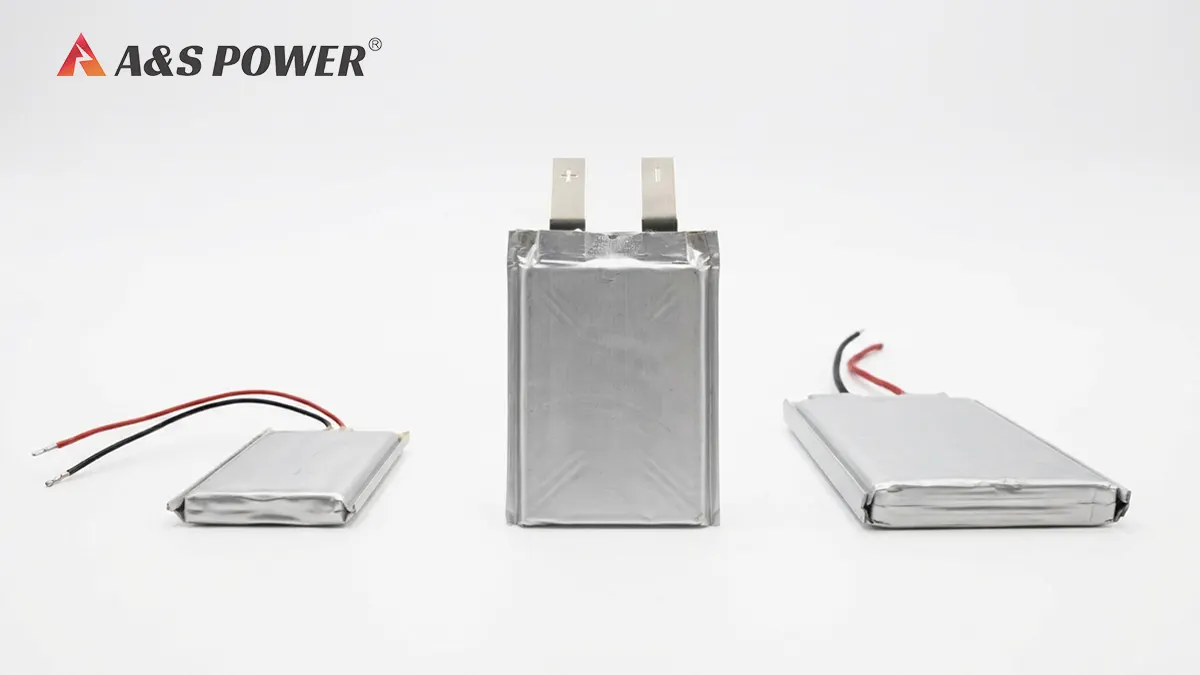
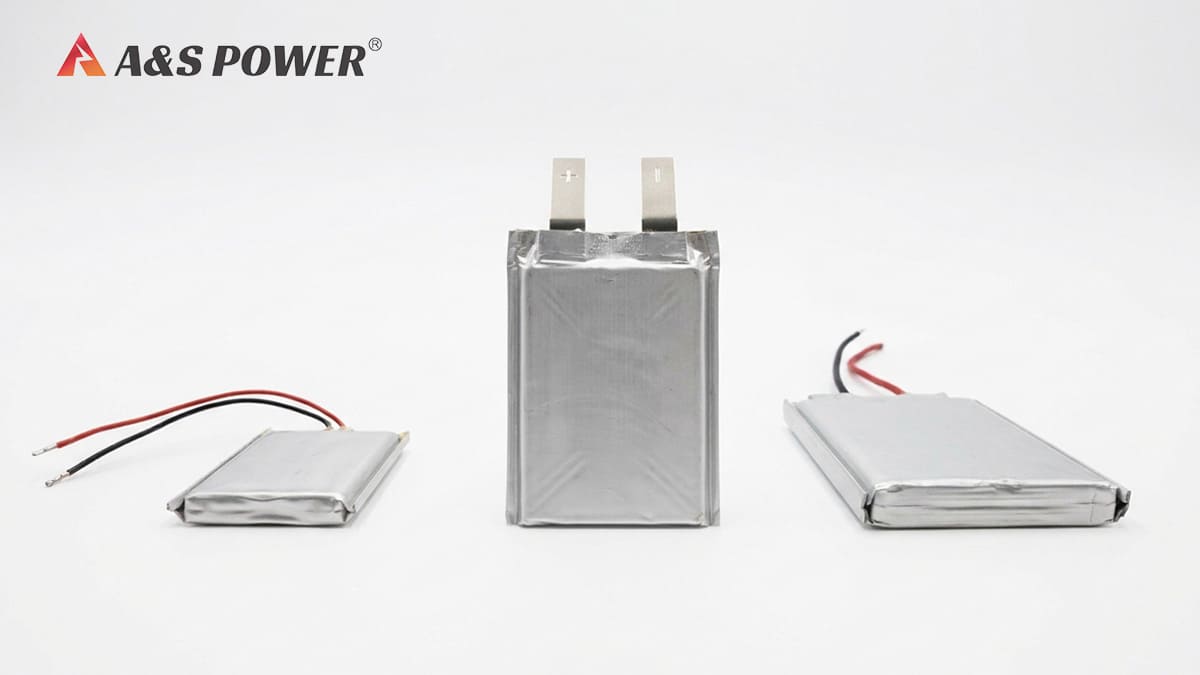
A LiPo pouch cell contains positive and negative electrodes, separators, electrolyte, current collectors, and a laminated pouch enclosure. These components work together to store and release electrical energy.
When the chemistry and construction remain comparable, increasing capacity generally requires increasing the quantity of electrochemically active material. This can involve using larger electrodes or adding more electrode layers, which usually increases the cell's dimensions or thickness.
For example, imagine two cells manufactured using the same material system and a comparable electrode design. If one cell contains more active electrode material, it will generally have a greater capacity. Accommodating that additional material requires more internal space.
However, the relationship is not always directly proportional. A cell with twice the capacity does not necessarily need twice the external volume. Differences in energy density, electrode utilization, packaging, and design efficiency affect the final result.
This is why a battery manufacturer should evaluate a proposed capacity increase against the original cell specification instead of estimating the required dimensions from capacity alone.
2. How Energy Density Allows More Capacity in the Same Size
Energy density is one of the most important factors determining whether a higher-capacity battery can fit into an existing enclosure.
There are two common ways to express energy density:
- Gravimetric energy density: Energy stored per unit mass, typically measured in Wh/kg.
- Volumetric energy density: Energy stored per unit volume, typically measured in Wh/L.
For a battery with a fixed nominal voltage, a higher usable capacity means more stored energy. If the external volume remains unchanged, achieving this increase generally requires a higher volumetric energy density.
For example, a nominal 3.7 V LiPo cell with a capacity of 2,000 mAh has a nominal energy of 7.4 Wh. A 2,500 mAh cell at the same nominal voltage stores 9.25 Wh.
The second cell stores 25% more nominal energy. If both cells occupy the same volume, the higher-capacity cell must also achieve approximately 25% greater volumetric energy density.
That is a mathematical requirement, not a guarantee that a manufacturer can achieve the increase in a particular design.
The U.S. Department of Energy explains the importance of volumetric energy density in its discussion of volumetric energy density in lithium-ion batteries. This provides useful background on why energy density matters when space is limited.
For further context, A&S Power's custom rechargeable lithium polymer battery design guide discusses battery customization and the factors that need to be considered when matching a cell to a product.
What can improve energy density?
Several factors may influence how much energy a cell can store within a given volume:
- Cathode material: Different cathode chemistries and formulations offer different practical capacities, operating voltages, and energy-density characteristics.
- Anode material: The anode's capacity, design, and compatibility with the cathode influence the cell's overall performance.
- Electrode loading and utilization: The amount of active material per unit electrode area and the fraction that can be used effectively affect capacity.
- Internal construction: Electrode thickness, coating design, layer arrangement, and inactive component proportions influence the available energy per unit volume.
- Manufacturing consistency: Electrode coating, assembly precision, and process control affect whether the intended performance can be achieved consistently.
These factors interact. Increasing active material loading, for example, does not automatically deliver a proportional increase in usable capacity because ion transport, resistance, heat generation, and cycle life may also change.
3. Can Higher-Cobalt Cathode Materials Increase LiPo Battery Capacity?
Cathode chemistry is particularly relevant when evaluating whether two cells of similar size can provide different capacities.
Lithium-ion and lithium polymer batteries can use different cathode material systems. Lithium cobalt oxide (LCO), lithium nickel manganese cobalt oxide (NMC), and other chemistries have different electrochemical characteristics.
LCO is widely associated with compact consumer electronics because it can provide high volumetric energy density. Cobalt also plays important roles in the electrochemical properties and structural stability of certain layered cathode materials.
The U.S. Department of Energy's explanation of reducing reliance on cobalt in lithium-ion batteries describes how cathode composition involves trade-offs among energy density, electrochemical performance, material stability, and cost.
For some applications, selecting an appropriate cathode formulation may help a manufacturer achieve a higher capacity within a given cell volume.
However, it is important to distinguish between cobalt content and battery capacity.
Adding more elemental cobalt to a cell is not a practical, standalone method of increasing capacity. The relevant consideration is the composition and structure of the cathode active material, together with the complete electrode design and manufacturing process.
Nor does a higher cobalt content automatically guarantee higher capacity. The outcome depends on the particular material formulation, usable operating range, electrode design, and performance requirements.
A material selection that improves energy density under one set of conditions may also affect cost, cycle life, thermal behavior, or supply-chain considerations.
For OEM customers, the more useful question is therefore not simply whether a battery can contain more cobalt. It is whether a suitable cathode system can deliver the required capacity within the specified dimensions and operating limits.
4. Can a LiPo Battery Have More Capacity Without Increasing Its Length and Width?
Yes, in some cases.
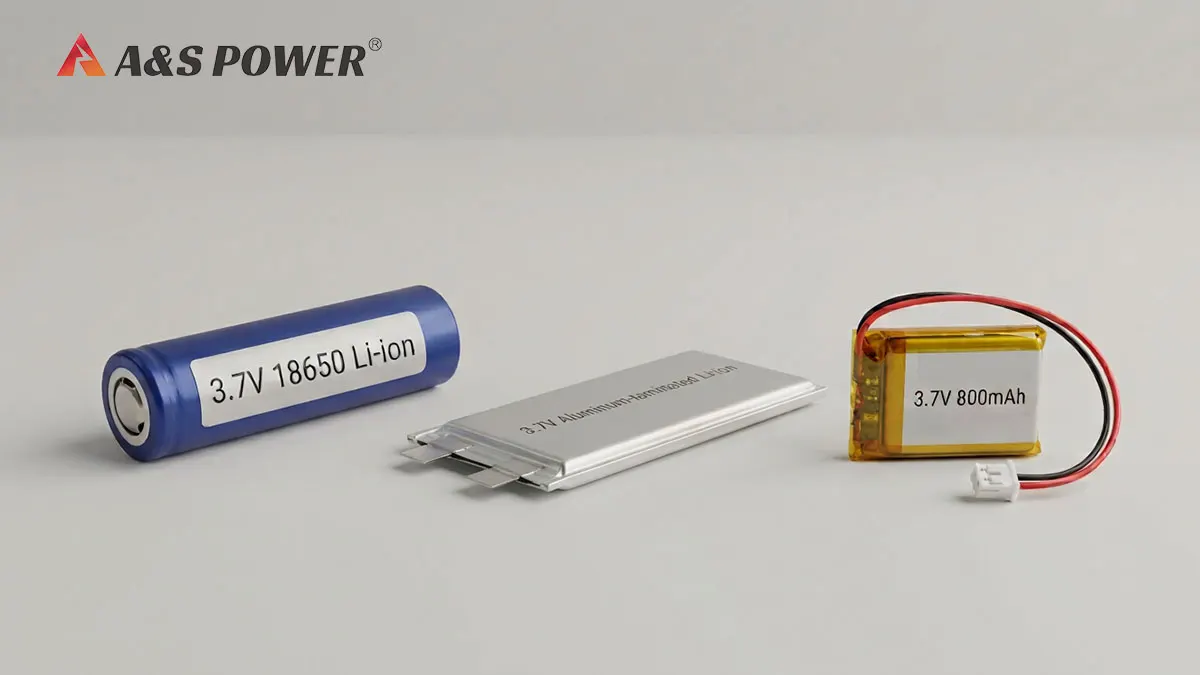
A pouch cell has a flexible laminated enclosure rather than the rigid cylindrical casing used by a conventional cylindrical cell. This format gives manufacturers greater freedom to customize its length, width, and thickness.
If the length and width are fixed, increasing thickness may create additional internal volume for electrode material. This can be a practical option when a product enclosure has unused space in the thickness direction.
However, increasing thickness is not the only possibility. A different cell design or material system may also help increase capacity without changing the external dimensions.
The feasibility depends on the original design and the size of the requested increase.
| Customer requirement | Potential engineering approach | Main limitation |
|---|---|---|
| Same length and width, slightly higher capacity | Evaluate a thicker cell or a higher-energy-density design. | Available thickness and mechanical clearance. |
| Same length, width, and thickness | Evaluate alternative materials and electrode construction. | The achievable gain depends on the existing design. |
| Same external dimensions and substantially higher capacity | Conduct a feasibility assessment before committing to specifications. | The target may exceed practical material or safety limits. |
No single approach works for every battery.
If the original cell already uses a highly optimized design, there may be little room for additional capacity. Conversely, an existing design with more room for optimization may offer a realistic opportunity to improve energy density.
For products with strict thickness requirements, see A&S Power's guide to ultra-thin lithium polymer batteries. It provides additional context on the design constraints associated with thin pouch cells.
A&S Power also offers custom Li-Polymer battery solutions for projects that require different dimensions, capacities, voltages, connectors, and protection-circuit configurations. The appropriate design depends on the product's actual space and performance requirements.
5. Why Higher Capacity Is Not the Only Design Objective
When selecting a custom LiPo battery, maximizing capacity should not be the only goal.
A battery must perform reliably within the product's intended operating environment. A design that achieves a higher nominal capacity but cannot meet the required discharge rate, temperature limits, or service life may not be suitable for the application.
Discharge performance
Some products, such as wireless equipment, medical electronics, and compact industrial devices, have specific current requirements. The cell must deliver the required current without excessive voltage drop or heat generation.
A capacity increase alone does not establish that the battery can support a higher discharge current.
Cycle life
Electrode materials and operating conditions influence how capacity changes over repeated charge and discharge cycles. A higher initial capacity does not necessarily mean that the battery will retain that capacity for as long as another design.
Temperature and safety
The cell must operate within appropriate charging and discharging temperature limits. Material selection, electrode design, protection circuitry, and the application environment all matter.
A higher-energy-density design must still meet the relevant safety and reliability requirements.
Mechanical integration
Pouch cells need sufficient space for insulation, electrical connections, manufacturing tolerances, and any expansion allowance required by the selected cell design.
The nominal cell dimensions should not be treated as the entire battery compartment requirement. A finished battery pack may also contain protection circuitry, wires, connectors, and other components.
This distinction is especially important when a customer specifies the maximum dimensions of the complete battery pack rather than those of the bare cell.
6. How to Request a Higher-Capacity Custom LiPo Battery
For OEM product developers, the most effective way to evaluate a capacity increase is to provide the battery manufacturer with the existing design constraints and the desired performance target.
At A&S Power, the following information helps establish whether a higher-capacity option is technically feasible.
1. Current battery specifications
Provide the existing voltage, capacity, length, width, thickness, and, if available, the battery model or datasheet.
2. Maximum available space
Specify the maximum permitted dimensions, including any restrictions on thickness. Clarify whether the measurements refer to the cell or the complete battery assembly.
3. Required operating performance
Describe the expected operating time, continuous and peak discharge currents, charging requirements, and operating temperature range.
4. Service-life requirements
Explain the expected charge and discharge frequency and any cycle-life or capacity-retention requirements.
5. Application and mechanical constraints
Identify the end product and any relevant connector, wire, protection-circuit, insulation, or certification requirements.
With this information, the manufacturer can assess whether the target might be achieved through a material change, revised electrode construction, adjusted thickness, or another cell-design modification.
The result should be a technically evaluated specification rather than an assumed capacity increase based solely on the battery's external dimensions.
If you are developing a new product or upgrading an existing one, A&S Power provides custom LiPo battery solutions for OEM and ODM projects. Sharing the current cell dimensions and target capacity is a useful starting point for a design feasibility discussion.
Conclusion
Does a higher-capacity LiPo battery have to be bigger? In most cases, yes, when the chemistry and internal design remain comparable. More capacity generally requires more active material and therefore more space.
However, battery size and capacity are not linked by a fixed ratio. Different cathode materials, electrode designs, and energy densities can allow cells with similar external dimensions to provide different capacities. Adjusting thickness may also be an option when the product enclosure permits it.
The practical limit depends on the existing cell design and the application's electrical, mechanical, thermal, safety, and lifetime requirements. No material change can guarantee a capacity increase without evaluating these trade-offs.
For OEM buyers, the best approach is to define the maximum battery dimensions first, then evaluate the capacity that can realistically be achieved within those limits. This allows the battery manufacturer to recommend a suitable design based on actual requirements rather than capacity alone.
Frequently Asked Questions
1. Does a higher-capacity LiPo battery always have larger dimensions?
No. A higher-capacity LiPo battery is generally larger when the chemistry and design are comparable, but cells with different energy densities can provide different capacities within similar dimensions. The achievable difference depends on the specific cell design.
2. Can I increase the capacity of a LiPo battery without changing its size?
Potentially. A manufacturer may evaluate a different cathode formulation, electrode design, or manufacturing approach to improve energy density. Whether the target is feasible depends on the original design and the required performance and safety limits.
3. Does increasing battery thickness increase capacity?
Increasing thickness can provide more internal volume for electrode material and may increase capacity. However, the actual gain depends on the cell construction, material system, and available design space.
4. Does a higher cobalt content always mean higher battery capacity?
No. Cobalt's role depends on the cathode material's composition and structure. Certain cobalt-containing cathode systems offer high volumetric energy density, but cobalt content alone does not determine a cell's capacity. The complete electrode formulation and cell design must be considered.
5. Can two LiPo batteries with the same dimensions have different capacities?
Yes. Differences in cathode chemistry, electrode loading, active material utilization, and internal construction can lead to different capacities in cells with similar external dimensions. The actual specifications must be verified for each cell.
6. Is a higher-capacity LiPo battery always better?
Not necessarily. A higher capacity may increase operating time, but the battery must also meet current, temperature, charging, cycle-life, safety, and mechanical requirements. The best choice balances these factors for the intended application.
7. What information should I provide to request a custom high-capacity LiPo battery?
Provide the nominal voltage, capacity, maximum length, width and thickness, discharge current, charging conditions, operating temperature, expected cycle life, and end application. An existing battery datasheet or drawing can also help the manufacturer evaluate the design.