




Introduction
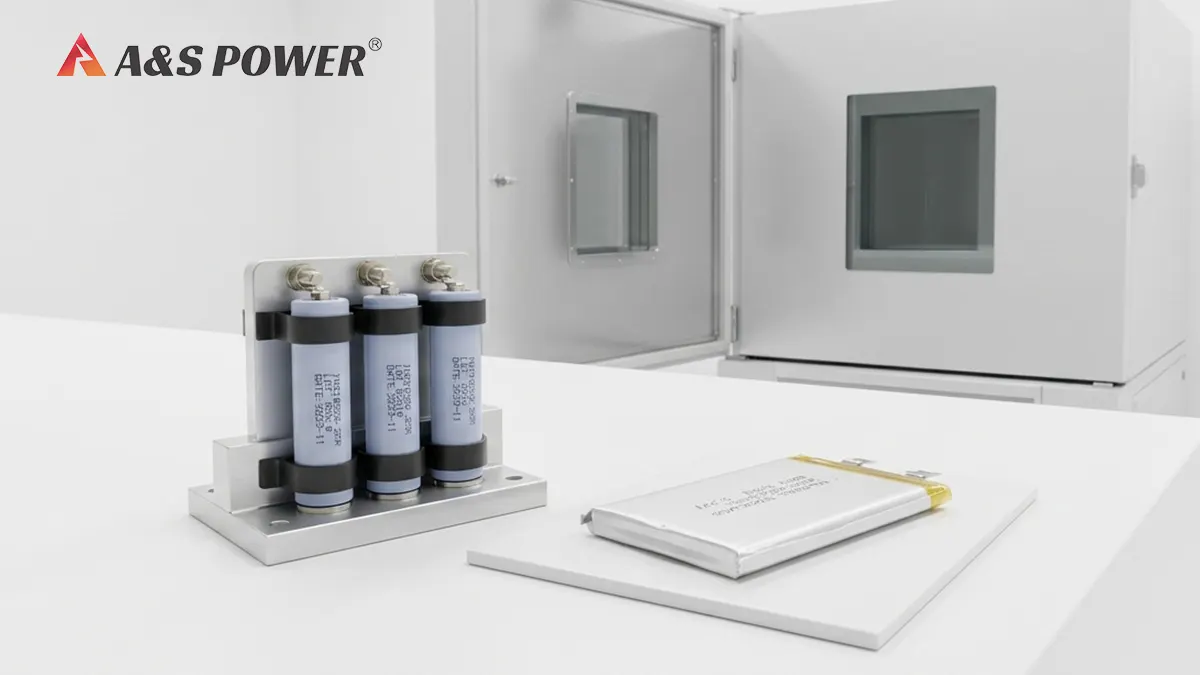
Why does battery capacity decrease at high temperatures? This is an important question for engineers, product developers, and manufacturers using rechargeable lithium batteries in equipment exposed to heat.
Lithium-ion and lithium-polymer batteries are sensitive to operating temperature. Although higher temperatures can temporarily improve certain electrochemical reactions and discharge performance, prolonged exposure to heat accelerates battery aging. Over time, this can reduce the amount of energy a battery can store and deliver, shorten its cycle life, and affect its safety.
For products operating in hot climates, enclosed equipment, industrial environments, or applications that generate significant internal heat, understanding temperature-related battery degradation is essential.
The solution is not simply to choose a battery with a larger rated capacity. Instead, battery selection should account for the actual operating temperature, charging conditions, discharge load, expected service life, and cell chemistry.
This article explains the scientific reasons why high temperatures affect battery capacity, the difference between temporary performance changes and permanent capacity loss, and how to select a suitable battery for high-temperature applications.
Quick Answer: Why Does Battery Capacity Decrease at High Temperatures?
Battery capacity decreases over time in high-temperature environments because heat accelerates chemical side reactions inside the cell. These reactions can consume active lithium, degrade electrode materials, and destabilize the electrolyte and electrode interfaces.
The main consequences include:
- Accelerated aging: Unwanted chemical reactions occur more rapidly at elevated temperatures.
- Permanent capacity loss: Some lithium and active electrode material become unavailable for normal charge and discharge.
- Increased internal resistance: Aging can increase resistance and reduce the energy a battery can deliver under load.
- Shorter cycle life: Repeated operation at elevated temperatures can reduce the number of useful charge-discharge cycles.
- Higher safety risks: Excessive heat can contribute to gas generation, cell swelling, electrolyte degradation, and, under severe conditions, thermal runaway.
The extent of degradation depends on the battery chemistry, cell design, temperature, state of charge, charging voltage, current, and exposure duration. There is no single capacity-loss percentage that applies to every lithium battery.
1. How High Temperatures Affect Lithium Battery Capacity
To understand why heat reduces battery capacity, it is necessary to distinguish between a battery's immediate performance and its long-term condition.
1.1 Temporary Performance Changes at Elevated Temperatures
Battery performance depends partly on how easily lithium ions move through the electrolyte and across the electrode interfaces.
Within a cell's permitted operating range, a moderate temperature increase can improve ion transport and reaction kinetics. In some circumstances, a battery may deliver its stored energy more readily than it would at a lower temperature.
However, improved short-term performance does not mean that the battery has gained permanent storage capacity or that high-temperature operation will extend its service life.
The distinction matters because a battery can initially appear to perform normally in a hot environment while its internal components are aging more rapidly. For a further explanation of the difference between immediate discharge performance and long-term durability, see Battery University's guide to discharging batteries at high and low temperatures.
1.2 Permanent Capacity Fade During Long-Term Exposure
Prolonged heat exposure accelerates several degradation mechanisms inside lithium-ion cells. Some of these reactions consume cyclable lithium, while others reduce the amount of active electrode material available for electrochemical reactions.
As degradation progresses, the battery may no longer deliver its original rated capacity under the same test conditions.
For example, a battery that originally delivers its specified capacity under a defined discharge protocol may deliver less energy after extended high-temperature operation. The actual reduction must be established through testing; it cannot be calculated accurately from ambient temperature alone.
Research reviews on lithium-ion battery aging identify temperature, voltage limits, charging and discharging conditions, and material stability as interconnected factors affecting capacity retention. The peer-reviewed review Understanding ageing in Li-ion batteries: a chemical issue, published in Chemical Society Reviews, discusses how these chemical processes contribute to battery degradation.
2. Four Main Reasons High Temperatures Reduce Battery Capacity
2.1 Accelerated Chemical Side Reactions
Lithium-ion batteries rely on carefully controlled electrochemical reactions between the positive and negative electrodes. The electrolyte and the interfaces between the electrodes and electrolyte also play essential roles.
At elevated temperatures, many unwanted chemical reactions proceed more rapidly. These reactions can consume electrolyte components, change electrode interfaces, and contribute to the loss of cyclable lithium.
One important process involves the solid electrolyte interphase (SEI), a protective layer that forms on the negative electrode. This layer is necessary for normal battery operation, but its continued growth or degradation can consume lithium and increase resistance.
Heat can accelerate changes in this interface, contributing to capacity fade over time.
The rate and severity of these reactions depend on cell chemistry, electrode formulation, voltage, and operating conditions. Therefore, two batteries with the same nominal voltage and capacity may age differently under the same thermal conditions.
For a deeper scientific explanation, the open-access review Lithium ion battery degradation: what you need to know in Physical Chemistry Chemical Physics explains how multiple degradation mechanisms combine to produce capacity and power fade.
2.2 Degradation of Electrode Materials
The positive and negative electrodes contain materials that enable lithium to be stored and released during charging and discharging.
Prolonged high-temperature exposure can alter these materials and their interfaces. Depending on the cell chemistry and operating conditions, degradation may include structural changes, transition-metal dissolution, surface reactions, or loss of electrically connected active material.
When less active material remains available for normal electrochemical reactions, the cell's usable capacity can decline.
The specific degradation mechanism varies between lithium nickel manganese cobalt oxide (NMC), lithium iron phosphate (LFP), lithium cobalt oxide (LCO), and other lithium-ion chemistries.
It is therefore inaccurate to assume that every lithium battery experiences the same rate of capacity loss at a particular temperature.
2.3 Electrolyte Degradation and Gas Generation
The electrolyte transports lithium ions between the electrodes. Its chemical stability is essential for reliable battery performance.
Elevated temperatures can accelerate electrolyte decomposition and other unwanted reactions, especially when combined with high cell voltage or prolonged storage at a high state of charge.
These processes may generate gases and alter the internal interfaces of the cell. In pouch cells, gas accumulation can contribute to swelling. Other cell formats may exhibit different visible symptoms.
Electrolyte degradation can also increase polarization and reduce electrochemical efficiency, further affecting usable capacity and power delivery.
Gas generation or swelling should not be treated as a normal consequence that can be ignored. A swollen, leaking, or abnormally hot battery should be taken out of service according to the equipment manufacturer's safety procedures.
2.4 Increased Internal Resistance and Reduced Power Delivery
Battery aging can change internal resistance and electrochemical impedance.
When resistance or polarization increases, a larger portion of the cell's voltage is lost under load. The terminal voltage may reach the equipment's low-voltage cutoff earlier, leaving some stored energy inaccessible to that device under its operating conditions.
This can make the battery appear to have less usable capacity, even when the relationship between its measured capacity and internal resistance is not straightforward.
It is important to distinguish two measurements:
- Capacity retention: How much charge or energy the battery can deliver under a specified test protocol compared with its original performance.
- Power capability: How effectively the battery can deliver current while maintaining an acceptable voltage.
A battery may experience declining capacity, increasing resistance, or both. Standardized capacity testing and resistance measurements help determine which performance changes are occurring.
3. Does High Temperature Always Reduce Battery Capacity Immediately?
No. The effect depends on whether the question concerns immediate discharge performance or long-term degradation.
| Condition | Possible Battery Response |
|---|---|
| Moderate temperature increase within the specified range | Some electrochemical reactions and discharge performance may improve temporarily. |
| Prolonged operation at elevated temperature | Chemical aging accelerates, potentially reducing capacity retention and cycle life. |
| High-temperature storage at a high state of charge | Calendar aging may accelerate, depending on cell chemistry and voltage. |
| Charging beyond the permitted temperature range | Increased risk of unwanted side reactions and safety problems. |
| Severe overheating | Potential damage, gas generation, and increased risk of thermal runaway. |
These are general trends, not universal performance guarantees. The permitted temperature range and actual response must be verified against the selected cell's datasheet and test results.
Battery University's explanation of high- and low-temperature discharge describes how elevated temperatures can improve immediate performance while prolonged heat exposure shortens service life. Its companion resource, Charging at High and Low Temperatures, explains why charging and discharging limits should not be assumed to be identical.
4. Why Battery Cycle Life Becomes Shorter in Hot Environments
Battery cycle life describes how many charge-discharge cycles a battery can complete before its capacity or other performance characteristics reach a defined end-of-life criterion.
High temperature can shorten cycle life by accelerating chemical degradation during both cycling and storage.
Three operating factors deserve particular attention.
First, continuous heat exposure. A battery installed near a motor, power converter, heating element, or other heat source may remain hot for extended periods. Even when current demand is moderate, prolonged exposure can accelerate calendar aging.
Second, charging conditions. Charging at high temperatures can increase unwanted side reactions. The combined effects of temperature, charging current, and cell voltage may be more damaging than any one factor considered independently.
Third, high state of charge. Storing a lithium-ion battery at a high state of charge while it is hot can increase aging in many cell chemistries. Where the application permits, a manufacturer-approved storage state of charge may help reduce stress.
Consequently, cycle-life figures should never be quoted without their associated test conditions. A cycle-life result obtained at one temperature, current, and depth of discharge cannot automatically be applied to a different operating environment.
For additional background on how temperature, charge level, and depth of discharge interact, see Battery University's guide to prolonging lithium-based battery life. Its example data apply to particular battery systems and should not be treated as a universal prediction for every cell.
5. How High Temperature Affects Battery Safety
Capacity loss is not the only concern. High temperatures can also affect the safety and reliability of a lithium battery.
Depending on the cell design and severity of exposure, possible effects include:
- Accelerated electrolyte and electrode-interface degradation.
- Increased gas generation and pouch-cell swelling.
- Changes in internal resistance and heat generation.
- Reduced long-term reliability.
- Increased risk of thermal runaway under severe abuse or failure conditions.
Thermal runaway is a self-accelerating process in which heat-generating reactions can raise cell temperature further, potentially leading to venting, fire, or other hazardous outcomes.
High ambient temperature alone does not mean that thermal runaway will occur. The risk depends on the cell's condition, temperature, electrical loading, protective design, and other factors. Nevertheless, excessive heat reduces the safety margin and should be addressed through appropriate engineering controls.
A battery management system (BMS) can provide functions such as temperature monitoring and charging or discharging cutoffs when the system is designed to support them. However, a BMS cannot reverse chemical aging or make an unsuitable cell safe for continuous operation outside its specified limits.
For further background on the materials and engineering challenges involved in battery operation across a wide temperature range, see the peer-reviewed review Challenges and advances in wide-temperature rechargeable lithium batteries, published in Energy & Environmental Science.
6. How to Reduce High-Temperature Battery Capacity Loss
For product manufacturers and system integrators, preventing excessive heat is generally more effective than attempting to compensate for capacity loss after it occurs.
6.1 Control the Actual Battery Temperature
Measure the temperature where the battery operates, rather than relying exclusively on the surrounding air temperature.
Internal heat can be generated by electrical losses during charging and discharging. An enclosed product may therefore have a battery temperature significantly different from its ambient temperature.
Thermal design should consider the battery's position, airflow, insulation, nearby heat sources, current demand, and duty cycle.
6.2 Follow the Cell Manufacturer's Temperature Limits
The charging and discharging temperature ranges are not necessarily identical.
A cell may permit discharge under conditions where charging is restricted. The applicable limits also vary with chemistry, construction, and model.
Always use the specified temperature limits for the actual cell or battery pack. Do not assume that a general temperature range for lithium-ion batteries applies to every lithium-polymer or lithium-ion product.
This technical guide to temperature-dependent charging provides useful background, but the actual cell manufacturer's datasheet and charging specifications must take precedence for a particular product.
6.3 Optimize Charging Current and Voltage
Charging current, upper charging voltage, temperature, and state of charge can interact to influence battery aging.
Where supported by the manufacturer's specifications, a suitable charging strategy may reduce thermal and electrochemical stress. Temperature-based charging restrictions and appropriate current limits should be integrated into the system design.
Never raise the charging voltage or bypass temperature protection in an attempt to recover capacity.
6.4 Choose a Battery Designed for the Application
If equipment must operate continuously in a high-temperature environment, a standard consumer-grade cell may not provide the required service life.
A suitable solution may require specially qualified high-temperature cells, temperature-resistant materials, appropriate separators and electrolyte formulations, or a different cell construction. The exact requirements depend on the intended temperature range and operating profile.
The term high-temperature battery should not be treated as a universal specification. Confirm the manufacturer's permitted operating and charging temperatures, expected cycle life under representative conditions, and available qualification data.
For applications requiring a tailored battery design, A&S Power's rechargeable battery solutions provide a starting point for discussing cell chemistry, pack configuration, and application requirements. The appropriate design should be determined from the actual technical specifications and validated operating conditions.
6.5 Validate the Complete Battery Pack
Cell-level performance does not automatically establish complete pack performance.
The pack design, BMS, wiring, connectors, enclosure, thermal path, and charging system can all affect temperature and reliability. For demanding applications, testing should reproduce the intended ambient temperature, current profile, charging conditions, and operating duration.
This helps establish whether the proposed battery meets the product's capacity-retention, cycle-life, and safety requirements.
Before production, manufacturers should also confirm which safety and compliance requirements apply to the intended product and destination market. A&S Power's battery certification information can help buyers identify relevant certification topics; the certification status of any particular model should be verified individually.
7. How to Select a Battery for High-Temperature Applications
Battery selection should begin with the real operating conditions rather than a nominal capacity target alone.
| Selection Factor | What to Verify |
|---|---|
| Operating temperature | Actual ambient and battery-cell temperatures during normal operation and peak load. |
| Charging temperature | Manufacturer-approved charging range and any temperature-dependent current limits. |
| Discharge profile | Continuous current, peak current, duty cycle, and low-voltage cutoff. |
| Required service life | Expected calendar life, cycle count, and acceptable capacity retention. |
| Cell chemistry | Suitability for the application, including thermal behavior and aging characteristics. |
| Protection and thermal design | Temperature sensing, protective cutoffs, enclosure design, and heat dissipation. |
| Qualification testing | Evidence that the cell or pack meets the intended operating conditions. |
For OEM and ODM projects, these requirements should be discussed before the battery design is finalized.
A&S Power develops customized rechargeable battery solutions, including lithium-ion and lithium-polymer battery packs. For products exposed to elevated temperatures, the engineering review should establish the actual temperature profile, electrical requirements, charging conditions, and expected service life before selecting a cell.
Developing a battery for a high-temperature application?
Define your required operating temperature, charging conditions, discharge current, available installation space, and expected service life before selecting a cell. These details help determine whether a standard cell or a specially qualified high-temperature solution is appropriate.
Visit A&S Power to discuss custom rechargeable battery requirements for your application.
Conclusion
Battery capacity decreases over time at high temperatures primarily because heat accelerates chemical and electrochemical aging inside the cell. These processes can consume cyclable lithium, degrade electrode materials, destabilize the electrolyte, and increase internal resistance.
The result may be reduced usable capacity, shorter cycle life, and increased safety risks. However, the immediate effect of a moderate temperature increase is not always a decrease in discharge performance; temporary performance improvements can coexist with faster long-term aging.
For equipment that operates continuously in hot environments, the most effective approach is to control battery temperature, follow the cell manufacturer's charging and discharging limits, and select cells qualified for the intended conditions.
At A&S Power, battery selection and customization should be based on the actual application requirements and verified technical specifications—not on nominal capacity alone.
Frequently Asked Questions
1. Does high temperature reduce lithium battery capacity?
Prolonged high-temperature exposure can accelerate chemical aging, leading to permanent capacity loss. The degree of loss depends on the cell chemistry, temperature, state of charge, charging conditions, and exposure duration.
2. Why does a lithium battery lose capacity faster in hot weather?
High temperatures accelerate unwanted chemical reactions and can degrade electrode interfaces and electrolyte components. Outdoor equipment and devices in hot climates may also experience additional heat from direct sunlight, charging, or internal electrical losses.
3. Can a battery temporarily perform better at higher temperatures?
Yes. Within its permitted operating range, a moderate temperature increase can improve ion transport and some electrochemical reaction rates. This may improve short-term discharge performance, but it does not mean that long-term battery aging is reduced.
4. What temperature is too high for a lithium-ion battery?
There is no single upper temperature limit for every lithium-ion battery. Permitted charging and discharging temperatures vary by cell chemistry and model. Always consult the manufacturer's datasheet and distinguish between charging, discharging, and storage limits.
5. Does high-temperature charging damage lithium batteries?
Charging outside the manufacturer's specified temperature range can accelerate unwanted side reactions and increase safety risks. The effects depend on the cell design, temperature, charging current, and voltage. Follow the approved charging specifications and use appropriate temperature protection.
6. Can a high-temperature battery completely prevent capacity loss?
No battery should be assumed to be immune to aging. Cells designed or qualified for elevated-temperature operation may offer better performance under specified conditions, but their actual capacity retention and service life must be verified through application-relevant testing.
7. How can manufacturers extend battery life in high-temperature applications?
Manufacturers can reduce thermal stress through improved heat management, appropriate charging controls, suitable cell selection, temperature monitoring, and pack-level validation. Selecting a cell specifically qualified for the expected operating environment is particularly important for continuous high-temperature use.
8. Should I choose a larger-capacity battery for a high-temperature application?
Not necessarily. A larger nominal capacity may provide more initial energy, but it does not solve the underlying aging mechanism. The better approach is to establish the required runtime and service life, determine the real battery temperature, and select a cell and pack design validated for those conditions.