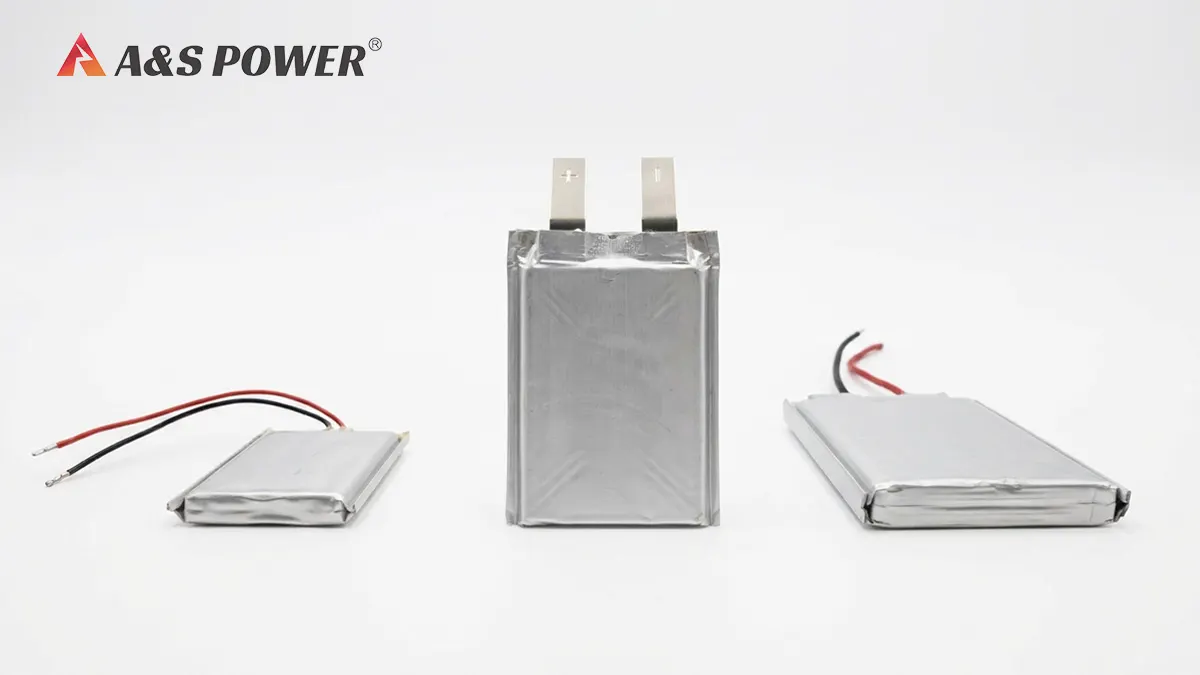


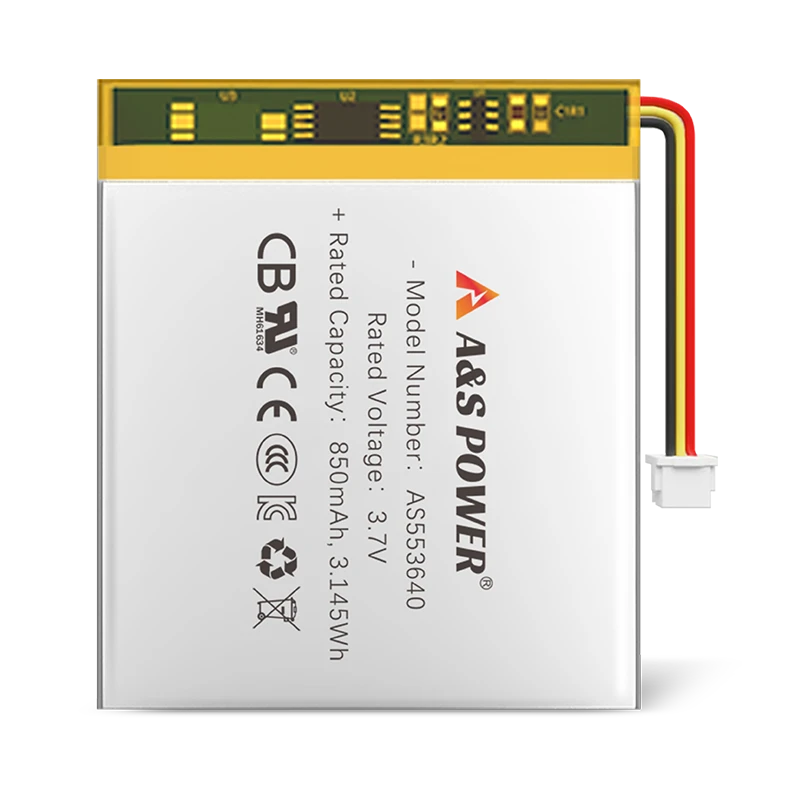


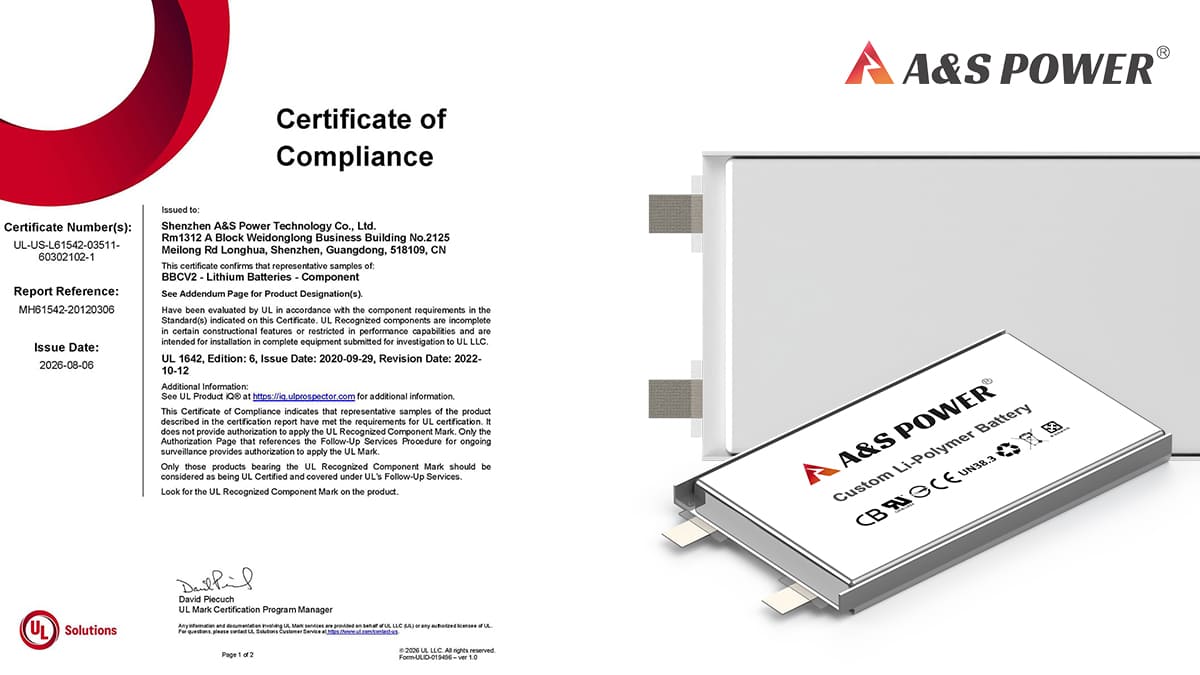
A&S Power has expanded its rechargeable lithium polymer battery cell portfolio with 14 additional 3.7V models covered by its UL 1642 certification documentation, ranging from 100mAh to 3000mAh.
Quick Answer:
A&S Power's UL 1642 documentation covers multiple rechargeable lithium battery cell models, including 14 newly highlighted 3.7V LiPo cells ranging from 100mAh to 3000mAh. The certificate is identified by Certificate Number UL-US-L61542-03511-60302102-1, with Report Reference MH61542-20120306 and an Issue Date of August 6, 2026.
Introduction
When I discuss lithium polymer battery sourcing with OEM customers, I find that certification is rarely just a checkbox. For many engineering teams, purchasing departments and compliance managers, the certification status of a battery cell can affect supplier qualification, documentation, product development and market-entry planning.
That is why we are highlighting this latest UL 1642 certification update from A&S Power. The certificate covers rechargeable battery cells manufactured by Shenzhen A&S Power Technology Co., Ltd. and includes a broad range of models.
Among these models are 14 additional 3.7V lithium polymer battery cells that I want to highlight because they provide different dimensional and capacity options for compact rechargeable electronic products.
The newly highlighted models range from the compact 301525 3.7V 100mAh cell to the 755060 3.7V 3000mAh cell. This gives product developers more options when balancing battery size, capacity, runtime and available installation space.
UL 1642 Certification Details
The certificate identifies the product category as Rechargeable Battery Cells and references UL 1642, Edition 6. The certificate number, report reference and issue date provide clear identification information for customers reviewing the certification documentation.
| Certification Item | Details |
|---|---|
| Certification Standard | UL 1642 |
| Edition | Edition 6 |
| Product Category | Rechargeable Battery Cells |
| Certificate Number | UL-US-L61542-03511-60302102-1 |
| Report Reference | MH61542-20120306 |
| Issue Date | August 6, 2026 |
| Issued To | Shenzhen A&S Power Technology Co., Ltd. |
UL 1642 Certificate Evidence
For customers who need to review the certification evidence, I recommend providing the original certificate pages directly on the article rather than displaying only a certification badge. This allows engineers and purchasing teams to review the certificate number, report reference, issue date and covered product models.
UL 1642 Certificate – Page 1
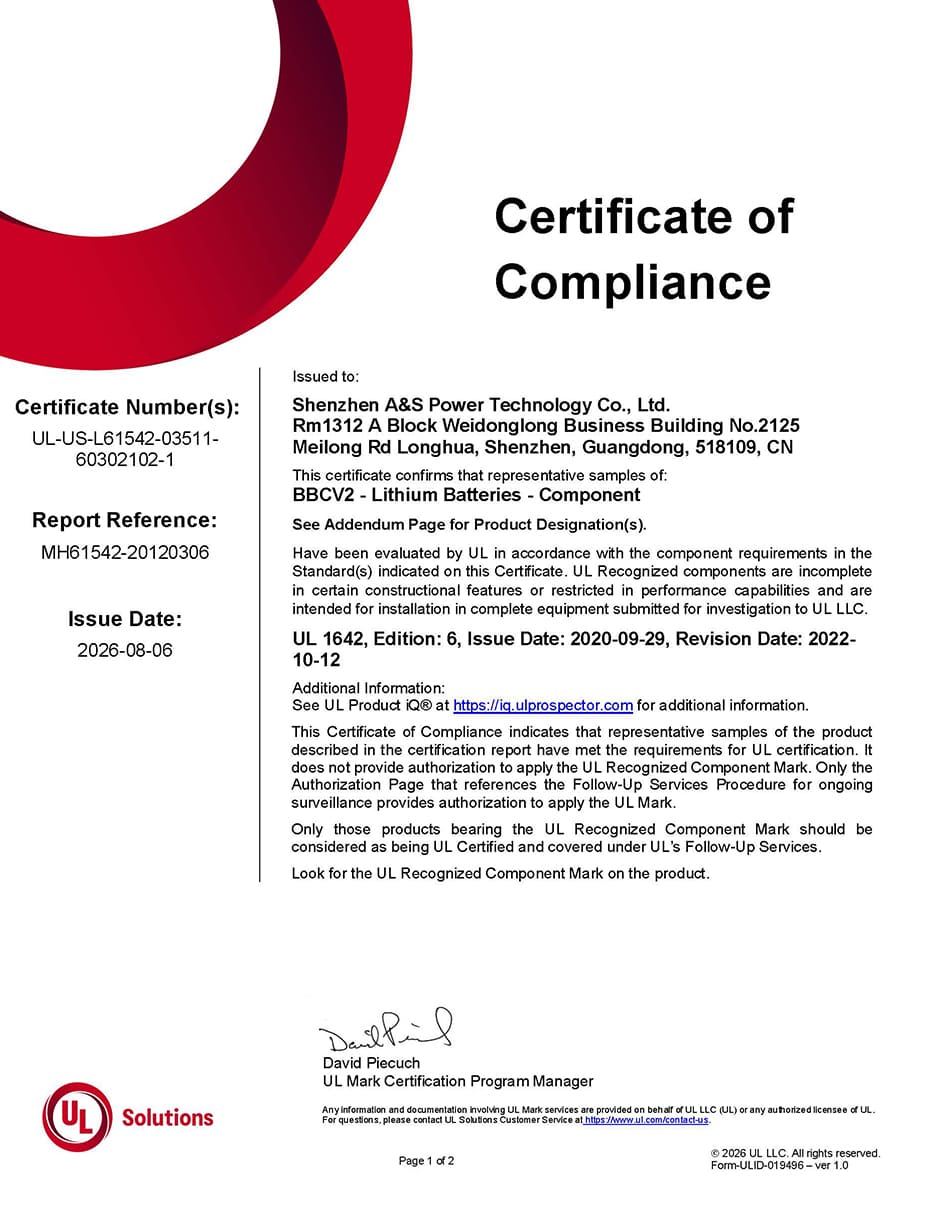
UL 1642 Certificate of Compliance — Certificate No. UL-US-L61542-03511-60302102-1.
UL 1642 Certificate – Page 2
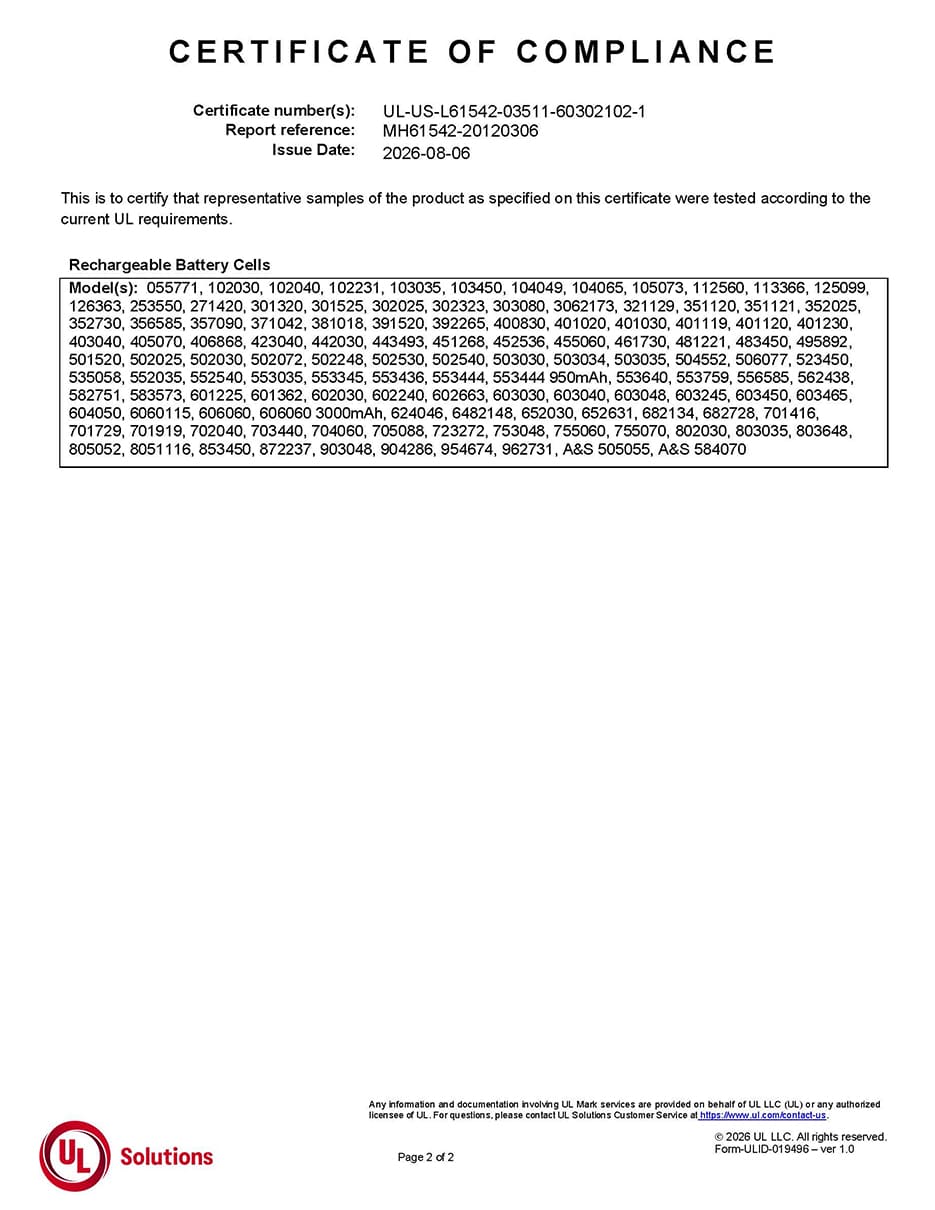
UL 1642 certificate model list showing rechargeable battery cell models covered by the certification documentation.
14 Newly Highlighted UL 1642 LiPo Battery Cell Models
The following 14 models are the newly highlighted rechargeable lithium polymer battery cells covered by the certification information shown in this update. All models listed below have a nominal voltage of 3.7V.
| Model | Nominal Voltage | Capacity | Typical Application Direction |
|---|---|---|---|
| 601225 | 3.7V | 150mAh | Compact electronics and wearable devices |
| 502540 | 3.7V | 500mAh | Portable electronics and IoT equipment |
| 452536 | 3.7V | 400mAh | Compact portable devices |
| 582751 | 3.7V | 800mAh | Wearables and handheld electronics |
| 682728 | 3.7V | 520mAh | Portable electronics and IoT |
| 755060 | 3.7V | 3000mAh | Higher-capacity portable equipment |
| 501520 | 3.7V | 150mAh | Small electronic devices |
| 102030 | 3.7V | 600mAh | Portable and compact electronics |
| 903048 | 3.7V | 1500mAh | Handheld and portable equipment |
| 301525 | 3.7V | 100mAh | Ultra-compact electronic devices |
| 502072 | 3.7V | 900mAh | Portable electronics and IoT |
| 602030 | 3.7V | 300mAh | Compact consumer electronics |
| 553035 | 3.7V | 600mAh | Portable devices and smart electronics |
| 502530 | 3.7V | 350mAh | Compact IoT and portable equipment |
What Does UL 1642 Mean for Lithium Battery Cells?
UL 1642 is a lithium battery safety standard focused on battery cells. For OEM battery projects, it is important to distinguish cell-level certification from certification of a complete battery pack or finished electronic product.
In practical OEM projects, I normally treat cell certification as one part of the overall battery compliance process. A certified cell does not automatically mean that every finished battery pack, BMS configuration, enclosure or end product has the same certification status.
This distinction matters when an OEM customer is selecting a cell for a new battery design. The final battery configuration should be evaluated according to its construction, application, electrical characteristics and target market requirements.
Why UL 1642 Documentation Matters for OEM Battery Development
1. Supplier Qualification
When I work with OEM customers, certification documentation is often reviewed during supplier qualification. A clearly documented certificate number, report reference and covered model list can make the technical review more straightforward.
2. More Cell Options for Different Designs
The 14 models highlighted here cover a capacity range from 100mAh to 3000mAh. This gives engineers more options when the available installation space, runtime requirement or device architecture changes.
3. Support for Global Battery Projects
International battery projects frequently involve multiple technical and regulatory requirements. UL 1642 documentation can therefore become one component of a broader compliance package, alongside transportation testing and other applicable standards.
4. A Starting Point for Custom Battery Development
I do not recommend choosing a battery based on capacity alone. For a custom battery project, I first look at available space, voltage, required runtime, current demand, connector, protection circuit and certification targets.
From 100mAh to 3000mAh: A Flexible 3.7V Cell Range
One useful feature of this portfolio is its wide capacity range. Smaller cells such as the 301525 at 100mAh and the 601225 and 501520 at 150mAh provide starting points for space-constrained electronics.
Mid-range models such as the 502540 at 500mAh, 102030 at 600mAh, 553035 at 600mAh and 582751 at 800mAh provide additional choices for portable electronics and IoT equipment.
At the higher end, the 903048 offers 1500mAh while the 755060 provides 3000mAh. These higher-capacity cells can be considered when longer operating time is required and sufficient internal volume is available.
Actual suitability depends on more than capacity. The final cell selection should also consider dimensions, discharge requirements, operating temperature, charging conditions, protection requirements and the mechanical design of the host device.
Potential Applications for These 3.7V LiPo Battery Cells
Because the models cover different dimensions and capacities, they can be considered for a broad range of compact rechargeable products. Depending on the final electrical and mechanical requirements, typical application directions may include:
- Wearable electronics
- GPS trackers and portable IoT devices
- Handheld consumer electronics
- Smart beauty and personal-care equipment
- Portable medical and healthcare equipment
- Industrial handheld devices
- Portable monitoring equipment
- Other compact rechargeable electronic products
These applications are examples rather than a statement that every listed model is suitable for every application. The correct cell should be selected according to the actual device specifications and certification requirements.
Related A&S Power Resources
If you are evaluating UL 1642 certified LiPo battery cells for an OEM project, I recommend reviewing the following resources:
- A&S Power Lithium Battery Certification Center — View UL, CB, CE, KC, CCC, UN38.3 and other certification records.
- Rechargeable Lithium Polymer Battery Portfolio — Browse A&S Power's LiPo battery models.
- A&S Power Technology Strength — Learn more about battery R&D, testing and manufacturing capabilities.
- A&S Power Company News — Explore company updates, certification announcements and battery manufacturing news.
UL Certification Verification and Reference
Customers who need to review UL certification information should use official UL Solutions resources and the original certification documentation supplied by the manufacturer.
Frequently Asked Questions About UL 1642 LiPo Battery Cells
Looking for a UL 1642 LiPo Battery Cell for Your OEM Project?
Tell us your required dimensions, voltage, capacity, discharge current and application. Our engineering team can help evaluate a suitable cell or develop a customized lithium polymer battery solution.
Request a Battery Solution