




14500 Battery 3.7V Li-ion Rechargeable: What You Need to Know
Quick Answer:
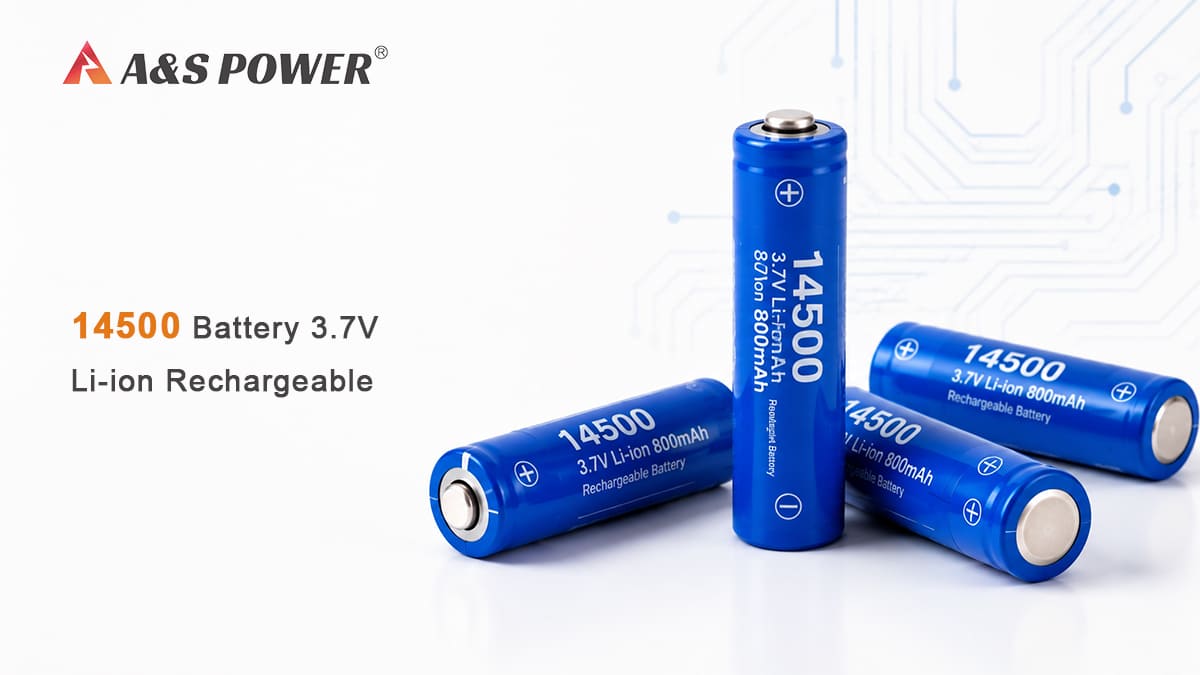
A 14500 battery 3.7V Li-ion rechargeable is a cylindrical lithium-ion battery approximately 14 mm in diameter and 50 mm long. It has a nominal voltage of about 3.6–3.7V and a full-charge voltage of 4.2V.
Although its physical dimensions are similar to an AA battery, a 3.7V 14500 Li-ion battery is not a direct electrical replacement for a conventional 1.5V alkaline AA or 1.2V Ni-MH AA battery. The higher voltage can damage equipment that is designed only for standard AA cells.
Typical 14500 capacities vary by cell design and manufacturer. Current commercial examples include approximately 700mAh, 800mAh, 1,000mAh, 1,100mAh and, in some products, higher ratings. For example, A&S Power specifies its 14500 cell at 3.7V and 800mAh, while other commercially available protected cells are rated at 1,000–1,100mAh or higher.
When I evaluate a small cylindrical lithium battery for a compact electronic product, the 14500 format is one of the first cell sizes I consider when space is limited but the application needs more voltage than a conventional AA battery can provide.
The name itself is simple. “14500” generally refers to the approximate physical format: around 14 mm in diameter and 50 mm in length. The chemistry, however, is what makes a 3.7V 14500 battery different from a conventional AA cell.
This distinction is important for product designers and purchasing teams. A battery can have the same general physical dimensions as an AA cell while having completely different electrical characteristics.
For OEM applications, I therefore recommend evaluating the voltage, capacity, discharge current, dimensions, protection circuit, terminal configuration and charging method together, rather than selecting a 14500 battery based on size alone.
What Is a 14500 3.7V Li-ion Rechargeable Battery?
A 14500 3.7V battery is a small cylindrical rechargeable lithium-ion cell.
The “3.7V” figure represents the cell's nominal voltage. A typical single-cell Li-ion battery is charged to approximately 4.2V, while its usable voltage decreases as the battery discharges.
The “14500” designation mainly describes the physical format rather than a universal capacity specification. This is why two 14500 batteries can have the same approximate dimensions but different capacities, discharge ratings, internal resistance and protection configurations.
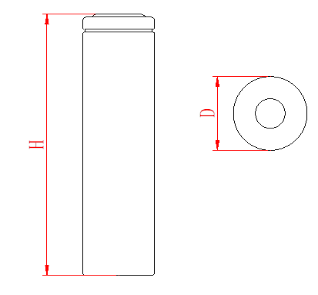
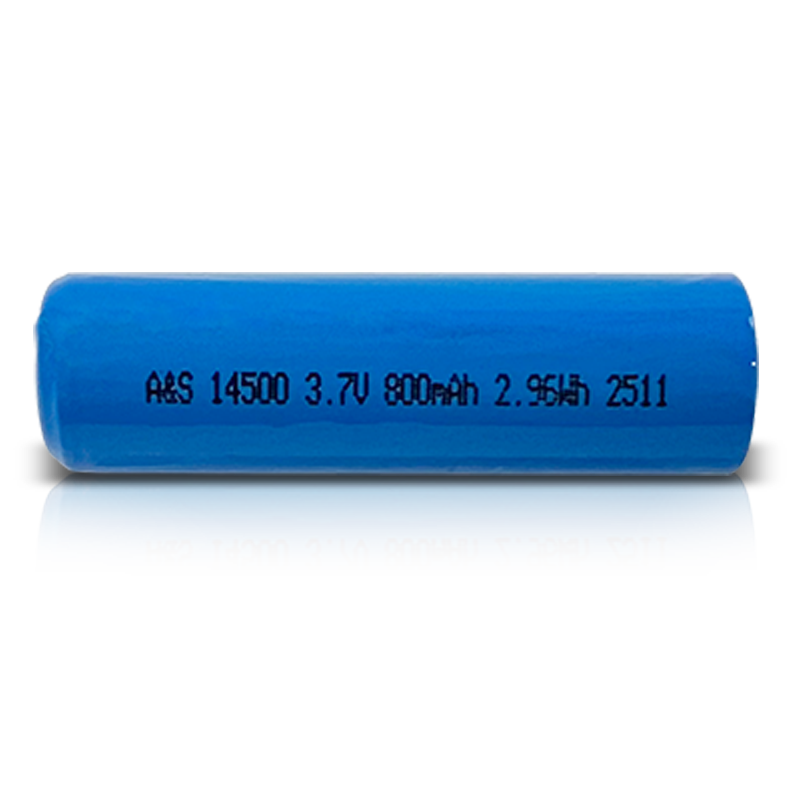
For example, A&S Power's 14500 cell is specified at 800mAh nominal capacity and 3.7V nominal voltage, with a 4.2V charge voltage and 3.0V discharge cut-off specification.
|
Item |
Cell-Specifications |
|
|
D |
14.5-0.5 mm max. | |
|
H |
49.5-0.6 mm max. |
Another manufacturer, XTAR, lists 14500 products at 800mAh and 1,200mAh, illustrating that capacity is not fixed by the 14500 size designation.
14500 Battery Specifications at a Glance
| Parameter | Typical / Example Value | What It Means |
|---|---|---|
| Battery format | 14500 | Small cylindrical Li-ion format |
| Diameter | About 14 mm | Physical cell diameter |
| Length | About 50 mm | Cell length; protected versions can be longer |
| Nominal voltage | 3.6–3.7V | Normal operating voltage |
| Full-charge voltage | 4.2V | Typical Li-ion charge termination voltage |
| Capacity | About 700–1,200mAh in common products | Depends on cell design |
| Energy | About 2.6–4.4Wh | Approx. voltage × capacity |
| Rechargeable | Yes | Designed for repeated charging |
| Chemistry | Lithium-ion | Rechargeable lithium battery chemistry |
| Protection | Optional / application dependent | PCM/BMS can provide protection functions |
These figures should be treated as representative rather than universal specifications. A production battery must always be designed according to the actual cell datasheet and application requirements.
14500 Battery vs. AA Battery: Are They the Same?
This is probably the most important question about 14500 batteries.
Physically, they are similar. Electrically, they are different.
A standard AA battery can refer to several chemistries, including 1.5V alkaline cells and 1.2V rechargeable Ni-MH cells. A 14500 Li-ion battery normally has a nominal voltage of approximately 3.7V.
That means a 14500 Li-ion cell should not automatically be installed in equipment designed for one or two conventional AA batteries.
For example, a device designed for a single 1.5V AA battery may not tolerate the approximately 4.2V maximum voltage of a fully charged 14500 Li-ion cell.
Some specialty lithium AA-format rechargeable batteries include internal electronics that regulate the output to approximately 1.5V. These are different products from a conventional 3.7V 14500 cell.
14500 vs. Conventional AA
| Feature | 14500 Li-ion | Alkaline AA | Ni-MH AA |
| Nominal voltage | 3.6–3.7V | 1.5V | 1.2V |
| Rechargeable | Yes | Usually no | Yes |
| Approx. physical format | 14 × 50mm | AA format | AA format |
| Typical application | High-voltage compact electronics | General consumer devices | Rechargeable AA equipment |
| Full-charge voltage | About 4.2V | N/A | About 1.4–1.5V |
| Electrical compatibility | 3.7V-rated equipment | 1.5V-rated equipment | 1.2V-rated equipment |
The key point is that AA describes a size family, while 3.7V describes an electrical characteristic.
How Much Capacity Does a 14500 Battery Have?
Capacity is one of the specifications that varies most between 14500 products.
A&S Power's 14500 3.7V cell, for example, is rated at 800mAh, with a minimum capacity specification of 750mAh under its stated test conditions.
Commercial products can also be rated at around 1,000mAh or 1,100mAh, while some manufacturers advertise capacities of 1,200mAh or higher. These differences demonstrate why I would not judge a battery only by the nominal “14500” label.
Energy can be estimated using:
Energy (Wh) = Voltage (V) × Capacity (Ah)
For an 800mAh, 3.7V cell:
3.7V × 0.8Ah ≈ 2.96Wh
That matches the 2.96Wh energy specification published for an 800mAh 3.7V 14500 cell by another commercial manufacturer.
Actual usable energy will depend on discharge current, cut-off voltage, temperature, battery age and the equipment's power requirements.
Charging a 14500 3.7V Li-ion Rechargeable Battery
A standard 14500 Li-ion cell should be charged with a charger designed for 3.6/3.7V lithium-ion cells.
For conventional Li-ion chemistry, the charge voltage is generally 4.2V. A&S Power's published 14500 specification identifies 4.2V as the charge voltage and 160mA as its standard charge current for the 800mAh cell.
I would not use a conventional AA Ni-MH charger simply because the battery has AA-like dimensions.
For OEM equipment, the charging system should be matched to the actual cell chemistry and battery configuration. If the final product contains multiple cells, the charger and protection architecture must also account for the series/parallel configuration.
Protected vs. Unprotected 14500 Batteries
Another important design decision is whether the 14500 cell requires a protection circuit.
A protected 14500 battery may incorporate a protection circuit module that helps protect against conditions such as:
- Overcharge
- Over-discharge
- Overcurrent
- Short circuit
Commercial protected 14500 batteries are available with these functions. For example, KeepPower lists a protected 14500 battery with overcharge, over-discharge, overcurrent and short-circuit protection.
However, I would not assume that every 14500 battery contains protection electronics.
For OEM products, protection should be evaluated at the cell, battery-pack and device-system level. The required protection depends on the application, charging architecture, current demand and applicable safety requirements.
Common Applications of 14500 Batteries
The compact size and relatively high nominal voltage make 14500 batteries suitable for many small electronic products.
Common applications include:
Flashlights and Portable Lighting
14500 cells are widely used in compact LED flashlights and portable lighting equipment. Their cylindrical format fits small battery compartments while providing a nominal voltage around 3.7V.
Consumer Electronics
Small electronic products, smart devices, toys and portable equipment can use 14500 cells when the system is specifically designed for a 3.7V lithium-ion power source.
Medical and Portable Equipment
Compact medical or monitoring equipment may use small cylindrical lithium batteries where stable power and limited installation space are important. However, medical applications require much more detailed battery validation than simply selecting a commercially available cell.
Industrial Sensors and IoT Devices
Small industrial sensors, monitoring equipment and IoT devices may also benefit from the compact form factor. The final choice depends heavily on standby current, peak current, operating temperature and required service life.
OEM Battery Packs
For products requiring more than one cell, 14500 cells can be assembled into customized battery packs. Series connections can increase voltage, while parallel connections can increase capacity.
For example, a 2S configuration using suitable 3.7V Li-ion cells has a nominal voltage around 7.4V, although the exact pack design must account for charging, protection and cell matching.
What Should OEM Buyers Check Before Purchasing 14500 Batteries?
When I work through a small lithium battery specification, I recommend checking these parameters before discussing price:
- Nominal voltage – Confirm that the electronics are designed for 3.6/3.7V Li-ion.
- Capacity – Determine the required runtime rather than choosing the highest advertised mAh.
- Maximum continuous discharge current – Make sure the cell can handle the device's normal load.
- Peak current – Check startup or motor-related current demands.
- Dimensions – Confirm the available diameter and length, including protection components.
- Terminal type – Flat-top, button-top, tabs, wires and connectors can affect mechanical integration.
- Protection circuit – Determine whether PCM or another protection architecture is required.
- Operating temperature – Check the manufacturer's validated charge and discharge range.
- Cycle-life requirements – Match expected charging frequency with the cell's tested cycle performance.
- Compliance requirements – Determine which transportation and product safety documentation is required for the target market.
For commercial products, documentation should be evaluated against the actual cell and final battery configuration rather than relying only on a generic certificate.
14500 Battery OEM and Customization Options
For some projects, an off-the-shelf 14500 cell is enough. For others, customization becomes more practical.
At A&S Power, 14500 cells can be integrated into custom battery solutions with options involving battery configuration, terminals, wires, connectors, protection circuits and labeling. The company's published 14500 product information also describes customized terminations and battery-pack assembly for OEM applications.
A&S Power's broader Li-ion battery portfolio supports customized voltage, capacity, dimensions, connectors and protection requirements for applications including GPS devices, medical equipment, consumer electronics and industrial products.
For an OEM project, I recommend starting with the device requirements rather than asking only for a “14500 battery.”
A useful engineering specification should include:
Voltage + capacity + dimensions + current + connector + protection + charging method + operating temperature + certifications
That gives the battery manufacturer enough information to determine whether a standard 14500 cell is appropriate or whether a customized pack is better.
Safety and Compliance Considerations
Lithium-ion batteries require controlled charging, appropriate protection and careful mechanical handling.
A 14500 cell should not be short-circuited, crushed, punctured, improperly charged or exposed to unsuitable temperatures. Protected commercial cells commonly specify protection against overcharge, over-discharge, overcurrent and short circuit.
For products intended for international distribution, I also recommend discussing applicable requirements such as IEC 62133, UN 38.3, RoHS, REACH and other market-specific requirements with the battery manufacturer.
The exact certification package depends on whether the product uses a single cell, a battery pack, a protection circuit and how the battery will be transported and incorporated into the finished equipment.
Conclusion
A 14500 battery 3.7V Li-ion rechargeable is a compact cylindrical lithium-ion cell that offers considerably higher nominal voltage than conventional AA batteries while maintaining a similar physical format.
Its approximate 14 × 50mm format, rechargeable chemistry and capacity options make it useful for flashlights, portable electronics, sensors, IoT equipment and other compact devices. However, the most important selection issue is voltage compatibility: a 3.7V 14500 Li-ion cell should not be treated as a direct replacement for a conventional 1.5V AA or 1.2V Ni-MH battery.
For OEM projects, I recommend evaluating capacity, discharge current, dimensions, protection, charging and compliance together. When a standard cell cannot meet the mechanical or electrical requirements, a customized 14500 battery pack can provide a more suitable solution.
FAQs: About 14500 Battery 3.7V Li-ion Rechargeable
Is a 14500 battery the same size as an AA battery?
A 14500 cell has dimensions similar to an AA battery, generally around 14 mm in diameter and 50 mm in length. However, physical similarity does not mean electrical compatibility.
Is a 14500 battery 3.7V or 4.2V?
A typical 14500 Li-ion battery has a nominal voltage of approximately 3.6–3.7V and reaches about 4.2V when fully charged.
Can I use a 14500 battery instead of an AA battery?
Not necessarily. A conventional 3.7V 14500 Li-ion battery should only be used in equipment designed to accept that voltage. It should not automatically replace a 1.5V alkaline or 1.2V Ni-MH AA battery.
How many mAh is a 14500 battery?
There is no single standard capacity. Commercial 14500 cells are available in different capacities, including approximately 700mAh, 800mAh, 1,000mAh, 1,100mAh and 1,200mAh examples.
Can a 14500 battery be recharged?
Yes. A conventional 14500 Li-ion cell is rechargeable and should be charged using a charger specifically designed for the appropriate lithium-ion chemistry and voltage.
Does every 14500 battery have protection?
No. Some 14500 batteries are protected, while others are unprotected. Protected versions may include circuitry for overcharge, over-discharge, overcurrent and short-circuit protection.
Can A&S Power customize a 14500 battery?
Yes. A&S Power provides 14500 cells and custom battery-pack solutions, including customized terminations, connectors, protection requirements and battery configurations for OEM applications.
-

 May.2026.08.27A&S Power Expands UL 1642 Certified LiPo Battery Cell PortfolioLearn More
 -
 May.2026.08.273.7V 750mAh LiPo Battery - AS603040 : UL, CB, CCC & UN38.3 ComplianceLearn More
 -
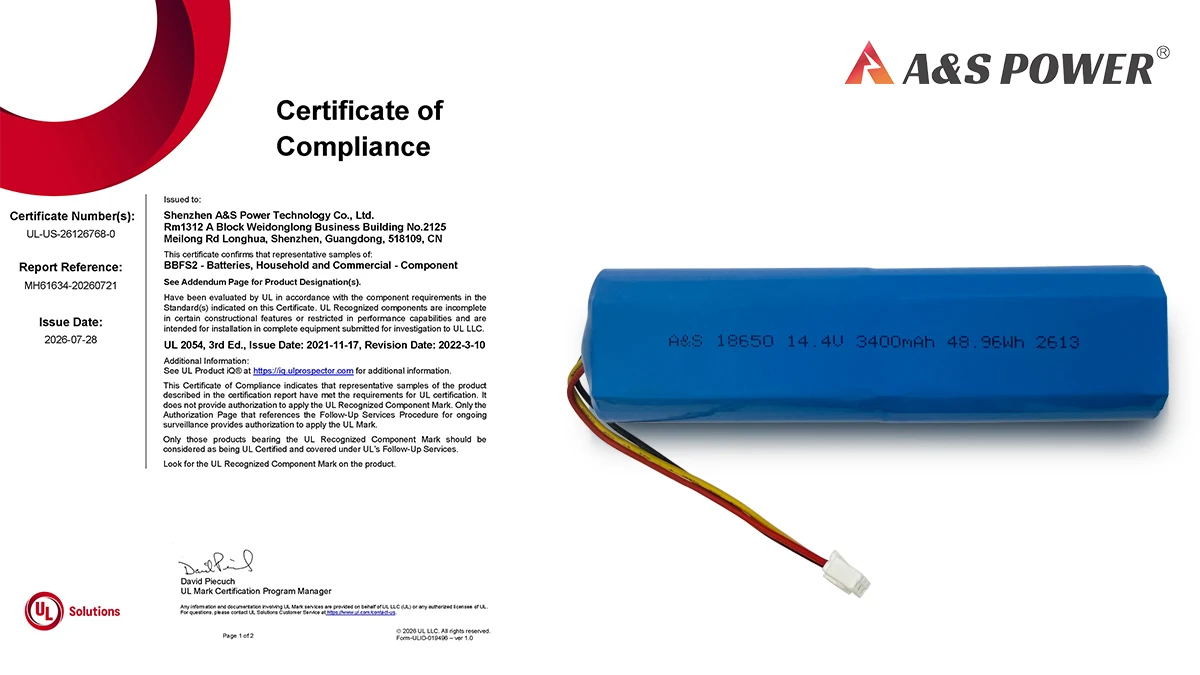 May.2026.08.26UL 2054 Compliance for 18650 3400mAh Rechargeable Li-ion BatteryLearn More
 -
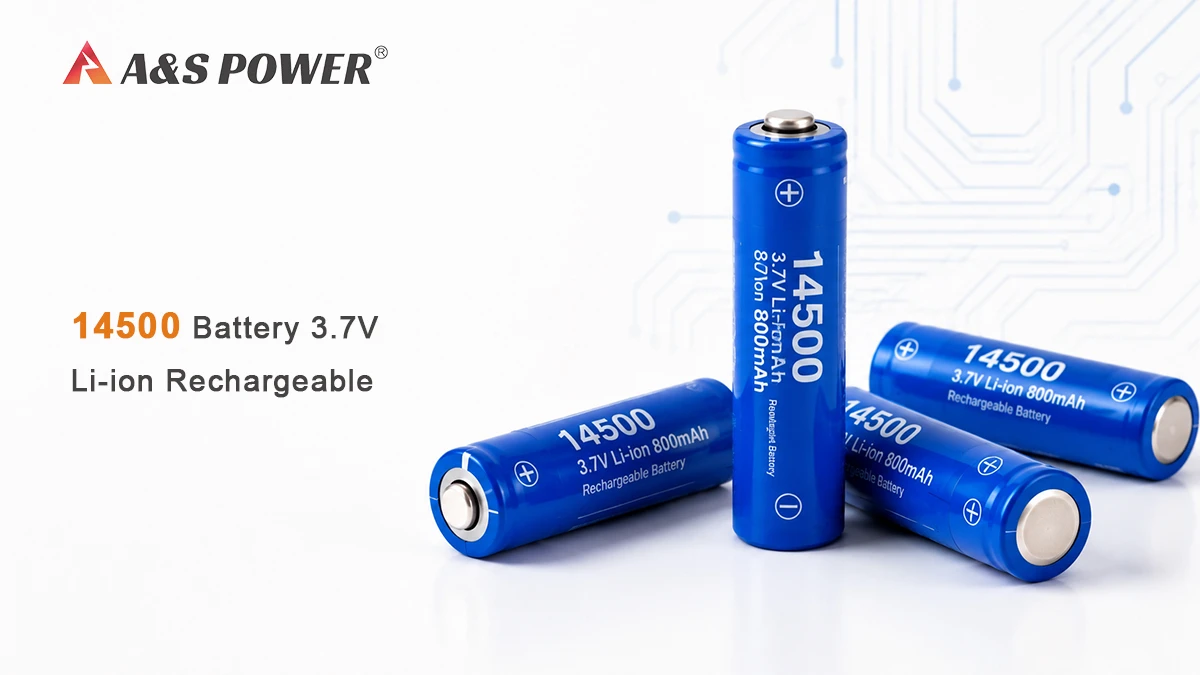 May.2026.08.2614500 Battery 3.7V Li-ion Rechargeable: What You Need to KnowLearn More
 -
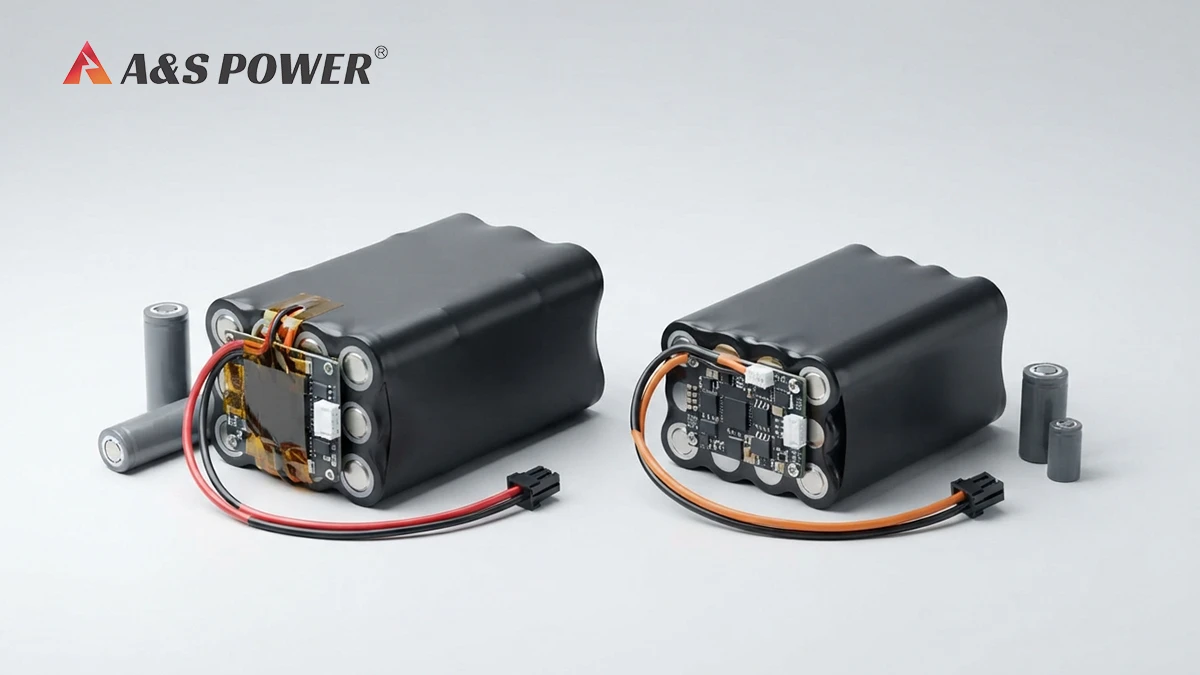 May.2026.08.25LiFePO4 vs. Ternary NMC Battery Packs: Cost, Safety, and LifespanLearn More