


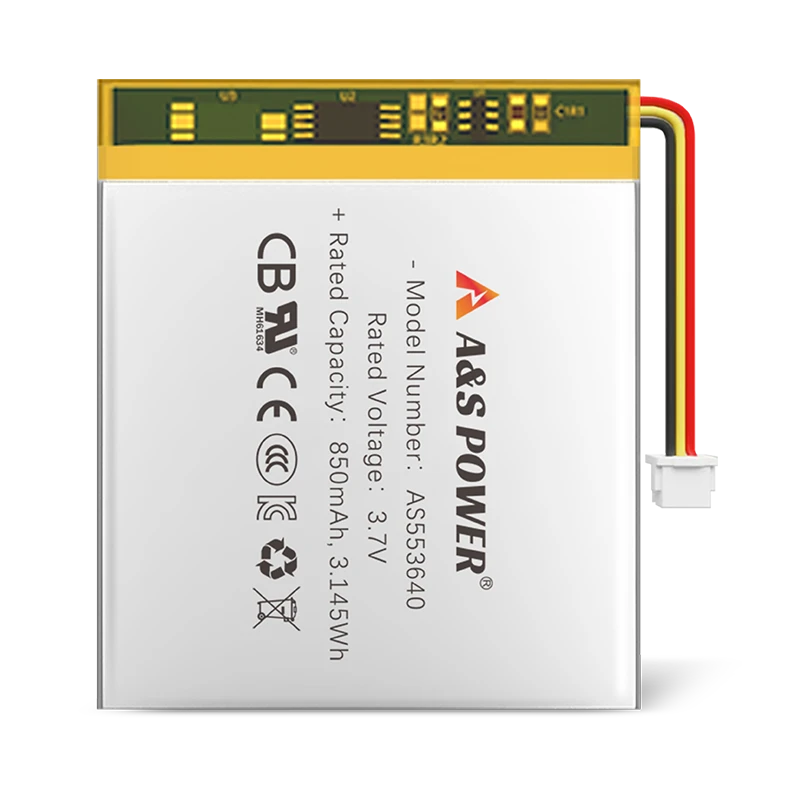
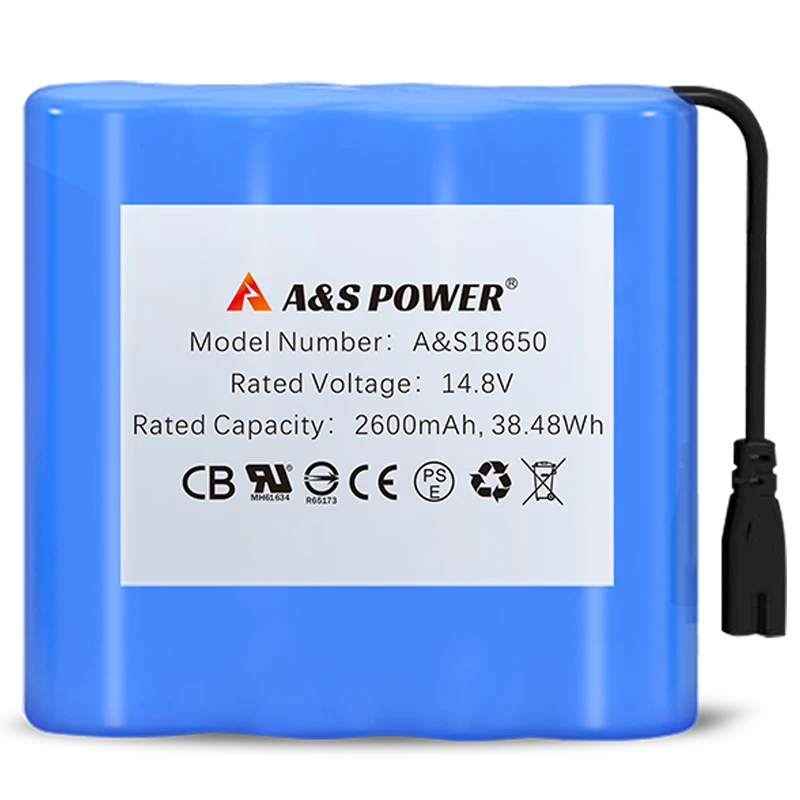
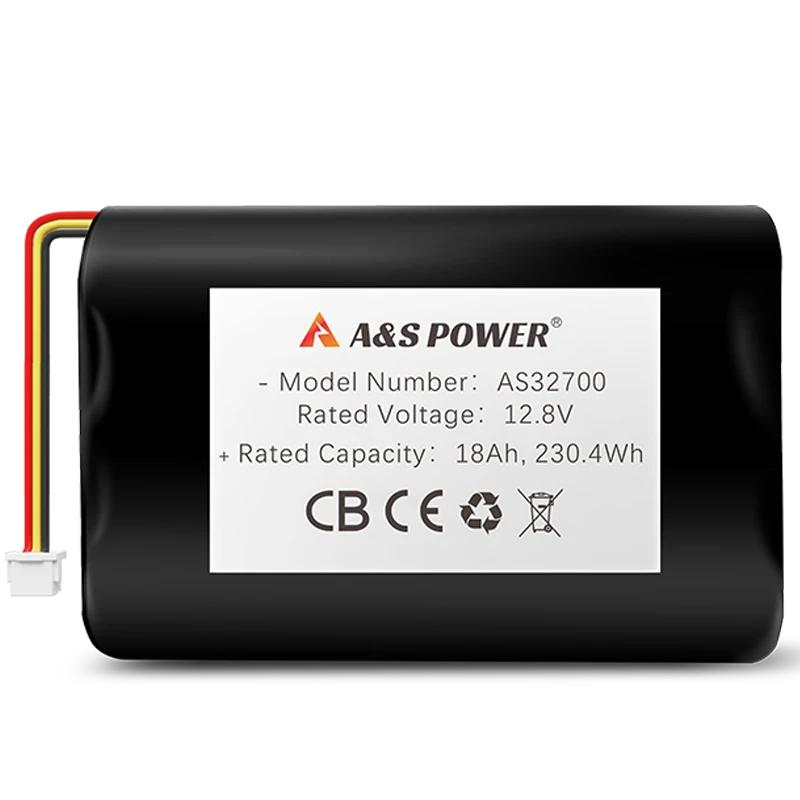


18650 Battery Pack for Portable Speakers: Engineering, Performance & Design Guide
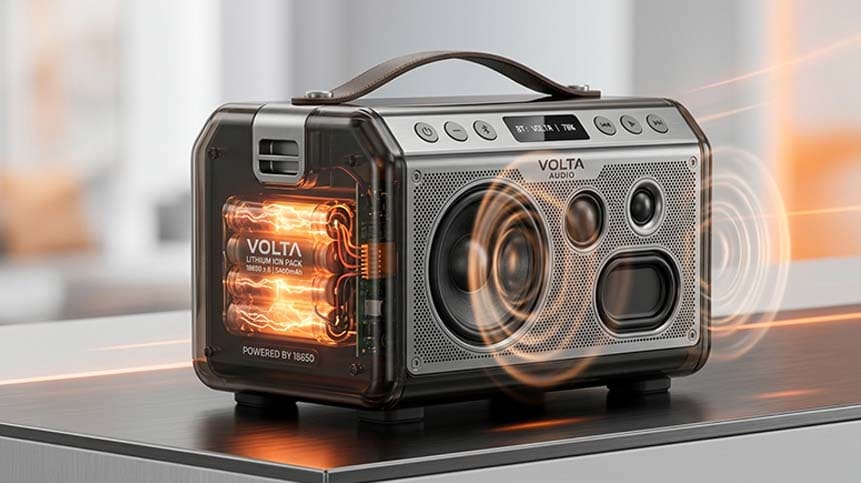
When I first started working with lithium-ion battery systems for audio devices, I realized one thing very clearly:
portable speakers live or die by their battery design.
Among all available solutions, the 18650 lithium-ion battery pack remains one of the most widely used energy systems in Bluetooth and portable speaker manufacturing.
In this article, I will break down how these battery packs are designed, why they are preferred, what configurations are commonly used, and how manufacturers optimize them for performance, safety, and long cycle life.
What Is an 18650 Battery Pack for Portable Speakers?
An 18650 battery pack is a rechargeable lithium-ion system built using cylindrical 18650 cells (18mm diameter, 65mm length).
These cells are typically arranged in combinations of:
- Series (S) → increases voltage
- Parallel (P) → increases capacity
Typical configurations in speakers:
- 1S (3.7V system) → small Bluetooth speakers
- 2S (7.4V system) → mid-range portable speakers
- 3S (11.1V system) → high-power speakers
- 4S (14.8V system) → professional audio systems
For example, industrial speaker packs often use 4S2P 14.8V 6700mAh systems to balance power and runtime requirements.
Why 18650 Cells Are Used in Portable Speakers
From an engineering perspective, 18650 cells are still dominant for three key reasons:
1. High energy density
They offer strong capacity per volume compared to older NiMH systems.
2. Mature supply chain
Global availability makes them cost-efficient for OEM manufacturers.
3. Flexible configuration
Designers can scale voltage and capacity easily.
Technical Structure of a Speaker Battery Pack
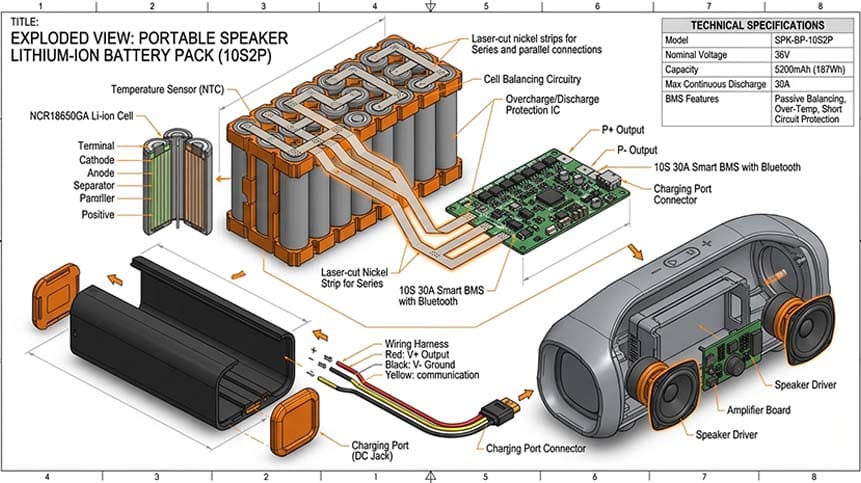
A typical 18650 speaker battery system includes:
1. Cell array (18650 cells)
Configured in S-P combinations.
2. BMS (Battery Management System)
Protects against:
- Overcharge
- Over-discharge
- Overcurrent
- Short circuit
- Temperature anomalies
Modern speaker packs rely heavily on smart BMS modules for safety and communication protocols (like SMBus).
3. Nickel strips & wiring system
Ensures stable current distribution.
4. Protective casing
PVC shrink, ABS shell, or metal enclosure depending on application.
Common Voltage Configurations in Portable Speakers
3.7V (1S system)
Used in compact speakers and wearable audio devices.
7.4V (2S system)
Balanced performance for mid-range Bluetooth speakers.
10.8V (3S system)
High output speakers and enhanced bass systems.
14.8V (4S system)
Professional or outdoor large portable speakers requiring higher wattage output.
Example industrial configuration:
- 4S2P
- 14.8V
- 6.7Ah capacity
- Designed for smart speakers and high-power audio systems
Capacity Design (mAh vs Real Runtime)
One of the most misunderstood topics in speaker batteries is capacity.
Let’s clarify it:
Formula:
Energy (Wh) = Voltage × Capacity (Ah)
Example:
| Configuration | Voltage | Capacity | Energy |
|---|---|---|---|
| 2S1P | 7.4V | 2.6Ah | 19.24Wh |
| 3S2P | 10.8V | 5.2Ah | 56.16Wh |
| 4S2P | 14.8V | 6.7Ah | 99.16Wh |
This directly affects:
- Playback time
- Bass performance
- Peak output power
Real Industry Data
Below is a simplified engineering benchmark based on commercial Bluetooth speaker battery systems:
| Application | Voltage | Capacity | Typical Usage |
|---|---|---|---|
| Mini speaker | 3.7V | 2000–5000mAh | Indoor use |
| Portable speaker | 7.4V | 4000–8000mAh | Travel use |
| Outdoor speaker | 10.8V | 5000–9000mAh | High volume |
| Professional speaker | 14.8V | 6000–10000mAh | Stage/audio systems |
In industrial designs, 3S and 4S systems dominate due to better power stability and higher output capability.
Safety Systems
A well-designed 18650 speaker battery pack MUST include:
1. Overcharge protection
Prevents voltage exceeding 4.2V per cell.
2. Over-discharge protection
Prevents deep discharge damage.
3. Temperature protection
Ensures safe operation between -20°C to 60°C.
4. Short-circuit protection
Prevents catastrophic failure.
Modern systems integrate intelligent monitoring chips for precise control and data feedback.
Engineering Challenges in Portable Speaker Battery Design
From my experience in lithium battery system design, the biggest challenges are:
1. Heat management
High-power speakers generate thermal stress.
2. Space limitations
Internal structure must balance acoustics and battery size.
3. Voltage stability
Bass-heavy audio loads cause voltage drops.
4. Cycle life optimization
Most packs aim for 500–1000 cycles under proper usage conditions.
Battery Chemistry Options
While 18650 dominates, not all cells are equal:
- NMC (Nickel Manganese Cobalt) → most common
- LCO (Lithium Cobalt Oxide) → high energy density
- INR (Lithium Nickel Manganese) → balanced performance
For portable speakers, NMC-based 18650 cells are preferred due to safety + power balance.
OEM/ODM Custom Battery Design for Speakers
In OEM manufacturing, customization is key:
Typical options include:
- Capacity tuning (2000mAh–10000mAh)
- Voltage configuration (1S–4S)
- Connector types (JST, wire leads, PCB tabs)
- Smart BMS integration (UART / SMBus)
- Shape customization (flat / stacked / L-shaped)
This flexibility is why 18650 remains dominant in speaker industry supply chains.
Amplifiers and Portable PA Systems Powered by 18650 Battery Packs
In real-world audio applications, 18650 battery packs are not only used in portable Bluetooth speakers, but also play a critical role in instrument amplifiers and portable PA systems.
From my experience working with OEM audio manufacturers, amplifiers demand a very different power profile compared to standard speakers. They require:
- Higher peak current output
- Stable voltage under heavy load
- Longer continuous runtime
- Strong thermal stability
This is where a well-designed 18650 lithium-ion battery pack becomes essential.
Why Amplifiers Require Higher-Performance Battery Systems
Unlike small speakers, instrument amplifiers and portable PA systems often operate at higher wattage levels, especially during live performances or outdoor events.
Typical requirements include:
- 10W–200W+ output power range
- Continuous operation for 4–10 hours
- High transient current during sound peaks
To support this, manufacturers commonly use:
- 3S (11.1V) configurations for compact amplifiers
- 4S (14.8V) configurations for professional PA systems
These configurations ensure stable energy delivery without distortion or voltage drop.
Application Scenarios in Audio Industry
18650 battery packs are widely integrated into:
- Instrument amplifiers (guitar, bass, keyboard amps)
- Portable PA systems for outdoor events
- Public speaking sound systems
- Street performance audio setups
- Outdoor festival and travel sound equipment
In these systems, battery stability directly affects sound clarity and amplifier performance.
Engineering Advantage of 18650 Packs in Amplifiers
Compared with alternative battery formats, 18650-based packs provide:
| Advantage | Impact on Amplifiers |
|---|---|
| High discharge rate | Supports peak sound output |
| Modular design | Flexible voltage scaling (3S/4S) |
| Mature BMS integration | Prevents overload during live use |
| Cost efficiency | Suitable for OEM amplifier brands |
| Easy maintenance | Replaceable cell architecture |
This makes them a preferred solution for both entry-level and professional-grade audio amplifier manufacturers.
Future Trends in Speaker Battery Technology
The industry is gradually shifting toward:
1. Higher-density cells
21700 cells are slowly replacing 18650 in premium speakers.
2. Smart BMS integration
Real-time monitoring and app-based battery diagnostics.
3. Fast charging systems
USB-C PD integration becomes standard.
4. Lightweight modular packs
Easier replacement and recycling systems.
However, 18650 remains the cost-performance leader.
Conclusion
The 18650 battery pack for portable speakers remains one of the most reliable and widely adopted energy systems in the audio industry.
From compact Bluetooth speakers to high-power professional audio systems, its flexibility in voltage configuration, cost efficiency, and mature safety ecosystem make it a long-term industry standard.
From my perspective, the future will bring smarter BMS integration and higher energy density cells, but the 18650 architecture will remain foundational for years to come.
FAQ (Frequently Asked Questions)
Q1: What is the best 18650 configuration for portable speakers?
A 2S or 3S configuration is most common, depending on power requirements.
Q2: How long does an 18650 speaker battery last?
Typically 500–1000 full charge cycles with proper BMS protection.
Q3: Can I replace speaker battery cells myself?
Technically yes, but only if voltage and configuration match exactly.
Q4: Why do some speakers use 14.8V batteries?
Higher voltage allows stronger amplifier output and deeper bass performance.
Q5: Are 18650 batteries safe for speakers?
Yes, when paired with a high-quality BMS and thermal protection system.
-

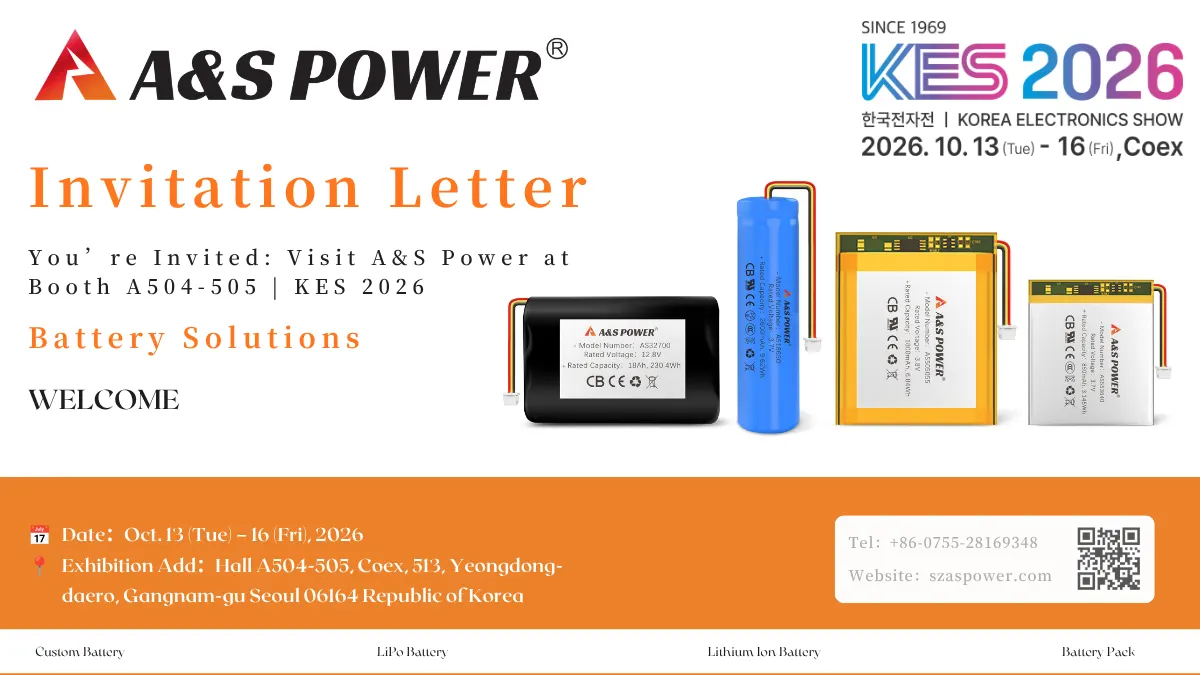 May.2026.09.17Meet A&S Power at KES 2026 in Seoul – Custom Lithium Battery SolutionsLearn More
 -
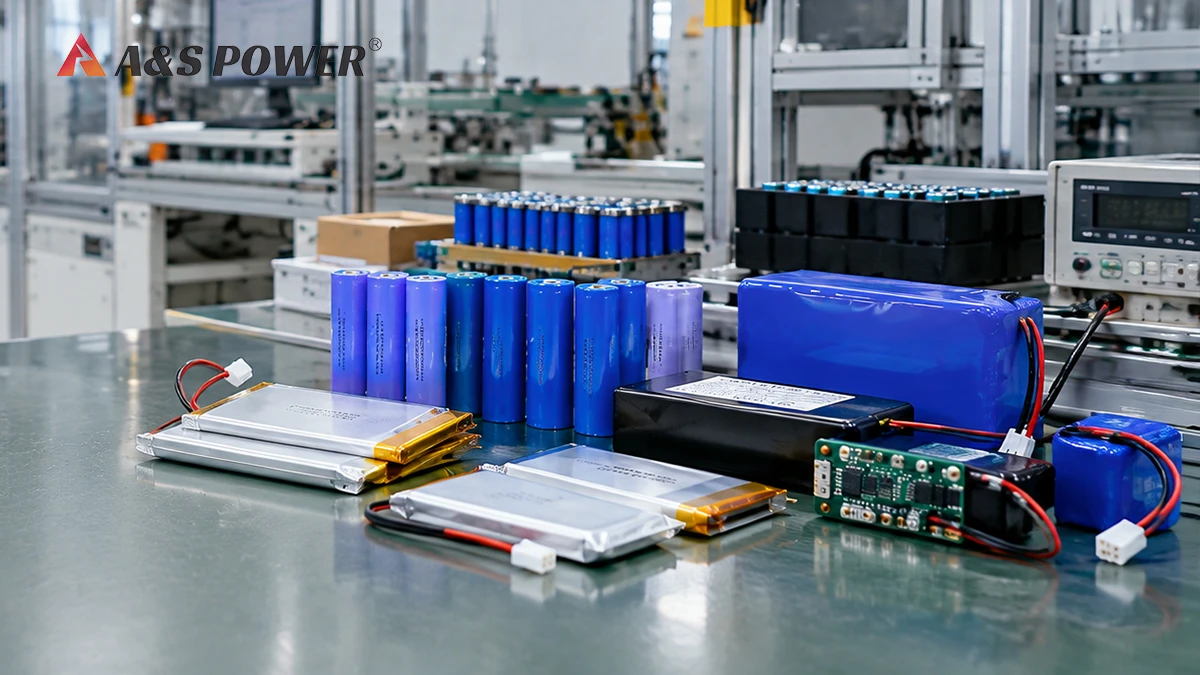 May.2026.09.16How to Choose a Custom Lithium Battery Manufacturer in China: A Buyer's GuideLearn More
 -
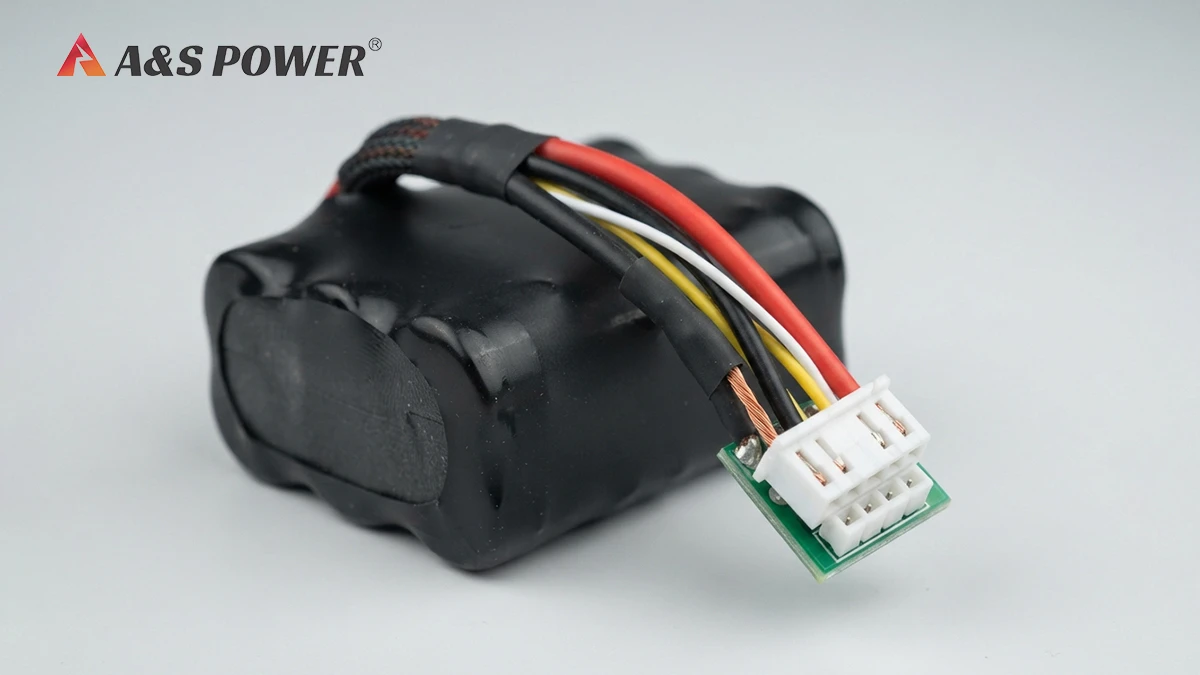 May.2026.09.15Can VHR-4N Connectors Work With 14 AWG Battery Wires?Learn More
 -
 May.2026.09.14Who Pays UL Battery Certification Maintenance Fees?Learn More
 -
 May.2026.09.11PTC vs PCM: Why Use Both in Lithium Battery Protection?Learn More