



Introduction
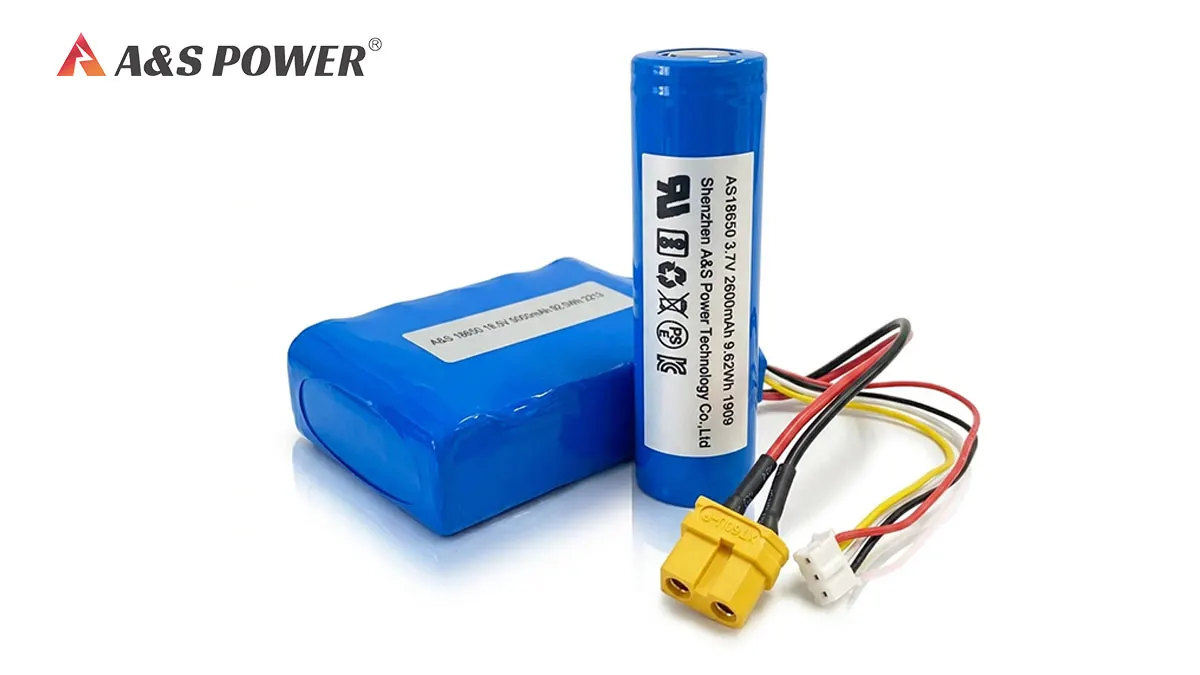
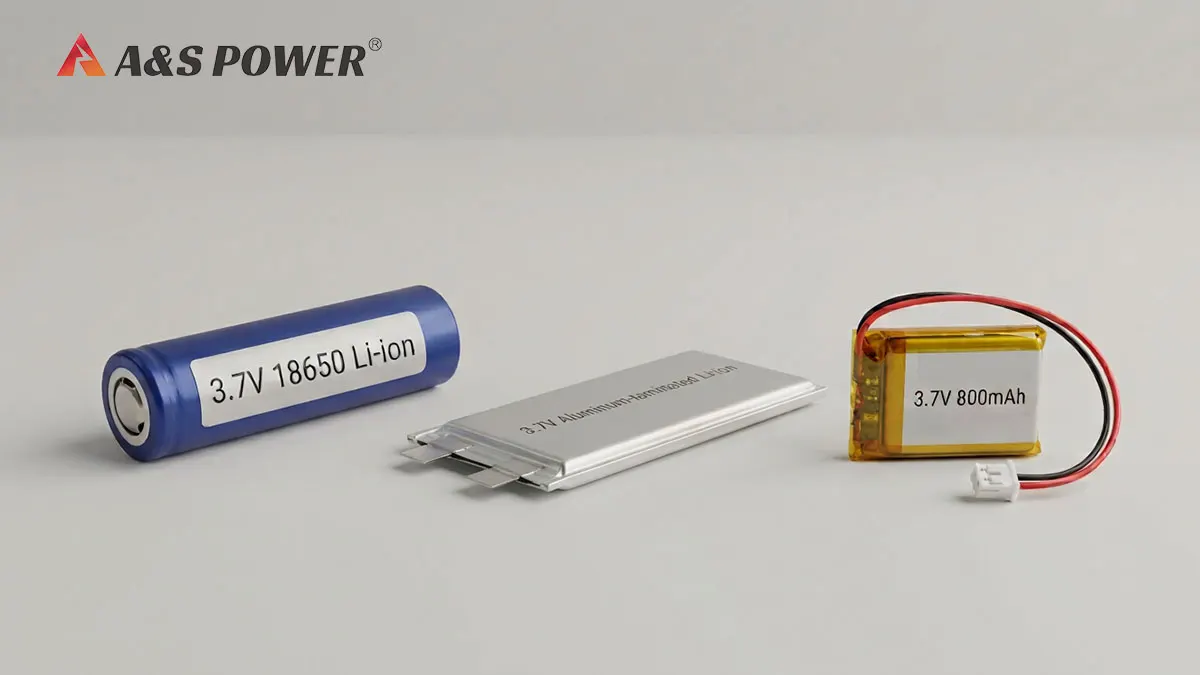
The 18650 lithium-ion battery remains a widely used cylindrical cell format for portable electronics, power tools, flashlights, mobility equipment, and custom battery packs. Its standardized form factor makes it practical for product designers and battery manufacturers, but choosing the right cell requires more than checking its dimensions or advertised capacity.
When evaluating 18650 battery specs, engineers should consider physical size, nominal voltage, charging voltage, capacity, energy, maximum discharge current, and operating conditions. These parameters determine whether a cell can meet an application's electrical, mechanical, and thermal requirements.
At A&S Power, we approach battery selection by looking at the complete application rather than a single specification. A high-capacity cell may be suitable for a device that operates for long periods at moderate power, while a high-discharge cell may be a better choice for equipment with demanding current requirements.
This guide explains the key specifications of 18650 batteries, how to interpret manufacturer datasheets, and what to consider when selecting cells for OEM battery pack development.
Quick Answer: What Are the Standard 18650 Battery Specs?
A typical rechargeable 18650 lithium-ion cell has a nominal diameter of approximately 18 mm and a nominal length of 65 mm. Conventional lithium-ion models commonly specify a nominal voltage of 3.6V or 3.7V, a maximum charging voltage of 4.2V, and a capacity that varies by model and intended use.
| Specification | Typical Reference Value | Important Consideration |
|---|---|---|
| Cell format | 18650 cylindrical | Identifies the size format, not the electrical performance |
| Diameter | Approximately 18 mm | Actual maximum diameter depends on the datasheet |
| Length | Approximately 65 mm | Protected or button-top versions may be longer |
| Nominal voltage | 3.6V or 3.7V | Depends on the cell model and chemistry |
| Standard full-charge voltage | Commonly 4.2V | Confirm the manufacturer's specified charging limit |
| Capacity | Model-dependent; commonly around 2,000–3,500 mAh for many mainstream models | High-capacity and high-power cells have different trade-offs |
| Energy | Capacity multiplied by nominal voltage | Expressed in watt-hours (Wh) |
| Discharge current | Model-dependent | Must be checked against the manufacturer's limits |
| Cell shape | Cylindrical | Flat-top and button-top terminal designs are available |
These values are general reference points, not a universal specification. The selected cell's official datasheet should always take precedence.
1. Understanding 18650 Battery Dimensions
What Does 18650 Mean?
The number 18650 describes a cylindrical cell's approximate physical format:
- 18: Approximately 18 mm in diameter.
- 65: Approximately 65 mm in length.
- 0: Indicates a cylindrical cell format in the naming convention.
The designation does not tell you the battery's capacity, discharge current, internal resistance, or chemistry. Two cells with the same 18650 format may have substantially different electrical performance.
For a product designer, dimensional compatibility is an important first step. A cell must fit the available compartment, holder, or battery enclosure without excessive compression or movement.
Why Actual Dimensions Matter
Although 18 mm × 65 mm is the familiar reference size, the actual maximum dimensions can vary by model. Protective circuitry, terminal construction, insulation, and mechanical design can affect the overall length or diameter of a finished cell.
Terminal style also matters. A flat-top cell and a button-top cell may not fit the same holder or make reliable contact in the same device.
For example, the published Samsung INR18650-30Q specification lists a maximum height of 65.0 mm and a maximum diameter of 18.4 mm. These model-specific dimensions illustrate why nominal format labels should not replace a datasheet review.
When designing a battery compartment, I recommend checking the manufacturer's maximum dimensions rather than designing around nominal dimensions alone. Include appropriate manufacturing tolerances and consider the insulation, interconnection method, and enclosure design.
If the battery will be assembled into a multi-cell pack, designers should also account for holders, busbars, wiring, protection components, and the space needed for thermal management.
2. 18650 Battery Voltage Explained
Nominal Voltage: 3.6V or 3.7V
Nominal voltage is the representative voltage used to describe a cell's electrical characteristics. Many conventional lithium-ion 18650 cells are rated at either 3.6V or 3.7V.
These ratings are often used similarly in general product descriptions, but they should not be treated as proof that two cells are interchangeable. The actual voltage profile, chemistry, charging requirements, and discharge limits must be checked for the specific model.
Full-Charge Voltage: Commonly 4.2V
For many conventional 18650 lithium-ion cells, the specified charging voltage is 4.2V per cell. Charging is generally performed using a compatible constant-current/constant-voltage (CC/CV) charging profile.
However, 4.2V is not a universal charging limit for every lithium-based cell. Some chemistries and cell designs require different charging voltages. Always follow the cell manufacturer's instructions and use a compatible charger and protection system.
Discharge Cutoff Voltage
The discharge cutoff voltage is the lower voltage limit specified for a cell under defined operating conditions. Depending on the model, the specified limit may be 2.5V, 2.75V, 3.0V, or another value.
For example, the Samsung INR18650-30Q datasheet specifies a 2.5V discharge cutoff under its stated test conditions. That does not mean every 18650 cell should be discharged to 2.5V.
The usable capacity also depends on the discharge current, temperature, and cutoff voltage used in testing. A device's battery management system (BMS) should be designed around the selected cell's actual limits.
3. 18650 Battery Capacity: What Does mAh Mean?
Understanding Capacity Ratings
Capacity describes how much electrical charge a battery can deliver under specified test conditions. It is commonly expressed in milliampere-hours (mAh) or ampere-hours (Ah).
- 2,000 mAh = 2.0 Ah
- 2,500 mAh = 2.5 Ah
- 3,000 mAh = 3.0 Ah
- 3,500 mAh = 3.5 Ah
A higher capacity can provide longer operating time when other conditions are comparable. However, the actual runtime depends on the device's current consumption, operating voltage, temperature, discharge rate, and the capacity that remains usable before the cutoff voltage is reached.
Typical Capacity Ranges
Many mainstream 18650 lithium-ion cells fall within approximately 2,000–3,500 mAh, although the available range depends on the model, chemistry, and intended performance.
Consider two examples from published manufacturer specifications:
| Cell Model | Nominal Voltage | Rated or Typical Capacity | Key Specification |
|---|---|---|---|
| Samsung INR18650-30Q | 3.6V | 3,000 mAh nominal; 2,950 mAh minimum discharge capacity under the cited test conditions | Datasheet specifies a 2.5V discharge cutoff under its stated test conditions |
| Molicel INR-18650-P28A | 3.6V | 2,800 mAh typical; 2,700 mAh minimum | Designed for applications requiring high discharge capability; the cited datasheet specifies a maximum discharge current of 35A under its stated conditions |
Sources: Samsung INR18650-30Q specification and Molicel INR-18650-P28A official cell specifications.
These examples illustrate why capacity alone is not enough to choose a cell. The P28A's lower capacity rating does not automatically make it inferior to the 30Q; the appropriate choice depends on the load profile and other performance requirements.
Be cautious when evaluating unusually high advertised capacities. A capacity claim should be supported by a traceable manufacturer datasheet and a defined test method, not just a product label.
4. How to Calculate 18650 Battery Energy
Capacity in mAh describes electrical charge, while watt-hours (Wh) provide a more direct estimate of stored electrical energy.
For a 3.6V, 3,000mAh cell:
3.6V × 3.0Ah = 10.8Wh
For a 3.6V, 2,800mAh cell:
3.6V × 2.8Ah = 10.08Wh
These are nominal energy calculations, not guarantees of usable energy in a finished device. Actual delivered energy depends on discharge conditions, conversion losses, cell characteristics, and the system's cutoff voltage.
When comparing battery options for a product, Wh can be more useful than mAh alone, especially when the batteries have different nominal voltages.
5. Discharge Current and Power Performance
Maximum discharge current is one of the most important 18650 battery specifications for power tools, motors, and other demanding applications.
A cell optimized for high capacity may not be designed to supply the same current as a high-power cell. Increasing discharge current can also increase heat generation and voltage drop, depending on the cell's internal resistance and operating conditions.
When reviewing a datasheet, distinguish between:
- Continuous discharge current: The current permitted during sustained operation under specified conditions.
- Pulse discharge current: A higher current that may be permitted for a limited duration under defined conditions.
- Temperature limits: The conditions under which the specified current rating remains valid.
- Discharge cutoff voltage: The lower voltage limit under the specified test conditions.
Do not assume that a short-duration peak current rating can be used continuously. Pulse limits are meaningful only when the duration, rest period, temperature, and other conditions are defined.
For high-current applications, I recommend evaluating the cell's discharge curves, voltage sag, temperature rise, and the BMS's current rating together. A battery pack must satisfy the requirements of the complete system, not simply the rating printed on one cell.
For further technical background, see Battery University's explanation of lithium-ion discharge characteristics.
6. How Series and Parallel Connections Affect Battery Pack Specs
18650 cells are frequently assembled into packs to achieve a target voltage, capacity, or power output.
Series Connections: Increasing Voltage
Connecting cells in series increases the pack's nominal voltage while the ampere-hour capacity remains approximately equal to that of one cell.
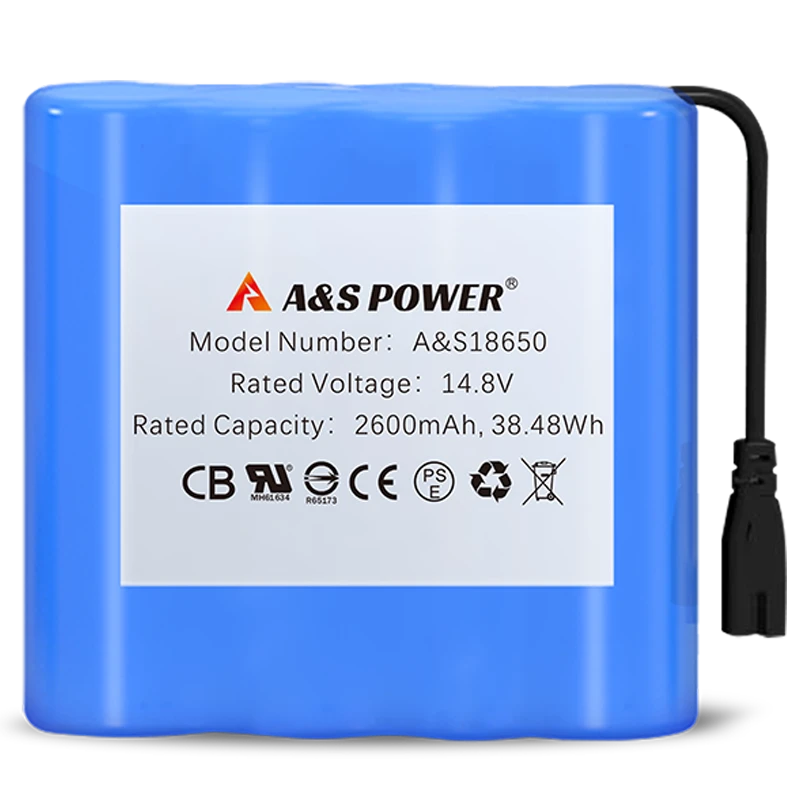
For example, a 3S pack made from 3.6V, 3,000mAh cells has:
- Nominal voltage: 3 × 3.6V = 10.8V
- Nominal capacity: 3,000mAh
- Nominal energy: approximately 32.4Wh
Parallel Connections: Increasing Capacity
Connecting matched cells in parallel increases capacity and current capability, subject to cell matching, interconnection design, and system limits.
A 1S2P pack using two 3.6V, 3,000mAh cells has:
- Nominal voltage: 3.6V
- Nominal capacity: approximately 6,000mAh
- Nominal energy: approximately 21.6Wh
In a 3S2P arrangement, six identical cells would provide a nominal 10.8V, 6,000mAh pack with approximately 64.8Wh of nominal energy.
These calculations assume identical cells and idealized addition of their nominal ratings. Real pack performance depends on cell variation, temperature, wiring resistance, BMS limits, and the discharge profile.
For an OEM battery pack, series/parallel configuration should be determined by the equipment's voltage window, required runtime, current demand, and mechanical constraints.
7. How to Choose the Right 18650 Battery for Your Application
I recommend evaluating the following factors before approving a cell for production.
1. Confirm the electrical requirements. Define nominal voltage, minimum operating voltage, peak power, continuous current, and required runtime.
2. Select the appropriate capacity and discharge profile. Do not maximize mAh without checking the cell's current capability and thermal behavior.
3. Verify mechanical compatibility. Check maximum cell dimensions, terminal style, insulation, mounting method, and enclosure tolerances.
4. Review safety and protection requirements. Select an appropriate charging system, BMS or protection circuit, and thermal design. Protection electronics do not replace correct cell selection.
5. Evaluate operating conditions. Ambient temperature, charging temperature, vibration, storage duration, and expected duty cycles can influence performance and service life.
6. Verify documentation and consistency. Request the manufacturer's datasheet and applicable test or certification documents. Validate the cell using samples and application-specific testing before mass production.
For product developers who need a tailored solution, A&S Power's custom battery solutions support OEM/ODM project discussions. The appropriate design depends on the application, target specifications, available space, and production requirements.
8. When a Custom 18650 Battery Pack Makes Sense
A standard 18650 cell may be suitable for a prototype, but a production-ready battery pack requires additional engineering decisions.
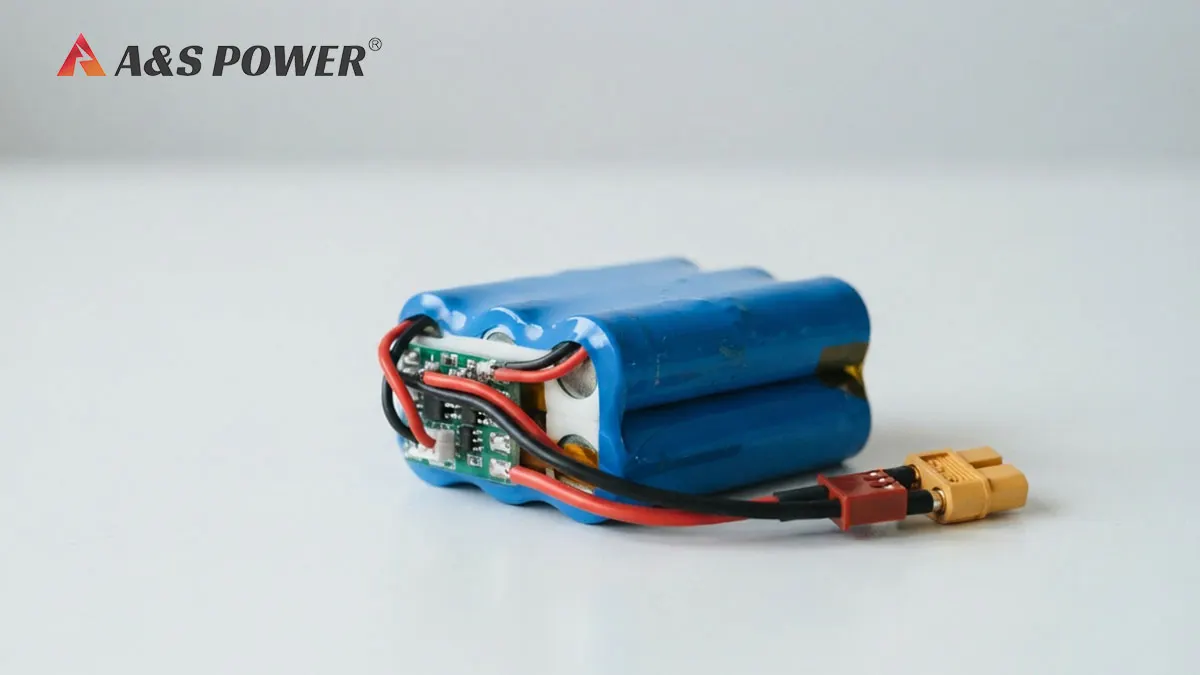
A custom pack may involve selecting the cell model, configuring series and parallel connections, designing the BMS, choosing wires and connectors, and integrating the pack into the device enclosure.
The design should also address current demand, charging requirements, thermal management, mechanical protection, and relevant transportation or product compliance requirements.
At A&S Power, we recommend starting an OEM/ODM discussion with the intended application, target voltage, capacity, continuous and peak current, dimensions, connector requirements, and expected operating environment.
These details help establish whether an 18650-based pack is suitable or whether another cell format would better meet the project's requirements. Visit A&S Power to learn more about custom rechargeable battery development and OEM/ODM support.
Conclusion
Understanding 18650 battery specs means looking beyond the familiar 18 mm × 65 mm format. Nominal voltage, charging limits, capacity, energy, discharge current, and operating conditions all affect whether a cell will perform reliably in its intended application.
A 3.6V, 3,000mAh cell may be a sensible choice for one product, while a lower-capacity, higher-power cell may be more appropriate for another. The correct decision depends on the load profile and the manufacturer's verified specifications.
For OEM product development, I recommend selecting cells based on the complete electrical and mechanical requirements, validating the design with representative samples, and confirming that the finished battery pack meets the applicable safety and compliance requirements.
Frequently Asked Questions
1. What are the standard dimensions of an 18650 battery?
An 18650 cylindrical cell has a nominal diameter of approximately 18 mm and a nominal length of 65 mm. Actual maximum dimensions vary by model, terminal design, and protection construction, so check the manufacturer's datasheet before designing a battery compartment.
2. Is an 18650 battery 3.6V or 3.7V?
Both nominal voltage ratings are used for conventional lithium-ion 18650 cells. The correct rating depends on the specific model. Always verify the datasheet rather than assuming that every cell has identical electrical characteristics.
3. What is the maximum charging voltage of an 18650 battery?
Many conventional lithium-ion 18650 cells specify a maximum charging voltage of 4.2V per cell. This value is not universal across all lithium-based chemistries. Use a charger and charging profile approved for the exact cell model.
4. What is the highest capacity available in an 18650 battery?
There is no single permanent maximum applicable to every manufacturer and chemistry. Many mainstream models offer approximately 2,000–3,500 mAh, but the available specifications change as cell designs evolve. Verify any high-capacity claim against an official datasheet and test conditions.
5. How many watt-hours does a 3,000mAh 18650 battery have?
At a nominal voltage of 3.6V, a 3,000mAh cell has a nominal energy rating of 10.8Wh. This is calculated by multiplying 3.6V by 3.0Ah. Actual usable energy depends on operating conditions and the discharge cutoff.
6. Can I replace one 18650 battery with another model?
Not automatically. The replacement must be compatible in dimensions, terminal design, chemistry, charging voltage, discharge capability, and protection requirements. In multi-cell packs, matching cell specifications and condition is particularly important.
7. How many 18650 cells are needed for a 12V battery pack?
The number depends on the required voltage and the system's operating range. Three conventional 3.6V cells in series provide 10.8V nominal, while four provide 14.4V nominal. A pack described as "12V" must be designed around the equipment's actual voltage requirements, not the label alone.
8. How do I choose an 18650 battery for an OEM project?
Start with the required voltage, capacity, continuous and peak current, dimensions, operating temperature, charging method, and compliance requirements. Then compare verified cell datasheets and test samples in the intended application. A battery manufacturer can help assess cell selection, pack configuration, and protection-system requirements.