



Written by A&S Power Technical Team | Battery Engineering & OEM Specialists
Published: October 13, 2026 | Updated: October 13, 2026
Quick Answer
A 3.7V lithium-ion battery is a rechargeable battery commonly rated at a nominal voltage of 3.7 volts per cell. It offers a useful combination of energy density, relatively low self-discharge, rechargeable performance, and compact packaging options. Typical applications include portable electronics, GPS devices, wireless audio products, medical equipment, lighting, barcode scanners, and industrial handheld instruments.
For conventional 3.7V lithium-ion cells designed for a 4.2V maximum charge voltage, the fully charged voltage is typically 4.2V, while the lower operating limit depends on the specific cell and the equipment's protection settings. The 3.7V label alone does not define capacity, charging current, discharge capability, or battery life.
For product designers and OEM buyers, the right choice depends on more than nominal voltage. Cell chemistry, capacity, peak current, operating temperature, physical dimensions, protection circuitry, and certification requirements all need to match the application.
Introduction
When engineers develop a portable electronic product, the battery affects much more than runtime. It influences product dimensions, weight, charging design, operating temperature, safety controls, and long-term maintenance costs.
The 3.7V lithium-ion battery is a common option for compact rechargeable equipment because it can provide useful energy from a single cell without requiring the additional wiring and space associated with a multi-cell series pack.
However, I would not recommend choosing a battery based on its voltage rating alone. Two batteries labeled 3.7V can have different capacities, discharge limits, dimensions, and charging requirements. Their suitability also depends on the device's actual power consumption.
In this guide, we explain the main characteristics of 3.7V lithium-ion batteries, how they work, where they are used, and what engineers should evaluate before selecting a battery for an OEM product.
1. What Is a 3.7V Lithium-Ion Battery?
A 3.7V lithium-ion battery is a rechargeable battery whose nominal voltage is commonly specified as 3.7V per cell. During charging and discharging, its terminal voltage changes as its state of charge changes.
The battery stores energy through reversible electrochemical reactions. During discharge, lithium ions move from the negative electrode toward the positive electrode through the electrolyte, while electrons flow through the external circuit to power the connected device. During charging, the process reverses.
The term 3.7V describes a nominal voltage rating, not a constant output voltage. A compatible electronic device must accommodate the battery's permitted operating voltage range.
Nominal voltage versus actual voltage
For a conventional lithium-ion cell rated for 3.7V nominal voltage and 4.2V maximum charging voltage, the voltage characteristics commonly include:
- Nominal voltage: 3.7V.
- Typical full-charge voltage: 4.2V.
- Lower discharge limit: Often around 2.8–3.0V for some cell designs, but the manufacturer's specified limit must be followed.
- Operating voltage: Changes with state of charge, load, temperature, and cell characteristics.
These are reference values, not universal limits for every lithium-based battery. Some lithium-ion cells use different nominal voltages or higher permitted charge voltages, and lithium iron phosphate (LiFePO4) has a different voltage profile.
For a more detailed explanation of nominal and charging voltages, see Battery University's guide to lithium-ion voltage differences.
2. Key Characteristics of 3.7V Lithium-Ion Batteries
2.1 High energy density for portable products
Energy density describes how much energy a battery stores relative to its mass or volume. Lithium-ion technology is widely used in portable equipment because it can provide substantial energy without the weight and bulk associated with some older rechargeable battery technologies.
This is particularly valuable for handheld scanners, GPS trackers, wireless audio products, and medical monitoring equipment, where battery space is often limited.
Nevertheless, energy density varies with cell chemistry, electrode design, construction, and capacity. A 3.7V rating by itself does not establish how much energy a battery stores.
2.2 Rechargeable performance
A lithium-ion cell can be charged and discharged repeatedly under appropriate operating conditions. This makes it suitable for products that need regular charging rather than frequent battery replacement.
Its useful service life depends on several factors, including charging voltage, discharge depth, current, temperature, storage conditions, and the cell's design.
For this reason, cycle-life claims should be based on the manufacturer's test conditions rather than treated as a guaranteed number of cycles for every application.
2.3 Relatively low self-discharge
Lithium-ion batteries generally retain their charge well compared with many older rechargeable battery types. This can benefit equipment that operates intermittently, including emergency lights, portable instruments, and certain monitoring devices.
However, the battery can still lose charge during storage. Its protection circuit, monitoring electronics, temperature, age, and storage state can all affect the rate of discharge.
For equipment kept in storage for long periods, the battery should be checked and maintained according to its manufacturer's instructions.
2.4 No conventional memory effect
Lithium-ion batteries do not have the conventional memory effect associated with certain older nickel-based rechargeable battery systems.
Users therefore do not generally need to perform periodic full discharge cycles simply to prevent a memory effect. In fact, repeated deep discharges can increase battery stress.
For many applications, avoiding unnecessary full discharges and prolonged exposure to maximum charge voltage can help preserve battery life.
2.5 Flexible battery formats
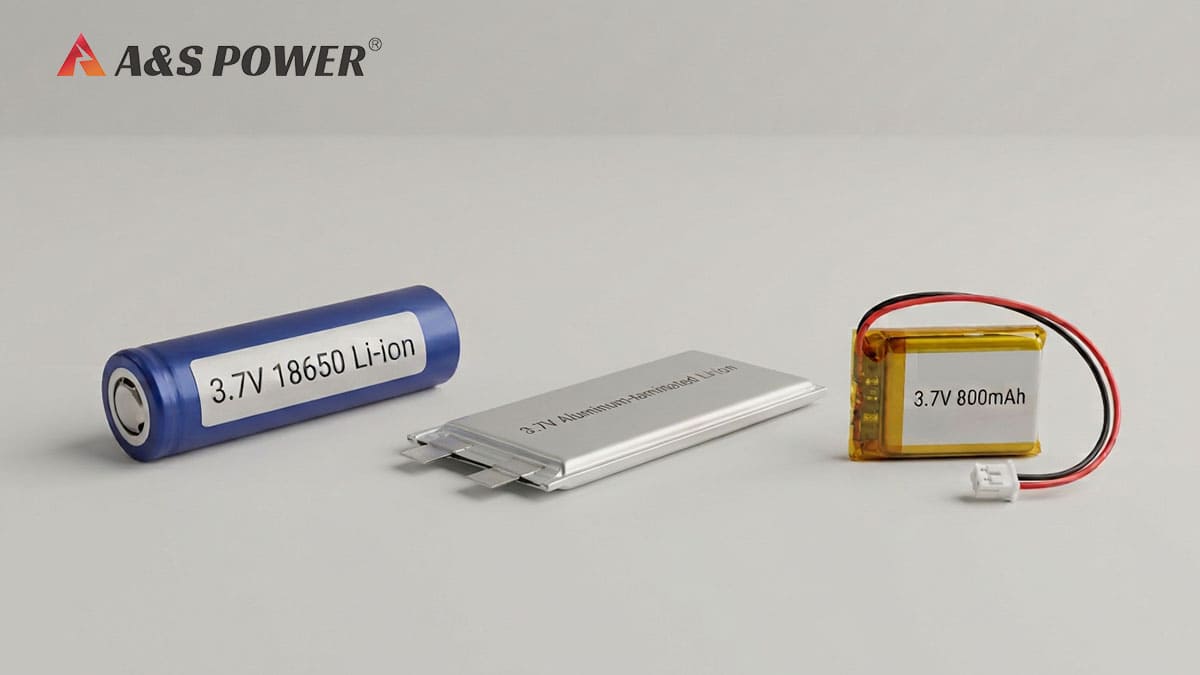
A 3.7V battery may be supplied in different physical formats, depending on the required application.
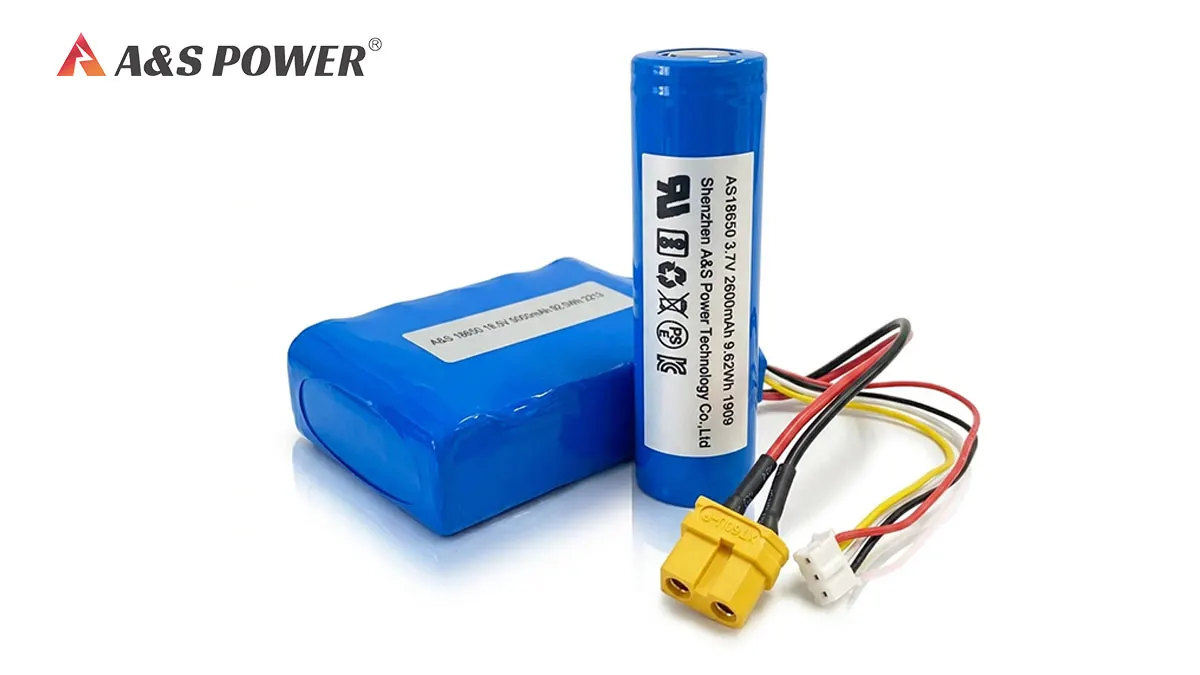
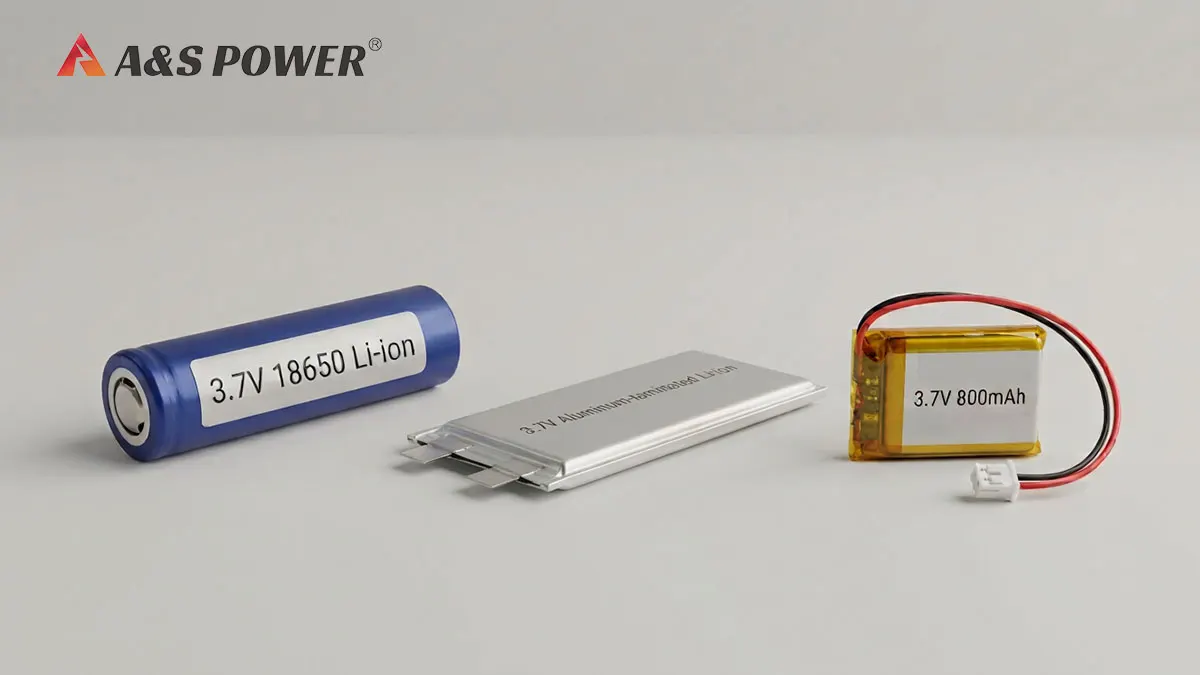
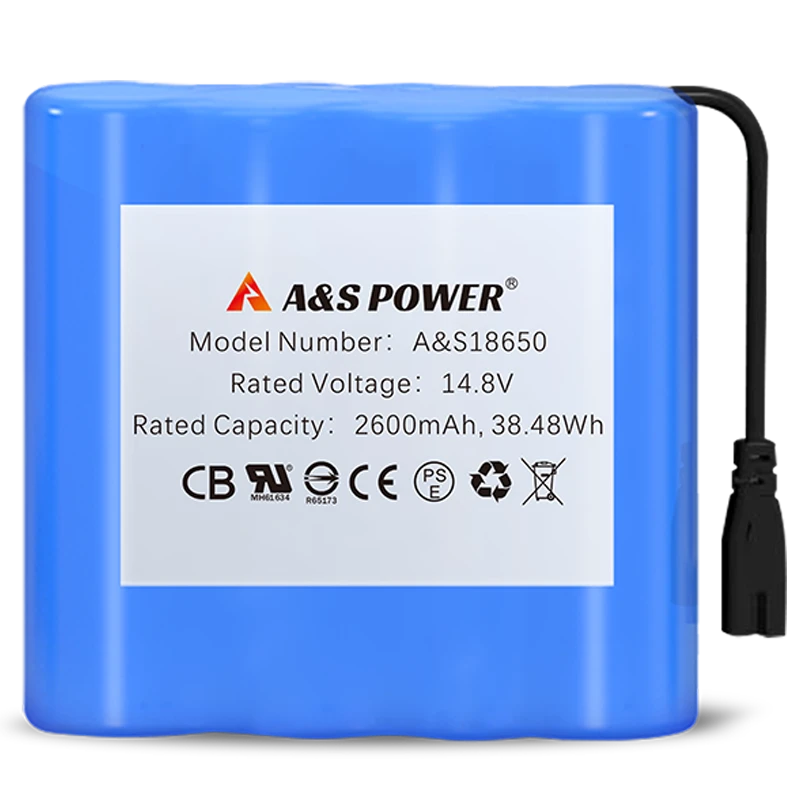
- Cylindrical cells: Such as 18650 cells, suitable for devices designed around standardized cylindrical dimensions.
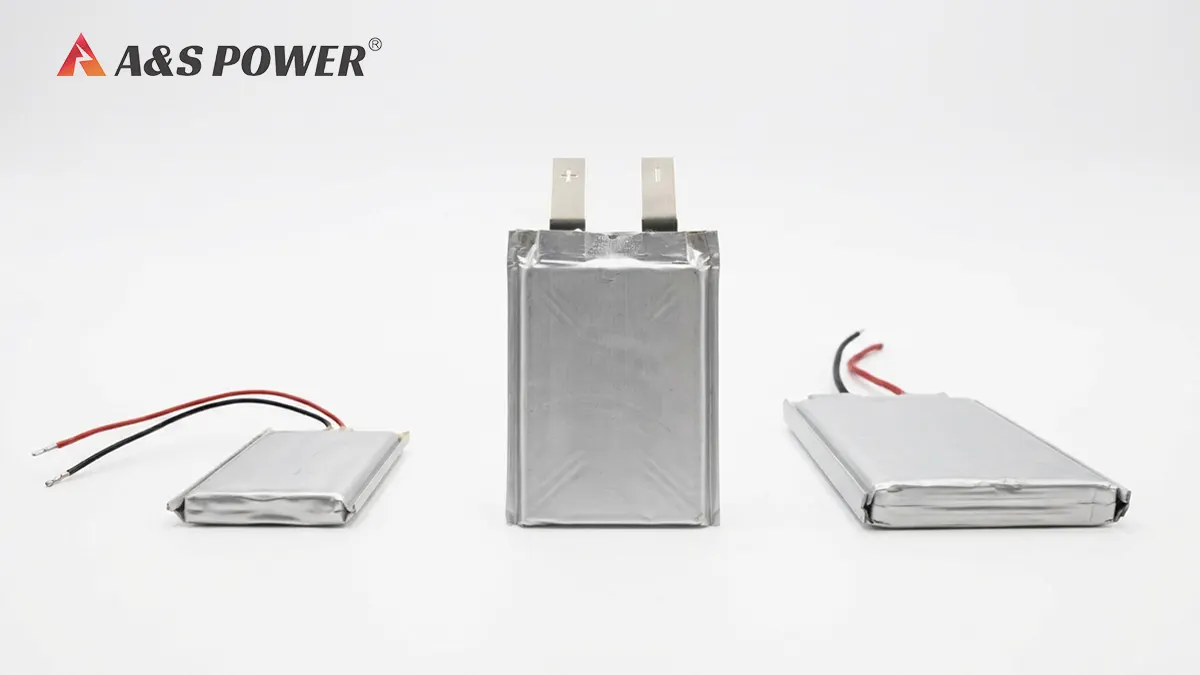
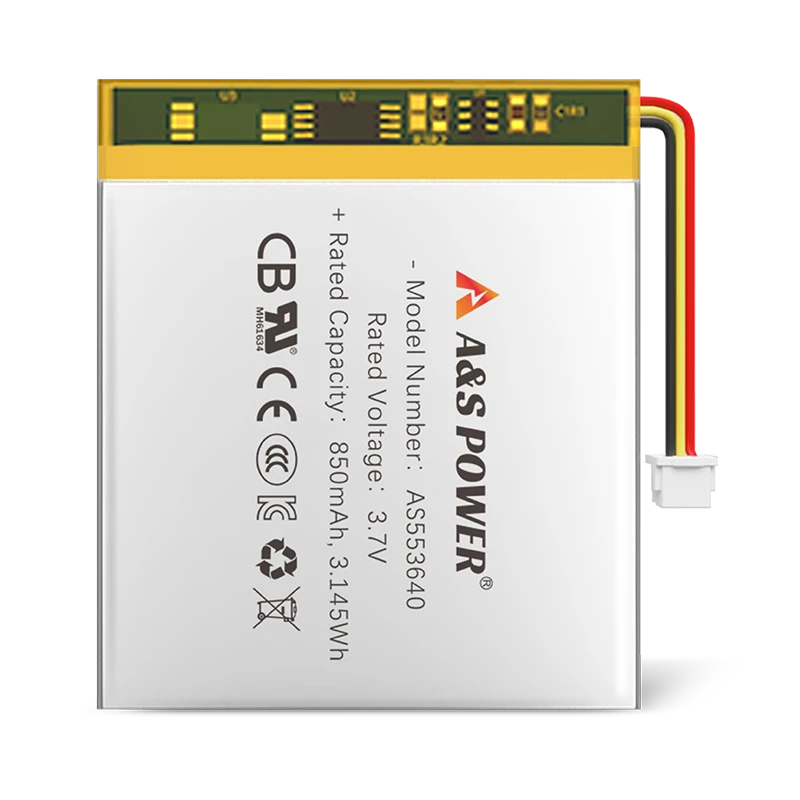
- Lithium polymer pouch cells: Useful when a thin, lightweight, or non-cylindrical battery shape is needed.
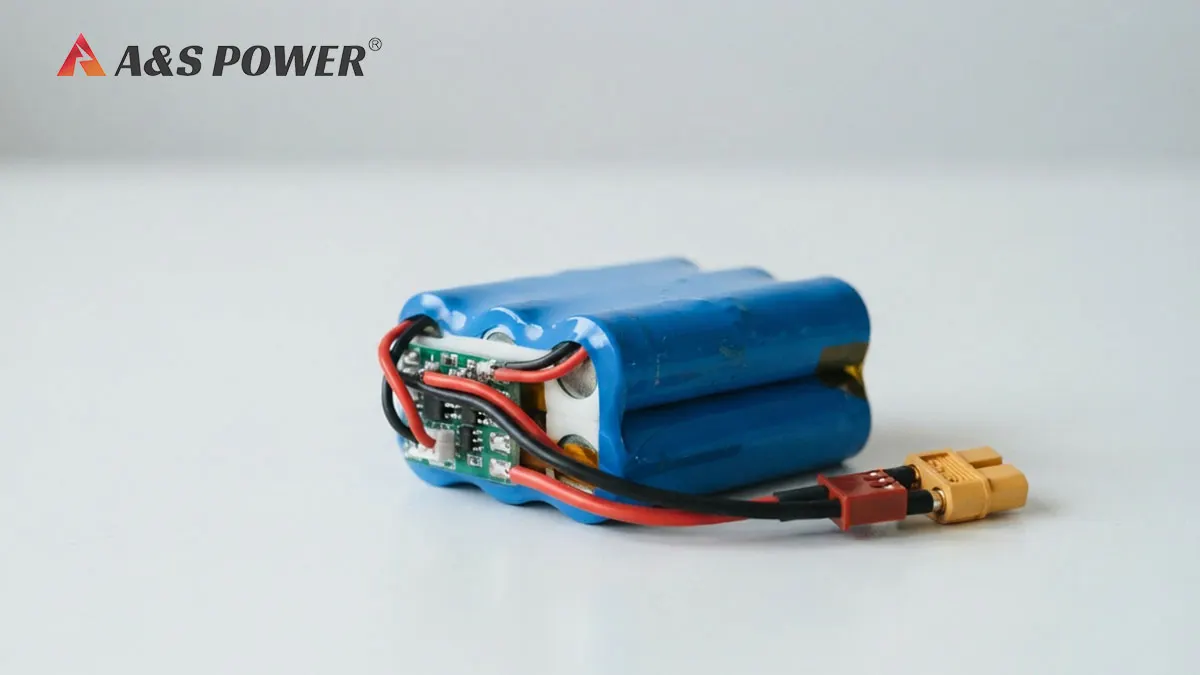
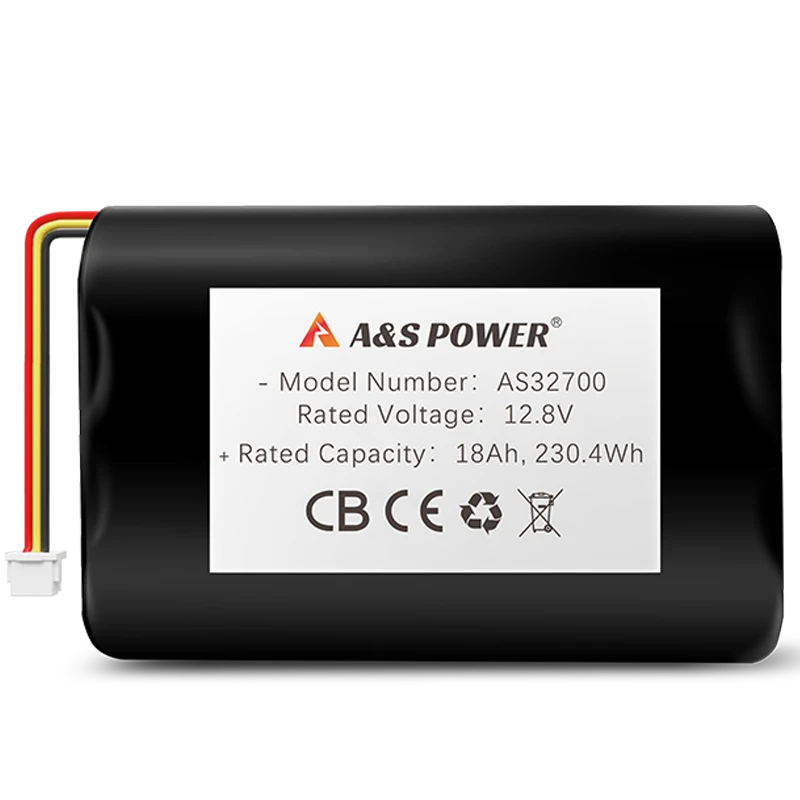
- Custom single-cell battery assemblies: May include protective circuitry, wiring, connectors, and other integration features.
At A&S Power, our OEM/ODM battery solutions include lithium-ion and lithium polymer products. Battery dimensions, capacity, connectors, and protection requirements can be evaluated against the customer's product design.
Explore our custom lithium-ion battery solutions to understand the available customization options.
2.6 Performance depends on the actual load
A battery's capacity tells you how much charge it can store, but it does not tell you how much current it can safely deliver.
A battery designed for a low-power sensor may not be suitable for a device that requires a high startup current or repeated power pulses.
For engineering selection, we recommend checking continuous discharge current, peak current and pulse duration, internal resistance, temperature rise, and voltage drop under load.
These parameters help determine whether the battery can support the device's real operating conditions.
3. Technical Specifications: What Do the Numbers Mean?
The following table illustrates common specifications used when evaluating a conventional 3.7V lithium-ion battery.
| Parameter | Typical reference or example | Engineering significance |
|---|---|---|
| Nominal voltage | 3.7V | Used for preliminary system design |
| Maximum charge voltage | 4.2V for the specified cell type | Determines the required charging voltage |
| Lower discharge limit | Often approximately 2.8–3.0V for some cells | Must follow the cell datasheet |
| Capacity | 2,600mAh, example | Indicates rated charge capacity |
| Energy | 9.62Wh for 3.7V, 2,600mAh | Helps estimate stored energy |
| Cell configuration | 1S for one cell or one series group | Determines nominal pack voltage |
| Charge current | Model-specific | Affects charging time, temperature, and service life |
| Discharge current | Model-specific | Determines whether the battery can power the load |
| Operating temperature | Model-specific | Defines permitted environmental conditions |
Important: The values above are general references or illustrative calculations. They are not a specification for every 3.7V battery.
How to calculate battery energy
Battery energy can be estimated using the following formula:
For example, a 3.7V battery rated at 2,600mAh has a capacity of 2.6Ah.
3.7V × 2.6Ah = 9.62Wh
This means the battery has a nominal stored-energy rating of approximately 9.62Wh. It does not mean that a device will necessarily receive 9.62Wh of usable energy. Conversion losses, discharge limits, temperature, load, and battery condition affect the energy available in practice.
How capacity affects runtime
A larger capacity can increase operating time when other conditions remain comparable. However, actual runtime also depends on average power consumption and the efficiency of the device's power electronics.
For an initial estimate:
Suppose a device consumes an average of 1W and receives 8Wh of usable battery energy. Its estimated runtime would be about eight hours.
This is a simplified estimate, not a performance guarantee. Engineers should validate runtime using the actual device, battery, operating profile, and environmental conditions.
4. How Are 3.7V Lithium-Ion Batteries Used?
The combination of rechargeable operation and compact packaging makes 3.7V batteries suitable for a broad range of electronic products.
4.1 Consumer electronics and wireless audio
Wireless speakers, portable audio devices, handheld gaming products, and other compact electronics often require rechargeable batteries that fit inside a limited enclosure.
A single-cell 3.7V battery may suit these products when its voltage range, capacity, discharge current, and charging system match the electronic design.
The battery's physical shape also matters. A pouch cell may fit a thin enclosure, while a cylindrical cell may be more appropriate for a product designed around a standard cell holder.
4.2 GPS trackers and handheld scanners
GPS tracking devices, barcode scanners, and portable terminals need a battery that supports both normal operation and short periods of higher power consumption.
Wireless communication, display activation, scanning, and location acquisition can create different load profiles. Selecting a battery therefore requires more than calculating average current.
The design should account for peak loads, expected runtime, charging frequency, and the available space for the battery.
4.3 Medical and healthcare equipment
Portable monitoring devices and other healthcare electronics may use rechargeable lithium-ion batteries to support mobility and convenient charging.
For these products, battery selection should also consider the consequences of power interruption, charging behavior, operating environment, and applicable product-level safety requirements.
Certification requirements depend on the device, battery construction, target market, and relevant standards. A battery certificate should not automatically be interpreted as certification of the complete medical device.
4.4 Lighting and security equipment
Portable lights, cabinet lights, wireless security products, and monitoring equipment can use 3.7V rechargeable batteries where the electrical and mechanical requirements are compatible.
For lighting products, engineers should evaluate the LED driver's input range, startup current, expected operating time, and low-voltage behavior.
For security equipment, standby consumption may be just as important as active power consumption because the device may spend most of its life waiting for an event.
4.5 Industrial handheld equipment and IoT devices
Portable measurement instruments, wireless sensors, compact controllers, and other industrial electronics can benefit from rechargeable battery power.
The appropriate battery depends on operating temperature, vibration, peak current, charging access, expected service life, and maintenance requirements.
In industrial environments, the complete battery assembly should be assessed for electrical protection, mechanical integrity, and the environmental conditions in which it will operate.
A&S Power also provides battery solutions for consumer electronics and related portable applications.
5. How to Charge a 3.7V Lithium-Ion Battery Correctly
Charging is one of the most important factors affecting battery performance and safety.
For a conventional lithium-ion cell specified for a 4.2V maximum charge voltage, the charging circuit generally uses a constant-current/constant-voltage (CC/CV) method.
During the initial stage, the charger supplies controlled current while the cell voltage rises. Once the specified voltage limit is reached, the charger holds that voltage while the current gradually decreases. Charging terminates according to the charger's control criteria.
The exact current, voltage tolerance, termination threshold, and charging time depend on the cell and charging-system specifications.
Important charging precautions
- Use a charger designed for the exact battery chemistry and specified charge voltage.
- Do not assume that every battery marked 3.7V should be charged to 4.2V. Verify the datasheet.
- Do not exceed the manufacturer's permitted charging current or temperature range.
- Avoid charging a damaged, swollen, or otherwise abnormal battery.
- Do not continue charging a battery that becomes abnormally hot.
- Ensure the charging circuit and protection system are compatible with the battery pack.
Lithium-ion batteries should not be continuously trickle-charged in the manner used by some other battery chemistries. The charger must terminate or control charging according to the cell manufacturer's requirements.
For additional technical guidance, read Battery University's explanation of lithium-ion charging.
6. 3.7V Single-Cell Batteries Versus Multi-Cell Battery Packs
A single 3.7V cell is not equivalent to a battery pack containing multiple cells connected in series.
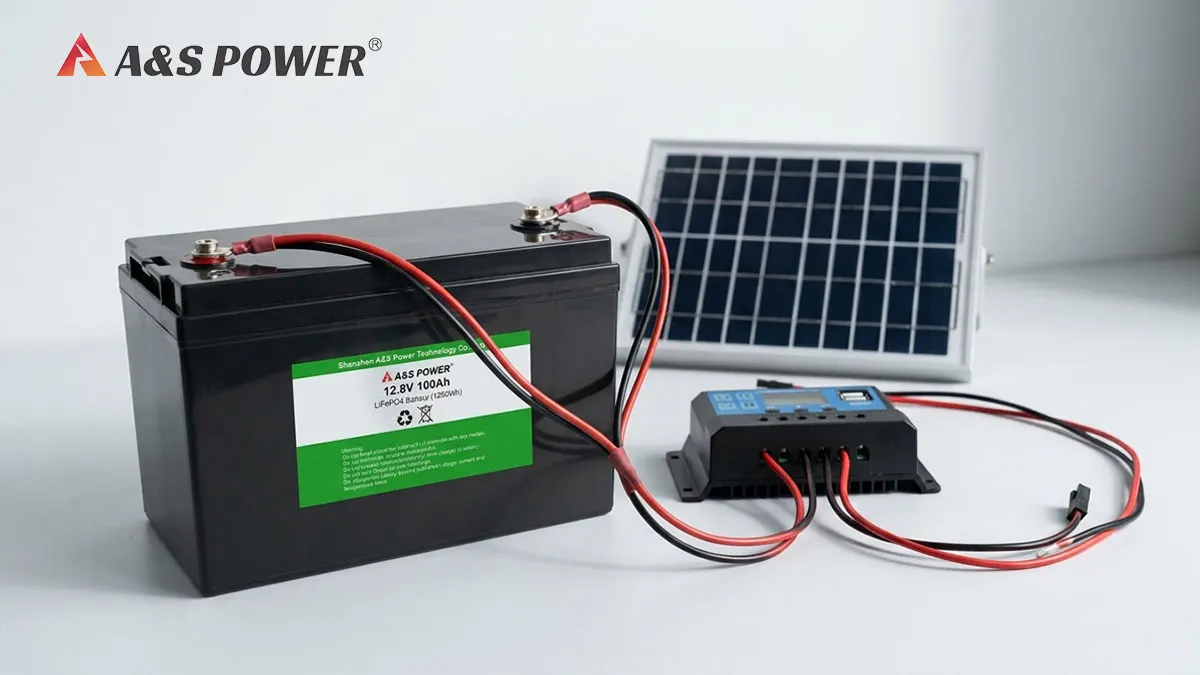
When compatible cells are connected in series, their nominal voltages add together. When cells are connected in parallel, the nominal voltage remains approximately the same while the combined capacity can increase.
For example, a conventional three-cell series configuration, commonly called 3S, has a nominal voltage of approximately 11.1V when using 3.7V-rated cells. With a 4.2V-per-cell maximum charge specification, the corresponding series pack's maximum charging voltage is 12.6V.
| Configuration | Nominal voltage | Illustrative capacity behavior |
|---|---|---|
| 1S, one cell | 3.7V | One cell's rated capacity |
| 2S, two cells in series | 7.4V | Approximately the capacity of one cell in Ah |
| 3S, three cells in series | 11.1V | Approximately the capacity of one cell in Ah |
| 1S2P, two cells in parallel | 3.7V | Approximately twice the capacity of one matched cell in Ah |
These examples assume compatible cells with a nominal voltage of 3.7V. Actual pack design requires appropriate cell matching, charging controls, wiring, and protection.
Series and parallel configurations should never be selected solely by adding voltage or capacity figures. The designer must also evaluate current sharing, cell balancing where applicable, fault conditions, and the battery management or protection architecture.
7. How to Choose the Right 3.7V Battery for an OEM Product
When selecting a battery for a new product, we recommend evaluating the complete operating requirements before finalizing the cell.
Step 1: Define the voltage requirements
Confirm the device's minimum and maximum permitted input voltage. The device must operate across the battery's specified voltage range, not just at its nominal voltage.
Step 2: Calculate the required capacity
Estimate average power consumption, required operating time, and usable battery energy. Include allowances for conversion losses, aging, environmental conditions, and the desired service interval.
Step 3: Verify continuous and peak current
Check the load profile, including startup surges and short high-current pulses. The battery should meet the required current without unacceptable voltage drop or temperature rise.
Step 4: Confirm mechanical dimensions
Check the available space for battery length, width, thickness, cable routing, connector access, and mechanical protection.
If the product has an unusual enclosure or tight space constraints, a custom pouch battery or tailored battery assembly may be more appropriate than a standard cell.
Step 5: Specify protection and compliance requirements
Determine whether the application requires overcharge, over-discharge, overcurrent, short-circuit, temperature monitoring, or other protective functions.
Also identify the relevant certification and transportation requirements early in development. Requirements vary by battery design, application, and destination market.
Step 6: Validate samples before mass production
Test the proposed battery in the actual device. Evaluate runtime, charging behavior, peak-current performance, temperature, mechanical fit, and protection behavior under representative conditions.
For projects requiring a customized battery pack, A&S Power supports OEM/ODM development covering electrical specifications, dimensions, connectors, and protection requirements. Learn more about our custom battery solutions.
8. Why Work With A&S Power on a Custom 3.7V Battery?
A standard battery may be suitable for a straightforward product, but OEM projects often require a closer match between the battery and the device.
A&S Power develops rechargeable lithium-ion and lithium polymer battery solutions for applications including consumer electronics, portable equipment, medical products, lighting, and industrial devices.
Our customization process can address:
- Nominal voltage and capacity.
- Battery dimensions and physical format.
- Cell configuration and discharge requirements.
- Cable length, wire specification, and connector type.
- Protection circuit and BMS requirements.
- Applicable testing and certification needs.
We recommend beginning with the device's actual electrical and mechanical requirements rather than selecting a battery based on nominal voltage alone.
To discuss a project, visit our custom lithium-ion battery manufacturing page or contact the A&S Power team through the company website.
Conclusion
A 3.7V lithium-ion battery is a widely used rechargeable power source for portable electronics, wireless devices, medical equipment, lighting, and industrial instruments. Its main advantages include useful energy density, rechargeable operation, relatively low self-discharge, and availability in different physical formats.
However, 3.7V is only a nominal rating. It does not specify the maximum charging voltage, usable capacity, permissible discharge current, operating temperature, or expected service life.
For reliable product integration, engineers should verify the cell datasheet, calculate the required energy, evaluate peak-current demands, select a compatible charging system, and validate the complete battery assembly.
For OEM and ODM buyers, a well-matched battery solution starts with the application's real requirements. A&S Power can help evaluate customized lithium-ion and lithium polymer battery options for different product designs.
Frequently Asked Questions
1. What is a 3.7V lithium-ion battery?
A 3.7V lithium-ion battery is a rechargeable battery commonly rated at 3.7V nominal voltage per cell. It is used in portable electronic devices and battery packs where its voltage, capacity, current capability, and dimensions match the application.
2. Is a 3.7V lithium-ion battery fully charged at 3.7V?
No. For a conventional cell specified for a 4.2V maximum charge voltage, 3.7V is the nominal rating, not the full-charge voltage. The actual voltage changes during charging and discharging.
3. What voltage should I use to charge a 3.7V lithium-ion battery?
Many conventional 3.7V lithium-ion cells use a 4.2V maximum charge voltage. However, the correct value must be confirmed from the specific cell datasheet. Do not assume that all lithium-based batteries use the same charging voltage.
4. How long does a 3.7V lithium-ion battery last?
Battery runtime depends primarily on usable energy and the device's power consumption. Battery service life depends on cycle frequency, charging conditions, temperature, discharge depth, storage, and cell quality. There is no single runtime or cycle-life figure that applies to every 3.7V battery.
5. Can I use a higher-capacity 3.7V battery in my device?
Potentially, yes, if the replacement battery is compatible with the device's voltage range, charging system, discharge current requirements, dimensions, connector, and protection circuitry. A higher capacity alone does not guarantee compatibility.
6. What is the difference between a 3.7V lithium-ion battery and a 3.7V LiPo battery?
Lithium polymer (LiPo) batteries are part of the broader lithium-ion battery family and commonly use pouch-style construction. The term LiPo often refers to a battery's construction and electrolyte system rather than a completely separate voltage class. Both types may be rated at 3.7V nominal voltage, but their electrical and mechanical specifications still need to be checked individually.
7. Can multiple 3.7V lithium-ion cells be connected together?
Yes, when the cells and pack design are compatible. Series connections increase nominal voltage, while parallel connections increase available capacity and current capability under appropriate design conditions. The completed pack must incorporate suitable charging and protection arrangements.
8. Can A&S Power manufacture a custom 3.7V lithium-ion battery?
A&S Power provides OEM/ODM lithium-ion and lithium polymer battery solutions. Customization can include capacity, dimensions, connectors, wiring, and protection requirements, subject to engineering review. Customers should provide the intended application, voltage, capacity, discharge current, available space, and relevant certification requirements to begin a project.