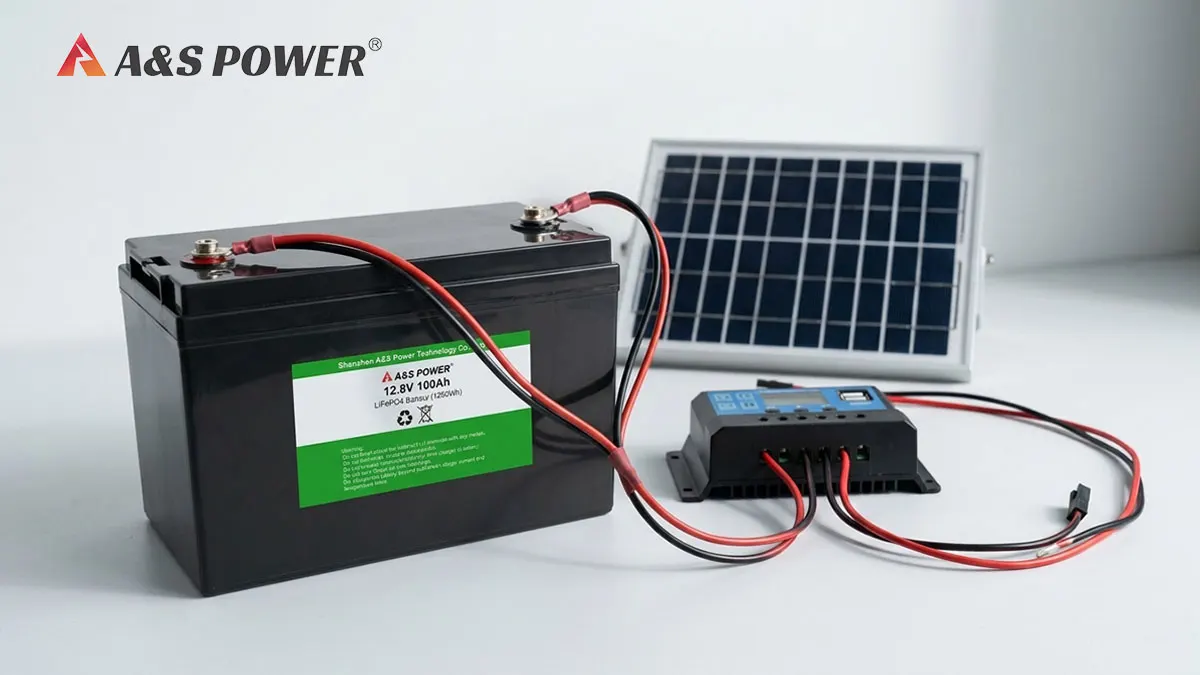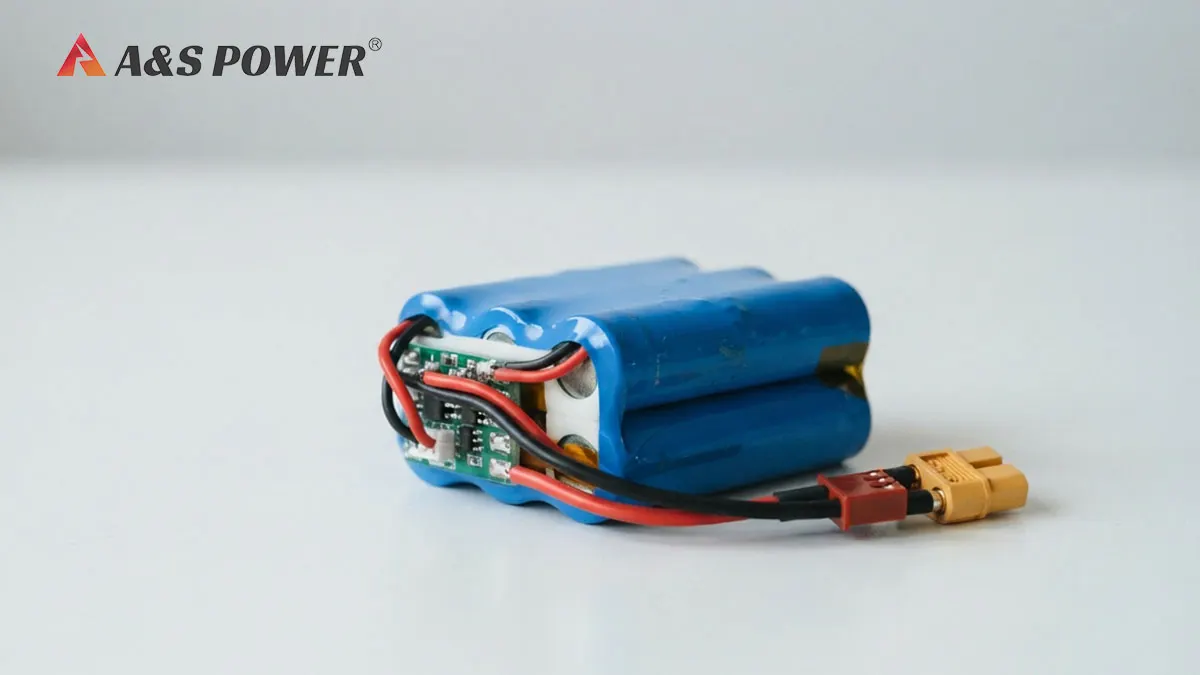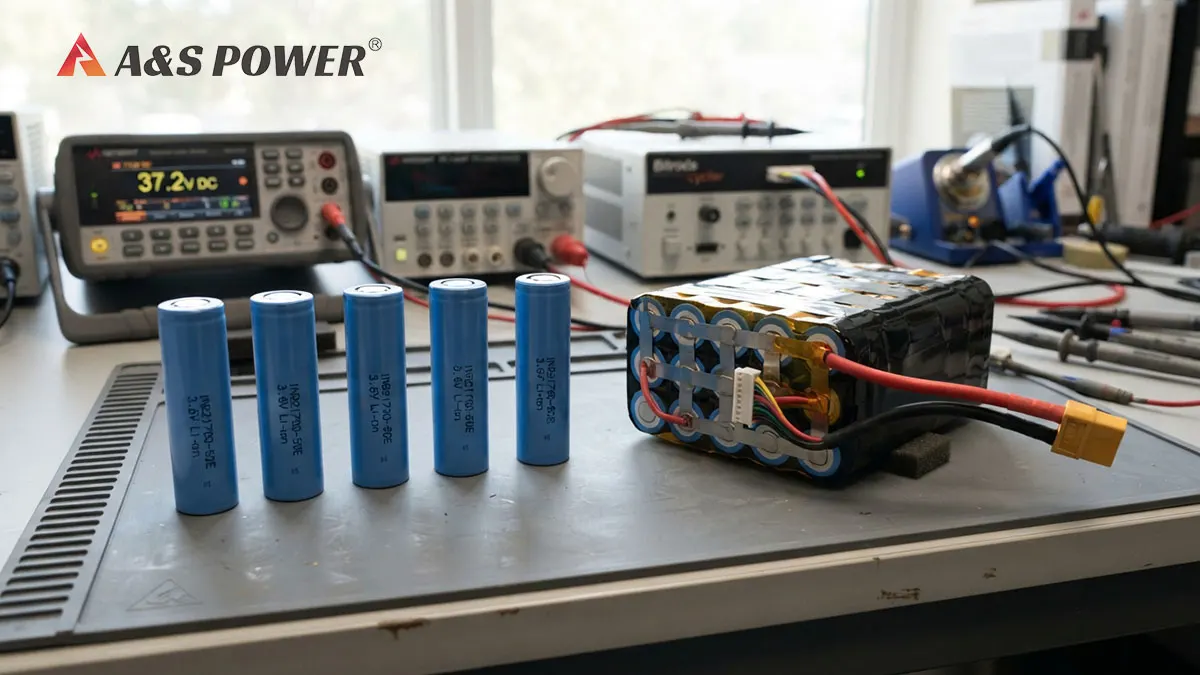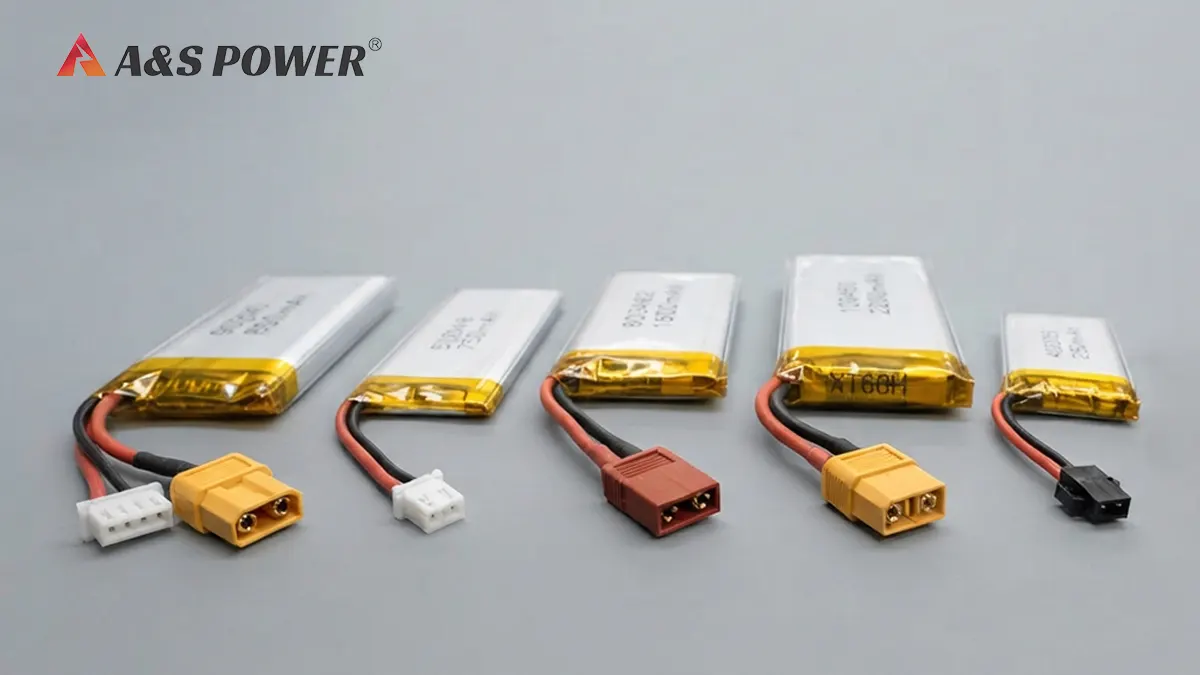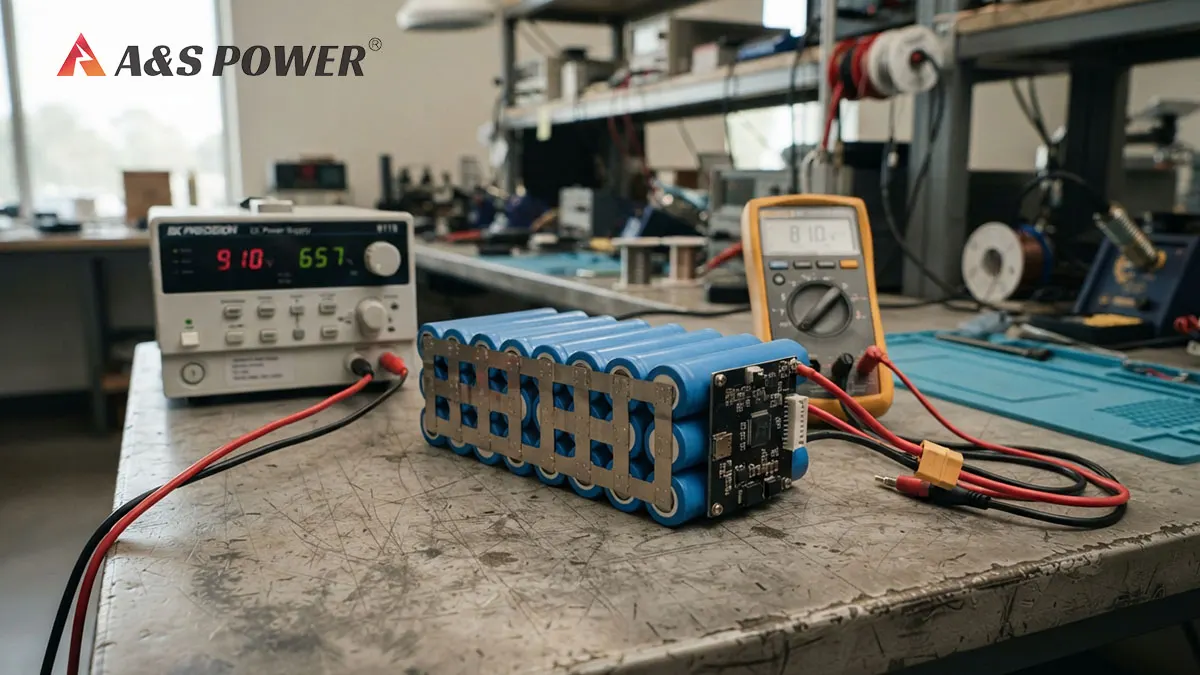




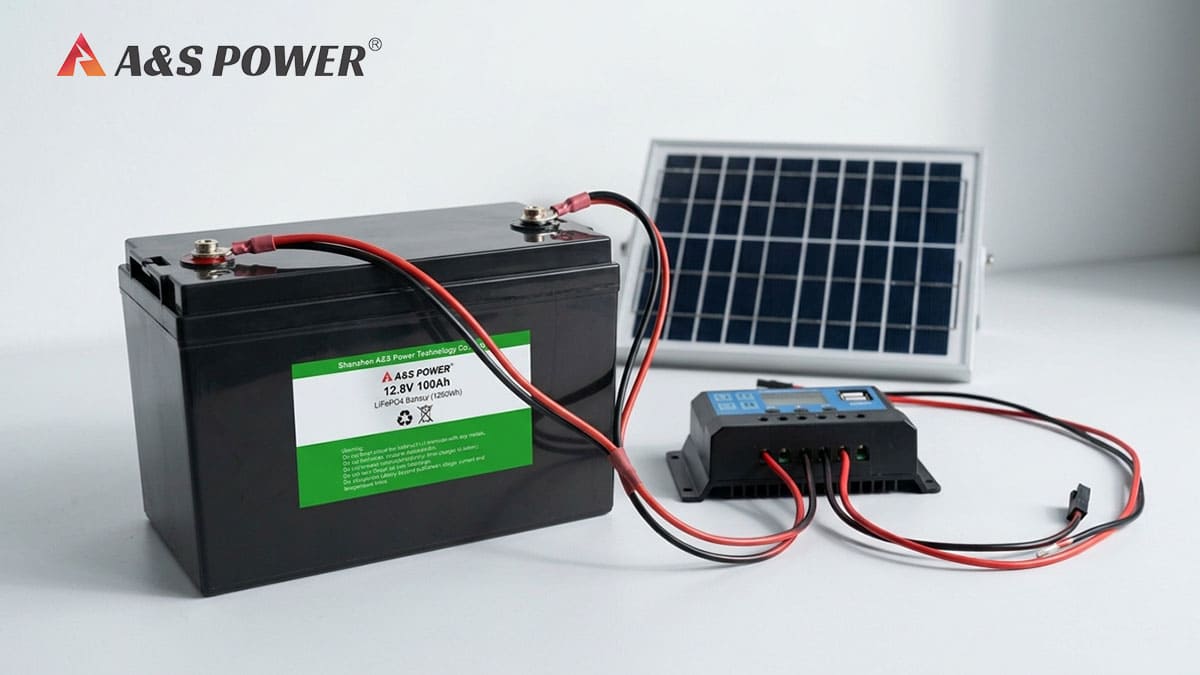
What happens when a battery becomes fully charged but a solar panel continues to supply power? Will the battery disconnect both its charging and discharging ports, or can it continue powering the connected device while charging is temporarily stopped?
These are important questions for engineers developing solar-powered equipment, portable electronics, outdoor monitoring devices, and other battery-operated products.
The answer depends on how the battery, protection circuit, and solar charging system are designed. A battery protection circuit and a solar charge controller may perform different functions, so the behavior of one component should not automatically be attributed to the other.
In a real customer inquiry received by A&S Power, the customer asked what would happen if a fully charged battery remained connected to a solar panel with a maximum voltage of 21V.
Our technical response described a charging protection and recovery process: charging continues until a protection voltage is reached, charging is then stopped while discharging remains possible, and charging resumes after the voltage falls below a recovery threshold.
However, the exact meaning of the protection voltage in this particular application has not yet been verified against the original battery specification or circuit design. This distinction is important when explaining the expected behavior without making unsupported claims about a specific battery pack.
Quick Answer: What Happens When a Battery Is Fully Charged?
When a battery reaches the relevant protection voltage described in the A&S Power customer response, charging stops, but discharging remains possible. When the battery voltage subsequently drops below the recovery threshold, charging resumes.
This does not mean that every lithium battery disconnects its charging and discharging ports in the same way. The precise behavior depends on the battery protection circuit, charging controller, and system configuration.
For the customer scenario involving a 21V solar panel, the available information is not sufficient to confirm whether that panel is compatible with the battery or whether a particular port will disconnect.
The following distinctions help clarify the situation:
- Charging protection: The response confirms that charging stops at the specified protection voltage.
- Discharging behavior: The response states that the battery can still discharge after charging has stopped.
- Recovery behavior: Charging resumes when the voltage drops below the recovery threshold.
- Solar panel compatibility: A maximum panel voltage of 21V alone does not establish compatibility with the battery or its charging electronics.
Key Takeaways
- A fully charged battery does not necessarily need to disconnect its discharge path when charging stops.
- The A&S Power response describes charging interruption followed by automatic recovery under the stated voltage conditions.
- The exact meaning and value of the protection voltage in the customer's application remain unverified.
- Solar panel voltage, battery charging voltage, and charge controller input limits must be evaluated together.
- A suitable charging controller and correctly configured protection system are essential to the design of a reliable solar-powered battery application.
1. What Happens When a Battery Reaches Full Charge?
A battery reaches its intended full-charge condition according to the charging method and limits established for its chemistry and configuration. Reaching full charge does not necessarily mean that every component in the system switches off.
The charging system may regulate current, terminate charging, or change its operating state according to its control strategy.
For example, the Texas Instruments BQ24650 solar battery charge controller supports lithium-ion, lithium-polymer, and lithium iron phosphate charging applications and provides charge-voltage regulation, charge termination, and automatic restart functions under specified conditions. This illustrates how charging behavior can depend on the controller's design rather than on the battery alone.
In the A&S Power customer inquiry, the confirmed response describes the following sequence:
- Charging continues until the stated protection voltage is reached.
- Once that voltage is reached, the battery cannot continue charging but can still discharge.
- When the voltage falls below the recovery threshold, charging resumes.
This is the behavior reported in the customer response. It should not be interpreted as a complete description of every possible charging mode or as confirmation of a particular circuit topology.
Does a fully charged battery always stop receiving solar power?
Not necessarily in the same way across all systems.
Some solar charge controllers reduce or stop charging current when the battery reaches its configured charging limit. Other systems may rely on different combinations of charge regulation and battery protection.
For instance, the Texas Instruments BQ24650 datasheet describes a controller that regulates charging voltage and current, terminates charging under specified conditions, and can automatically restart charging when the battery voltage falls below an internal threshold.
This is a general example of solar charging behavior, not proof that the customer's battery uses the same control method.
The key engineering question is which component controls charging in the actual application and how its settings interact with the battery's protection circuit.
2. Will the Battery Disconnect Both Charging and Discharging Ports?
This was the central question in the customer's inquiry.
The customer wanted to know whether connecting a solar panel after the battery had become fully charged would disconnect both the charging and discharging ports.
According to the A&S Power response, once the specified protection voltage is reached, the battery cannot continue charging but can still discharge.
Therefore, the response does not describe both charging and discharging being disconnected simultaneously.
However, the exact electrical implementation remains unverified. The original response does not identify the protection circuit, switching components, port topology, or specific voltage thresholds.
It would therefore be inaccurate to claim that every A&S Power battery pack, or every lithium battery, behaves this way regardless of its configuration.
Charging interruption versus complete battery disconnection
These are different operating conditions.
| Operating condition | What it means | What can be concluded here |
|---|---|---|
| Charging stops | The battery is no longer accepting charging current under the stated condition. | Confirmed by the A&S Power response. |
| Discharging remains available | The battery can continue supplying power to a load. | Confirmed by the A&S Power response. |
| Both paths disconnect | Charging and discharging are both interrupted. | Not described in the response. |
| Charging automatically resumes | Charging becomes available again after the voltage falls below the recovery threshold. | Confirmed by the A&S Power response. |
This distinction matters when designing a product that must continue operating while connected to a solar charging source.
For example, an outdoor monitoring device may need to continue powering its sensors and communications circuitry even when the battery has reached its charging limit. Whether the load can remain powered depends on the battery system's actual design and operating conditions.
3. How Do Charging Protection and Voltage Recovery Work?
The A&S Power response identifies two relevant voltage conditions: a protection voltage and a recovery threshold.
The specific values and the exact circuit function represented by these terms have not yet been confirmed. They should therefore be treated as application-specific parameters rather than universal lithium battery specifications.
The reported behavior can be understood through the following sequence.
The battery accepts charging current under the applicable charging conditions.
Charging stops according to the behavior described in the customer response.
The battery can still discharge while charging is stopped.
Charging resumes, as described by A&S Power.
This sequence explains the customer response without assuming a specific circuit implementation.
Why are there two voltage thresholds?
In some battery charging and protection systems, the voltage at which charging is stopped differs from the voltage at which charging becomes available again. Such separation can help prevent rapid switching around a single threshold.
However, we have not verified that this is the precise mechanism used in the customer's battery.
Before assigning numerical values or identifying the underlying protection function, the original circuit documentation, battery specifications, or controller settings must be reviewed.
For OEM battery projects, this is why voltage thresholds should be agreed upon as part of the complete battery and charging-system specification.
4. Can a 21V Solar Panel Charge a Lithium Battery?
A solar panel with a stated maximum voltage of 21V cannot be declared compatible with a battery based on that number alone.
The customer's question specifies the panel's maximum voltage but does not provide the battery chemistry, series-cell configuration, charging-voltage limits, charge-current requirements, or charging-controller model.
These details are necessary to evaluate the complete system.
Battery voltage and solar panel voltage are not interchangeable
A battery's nominal voltage describes its voltage class under specified conditions. Its required charging voltage is a separate specification.
Likewise, a solar panel's voltage rating does not necessarily represent the voltage delivered under every operating condition. Depending on the specification, a quoted voltage may refer to an operating point, open-circuit voltage, or another rating.
The relevant values must be checked against the solar charge controller's input requirements and the battery's charging specifications.
For example, a controller may be designed to accept a solar input voltage higher than the battery's charging voltage and regulate the output accordingly. Victron Energy explains this operating principle in its SmartSolar MPPT solar charger documentation.
That example does not establish that this controller, or any other particular controller, is suitable for the customer's application.
What should be checked before connecting the panel?
Before connecting a 21V solar panel to a battery system, verify:
- Battery chemistry and configuration: Confirm the cell chemistry and number of cells connected in series.
- Maximum permitted charging voltage: Use the battery manufacturer's specifications.
- Solar panel specifications: Check the relevant operating voltage, open-circuit voltage, current, and power ratings.
- Charge controller compatibility: Confirm its permitted solar input range and battery charging profile.
- Charging current limits: Ensure the system does not exceed the permitted current for the battery, controller, or protection circuit.
- Protection and recovery settings: Obtain the applicable specifications rather than assuming default values.
Important safety note: Do not connect a solar panel directly to a lithium battery unless the battery and charging-system manufacturers explicitly specify that the arrangement is suitable. Use a compatible charging circuit or controller where required by the design.
5. What Is the Difference Between a Battery Protection Circuit and a Solar Charge Controller?
These components can contribute to safe charging, but they are not interchangeable.
A solar charge controller manages energy from the solar source and regulates battery charging according to its design and settings.
A battery protection circuit monitors specified battery conditions and responds according to its protection design. Its functions may include protection against overvoltage, undervoltage, overcurrent, or other conditions, depending on the circuit.
The actual functions available vary by product.
| Component | Primary role | What must be verified |
|---|---|---|
| Solar charge controller | Regulates power transferred from the solar source to the battery. | Solar input limits, charging profile, current limits, and supported chemistry. |
| Battery protection circuit | Responds to specified battery operating limits. | Protection thresholds, recovery conditions, current ratings, and switching behavior. |
| Battery pack | Stores and supplies electrical energy. | Chemistry, capacity, series configuration, permitted charge/discharge conditions, and pack specifications. |
| Connected load | Consumes power from the battery system. | Operating voltage, current demand, and whether it can remain powered during charging interruption. |
A system may use both a solar charge controller and a battery protection circuit. Their settings and behavior should be considered together rather than assuming that one replaces the other.
In the customer's case, the available response describes charging interruption and recovery, but it does not establish which component initiates the interruption. That question remains open until the original specifications or circuit design can be reviewed.
6. What Should OEM Buyers Confirm When Developing a Solar-Powered Battery Product?
For OEM and ODM projects, charging behavior should be evaluated during the battery and electronics design stage, rather than after the battery pack has been selected.
A battery may have suitable capacity and dimensions but still be incompatible with the intended charging circuit if its voltage limits, current requirements, or protection behavior do not match the application.
A&S Power provides custom rechargeable battery solutions, including lithium-ion, lithium-polymer, and LiFePO4 battery packs. For a project involving solar charging, the battery specification should be evaluated alongside the customer's charging electronics and product requirements.
Useful information to provide during an engineering review includes:
- Battery requirements: Chemistry, nominal voltage, capacity, series/parallel configuration, and operating conditions.
- Solar panel details: Rated power, operating voltage, open-circuit voltage, and expected current.
- Charging circuit: Controller model, schematic, or relevant electrical specifications.
- Protection requirements: Required voltage limits, charge/discharge current limits, and expected recovery behavior.
- System operation: Whether the connected load must remain powered while charging is interrupted.
- Product environment: Expected temperature range and other relevant operating conditions.
These details help engineers assess the intended operating behavior and identify specifications that require confirmation before production.
If your project requires a customized battery pack, visit A&S Power's official website to discuss battery requirements and the integration constraints of your application.
The objective is not simply to choose a battery with the right nominal voltage. It is to establish a compatible system in which the battery, charging controller, protection circuit, and load operate according to clearly defined specifications.
Conclusion
When a battery reaches the protection voltage described in the A&S Power customer response, charging stops while discharging remains possible. Charging resumes after the voltage falls below the stated recovery threshold.
This answers the customer's central question: the response does not indicate that both charging and discharging ports must disconnect simultaneously.
However, the specific meaning of the protection voltage has not yet been confirmed against the original battery specifications or circuit design. The exact threshold, recovery value, switching method, and compatibility with the customer's 21V solar panel therefore remain unverified.
For engineers and OEM buyers, the practical lesson is to evaluate the complete charging system rather than relying on the solar panel's voltage rating alone. Confirm the battery's charging requirements, controller input limits, current ratings, and protection behavior before finalizing the design.
A&S Power recommends establishing these electrical requirements during battery project development so that the battery pack can be matched to the intended application.
Frequently Asked Questions
1. What happens when a battery is fully charged but the solar panel remains connected?
The result depends on the charging system. In the A&S Power customer response, charging stops when the specified protection voltage is reached, while discharging remains possible. Charging resumes when the voltage falls below the recovery threshold.
2. Will both the charging and discharging ports disconnect when the battery is full?
Not according to the behavior described in the A&S Power response. It states that charging stops but discharging remains possible. The precise switching arrangement for the customer's battery has not been independently verified.
3. Does a 21V solar panel work with every lithium battery?
No. Compatibility depends on the battery chemistry, series-cell configuration, permitted charging voltage and current, solar panel characteristics, and charging-controller specifications. A 21V rating alone is insufficient to establish compatibility.
4. What is a battery charging protection voltage?
It is a voltage threshold associated with a specified charging protection or control function. Its exact meaning depends on the circuit and system design. In this customer case, the term has not yet been verified against the original specifications.
5. What is a charging recovery voltage?
It is a voltage threshold below which charging may become available again in a system that uses separate stop and recovery conditions. A&S Power's response states that charging resumes below the recovery threshold, but the actual threshold value remains unconfirmed.
6. Can a battery continue powering a device while charging is stopped?
It can in the operating condition described in the A&S Power response, which states that the battery can still discharge after charging stops. Whether a specific product can maintain its load depends on the battery design, remaining charge, load requirements, and system configuration.
7. Should a solar panel be connected directly to a lithium battery?
Do not assume direct connection is safe. Follow the battery and charging-system manufacturer's instructions and use a compatible charge controller or charging circuit where required. Verify the permitted input voltage, charging voltage, and current limits before connecting the system.
8. What information should I provide when requesting a custom solar battery pack?
Provide the battery chemistry, nominal voltage, capacity, series/parallel configuration, solar panel specifications, charging-controller details, required charge/discharge currents, and expected operating conditions. A circuit schematic or controller datasheet is particularly useful when the protection and recovery behavior needs to be verified.