



Technical guide by A&S Power — focused on practical battery selection, OEM/ODM integration, and lithium battery engineering.
Introduction
A 7.4V battery is one of the most common voltage configurations I encounter when working with rechargeable lithium battery packs for portable electronics, medical devices, industrial equipment, robotics, GPS equipment, and other battery-powered products.
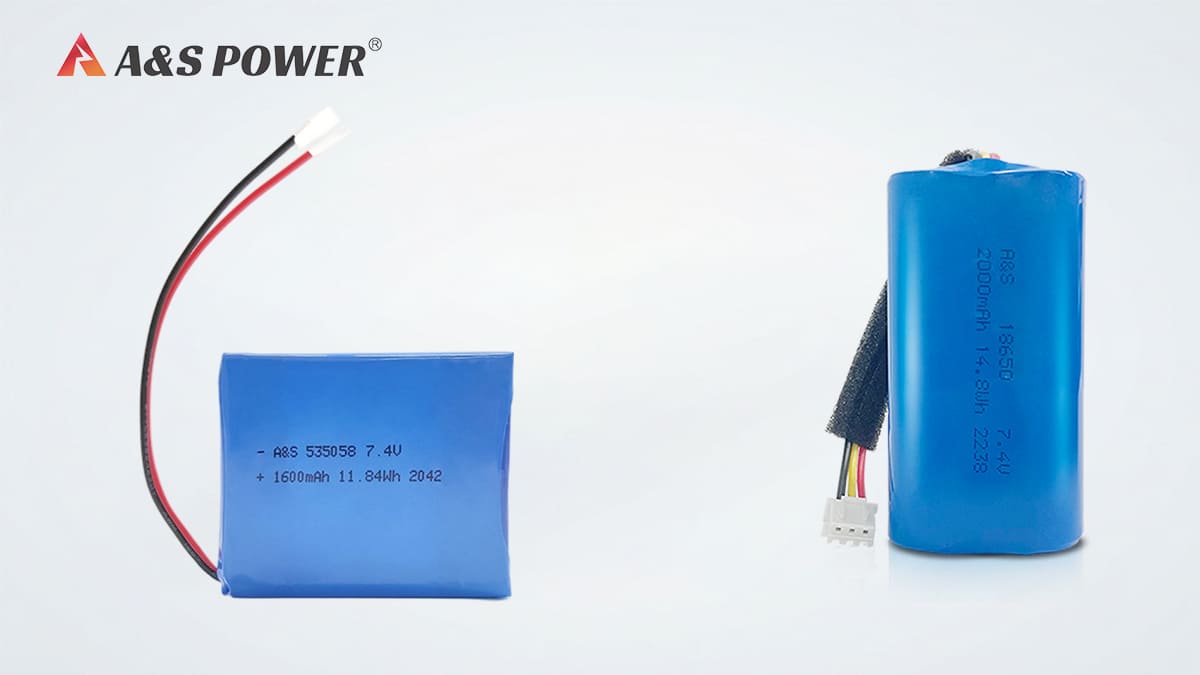
In most conventional lithium-ion and lithium polymer applications, a 7.4V battery refers to a two-cell series configuration, commonly called 2S. Each cell has a nominal voltage of approximately 3.7V, so two cells connected in series provide a nominal pack voltage of approximately 7.4V.
However, 7.4V does not mean that the battery always measures exactly 7.4V. For a conventional lithium-ion or LiPo chemistry using a 4.2V maximum charging voltage per cell, a fully charged 2S battery can reach approximately 8.4V.
This distinction is important when selecting a battery, charger, protection circuit, or power management system. In my experience, voltage alone is rarely enough to determine whether a battery is suitable for a product. Capacity, discharge current, dimensions, connector type, protection strategy, operating temperature, and regulatory requirements can all affect the final battery design.
In this guide, I will explain what a 7.4V battery actually means, how the 2S configuration works, how to calculate capacity and energy, how charging should be approached, where 7.4V battery packs are commonly used, and what OEM product designers should consider when choosing or customizing a battery.
Quick Answer: What Is a 7.4V Battery?
A 7.4V battery is commonly a 2S lithium-ion or lithium polymer battery pack made by connecting two approximately 3.7V nominal cells in series. For conventional 4.2V-per-cell Li-ion/LiPo chemistry, the pack reaches approximately 8.4V when fully charged.
The 7.4V rating describes the nominal voltage rather than the exact voltage at every point during operation. Battery capacity is normally expressed in mAh or Ah, while stored energy can be estimated using the relationship:
Energy (Wh) = Nominal Voltage (V) × Capacity (Ah)
In practical battery design, I therefore do not recommend selecting a battery based on the “7.4V” label alone. Capacity, discharge current, charging voltage, protection circuitry, physical dimensions, operating temperature and certification requirements are equally important.
1. What Does 7.4V Mean in a Battery?
The first thing to understand is the difference between nominal voltage and actual battery voltage.
A conventional lithium-ion cell is commonly specified at around 3.6V or 3.7V nominal. Battery University notes that manufacturers may use either 3.6V or 3.7V as the nominal rating depending on the cell and application. A typical cell may charge to approximately 4.2V and discharge toward approximately 2.8–3.0V, depending on the chemistry and manufacturer's specified limits.
When two 3.7V cells are connected in series:
3.7V + 3.7V = 7.4V nominal
At full charge:
4.2V + 4.2V = 8.4V
This is why a 7.4V LiPo battery should not be interpreted as a battery that always outputs exactly 7.4V.
The actual voltage changes as the battery is charged and discharged.
Typical 7.4V Battery Voltage Concept
| Battery State | Approximate Voltage |
|---|---|
| Nominal voltage | 7.4V |
| Full charge, conventional 4.2V/cell chemistry | 8.4V |
| Nominal voltage per cell | 3.7V |
| Typical 2S configuration | 2 cells in series |
| Configuration name | 2S |
These figures describe a common 2S lithium-ion/LiPo configuration, not a universal specification for every chemistry marketed as 7.4V.
2. Why Is a 7.4V Battery Called a 2S Battery?
“2S” means two cells connected in series. The letter “S” refers to series connection.
When cells are connected in series, their voltage adds together while the Ah capacity remains that of the individual series string.
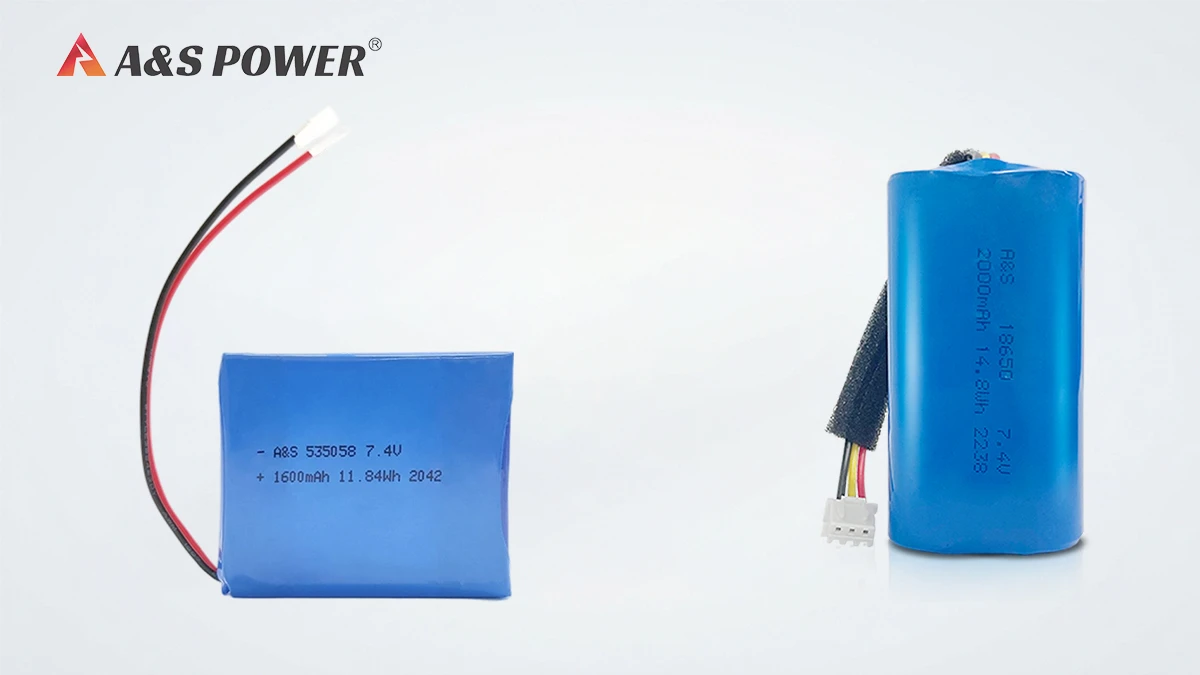
For example, if two 3.7V 2,000mAh cells are connected in series, the resulting battery is approximately:
- Nominal voltage: 7.4V
- Capacity: 2,000mAh
- Approximate nominal energy: 14.8Wh
This is different from connecting cells in parallel. A parallel configuration increases capacity while keeping the nominal voltage approximately the same.
For a multi-cell lithium battery, cell matching and appropriate protection are important. Cells in a series pack need to operate within the limits of the battery design, and the charging system must be suitable for the complete series configuration.
3. 7.4V Battery Capacity: mAh, Ah and Wh
Voltage tells me the electrical potential of the battery, but it does not tell me how much energy the battery can store. That is where capacity becomes important.
Battery capacity is normally specified in mAh or Ah.
For example, a 7.4V 2,000mAh battery has a nominal capacity of 2Ah.
A simple estimate of nominal energy is:
Therefore:
7.4V × 2Ah = 14.8Wh
The same calculation can be applied to different capacities.
| 7.4V Battery | Nominal Voltage | Capacity | Approx. Nominal Energy |
|---|---|---|---|
| 7.4V 1,000mAh | 7.4V | 1.0Ah | 7.4Wh |
| 7.4V 2,000mAh | 7.4V | 2.0Ah | 14.8Wh |
| 7.4V 3,000mAh | 7.4V | 3.0Ah | 22.2Wh |
| 7.4V 5,000mAh | 7.4V | 5.0Ah | 37.0Wh |
4. 7.4V LiPo vs. 7.4V Lithium-Ion Battery
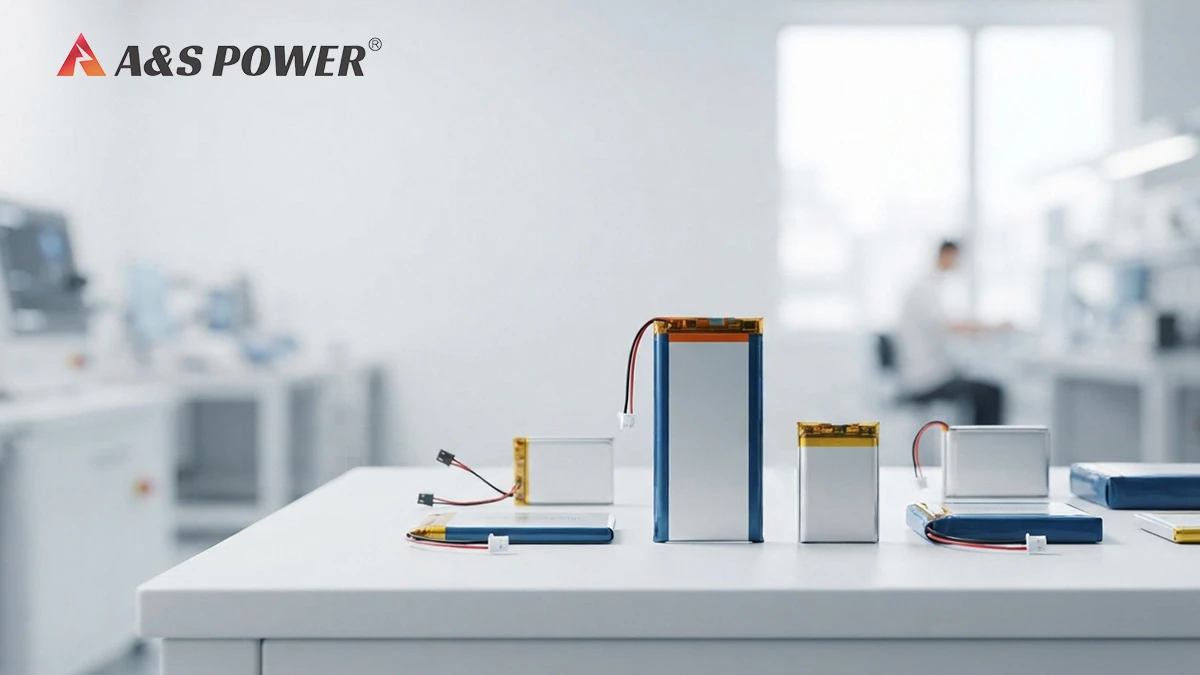
A 7.4V battery can be built using lithium polymer cells or conventional lithium-ion cells. The voltage configuration may be similar, but the physical construction and application characteristics can differ.
7.4V LiPo Battery
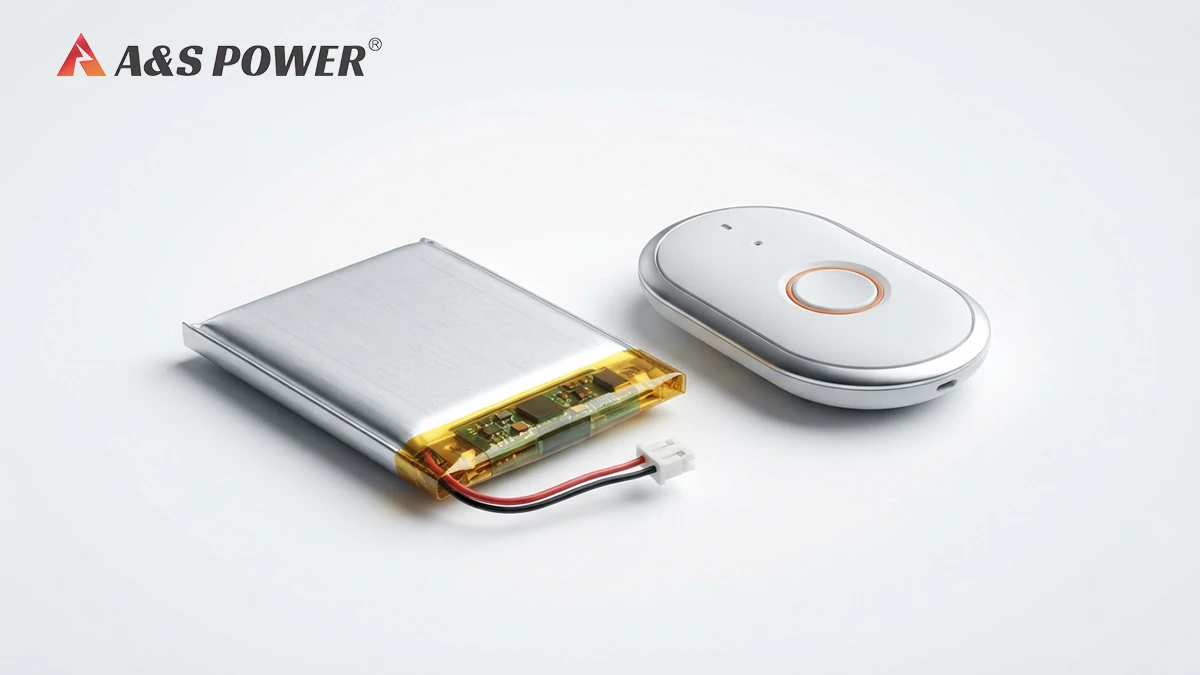
Lithium polymer batteries are especially useful when a product requires a customized shape, thin profile, lightweight construction, or efficient use of limited internal space. LiPo cells can be manufactured in many customized dimensions, making them attractive for portable and compact electronic products.
7.4V Lithium-Ion Battery
Lithium-ion battery packs may use cylindrical or other cell formats depending on the application. Cylindrical cells such as 18650 and 21700 are widely used in applications requiring specific energy, current capability, mechanical robustness, or standardized cell formats.
From an engineering perspective, I would not select between LiPo and lithium-ion based only on nominal voltage. The more important questions are available installation space, required capacity, continuous and peak current, operating environment, expected cycle life, mechanical requirements, safety architecture, and certification requirements.
5. How Do You Charge a 7.4V Battery?
Charging a 7.4V lithium battery requires a charging system designed for the specific battery chemistry and series configuration.
For a conventional 2S Li-ion or LiPo pack using cells with a 4.2V maximum charging voltage, the charger normally follows a suitable constant-current/constant-voltage (CC/CV) charging profile and limits the pack to approximately 8.4V.
Therefore, it is not correct to think of a “7.4V charger” simply as a generic power supply that outputs 7.4V. The charging voltage and charging algorithm need to match the battery.
For a 2S battery, cell balance is also an important consideration. If the two cells do not remain within the intended voltage relationship, the pack can become unsuitable for safe operation or charging.
6. Does a 7.4V Battery Need a BMS or Protection Circuit?
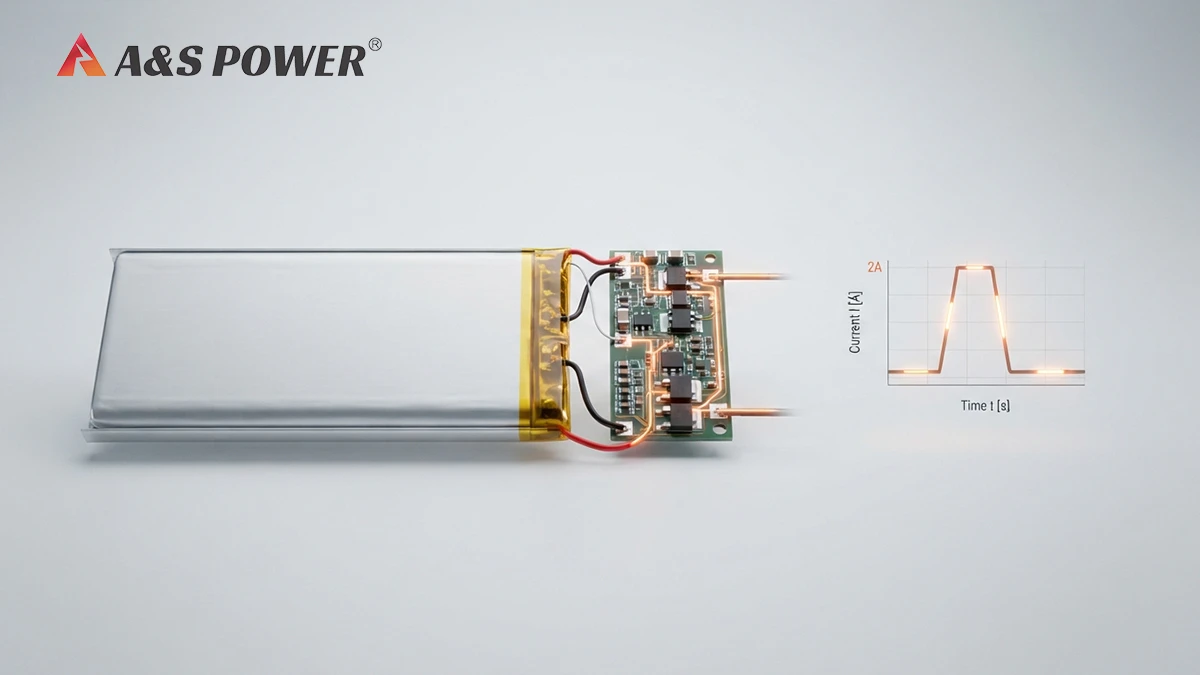
A multi-cell lithium battery pack generally needs an appropriate protection and control strategy. Depending on the battery design, this may involve a PCM, BMS, protection IC, balancing circuit, temperature sensing, or a combination of these functions.
The exact configuration depends on the application. A small 2S consumer battery may use a compact protection circuit, while a more sophisticated battery pack may require monitoring, balancing, temperature measurement, communication, and more advanced battery management functions.
Typical protection functions can include:
- Overcharge protection
- Over-discharge protection
- Over-current protection
- Short-circuit protection
- Temperature monitoring or protection
- Cell balancing for appropriate multi-cell designs
The protection design should always be matched to the actual cell chemistry, cell configuration, electrical load, charger, and intended use.
7. Common Applications of 7.4V Battery Packs
7.4V battery packs are useful because they provide a practical voltage level for many portable and medium-power electronic systems.
Common applications include:
- Portable medical equipment
- Patient monitoring devices
- Portable diagnostic equipment
- GPS tracking devices
- Industrial handheld equipment
- Robotics and small robotic platforms
- Portable instruments
- Consumer electronics
- IoT equipment
- Portable lighting systems
- Beauty and personal-care equipment
- Wireless and communication equipment
In many of these applications, the battery needs to fit into a specific enclosure. This is where a standard battery may become difficult to use, particularly when the product has strict requirements for thickness, connector location, wire length, capacity, or protection circuitry.
8. How to Choose the Right 7.4V Battery
When I help evaluate a 7.4V battery requirement, I recommend looking beyond the voltage specification and reviewing the complete electrical and mechanical system.
1. Confirm the Voltage
Determine whether the device genuinely requires a 7.4V nominal lithium battery and identify the acceptable operating voltage range of the electronics.
2. Determine the Required Capacity
Estimate the required operating time and calculate the approximate energy requirement. A larger mAh rating generally provides more stored charge, but the physical size and mass may also increase.
3. Check Continuous and Peak Current
A battery with sufficient capacity may still be unsuitable if it cannot provide the required current. Motorized products, wireless transmitters, pumps, actuators, and other loads may have short-duration current peaks that need to be considered.
4. Check Dimensions
For compact products, dimensions can be just as important as electrical specifications. LiPo batteries are often useful when the enclosure requires a customized length, width, thickness, or irregular shape.
5. Select the Correct Connector
Connector type, wire gauge, cable length, polarity, and connector position should be defined during the battery design process rather than treated as an afterthought.
6. Define the Protection Requirements
The battery protection circuit should be selected according to the battery chemistry, series configuration, load profile, charger, and safety requirements of the finished product.
7. Consider Certification and Compliance
Depending on the target market and product category, battery compliance may involve requirements such as IEC 62133-2 , applicable UL standards , UN 38.3 testing for transportation , CE marking requirements where applicable , RoHS compliance , and other market-specific regulatory requirements.
IEC 62133-2:2017 specifically establishes requirements and tests for the safe operation of portable sealed secondary lithium cells and batteries under intended use and reasonably foreseeable misuse. The consolidated IEC 62133-2:2017+A1:2021 version is also available from IEC.
9. 7.4V vs. 3.7V vs. 11.1V Battery
One of the easiest ways to understand lithium battery voltage configurations is to look at the number of cells connected in series.
| Nominal Battery Voltage | Typical Configuration | Typical Full-Charge Voltage* |
|---|---|---|
| 3.7V | 1S | 4.2V |
| 7.4V | 2S | 8.4V |
| 11.1V | 3S | 12.6V |
| 14.8V | 4S | 16.8V |
This series relationship is useful when designing battery-powered equipment. However, the device electronics must be designed for the actual voltage range rather than only the nominal label.
10. Why Custom 7.4V Batteries Can Be Better for OEM Products
For an OEM product, buying a standard 7.4V battery is not always the most efficient solution. The battery may have the correct nominal voltage but the wrong dimensions, connector, current capability, capacity, or protection configuration.
A custom 7.4V LiPo or lithium-ion battery can be designed around the product's actual requirements.
Depending on the project, customization may include:
- Battery voltage and series configuration
- Capacity and energy requirement
- Cell dimensions
- Overall battery dimensions
- Thickness and shape
- Wire length
- Connector type and position
- PCM or BMS configuration
- Temperature sensing
- Communication functions for advanced battery systems
- Mechanical packaging
- Production and regulatory requirements
For products with limited internal space, customization can be particularly valuable because the battery can be designed around the enclosure instead of forcing the enclosure to accommodate a standard battery.
A&S Power provides custom lithium polymer and lithium-ion battery solutions for OEM and ODM applications, including customized voltage, capacity, dimensions, connectors, protection circuits, and battery-pack configurations.
11. 7.4V Battery Technical Data at a Glance
| Parameter | Typical 7.4V 2S Li-ion/LiPo Pack | Engineering Consideration |
|---|---|---|
| Nominal voltage | 7.4V | Commonly based on two approximately 3.7V cells in series |
| Series configuration | 2S | Two cells connected in series |
| Typical maximum charge voltage | 8.4V | Applies to conventional 4.2V/cell chemistry |
| Capacity | Application dependent | Specified in mAh or Ah |
| Nominal energy | 7.4 × Ah | Actual usable energy depends on operating conditions |
| Protection | Application dependent | May include PCM/BMS and temperature protection |
| Cell chemistry | Usually Li-ion or LiPo in this voltage class | Verify chemistry before selecting charger or protection limits |
Key Takeaways
- A 7.4V battery commonly refers to a 2S lithium-ion or lithium polymer battery pack.
- Two approximately 3.7V nominal cells connected in series produce approximately 7.4V nominal.
- A conventional 2S Li-ion/LiPo battery using 4.2V/cell charging can reach approximately 8.4V when fully charged.
- Battery capacity is expressed in mAh or Ah, while nominal energy can be estimated using V × Ah.
- Charging equipment must match the battery chemistry, series configuration, and maximum charging voltage.
- A 2S lithium battery may require appropriate protection and cell-management functions.
- Battery selection should consider current, dimensions, connector, operating temperature, protection, and compliance—not just voltage.
- Custom 7.4V batteries can be useful when an OEM product requires specific dimensions, capacity, connectors, or protection functions.
Conclusion
A 7.4V battery is more than a simple voltage specification. In most conventional Li-ion and LiPo applications, it represents a 2S configuration using two approximately 3.7V nominal cells connected in series. When those cells use a conventional 4.2V maximum charging voltage, the battery can reach approximately 8.4V when fully charged.
For engineers and product designers, the more important question is whether the complete battery system matches the requirements of the device. Capacity determines how much charge the battery can provide, while current capability, cell selection, temperature, protection, dimensions, connectors, charging architecture, and certification requirements all influence the final design.
I also recommend looking at the battery and the electronic system as one integrated solution. A battery that looks suitable on paper may not work well if its peak current is too low, its dimensions do not fit the enclosure, its protection circuit does not match the charger, or its voltage range is incompatible with the electronics.
For OEM and ODM projects, a customized 7.4V LiPo or lithium-ion battery can therefore provide a more practical approach. The battery can be developed around the product's actual electrical, mechanical, and regulatory requirements rather than relying on a generic off-the-shelf pack.
About A&S Power
A&S Power is a lithium battery manufacturer specializing in custom lithium polymer, lithium-ion, LiFePO4, and battery-pack solutions for OEM and ODM applications.
Our custom battery services can cover electrical specifications, capacity, voltage, cell configuration, dimensions, shape, connectors, wires, PCM/BMS functions, mechanical integration, prototyping, and mass production.
We work with customers across applications including medical devices, portable electronics, GPS equipment, IoT products, industrial equipment, wearables, beauty devices, and other battery-powered products.
For projects where a standard battery does not fit the product requirements, our engineering team can work from the required voltage, capacity, dimensions, current, connector, and application environment to develop a battery solution.
Learn more about our custom lithium polymer battery manufacturing services
Need a Custom 7.4V Battery?
If you need a 7.4V LiPo or lithium-ion battery for an OEM product, I recommend starting with the actual device requirements rather than choosing a standard battery based only on voltage.
Share your required voltage, capacity, battery dimensions, maximum current, connector, working environment, and application. A custom battery can then be evaluated around your product's electrical and mechanical requirements.
Contact UsFrequently Asked Questions About 7.4V Batteries
1. Is a 7.4V battery the same as a 2S battery?
In common Li-ion and LiPo terminology, a 7.4V battery is typically a 2S battery made from two approximately 3.7V nominal cells connected in series. However, always verify the actual chemistry and electrical specifications rather than relying only on the voltage label.
2. What voltage is a fully charged 7.4V battery?
For a conventional 2S Li-ion or LiPo battery using a 4.2V maximum charging voltage per cell, the fully charged pack voltage is approximately 8.4V.
3. Can I use an 8.4V charger for a 7.4V battery?
An 8.4V maximum charging voltage can be appropriate for a conventional 2S Li-ion/LiPo battery designed for 4.2V per cell, but the charger must also use the correct charging profile and current limits. Do not use an 8.4V source simply because the voltage appears correct.
4. How long does a 7.4V battery last?
Runtime depends on capacity, device power consumption, discharge conditions, battery age, temperature, and system efficiency. A rough first estimate can be made from battery energy in Wh divided by the device's average power consumption in W, with real-world losses taken into account.
5. What is the difference between a 7.4V 1000mAh and 7.4V 5000mAh battery?
Both have the same nominal voltage, but the 5,000mAh battery has approximately five times the nominal charge capacity. Using the simple V × Ah calculation, a 7.4V 1,000mAh battery has approximately 7.4Wh of nominal energy, while a 7.4V 5,000mAh battery has approximately 37Wh.
6. Can A&S Power customize a 7.4V battery?
Yes. A&S Power provides custom battery solutions covering voltage, capacity, cell configuration, dimensions, shape, connectors, wires, PCM/BMS requirements, and other OEM battery specifications.
7. Is a 7.4V LiPo battery rechargeable?
Yes. A 7.4V LiPo battery is generally a rechargeable lithium polymer battery pack. However, it must be charged with equipment specifically designed for the battery's chemistry and 2S configuration.
8. Is 7.4V the same as 8.4V?
No. 7.4V is commonly the nominal voltage of a 2S Li-ion/LiPo pack, while approximately 8.4V is the maximum charging voltage for a conventional 2S pack using 4.2V per cell.
Recommended Internal Links
- Custom Li-Polymer Battery Manufacturer — Useful for readers looking for customized LiPo battery manufacturing.
- Custom Lithium-Ion Battery Manufacturer — Relevant for OEM/ODM battery design, BMS, connectors, and mechanical integration.
- Custom Lithium Battery Pack Manufacturer — Suitable for customers looking for complete custom battery-pack development.
- Custom Lithium Polymer Battery — Relevant for custom 3.7V, 7.4V, and other LiPo battery requirements.
Recommended External References
- Battery University — BU-303: Confusion with Voltages — Useful background on lithium battery nominal voltage, charging voltage, and voltage terminology.
- Battery University — BU-302: Series and Parallel Battery Configurations — Explains how series and parallel battery configurations affect voltage and capacity.
- Battery University — BU-405: Charging with a Power Supply — Provides technical background on lithium-ion charging voltage and charging considerations.
- IEC 62133-2:2017+A1:2021 — Official IEC information regarding safety requirements for portable sealed secondary lithium cells and batteries.
- European Commission — CE Marking — Official European Commission information concerning CE marking and applicable EU product requirements.
- European Commission — RoHS Directive — Official European Commission information concerning restrictions on hazardous substances in electrical and electronic equipment.