



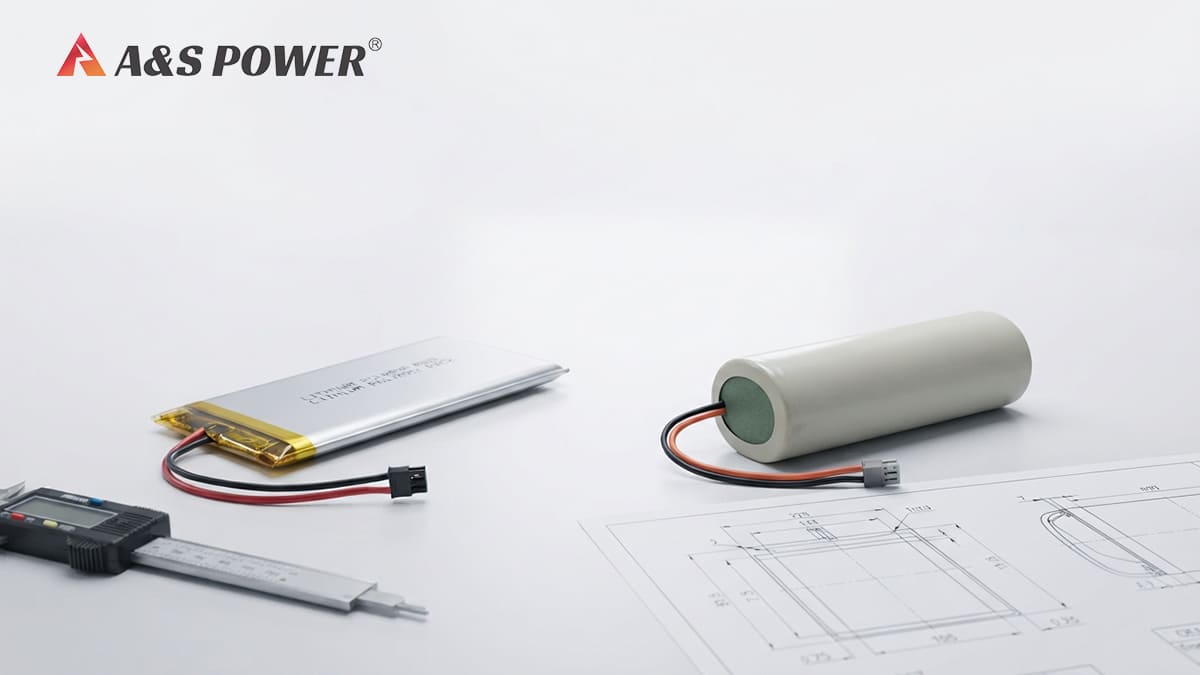
Yes. For an OEM battery project, once the customer confirms the sample, bulk production should follow the approved product specification and manufacturing configuration.
At A&S Power, our approach is that the approved sample becomes the reference for bulk production. The agreed battery cell, protection components, battery construction, and established assembly process should remain consistent when the project moves from sample approval to mass production.
This consistency is important because customers are not approving a sample simply to see whether a battery can work. They are approving a specific battery solution for integration into their product.
Introduction
One of the most common concerns we hear during custom battery development is simple:
“Will the battery I receive in mass production be the same as the sample I approved?”
It is a reasonable question.
When developing a custom Li-ion or LiPo battery, customers may spend considerable time evaluating the sample's dimensions, capacity, voltage, connector, protection behavior, discharge performance, and mechanical fit. The sample may also be tested inside the customer's own device.
Once the sample passes these checks, the project moves toward bulk production. At this point, customers need confidence that the approved design will not unexpectedly change.
From our experience at A&S Power, sample approval should establish the production reference for the project. Bulk production should follow the confirmed specification rather than treating the sample as a temporary demonstration unit.
Key Takeaways
- An approved battery sample should serve as the reference for bulk production.
- The agreed cell specification should remain consistent after sample approval.
- Protection components such as PCM or BMS should follow the approved configuration.
- Battery construction and assembly methods should remain aligned with the approved production solution.
- Sample approval is more than a functional test; it is an important production milestone.
- Any necessary change to a critical component or specification should be communicated and evaluated rather than introduced silently.
Why Do Customers Ask Whether Battery Samples Match Mass Production?
For a standard off-the-shelf battery, the difference between one unit and another may appear relatively straightforward.
For a custom OEM battery, however, many individual elements contribute to the final battery pack.
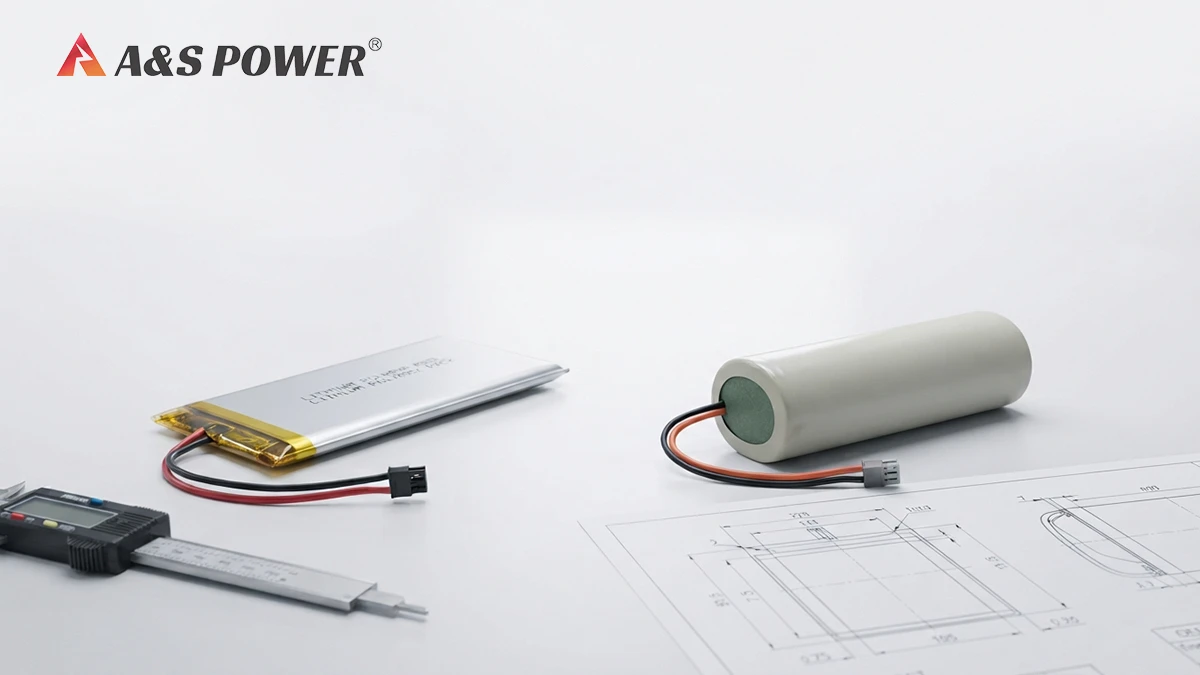
A custom battery may include:
- A specific lithium-ion or lithium polymer cell
- A defined nominal voltage and capacity
- PCM or BMS protection
- NTC or other temperature-sensing components
- Wires and connectors
- Insulation materials
- Tabs and welding configuration
- Mechanical dimensions
- Adhesive or fixing materials
- Labeling requirements
- A defined assembly process
The customer may have designed the battery compartment around these specifications.
Therefore, if a production battery uses a different cell, different protection configuration, or substantially different construction, the result could affect more than the battery itself.
It could influence the fit, electrical performance, charging behavior, thermal characteristics, or compatibility with the customer's device.
That is why sample-to-production consistency matters.
What Should Remain the Same After Battery Sample Approval?
When we talk about consistency between a battery sample and bulk production, we do not mean that every individual battery will be physically identical down to microscopic variations.
Manufacturing naturally involves normal production tolerances.
The important point is that the approved product configuration and manufacturing requirements remain the same.
1. Battery Cell Specification
The cell is one of the most important parts of a custom battery.
A battery sample may be developed around a particular cell specification based on:
- Voltage
- Capacity
- Dimensions
- Energy density
- Discharge capability
- Charging requirements
- Operating temperature
- Application requirements
If a different cell is introduced during mass production, the battery's characteristics can change even if the nominal voltage and capacity appear similar.
For example, two cells may both be described as 3.7 V and 1,000 mAh, but their dimensions, internal resistance, discharge capability, cycle performance, and operating characteristics may not be identical.
For this reason, cell selection should be treated as part of the approved battery configuration.
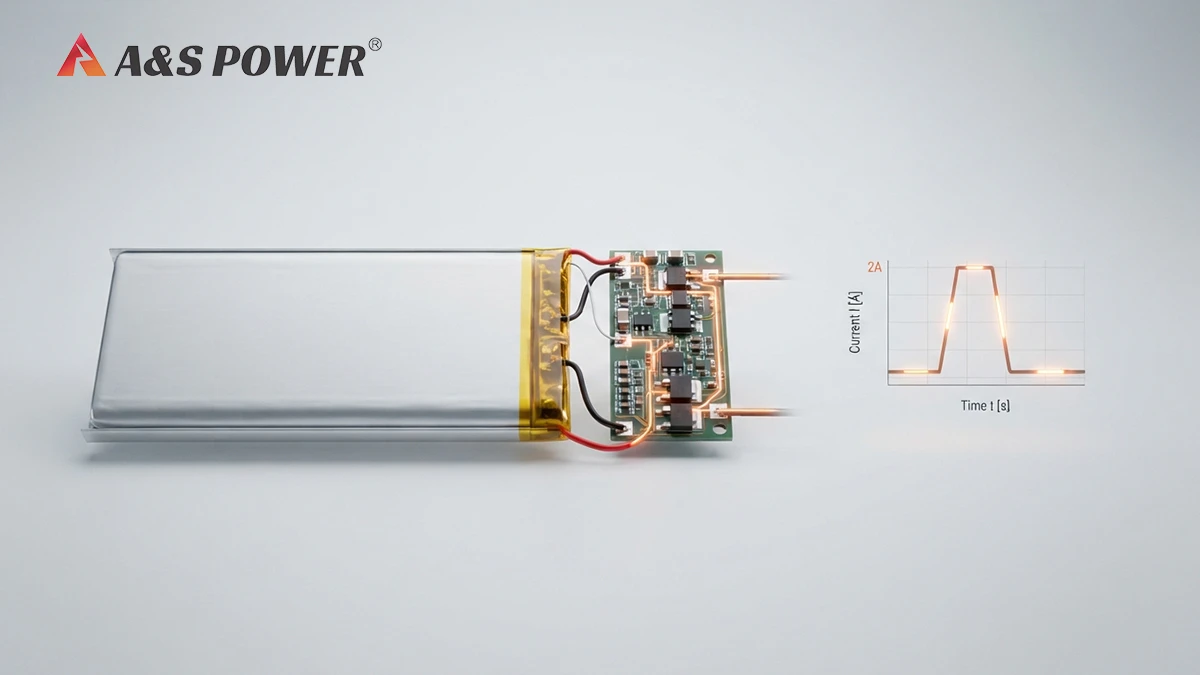
2. PCM, BMS and Protection Components
The protection circuit is another critical part of a rechargeable battery pack.
Depending on the application, a custom battery may use a PCM or BMS to provide functions such as:
- Overcharge protection
- Over-discharge protection
- Over-current protection
- Short-circuit protection
- Temperature monitoring or protection
- Cell balancing in applicable multi-cell battery systems
The protection solution should be selected according to the battery's electrical requirements and the customer's application.
If the sample has been tested with an agreed protection configuration, changing that configuration during mass production could alter the battery's protection behavior.
Therefore, protection components should also be part of the production reference established during sample approval.
3. Battery Construction
The physical construction of the battery should also remain consistent with the approved design.
This can include:
- Cell arrangement
- Number of cells
- Series and parallel configuration
- Wire routing
- Connector position
- Insulation
- Protection-board placement
- Tab welding
- Battery dimensions
- Packaging or enclosure
This is especially important for products with limited internal space.
A customer may have already completed mechanical testing using the approved sample. Even a small change in construction can create an integration problem if it changes the battery's dimensions or connector position.
4. Assembly Process
The assembly process is another important part of production consistency.
A custom battery is not simply a collection of components. How those components are assembled can influence the final product.
Depending on the battery design, production may involve processes such as:
- Cell preparation
- Cell grouping
- Tab or terminal welding
- PCM/BMS installation
- Wire and connector assembly
- Insulation
- Protection and fixing
- Electrical testing
- Capacity or performance testing
- Final inspection
When the sample has been approved and the production process has been established, bulk production should follow the corresponding manufacturing process and quality requirements.
Why Is Sample-to-Production Consistency Important for OEM Batteries?
For many OEM projects, the battery is not an independent product.
It is a component inside another product.
For example, a custom battery may be integrated into:
- Medical devices
- GPS trackers
- Wearable electronics
- Industrial equipment
- POS terminals
- IoT devices
- Beauty equipment
- Emergency lighting
- Audio equipment
- Portable instruments
The customer may have already completed product-level testing using the battery sample.
This means that changing the battery after approval could potentially require additional testing.
Electrical integration
A different cell or protection configuration may affect voltage behavior, current capability, or protection response.
Mechanical integration
A different cell size, wire position, connector, or battery construction may affect how the pack fits inside the customer's device.
Charging compatibility
Battery characteristics and protection settings can influence charging behavior and compatibility with the customer's charging system.
Product validation
If a customer has already validated the product using an approved battery sample, unexpected changes may require another round of verification.
For this reason, maintaining the approved configuration helps customers move from development to production with greater confidence.
What Happens After the Customer Approves the Battery Sample?
At A&S Power, we view sample approval as an important transition point.
Before approval, the battery is still being evaluated.
The customer may request changes to:
- Capacity
- Dimensions
- Connector
- Protection parameters
- Wire length
- Cell configuration
- Packaging
- Labeling
- Other technical requirements
After the final sample has been confirmed, the production specification becomes the reference for the bulk order.
“The bulk production will remain the same after sample confirmation.”
In practical terms, this means the production battery should follow the confirmed specification and production solution rather than introducing an unrelated configuration simply because the order has moved from sampling to mass production.
Can a Production Battery Ever Need a Change?
This is an important distinction for professional OEM purchasing.
Sample-to-production consistency does not mean that no change could ever be necessary under any circumstances.
For example, a project could encounter:
- A customer-requested specification change
- A new regulatory requirement
- A component discontinuation
- A significant material availability issue
- A safety-related engineering requirement
- A manufacturing improvement that requires customer evaluation
In these situations, the correct approach is not to silently replace a critical component.
Instead, the proposed change should be reviewed against the approved specification and the customer's application requirements.
Depending on the change, a new sample, engineering evaluation, or customer approval may be appropriate.
This distinction is especially important for B2B battery projects because transparency about technical changes is part of reliable OEM supply.
What Should Customers Confirm Before Approving a Battery Sample?
If you are sourcing a custom rechargeable battery, sample approval is a good opportunity to document the key production requirements.
We recommend confirming at least the following:
| Item | What to Confirm |
|---|---|
| Cell | Cell type, model/specification, voltage and capacity |
| Protection | PCM/BMS configuration and protection requirements |
| Battery structure | Series/parallel configuration and physical construction |
| Dimensions | Length, width, thickness and tolerance |
| Connector | Connector type, position and wire length |
| Performance | Capacity, discharge requirements and other application-specific tests |
| Charging | Charging voltage/current requirements |
| Assembly | Key assembly and welding requirements |
| Appearance | Insulation, labels and finishing requirements |
| Testing | Required production inspection and testing |
The more clearly these requirements are defined before sample approval, the easier it is to establish a reliable production reference.
Sample Approval Should Be More Than “It Works”
A common mistake in battery sourcing is to evaluate a sample only by asking:
“Does the battery work?”
For an OEM project, the better question is:
“Does this battery meet the complete specification required for production?”
A sample can power a device and still fail to meet the customer's long-term requirements.
A proper sample evaluation may include:
- Electrical specifications
- Capacity
- Voltage
- Current capability
- Charging behavior
- Protection behavior
- Physical dimensions
- Connector configuration
- Mechanical fit
- Appearance
- Application compatibility
- Relevant safety and regulatory requirements
Once these requirements have been evaluated and the sample is approved, the approved configuration provides a much stronger basis for bulk production.
How A&S Power Approaches Sample-to-Production Consistency
At A&S Power, we work with customers on customized rechargeable battery projects from sample development through bulk production.
Our role is not simply to provide a battery sample and then manufacture a different product when the order becomes larger.
The sample is developed according to the customer's application requirements, and after confirmation, the bulk production follows the approved battery specification and established production solution.
For us, this is particularly important in OEM/ODM projects where customers may need to integrate the battery into an existing product design.
The objective is simple:
The battery that the customer approves should provide a reliable reference for the battery that enters bulk production.
This approach helps reduce unnecessary surprises during the transition from engineering validation to production.
Conclusion
For a custom OEM battery project, the approved sample should represent more than a working prototype.
It should establish the technical reference for mass production.
At A&S Power, once the customer confirms the battery sample, bulk production follows the approved product specification and production solution. This includes the agreed cell specification, protection components, battery construction, and established assembly requirements.
At the same time, professional battery sourcing requires a clear process for handling any necessary engineering or component change. If a significant change becomes necessary, it should be evaluated rather than introduced without customer awareness.
For OEM customers, the goal is straightforward: the transition from approved sample to mass production should be predictable, controlled, and technically consistent.
FAQ
1. Will the production battery be the same as the approved sample?
Yes. After sample confirmation, bulk production should follow the approved battery specification and production configuration.
2. Does mass production use the same battery cell as the approved sample?
The approved cell specification should remain the production reference unless a technical or supply-related change requires a new evaluation and approval.
3. Can the PCM or BMS change after sample approval?
The protection configuration should remain consistent with the approved specification. If a significant change is necessary, it should be technically evaluated before production.
4. Will the battery assembly process remain the same during mass production?
The established assembly process should be followed for bulk production so that the production battery remains consistent with the approved solution.
5. Why is battery sample-to-production consistency important?
Customers often validate their products using the battery sample. Unexpected changes can affect electrical performance, mechanical fit, charging behavior, protection performance, and product validation.
6. What should I confirm before approving a custom battery sample?
Customers should confirm the cell specification, capacity, voltage, dimensions, connector, protection configuration, battery construction, performance requirements, and relevant testing requirements.
7. What if a battery component becomes unavailable after sample approval?
The proposed replacement should be evaluated against the approved specification and application requirements. Depending on the impact, a new sample or customer approval may be necessary.
Recommended Resources
For customers evaluating a custom battery project, the following resources can provide additional information about battery selection, customization, protection, and OEM supply.
Recommended Internal Links
- Custom Rechargeable Battery — Learn more about customized battery solutions for OEM applications.
- Custom Battery Manufacturing — Explore A&S Power's OEM and ODM rechargeable battery capabilities.
- Get a Custom Battery Quote — Contact A&S Power for a battery development and production inquiry.
Recommended External References
- IEC — International Electrotechnical Commission — International standards and technical information relevant to electrical and electronic products.
- UL Solutions — Safety science and certification resources for batteries and electrical products.
- United Nations — Transport of Dangerous Goods — Reference information for the transport of dangerous goods, including applicable battery-related requirements.
Need a Custom Battery That Matches Your Production Requirements?
Whether you are developing a medical device, GPS tracker, wearable, IoT product, industrial device, or other portable electronics, A&S Power can work with you from battery sample development to bulk production.
Tell us your required voltage, capacity, dimensions, connector, protection requirements, and application. Our engineering team can help evaluate the battery configuration and develop a production-ready solution.
Get a Custom Battery Quote