



Written by: A&S Power Technical Team | Battery Engineering & OEM Specialists Published: November 11, 2026 Updated: November 11, 2026
Introduction
Choosing a lithium battery factory is not simply about comparing quotations, checking product specifications, or finding a supplier with an attractive website. For businesses developing battery-powered products, the real challenge is identifying a manufacturing partner that can consistently deliver the required battery performance, maintain quality standards, support customization, and meet production schedules.
The difficulty is that not every company advertising itself as a lithium battery manufacturer actually operates a battery production facility. Some businesses are trading companies that purchase finished batteries from external factories and resell them under their own names. Others may have assembly capabilities but outsource cell production, testing, or other manufacturing processes.
Neither business model is automatically unsuitable. A well-managed trading company can provide useful sourcing services, while an assembly-focused manufacturer can be the right partner for custom battery packs. The important thing is understanding what the supplier actually controls and whether its capabilities match your project.
At A&S Power, we believe that evaluating a battery supplier should go beyond its product catalog and sales promises. Buyers should examine manufacturing processes, engineering resources, material traceability, quality control, and technical documentation before making a long-term purchasing decision.
In this guide, we explain eight practical questions that help distinguish a genuine lithium battery manufacturing partner from a middleman and show what evidence buyers should request before placing an order.
Quick Answer: How Do You Identify a Genuine Lithium Battery Factory?
A genuine lithium battery factory should be able to demonstrate its actual production operations, explain where its battery cells and materials come from, provide documented quality-control procedures, support technical customization, and supply traceable product testing and certification records.
The most reliable way to evaluate a supplier is to compare its claims with verifiable evidence rather than relying on its company profile, factory photographs, or quoted production capacity.
Key Takeaways
1. Do You Own and Operate Your Own Lithium Battery Manufacturing Facility?
This should be the first question when evaluating a potential lithium battery manufacturer.
A company may describe itself as a lithium battery factory even when it does not own production equipment or directly manage manufacturing operations. It might purchase finished battery packs from another factory, apply its own branding, and handle export documentation and customer communication.
There is nothing inherently wrong with this arrangement. However, it creates a different level of control over production, engineering changes, quality management, and delivery schedules.
Instead of asking only whether a supplier has a factory, ask what actually happens inside that facility.
It is also important to distinguish between cell manufacturing and battery pack manufacturing.
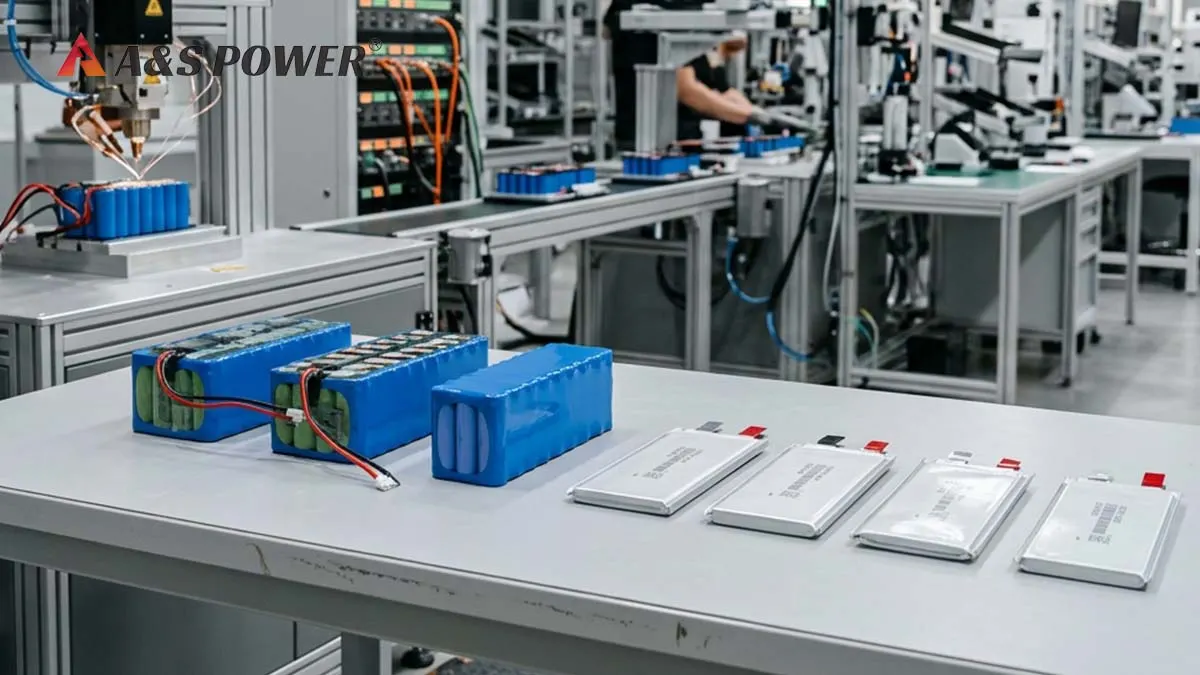
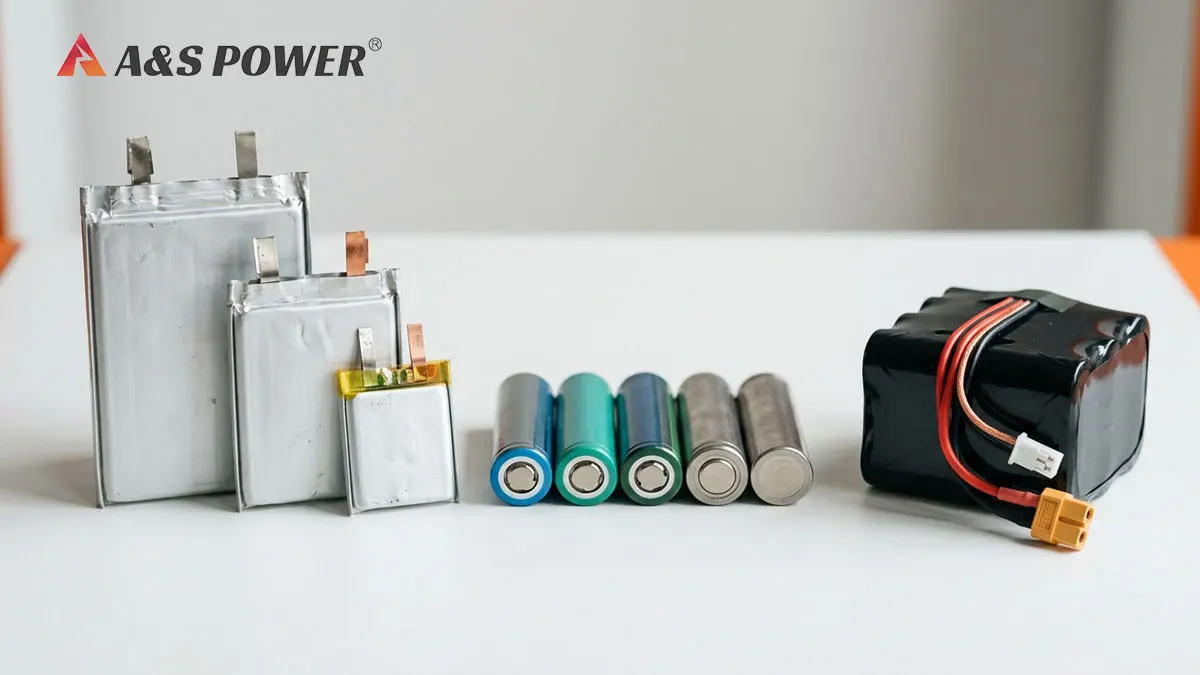
Producing lithium-ion cells requires specialized electrode preparation, coating, drying, cell assembly, electrolyte filling, formation, and aging processes. By comparison, a battery pack manufacturer may purchase qualified cells and perform cell selection, welding, wiring, PCM/BMS installation, enclosure assembly, and finished-pack testing.
Both can be legitimate manufacturing operations, but they are not the same.
For buyers who need to understand battery safety and manufacturing responsibilities, the OSHA lithium-ion battery safety standards reference provides additional information about relevant battery safety standards and their applications.
What we recommend: Ask the supplier to show you its actual production workflow for your intended product. A manufacturer should be able to explain which processes it performs internally and which depend on external partners.
You can also review the A&S Power company profile to learn more about our manufacturing background and business development.
2. Where Do Your Lithium Battery Cells Come From?
Even if a supplier operates its own battery assembly facility, it may purchase cells from external manufacturers.
This is common in the battery industry. Many custom battery pack manufacturers specialize in assembling and integrating cells rather than manufacturing the cells themselves.
The important question is not whether every component is produced in-house. It is whether the supplier has a controlled and transparent cell-sourcing process.
Ask the supplier:
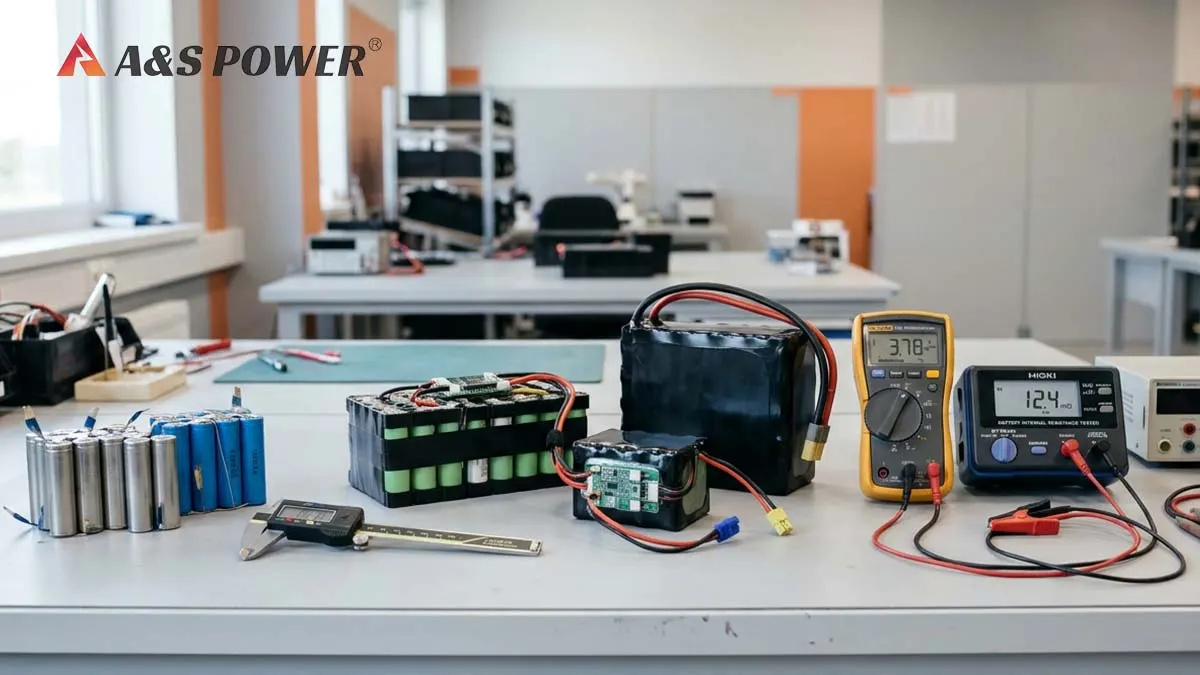
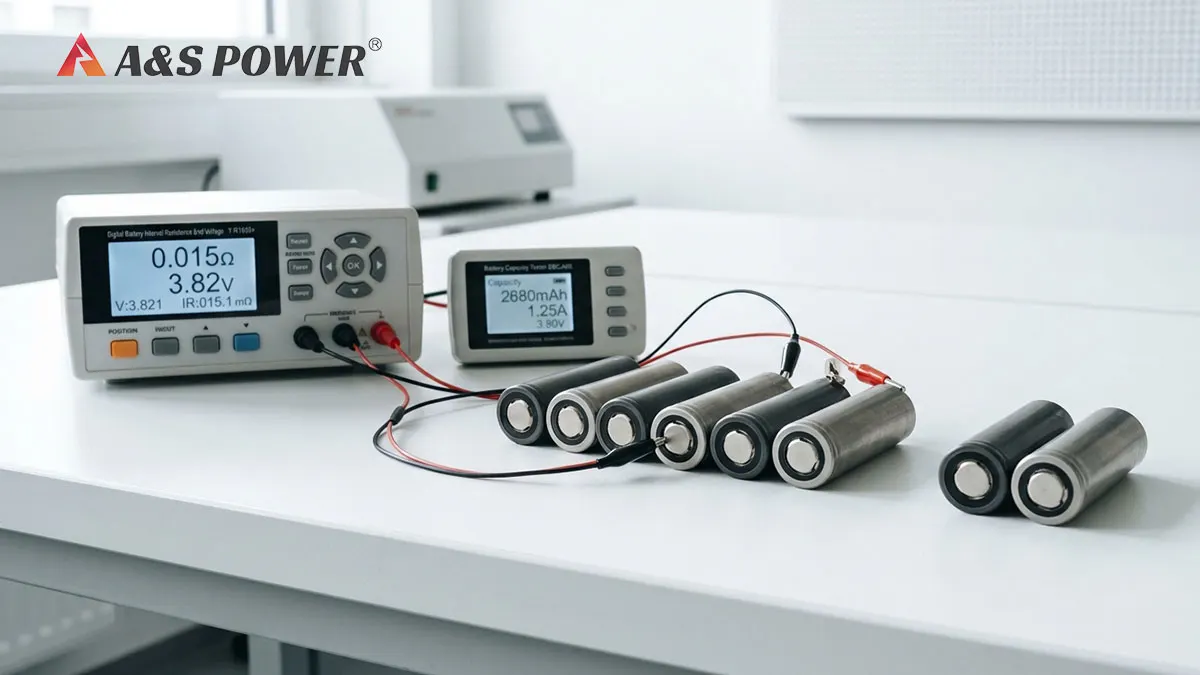
A reliable supplier should be able to explain its cell selection criteria, including nominal capacity, operating voltage, internal resistance, physical dimensions, and discharge performance.
For multi-cell battery packs, cell consistency is particularly important. Differences in capacity, voltage, and internal resistance can affect pack performance, balancing behavior, and service life.
For example, when assembling a 4S1P lithium-ion battery pack, using cells with inconsistent characteristics can create uneven voltage behavior during charging and discharging.
We recommend checking whether the manufacturer performs incoming inspections and cell matching before assembly.
A useful verification method: Request an anonymized incoming inspection record or cell matching report. This helps establish whether the supplier has a documented process rather than simply accepting whatever cells arrive from its vendors.
3. What Is Your Actual Production Capacity?
Production capacity is one of the easiest figures for suppliers to exaggerate.
A quotation stating that a factory can produce hundreds of thousands of batteries per month does not necessarily mean it can manufacture your specific battery configuration at that volume.
Production capacity depends on several factors:
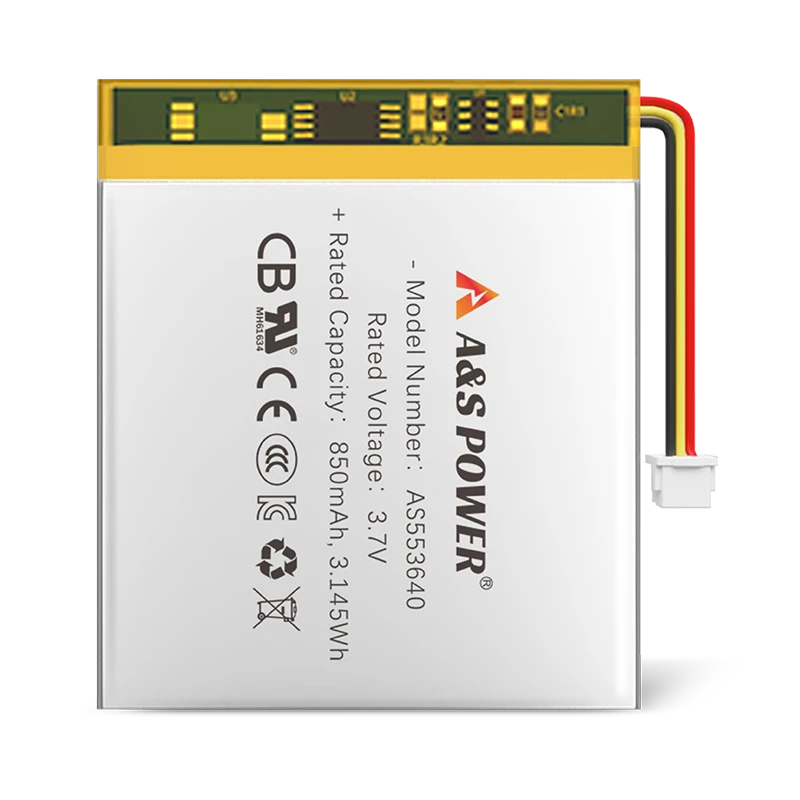
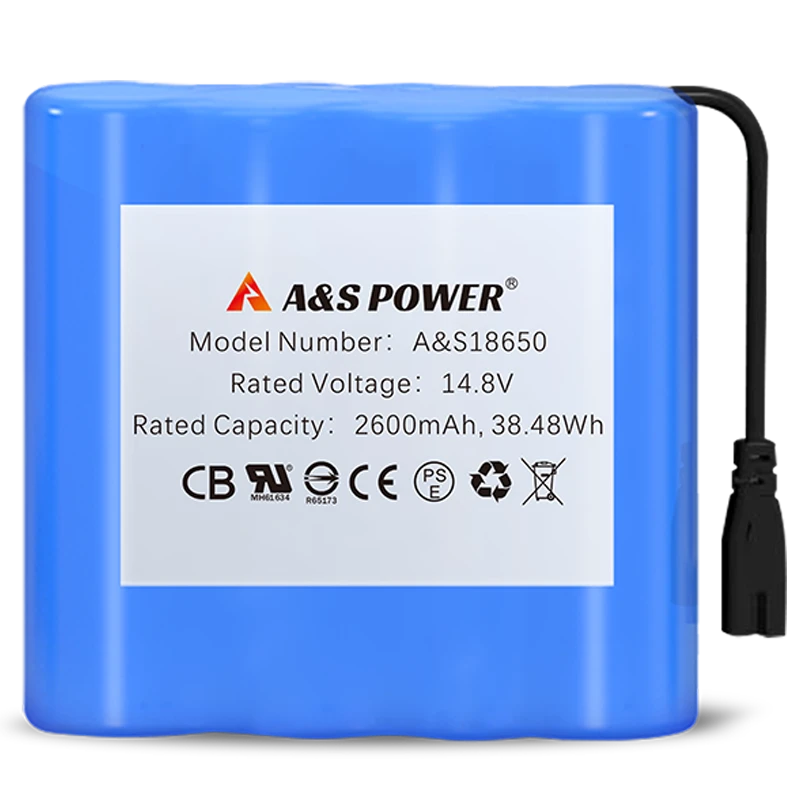
For instance, assembling a standard cylindrical lithium-ion battery pack may involve a different workflow from producing a customized lithium polymer battery with specific dimensions, connectors, protective circuitry, and wiring arrangements.
When evaluating capacity, ask for information related to your actual project rather than the factory's total theoretical output.
| Evaluation Factor | Evidence to Request |
|---|---|
| Production equipment | Photos or live demonstration of relevant equipment |
| Monthly capacity | Production records for comparable battery products |
| Workforce | Number of workers assigned to relevant production processes |
| Production lead time | Historical lead times for similar orders |
| Capacity utilization | Current production schedule and available capacity |
| Expansion capability | Additional lines, shifts, or outsourcing arrangements |
Another important question is whether the factory can maintain the same quality when production volume increases.
A supplier that produces excellent samples but struggles with repeatability during mass production may create significant problems for your business.
What we recommend: Request production data for a battery product similar to yours. Ask how the supplier manages production scheduling during peak demand and how it handles unexpected increases in order volume.
4. What Quality Control Procedures Do You Perform?
Quality control is one of the strongest indicators of a manufacturer's operational maturity.
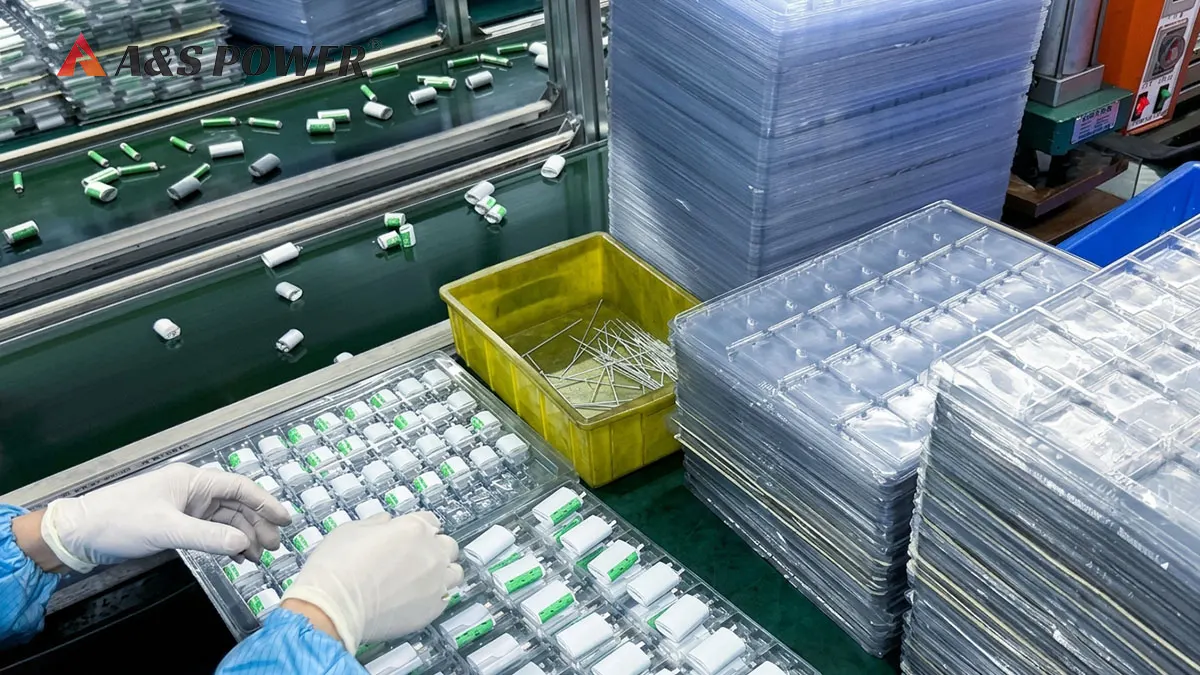
A reliable lithium battery factory should have inspection procedures covering incoming materials, manufacturing operations, and finished products.
A single final inspection cannot replace quality control throughout the manufacturing process.
For custom lithium battery packs, we recommend examining three main stages.
Incoming Quality Control (IQC)
Before production begins, incoming materials should be inspected against defined specifications.
Typical checks include:
The specific inspection requirements should depend on the battery design and supplier agreements.
In-Process Quality Control (IPQC)
During production, manufacturers should monitor critical assembly operations.
For example, battery pack assembly may require checks on:
For pouch-cell products, correct handling and insulation are also important because the flexible aluminum-laminated packaging requires suitable protection against mechanical damage.
Outgoing Quality Control (OQC)
Before shipment, finished battery packs should undergo testing based on their specifications and intended applications.
Depending on the product, this may include:
Not every product requires identical testing, and inspection sampling methods should be defined according to product risk and customer requirements.
What we recommend: Ask for an example of an inspection report with sensitive customer information removed. Check whether the supplier records actual measurement results, acceptance criteria, and inspection dates.
5. Can You Provide Verifiable Certifications and Test Reports?
Certificates are important, but simply displaying certification logos on a website is not sufficient.
A lithium battery supplier should be able to explain which standards apply to its products and provide documentation that can be verified.
Common standards and requirements include:
| Standard or Requirement | Main Purpose | What Buyers Should Verify |
|---|---|---|
| UN 38.3 | Lithium battery transport testing | Applicable test summary and product identification |
| UL 1642 | Safety standard for lithium cells | Whether the actual cell model is covered |
| UL 2054 | Safety standard for household and commercial batteries | Whether the relevant battery pack is covered |
| IEC 62133-2 | Safety requirements for portable sealed secondary lithium cells and batteries | Applicable model and certification scope |
| CE | Applicable European conformity requirements | Relevant legislation and supporting technical documentation |
| RoHS | Restriction of certain hazardous substances | Applicable product and material compliance evidence |
One particularly important document is the UN 38.3 Test Summary.
According to the U.S. Department of Transportation's Pipeline and Hazardous Materials Safety Administration (PHMSA), manufacturers and subsequent distributors must make lithium battery test summaries available. The document includes manufacturer information, test laboratory details, a unique report number, battery identification, and test results.
The eight UN 38.3 tests cover different transportation-related conditions, including altitude simulation, thermal testing, vibration, shock, external short circuit, impact or crush, overcharge, and forced discharge, as applicable to the battery type.
Buyers can consult the official PHMSA lithium battery test summary guidance and its UN 38.3 Test Summary reference document to understand what information a test summary should contain.
For additional background on battery testing and certification, UL Solutions' battery safety testing and certification resources explain relevant testing standards, including UL 1642, UL 2054, and IEC 62133-2.
The key point is that a certificate or test report must correspond to the actual battery design being purchased.
For example, a UN 38.3 report for one battery configuration should not automatically be treated as evidence that a different cell arrangement, capacity, or battery design has passed the same testing.
What we recommend: Request the complete relevant documentation and compare the model number, manufacturer, battery description, and configuration against your quotation and approved sample.
You can also review the A&S Power battery certification resources to learn more about the certifications and compliance documentation associated with our battery products.
6. Do You Have In-House Engineering and OEM/ODM Customization Capabilities?
A supplier that only resells standard battery products may have limited control over technical changes.
For businesses developing specialized electronic devices, this can become a major obstacle.
A capable custom lithium battery manufacturer should be able to discuss engineering requirements before production begins.
Depending on the project, customization may involve:
For example, a wearable device may require a thin lithium polymer battery with a specific thickness, connector position, and cable length. A portable industrial device may require a multi-cell lithium-ion pack with a suitable BMS and higher discharge capability.
These requirements cannot be evaluated through price comparison alone.
Ask whether the supplier has engineers who can review battery drawings, electrical specifications, mechanical constraints, and application requirements.
Also clarify who is responsible for design changes, sample approval, technical problem-solving, and engineering validation.
For projects involving customized battery dimensions, electrical configurations, or protection circuitry, you can explore A&S Power custom lithium battery solutions to understand the types of OEM/ODM requirements that can be evaluated during project development.
What we recommend: Submit a realistic technical inquiry and evaluate the response. A capable engineering team should ask relevant questions about your application rather than immediately quoting a generic battery.
7. How Do You Ensure Traceability and Consistent Mass Production?
A battery sample that passes inspection does not guarantee that every subsequent production batch will meet the same requirements.
This is why traceability and production consistency deserve particular attention.
A professional manufacturing process should maintain records that help connect finished products with their production history.
Depending on the factory's system, traceability information may include:
Traceability becomes especially important when a quality problem appears after shipment.
For example, if a batch of battery packs shows abnormal voltage differences, the manufacturer should be able to investigate the relevant production records, cell batches, and inspection results.
Buyers should also ask how the factory handles nonconforming products.
Does it isolate defective materials? Are corrective actions documented? Are changes to cells, components, or production processes reviewed before implementation?
A supplier should have a clear process for handling product deviations and communicating changes that could affect battery performance or safety.
For further reference, PHMSA's lithium battery transportation guidance explains the role of test summaries in providing traceability and accountability throughout the battery supply chain.
What we recommend: Ask the manufacturer to explain how it traces a finished battery pack back to its cell batch and production records. This is a practical way to evaluate whether its quality management system operates beyond written procedures.
8. Can You Demonstrate Consistent Delivery and Long-Term Customer Support?
The final question is about what happens after the sample has been approved.
A reliable manufacturing partner should be able to support the entire purchasing relationship, from initial technical evaluation to repeat orders and after-sales problem-solving.
Evaluate the supplier's ability to provide:
It is also useful to ask for references from customers with similar battery applications, where confidentiality permits.
When reviewing references, focus on whether the supplier has supported repeat production rather than simply completed a one-time sample order.
For OEM projects, long-term consistency is often more valuable than a small initial price advantage.
A manufacturer that communicates clearly, maintains production records, and responds effectively to technical issues can help reduce purchasing risks throughout the product lifecycle.
What we recommend: Start with a sample order or controlled pilot batch. Evaluate the actual product, documentation, communication, and delivery performance before increasing order volume.
Manufacturer vs. Middleman: What Should Buyers Look For?
The following comparison provides a practical way to evaluate different supplier business models.
| Evaluation Area | Direct Manufacturer | Trading Company / Middleman |
|---|---|---|
| Production facility | Operates or directly manages manufacturing operations | Usually relies on external factories |
| Production control | Direct involvement in production planning and inspection | Depends on manufacturing partners |
| Engineering support | May provide in-house battery design and engineering | Often coordinates technical requests externally |
| Cell sourcing | Can manage and document cell sourcing | Depends on its upstream suppliers |
| Quality management | Can maintain direct production inspection records | Quality control depends on partner factories |
| Customization | Can directly manage supported assembly and design changes | Customization depends on external production resources |
| Production traceability | Can provide manufacturing and inspection records | May have limited access to factory-level records |
| Communication | Can coordinate directly with production and engineering teams | Usually communicates through intermediaries |
Note: This is a general comparison, not an absolute rule. Some trading companies maintain strong supplier-management systems, while some manufacturers outsource substantial parts of their operations. Buyers should evaluate actual capabilities rather than company labels.
A Practical Lithium Battery Factory Evaluation Checklist
Before choosing a supplier, we recommend using a structured evaluation process. The following checklist can help procurement teams compare candidates using the same criteria.
| Evaluation Criteria | Suggested Verification |
|---|---|
| Factory ownership and operations | Factory visit or live production video |
| Cell sourcing | Cell manufacturer and batch information |
| Production capacity | Relevant production records |
| Quality control | IQC, IPQC, and OQC documentation |
| Certifications | Model-specific certificates and test reports |
| Engineering capabilities | Technical review and sample development |
| Traceability | Cell batch and finished-product records |
| Delivery and after-sales | Lead-time history and complaint-handling procedures |
This checklist is an internal purchasing assessment framework, not an industry certification or standardized scoring system.
A useful approach is to classify findings into three categories:
This makes it easier to identify information gaps before approving a supplier.
How A&S Power Approaches Lithium Battery Manufacturing
At A&S Power, we understand that selecting a battery manufacturer involves more than finding a company that can supply a particular voltage and capacity.
Established in 2011, Shenzhen A&S Power Technology Co., Ltd. focuses on rechargeable lithium battery design, production, and OEM/ODM customization. Our product range includes lithium-ion batteries, lithium polymer batteries, and LiFePO4 battery solutions.
Our manufacturing and engineering capabilities support different battery requirements, including:
Our company profile also documents more than 200 production personnel and over 30 R&D experts. Our certification portfolio includes products covered by UL2054, UL1642, CE, CB, KC, UN38.3, and other applicable requirements. Actual certification coverage depends on the specific battery model and configuration.
You can learn more about our manufacturing background through our A&S Power company profile, explore our custom lithium battery solutions, or review our battery product certification resources.
We believe that a dependable manufacturing partnership should be built on transparent technical communication, documented quality processes, and a clear understanding of customer requirements.
Conclusion: Choose a Manufacturing Partner, Not Just a Battery Supplier
Choosing the right lithium battery factory requires more than comparing prices, reviewing catalogs, or accepting claims about production capacity.
The eight questions in this guide provide a practical starting point for evaluating whether a supplier has the manufacturing operations, cell sourcing controls, quality management, engineering resources, certifications, and production consistency your project requires.
Most importantly, distinguish between what a supplier claims and what it can demonstrate.
A genuine manufacturer should be willing to explain its production processes, identify the origin of its cells, provide relevant inspection records, and discuss technical requirements in detail.
For OEM and ODM battery projects, the right partner is not necessarily the company offering the lowest quotation. It is the company that can consistently deliver a battery solution that meets your electrical, mechanical, safety, and commercial requirements.
If you are developing a custom lithium-ion, lithium polymer, or LiFePO4 battery project, contact A&S Power to discuss your specifications and manufacturing requirements.
Frequently Asked Questions (FAQ)
1. How can I tell if a lithium battery supplier is a real manufacturer?
Ask the supplier to demonstrate its production facility, explain its manufacturing processes, and provide relevant production and quality inspection records. You should also clarify which operations are performed in-house and which are outsourced. A genuine manufacturer should be able to explain its actual role in producing the battery rather than relying only on product photographs or company introductions.
2. Is a lithium battery manufacturer better than a trading company?
Not necessarily. A direct manufacturer may offer better production visibility, engineering coordination, and control over manufacturing processes. However, an experienced trading company may provide reliable sourcing and supplier management. The best choice depends on your project's technical complexity, quality requirements, order volume, and need for customization.
3. What documents should I request from a lithium battery factory?
Common documents include company registration information, relevant quality management certificates, battery specifications, incoming inspection records, finished-product test reports, applicable safety certificates, and UN 38.3 Test Summaries. For customized batteries, request documentation that identifies the actual cell model and finished battery configuration.
4. Can a battery pack manufacturer use cells from another company?
Yes. Many battery pack manufacturers purchase cells from specialized cell producers and assemble them into customized battery packs. This is a common manufacturing model. Buyers should focus on cell sourcing transparency, incoming inspection, batch traceability, and the manufacturer's control over the final battery assembly process.
5. What is the difference between a lithium-ion cell factory and a battery pack factory?
A lithium-ion cell factory manufactures individual electrochemical cells through processes such as electrode production, cell assembly, electrolyte filling, formation, and aging. A battery pack factory integrates cells into finished battery systems using processes such as cell matching, electrical connections, welding, PCM/BMS installation, wiring, and testing. Their equipment, technical capabilities, and production responsibilities are different.
6. How do I verify whether a lithium battery certification is genuine?
Check the issuing certification organization's database or official verification channel. Compare the certificate holder, manufacturer, model number, applicable standard, and certification scope with the battery being purchased. Do not assume that a certificate for one battery model automatically covers every product from the same supplier.
7. Should I visit a lithium battery factory before placing a large order?
A factory visit is particularly useful for large-volume, customized, or safety-critical battery projects. It allows you to examine production equipment, material handling, inspection procedures, and actual manufacturing conditions. If an on-site visit is not practical, request a live video audit and supporting production documentation. For higher-risk projects, independent factory audits may provide additional assurance.
8. What should I prioritize when choosing a custom lithium battery manufacturer?
Prioritize technical compatibility, cell quality, engineering support, manufacturing control, quality assurance, traceability, and applicable certifications. Also evaluate whether the manufacturer can support sample development, pilot production, mass production, and future engineering changes. A supplier that understands your application's electrical and mechanical requirements is generally a stronger long-term partner than one selected solely on price.