



Written by: A&S Power Technical Team | Battery Engineering & OEM Specialists Published: November 16, 2026 Updated: November 16, 2026
Introduction
Choosing a custom lithium battery supplier is not simply a matter of comparing quotations, checking product catalogs, or finding a manufacturer that claims to offer OEM and ODM services. For businesses developing electronic devices, medical equipment, industrial products, and portable power systems, the supplier's engineering capabilities and manufacturing controls can directly affect product reliability, development costs, and long-term supply stability.
One common mistake in battery procurement is ordering samples before properly evaluating the supplier. A battery sample may look professional and meet its advertised capacity, but that alone does not establish whether the manufacturer can reproduce the same specifications consistently during mass production.
In our experience working with custom rechargeable lithium battery projects, supplier evaluation should begin before sample development. Buyers need to understand where the cells come from, how battery specifications are controlled, what testing equipment is available, and whether the supplier can provide the documentation required for the target application.
At A&S Power, we believe that a sample should be treated as the beginning of a technical qualification process, not simply as a product demonstration.
This guide provides a practical custom lithium battery supplier checklist to help procurement teams, engineers, and OEM buyers identify potential risks before spending money on samples.
Quick Answer: What Should You Check Before Ordering Battery Samples?
Before ordering samples from a custom lithium battery supplier, evaluate these 10 essential areas:
A reliable supplier should be able to provide specific technical evidence for these areas rather than relying entirely on marketing descriptions or certification logos.
1. Verify Whether the Supplier Is a Real Battery Manufacturer
The first step is understanding who will actually manufacture your battery.
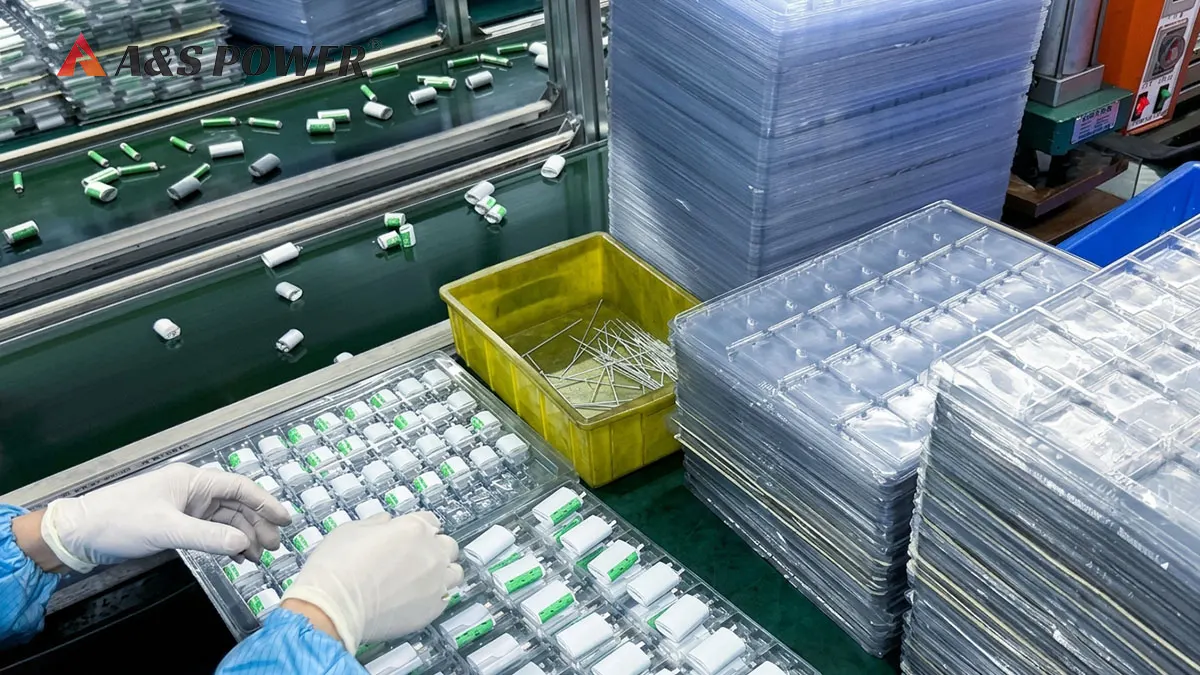
Some companies operate their own battery assembly facilities, while others purchase finished battery packs from third-party factories and resell them. Neither business model is automatically unsuitable, but the difference matters when your project requires customization, engineering support, or ongoing quality control.
For OEM and ODM projects, ask the following questions:
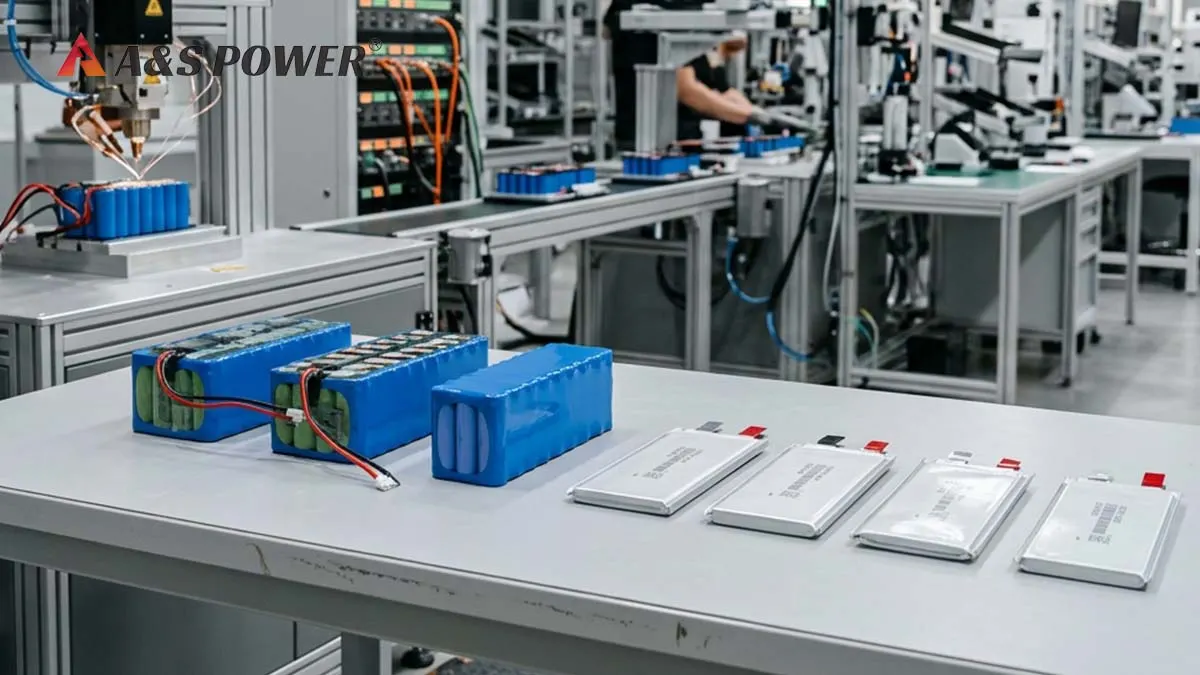
Pay particular attention to the production processes relevant to your battery type.
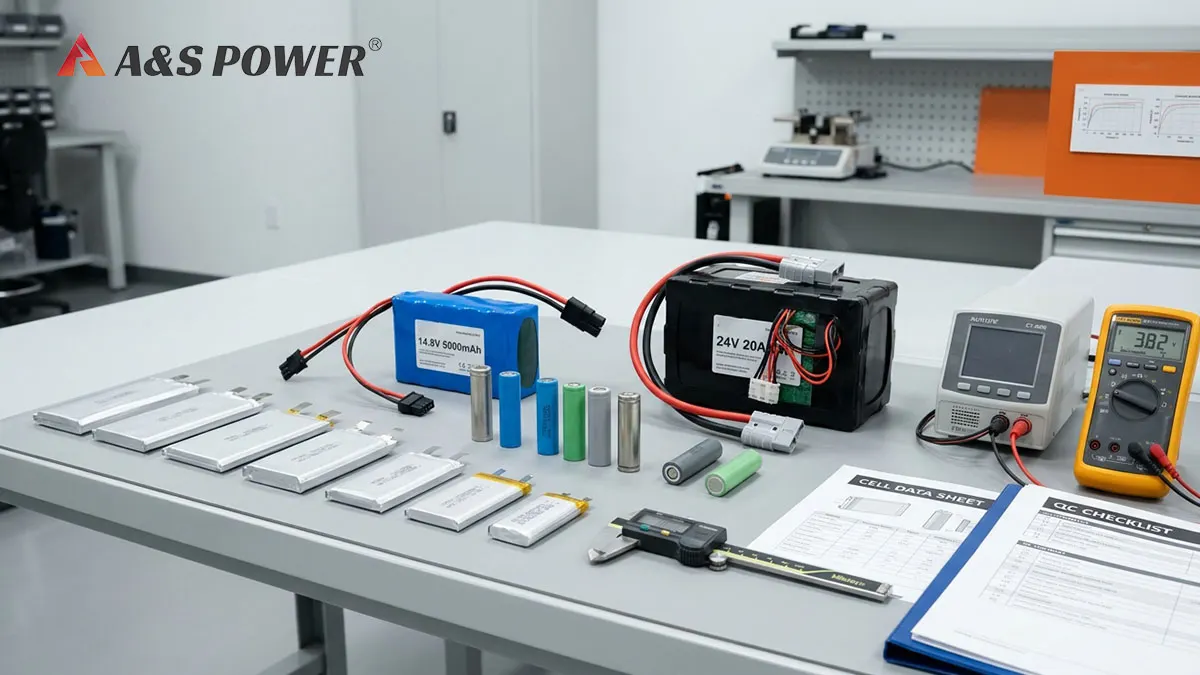
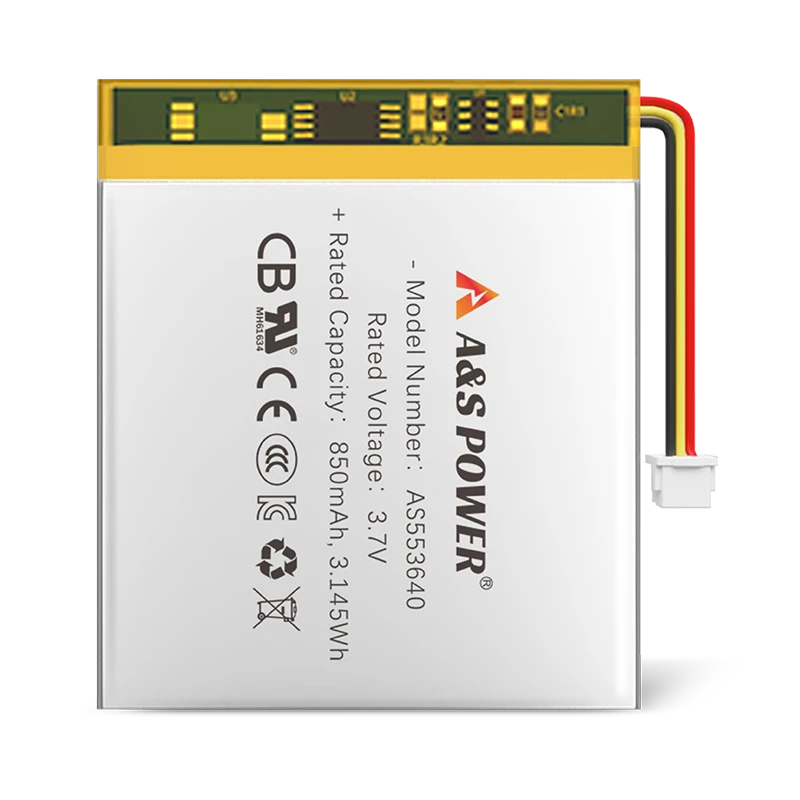
For example, a custom lithium polymer battery project may require pouch cell inspection, tab welding, protection circuit integration, wire soldering, insulation, and finished-pack testing.
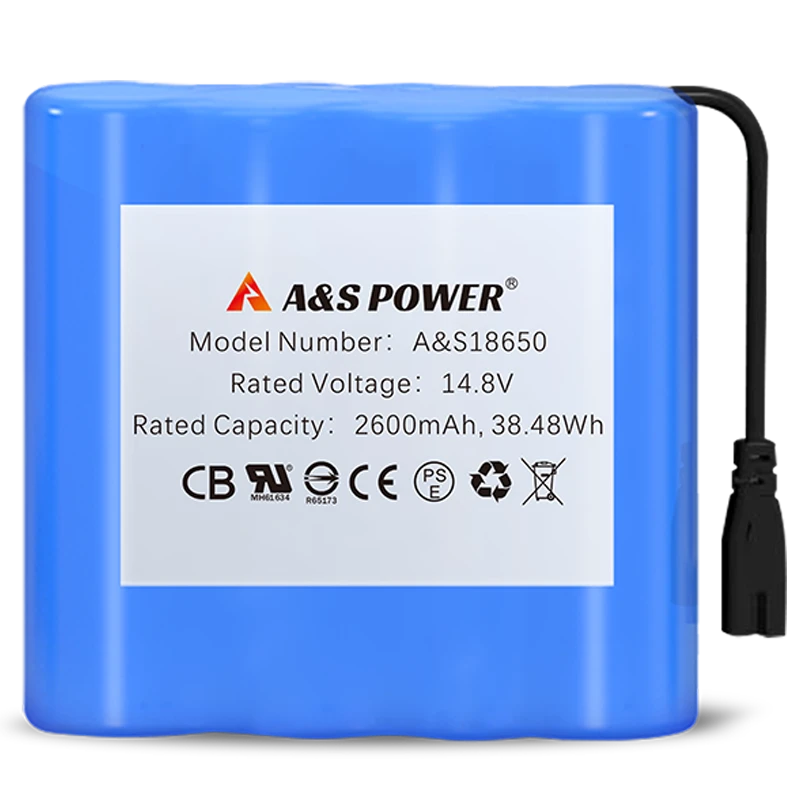
A cylindrical lithium-ion battery pack may require cell matching, spot welding, series-parallel configuration, BMS installation, and electrical testing.
A supplier that cannot clearly explain these processes may not have sufficient control over the product.
What we recommend: Request a short online technical meeting and ask the supplier to explain the production process for your specific battery configuration.
2. Evaluate Engineering and Customization Capabilities
A standard battery catalog does not necessarily demonstrate the ability to develop a custom battery.
For many OEM products, the battery must fit a limited installation space while meeting specific voltage, capacity, discharge current, connector, and operating temperature requirements.
Before ordering samples, confirm whether the supplier can support the following customization areas.
| Customization Area | What to Verify |
|---|---|
| Battery chemistry | Li-ion, LiPo, or LiFePO4 suitability |
| Voltage | Nominal voltage and charging voltage |
| Capacity | Required rated and minimum capacity |
| Dimensions | Length, width, thickness, and tolerances |
| Discharge performance | Continuous and peak discharge current |
| Protection circuit | Overcharge, over-discharge, overcurrent, and short-circuit protection |
| Connector | JST, Molex, XT series, or other specified connectors |
| Wiring | Wire gauge, length, polarity, and terminal arrangement |
| Battery configuration | 1S, 2S, 3S, 4S, or other configurations |
An experienced engineering team should also ask about the host device.
For example, a battery designed for a wearable device may have different requirements from one used in industrial equipment. Space limitations, operating temperature, vibration, charging methods, and expected operating cycles can all influence the battery design.
At A&S Power, our OEM and ODM battery solutions cover lithium-ion, lithium polymer, and LiFePO4 battery packs, with customization options for electrical specifications, dimensions, connectors, and protection circuits.
You can review our custom lithium battery solutions to understand the types of configurations and engineering support available. For pouch-cell applications, you can also explore our custom lithium polymer battery products.
3. Check Cell Sources, Manufacturing Dates, and Traceability
Cell quality is one of the most important factors affecting the performance and reliability of a finished battery pack.
However, simply asking whether a supplier uses Grade-A cells is not enough.
Buyers should request information that helps establish the actual identity and condition of the cells being used.
Before ordering samples, ask for:
Manufacturing date deserves particular attention.
Lithium-ion cells can experience aging during storage, even when they have not been used. Storage temperature, state of charge, and storage duration can influence their condition.
A cell that passes a basic voltage check is not necessarily new or suitable for every application.
It is also important to understand that capacity testing alone cannot establish whether a cell is unused or verify its manufacturing history.
We recommend specifying your acceptable cell age and traceability requirements before sample production, especially for projects with long service-life expectations.
For more detailed supplier verification questions, see our guide on how to vet a custom lithium battery supplier.
4. Review the Technical Specifications Before Sample Production
Never ask a supplier to develop a sample based only on a general description such as "3.7V 3000mAh lithium battery."
That information is insufficient for a reliable custom battery design.
A complete technical specification should describe both electrical and mechanical requirements.
| Specification | Information to Confirm |
|---|---|
| Nominal voltage | Required battery operating voltage |
| Rated capacity | Target capacity and minimum acceptance value |
| Maximum charging voltage | According to the selected cell chemistry and design |
| Charging current | Standard and maximum permitted charging current |
| Discharge current | Continuous and peak requirements |
| Cut-off voltage | Defined discharge termination voltage |
| Dimensions | Maximum available installation space |
| Connector | Exact model, pin arrangement, and polarity |
| Cable | Wire gauge, length, and insulation requirements |
| Operating temperature | Required charging and discharging temperature ranges |
| Protection | Required PCM/BMS functions |
| Cycle life | Target cycle-life requirement and test conditions |
Another important consideration is the difference between nominal specifications and acceptance criteria.
For example, a buyer may request a 3.7V, 2,000mAh lithium polymer battery. The supplier should clarify whether 2,000mAh represents the nominal capacity, minimum guaranteed capacity, or a target value.
Testing conditions must also be defined, including temperature, charge method, discharge current, and discharge cut-off voltage.
Without these details, two suppliers may report different capacity results while claiming to meet the same specification.
5. Examine the Supplier's Quality Control System
A battery manufacturer should have a documented quality control process covering incoming materials, production, and finished products.
Do not assume that a supplier has a reliable QC system simply because it owns testing equipment.
The important question is whether inspection procedures are documented, consistently implemented, and supported by appropriate equipment.
A typical battery manufacturing quality control process includes the following stages:
| QC Stage | Inspection Items | Purpose |
|---|---|---|
| IQC | Cell model, appearance, dimensions, voltage, and internal resistance | Verify incoming materials |
| Cell Inspection | Capacity and cell consistency, where applicable | Identify unsuitable cells |
| IPQC | Polarity, welding, soldering, wiring, and insulation | Control assembly quality |
| Functional Testing | Charging, discharging, and protection functions | Verify electrical performance |
| FQC | Dimensions, weight, voltage, and appearance | Confirm finished product specifications |
| OQC | Quantity, labeling, packaging, and inspection records | Control shipment quality |
Not every inspection is necessarily performed on every battery. Some checks are conducted through sampling, while others may require 100% inspection.
Ask the supplier to explain which procedures are performed on every unit and which follow a sampling plan.
You should also ask how defective cells and finished batteries are identified, segregated, and handled.
6. Confirm Testing Equipment and Sample Verification Capabilities
Testing equipment is another important part of supplier evaluation.
A manufacturer may claim that every battery undergoes strict testing, but buyers should understand what those tests actually measure.
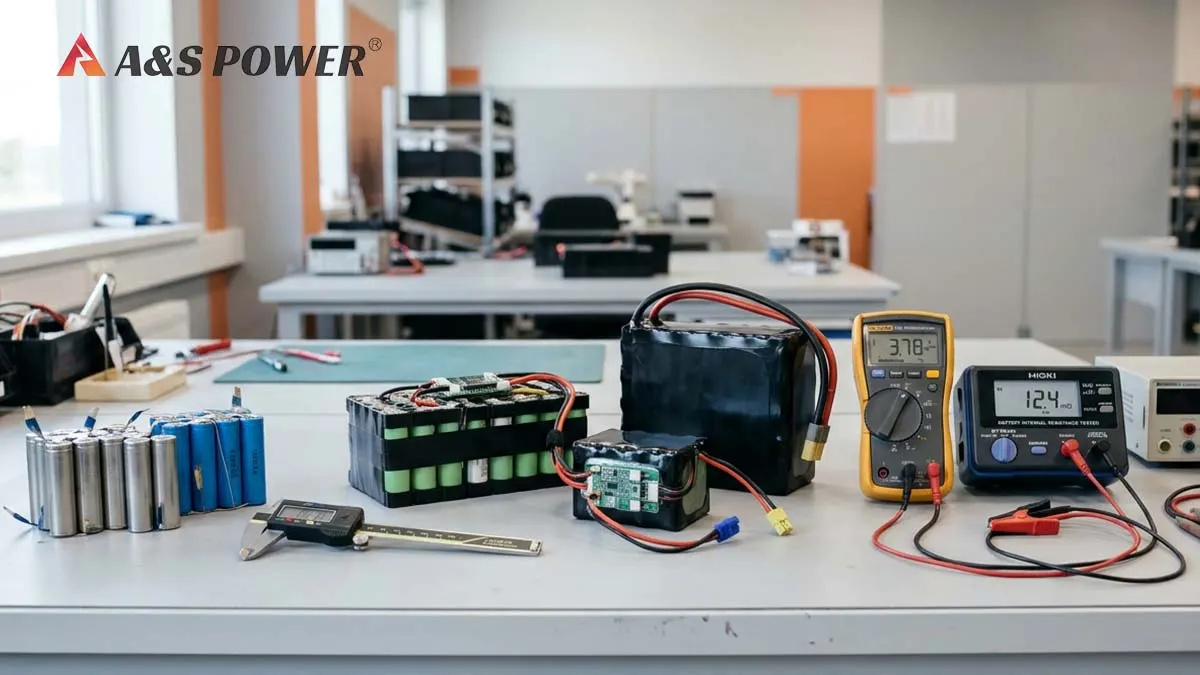
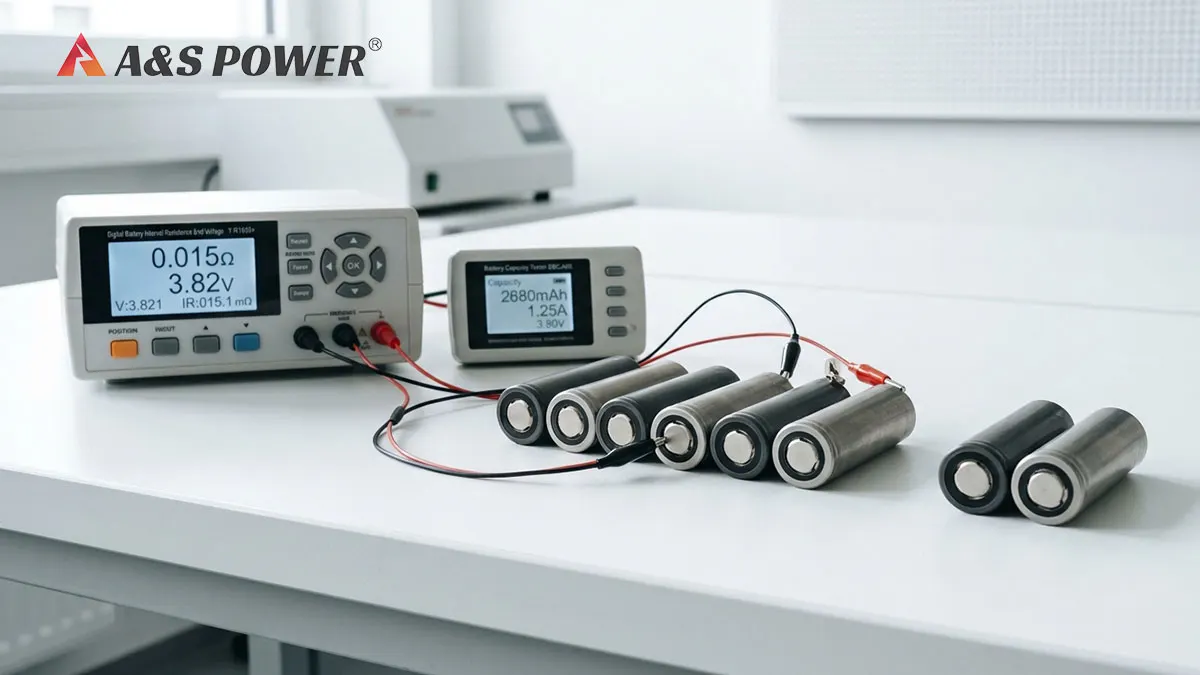
For a custom lithium battery project, relevant equipment may include:
Different equipment serves different purposes.
For example, a multimeter can measure voltage, but it cannot independently establish the actual discharge capacity of a battery.
Similarly, measuring internal resistance does not replace a controlled charge-discharge test.
Before ordering samples, request information about the supplier's testing procedures and sample inspection reports.
For application-specific projects, consider arranging additional tests for:
The exact test plan should depend on the battery design and intended application.
7. Verify Certifications and Compliance Documents
Battery certifications are important, but buyers should avoid treating every certificate as interchangeable.
Different standards address different safety, product, and transportation requirements.
| Standard or Regulation | Main Purpose |
|---|---|
| UN 38.3 | Lithium battery transportation testing |
| IEC 62133-2 | Safety requirements for portable sealed rechargeable lithium cells and batteries |
| UL 1642 | Safety standard for lithium cells |
| UL 2054 | Safety standard for household and commercial batteries |
| CE | Applicable European conformity requirements |
| RoHS | Restriction of certain hazardous substances |
The appropriate requirements depend on the battery configuration, end product, destination market, and applicable regulations.
The IEC 62133-2 standard specifies safety requirements and tests for portable sealed secondary lithium cells and batteries under intended use and reasonably foreseeable misuse.
Similarly, UL Solutions' battery safety testing information explains the different UL standards and testing services applicable to battery products.
For transportation, buyers should pay particular attention to UN 38.3 documentation.
Under the UN requirements, a lithium battery test summary should identify the manufacturer, test laboratory, battery description, model numbers, tests conducted, and results, among other information. Buyers can consult the United Nations Manual of Tests and Criteria, Revision 8 and related amendments for the relevant technical requirements.
Important: Always verify whether the documentation applies to the actual cell or finished battery configuration being purchased. A certificate for a different model does not automatically establish compliance for your custom battery pack.
You can also review the A&S Power battery certification page to see examples of battery-related certification records.
8. Understand the Sample Development and Approval Process
A professional supplier should have a clear sample development procedure.
Before placing an order, confirm:
One particularly important issue is whether the approved sample will become the reference for mass production.
We recommend documenting the final sample specifications, including dimensions, capacity, connector, wire length, protection circuit, and appearance.
Keep the approved sample and its corresponding technical records as a reference.
This helps prevent misunderstandings when production quantities increase.
A sample that works during an initial demonstration is not automatically proof that the supplier can maintain the same performance across future production batches.
For further guidance, see our article Will the Production Battery Be the Same as the Approved Sample?
9. Evaluate Production Capacity and Long-Term Consistency
A supplier may successfully manufacture several samples but struggle when an order increases to hundreds or thousands of units.
Before moving forward, discuss the supplier's production capacity and manufacturing arrangements.
Important questions include:
For OEM customers, production consistency is often more important than the supplier's maximum advertised output.
A supplier should be able to explain how the approved battery specifications are maintained across production batches.
Any proposed change to cells, protection circuits, connectors, or other critical components should be reviewed and approved before implementation.
This is particularly important for products that require repeat manufacturing over several years.
10. Check Communication, Technical Support, and Commercial Terms
Supplier evaluation should also include the quality of communication.
Battery development often involves multiple technical discussions. A supplier that cannot clearly explain electrical specifications, testing conditions, or engineering limitations can create unnecessary delays.
Before ordering samples, confirm:
Pay attention to how the supplier responds to technical questions.
A professional supplier should be willing to explain limitations rather than promise that every requirement can be achieved without reviewing the application.
Practical Custom Lithium Battery Supplier Checklist
The following checklist can be used by procurement and engineering teams before approving a supplier for sample development.
| Evaluation Item | What You Should Receive or Verify |
|---|---|
| Manufacturer identity | Company and manufacturing facility information |
| Engineering capability | Evidence of relevant custom battery projects |
| Cell sourcing | Cell manufacturer, model, and traceability |
| Technical specifications | Complete electrical and mechanical requirements |
| PCM/BMS design | Protection functions and technical configuration |
| Quality management | Documented IQC, IPQC, and FQC procedures |
| Testing capability | Relevant equipment and inspection records |
| Certifications | Applicable certificates and test documentation |
| Sample process | Defined development and approval procedure |
| Production consistency | Batch control and engineering change management |
| Technical support | Clear communication and after-sales responsibility |
| Commercial terms | Transparent quotation, MOQ, and delivery conditions |
A supplier does not need to provide every document before an initial discussion. However, the critical technical and quality requirements should be clarified before sample approval or commercial commitment.
Conclusion: Evaluate the Supplier Before Evaluating the Sample
Ordering a battery sample is an important step in OEM procurement, but it should not be the first step in supplier selection.
A professional custom lithium battery supplier should demonstrate more than the ability to produce a battery that matches a basic voltage and capacity requirement.
Buyers should evaluate the supplier's actual manufacturing capabilities, cell sourcing, engineering experience, quality management, testing procedures, certification documentation, and ability to maintain consistent production.
At A&S Power, we believe that successful custom battery development starts with a clear understanding of the customer's application and technical requirements.
As an OEM rechargeable lithium battery manufacturer in China, we provide customized lithium-ion, lithium polymer, and LiFePO4 battery solutions for different applications. Our development approach covers battery cell selection, electrical specifications, protection circuit configuration, mechanical customization, and production quality control.
Whether you are developing a new electronic product or looking for a long-term battery manufacturing partner, we recommend completing a structured supplier evaluation before ordering samples.
Have a Custom Battery Project?
Share your required voltage, capacity, dimensions, discharge current, connector, application, and target quantity with the A&S Power team. We can review your requirements and discuss a suitable battery solution.
Contact A&S Power for a Custom Battery SolutionFrequently Asked Questions
1. What should I check before ordering samples from a lithium battery supplier?
Before ordering samples, check the supplier's manufacturing capabilities, cell sourcing, technical customization, quality control procedures, testing equipment, and relevant certifications. You should also confirm the complete battery specifications, sample development process, and expected production consistency.
2. How can I verify whether a lithium battery supplier is a real manufacturer?
Request the company's factory address, production facility photographs, manufacturing process information, and details about its engineering and quality teams. A live video factory tour or an on-site audit can provide additional verification. Also clarify which manufacturing processes are performed in-house and which are outsourced.
3. What documents should I request before ordering custom lithium battery samples?
Depending on your project, request the cell datasheet, battery specification sheet, cell model and batch information, relevant quality inspection records, and applicable safety documentation. UN 38.3 test summaries, IEC 62133-2 reports, and UL documentation may also be required depending on the product and destination market.
4. How do I know whether a lithium battery sample meets the required specifications?
Compare the sample against an approved technical specification. Check its voltage, capacity under defined test conditions, dimensions, weight, connector, polarity, discharge performance, and protection functions. Additional testing may be necessary to verify charging behavior, temperature performance, and compatibility with the host device.
5. Should I test battery samples before placing a mass-production order?
Yes. Sample testing helps identify technical and compatibility problems before committing to larger quantities. However, sample approval should also include a documented specification, agreed acceptance criteria, and confirmation that the approved design will be maintained during mass production.
6. Does a UN 38.3 certificate mean a lithium battery is safe for every application?
No. UN 38.3 addresses transportation-related testing requirements for lithium cells and batteries. It does not replace application-specific battery safety evaluations or other applicable product certifications. Buyers should determine the required standards based on the battery design, end product, and target market.
7. What is the difference between a battery manufacturer and a battery trading company?
A battery manufacturer typically controls some or all relevant production and assembly processes, while a trading company generally sources products from external manufacturers. However, business classification alone does not determine reliability. Buyers should evaluate engineering support, production transparency, quality control, traceability, and responsibility for product quality.
8. How many samples should I order from a custom lithium battery supplier?
The quantity depends on the complexity and testing requirements of your project. A small initial batch may be sufficient for dimensional checks and basic functional evaluation. More samples may be needed for engineering validation, repeated testing, environmental testing, and pilot production. Agree on the sample quantity with your engineering team before ordering.