



Introduction
When sourcing lithium batteries from an overseas manufacturer, one of the first documents procurement managers should request is the UN38.3 test report.
However, receiving a PDF labeled "UN38.3 Certified" does not automatically mean that the battery you intend to purchase has been properly tested.
A supplier may provide a genuine test report, but the document could cover a different battery model, an earlier design, a different cell configuration, or a product that does not match the current production specification.
This distinction matters because UN38.3 compliance is based on the tested cell or battery type, not simply the manufacturer's name or a general statement that its products meet international requirements.
For OEM buyers, importers, and product developers, checking the report is therefore an important part of supplier qualification.
This guide explains how to review a UN38.3 test report, identify the information that matters, understand the eight testing procedures, and determine whether the document actually supports the lithium battery you plan to purchase.
Quick Answer: What Should You Check in a UN38.3 Test Report?
Before approving a lithium battery supplier, verify these seven points:
The most important rule is simple: the UN38.3 documentation must be traceable to the actual battery design you are purchasing.
1. What Is a UN38.3 Test Report and Why Does It Matter?
UN38.3 refers to Part III, subsection 38.3 of the United Nations Manual of Tests and Criteria.
It establishes a series of design tests for lithium cells and batteries to evaluate their ability to withstand conditions associated with transportation.
These conditions include changes in air pressure, temperature variations, vibration, mechanical shock, external short circuits, and other potential hazards.
Lithium batteries are regulated for transportation because damage or abnormal operating conditions can create risks such as leakage, fire, and thermal runaway.
A battery type must meet the applicable UN38.3 testing requirements before it can be offered for transportation under the relevant dangerous goods regulations.
For battery buyers, this documentation serves two important purposes:
However, UN38.3 should not be confused with a complete battery quality certification.
A successful UN38.3 test does not independently establish battery cycle life, long-term reliability, manufacturing consistency, or suitability for every application.
For example, a lithium polymer battery that passes UN38.3 testing may still require additional electrical, environmental, and application-specific evaluations before being approved for a medical device or industrial product.
Buyers should therefore treat UN38.3 as one part of a broader supplier qualification process.
For the original technical requirements, buyers can consult the official UN Manual of Tests and Criteria, Revision 8 and Amendment 1, published by the United Nations Economic Commission for Europe (UNECE).
2. Understand the Difference Between a UN38.3 Test Report and a Test Summary
This is one of the most common sources of confusion during battery procurement.
Suppliers may use the terms "UN38.3 certificate," "UN38.3 test report," and "UN38.3 test summary" interchangeably. However, these documents serve different purposes.
| Document | Main Purpose | Typical Information |
|---|---|---|
| UN38.3 Test Report | Detailed record of laboratory testing | Sample identification, test procedures, conditions, results, observations and conclusions |
| UN38.3 Test Summary | Standardized summary of compliance information | Manufacturer, laboratory, report number, battery description, test results and responsible person |
| General Certificate of Compliance | A broader declaration of conformity | Product or standard covered, issuing organization and declaration details |
2.1 UN38.3 Test Report
The full test report is the more detailed technical document.
Depending on the laboratory's reporting format, it may include:
This document is particularly useful when engineers or quality assurance teams need to investigate whether a specific battery design was properly evaluated.
2.2 UN38.3 Test Summary
The test summary is a standardized document intended to make essential compliance information available throughout the supply chain.
Under subsection 38.3.5 of the UN Manual of Tests and Criteria, the summary contains ten required information elements.
These include manufacturer information, testing laboratory details, a unique report identification number, the report date, battery description, test results, applicable assembled battery testing requirements, the referenced edition of the UN Manual, and the responsible person's name and title.
The US Department of Transportation's Pipeline and Hazardous Materials Safety Administration (PHMSA) provides a useful official explanation of these requirements in its Lithium Battery Test Summaries guidance.
Buyers can also refer directly to the PHMSA lithium battery test summary document, which explains the ten required information elements.
Important: A test summary is not a substitute for the detailed report when a buyer needs to investigate technical details. Both documents serve useful but different purposes.
For supplier qualification, requesting both is a sensible approach.
3. Check Whether the Tested Battery Model Matches the Product You Are Buying
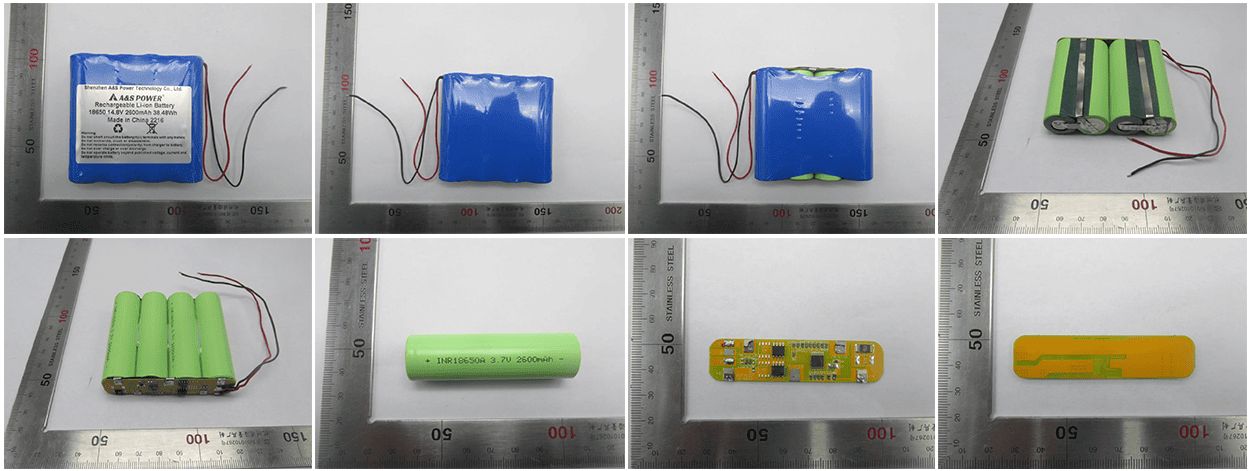
This is arguably the most important step in the entire verification process.
A supplier might show you a UN38.3 report for a battery with the same nominal voltage as your target product. However, matching voltage alone does not establish that the report covers your battery.
Consider the following example:
| Specification | Tested Battery | Proposed Production Battery |
|---|---|---|
| Battery type | Li-ion pouch pack | Li-ion pouch pack |
| Nominal voltage | 3.7V | 3.7V |
| Capacity | 2,000mAh | 2,500mAh |
| Physical dimensions | 10 × 34 × 52mm | 12 × 35 × 55mm |
| Protection circuit | Configuration A | Configuration B |
| Connector | JST 2-pin | JST 3-pin |
Although both products use the same battery chemistry and nominal voltage, they have different electrical and mechanical specifications.
The existing report should not automatically be accepted as covering the proposed production battery.
What information should you compare?
Check the following details against the battery datasheet and physical product:
1. Model number
The battery model or an appropriately identified product model should correspond to the tested design.
A supplier should explain any difference between the model number in the report and the model number on the quotation or product datasheet.
2. Battery chemistry
Determine whether the tested product is lithium-ion, lithium metal, or another applicable battery category.
A report for a lithium-ion battery cannot simply be used to support an unrelated lithium metal product.
3. Voltage and capacity
Compare nominal voltage, rated capacity, and watt-hour rating.
For rechargeable lithium-ion batteries, watt-hours are generally calculated as:
For example, a 3.7V, 2,000mAh battery has a nominal energy rating of:
This is a useful cross-check when reviewing the test documentation.
4. Physical construction
Check the battery's dimensions, weight, cell arrangement, casing, and other relevant design characteristics.
5. Electrical configuration
For assembled battery packs, pay particular attention to the series and parallel arrangement, protection circuitry, and other design elements that may affect the battery's testing requirements.
Can one UN38.3 report cover multiple battery models?
Sometimes, yes.
A manufacturer may have several battery models that share sufficiently similar designs, and a laboratory may evaluate a defined battery type or product family.
However, this does not mean that every battery with the same voltage or chemistry is automatically covered.
The supplier should provide a clear technical explanation of the covered models and the basis for applying the existing test results.
When there are significant changes to cell type, configuration, construction, or other relevant design characteristics, the manufacturer should consult the testing laboratory to determine whether additional testing or a new report is required.
Procurement recommendation: Never approve a battery model based only on a supplier's verbal statement that "the same UN38.3 report can be used."
Request written confirmation identifying the exact model or covered product family.
4. Review the Eight UN38.3 Testing Procedures
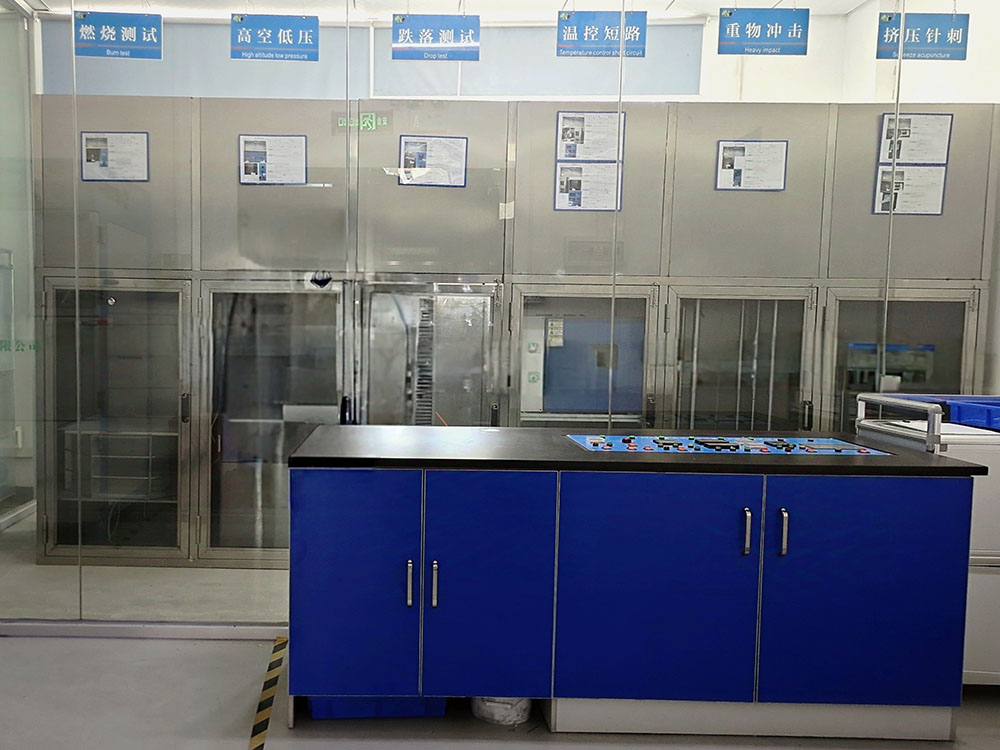
UN38.3 includes environmental, mechanical and electrical testing procedures for applicable lithium battery types.
UN38.3 includes eight designated tests, T1 through T8.
However, not every test applies to every lithium cell or battery type. Applicability depends on the product category and the requirements of subsection 38.3.
Buyers should therefore review the applicable tests rather than assume that every report must show eight identical PASS results.
What are the T1–T8 tests?
| Test | Test Name | What It Evaluates |
|---|---|---|
| T1 | Altitude Simulation | Battery response to reduced atmospheric pressure |
| T2 | Thermal Test | Performance under temperature cycling |
| T3 | Vibration | Resistance to vibration during transportation |
| T4 | Shock | Resistance to mechanical shock |
| T5 | External Short Circuit | Response to an external electrical short circuit |
| T6 | Impact / Crush | Mechanical abuse resistance for applicable cell designs |
| T7 | Overcharge | Response to overcharging for applicable rechargeable batteries |
| T8 | Forced Discharge | Response to forced discharge for applicable cell designs |
T1: Altitude Simulation
This test simulates reduced atmospheric pressure, representing conditions that may occur during air transportation.
It evaluates whether the battery experiences leakage, venting, disassembly, rupture, fire, or other prohibited outcomes under the specified test conditions.
T2: Thermal Test
Lithium batteries may experience significant temperature changes during transportation.
The thermal test evaluates their response to temperature cycling and checks for signs of physical or electrical failure.
T3: Vibration
Batteries may be exposed to continuous vibration during transportation by road, rail, or air.
This test evaluates whether vibration causes leakage, venting, disassembly, rupture, or other specified failure conditions.
T4: Shock
Mechanical impacts can occur when packages are handled or transported.
The shock test evaluates the battery's ability to withstand prescribed mechanical shock conditions.
T5: External Short Circuit
An external short circuit can cause a rapid increase in current and temperature.
This test evaluates the battery's response to an external short circuit under specified conditions.
T6: Impact or Crush
This test evaluates the response of applicable lithium cell designs to mechanical damage.
The test method depends on the cell category and applicable requirements.
T7: Overcharge
Overcharging can create abnormal electrical and thermal conditions.
This test evaluates applicable rechargeable battery designs under specified overcharge conditions.
T8: Forced Discharge
This test evaluates how applicable lithium cells respond when forced into discharge conditions beyond their normal operating state.
Why are some tests marked N/A?
An N/A result does not automatically indicate a failed report.
Under the UN38.3 scope requirements, different tests apply to different product categories.
For example, under the standard test scope:
These distinctions are important when reviewing a report.
A buyer should ask the supplier or testing laboratory to explain any N/A result that appears inconsistent with the battery category.
For the underlying requirements, consult the United Nations Manual of Tests and Criteria, including Revision 8 and Amendment 1.
A good report should demonstrate that all applicable tests were completed successfully, with any exclusions properly justified.
5. Verify the Testing Laboratory and Report Authenticity
A document can contain all the expected information and still require further verification.
Buyers should establish whether the laboratory actually exists and whether the report can be traced to that organization.
5.1 Check the laboratory's full identity
Review:
These details should be consistent throughout the report and test summary.
5.2 Check laboratory accreditation
As part of supplier due diligence, ask whether the laboratory holds ISO/IEC 17025 accreditation for relevant testing activities.
Where accreditation is claimed, verify it through the accreditation body's official directory.
Pay attention to the scope of accreditation. A laboratory may be accredited for certain testing activities without every service it offers being included in its accredited scope.
Do not assume that an accreditation logo alone proves that a particular UN38.3 report was issued under an accredited scope.
5.3 Contact the laboratory when necessary
If the purchase involves a large order, a custom battery pack, or a critical application, consider contacting the laboratory through independently verified contact details.
Ask it to confirm:
Some laboratories may restrict the information they can disclose without authorization from their customer. In that situation, request written authorization from the supplier.
5.4 Look for document inconsistencies
Warning signs include:
A genuine-looking document should never replace independent verification when doubts remain.
PHMSA has also published an official interpretation, Interpretation 24-0094, illustrating why missing report numbers, testing laboratory information, or responsible-person details can make a test summary incomplete.
6. Check the Test Date, Standard Revision, and Report Validity
Another important consideration is whether the report refers to an appropriate edition of the UN Manual of Tests and Criteria.
The report should identify the revision and amendments used during testing.
As of November 2026, buyers should pay particular attention to Revision 8 and Amendment 1, published by UNECE in September 2025, together with any applicable regulatory transition provisions.
Do not automatically reject an older report simply because its issue date is several years ago.
A UN38.3 test summary does not have a universal annual expiration date. According to PHMSA's interpretation, the documentation remains valid unless the relevant battery design changes in a way that necessitates retesting or another applicable regulatory requirement applies.
See the official PHMSA Interpretation 23-0040 on UN38.3 test summary validity.
When should a new test or evaluation be considered?
A new evaluation may be necessary when changes affect the tested battery type, such as:
Not every change automatically requires a complete new UN38.3 test.
For example, changing a label or external packaging does not necessarily change the tested battery design.
The appropriate decision should be based on the applicable UN38.3 provisions and the testing laboratory's assessment.
Buyers should focus on design traceability rather than simply looking for the newest report date.
7. Common Warning Signs When Evaluating a Battery Supplier
The following situations deserve additional investigation before approving a supplier.
| Warning Sign | Why It Matters | Recommended Action |
|---|---|---|
| Supplier only provides a generic certificate | The document may not identify the tested battery design | Request the detailed report and test summary |
| Model number does not match | The tested design may differ from the purchased product | Request documented model coverage |
| Laboratory information is incomplete | Independent verification becomes difficult | Verify laboratory identity and credentials |
| All eight tests are marked PASS without clear applicability information | The test record may not adequately explain the battery category or testing scope | Request clarification from the laboratory |
| Several models share one report without explanation | The product family may not be properly defined | Request the covered-model list and technical justification |
| Supplier refuses to provide traceable documentation | Compliance claims cannot be adequately evaluated | Place the approval on hold |
| Battery specifications differ from the report | The report may not represent the actual production design | Compare the report with the approved datasheet and sample |
One warning sign alone does not necessarily prove that a supplier is dishonest.
However, unresolved discrepancies should be treated as supplier qualification risks.
8. A Practical UN38.3 Verification Checklist for Procurement Teams
To make the process easier, procurement and engineering teams can use the following checklist before approving a new lithium battery supplier.
| Verification Item | What to Confirm | Status |
|---|---|---|
| Manufacturer | Legal manufacturer identity is traceable | ☐ |
| Battery model | Tested model matches the proposed product or documented product family | ☐ |
| Battery specifications | Chemistry, voltage, capacity, Wh, weight and dimensions are consistent | ☐ |
| Battery construction | Relevant cell configuration and protection design are identified | ☐ |
| Test laboratory | Laboratory identity and relevant credentials are verified | ☐ |
| Report number | Unique identification number is available | ☐ |
| Test date | Report date and applicable standard revision are recorded | ☐ |
| Test results | All applicable tests have passed | ☐ |
| N/A results | Exclusions are technically justified | ☐ |
| Test summary | Required information elements are present | ☐ |
| Design changes | Changes since testing have been reviewed | ☐ |
| Production consistency | Approved documentation corresponds to the production battery | ☐ |
What should you request from a lithium battery supplier?
For a more efficient supplier evaluation, request these documents together:
For custom battery projects, it is also helpful to request a controlled product specification or approved sample record.
This creates a documented reference against which future production batches can be checked.
For transportation-related requirements beyond the test report itself, buyers can also consult the IATA lithium battery guidance and dangerous goods resources.
9. Why UN38.3 Documentation Matters When Selecting a Custom Battery Manufacturer
Standard off-the-shelf batteries are relatively straightforward to evaluate because their specifications and model numbers are usually established.
Custom lithium battery projects are more complicated.
An OEM battery pack may involve customized voltage, capacity, dimensions, cell arrangements, connectors, protection circuits, and mechanical enclosures.
Even when a supplier has existing UN38.3 documentation, buyers still need to establish whether the documentation covers the actual configuration being developed.
This is particularly important for:
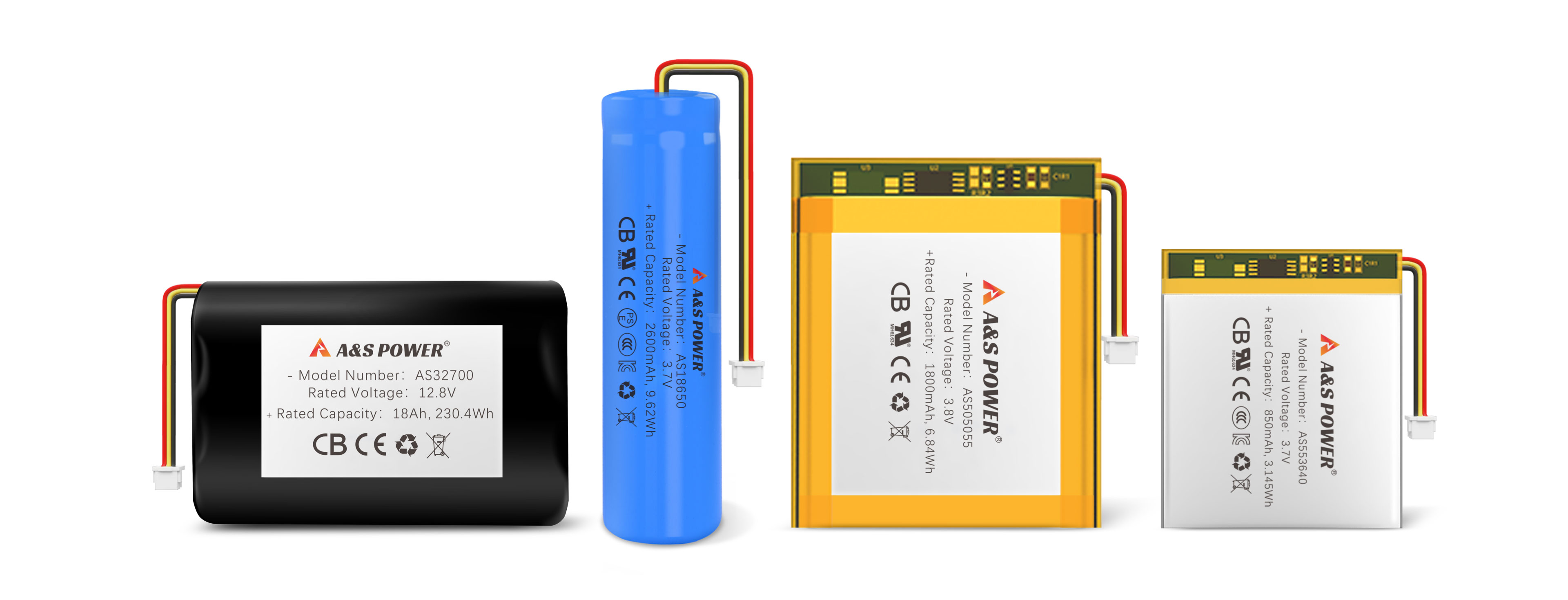
For these applications, the supplier should be able to explain how battery design, sample approval, testing documentation, and mass-production specifications are connected.
At A&S Power, our OEM and ODM battery solutions include lithium-ion and lithium polymer battery customization, covering voltage, capacity, dimensions, connectors, and battery protection configurations.
Buyers developing a new battery-powered product can explore our custom battery solution to understand the available OEM and ODM development options.
For projects specifically requiring pouch-cell battery designs, our custom lithium polymer battery solutions provide a relevant starting point.
Buyers can also review our lithium-ion battery product range and battery certifications when evaluating product and compliance requirements.
When requesting a quotation, buyers should provide their application requirements and ask the supplier to identify the applicable compliance documentation for the proposed battery design.
The goal is not simply to obtain a UN38.3 document. It is to ensure that the document, battery specification, approved sample, and production design all refer to the same product.
Conclusion
Checking a UN38.3 test report is an essential step when selecting a lithium battery supplier, especially for international OEM and ODM projects.
A reliable verification process should go beyond checking whether a document contains a UN38.3 logo or a PASS statement.
Buyers should examine the battery model, manufacturer identity, technical specifications, applicable T1–T8 results, testing laboratory, report number, and referenced standard revision.
Most importantly, the tested battery design must correspond to the battery being purchased.
For procurement managers and product developers, combining UN38.3 document verification with datasheet review, sample evaluation, and production quality assessment provides a more dependable basis for supplier selection.
A supplier that can clearly explain its battery specifications, testing documentation, and design traceability makes it easier for buyers to manage compliance risks throughout the product development and procurement process.
Frequently Asked Questions
Is a UN38.3 test report mandatory when purchasing lithium batteries?
A buyer does not necessarily need to receive a complete laboratory report with every purchase. However, lithium cell and battery manufacturers and subsequent distributors generally must make the applicable UN38.3 test summary available, subject to the relevant regulatory exceptions. Buyers should obtain sufficient documentation to establish that the purchased battery type has passed the applicable design tests.
How can I check whether a UN38.3 test report is genuine?
Check the report number, laboratory name, manufacturer information, battery model, testing date, and responsible-person details. Where necessary, contact the laboratory using independently verified contact information and request confirmation of the report's authenticity.
Does every lithium battery need to pass all eight UN38.3 tests?
No. Test applicability depends on the battery category and construction. For example, rechargeable lithium battery types are generally subject to T1–T5 and T7, while lithium cell types are subject to T1–T6 and T8 under the applicable scope provisions. Review the relevant requirements rather than assuming all eight tests apply to every product.
Does a UN38.3 test report expire?
There is no universal annual expiration period for a UN38.3 test summary. Documentation can remain valid when the tested battery design remains unchanged, subject to applicable regulatory requirements. A design change that necessitates retesting may require updated documentation.
Can one UN38.3 test report cover multiple lithium battery models?
Yes, in certain circumstances. A report may cover a defined battery type or product family, depending on the laboratory's evaluation and applicable testing requirements. However, different capacities, dimensions, cell configurations, or protection designs should not automatically be assumed to fall under the same report. Ask the supplier for documented coverage of each proposed model.
Is UN38.3 the same as UL certification or IEC 62133?
No. These standards address different aspects of battery safety and compliance. UN38.3 focuses on transportation-related design testing, while UL standards and IEC 62133 address other product safety requirements and application contexts. Depending on the destination market and end product, additional certifications or evaluations may be necessary.
Looking for a Reliable Custom Lithium Battery Manufacturer?
A&S Power provides OEM and ODM lithium-ion and lithium polymer battery solutions. Contact our team to discuss your battery specifications, application requirements, and relevant compliance documentation.
Get a Custom Battery Quote