



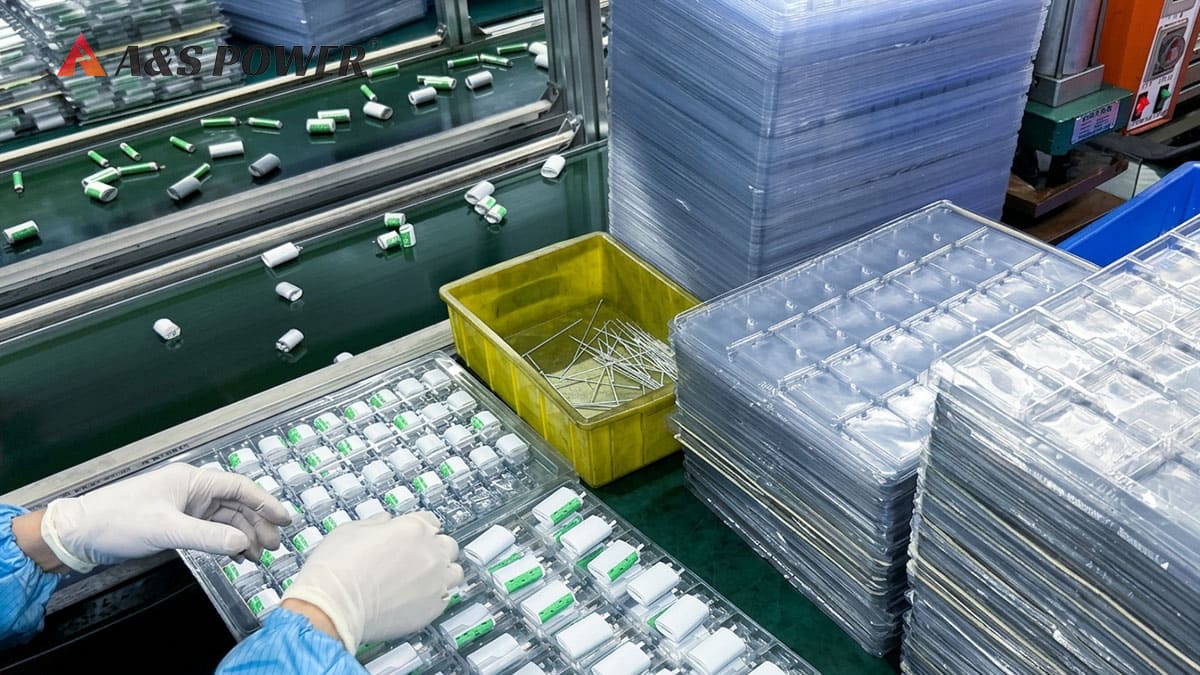
Introduction
Finding a lithium polymer (LiPo) battery supplier is relatively easy. Finding one that can consistently manufacture batteries to your exact specifications, maintain stable quality across production batches, and support your product throughout its lifecycle is much more challenging.
For OEM manufacturers, product developers, and purchasing managers, selecting a battery supplier is not simply a matter of comparing capacity, dimensions, and unit prices. Manufacturing processes, cell sourcing, material control, electrical testing, protection circuit design, and production traceability all influence the reliability of the finished battery.
A supplier may offer attractive prices and provide impressive product samples, but these factors alone cannot demonstrate whether the same performance can be maintained during mass production.
At A&S Power, we believe that evaluating a LiPo battery manufacturer requires looking beyond the finished battery. The manufacturing processes behind it deserve equal attention.
In this guide, we explain 10 important manufacturing details that buyers should examine before choosing a reliable LiPo battery supplier. These checks can help you identify manufacturing risks, compare potential OEM partners, and make more informed sourcing decisions.
Quick Answer: What Makes a Reliable LiPo Battery Supplier?
A reliable LiPo battery supplier should demonstrate control over cell sourcing, raw materials, electrode and cell manufacturing or qualified cell procurement, pouch assembly, welding, sealing, PCM/BMS integration, electrical testing, quality documentation, and batch traceability.
Most importantly, the supplier should be able to provide verifiable evidence of its manufacturing and quality-control capabilities rather than relying solely on product samples or marketing claims.
10 Manufacturing Details to Check Before Choosing a LiPo Battery Supplier
1. Verify Where the Battery Cells Come From
Cell sourcing is one of the first things I recommend investigating.
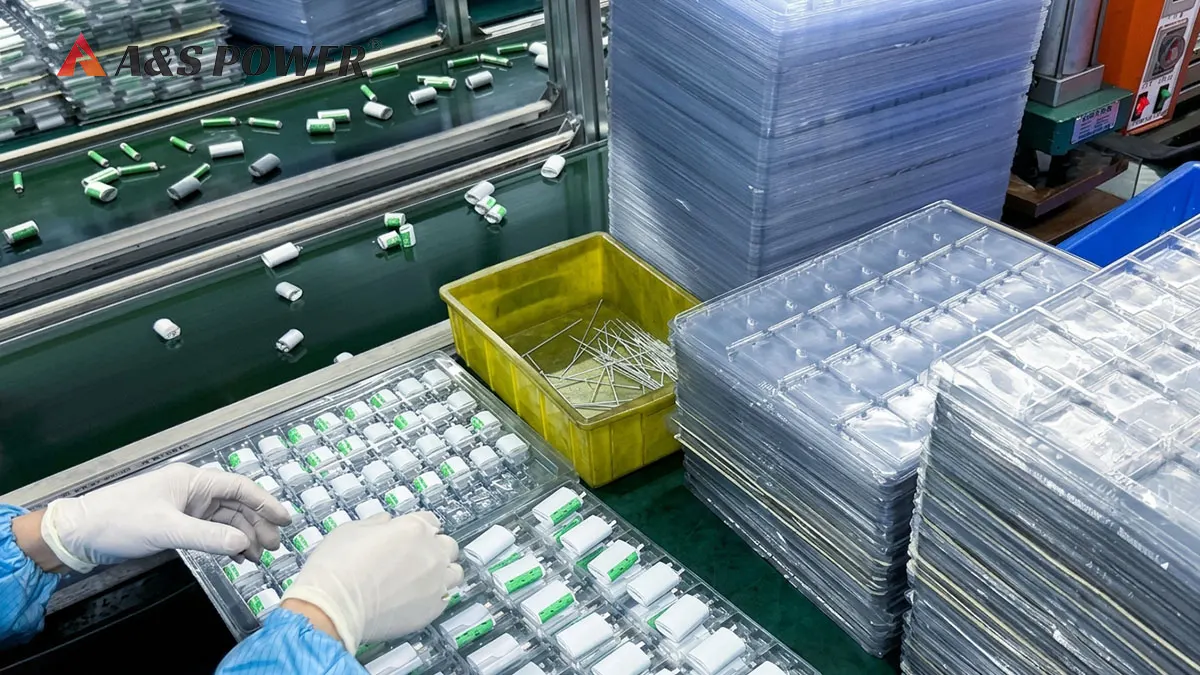
Not every company advertising itself as a lithium polymer battery manufacturer actually manufactures battery cells. Some companies produce cells in-house, while others purchase cells from qualified manufacturers and focus on battery pack assembly, protection circuit integration, and customization.
Neither business model is automatically unreliable. What matters is whether the supplier can demonstrate control over the cell supply chain.
When evaluating cell sourcing, ask:
Pay particular attention to capacity, nominal voltage, internal resistance, dimensions, and cell appearance.
A supplier should also explain how it handles changes in cell manufacturers or materials. Substituting a different cell without customer approval can affect battery performance and product compatibility.
2. Examine Raw Material and Component Quality Control
A LiPo battery consists of multiple materials and components, including cathode and anode materials, separators, electrolytes, aluminum-plastic pouch film, tabs, wires, connectors, and protection circuit components.
The quality of these materials directly affects manufacturing consistency.
In battery cell production, electrode preparation generally involves slurry mixing, coating, drying, calendaring, and cutting. Each stage requires controlled process parameters and appropriate inspection.
For pouch battery assembly, component dimensions, material compatibility, and incoming inspection are also important.
Ask your potential supplier:
A documented incoming quality control (IQC) process is a positive sign.
A supplier should be able to explain what happens when incoming cells, protection boards, connectors, or other components fail inspection.
3. Check Electrode and Cell Manufacturing Capabilities
This check is particularly important when sourcing directly from a LiPo cell manufacturer.
Electrode production is a technically demanding process. Variations in coating thickness, material distribution, moisture control, and electrode dimensions can influence electrochemical performance and manufacturing consistency.
The typical lithium-ion cell manufacturing process includes three major stages:
| Manufacturing Stage | Main Processes | Important Quality Considerations |
|---|---|---|
| Electrode fabrication | Mixing, coating, drying, calendaring, cutting | Coating uniformity, thickness, moisture, material consistency |
| Cell assembly | Stacking, tab joining, pouch preparation, electrolyte filling and sealing | Alignment, contamination control, welding and sealing quality |
| Cell finishing | Formation, aging, capacity grading and inspection | Electrical performance, stability, capacity consistency |
The manufacturing stages and associated quality controls are also discussed in technical literature on lithium-ion electrode processing and battery production. For further technical background, buyers can consult the IET technical publication on battery electrode processing and research on traceability in battery cell production.
If your supplier purchases finished cells, ask how it qualifies the original cell manufacturer and verifies incoming cell performance.
A battery pack assembler should not claim to manufacture electrode materials or cells unless those processes are genuinely performed within its manufacturing operation.
4. Inspect Pouch Assembly, Tab Welding, and Sealing Quality
For lithium polymer batteries, pouch assembly is one of the most important manufacturing areas to evaluate.
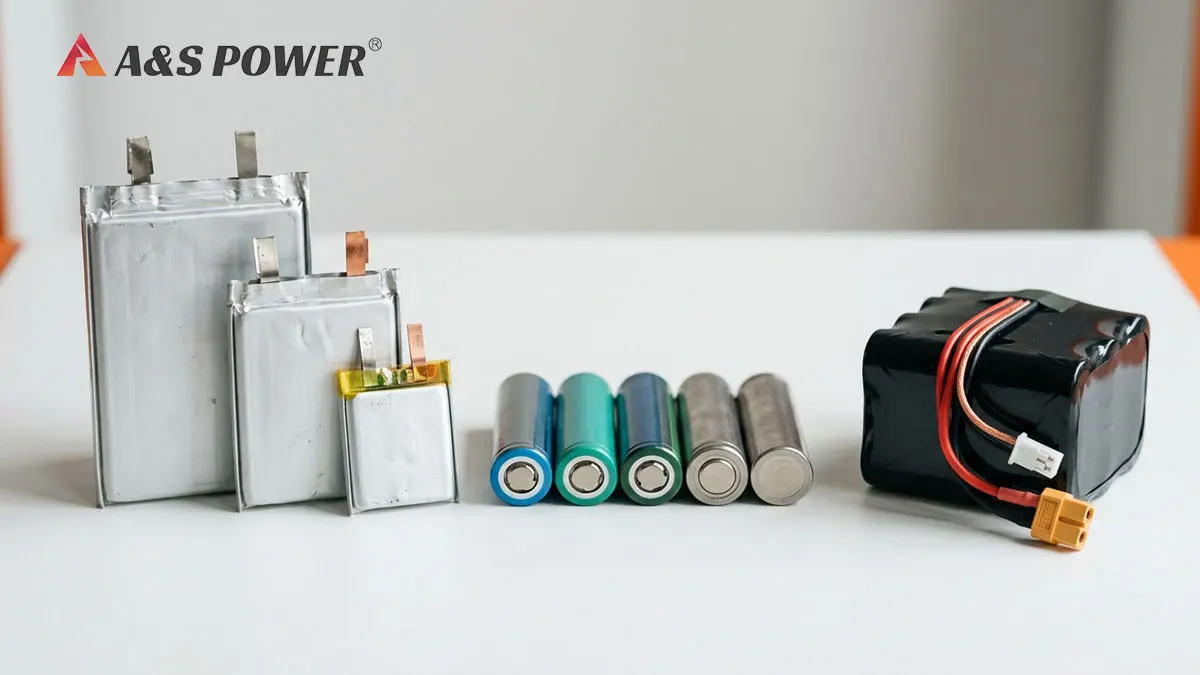
Unlike cylindrical cells, LiPo batteries use flexible aluminum-laminated pouch packaging. The pouch structure must provide effective containment and maintain reliable sealing under the specified operating conditions.
Three areas deserve particular attention.
Tab welding
The positive and negative tabs must be joined using an appropriate welding process. Poor welding can increase connection resistance, cause localized heating, or lead to intermittent electrical connections.
Pouch sealing
The sealing process must maintain consistent sealing conditions appropriate to the pouch material and cell design. Inadequate sealing may compromise package integrity.
Visual and dimensional inspection
Finished cells should be inspected for abnormal swelling, leakage, damaged pouch edges, contamination, and dimensional deviations.
For custom battery projects, I also recommend checking whether the manufacturer can maintain consistent pouch dimensions, tab positions, and terminal configurations across production batches.
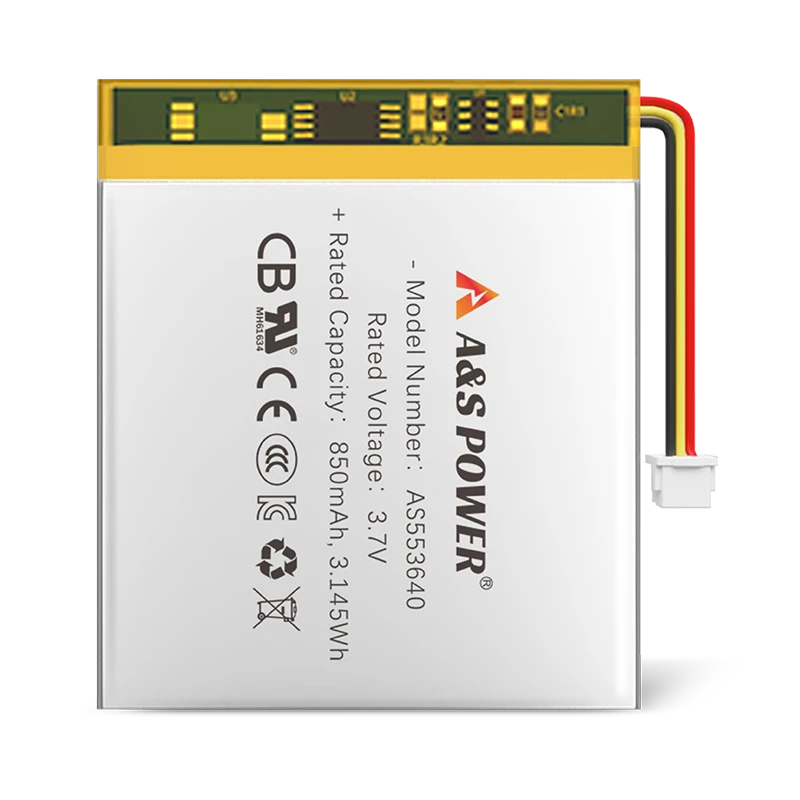
These details are particularly important when the battery must fit into a compact electronic enclosure. For example, A&S Power provides custom lithium polymer battery configurations for projects with specific dimensional and electrical requirements.
5. Evaluate Formation, Aging, and Capacity Grading
A battery's manufacturing quality cannot be established by appearance alone.
Formation, aging, and electrical grading are important stages in cell production.
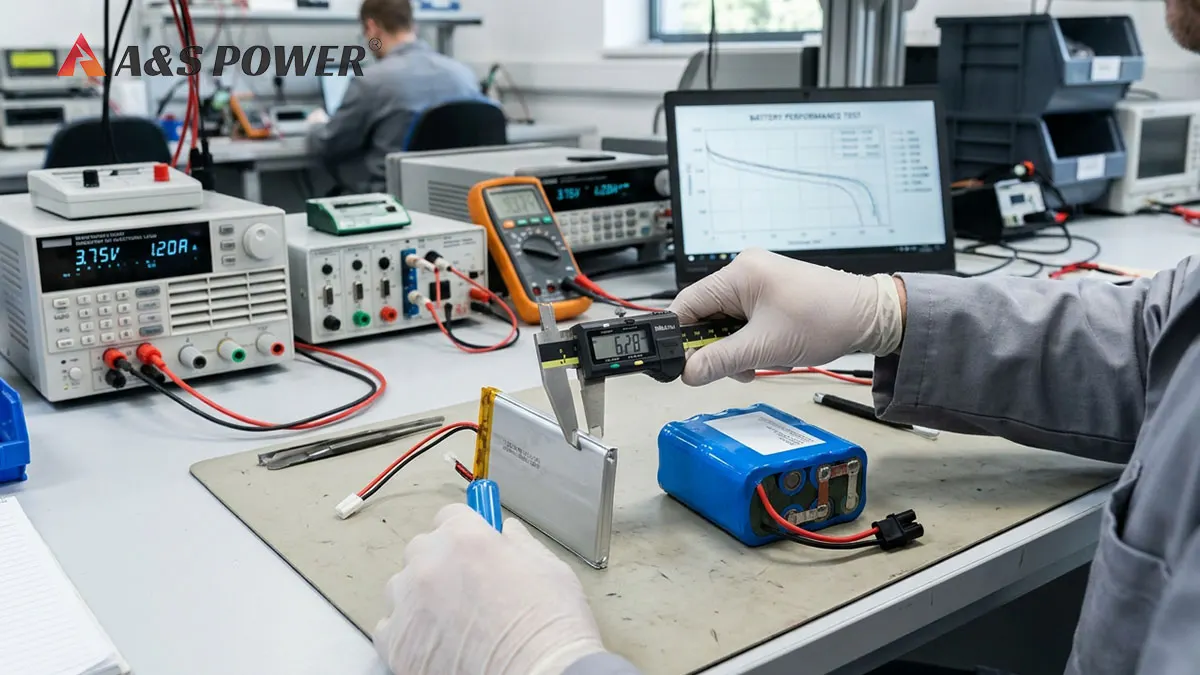
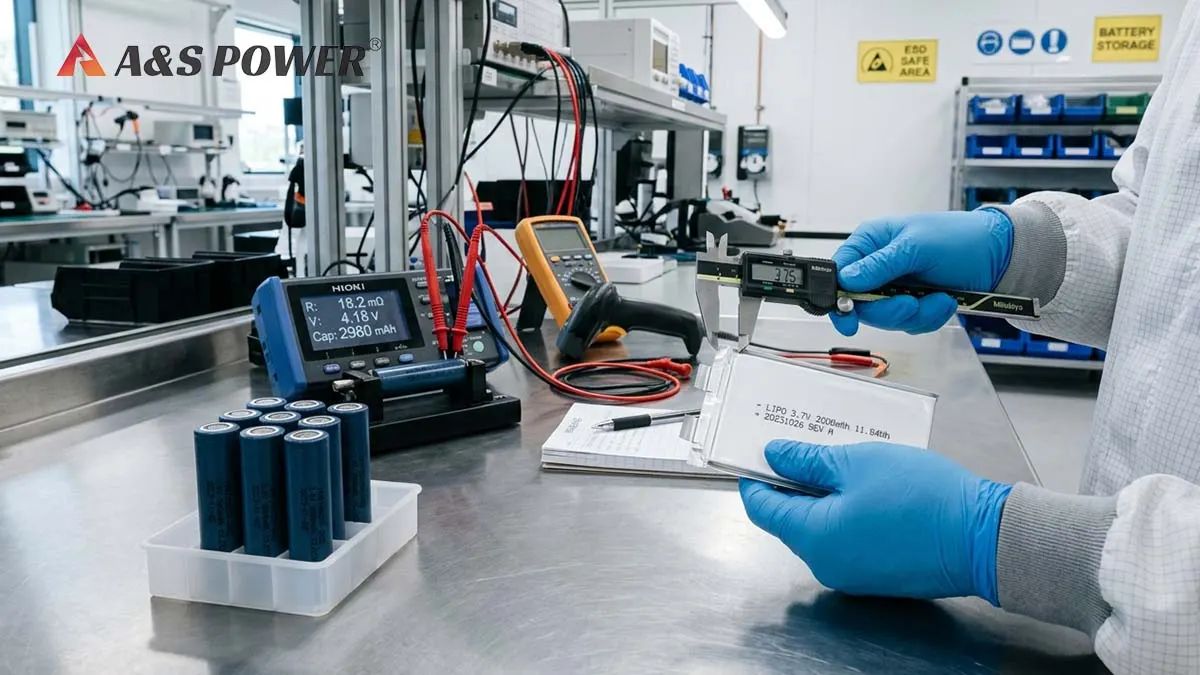
Formation involves controlled initial charging and discharging to activate the cell's electrochemical system. Aging provides time for the manufacturer to observe cell behavior under defined conditions. Capacity grading helps classify cells according to measured electrical performance.
When reviewing a supplier, ask whether it maintains records of:
It is important to understand that capacity and internal resistance measurements depend on test conditions, including temperature, current, voltage limits, and measurement equipment.
Therefore, a supplier should provide the actual test conditions rather than presenting capacity or resistance values without context.
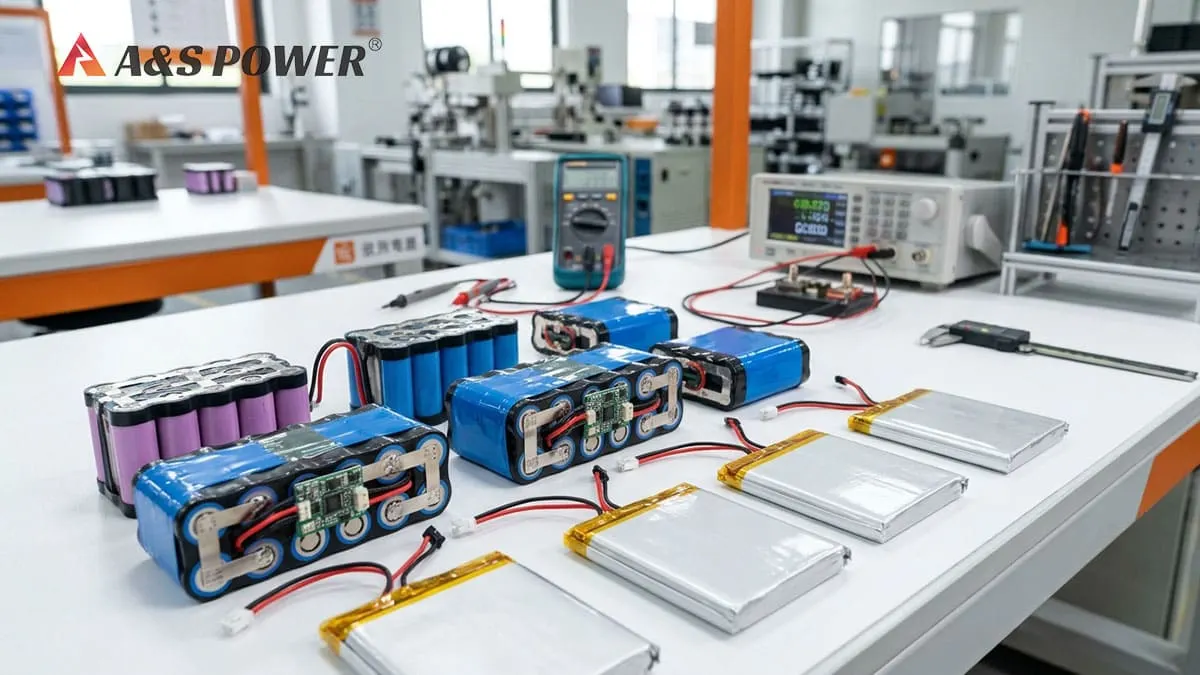
For assembled battery packs, ask whether final electrical testing is performed after cell assembly and protection circuit integration.
6. Check PCM/BMS Design and Protection Capabilities
A good LiPo battery supplier should understand more than cell specifications.
The protection circuit is an essential part of many rechargeable battery packs, helping protect against operating conditions such as overcharge, over-discharge, and excessive current, depending on the circuit design.
For multi-cell battery packs, a battery management system (BMS) may also provide additional monitoring and balancing functions.
The appropriate protection design depends on the application, cell chemistry, series and parallel configuration, charger, load characteristics, and operating environment.
Before placing an order, confirm whether the supplier can customize:
Do not assume that every protection board provides identical functions or protection thresholds.
For OEM applications, the supplier should review the battery's actual electrical requirements and confirm that the selected protection circuit is compatible with the end product.
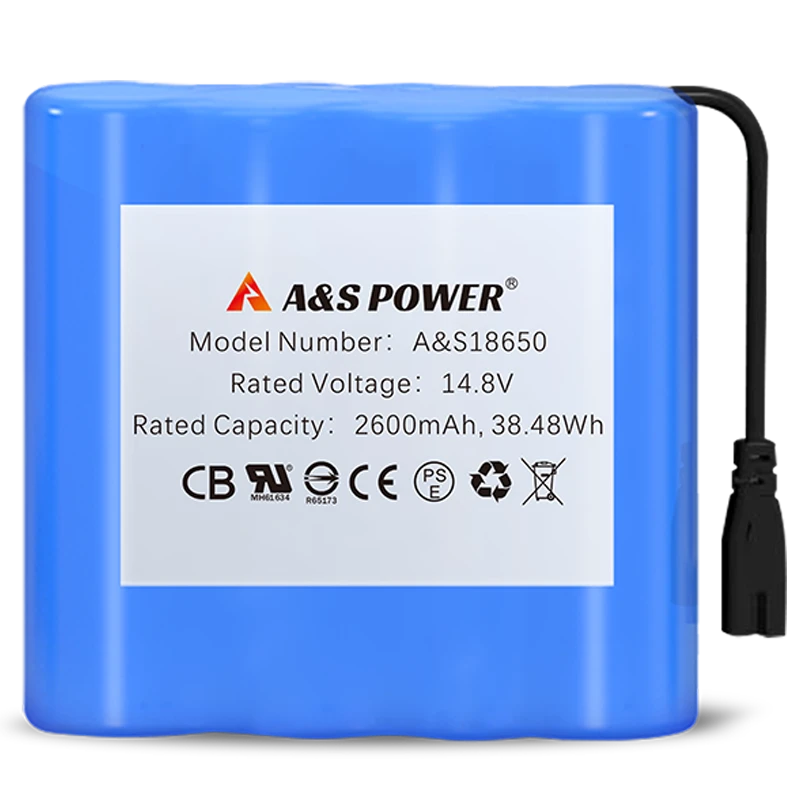
For additional product examples, you can explore A&S Power's 18650 lithium-ion battery pack and its protection circuit configuration.
7. Review Electrical, Mechanical, and Safety Testing
A reliable manufacturer should have a documented testing plan covering both individual cells and finished battery packs.
Testing requirements depend on battery design, intended application, destination market, and applicable regulations.
| Testing Category | Examples | What It Helps Evaluate |
|---|---|---|
| Electrical testing | Voltage, capacity, internal resistance, charge/discharge performance | Electrical characteristics and specification compliance |
| Protection testing | Overcharge, over-discharge, overcurrent and short-circuit protection | Protection circuit functionality |
| Mechanical testing | Vibration, shock and other applicable mechanical tests | Resistance to specified mechanical stresses |
| Environmental testing | Temperature-related performance and storage evaluations | Performance under defined environmental conditions |
| Safety and compliance testing | Applicable IEC, UL and UN testing | Compliance with relevant safety or transport requirements |
One important distinction is that internal quality inspection is not the same as independent certification.
For example:
The applicable standard depends on the battery and its intended use. A UN 38.3 test report, for example, should not be presented as proof that every aspect of a battery's end-use safety has been certified.
Buyers can review the official IEC 62133-2 consolidated standard and UL Solutions battery safety testing services for further information about relevant testing requirements and standard scopes.
You can also visit the A&S Power battery certifications page to learn more about the certification documentation available for its battery products.
8. Examine Production Consistency and Manufacturing Capacity
A supplier may produce an excellent prototype but struggle to maintain the same quality when an order moves into mass production.
This is why I recommend evaluating production consistency rather than focusing exclusively on maximum daily output.
Ask the manufacturer:
For custom LiPo batteries, production consistency also involves maintaining the same dimensions, capacity requirements, connectors, wire lengths, protection functions, and labeling.
If you are developing a new product, ask whether the supplier can support sample development, engineering validation, pilot production, and subsequent mass production.
A realistic production plan is more valuable than an impressive capacity figure without supporting evidence.
9. Verify Quality Management and Batch Traceability
Manufacturing quality should be supported by a documented quality management system.
ISO 9001 certification can indicate that an organization operates a formal quality management system, but it does not automatically guarantee that every battery meets your technical specifications.
You should examine how the supplier applies its quality procedures to actual battery production.
A useful traceability system should connect finished battery packs with relevant production information, such as:
This information becomes particularly valuable when a customer reports a performance issue after delivery.
Without proper traceability, identifying the affected production batch and investigating the root cause becomes more difficult.
I also recommend asking how the supplier handles nonconforming products, corrective actions, and customer complaints.
A reliable partner should be able to explain its investigation and corrective action process rather than simply promising to replace defective products.
10. Assess Customization, Engineering Support, and Long-Term Cooperation
The final manufacturing detail is the supplier's ability to support your product beyond the initial order.
OEM battery projects often involve requirements that differ significantly from standard catalog batteries.
For example, a customer may need a specific pouch size, higher capacity within a limited enclosure, a customized connector, a particular wire length, or a protection circuit designed around the product's operating current.
A capable custom LiPo battery supplier should be able to review:
Engineering support is especially important when a project involves tight dimensional tolerances or demanding electrical requirements.
At A&S Power, our OEM/ODM battery solutions focus on customization of battery dimensions, capacity, voltage, connectors, wiring, and protection circuit configurations according to project requirements.
The goal should be to establish a supplier relationship that supports product development, production validation, and repeat manufacturing—not simply to complete one purchase order.
How to Compare LiPo Battery Suppliers: A Practical Checklist
The following table can help purchasing teams compare potential suppliers using consistent evaluation criteria.
| Evaluation Item | What to Request | Warning Sign |
|---|---|---|
| Cell sourcing | Cell manufacturer and model information | Cannot explain cell origin |
| Material control | IQC procedures and inspection criteria | No defined incoming inspection |
| Manufacturing process | Process flow and production evidence | Vague descriptions of manufacturing |
| Pouch assembly | Welding and sealing quality controls | No documented process checks |
| Cell grading | Capacity, voltage and IR test records | Only provides nominal specifications |
| PCM/BMS | Circuit specifications and test results | Cannot explain protection functions |
| Product testing | Applicable test reports and procedures | Treats all certificates as interchangeable |
| Production consistency | Batch inspection and production records | No repeat-order quality controls |
| Traceability | Batch identification and quality records | Cannot identify production lots |
| Engineering support | Customization and technical review capabilities | Cannot evaluate application requirements |
This is not a formal certification scorecard. It is a practical supplier-screening tool that helps identify areas requiring further technical verification.
Common Mistakes When Choosing a LiPo Battery Supplier
Even experienced purchasing teams can overlook important manufacturing details when comparing quotations.
Here are four mistakes I recommend avoiding.
Choosing the lowest price without reviewing specifications
Two batteries with the same nominal voltage and capacity may differ in cell quality, discharge capability, protection design, dimensions, and testing requirements.
Compare equivalent technical specifications before comparing prices.
Accepting samples as proof of mass-production quality
A successful sample demonstrates that a particular battery can be produced. It does not establish that every future production batch will have identical performance.
Request batch inspection records and production quality procedures.
Assuming every certificate covers the complete battery
Certification and test reports have defined scopes. Always verify the model, cell or pack configuration, applicable standard, and report details.
Ignoring long-term component availability
Changes in cell models, connectors, protection boards, and other components can affect repeat production.
Discuss change-control procedures and obtain approval requirements for critical component substitutions before mass production.
Conclusion: Choose a LiPo Battery Supplier Based on Manufacturing Evidence
Selecting a reliable LiPo battery supplier requires more than checking a product catalog or requesting a competitive quotation.
The most important considerations are cell sourcing, material control, manufacturing processes, pouch assembly, electrical grading, PCM/BMS design, testing, production consistency, traceability, and engineering support.
A trustworthy supplier should be willing to explain how its batteries are manufactured, how quality is verified, and how production changes are controlled.
At A&S Power, we understand that every OEM battery project has its own electrical, mechanical, and application requirements. Our team supports custom lithium-ion, lithium polymer, and LiFePO4 battery solutions for customers developing rechargeable battery-powered products.
If you are evaluating a custom LiPo battery project, we recommend sharing your required voltage, capacity, dimensions, discharge current, connector, and application details before selecting a battery configuration.
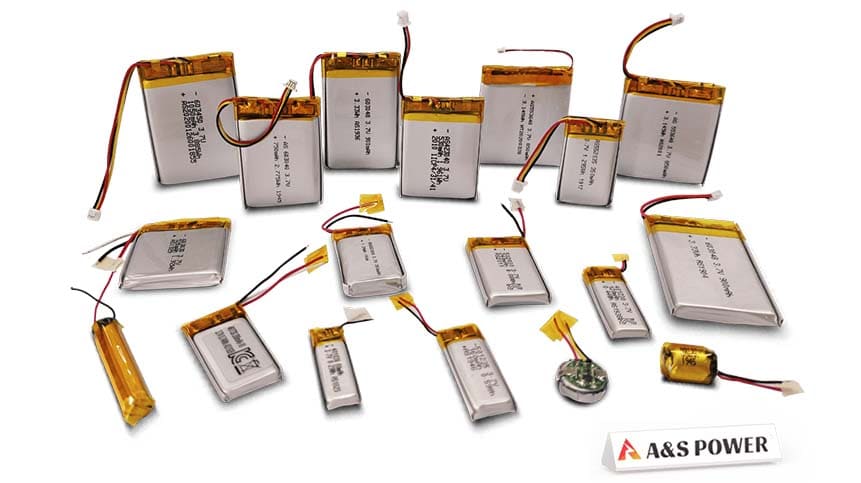
Looking for a Custom LiPo Battery Manufacturing Partner?
Contact A&S Power to discuss your custom LiPo battery requirements and request an OEM/ODM solution for your project.
Get Custom Battery QuoteFrequently Asked Questions About LiPo Battery Suppliers
1. How do I know if a LiPo battery supplier is a real manufacturer?
Ask for its manufacturing process flow, production facility information, equipment details, quality-control procedures, and sample production records. Also establish whether it manufactures battery cells, assembles battery packs, or performs both operations. These are different capabilities and should be evaluated separately.
2. What certifications should a reliable LiPo battery supplier have?
The appropriate certifications depend on the application and target market. Commonly relevant standards include IEC 62133-2, UL 1642, UL 2054, and UN 38.3. However, these standards have different scopes. Always verify the actual tested model, configuration, and supporting documentation.
3. How can I check the quality of a custom lithium polymer battery?
Review its voltage, discharge capacity, internal resistance, dimensions, protection functions, and applicable safety test results. Ask for the testing conditions and acceptance criteria. For production orders, request batch inspection records rather than relying exclusively on prototype samples.
4. What is the difference between a LiPo cell manufacturer and a LiPo battery pack assembler?
A cell manufacturer produces the electrochemical cell, while a battery pack assembler integrates cells with components such as protection circuits, wires, connectors, and packaging. Some companies perform both operations, while others specialize in pack assembly using qualified externally sourced cells.
5. Can a LiPo battery supplier customize voltage, capacity, size, and connectors?
Yes. Custom LiPo battery packs can be designed around application requirements, including voltage, capacity, dimensions, connector types, cable lengths, and protection circuit configurations. However, the feasibility of each specification depends on cell availability, electrical limits, mechanical constraints, and safety requirements.
6. Why is battery batch traceability important?
Traceability allows manufacturers to connect finished battery packs with cell batches, material records, production dates, and inspection results. When a quality issue occurs, these records help identify potentially affected products and investigate the root cause.
7. Should I request a sample before placing a bulk LiPo battery order?
Yes. A sample allows your engineering team to verify physical dimensions, electrical characteristics, connector compatibility, charging behavior, and integration with the end product. Before mass production, establish approved specifications and acceptance criteria so that production units can be compared against the validated sample.
8. What information should I provide when requesting a custom LiPo battery quotation?
Provide the required nominal voltage, capacity, maximum discharge current, battery dimensions, charging specifications, connector type, wire length, operating temperature, application, estimated order quantity, and applicable certification requirements. A reference drawing or existing battery sample can also help the supplier assess feasibility more accurately.