



Introduction
Choosing a custom battery supplier involves more than comparing battery prices, production capacity, or advertised certifications. For OEM and ODM projects, the documents provided by a supplier are an important part of evaluating its technical capabilities, manufacturing processes, product safety, and quality management.
A lithium battery may have the correct voltage, capacity, and dimensions, but these specifications alone cannot establish whether the product meets the requirements of its intended application. Buyers also need evidence showing which cells are used, how the battery pack is designed, what safety tests have been completed, and whether the delivered products can be traced to their production batches.
So, what documents should a professional custom battery supplier provide?
At a minimum, buyers should expect relevant company and quality-system information, battery datasheets, approved technical specifications, applicable safety test reports or certificates, quality inspection records, and transportation-related documentation. Additional records may be necessary depending on the battery chemistry, product application, destination market, and shipping method.
At A&S Power, we believe documentation should support the entire battery sourcing process, from initial engineering evaluation to sample approval, mass production, and shipment. This guide explains the key documents buyers should request and how to evaluate them.
Quick Answer: Essential Documents from a Custom Battery Supplier
A professional custom lithium battery supplier should be able to provide the following documents when applicable to the project:
Not every document is mandatory for every battery project. The important point is that the supplier must provide documentation that accurately corresponds to the actual battery model, configuration, and intended application.
1. Company Qualification and Quality Management Documents
Before discussing battery specifications, buyers should establish whether the supplier is a legitimate business with an appropriate quality management system.
1.1 Business License and Company Profile
A business license helps verify the supplier's registered legal entity and business status. Buyers should check whether the company name on the license matches the entity issuing quotations, signing contracts, and receiving payments.
A company profile can provide additional information, including:
One important distinction is that a company profile is informational evidence, not independent proof of manufacturing capability. Buyers should not assume that a company owns a factory simply because its website describes it as a manufacturer.
1.2 ISO 9001 Quality Management System Certificate
An ISO 9001 certificate provides evidence that an organization operates a quality management system assessed against the standard.
For battery buyers, this is useful when evaluating whether the supplier has established procedures for production control, inspection, corrective actions, and continuous improvement.
However, ISO 9001 certification does not automatically mean that every battery manufactured by the company has passed a specific safety test or product certification.
Buyers should verify:
A supplier's quality management certification should be treated as one part of the qualification process rather than a replacement for product-level testing.
2. Battery Technical Specifications and Engineering Documents
Technical documentation is particularly important for custom battery projects because the finished battery is often designed around a customer's available installation space, electrical requirements, and operating conditions.
2.1 Battery Datasheet
A battery datasheet is one of the first documents buyers should request.
It should provide sufficient information to determine whether the proposed battery is suitable for the application.
| Technical Parameter | Information Buyers Should Verify |
|---|---|
| Battery chemistry | Li-ion, LiPo, LiFePO4, or other chemistry |
| Nominal voltage | Rated operating voltage |
| Rated capacity | Nominal capacity in Ah or mAh |
| Minimum capacity | Guaranteed minimum under stated test conditions |
| Charging voltage | Recommended or specified charge limit |
| Charging current | Standard and maximum charging current |
| Discharge current | Continuous and peak discharge limits |
| Operating temperature | Charging and discharging temperature ranges |
| Dimensions | Length, width, and thickness |
| Weight | Battery or battery pack weight |
| Protection | PCM/BMS protection functions, where applicable |
| Cycle life | Test conditions and defined end-of-life criteria |
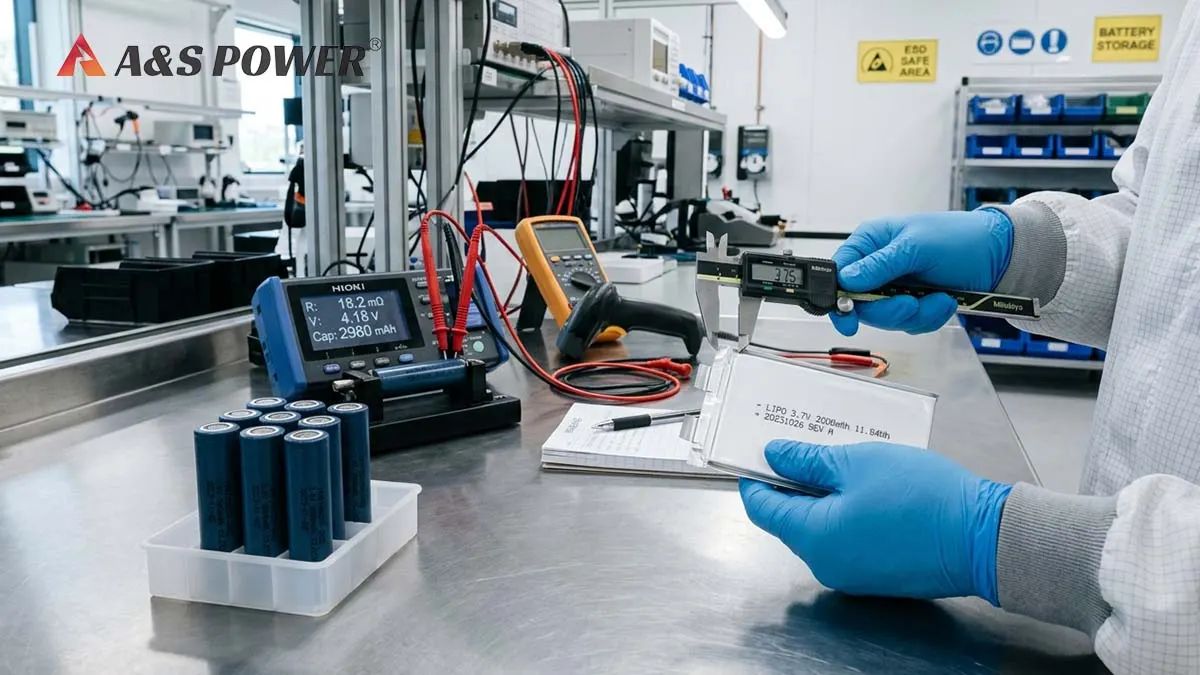
Buyers should pay particular attention to test conditions. Capacity measurements, for example, depend on discharge current, temperature, cutoff voltage, and testing procedures.
A capacity value without its measurement conditions is incomplete technical information.
2.2 Battery Drawings and Dimensional Specifications
For custom lithium polymer batteries and battery packs, dimensional drawings are essential.
A drawing should identify the battery's physical dimensions, connector position, cable length, terminal configuration, and any important installation restrictions.
For pouch cells, buyers should also confirm whether the stated dimensions include the pouch sealing edges and whether the thickness refers to a specified measurement condition.
These details help prevent problems such as:
A professional supplier should provide updated drawings when the battery design changes.
2.3 Cell, PCM, and BMS Specifications
For a customized battery pack, the finished product depends on more than the individual cell.
Buyers should request relevant cell specifications and protection circuit documentation.
Cell documentation may include chemistry, nominal voltage, capacity, charging limits, discharge ratings, dimensions, and manufacturer identification.
PCM or BMS documentation should describe applicable protection functions, such as:
These specifications should match the actual battery configuration. A protection board's presence alone does not establish that the finished pack is suitable for every charging or discharging condition.
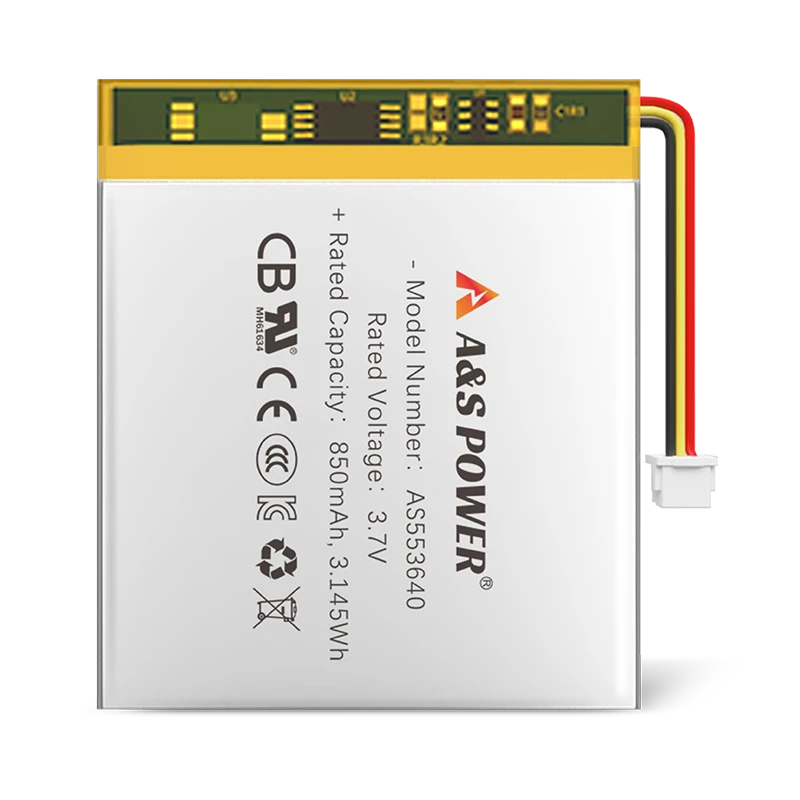
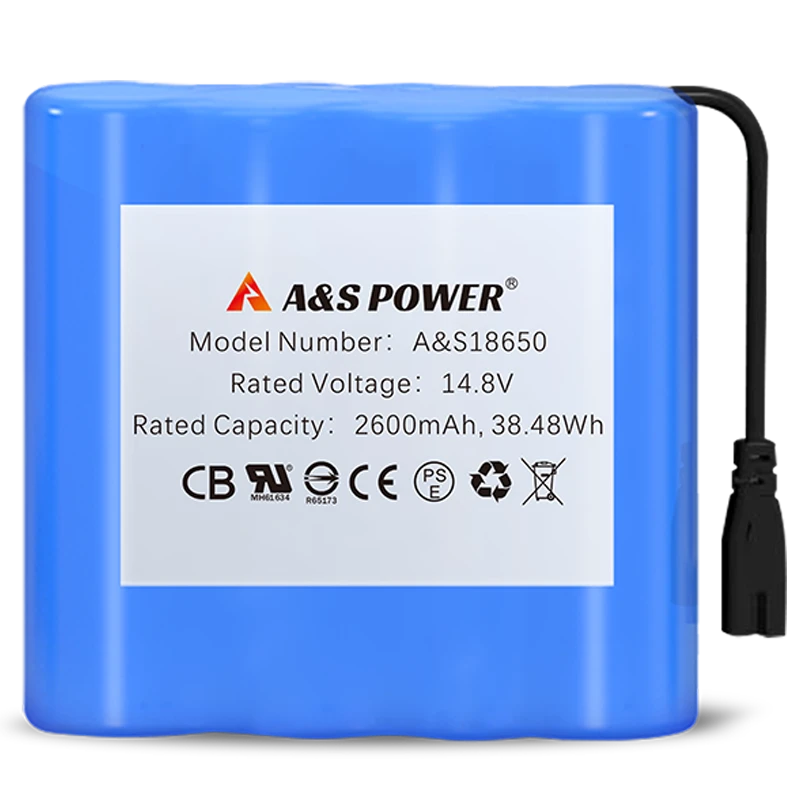
For a practical product-level reference, buyers can also review the technical information provided on an A&S Power 18650 lithium battery pack product page.
3. Battery Safety Certifications and Test Reports
Safety documentation is one of the most important areas of supplier evaluation.
However, different standards cover different products and applications. Buyers should identify the applicable standard rather than simply requesting as many certificates as possible.
3.1 UN38.3 Test Report and Test Summary
UN38.3 relates to the transportation testing requirements for lithium cells and batteries under Section 38.3 of the UN Manual of Tests and Criteria.
The test program covers eight test types:
Buyers should distinguish between a complete UN38.3 test report and the UN38.3 test summary.
The test summary identifies the tested cell or battery type, manufacturer, testing laboratory, report reference, and relevant test results. It must contain the information required by the applicable UN provisions.
A particularly important point is that a test summary should correspond to the actual battery type being supplied. A document for a different capacity, construction, or battery configuration should not automatically be accepted as evidence for the purchased product.
The IATA Lithium Battery Guidance Document (2026) provides useful information about lithium battery transportation requirements and test summaries. Buyers can also consult the U.S. PHMSA guidance on lithium battery test summaries.
3.2 UL Certification and Test Documentation
UL standards are relevant to many lithium battery applications, particularly products intended for North American markets.
Examples include:
The applicable standard depends on the battery type and end-product requirements.
When reviewing UL documentation, buyers should check the certified manufacturer, product category, model identification, and certification status.
A supplier should not claim that an entire product range is UL certified merely because one battery model has passed a UL-related evaluation.
The UL Solutions Battery Safety Testing and Certification page provides further information about relevant battery safety standards. Buyers can also use the UL Product iQ certification database to investigate certification information.
3.3 IEC 62133-2 and CB Documentation
IEC 62133-2 addresses safety requirements and testing for portable sealed secondary lithium cells and batteries under intended use and reasonably foreseeable misuse.
It is particularly relevant to portable electronic applications.
For projects requiring international certification evaluation, buyers may also encounter IECEE CB test reports and certificates.
These documents should be reviewed carefully to confirm the tested product, applicable standard edition, manufacturer, and certification scope.
For reference, the official IEC 62133-2 publication describes the standard's scope and technical requirements. The IECEE website provides further information about the CB Scheme.
Important: UN38.3, UL, and IEC 62133-2 are not interchangeable. Passing a transportation test does not automatically establish compliance with an end-product safety standard.
4. SDS and Other Chemical Safety Information
A Safety Data Sheet (SDS), historically called an MSDS, may be requested during battery sourcing, warehousing, customs-related procedures, or internal safety reviews.
When applicable, buyers should check that the document accurately identifies the battery product, chemistry, manufacturer, and relevant hazard information.
However, there is an important distinction: an SDS is not universally required for transporting manufactured lithium battery articles.
According to IATA's lithium battery transportation guidance, an SDS is not an IATA Dangerous Goods Regulations transport document and is not generally required for manufactured battery articles under GHS provisions.
Therefore, buyers should not treat an SDS as a substitute for a UN38.3 test summary or the applicable dangerous goods shipping documentation.
5. Battery Quality Inspection and Production Records
Certificates demonstrate that certain requirements have been evaluated, but they do not prove that every production batch is identical to the tested sample.
This is why quality inspection documentation matters.
5.1 Incoming Material Inspection Records
These records help establish whether incoming cells and components meet the approved purchasing specifications.
Depending on the project, inspection items may include:
The inspection method and sampling frequency should be defined by the supplier's quality procedures and the customer's requirements.
5.2 In-Process Inspection Records
For customized battery packs, production controls may include cell matching, welding quality, insulation, wiring, protection circuit installation, and assembly checks.
These records are useful because some battery defects cannot be identified through a final voltage measurement alone.
5.3 Final Inspection and Functional Test Reports
Before shipment, buyers should request final inspection evidence appropriate to the product.
Depending on the battery design, this may include:
Not every battery requires every test on every unit. The inspection plan should be based on the approved specification, production risk, and customer agreement.
6. Production Traceability and Change Control Documents
Traceability is particularly important for OEM customers who purchase batteries repeatedly or use them in products requiring long-term quality support.
A professional supplier should be able to link finished battery packs to relevant production information.
Useful records include:
| Document | Purpose |
|---|---|
| Production batch records | Identify the production lot and manufacturing date |
| Cell lot information | Trace the source and batch of battery cells |
| BOM (Bill of Materials) | Identify approved components and materials |
| Inspection records | Verify production and quality checkpoints |
| Nonconformance reports | Document identified quality problems |
| Corrective action reports | Record investigation and corrective measures |
| Engineering change notices | Track approved design or component changes |
For example, if a supplier changes the cell manufacturer, PCM design, connector, or battery dimensions, the buyer should receive an appropriate change notification before the revised product enters production.
This is particularly important when a battery has already been approved through sample testing.
The approved sample, production specification, and delivered product should remain consistent unless the customer formally approves a change.
7. Packaging, Labeling, and Shipping Documents
Documentation requirements do not end when manufacturing is completed.
Lithium battery shipments are subject to transportation requirements that depend on battery configuration, watt-hour rating, shipping method, packaging, and applicable regulations.
Depending on the shipment, buyers may need:
The exact requirements should be confirmed with the freight forwarder and relevant carrier before shipment.
Buyers should also ensure that the battery description, model, quantity, and packaging information are consistent across the relevant documents.
A mismatch between the actual goods and shipping paperwork can cause shipment delays or rejection.
For additional guidance, refer to the official IATA Battery Shipping Regulations and its Lithium Battery Resources.
8. How to Verify Whether Supplier Documents Are Reliable
Receiving a collection of certificates and reports is not enough. Buyers should check whether the documents are authentic, current where applicable, and relevant to the battery being purchased.
I recommend using the following verification process.
8.1 Check Model Consistency
Compare the model numbers, battery chemistry, nominal voltage, capacity, and manufacturer information across the datasheet, drawings, test reports, and certificates.
For example, if the purchased battery is a 3.7V 2,000mAh lithium polymer pack, but the submitted safety report identifies a different battery configuration, the supplier should explain the relationship between the tested product and the supplied model.
Do not assume that similar appearance or electrical specifications automatically mean two products share the same certification coverage.
8.2 Verify the Issuing Organization
Where possible, verify certificates through the issuing certification body's official database.
For UL-related products, buyers can consult the UL Product iQ certification database.
For IEC-related certification, the IECEE website provides information about the CB Scheme and participating certification bodies.
If a supplier cannot provide a verifiable certificate number, report reference, or issuing organization, request clarification before approving the project.
8.3 Check Document Dates and Revisions
Technical specifications and certificates may be affected by design changes, new standard editions, or changes to the manufacturing process.
Buyers should confirm that the submitted documents reflect the current approved product configuration.
For example, changing the cell model, protection circuit, or battery construction may require additional technical evaluation and, depending on the applicable certification requirements, further testing.
8.4 Request Documents Before Mass Production
A common sourcing mistake is waiting until the finished batteries are ready for shipment before requesting technical and compliance documents.
We recommend reviewing the essential documentation during supplier qualification and sample development.
This allows engineering teams to identify missing information before production commitments are made.
9. Recommended Document Checklist for Different Purchasing Stages
Not every document needs to be collected at the same time. A staged approach makes supplier qualification more efficient.
| Purchasing Stage | Recommended Documents | Main Purpose |
|---|---|---|
| Supplier evaluation | Business license, company profile, ISO 9001 certificate | Verify business and quality capabilities |
| Engineering evaluation | Datasheet, cell specifications, drawings, PCM/BMS specifications | Confirm technical suitability |
| Sample approval | Sample test reports, dimensional inspection, functional test records | Validate the proposed design |
| Compliance review | Applicable UL/IEC documents, UN38.3 test summary, relevant declarations | Evaluate safety and regulatory requirements |
| Mass production | Approved BOM, production specifications, batch and inspection records | Maintain production consistency |
| Shipment | Applicable transport documents, packing list, commercial invoice | Support transportation and delivery |
The table is a practical purchasing checklist, not a universal legal document requirement. The final document package should be agreed upon according to the project specification and destination market.
10. What Documentation Should Buyers Expect from A&S Power?
At A&S Power, we understand that custom battery projects require more than manufacturing a battery with the requested voltage and capacity.
Our engineering and manufacturing process covers rechargeable lithium-ion batteries, lithium polymer batteries, and LiFePO4 battery solutions for different OEM and ODM applications.
For project evaluation, buyers can discuss the technical documentation relevant to their battery requirements, including:
A&S Power maintains a certification resource covering relevant product and compliance documentation. Buyers can visit our Battery Certifications and Testing Documents page for further information.
For customers developing a new battery-powered product, we recommend confirming the required technical specifications and certification scope before sample production. This helps ensure that the battery design, protection circuit, connector, and documentation are aligned with the finished device.
Our goal is to provide customers with a battery solution supported by appropriate technical information and quality documentation throughout the OEM/ODM cooperation process.
Conclusion
A professional custom battery supplier should provide more than a quotation and a list of certificates. Buyers need a consistent set of company, technical, safety, quality, traceability, and transportation documents that correspond to the actual battery being purchased.
The most important principle is document consistency. A valid certificate for one battery model does not automatically cover every product from the same supplier, and a UN38.3 test summary does not replace product safety certification.
For OEM and ODM buyers, reviewing documentation early can reduce engineering misunderstandings, improve supplier qualification, and help prevent avoidable compliance and shipping problems.
When evaluating a custom lithium battery manufacturer, look beyond the number of certificates. Focus on whether the supplier can provide accurate, verifiable, and product-specific evidence throughout the entire manufacturing process.
Frequently Asked Questions
1. What documents should I request from a custom lithium battery manufacturer?
Start with the battery datasheet, technical drawings, cell specifications, PCM/BMS specifications, applicable safety certification documents, UN38.3 test summary, and relevant quality inspection records. You should also request company qualification information and production traceability records when appropriate. The exact requirements depend on the battery application, destination market, and transportation method.
2. Is a UN38.3 test report the same as a UN38.3 test summary?
No. A UN38.3 test report contains detailed testing information, while the test summary provides the required identification and confirmation information for the tested battery type. Manufacturers and subsequent distributors must make the applicable test summary available under the relevant requirements. The two documents serve different purposes.
3. Does every lithium battery supplier need an ISO 9001 certificate?
ISO 9001 is a widely used quality management system standard, but it is not a universal legal requirement for every lithium battery supplier. For OEM projects, it can provide useful evidence of established quality management processes. However, buyers should also evaluate actual production controls, testing capabilities, and product-specific documentation.
4. Is an SDS mandatory for shipping lithium batteries?
Not universally. According to IATA's lithium battery guidance, an SDS is not generally required as a transport document for manufactured lithium battery articles. Transportation requirements depend on the applicable dangerous goods regulations and shipment conditions. A UN38.3 test summary and other required shipping documents should not be replaced by an SDS.
5. What is the difference between UL 1642 and UL 2054?
UL 1642 is a safety standard for lithium batteries, while UL 2054 addresses household and commercial batteries. Their applicability depends on the product construction and intended use. Buyers should confirm which standard and certification scope apply to their particular battery rather than assuming that one standard covers all lithium battery products.
6. Should a battery supplier provide a BMS or PCM test report?
For battery packs incorporating a PCM or BMS, buyers should request relevant technical specifications and functional test evidence. These documents help verify protection functions such as overcharge, over-discharge, overcurrent, and short-circuit protection, as applicable to the design. The required testing should be determined by the battery configuration and project requirements.
7. How can I check whether a battery certification is genuine?
Check the certificate number, issuing organization, manufacturer name, product model, and certification scope. Where available, use the issuing organization's official certification database. If the document identifies a different model or manufacturer, ask the supplier to explain the relationship before accepting it.
8. When should I request battery compliance documents?
Ideally, request the initial technical and compliance documents during supplier evaluation and sample development, before mass production. Final production and shipping records should be reviewed at the appropriate manufacturing and shipment stages. Early verification helps reduce the risk of discovering missing or mismatched documentation after production has started.