




Custom Battery Pack vs. Off-the-Shelf Battery: OEM Cost & Time Comparison
Quick Answer:
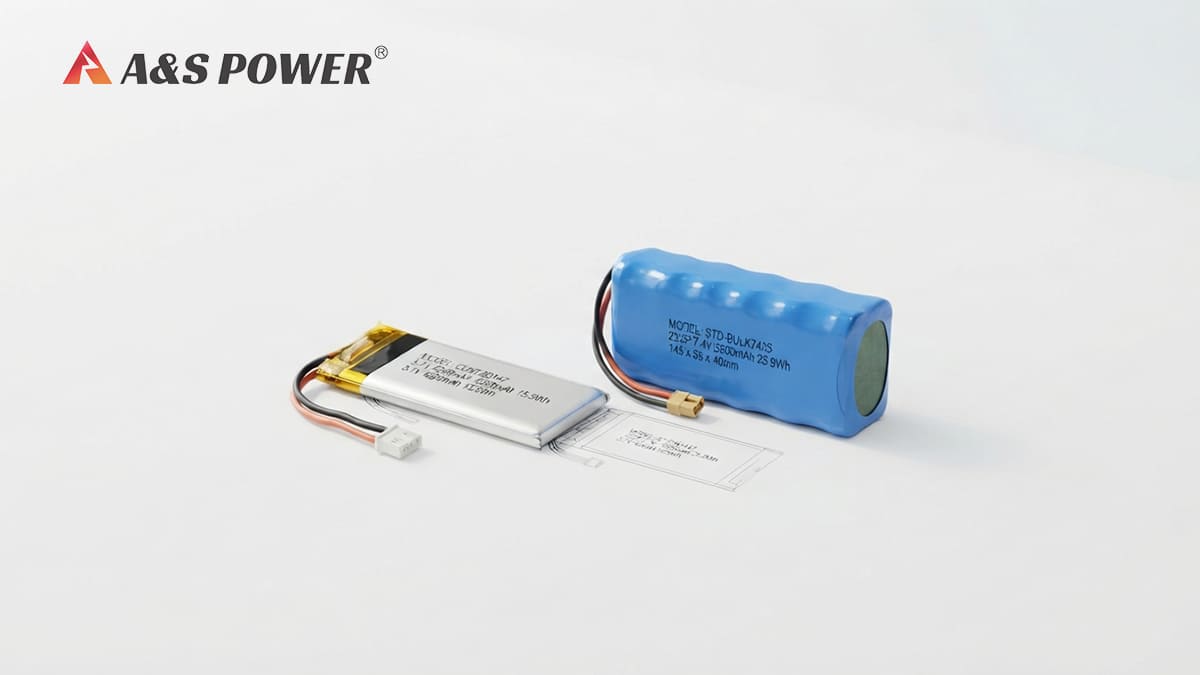
For OEM products, an off-the-shelf battery usually has the advantage in initial cost and availability, while a custom battery pack can provide better mechanical integration, electrical performance, protection, and long-term supply control. The better choice depends on production volume, device constraints, development stage, and total cost of ownership.
In my experience, the key question is not simply, “Which battery is cheaper?” It is, “Which battery creates the lowest total cost and lowest development risk for the complete product?”
A standard battery can be a sensible choice for prototypes or products designed around an existing battery size. A custom pack becomes more attractive when the device requires a specific shape, connector, voltage, capacity, current capability, BMS, or certification pathway.
Introduction
When an OEM team starts a new electronic product, the battery is often treated as a component that can be purchased after the main product design is complete. In practice, this approach can create problems.
A standard battery may look inexpensive because there is no custom engineering charge. However, if its dimensions do not fit the enclosure, the connector needs modification, or its discharge performance does not match the device, the apparent saving can quickly disappear.
Custom battery development has the opposite cost structure. Engineering, sampling, testing, and possibly tooling create higher upfront expenses, but the resulting pack can be designed around the product.
Recent battery-industry guidance shows the same basic pattern: standard packs generally reduce early development effort, while custom packs require engineering and validation but provide greater control over integration and specifications.
At A&S Power, I approach this decision from an OEM manufacturing perspective. I look at the battery price, but I also consider engineering hours, prototype revisions, certification, production volume, inventory, and long-term availability.
What Is the Difference Between a Custom and Off-the-Shelf Battery Pack?
An off-the-shelf battery pack is manufactured according to an existing specification. Its dimensions, voltage, capacity, connector, protection circuit, and other parameters are normally fixed.
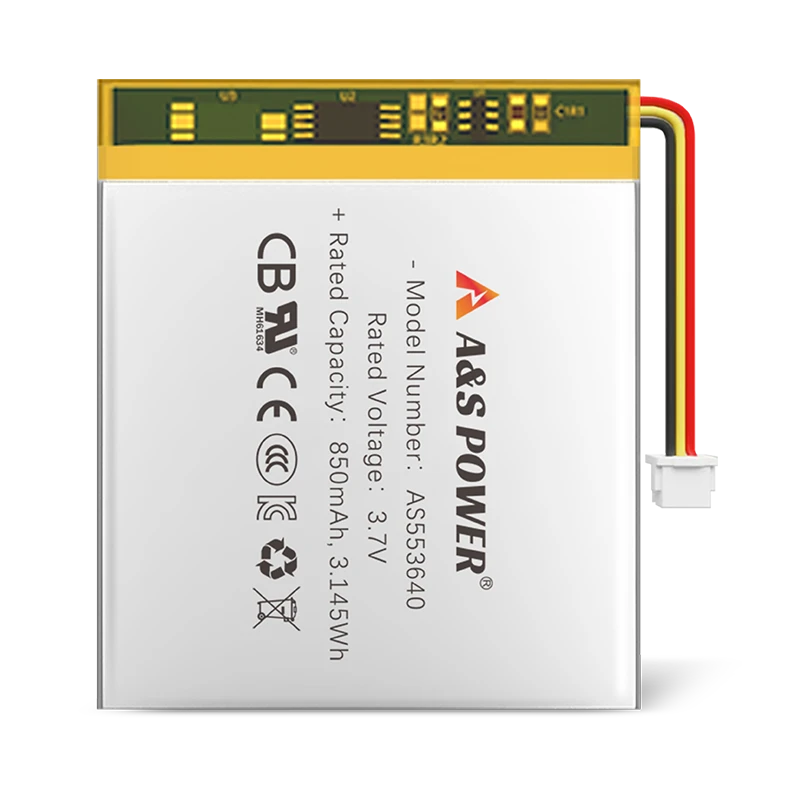
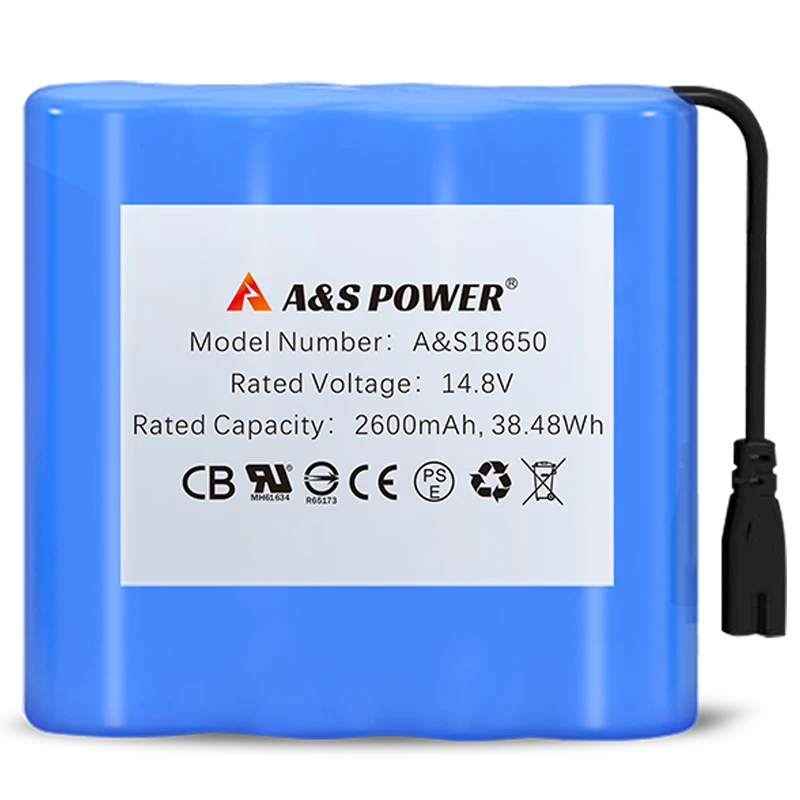
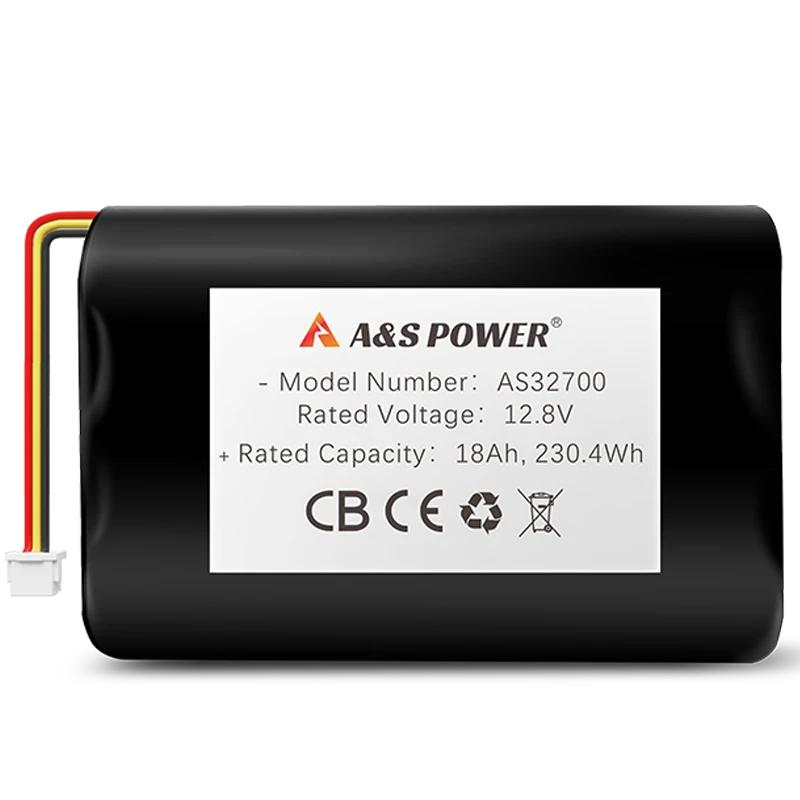
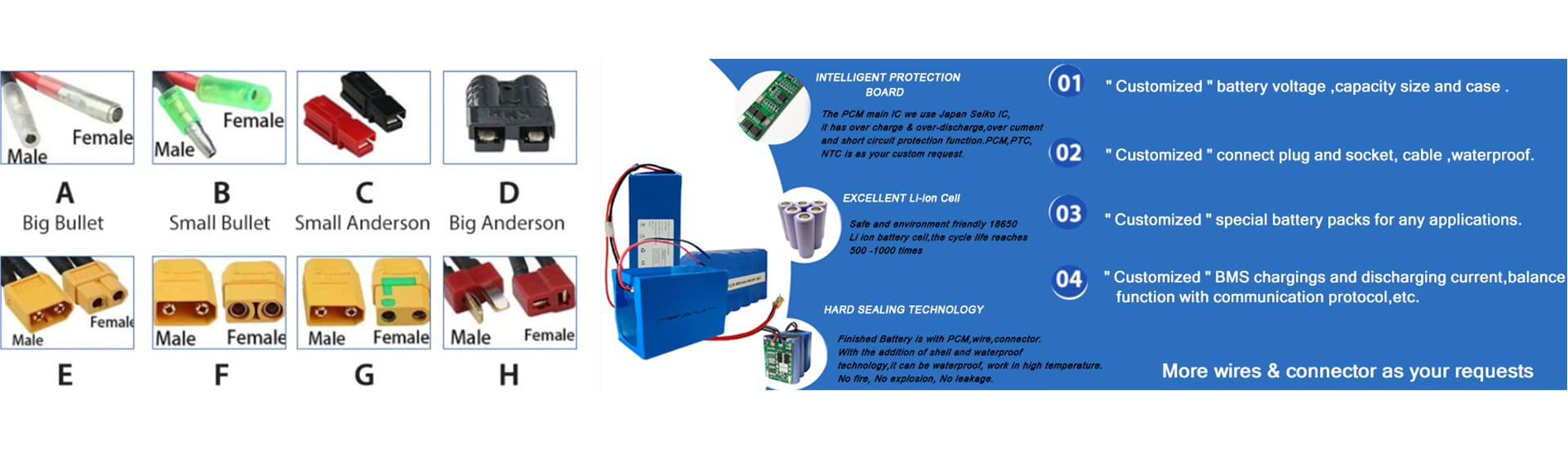
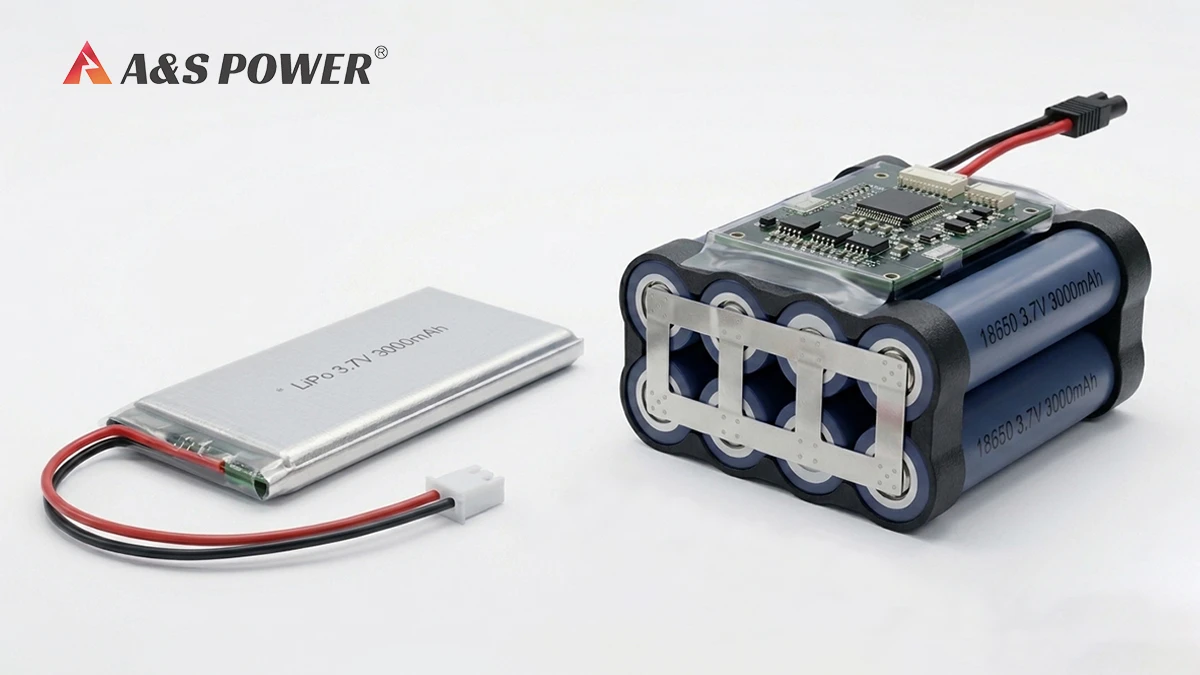
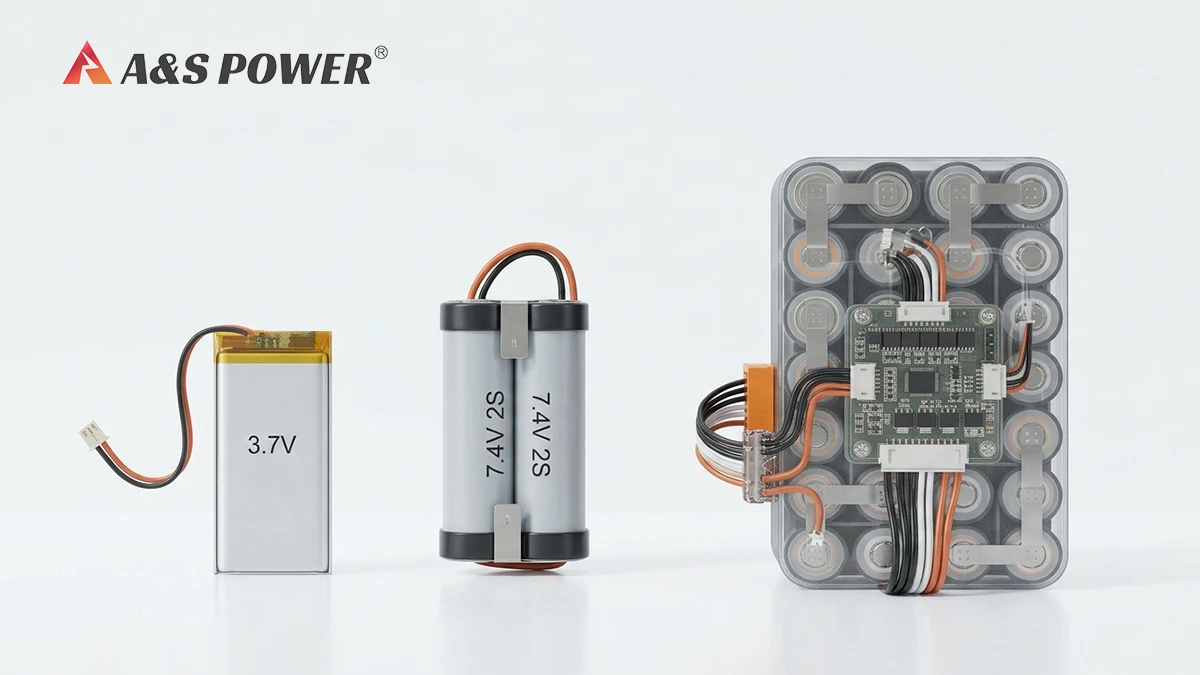
A custom battery pack is developed around the requirements of a specific product. Depending on the application, customization can include cell chemistry, voltage, capacity, dimensions, wiring, connector, protection circuit, BMS, enclosure, and communication functions.
| Factor | Off-the-Shelf Battery | Custom Battery Pack |
|---|---|---|
| Initial engineering cost | Low | Higher |
| Availability | Usually faster | Requires development |
| Dimensions | Fixed | Customizable |
| Voltage/capacity | Predefined | Designed for application |
| Connector | Standard | Custom options |
| BMS/PCM | Existing configuration | Can be application-specific |
| Prototype development | Minimal | Required |
| Production flexibility | Limited | High |
| Long-term specification control | Supplier-dependent | Stronger |
| Best suited for | Standard products/prototypes | OEM production |
A&S Power's custom battery solution covers electrical design, mechanical integration, connectors, BMS functions, and other OEM requirements rather than simply supplying a catalog battery.
Initial Cost: Which Battery Option Is Cheaper?
If I compare only the purchase price of one battery, the off-the-shelf option will often appear cheaper.
There are several reasons:
- The design has already been completed.
- The battery manufacturer has already developed the production process.
- Existing tooling and protection circuits may be used.
- No new engineering work may be required.
- The supplier may already have inventory.
A custom battery can introduce non-recurring engineering (NRE), prototype charges, tooling, testing, and certification costs. Industry estimates vary significantly by battery complexity, so I do not recommend using a single “average custom battery cost” as a purchasing benchmark. Some industry sources report NRE/tooling in the thousands or tens of thousands of dollars for complex projects, while simpler customizations can require much less.
The important point is that these are project-dependent costs, not fixed industry prices.
Why Unit Price Alone Can Be Misleading
Suppose a standard battery costs less per unit but requires:
- A mechanical bracket;
- A larger enclosure;
- A modified cable route;
- Additional assembly labor;
- More engineering iterations;
- Lower usable capacity because of space limitations.
The battery itself may be cheaper, but the complete product may not be cheaper.
For an OEM project, I therefore recommend calculating:
Total Battery Cost = Battery Price + Engineering + Integration + Testing + Tooling + Logistics + Inventory Risk
This is a much more useful comparison than looking at the battery quotation alone.
Lead Time: Which Option Gets to Market Faster?
Lead time is one of the strongest arguments for off-the-shelf batteries.
If the required battery is already manufactured and available from stock, an OEM can often purchase samples quickly and begin electrical or mechanical testing almost immediately.
Custom battery development follows more stages:
- Requirement review
- Cell selection
- Electrical design
- Mechanical design
- BMS or PCM selection
- Prototype production
- Sample testing
- Design revision
- Production approval
- Mass production
Published OEM battery manufacturing schedules show that custom development can range from several weeks to several months depending on complexity, while standard configurations can move much faster. For example, one manufacturer reports simple custom development in roughly 10–15 working days for prototypes, with mass production taking around 25–35 days after approval; other engineering-heavy projects can take considerably longer.
Therefore, I would not promise a universal “custom battery lead time.” The realistic schedule depends on whether the project requires a new BMS, enclosure tooling, special connectors, certification, firmware, or other engineering work.
When Customization Can Actually Save Time
This may sound contradictory, but customization can reduce development time when the standard battery creates repeated integration problems.
If an off-the-shelf pack repeatedly fails mechanical fitting or electrical validation, the project may go through several rounds of redesign.
A custom pack allows the battery manufacturer and OEM engineering teams to solve these requirements together from the beginning.
For example, if an enclosure has only a narrow battery compartment, a custom LiPo pouch battery can be designed around the available length, width, and thickness rather than forcing the product to accommodate a standard battery.
The Hidden Cost of Mechanical Integration
Mechanical integration is one of the most overlooked costs in battery sourcing.
A standard pack may have the correct voltage and capacity but still fail because:
- It is too thick.
- The connector is positioned incorrectly.
- The cable is too short.
- The protection PCB occupies too much space.
- The battery shape conflicts with internal components.
- The battery cannot be securely mounted.
For compact electronics, this matters considerably.
A&S Power's custom LiPo solutions can be adapted for dimensions, voltage, capacity, connectors, cables, and protection requirements, which is particularly useful for space-constrained IoT, wearable, medical, and portable electronics.
Engineering and Certification Costs
Custom battery development should also account for testing and regulatory requirements.
For lithium batteries, different standards address different risks and applications. UN 38.3 is associated with transportation testing, while IEC 62133-2 addresses safety requirements for portable rechargeable lithium cells and batteries. UL 2054 covers household and commercial batteries and has specific scope and application requirements. These standards are not interchangeable.
This is important for OEM buyers because using a certified cell does not automatically mean that the completed custom battery pack is certified for every intended application.
I recommend identifying the target market and applicable standards before finalizing the battery design. This can prevent a situation where the battery passes an internal performance test but later requires redesign to satisfy a product-safety or transportation requirement.
Cost Comparison by Production Stage
The economic balance between standard and custom batteries changes as the project moves from prototype to mass production.
| Project Stage | Off-the-Shelf Battery | Custom Battery Pack |
| Early prototype | Usually lower initial cost | Higher development cost |
| Engineering validation | Fast if specification matches | More testing required |
| Low-volume production | Often convenient | Unit cost may remain higher |
| Medium-volume OEM | May become less flexible | Customization becomes more valuable |
| High-volume production | Supplier dependency remains | Better opportunity for optimized unit cost |
| Long-term production | SKU availability is a risk | Approved specification can be maintained |
Industry sourcing data also shows that custom battery economics are strongly influenced by order quantity. Small engineering batches can carry substantial setup costs, while larger production quantities allow engineering and tooling expenses to be distributed across more units.
I therefore recommend evaluating custom battery economics based on the expected product lifecycle, not only the first purchase order.
When Should an OEM Choose an Off-the-Shelf Battery?
I would normally consider an off-the-shelf battery first when:
- The product enclosure already accommodates a standard size.
- Voltage and capacity requirements match an existing model.
- Current requirements are within the battery's verified capability.
- The connector and cable arrangement are acceptable.
- Production volume is uncertain.
- The product needs rapid prototyping.
- The battery does not require special BMS functions.
This approach can be especially practical for early proof-of-concept projects.
However, I always recommend verifying the actual datasheet and supplier specifications rather than assuming that a catalog battery will perform as expected.
When Does a Custom Battery Pack Make More Sense?
A custom battery becomes more attractive when the product requires:
- Limited or irregular internal space;
- Ultra-thin battery construction;
- Specific voltage or capacity;
- Higher continuous or peak current;
- Custom connector placement;
- Special cable length;
- PCM or BMS customization;
- Temperature monitoring;
- Communication functions;
- Specific operating-temperature requirements;
- Long-term OEM supply;
- Market-specific certification requirements.
A&S Power's custom battery services include cell selection, configuration, BMS development, connector and cable customization, prototype development, testing support, and mass production.
For OEM products where the battery is part of the product architecture rather than a simple replacement component, this integrated approach can be more practical.
A Practical OEM Cost and Time Decision Framework
When I evaluate a battery project, I use five questions:
1. Can the standard battery physically fit?
If yes, the off-the-shelf option remains attractive.
2. Does it meet the complete electrical load profile?
Capacity alone is not enough. I check average current, continuous current, peak current, voltage range, charging requirements, and expected runtime.
3. Will the standard battery create additional product costs?
I include brackets, enclosure changes, wiring, engineering labor, assembly time, and redesign risk.
4. What is the expected production volume?
A custom solution becomes easier to justify when the same battery will be produced repeatedly over the product lifecycle.
5. What happens if the standard battery disappears?
For an OEM product expected to remain in production for several years, supply continuity matters. A custom specification and formal supplier relationship can provide greater control than relying entirely on a catalog SKU.
How OEM Buyers Can Reduce Custom Battery Cost and Lead Time
Custom does not automatically mean expensive or slow.
I have found that the most effective way to reduce development time is to provide a complete battery requirement at the beginning.
At minimum, I recommend providing:
| Requirement | Information |
| Battery chemistry | LiPo, Li-ion, LiFePO4, etc. |
| Voltage | Nominal and operating range |
| Capacity | Required mAh or Wh |
| Current | Average, continuous, and peak |
| Dimensions | Maximum L × W × T |
| Connector | Type and position |
| Cable | Length and specification |
| Charging | Voltage and current |
| Protection | PCM/BMS requirements |
| Environment | Temperature, humidity, vibration |
| Certification | Target market and standards |
| Quantity | Prototype, pilot, and annual volume |
A detailed specification allows the manufacturer to recommend an appropriate cell and pack architecture instead of repeatedly revising the design. A&S Power uses a similar specification-driven approach for custom lithium battery projects.
Custom Battery Pack vs. Off-the-Shelf Battery: My Recommendation
I do not consider either option universally better.
For rapid prototyping, replacement applications, low-volume projects, and products designed around standard battery dimensions, an off-the-shelf pack can be the most economical choice.
For OEM products with tight mechanical constraints, specific electrical requirements, custom protection, long-term production plans, or regulatory requirements, I generally recommend evaluating a custom battery pack.
The most important lesson is simple: the lowest battery unit price is not necessarily the lowest OEM cost.
When I compare the two options, I look beyond the quotation and calculate the total effect on product engineering, enclosure design, testing, production, logistics, and long-term supply.
Conclusion
The decision between a custom battery pack and an off-the-shelf battery should be based on the entire OEM project rather than battery price alone.
An off-the-shelf battery can provide a faster and lower-cost starting point when its specifications already match the product. A custom battery requires more engineering at the beginning, but it can deliver better space utilization, electrical compatibility, protection, certification planning, and long-term production control.
For OEM manufacturers, I recommend making the decision early in product development. Define the voltage, capacity, current profile, dimensions, connector, charging method, protection system, operating environment, certification requirements, and expected production volume before requesting quotations.
That approach gives both the OEM and battery manufacturer a clearer basis for comparing cost, lead time, technical risk, and total cost of ownership.
FAQs: About Custom Battery Pack vs. Off-the-Shelf Battery
Is a custom battery pack more expensive than an off-the-shelf battery?
Usually, the initial development cost is higher because custom packs may require engineering, prototypes, tooling, and testing. However, the total OEM cost can be lower when customization reduces enclosure changes, assembly work, redesigns, and integration problems.
How long does a custom battery pack take to develop?
There is no universal lead time. Simple custom packs may be developed in a few weeks, while projects involving custom BMS functions, tooling, firmware, or certification can take considerably longer. Published manufacturer schedules show prototype and production timelines varying significantly according to complexity.
When is an off-the-shelf battery the better choice?
An off-the-shelf battery is usually appropriate when the product can accommodate an existing battery size and the voltage, capacity, current, connector, charging, and protection requirements already match.
Is a custom LiPo battery suitable for compact OEM devices?
Yes. LiPo pouch cells can provide flexibility in dimensions and thickness, making them useful for compact devices such as wearables, GPS trackers, IoT products, medical electronics, and portable equipment.
What information should I give a battery manufacturer for an OEM quotation?
I recommend providing voltage, capacity, average and peak current, dimensions, connector, cable length, charging requirements, protection functions, operating temperature, certification requirements, expected quantity, and application details. A complete specification usually produces a more accurate quotation and development schedule.
Does a certified lithium cell mean the complete battery pack is certified?
No. Cell-level and pack-level compliance should not be treated as identical. The applicable requirements depend on the battery configuration, intended use, target market, and certification program.
-

 May.2026.08.24What Is a Smart Battery?Learn More
 -
 May.2026.08.24Custom Battery Pack vs. Off-the-Shelf Battery: OEM Cost & Time ComparisonLearn More
 -
 May.2026.08.21Soft Pouch LiPo vs. Hard Plastic Enclosure Lithium Pack: Durability & SafetyLearn More
 -
 May.2026.08.20Custom LiPo Battery vs. Cylindrical 18650 Pack: Which Is Better for Your Device?Learn More
 -
 May.2026.08.19Custom Lithium Battery Pack Voltage & Capacity Selection GuideLearn More