



Introduction
When purchasing lithium batteries for an OEM project, comparing supplier quotations is usually one of the first steps. Two manufacturers may offer batteries with the same nominal voltage, capacity, dimensions, and connector, yet their prices can be significantly different.
At first glance, choosing the lower quotation seems like a straightforward way to reduce procurement costs. However, the actual difference may involve cell quality, production processes, battery protection, testing standards, component selection, or after-sales support.
A battery that costs less initially may create additional expenses through inconsistent performance, premature capacity degradation, production delays, or product returns.
At A&S Power, we understand that battery procurement involves more than selecting a specification and negotiating a unit price. The battery must perform consistently in the customer's equipment, meet the relevant safety requirements, and remain available throughout the product's production lifecycle.
In this guide, we explain how to compare two lithium battery suppliers systematically, identify hidden differences behind unusually low quotations, and determine which supplier offers better long-term value.
Quick Answer: What Should You Compare Between Two Lithium Battery Suppliers?
To compare two lithium battery suppliers accurately, evaluate their cell sources, technical specifications, sample test results, certifications, manufacturing processes, quality control, production capacity, warranty terms, and total cost of ownership.
The lowest quotation is not necessarily the most economical option. A reliable supplier should provide verifiable technical information, consistent production quality, traceable materials, and clear commercial responsibilities.
The following eight factors provide a practical starting point:
- Cell origin, authenticity, and quality consistency.
- Battery specifications and actual performance.
- Battery protection and engineering capabilities.
- Certifications and compliance documentation.
- Manufacturing processes and quality control.
- Production capacity and delivery reliability.
- Warranty, technical support, and communication.
- Total cost of ownership rather than initial purchase price.
1. Compare the Actual Battery Cells, Not Just the Quoted Specifications
The first difference to investigate is the origin and quality of the cells used by each supplier.
Two suppliers may quote a 3.7V 2,000mAh lithium polymer battery, but this does not automatically mean they are offering equivalent products.
Their cells may differ in manufacturer, production batch, materials, internal resistance, capacity consistency, and storage history.
Some suppliers may use cells from established manufacturers, while others rely on less transparent sourcing channels. Descriptions such as "Grade A," "premium quality," or "high-performance cell" should not be accepted without supporting evidence.
We recommend asking both suppliers:
- Who manufactures the battery cells?
- Are the cells purchased directly from the manufacturer or through distributors?
- Can the supplier provide cell specifications and relevant batch information?
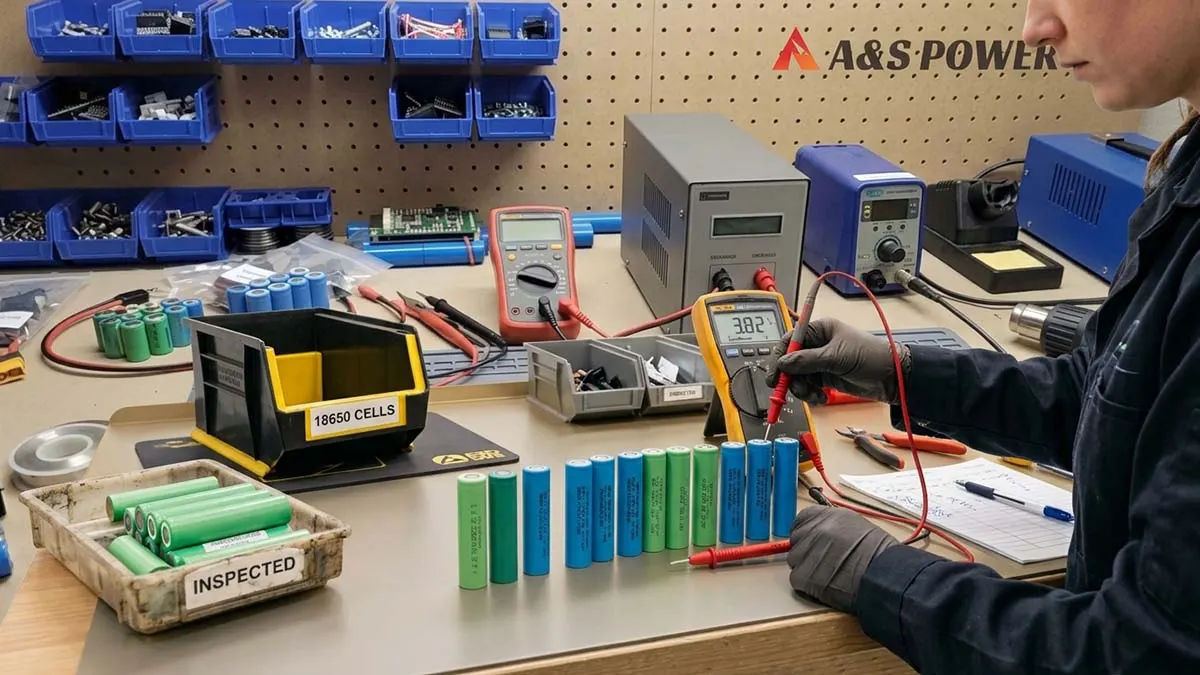
- How are incoming cells inspected and sorted?
- Can the supplier provide sample test results?
- How does the supplier control cell consistency between production batches?
Cell authenticity is particularly important when purchasing branded cylindrical cells such as 18650 or 21700.
Research published in ACS Energy Letters discusses counterfeit lithium-ion cell identification and the importance of evaluating physical characteristics and electrical performance rather than relying on appearance alone.
Our recommendation: Never approve a supplier based exclusively on a datasheet or a verbal promise about cell grade. Request traceable sourcing information and independently evaluate representative samples.
For a more detailed supplier verification process, see our guide on how to vet a custom lithium battery supplier and identify old stock or questionable cell quality.
2. Compare Battery Performance Under the Same Testing Conditions
A second common purchasing mistake is comparing battery specifications without checking how they were measured.
For example, Supplier A may quote a 2,000mAh battery, while Supplier B offers a 2,200mAh battery at a lower price. The second option appears more attractive, but the capacity figures may have been measured under different discharge conditions.
A meaningful comparison requires consistent testing parameters.
| Evaluation Parameter | What to Verify | Why It Matters |
|---|---|---|
| Nominal voltage | Chemistry and rated voltage | Confirms electrical compatibility |
| Rated capacity | Minimum and typical capacity | Prevents misleading capacity comparisons |
| Discharge current | Continuous and peak ratings | Determines whether the battery supports the load |
| Internal resistance | Measurement method and test conditions | Helps evaluate voltage drop and heating |
| Cycle life | Charge/discharge conditions and end-of-life criteria | Provides context for expected durability |
| Operating temperature | Charging and discharging limits | Determines environmental suitability |
| Dimensions and weight | Actual sample measurements | Confirms mechanical compatibility |
For a fair comparison, request test reports using the same temperature, charge procedure, discharge current, cutoff voltage, and measurement method.
For example, if one supplier measures capacity at 0.2C and the other uses 0.5C, the results should not be treated as directly equivalent without considering the effect of discharge rate.
Also, distinguish between typical capacity and minimum guaranteed capacity. These are not interchangeable.
For custom battery packs, additional parameters may include cell matching, pack voltage, PCM or BMS settings, connector specifications, wire gauge, and insulation.
A supplier that can explain these details is generally better equipped to support an OEM engineering project than one that only provides a price list.
3. Evaluate Engineering and Customization Capabilities
The third factor is whether both suppliers can actually manufacture the battery your product requires.
A standard battery may be relatively easy to source. However, customized lithium battery projects involve additional engineering considerations.
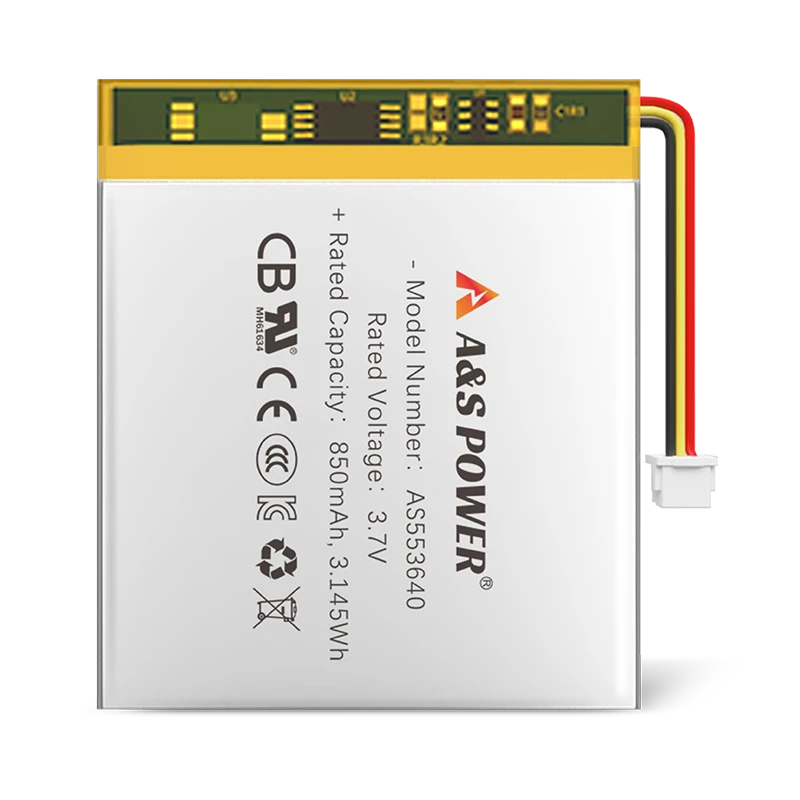
For example, a wearable device may require a thin lithium polymer battery with a specific length, width, thickness, connector, and cable position. A portable industrial device may need a multi-cell lithium-ion battery pack with a customized protection circuit.
Ask both suppliers whether they can support:
- Customized battery dimensions and capacity.
- Lithium-ion, lithium polymer, and LiFePO4 battery solutions.
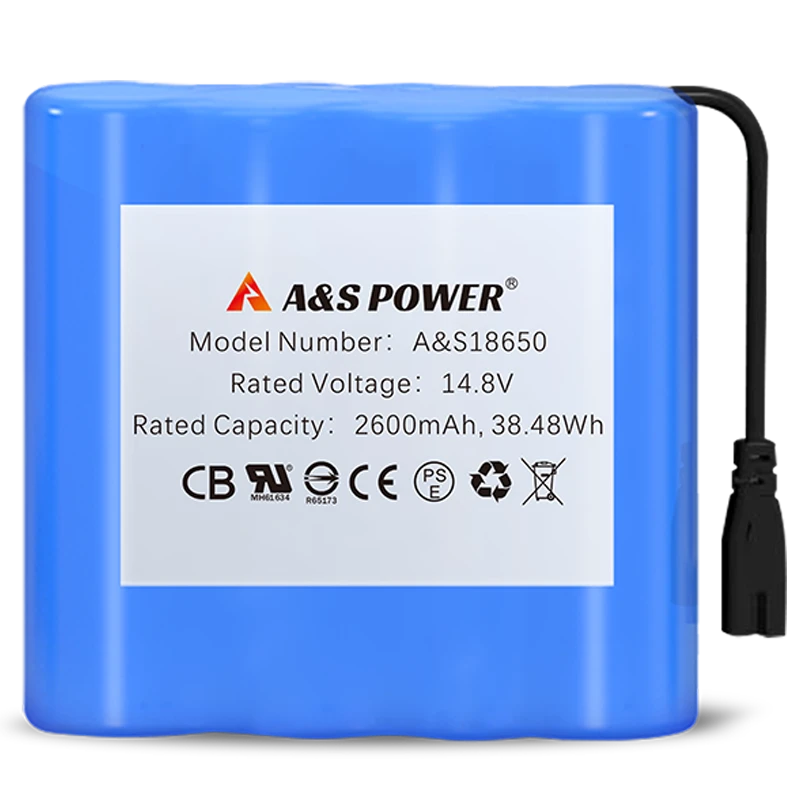
- Series and parallel cell configurations.
- Customized PCM or BMS protection parameters.
- Connector, cable, and terminal configurations.
- Charging and discharging requirements.
- Prototype development and sample testing.
- Engineering changes during product development.
A supplier that only assembles standard battery models may have limited flexibility when your project requires a specialized design.
However, customization claims should also be verified. Ask for previous project examples, technical drawings, sample units, and clear engineering responsibilities.
You can review A&S Power's custom lithium battery manufacturing solutions to understand the types of battery customization and OEM/ODM support involved in these projects.
4. Verify Certifications Instead of Counting Certification Logos
Certification is another area where two suppliers can appear similar but offer very different levels of compliance support.
One supplier may display numerous certification logos on its website, while another provides fewer but more relevant documents for the exact battery model.
The important question is not how many logos appear in a brochure. It is whether the documentation applies to the battery being purchased and the intended end application.
| Standard or Requirement | General Scope |
|---|---|
| UL 1642 | Safety requirements for lithium cells |
| UL 2054 | Safety requirements for household and commercial batteries |
| IEC 62133-2 | Safety requirements for portable sealed secondary lithium cells and batteries |
| UN 38.3 | Testing requirements for the transport of lithium cells and batteries |
| CE | Applicable European conformity requirements, depending on the product and legislation |
| RoHS | Restrictions on certain hazardous substances in electrical and electronic equipment |
These standards are not interchangeable. For example, a cell-level certification does not automatically establish that a complete custom battery pack has been evaluated to the same requirements.
Before selecting a supplier, request:
- Relevant certificates and test reports.
- The exact model numbers covered by the documents.
- The name of the issuing or testing organization.
- Applicable test standards and editions.
- Confirmation that the proposed product configuration matches the documented design.
You can consult UL Solutions' battery safety testing and certification information and the IEC 62133-2 international standard for additional background.
For transportation, also ask for the applicable UN 38.3 test summary. The UNECE Manual of Tests and Criteria, Revision 8 and Amendment 1, provides the relevant regulatory testing reference. Verify that the shipment configuration is covered by the documentation.
A professional supplier should explain which documents are available, which apply to the quoted model, and whether additional testing is required for your finished product.
You can also review the A&S Power battery certification center for examples of product certification records.
5. Compare Manufacturing Processes and Quality Control
A competitive quotation does not tell you how consistently a supplier can reproduce the same battery specification across hundreds or thousands of units.
This is particularly important for OEM customers who depend on repeat orders.
When comparing two manufacturers, investigate their quality-control procedures at different production stages.
| Production Stage | Important Quality Checks |
|---|---|
| Incoming materials | Cell identification, dimensions, voltage, and appearance |
| Cell inspection | Capacity, internal resistance, and consistency |
| Pack assembly | Polarity, welding quality, and connection integrity |
| Protection circuit | Protection functions and electrical parameters |
| Final inspection | Voltage, current, dimensions, and appearance |
| Shipment preparation | Packaging, labeling, and relevant transport documentation |
You should also ask how nonconforming products are handled.
For example, if a batch contains cells outside the agreed capacity or internal-resistance limits, does the supplier reject them, sort them, or mix them with qualified materials?
A reliable manufacturer should have documented inspection criteria, production records, and a corrective-action process.
Where possible, request a factory audit or a remote production review. Pay attention to actual inspection equipment, production records, testing procedures, and the separation of qualified and rejected materials.
A factory's production capacity alone does not demonstrate consistent quality. Process control matters just as much.
6. Compare Production Capacity, Lead Times, and Supply Stability
A supplier may offer an attractive price for the first order but struggle to maintain the same delivery schedule when your order volume increases.
This is a common concern for OEM customers preparing for mass production.
When evaluating both suppliers, ask for specific information about:
- Monthly production capacity for the relevant battery type.
- Current production utilization and available capacity.
- Sample development and approval lead times.
- Mass-production lead times.
- Availability of key cells and electronic components.
- Production planning for repeat orders.
- Procedures for handling material shortages.
- Whether production changes require customer approval.
Be careful when comparing a manufacturer's total factory output with its actual capacity for your specific battery model.
For example, a factory producing thousands of battery units daily may still have limited capacity for a customized battery pack requiring particular cells, connectors, and protection circuits.
We recommend asking both suppliers to provide a production schedule covering material procurement, assembly, inspection, and shipment.
This makes it easier to identify unrealistic delivery promises before they affect your own production plan.
7. Compare Warranty Terms and Technical Support
The relationship with a battery supplier should not end when the shipment arrives.
If a battery develops an abnormal issue during testing or after integration into the finished product, the supplier's response can significantly affect your project.
| Item | Questions to Ask |
|---|---|
| Warranty period | How long is the warranty, and when does it begin? |
| Defect responsibility | What happens if products fail to meet agreed specifications? |
| Technical support | Can engineers help investigate electrical or mechanical problems? |
| Failure analysis | Will the supplier provide a technical failure report? |
| Replacement policy | How are confirmed defective units handled? |
| Engineering changes | How are changes to cells, PCM, connectors, or materials communicated? |
Pay particular attention to whether the warranty covers the complete battery pack or only selected components.
Also, clarify whether warranty claims require the customer to return samples, provide test records, or follow a specific failure-analysis procedure.
A supplier offering a slightly higher quotation may provide better value if it has experienced engineers, clear technical responsibilities, and an effective corrective-action process.
8. Calculate the Total Cost of Ownership Instead of Comparing Unit Prices
This is arguably the most important step when comparing two lithium battery suppliers.
The purchase price is only one part of the total cost of a battery project.
Consider two hypothetical quotations:
| Cost Item | Supplier A | Supplier B |
|---|---|---|
| Battery unit price | $5.00 | $5.80 |
| Initial order quantity | 5,000 | 5,000 |
| Initial purchase cost | $25,000 | $29,000 |
| Additional inspection costs | $1,000 | $300 |
| Estimated rework and replacement costs | $2,000 | $400 |
| Total estimated project cost | $28,000 | $29,700 |
Illustrative procurement scenario only. These figures are hypothetical and are not actual A&S Power quotations or industry-average failure rates.
Supplier A initially appears to save $4,000.
However, after accounting for additional inspection, rework, and replacement expenses, the actual difference falls to $1,700.
The calculation becomes even more important when considering production downtime, customer returns, engineering investigations, and shipment delays.
A practical procurement calculation is:
For some applications, battery lifetime and usable energy should also be considered. A battery with a higher initial price may deliver better economic value if its verified performance and service life reduce replacement frequency.
The exact calculation depends on the application, operating conditions, warranty coverage, and expected product lifetime.
Our advice: Ask both suppliers for itemized quotations based on the same technical specification, order quantity, Incoterms, packaging requirements, certification scope, and warranty conditions. Otherwise, the comparison is not truly like-for-like.
9. A Practical Scorecard for Comparing Two Lithium Battery Suppliers
After collecting technical documents, quotations, and sample results, organize the information into a weighted evaluation.
The following scorecard is a suggested procurement framework, not an official industry standard.
| Evaluation Category | Suggested Weight | What to Assess |
|---|---|---|
| Cell quality and traceability | 20% | Cell origin, authenticity, consistency |
| Technical performance | 15% | Capacity, resistance, discharge capability |
| Safety and certifications | 15% | Applicable test reports and compliance |
| Manufacturing quality | 15% | Inspection, process control, traceability |
| Engineering capabilities | 10% | OEM/ODM design and customization |
| Production and delivery | 10% | Capacity, lead times, supply stability |
| Warranty and support | 10% | Technical response and defect handling |
| Total commercial cost | 5% | Complete project cost |
| Total | 100% |
Score each supplier from 1 to 5:
- 1 = Poor or insufficient evidence.
- 2 = Below requirements.
- 3 = Meets basic requirements.
- 4 = Good, with supporting evidence.
- 5 = Excellent, with strong verification.
Calculate each weighted score using:
For example, if Supplier A receives a rating of 4 out of 5 for cell quality, its weighted score for that category is:
(4 ÷ 5) × 20 = 16 points.
This approach prevents a low quotation from dominating the decision.
One important qualification: some requirements should be treated as mandatory pass/fail conditions rather than compensated for by a high overall score. A supplier that cannot meet critical safety, electrical, or regulatory requirements should not become acceptable simply because it offers a better price.
10. Red Flags That Should Make You Question a Low Quotation
During supplier evaluation, certain warning signs deserve additional investigation.
| Warning Sign | Potential Concern |
|---|---|
| Price is significantly below comparable quotations | Different cell sources, materials, or testing scope |
| No clear cell manufacturer information | Limited sourcing transparency |
| Only verbal claims about Grade A cells | Unverified cell classification |
| No sample testing allowed | Product performance cannot be independently evaluated |
| Certificates do not match the quoted model | Compliance documentation may be irrelevant |
| No batch traceability | Difficulties investigating production defects |
| Specifications change between quotations | Uncontrolled product configuration |
| Unrealistically short lead times | Stock availability or production claims need verification |
| Unclear warranty responsibilities | Potential disputes after delivery |
None of these signs alone proves that a supplier is unreliable. However, repeated unwillingness to provide evidence should be treated as a serious procurement concern.
A professional manufacturer should be willing to explain its technical specifications, clarify quotation differences, and provide reasonable supporting documentation.
Conclusion: Choose the Supplier That Delivers Verifiable Value
Comparing two lithium battery suppliers requires more than looking at the final price on a quotation.
The better supplier is the one that can consistently deliver batteries matching your electrical and mechanical requirements, demonstrate appropriate safety compliance, maintain controlled production processes, and provide dependable technical support.
At A&S Power, we believe that a successful OEM battery project begins with clear specifications, appropriate cell selection, engineering communication, and quality control throughout production.
Since 2011, A&S Power has developed rechargeable lithium-ion, lithium polymer, and LiFePO4 battery solutions for OEM and ODM applications. Our manufacturing and engineering experience supports projects requiring customized voltage, capacity, dimensions, connectors, and battery protection solutions.
We recommend evaluating every potential supplier using the same technical requirements, sample-testing procedures, and commercial conditions before making a purchasing decision.
The goal is not simply to find the cheapest battery. It is to find a supplier that can deliver the right battery, at the agreed quality level, consistently and at a commercially sustainable cost.
If you are comparing quotations for a custom lithium battery project, you can contact A&S Power to discuss your specifications and OEM/ODM requirements.
Frequently Asked Questions (FAQs)
1. How do I compare two lithium battery suppliers effectively?
Compare their cell sourcing, battery specifications, sample test results, certifications, manufacturing quality, production capacity, warranty conditions, and total cost of ownership. Use identical technical requirements and commercial conditions to ensure a fair comparison.
2. Why is one lithium battery supplier much cheaper than another?
Price differences may result from cell manufacturer, cell grade, material selection, battery protection components, testing requirements, labor costs, production scale, certification scope, or warranty coverage. Ask for an itemized quotation to identify what is included in each offer.
3. Is a Grade A lithium battery always better?
Not necessarily. The term Grade A is not a universal guarantee of performance across all suppliers. Buyers should request the cell manufacturer's specifications, traceability information, inspection records, and supporting test results rather than relying on the grade description alone.
4. What documents should I request before purchasing lithium batteries?
Depending on the application, request the battery datasheet, cell manufacturer information, applicable UL or IEC test reports, UN 38.3 test summary, quality inspection records, and relevant certification documents. Confirm that the documents correspond to the actual battery model and configuration.
5. Should I test battery samples before placing a bulk order?
Yes. Sample evaluation is an important step before mass production. Test capacity, voltage, internal resistance, charging and discharging performance, dimensions, connector compatibility, and protection functions against the agreed specifications.
For critical applications, additional environmental, mechanical, and safety testing may be necessary.
6. What is the difference between a battery manufacturer and a battery trading company?
A battery manufacturer or pack assembler may provide direct engineering, customization, assembly, and production quality control. A trading company may offer access to different manufacturers and sourcing options. Neither business model automatically guarantees better quality. Evaluate actual technical capability, cell sourcing transparency, traceability, and responsibility for product quality.
7. How can I reduce the risk of receiving inconsistent lithium battery batches?
Establish written specifications and acceptance criteria before ordering. Require batch identification, incoming material inspection, capacity and internal-resistance testing where appropriate, and documented production quality checks. For repeat orders, establish procedures for approving changes to cells, materials, and battery configurations.
8. What matters more when choosing a lithium battery supplier: price or quality?
Both matter, but quality and safety requirements should be established first. Once suppliers meet the necessary technical and compliance requirements, compare their total project costs, delivery reliability, warranty support, and long-term performance. The best purchasing decision balances verified quality with commercial competitiveness.