




How to Choose Custom Lithium Battery Specs for IoT Devices
Quick Answer:
The best way to choose a custom lithium battery for an IoT device is to start with the device's actual power profile rather than selecting a battery by capacity alone. I normally evaluate six core parameters: voltage, capacity, peak and continuous current, physical dimensions, charging requirements, and protection features.
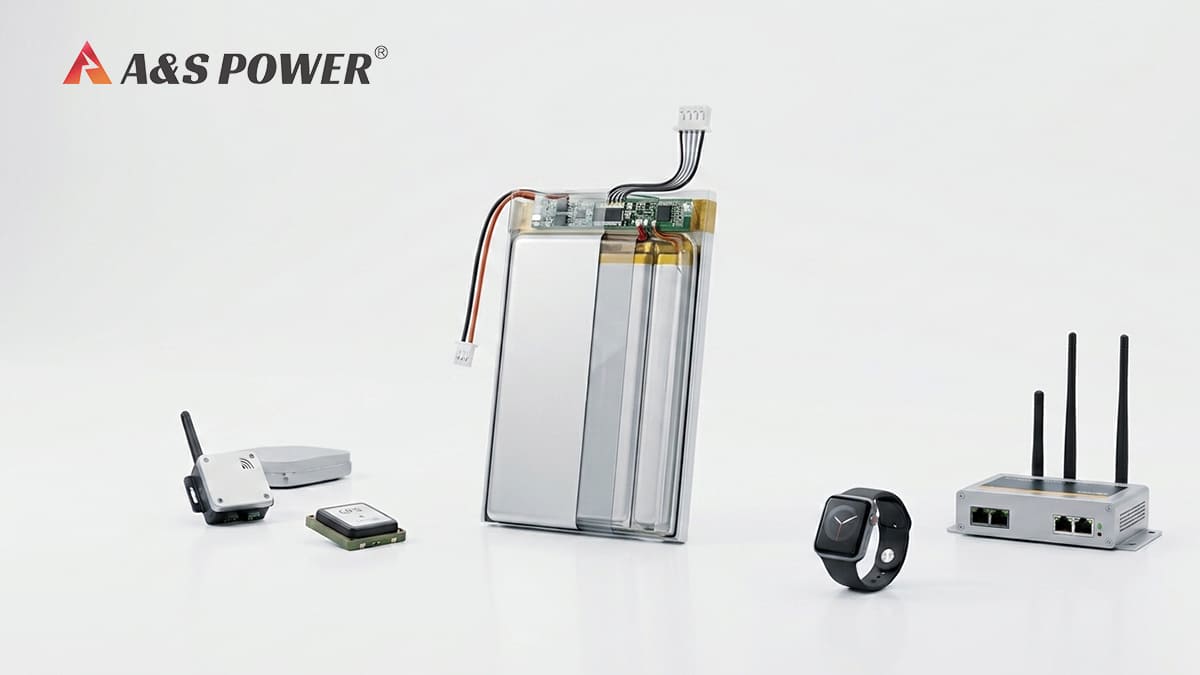
For low-power IoT sensors, GPS trackers, smart locks, wearables, and connected industrial devices, a customized lithium polymer battery can be particularly useful because the pouch format allows engineers to optimize dimensions, capacity, connectors, and protection circuitry around the product enclosure.
The key is to match the battery to the complete operating cycle: sleep, sensing, processing, wireless transmission, receiving, and charging. This approach is more reliable than simply choosing the largest available mAh rating.
Introduction
When I discuss battery requirements with IoT product developers, one of the first mistakes I see is treating battery capacity as the only important specification.
A 2,000mAh battery may sound better than a 1,000mAh battery, but that does not automatically make it the better choice. An IoT product may spend most of its time in deep sleep and then draw a much higher current when its cellular, Wi-Fi, Bluetooth, GPS, or LoRa radio becomes active.
That means the battery has to satisfy both energy requirements and power requirements.
For custom IoT battery projects, I recommend defining the electrical and mechanical requirements together. This prevents a common development problem: finding a battery with sufficient capacity but discovering later that it does not fit the enclosure, cannot deliver the required peak current, or does not match the charging and protection system.
1. Start With the IoT Device's Power Profile
Before selecting a cell, I first determine how the device consumes energy during a complete operating cycle.
A typical battery-powered IoT device may have several operating states:
- Sleep or standby
- Sensor measurement
- MCU processing
- Wireless transmission
- Wireless receiving
- GPS positioning
- Display or indicator operation
- Charging
LoRaWAN design guidance, for example, recommends identifying the current consumption and duration of different operating modes when estimating battery life. This is especially important for devices designed to operate for months or years between maintenance intervals.
A simple first calculation is:
Daily energy consumption = average current × operating voltage × operating time
For a rough capacity estimate:
Required capacity ≈ daily consumption × target operating days ÷ usable battery capacity factor
The final design should also consider temperature, aging, discharge characteristics, conversion losses, and the device's minimum operating voltage.
Why Average Current Is Not Enough
Average current can hide short but important current peaks.
For example, a cellular IoT tracker may consume very little current while sleeping but require a significantly higher current during RF transmission. TI's IoT reference design specifically addresses monitoring current peaks during RF transmission, demonstrating why the battery and power architecture must be evaluated together.
Therefore, I always ask customers for both:
- Average or typical current
- Maximum or peak current
A battery that has enough mAh but cannot support the required load can cause voltage drop, system resets, communication failures, or unexpected shutdowns.
2. Choose the Correct Battery Voltage
Voltage is the second major specification.
Many single-cell lithium polymer batteries use a nominal voltage around 3.7V, with the actual voltage changing during charging and discharge. A typical 3.7V LiPo cell reaches approximately 4.2V when fully charged and operates at lower voltage as its stored energy is depleted.
However, the correct battery voltage depends on the IoT electronics.
If the main electronics operate directly from a single lithium cell, a 1S battery may be appropriate. If the system requires a higher voltage, multiple cells can be connected in series, provided the charging and protection architecture is designed accordingly.
I do not recommend selecting the battery voltage simply because “3.7V is common.” The battery voltage must be compatible with the PMIC, charger, regulator, sensors, MCU, and wireless module.
3. Calculate the Required Battery Capacity
Capacity is normally expressed in mAh, but engineers should also consider Wh when comparing different voltage configurations.
The basic relationship is:
Energy (Wh) = Voltage (V) × Capacity (Ah)
For example:
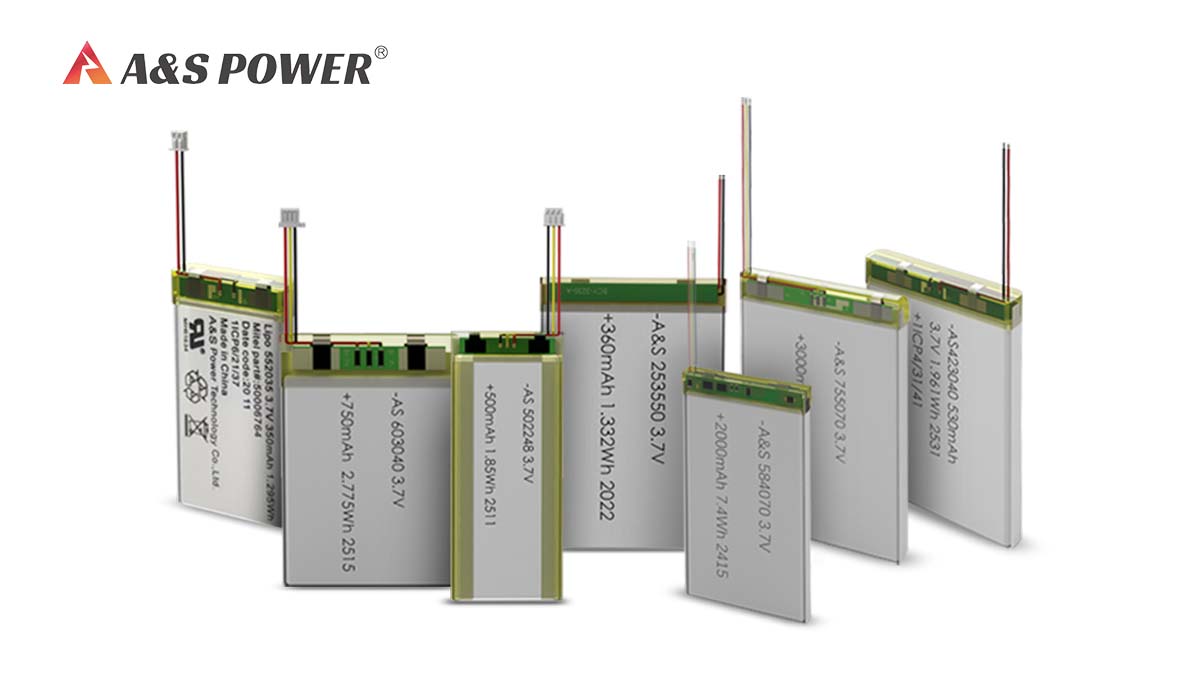
| Battery specification | Approximate nominal energy |
|---|---|
| 3.7V 500mAh | 1.85Wh |
| 3.7V 1,000mAh | 3.70Wh |
| 3.7V 2,000mAh | 7.40Wh |
| 3.7V 3,000mAh | 11.10Wh |
| 7.4V 2,000mAh | 14.80Wh |
These figures are nominal energy calculations rather than guaranteed usable energy.
In a real IoT product, the usable capacity can be lower because the system may stop operating before the battery reaches its theoretical minimum voltage. Temperature, discharge rate, battery aging, and conversion efficiency can also affect runtime.
For this reason, I prefer to calculate the expected operating profile first and then select a capacity with an appropriate engineering margin.
4. Match Battery Size to the IoT Enclosure
For IoT products, physical dimensions can be just as important as electrical specifications.
Typical requirements include:
- Length
- Width
- Thickness
- Weight
- Connector location
- Cable length
- Cell orientation
- Clearance from electronic components
This is one area where custom lithium polymer batteries provide an important advantage.
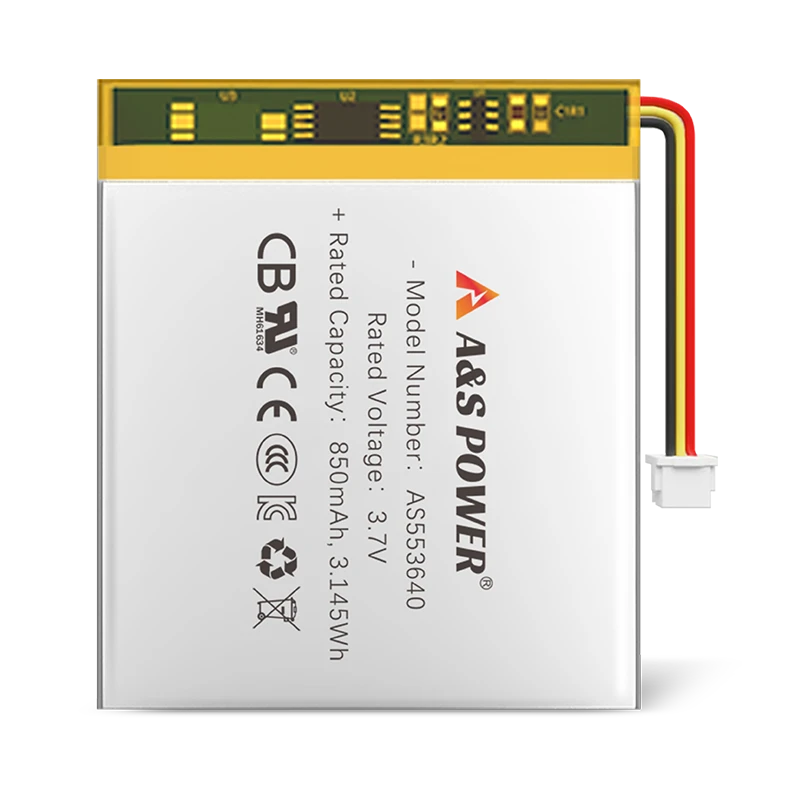
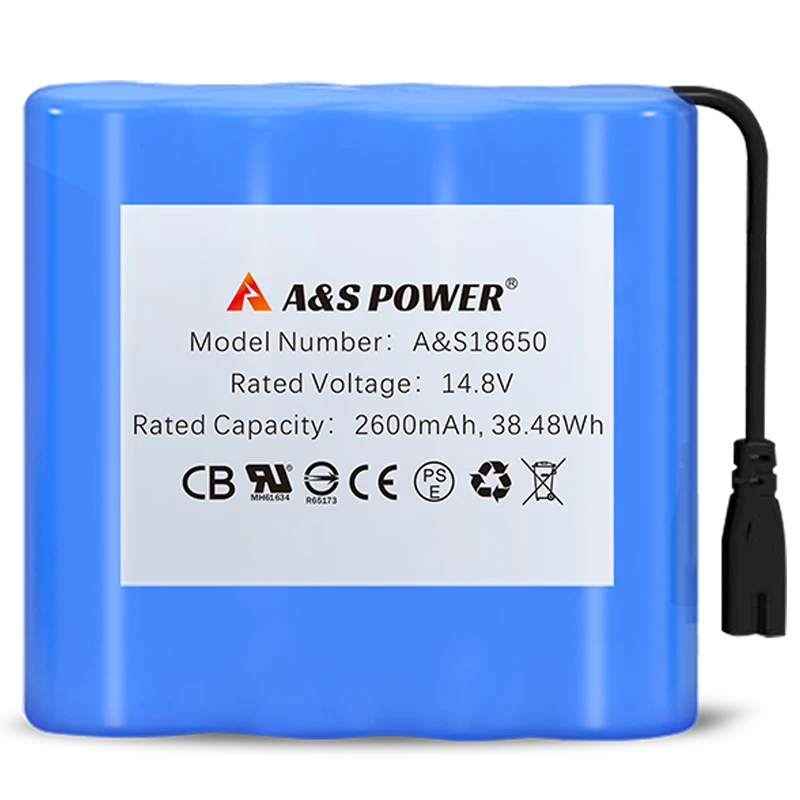
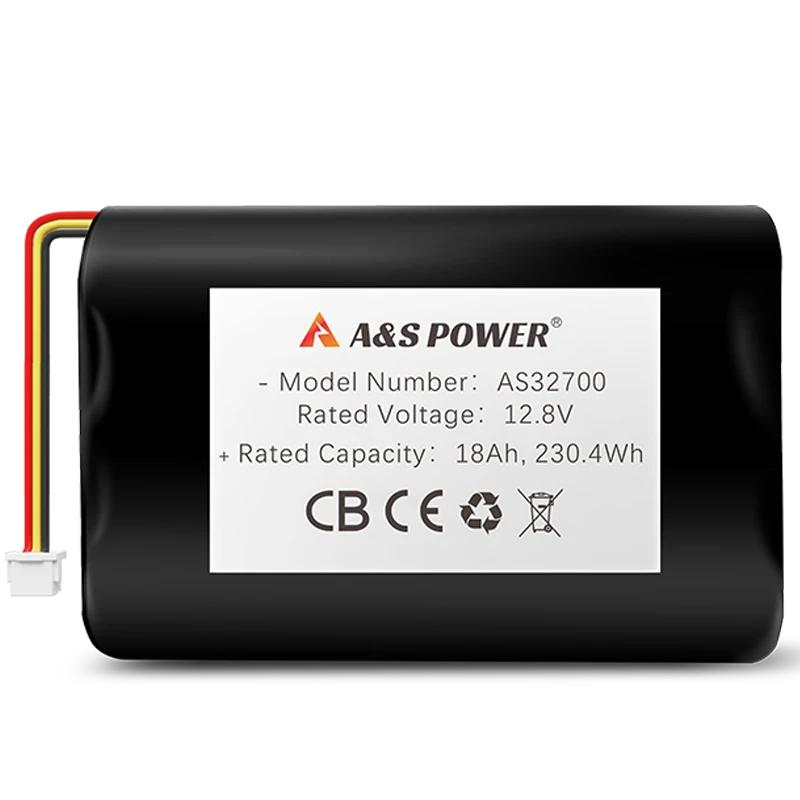
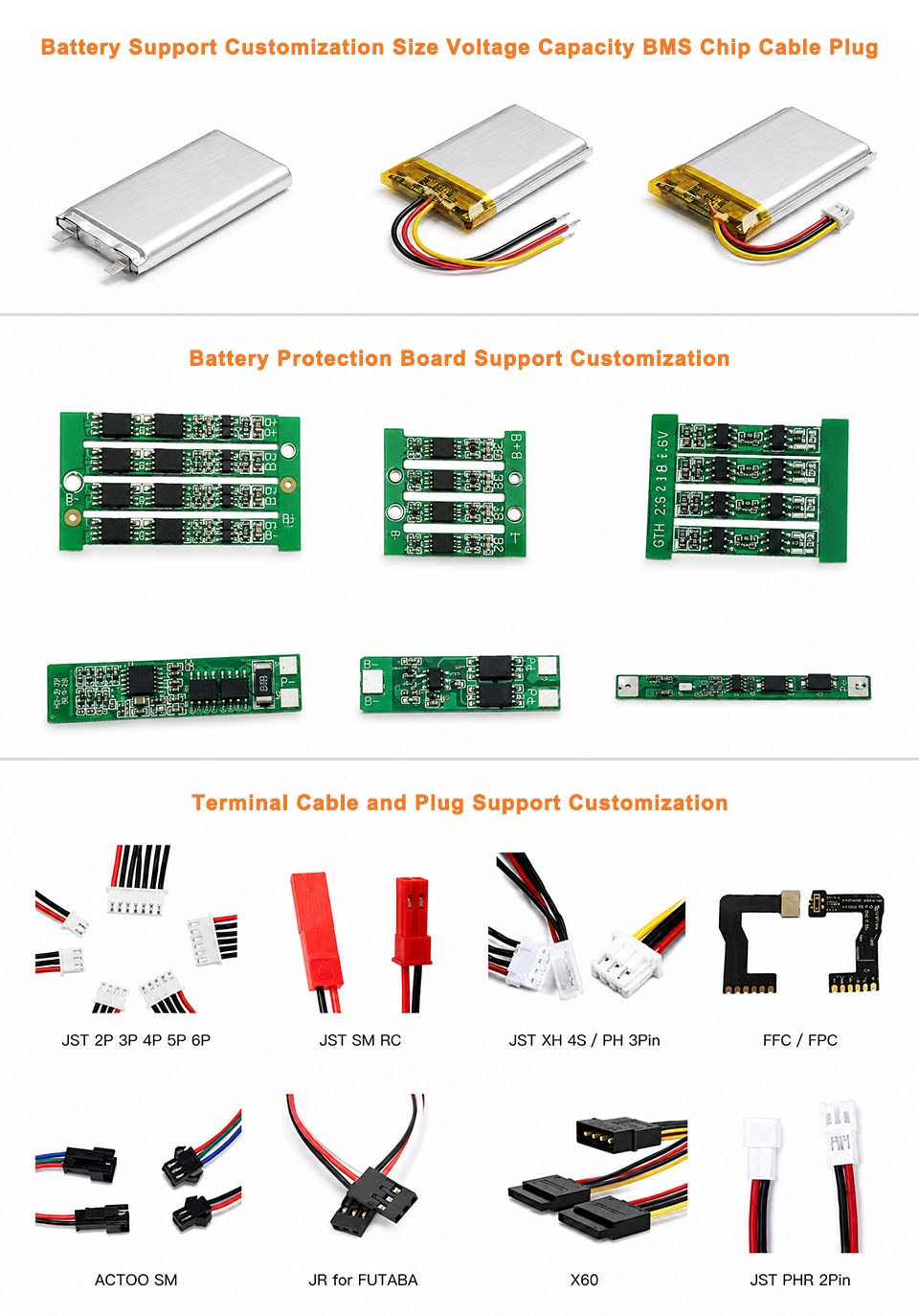
Unlike standard cylindrical cells such as 18650 batteries, pouch-style LiPo cells can be customized into different dimensions and thicknesses. A&S Power's custom battery solutions support customized size, voltage, capacity, cables, connectors, and protection circuits for IoT and other compact electronics.
Example IoT Battery Specification
A small wireless sensor might require a specification such as:
| Parameter | Example requirement |
| Battery type | Rechargeable LiPo |
| Nominal voltage | 3.7V |
| Capacity | 850mAh |
| Maximum thickness | 5mm |
| Connector | JST or custom connector |
| Protection | Overcharge, over-discharge, short circuit |
| Application | Wireless IoT sensor |
The exact specification should always be determined from the actual device rather than copied from another product.
5. Check Continuous and Peak Discharge Requirements
Capacity and discharge capability are different specifications.
A battery rated at 1,000mAh does not automatically mean it can safely deliver every possible current required by an IoT device.
I normally separate the requirement into:
Continuous discharge current: the current the device may draw for an extended period.
Peak discharge current: the short-duration current required during events such as cellular transmission, motor activation, GPS acquisition, or high-power wireless communication.
The battery's internal resistance, protection circuit, wiring, connector, and cell chemistry can all affect how well the system handles these peaks.
For cellular IoT products in particular, I recommend testing the complete battery and power path under the worst expected RF transmission conditions rather than relying only on the battery's nominal capacity.
6. Select the Right Protection Circuit
A rechargeable lithium battery should not be treated as simply a cell with two wires.
Depending on the application, the battery pack may require protection against:
- Overcharge
- Over-discharge
- Short circuit
- Overcurrent
- Excessive temperature
Some applications may also require battery monitoring or communication functions.
IEC 62133-2 specifically addresses safety requirements and tests for portable rechargeable lithium cells and batteries under intended use and reasonably foreseeable misuse.
For an IoT product, I recommend defining the protection requirements at the same time as the battery specification rather than adding a generic protection board at the end of development.
7. Consider Charging Requirements
If the IoT device is rechargeable, the charging system must be designed around the selected battery.
Important parameters include:
- Charging voltage
- Recommended charging current
- Charging time
- Charger IC compatibility
- Temperature conditions
- Charge termination
- Protection strategy
For a single-cell 3.7V LiPo battery, the charger is typically designed around the cell's specified full-charge voltage. However, the exact charging profile should always follow the selected cell manufacturer's specification.
The battery, charger IC, protection circuit, and firmware should therefore be treated as one power-management system.
8. Consider the IoT Operating Environment
Battery specifications should also reflect where the device will operate.
An indoor Bluetooth sensor has very different requirements from an outdoor GPS tracker or industrial monitoring device.
Consider:
- Operating temperature
- Storage temperature
- Humidity
- Vibration
- Shock
- Charging environment
- Expected cycle life
- Maintenance interval
Temperature is particularly important because battery performance changes with temperature. If an IoT product will be installed outdoors, inside vehicles, or in industrial environments, I recommend validating the battery under the actual expected temperature range instead of relying only on room-temperature testing.
9. Plan Safety and Transportation Compliance Early
For commercial IoT products, regulatory requirements should be considered before mass production.
For rechargeable lithium batteries, IEC 62133-2 is an important international safety reference for portable lithium secondary cells and batteries.
Transportation is a separate consideration. UN Manual of Tests and Criteria Section 38.3 defines testing requirements for lithium cells and batteries used in transport, including rechargeable lithium-ion batteries. UNECE's current materials also reflect ongoing amendments and clarifications to the UN 38.3 framework.
Depending on the target market and product category, customers may also require certifications or regulatory documentation such as UL, CE, CB, RoHS, or other market-specific requirements.
I recommend identifying these requirements before finalizing the cell and pack design because changing the battery later can affect testing and certification.
10. Create a Complete Custom Battery Specification
When requesting a quotation from a battery manufacturer, I recommend providing more than “3.7V 1,000mAh.”
A useful IoT battery specification should include:
| Specification | Information to provide |
| Battery chemistry | LiPo, Li-ion, LiFePO4, etc. |
| Nominal voltage | 3.7V, 7.4V, etc. |
| Capacity | Required mAh |
| Continuous current | Required A |
| Peak current | Required A and duration |
| Dimensions | L × W × T |
| Connector | Type and position |
| Cable | Length and wire specification |
| Protection | PCM/BMS requirements |
| Charging | Charge voltage/current |
| Operating temperature | Required range |
| Cycle life | Target cycles |
| Certifications | Required markets/standards |
| Quantity | Prototype and mass-production volume |
This information allows the battery manufacturer to evaluate the application more accurately and recommend a cell rather than simply matching a catalog number.
Custom Lithium Battery vs. Standard Battery for IoT
A standard battery can be appropriate when the enclosure has enough space and the electrical requirements match an existing product.
A custom battery becomes more attractive when the IoT device requires:
- Unusual dimensions
- Ultra-thin construction
- A specific connector
- Higher capacity within limited space
- Special protection functions
- A specific discharge profile
- Customized cable placement
- Production-level OEM integration
For compact IoT sensors, trackers, wearables, smart locks, and portable monitoring equipment, custom LiPo batteries can provide greater mechanical flexibility than standard cylindrical cells. A&S Power currently provides customized LiPo solutions covering dimensions, voltage, capacity, connectors, and protection circuits.
Why A&S Power for Custom IoT Battery Development?
At A&S Power, I approach IoT battery projects as an engineering problem rather than simply a capacity-selection exercise.
Our custom battery solutions cover cell selection, voltage and capacity design, physical dimensions, connectors, cables, PCM/BMS protection, and certification requirements. We manufacture lithium polymer and lithium-ion battery solutions for applications including IoT sensors, GPS trackers, wearables, medical electronics, and industrial equipment.
For OEM customers, this approach makes it easier to move from an early prototype specification to a production-ready battery design.
Conclusion
Choosing a custom lithium battery for an IoT device should begin with the device's real operating profile, not simply a desired mAh number.
I recommend defining the voltage, average and peak current, capacity, physical dimensions, connector, charging system, protection requirements, operating temperature, cycle life, and regulatory requirements before selecting the cell.
For compact rechargeable IoT products, custom LiPo batteries can provide a useful combination of energy storage, low weight, and flexible mechanical design. The right battery is ultimately the one that works reliably with the entire IoT system—not simply the one with the largest capacity.
FAQs: About Custom Lithium Batteries for IoT Devices
What battery is best for IoT devices?
There is no single battery that is best for every IoT device. For compact rechargeable IoT products, a custom 3.7V LiPo battery is often a practical option because its pouch format allows flexible dimensions and capacity. The final selection should be based on the device's power profile, operating environment, charging system, and required lifetime.
How do I calculate the battery capacity for an IoT device?
Start by measuring the current consumption in sleep, sensing, processing, transmission, and receiving modes. Calculate the energy consumed over the target operating period, then select a battery with sufficient usable capacity and an appropriate engineering margin.
Is a 3.7V lithium battery suitable for IoT sensors?
A 3.7V nominal lithium battery can be suitable for many IoT sensors, particularly when the electronics are designed around a single-cell lithium-ion architecture. However, the complete voltage range must be compatible with the device's power-management system.
Should an IoT battery have a protection circuit?
For rechargeable lithium battery packs, appropriate protection is an important part of the battery system. Depending on the application, protection may include overcharge, over-discharge, short-circuit, overcurrent, and temperature protection.
Can the lithium battery size be customized for an IoT device?
Yes. Custom LiPo battery manufacturers can design the cell around specific length, width, thickness, capacity, connector, cable, and protection requirements. This is particularly useful when the IoT enclosure has limited or irregular internal space.
What certifications should an IoT lithium battery have?
The appropriate requirements depend on the application and target market. IEC 62133-2 is an important safety standard for rechargeable portable lithium batteries, while UN 38.3 relates to transportation testing for lithium cells and batteries. Additional certifications may be required depending on the finished product and market.
-

 May.2026.08.19Custom Lithium Battery Pack Voltage & Capacity Selection GuideLearn More
 -
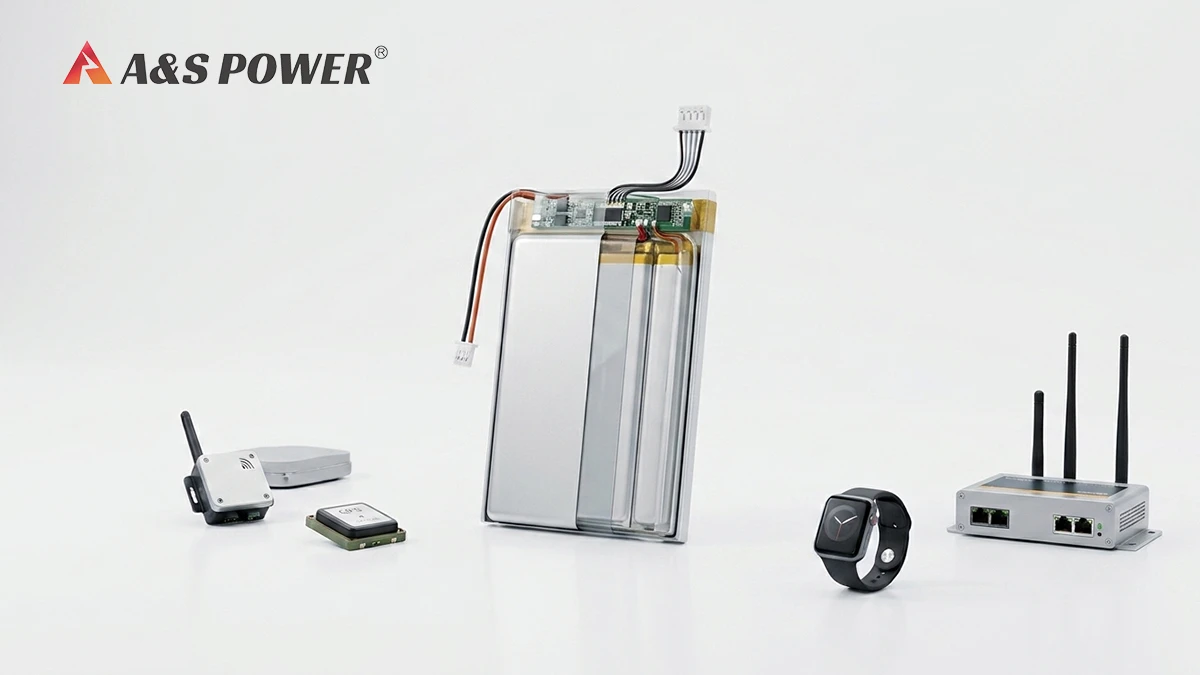 May.2026.08.18How to Choose Custom Lithium Battery Specs for IoT DevicesLearn More
 -
 May.2026.08.17Custom Medical Battery Design: IEC 62133, BMS & Cost GuideLearn More
 -
 May.2026.08.1718650 Cell or LiPo Battery Cell: Choosing the Best BatteryLearn More
 -
 May.2026.08.14A Complete Guide to 3.7 Volt Battery SizesLearn More