



Introduction
A medical alert device may look like a relatively simple wearable, but its battery requirements are more demanding than they first appear.
A typical modern medical alert device may combine an emergency button, two-way voice communication, GPS or Wi-Fi positioning, cellular connectivity, motion sensing and automatic fall detection in a compact enclosure. The battery therefore has to do more than simply store energy. It must support the device's electronics reliably while fitting into a small wearable form factor.
From my experience working with customized lithium battery solutions, I find that medical alert device projects are often won or lost during the battery design stage. A battery that is slightly too large can affect the enclosure. A battery with insufficient peak current can create communication problems. A poorly selected protection circuit can cause unnecessary shutdowns. And insufficient attention to charging and temperature management can create safety and reliability concerns.
For OEMs developing a new medical alert device, the better approach is to design the battery together with the device rather than treating it as an off-the-shelf component.
Quick Answer: What Battery Is Best for a Medical Alert Device?
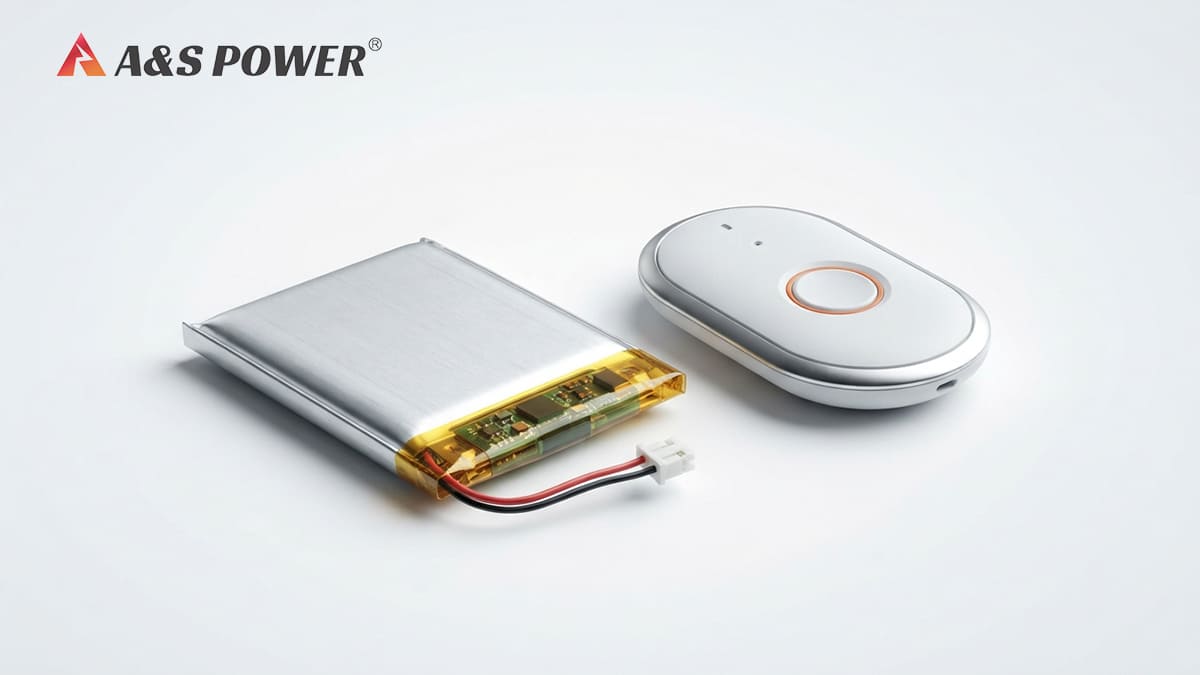
For many compact rechargeable medical alert devices, a custom lithium polymer (LiPo) battery can be an effective solution because the pouch format allows engineers to customize the battery's dimensions, capacity, wiring and protection circuit around the device.
However, there is no single battery specification that is suitable for every medical alert system.
The appropriate battery depends on:
- Device voltage
- Required operating time
- Cellular communication frequency
- GPS usage
- Fall detection requirements
- Speaker and microphone power consumption
- Device dimensions
- Charging method
- Operating temperature
- Protection requirements
- Expected battery cycle life
- Target market and applicable compliance requirements
Current commercial medical alert products demonstrate how widely battery requirements can vary. For example, some mobile medical alert devices publicly specify approximately 72 hours of battery life, while others advertise four or five days. Some specialized devices claim substantially longer battery life by using different operating modes and feature sets.
That is why I recommend starting with the device's actual power profile instead of selecting a battery based only on capacity.
What Is a Medical Alert Device Battery?
A medical alert device battery is the rechargeable or primary power source used in a personal emergency response system (PERS), medical alert pendant, GPS emergency button, fall detection wearable or similar personal safety device.
Traditional medical alert systems often used a wearable button connected to a home base station. Newer systems can be completely mobile and may include cellular communication, GPS, Wi-Fi positioning, fall detection and two-way voice communication.
The battery consequently becomes an important part of the complete system.
For example, a mobile medical alert device may need to maintain power for:
- Cellular communication
- GPS positioning
- Motion and fall-detection sensors
- Microcontroller operation
- Speaker and microphone
- Status indicators
- Emergency button monitoring
- Battery monitoring
- Wireless communication
- Charging and protection electronics
This explains why battery selection cannot be based on mAh alone.
Why Custom Batteries Are Important for Medical Alert Devices
1. Compact Wearable Design
Medical alert devices are normally designed to be worn around the neck, on the wrist or clipped to clothing.
That creates strict mechanical limitations.
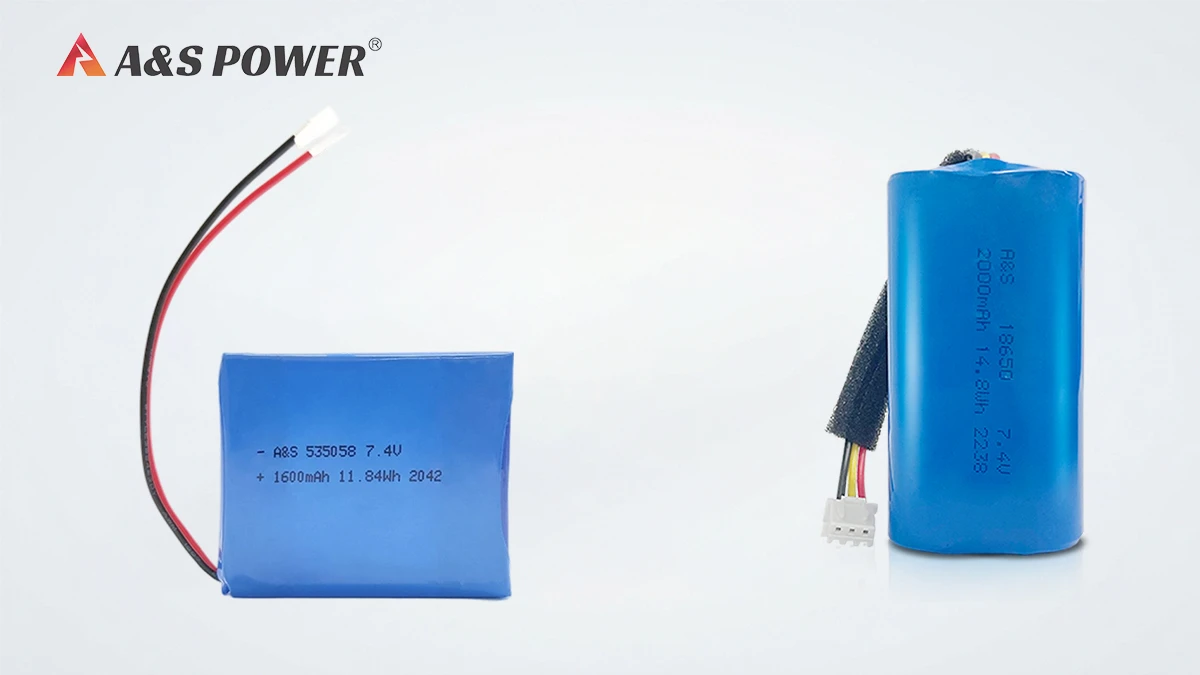
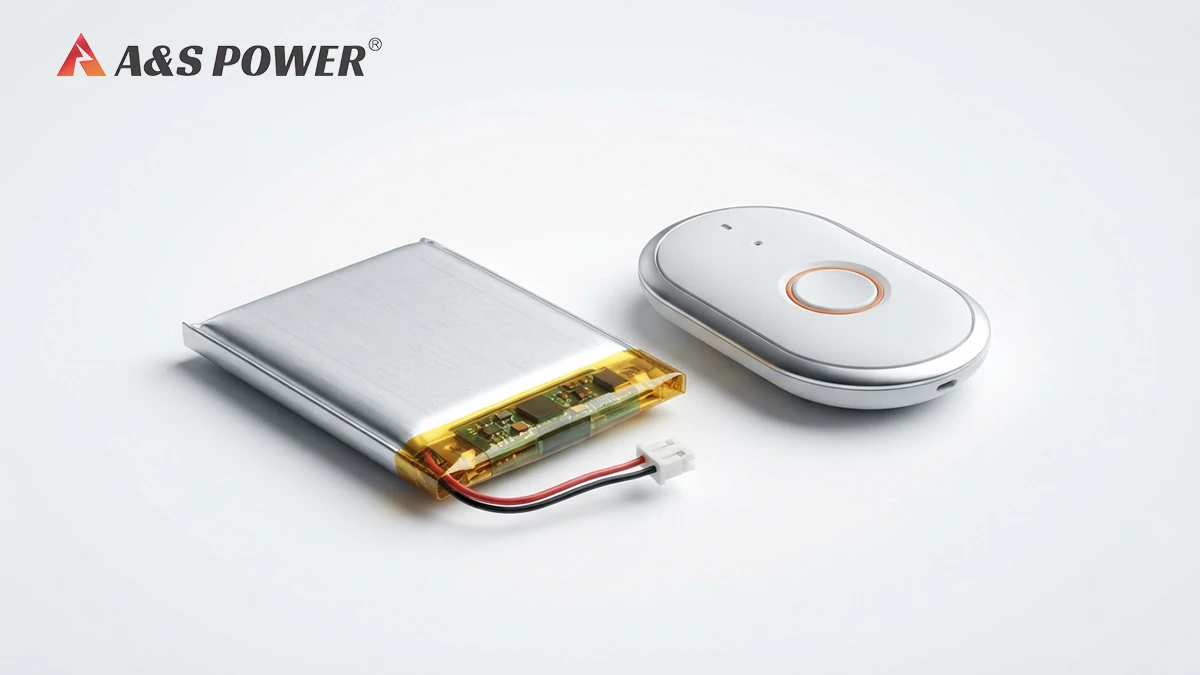
An off-the-shelf cylindrical battery may provide the required capacity but still be impossible to fit into the enclosure. A LiPo pouch cell can provide considerably more freedom because its length, width and thickness can be engineered around the available internal space.
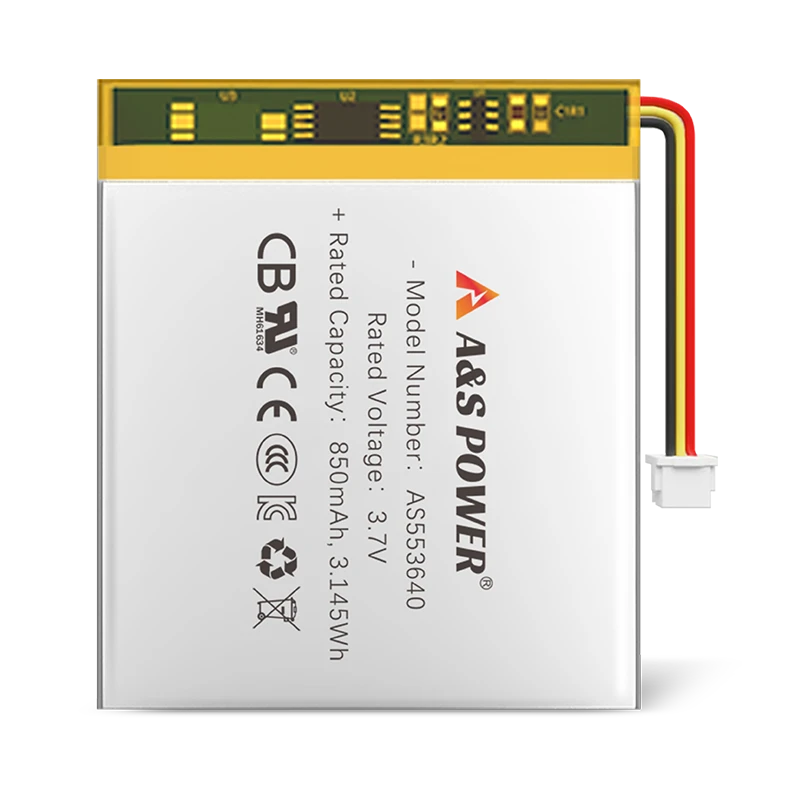
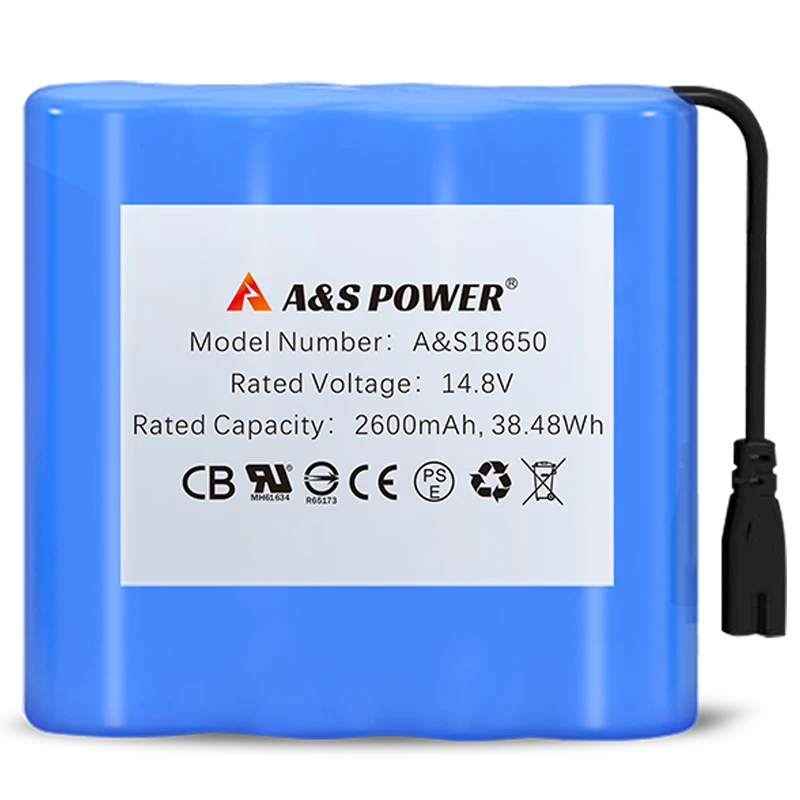
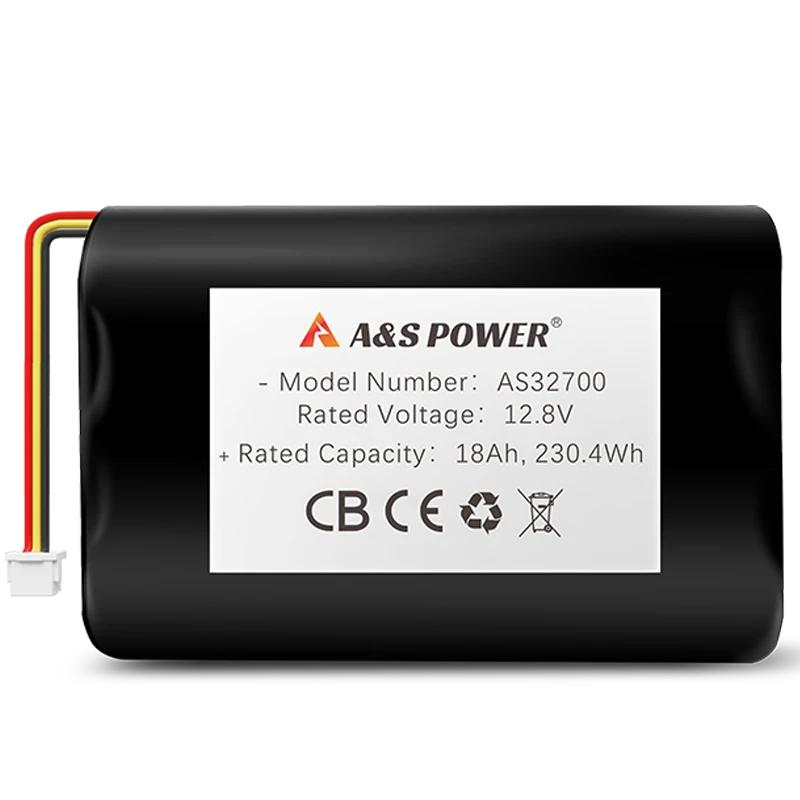
A&S Power provides customized LiPo solutions with different shapes and sizes for applications including medical devices, wearables and GPS products. Its published product range also includes compact LiPo cells intended for portable electronics and medical applications.
For a new medical alert product, I would normally determine the maximum battery envelope first and then work backward to the required capacity.
2. Battery Capacity Must Match Real Power Consumption
Capacity is usually expressed in mAh, but mAh by itself does not tell us how long a medical alert device will operate.
A simplified relationship is:
Battery Energy ≈ Voltage × Capacity
For example, a nominal 3.7V, 1,000mAh battery contains approximately:
3.7V × 1.0Ah = 3.7Wh
Actual device runtime will be lower than a simple theoretical calculation because of conversion losses, battery characteristics, temperature, aging and the device's operating pattern.
More importantly, a medical alert device does not necessarily consume constant current.
A device may remain in a low-power state for most of the day, then suddenly consume significantly more energy when it:
- Establishes a cellular connection
- Activates GPS
- Detects a fall
- Starts a voice call
- Transmits location information
- Communicates with a monitoring center
The battery therefore needs to support both average energy consumption and short-duration current demand.
Medical Alert Battery Design: Key Specifications
The following parameters should be defined before requesting a custom battery quotation.
| Parameter | Typical Design Question | Why It Matters |
|---|---|---|
| Nominal Voltage | 3.7V, 7.4V or another value? | Must match device electronics |
| Capacity | How many mAh are required? | Determines available energy |
| Dimensions | What is the maximum battery envelope? | Determines mechanical compatibility |
| Thickness | How thin must the pack be? | Important for wearable products |
| Continuous Current | What is normal operating current? | Ensures stable operation |
| Peak Current | What is the cellular/GPS peak load? | Prevents voltage drop |
| Cycle Life | How frequently will the device be charged? | Affects service life |
| Protection | What protection functions are required? | Helps manage battery safety |
| Temperature Sensing | Is an NTC required? | Supports temperature monitoring |
| Connector | What connector and cable length are required? | Simplifies device integration |
| Certification | Which markets will the device enter? | Determines compliance planning |
This table is intentionally presented as a design framework rather than a universal specification. The correct values should come from the device's electrical and mechanical requirements.
How GPS and Fall Detection Affect Battery Life
One of the biggest mistakes in medical alert battery design is looking only at standby consumption.
A simple emergency button may consume very little energy. A GPS-enabled device with automatic fall detection, cellular communication and two-way voice is a very different product.
Commercial medical alert products provide useful real-world examples.
Lifeline's On the Go system states that its rechargeable battery can last up to four days on a charge, while Medical Guardian advertises up to five days for one of its mobile devices. Senior Safety lists up to 72 hours for its mobile GPS device.
These figures should not be interpreted as an industry-wide battery standard. They demonstrate an important engineering principle:
Battery runtime depends strongly on device architecture and usage conditions.
Continuous GPS tracking, frequent cellular communication and voice calls can consume considerably more energy than a device that spends most of its time in a low-power state.
For OEM development, I recommend measuring the actual current consumption under several operating scenarios instead of estimating runtime from standby current alone.
Why BMS or PCM Protection Matters
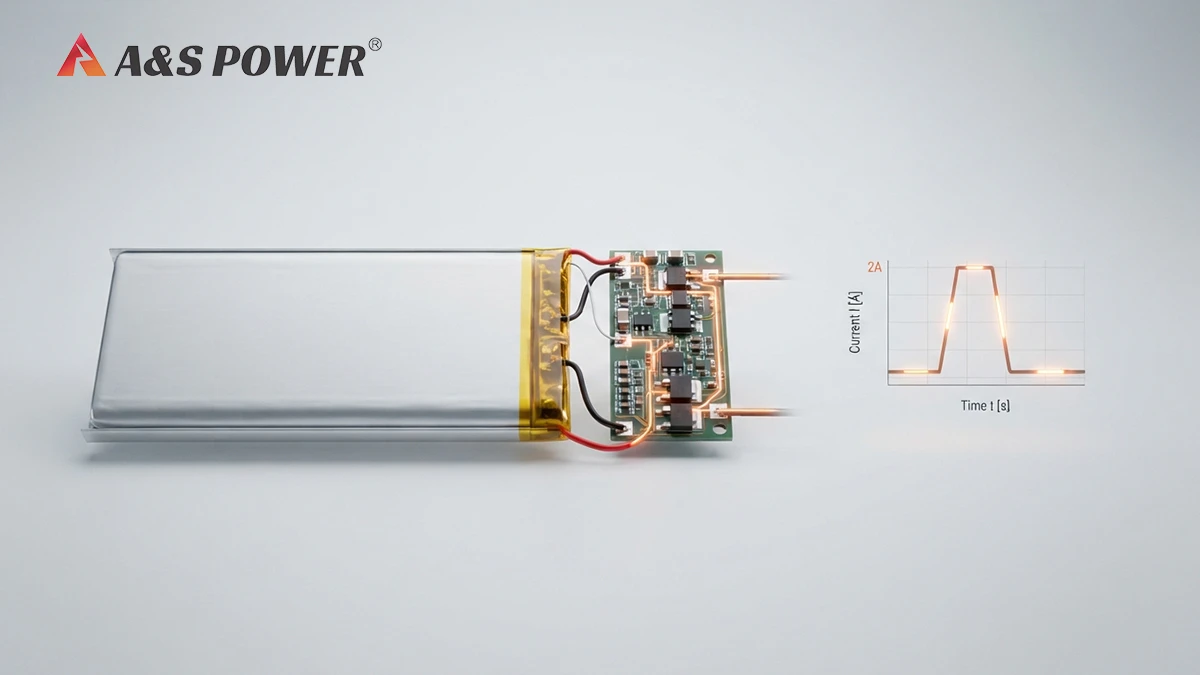
A custom medical alert battery may include a protection circuit module (PCM) or a more sophisticated battery management system (BMS), depending on the battery architecture and device requirements.
Protection functions can include:
- Overcharge protection
- Over-discharge protection
- Over-current protection
- Short-circuit protection
- Temperature monitoring
- Cell balancing for multi-cell configurations
- Communication functions in more advanced systems
The protection strategy should be designed together with the host device.
For example, an overly aggressive protection threshold could cause unnecessary shutdown during a cellular transmission burst. On the other hand, insufficient protection can increase safety risks.
A&S Power states that its customized battery solutions can include protection circuitry, temperature protection and communication functions depending on project requirements.
Safety and Compliance for Medical Alert Device Batteries
Battery safety and medical-device regulatory compliance are related but are not the same thing.
For example, the U.S. FDA's recognized consensus standards database includes IEC 62133-2 as a recognized standard relevant to medical devices. The standard covers safety requirements and testing for portable sealed secondary lithium cells and batteries.
FDA-recognized medical device standards
The IEC's official documentation describes IEC 62133-2 as specifying safety requirements and tests for portable sealed secondary lithium cells and batteries.
IEC 62133-2 lithium battery safety standard
Depending on the battery construction, product architecture and target market, manufacturers may also evaluate UL 1642 for lithium batteries. The FDA's recognized consensus standards database includes UL 1642.
FDA-recognized UL 1642 lithium battery standard
For international transportation, UN 38.3 testing is another important consideration for applicable lithium cells and batteries. The relevant requirements are contained in the UN Manual of Tests and Criteria.
UN 38.3 lithium battery transport requirements
For assembled battery systems, the applicable requirements can differ from those for individual cells. Depending on the battery configuration and target market, manufacturers may also evaluate UL 2054 as part of their overall compliance strategy.
FDA-recognized UL 2054 battery standard
OEMs should confirm the applicable standards with their battery manufacturer and compliance laboratory because requirements can vary according to the battery design, finished product, market and intended application.
What Should OEMs Ask a Medical Alert Battery Manufacturer?
Before choosing a battery supplier, I recommend asking the following questions.
Can the battery be customized to my enclosure?
The supplier should be able to work from a mechanical drawing rather than forcing the device around a standard cell.
Can you customize the PCM/BMS?
The protection circuit should match the device's charging system, operating current and safety requirements.
Can you provide NTC temperature sensing?
Temperature monitoring can be important for rechargeable battery applications, particularly where charging and wearable operation occur under varying environmental conditions.
Can you support custom cables and connectors?
Medical alert devices often have very limited internal space. Cable length, connector orientation and wire gauge can therefore matter.
Can you provide compliance documentation?
Ask specifically which certification applies to the actual cell or battery model, rather than accepting a generic statement such as "our batteries are certified."
Can you provide samples before mass production?
Prototype validation is essential. The battery should be tested inside the actual device rather than evaluated only as a standalone component.
Custom LiPo vs. Standard Battery for Medical Alert Devices
| Feature | Custom LiPo Battery | Standard Off-the-Shelf Battery |
|---|---|---|
| Shape | Highly customizable | Limited |
| Thickness | Can be designed for enclosure | Usually fixed |
| Capacity | Designed to project requirements | Fixed options |
| Connector | Customizable | Often limited |
| Protection Circuit | Custom design possible | Usually predefined |
| Cable | Custom length possible | Limited |
| Prototype Optimization | High | Lower |
| Integration | Designed around product | Product designed around battery |
| OEM Scalability | Suitable | Depends on availability |
For a compact medical alert wearable, I generally consider a custom LiPo battery first when space optimization is important.
A&S Power states that its LiPo solutions can be customized in shape and size and are used in medical devices, wearables and GPS applications.
How We Approach Custom Medical Alert Battery Development
At A&S Power, I recommend approaching a medical alert battery project in several stages.
Step 1: Define the Device
We first need the device voltage, current consumption, dimensions, expected runtime and charging method.
Step 2: Select the Cell
The cell chemistry, capacity, dimensions and discharge characteristics are selected according to the device requirements.
Step 3: Design the Protection Circuit
The PCM/BMS configuration is developed according to the battery and host device.
Step 4: Optimize the Mechanical Design
Battery dimensions, wires, connector position and insulation are adjusted to fit the enclosure.
Step 5: Prototype and Test
Samples should be evaluated inside the actual device under realistic operating conditions.
Step 6: Compliance Planning
Applicable battery and transportation standards should be identified before mass production.
Step 7: Mass Production
After validation, the battery configuration can be transferred into controlled production with appropriate quality inspection and traceability.
Our published custom battery capabilities include cell selection, customized dimensions, protection boards, wires, connectors and battery pack assembly.
Choosing the Right Medical Alert Battery Manufacturer
The cheapest battery is rarely the best choice for a medical alert project.
I would evaluate a supplier based on five areas:
Engineering capability: Can they design around your device rather than simply sell existing cells?
Battery safety: Can they provide appropriate protection and testing?
Customization: Can they modify dimensions, capacity, connectors and protection electronics?
Documentation: Can they provide traceable technical and compliance documentation?
Production capability: Can they move from prototype quantities to stable mass production?
A&S Power currently describes its business as an OEM/ODM lithium battery manufacturer providing customized LiPo and lithium-ion solutions for medical devices, GPS products and wearable electronics. Its published manufacturing information also lists UL, IEC 62133, CB, CE and UN38.3 among its battery certifications, with certification depending on the specific model.
Final Takeaway
A medical alert device battery is not simply a small rechargeable battery.
It is part of a system that may need to support emergency communication, GPS positioning, fall detection, voice communication and continuous monitoring while remaining compact and comfortable enough for everyday wear.
For OEMs, the most effective approach is to define the electrical load, mechanical envelope, runtime target, protection requirements and compliance strategy before selecting the battery.
A custom LiPo battery can be particularly useful when the device requires a compact shape, customized dimensions, integrated protection circuitry or a specific connector configuration.
Most importantly, battery capacity should not be selected in isolation. The best battery is the one that provides the required energy and current performance while fitting the device, supporting its safety architecture and meeting the applicable compliance requirements.
For companies developing a new medical alert pendant, GPS emergency button, fall detection wearable or personal emergency response system, early collaboration between the device engineer and battery manufacturer can significantly reduce integration problems later in the development cycle.
Key Takeaways
- Battery design should match the device: Voltage, capacity, dimensions, connector, and protection should be selected according to the actual medical alert device.
- GPS and cellular functions affect runtime: Emergency calls, GPS tracking, fall detection, and wireless communication can significantly increase power consumption.
- Custom LiPo batteries offer design flexibility: Their compact and customizable form factor makes them suitable for many wearable medical alert devices.
- Protection is essential: A properly designed PCM or BMS can help protect against overcharge, over-discharge, over-current, short circuit, and temperature-related risks.
- Compliance should be considered early: Depending on the application and target market, battery standards such as UL 1642, IEC 62133-2, UL 2054, and UN 38.3 may be relevant.
- OEMs should involve the battery manufacturer early: Sharing the device dimensions, power profile, runtime target, charging requirements, and certification goals helps create a more reliable battery solution.
Conclusion
Choosing the right custom medical alert devices battery is about more than capacity. In my view, the battery should be designed around the device’s actual power consumption, available space, runtime target, charging method, and safety requirements.
For compact medical alert wearables, a custom LiPo battery can provide greater flexibility in size, shape, capacity, connector, and protection design. This is especially useful for devices that combine GPS, cellular communication, fall detection, sensors, and two-way voice functions.
I recommend involving the battery manufacturer early in the product development process. A well-matched battery solution can help improve runtime, reliability, user comfort, and overall device integration while supporting the applicable safety and transportation requirements.
FAQ: Custom Medical Alert Devices Battery
What type of battery is commonly used in medical alert devices?
Rechargeable lithium batteries, including lithium-ion and lithium polymer batteries, are commonly used in modern portable medical alert devices. LiPo pouch cells are particularly useful when a customized shape or compact form factor is required.
How long should a medical alert device battery last?
There is no universal runtime requirement. Actual battery life depends on capacity, cellular communication, GPS usage, fall detection, voice calls, standby time and other device functions. Commercial products currently advertise runtimes ranging from roughly 48–72 hours to several days, while some specialized designs advertise substantially longer operation.
Can I customize the size of a medical alert battery?
Yes. Custom LiPo pouch batteries can be designed around the available space inside the device. Dimensions, capacity, wires, connectors and protection circuits can be customized according to the project requirements.
Can a medical alert battery include a protection circuit?
Yes. A custom battery pack can incorporate protection against conditions such as overcharge, over-discharge, over-current and short circuit. Temperature monitoring using an NTC can also be integrated when required.
Are medical alert batteries required to be UL certified?
The answer depends on the battery, device, market and applicable regulatory pathway. UL 1642 is recognized by the FDA as a consensus standard for lithium batteries, while other battery and medical-device standards may also be relevant. OEMs should determine the applicable requirements for the complete product rather than assuming one battery certification covers everything.
Can you customize a battery for a GPS and fall detection medical alert device?
Yes. A custom battery can be designed around the device's GPS, cellular, fall detection and voice communication requirements. The battery should be sized according to both average power consumption and peak current demand.
What information should I provide when requesting a custom medical alert battery?
The most useful information includes required voltage, capacity or runtime target, maximum battery dimensions, operating current, peak current, charging voltage/current, connector type, cable length, operating temperature and target market. A mechanical drawing and electrical specifications are even better.
About A&S Power
A&S Power is an experienced OEM and ODM lithium battery manufacturer specializing in customized LiPo, Li-ion, and LiFePO4 battery solutions. Since 2011, we have developed and manufactured more than 1,000 battery specifications for applications including medical devices, GPS trackers, smart wearables, and portable electronics.
For medical alert devices, our engineering team can customize battery dimensions, voltage, capacity, protection circuits, cables, and connectors according to the device's electrical and mechanical requirements. We support projects from battery selection and prototype development through testing, certification support, and mass production.
Our battery solutions have been developed for global OEM customers and include products with certifications and compliance such as UL, IEC 62133, CB, CE, CCC, RoHS, and UN38.3, depending on the specific battery model and application.
For companies developing medical alert pendants, GPS emergency buttons, fall detection wearables, and other personal safety devices, A&S Power provides a practical starting point for developing a battery around the product—not forcing the product to fit a standard battery.
Need a Custom LiPo Battery?
Developing a medical alert device that needs a compact, reliable, and precisely fitted battery? A&S Power can help you develop a custom LiPo battery based on your device’s voltage, capacity, dimensions, runtime, connector, and protection requirements.
Whether you are developing a GPS medical alert device, fall detection wearable, emergency pendant, or other portable medical device, our engineering team can support you from battery selection and prototyping to testing and mass production.
Tell us your battery requirements and let’s build the right power solution for your device.
Request a Custom Battery Quote