



Quick Answer
LiFePO4 Battery is often suitable for industrial IoT devices that prioritize long cycle life, thermal stability, and reliable long-term operation. Ternary NMC is worth considering when the device requires higher energy density, lower battery weight, or a more compact battery pack.
However, neither chemistry is automatically the right choice for every Industrial IoT application. In our experience as a custom rechargeable battery manufacturer, the correct selection depends on the device's energy consumption, operating environment, enclosure limitations, charging requirements, and expected service life.
For industrial IoT products such as remote monitoring equipment, industrial gateways, asset tracking systems, backup communication devices, and autonomous sensors, battery chemistry should be selected together with the electrical architecture and mechanical design.
Introduction
Industrial IoT devices are becoming increasingly dependent on rechargeable battery systems that can operate reliably for long periods with limited maintenance. From remote monitoring equipment and industrial sensors to wireless gateways, asset trackers, and portable control devices, the battery is often a critical part of the overall system design.
For many of these applications, two lithium-ion chemistries are frequently considered: LiFePO4 (LFP) and ternary NMC (Nickel Manganese Cobalt). Both can be used to build custom battery packs for industrial IoT equipment, but they have different characteristics in terms of energy density, cycle life, thermal stability, operating conditions, weight, and available space.
The right choice is therefore not simply a matter of which chemistry has better specifications. It depends on what the industrial IoT device actually requires. A stationary monitoring system with enough installation space may prioritize long cycle life and thermal stability, while a compact portable device may place greater emphasis on energy density and battery size.
At A&S Power, we evaluate these factors together when developing customized lithium battery packs for industrial applications. In this guide, we compare LiFePO4 vs. ternary NMC batteries from a practical battery-engineering perspective and explain which characteristics are more relevant for different industrial IoT applications.
Key Takeaways
- LiFePO4 (LFP): Offers strong thermal stability and generally long cycle life, making it a candidate for applications with frequent cycling or long service requirements.
- Ternary NMC: Usually provides higher cell-level energy density, which can be valuable when the available space or battery weight is limited.
- Safety: Both chemistries require appropriate charging controls, protection circuitry, cell selection, and pack-level safety engineering.
- Industrial IoT design: Standby current, peak loads, temperature exposure, and maintenance access can be as important as nominal battery capacity.
- Custom battery manufacturing: A reliable solution requires matching cell chemistry, voltage, capacity, PCM/BMS, connectors, and mechanical dimensions to the device.
What Are LiFePO4 and Ternary NMC Batteries?
LiFePO4 Battery Chemistry
LiFePO4, commonly called LFP, uses lithium iron phosphate as its cathode material. Its chemical structure contributes to good thermal and chemical stability compared with many other lithium-ion chemistries.
A typical LFP cell has a nominal voltage of approximately 3.2V. A multi-cell battery pack must be designed around the required system voltage, charging voltage, and battery management architecture.
For industrial IoT applications, LFP may be considered when the equipment needs long-term energy storage, repeated charging and discharging, or a robust operating profile. However, the actual service life depends on factors such as depth of discharge, temperature, charging conditions, and cell quality.
Ternary NMC Battery Chemistry
Ternary NMC refers to lithium nickel manganese cobalt oxide battery chemistry. Nickel, manganese, and cobalt are used in varying proportions, and different formulations can produce different performance characteristics.
NMC cells commonly have a nominal voltage of approximately 3.6V–3.7V, although exact specifications depend on the cell design.
The main advantage of NMC is its potential for higher energy density. This can help engineers develop a smaller or lighter battery pack when the available installation space is restricted.
For example, a compact industrial data logger installed inside a small enclosure may benefit from NMC if the energy requirement cannot be met with an LFP pack of acceptable size.
LiFePO4 vs NMC Battery: Technical Comparison
The following table summarizes commonly reported characteristics at the cell chemistry level. These are indicative engineering ranges, not guaranteed specifications for every cell or battery pack. Actual performance must be confirmed using the selected manufacturer's datasheet and test conditions.
| Parameter | LiFePO4 (LFP) | Ternary NMC |
|---|---|---|
| Cathode material | Lithium iron phosphate | Nickel manganese cobalt oxide |
| Typical nominal cell voltage | Approximately 3.2V | Approximately 3.6V–3.7V |
| Energy density | Generally lower | Generally higher |
| Cycle life | Often longer under suitable conditions | Varies by formulation and operating conditions |
| Thermal stability | Strong | Depends on NMC formulation and system design |
| Weight efficiency | Lower energy per unit of mass in many designs | Higher energy per unit of mass in many designs |
| Nickel and cobalt | None in the cathode chemistry | Present in varying proportions |
| Typical design priority | Longevity, stability, repeated cycling | Energy density, compactness, weight |
| Industrial IoT suitability | Long-life monitoring, backup, industrial systems | Compact equipment, weight-sensitive and space-constrained devices |
Published comparison guides commonly report LFP cell-level energy density in ranges around 90–160 Wh/kg and NMC in ranges around 150–250 Wh/kg, although the actual values vary substantially with cell design and manufacturing technology.
It is important not to use a single published range as a substitute for the specifications of the cell selected for your project.
The U.S. Department of Energy notes that LFP offers advantages including cycle life and thermal stability, while its lower operating potential results in lower energy density compared with some other lithium-ion chemistries.
Energy Density and Battery Size
Cycle Life and Long-Term Reliability
Industrial IoT equipment is frequently deployed in locations where battery replacement is inconvenient or expensive. Examples include factory monitoring systems, remote sensors, infrastructure equipment, and industrial tracking devices.
In these applications, cycle life is not simply a marketing number. It affects maintenance planning, service intervals, and the expected operating cost of the equipment.
Why LiFePO4 May Be Suitable for Frequent Cycling
LFP is widely recognized for its long cycle-life potential. Published battery comparisons commonly report thousands of cycles, with some LFP cells and systems exceeding 3,000 cycles under specified test conditions.
However, cycle life should always be evaluated with the following conditions:
- Depth of discharge (DoD)
- Charge and discharge current
- Operating temperature
- End-of-life capacity threshold
- Charging voltage and control strategy
- Storage conditions
A battery rated for 4,000 cycles at a particular test condition should not automatically be expected to deliver the same result in an industrial device operating at high temperature or with high peak loads.
NMC and Service Life Considerations
NMC can be a practical choice when the design requires a compact energy source. Its cycle life depends on the specific chemistry, cell construction, operating conditions, and battery management system.
For an industrial IoT product, I recommend evaluating the required number of cycles over the device's planned service period rather than selecting a chemistry based on a generic cycle-life figure.
For example, a remote monitoring device that spends most of its time in standby may have a very different battery aging profile from an industrial gateway that repeatedly powers a cellular modem, processor, and connected sensors.
Engineering consideration: If the equipment needs a decade of operation, we should examine both calendar aging and cycling aging. A long cycle-life rating alone does not guarantee a ten-year service life.
Energy Density and Battery Size
Energy density is one of the most important reasons an engineering team may consider NMC instead of LFP.
Industrial IoT devices are often designed around strict enclosure dimensions. The battery must share space with circuit boards, sensors, communication modules, connectors, and mechanical supports.
When NMC's Energy Density Can Help
Higher energy density can allow engineers to achieve a target energy capacity using a smaller or lighter battery pack.
This may be useful for:
- Portable industrial inspection equipment
- Compact asset tracking devices
- Mobile monitoring instruments
- Space-limited wireless gateways
- Equipment with strict weight restrictions
The advantage should be evaluated at the pack level, not only at the cell level. Insulation, protection circuits, wiring, casing, thermal management, and mechanical requirements all affect the final size and weight.
When LFP's Larger Pack May Be Acceptable
For stationary or semi-stationary industrial IoT equipment, a somewhat larger battery may be acceptable if the design prioritizes long service life and thermal stability.
A remote industrial monitoring unit mounted inside a cabinet may have more installation space than a portable sensor. In this case, the additional volume of an LFP pack could be balanced against the application's maintenance and operating requirements.
There is no universal size advantage for an entire battery system without comparing the same usable energy, operating limits, and pack construction.
Safety and Thermal Stability in Industrial IoT Devices
Safety is particularly important when industrial IoT devices are installed near machinery, production lines, electrical equipment, or occupied working areas.
LFP is generally recognized for its strong thermal stability. NMC, on the other hand, requires careful consideration of its specific formulation, charging conditions, and thermal management requirements.
Published technical comparisons often report higher thermal-runaway onset temperatures for LFP than for NMC, but these values are dependent on test methods, cell construction, state of charge, and other conditions. They should not be interpreted as universal safety thresholds for finished battery packs.
Why the BMS and Protection Circuit Matter
Regardless of chemistry, an industrial IoT battery pack needs appropriate protection and monitoring.
Depending on the design, the protection system may address:
- Overcharge
- Over-discharge
- Overcurrent
- Short circuit
- Temperature monitoring
- Cell balancing in multi-cell packs
A PCM or BMS does not eliminate every battery safety risk. The protection system must be matched to the cell characteristics, pack configuration, charging system, and expected load.
For multi-cell LFP and NMC battery packs, cell balancing and voltage monitoring may be important to maintaining safe and consistent operation. The specific protection strategy depends on the battery configuration and system requirements.
Temperature Performance in Industrial IoT Environments
Industrial IoT devices may operate in environments with substantial temperature variation. Equipment installed outdoors, near industrial machinery, or inside electrical cabinets may experience conditions that differ significantly from laboratory testing.
Both LFP and NMC battery performance is affected by temperature. Low temperatures can reduce available power and charging capability, while high temperatures can accelerate aging.
Cold and Hot Operating Conditions
The suitable operating range must be obtained from the selected cell and battery manufacturer's technical documentation. A general chemistry comparison cannot establish the allowable charging and discharging limits of a specific pack.
For our battery engineering process, we would consider:
- The minimum and maximum ambient temperature.
- Whether the battery will be charged in cold conditions.
- The continuous and peak discharge current.
- The expected thermal environment inside the enclosure.
- Whether the battery requires a temperature sensor or additional protection.
An industrial IoT device designed for outdoor use may need a different battery configuration from an indoor monitoring unit, even when both devices have the same nominal voltage and capacity.
Which Battery Chemistry Is Right for Your Industrial IoT Device?
The decision should begin with the device's actual operating requirements.
| Industrial IoT application | Factors to evaluate | Potential chemistry consideration |
|---|---|---|
| Remote monitoring sensor | Standby current, service interval, temperature | LFP may suit long-life requirements |
| Industrial gateway | Continuous power consumption, peak communication load | Both; depends on energy and enclosure constraints |
| Asset tracking device | Size, weight, operating duration | NMC may be considered for compact energy storage |
| Backup monitoring system | Standby life, charging frequency, safety | LFP may be considered where long service life is important |
| Portable industrial instrument | Weight, usable energy, enclosure size | NMC may offer a useful energy-density advantage |
| Stationary industrial equipment | Available space, cycling profile, maintenance | LFP may be suitable where size constraints are manageable |
This table describes potential design directions, not guaranteed application outcomes. The final selection depends on the complete electrical and mechanical requirements.
Questions I Would Ask Before Selecting the Battery
When we evaluate a custom industrial IoT battery project, I would first want to understand:
- What is the device's operating voltage?
- What is the average current consumption?
- What is the maximum pulse or continuous discharge current?
- How many hours, days, or months of runtime are required?
- Is the device continuously powered or intermittently active?
- What are the battery's physical dimensions and weight limits?
- How often will the battery be recharged?
- What are the expected operating and storage temperatures?
- What protection circuit, connector, and communication interface are required?
These details help us assess whether a particular cell chemistry and battery configuration can meet the application requirements.
Custom LiFePO4 and NMC Battery Packs for Industrial IoT
Selecting the battery chemistry is only one stage of industrial battery development. The final pack must also fit the device's electrical, mechanical, and production requirements.
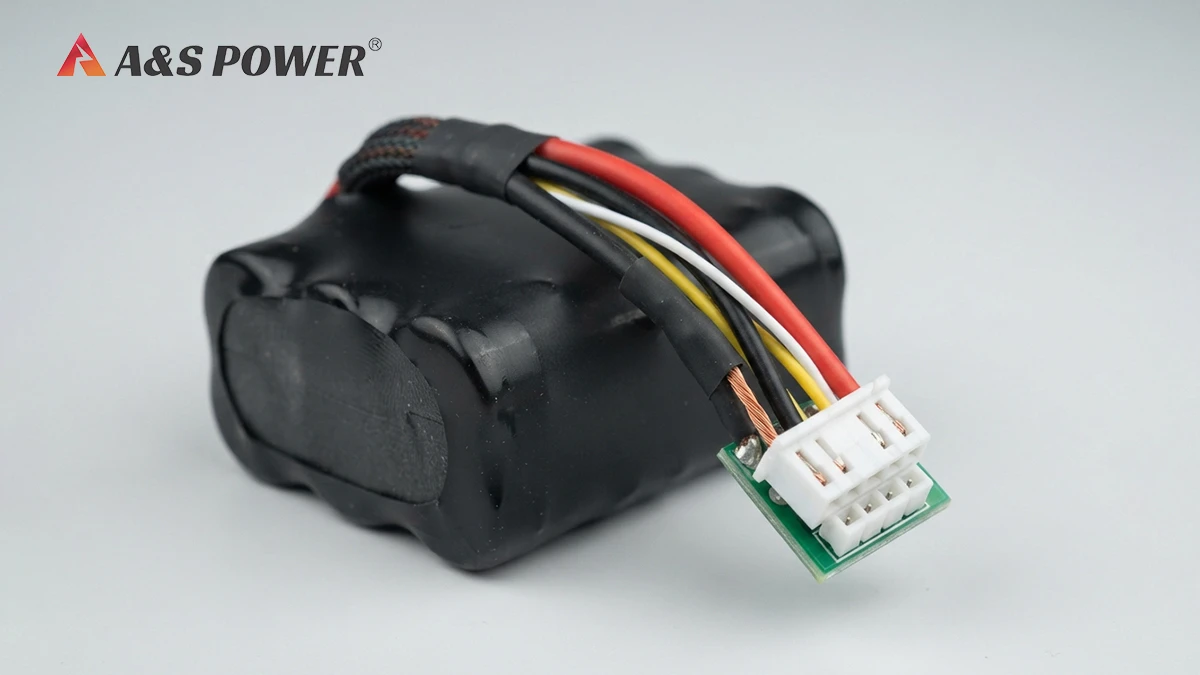
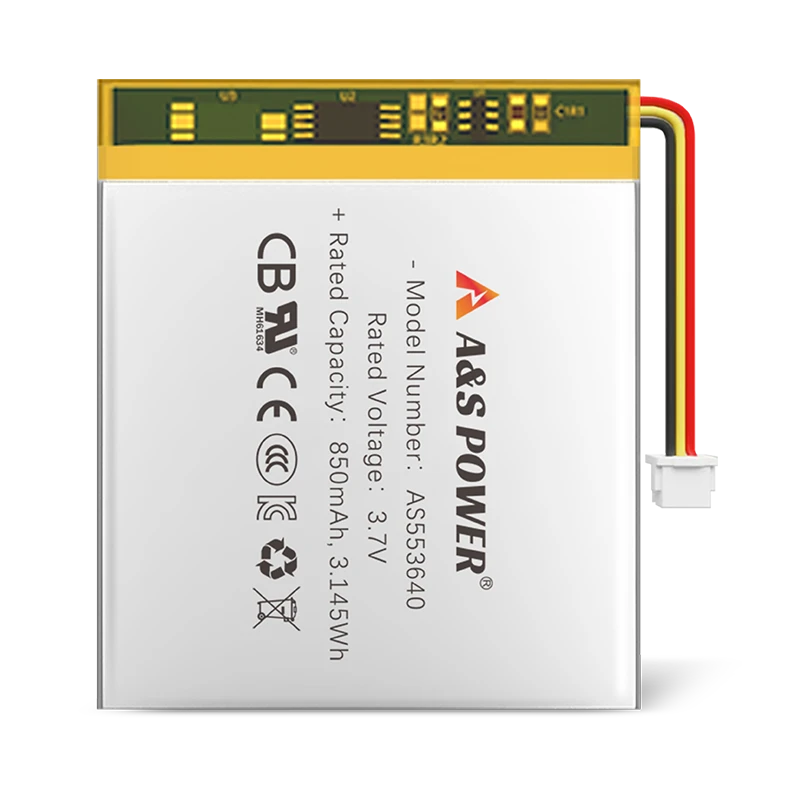
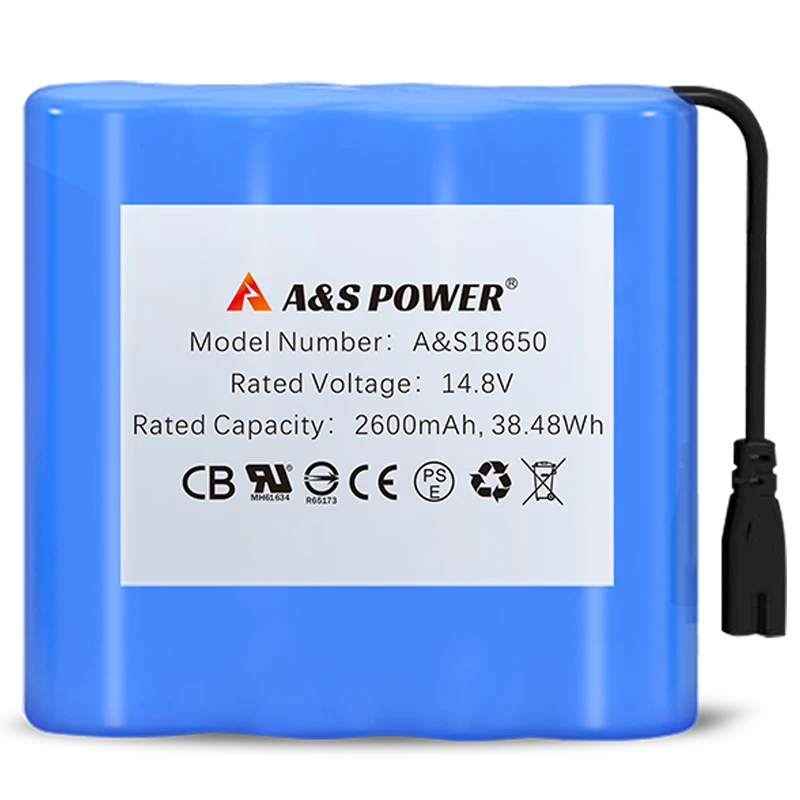
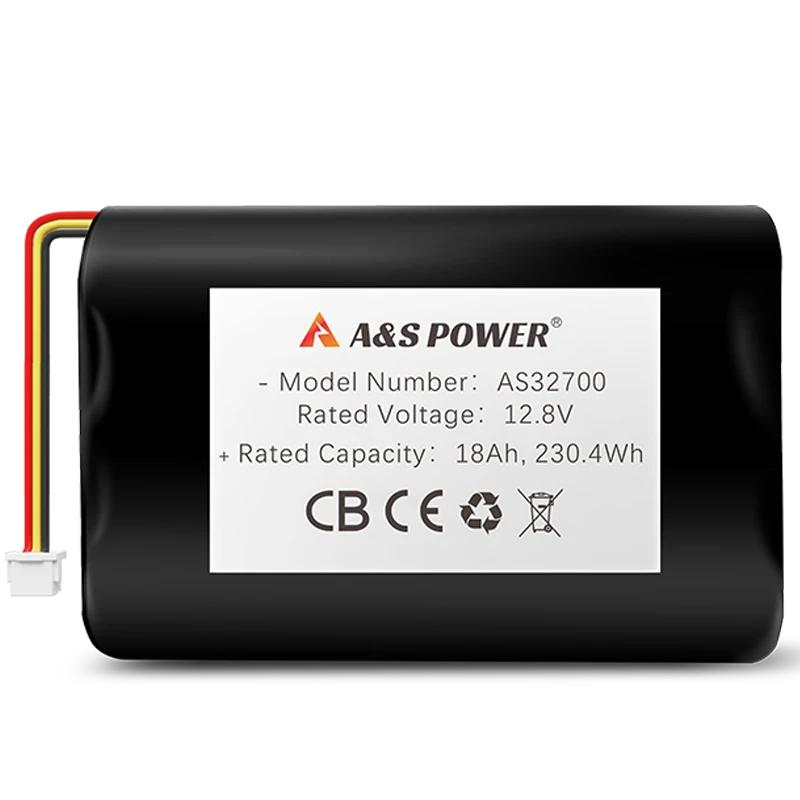
At A&S Power, we provide custom rechargeable battery solutions for industrial and electronic applications. Our engineering discussions can cover battery chemistry, capacity, dimensions, connectors, and PCM/BMS requirements based on the customer's product design.
Key Customization Factors
1. Voltage and cell configuration
LFP and NMC have different typical nominal cell voltages. The series configuration must be matched to the device's voltage requirements and charging system.
2. Capacity and energy requirements
Battery capacity should be selected according to the expected load profile and required runtime. A simple capacity calculation is useful for initial sizing, but real-world design must account for conversion losses, battery aging, temperature, and operating limits.
3. Mechanical dimensions
For industrial IoT devices, available space may be limited by the enclosure and PCB layout. The battery design should consider the complete pack, not just the dimensions of an individual cell.
4. PCM/BMS and protection
Protection settings should be compatible with the cell chemistry, pack configuration, load requirements, and charger. We need to confirm the appropriate overcurrent, overcharge, over-discharge, and temperature protection requirements.
5. Testing and qualification
The selected battery should be evaluated against the product's applicable requirements. Depending on the application and destination market, relevant transportation, safety, EMC, and product-level compliance requirements may need to be addressed.
Certification should be confirmed for the specific battery model and configuration rather than assumed from a chemistry name alone.
Conclusion
LiFePO4 and ternary NMC batteries serve different engineering priorities.
LiFePO4 is worth considering when thermal stability, long cycle-life potential, and long-term operation are important. NMC is worth considering when higher energy density, lower weight, or compact battery dimensions are major design constraints.
For industrial IoT devices, the most appropriate choice depends on the operating profile rather than a general chemistry ranking. A remote sensor, a stationary monitoring unit, and a portable industrial instrument may have very different battery requirements.
At A&S Power, we believe that a reliable custom battery solution begins with understanding the customer's application. By evaluating energy consumption, operating conditions, mechanical constraints, and protection requirements, engineering teams can make a more informed chemistry selection and develop a battery pack that is better aligned with the intended product.
Need a Custom LiFePO4 or NMC Battery for Your Industrial IoT Device?
Tell us your voltage, capacity, dimensions, operating current, and application requirements. Our team can help evaluate a suitable custom rechargeable battery configuration for your project.
Frequently Asked Questions (FAQ)
1. Is LiFePO4 better than NMC for industrial IoT devices?
Not universally. LiFePO4 may be suitable for applications that prioritize thermal stability and long cycle-life potential, while NMC may be useful where energy density and compact size are more important. The correct choice depends on the device requirements.
2. Which battery has a longer cycle life, LiFePO4 or NMC?
LiFePO4 generally has a longer cycle-life potential under comparable suitable conditions, but actual performance varies with cell design, operating temperature, charging conditions, and depth of discharge. Use the manufacturer's test data for the selected cell.
3. Does NMC provide higher energy density than LiFePO4?
NMC commonly offers higher cell-level energy density than LFP. The actual difference depends on the specific cell technology and pack design. Engineers should compare the usable energy, dimensions, and weight of the complete battery pack.
4. Can LiFePO4 batteries be used in remote monitoring equipment?
Yes, LiFePO4 can be considered for suitable remote monitoring applications. The design must verify voltage compatibility, runtime, temperature limits, charging requirements, and protection circuitry.
5. Do industrial IoT battery packs need a BMS or PCM?
The required protection and monitoring system depends on the battery configuration and application. Multi-cell packs commonly require appropriate cell monitoring and balancing, while protection settings must be compatible with the cell and load characteristics.
6. Can A&S Power customize LiFePO4 and NMC battery packs?
A&S Power provides custom rechargeable battery solutions. Customers should share their voltage, capacity, dimensions, load requirements, connectors, and application details so the appropriate battery configuration can be evaluated.