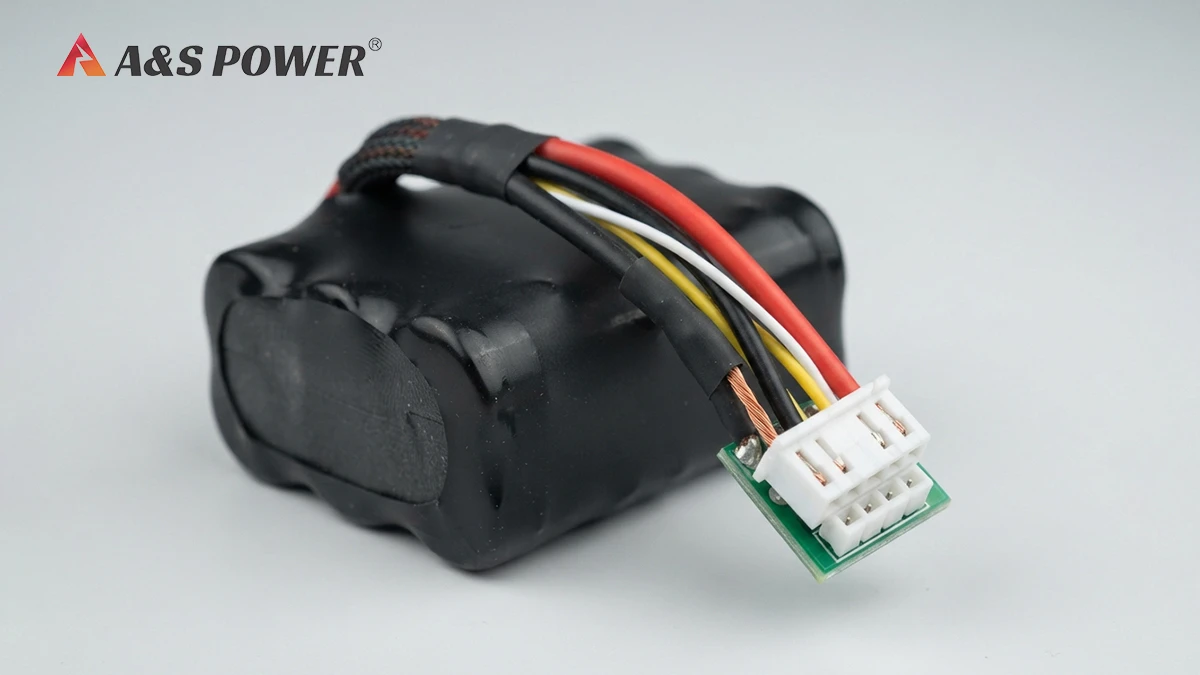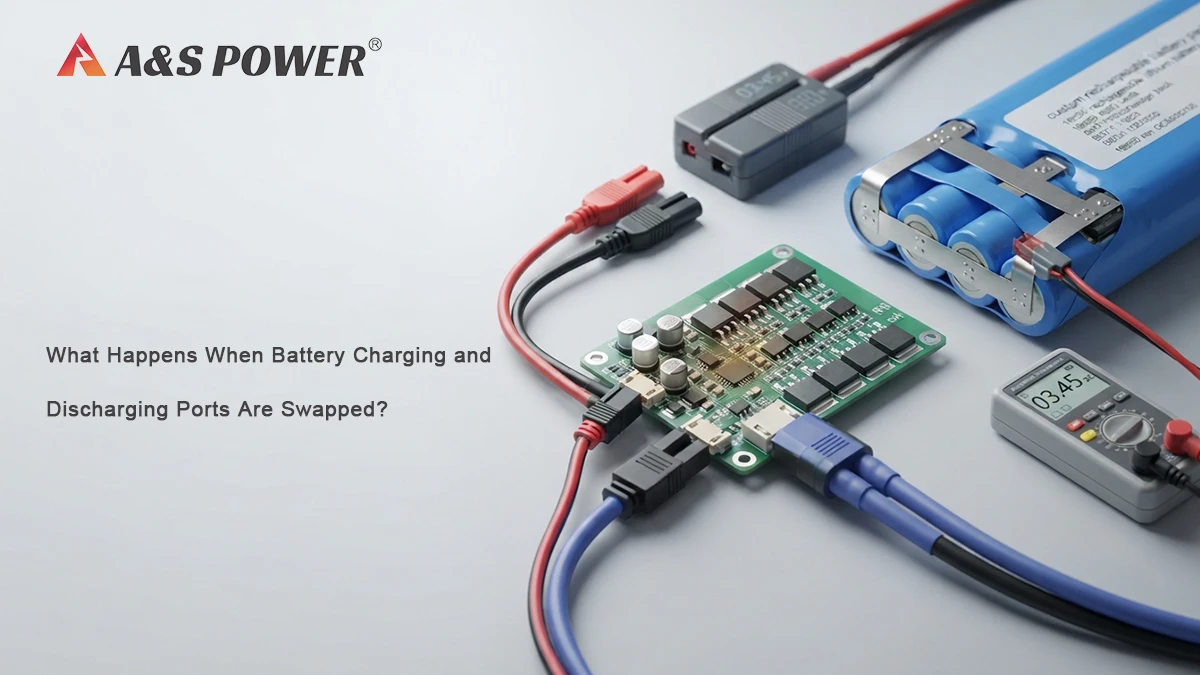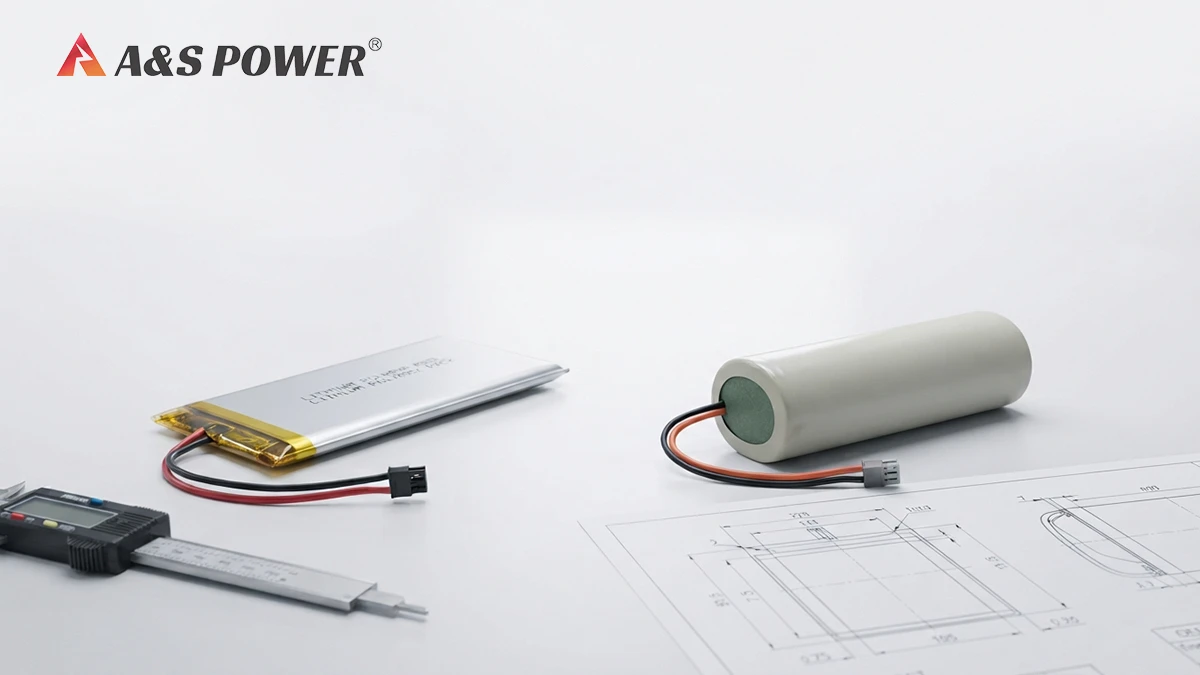


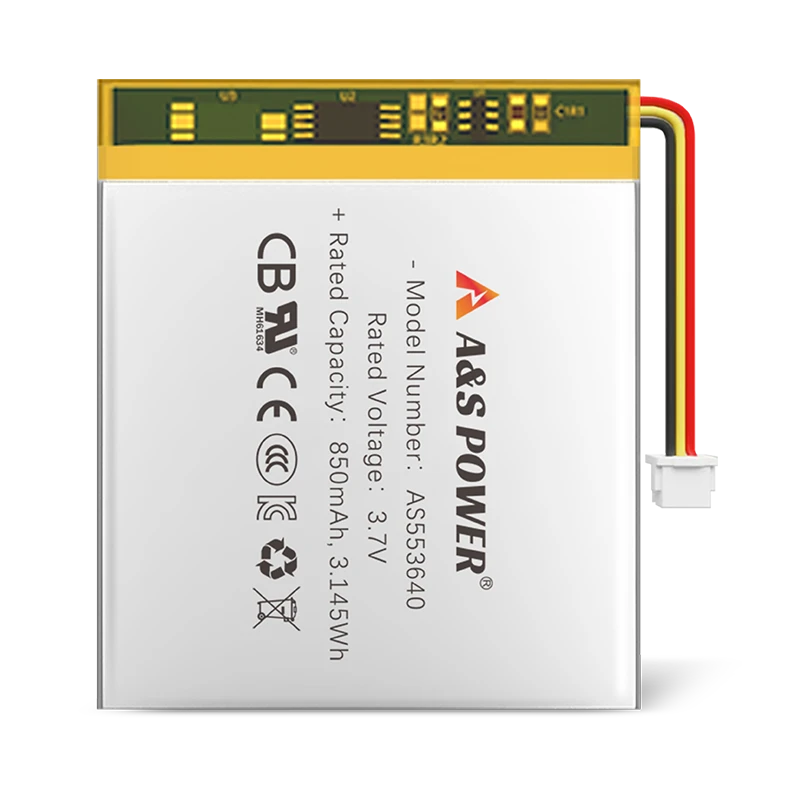


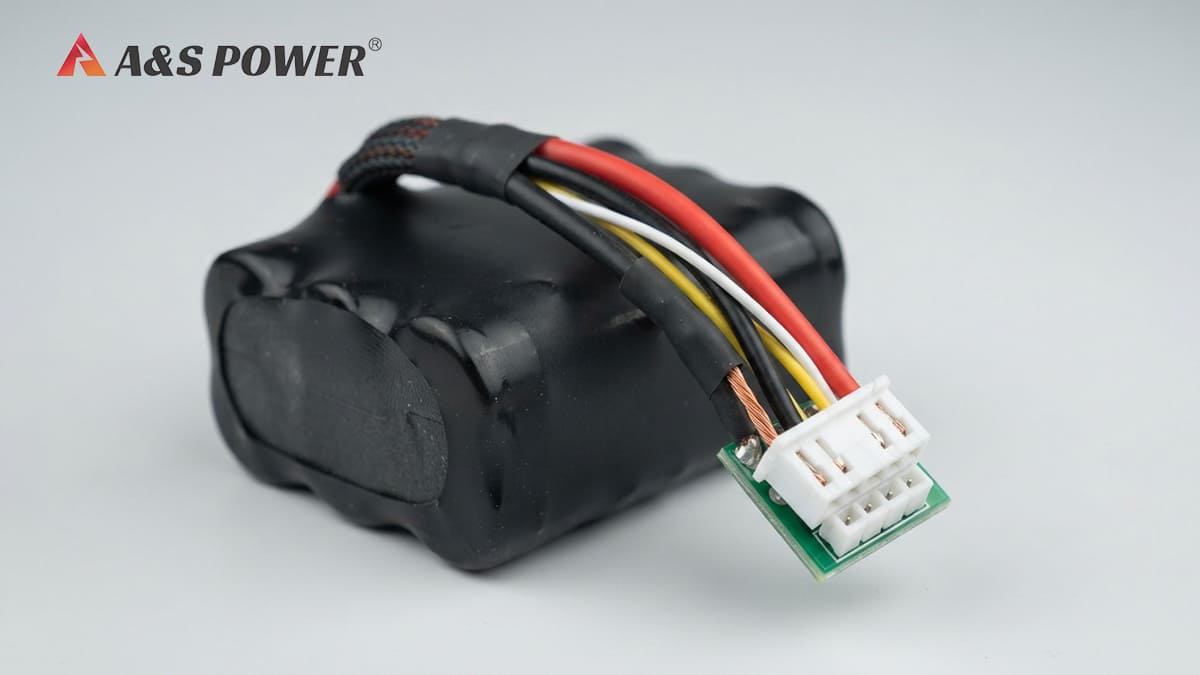
When a battery assembly uses different wire sizes for power and signal connections, connector compatibility should be evaluated as a complete wire-harness configuration, rather than by the connector housing name alone. For example, a battery may use 2 × 14 AWG power wires and 2 × 22 AWG signal wires for NTC and ID.
In an OEM battery project, A&S Power can review the required connector, wire gauges, terminals, signal configuration and battery-side harness together to determine the appropriate production solution.
Introduction
Battery connector selection is often more complicated than simply choosing a connector with the correct number of positions.
In real battery pack projects, engineers may need to combine large-gauge power wires with much smaller signal wires in the same connector assembly. A typical example is a battery using two power leads for positive and negative output together with two signal leads for functions such as an NTC temperature sensor and battery identification.
One customer recently asked A&S Power whether their battery assembly, using 2 × 14 AWG power wires and 2 × 22 AWG signal wires, could be configured with a VHR-4N connector. They also asked whether the power leads could instead be supplied in AWG 16 if necessary.
This question highlights an important issue in custom battery design: the connector housing, crimp terminal, wire gauge, electrical function, and mating PCB connector must all be considered together.
1. Why Wire Gauge Matters in Battery Connector Selection
Wire gauge directly affects the electrical and mechanical design of a battery harness. A battery power lead normally carries significantly more current than a signal wire. Therefore, power wires are often larger, while signal wires such as NTC and ID can use smaller conductors.
| Battery Connection | Example Wire | Typical Function |
|---|---|---|
| Power + | 14 AWG | Battery positive |
| Power − | 14 AWG | Battery negative |
| NTC | 22 AWG | Temperature sensing |
| ID | 22 AWG | Battery identification |
This configuration creates a practical connector-design question: Can one four-position connector accommodate both the power and signal wiring requirements?
The answer depends not only on the housing but also on the applicable terminals, wire insulation diameter, crimping requirements, current rating and the PCB-side mating connector.
2. What Is the VHR-4N Connector?
VHR-4N is a four-position housing in the JST VH connector family. The VH family is a wire-to-board connector system commonly used for power and signal connections in electronic equipment.
For battery applications, a four-position connector can be useful when the battery requires positive power, negative power, NTC temperature sensing and an ID or identification signal.
This type of connector configuration can therefore appear in custom rechargeable battery packs where both power and low-current signal functions need to be routed through the battery harness.
3. Can One Connector Carry Both Power and Signal Wires?
Yes, a four-position battery connector can be designed around both power and signal functions, provided that the selected contact and wiring configuration are appropriate for the application.
The two power wires may require a larger conductor because they carry battery current, while NTC and ID circuits may use smaller wires because they normally carry low signal current.
A typical configuration could be:
| Position | Function | Example Wire |
|---|---|---|
| Pin 1 | Battery + | 14 AWG |
| Pin 2 | Battery − | 14 AWG |
| Pin 3 | NTC | 22 AWG |
| Pin 4 | ID | 22 AWG |
The electrical functions are different even though all four circuits terminate through the same connector housing. This mixed-wire configuration should therefore be reviewed during battery engineering rather than left to the final assembly stage.
4. The Difference Between Connector Housing and Crimp Terminal
One of the most important lessons from this customer question is that a connector part number does not automatically define every wire size that can be crimped to it.
A connector assembly normally includes several components:
- Connector housing
- Crimp terminals
- Battery wires
- PCB-side header or mating connector
- Crimping process
- Electrical and mechanical validation
JST's VH documentation lists different contacts for different wire ranges. The applicable terminal specification therefore needs to be checked against the actual conductor size and insulation diameter.
This means engineers should not evaluate compatibility based solely on the VHR-4N housing. The wire gauge and corresponding terminal must be checked together.
5. What About 14 AWG Power Wires?
This is where battery OEM projects require more careful engineering. 14 AWG is substantially larger than 16 AWG. Therefore, when a design specifies 2 × 14 AWG power wires, the engineering team should verify whether the selected connector and contact system are designed for that conductor size.
Standard JST VH contact documentation should be checked carefully for the exact terminal part number and its applicable wire range. A connector housing should not be interpreted as proof that every wire gauge can be directly crimped into its standard contact.
6. What If the Customer Can Change From 14 AWG to 16 AWG?
Changing the power lead from 14 AWG to 16 AWG may simplify connector compatibility in some battery designs, but it should not be treated as an automatic substitution.
The correct wire size depends on the electrical and mechanical requirements of the application.
- Maximum continuous current
- Peak or pulse current
- Wire length
- Allowable voltage drop
- Operating temperature
- Installation environment
- Battery protection settings
- Connector contact rating
- Required safety margin
If a customer asks whether a battery can be supplied with AWG 16 instead of AWG 14, the battery manufacturer should first confirm that the reduced conductor size still meets the electrical requirements of the application.
7. Why NTC and ID Wires Can Be Smaller
NTC Wire
An NTC thermistor is commonly used to monitor battery or cell temperature. The host device or charger can use the temperature signal to determine whether charging or operation should continue.
Because the NTC circuit is a sensing circuit rather than a high-current power path, it generally does not require the same conductor size as the battery's main power leads.
ID Wire
An ID line can be used to identify the battery pack or provide battery-related information to the host system. Its electrical requirements are also generally different from those of the main positive and negative battery leads.
Therefore, a battery harness may legitimately combine large power wires with smaller signal wires within the same connector assembly, provided the connector and terminal system are suitable.
8. What Should Battery Engineers Check Before Confirming a Connector?
For a custom battery project, we recommend checking the following items before the connector configuration is finalized.
| Item | What to Confirm |
|---|---|
| Number of circuits | How many power and signal connections are required? |
| Power wire gauge | 14 AWG, 16 AWG, 18 AWG or another required size? |
| Signal wire gauge | What wire size is required for NTC, ID or communication? |
| Terminal compatibility | Does the selected terminal support the conductor and insulation diameter? |
| PCB mating interface | Does the battery connector mate correctly with the customer's PCB-side connector? |
| Electrical requirements | Current, voltage, temperature, voltage drop and safety margin |
9. How A&S Power Handles Connector Requirements
For OEM battery projects, customers do not always need to select every battery-side component independently. A&S Power can review the battery requirements together with the customer's connector and wiring specifications.
For a project such as 2 × 14 AWG power wires + 2 × 22 AWG signal wires, the engineering discussion can cover:
- Battery voltage and capacity
- Maximum current
- Power-wire gauge
- Signal-wire gauge
- Connector housing
- Crimp terminal
- NTC configuration
- ID configuration
- Wire length
- PCB mating connector
- Battery-side assembly
This approach helps prevent a common problem: selecting a connector first and discovering during production that the required wire gauge or terminal configuration does not match.
10. Connector Selection Should Be Part of Battery Customization
A custom battery is more than a cell or battery pack with two wires attached. For many electronic products, the battery is an integrated electrical subsystem.
The battery manufacturer may need to coordinate:
Cell → Protection Circuit → Wires → Connector → NTC → ID → PCB Interface
A connector specification can therefore affect the entire battery assembly.
This is especially important for products where the battery is installed inside a compact enclosure, because wire routing, bend radius, connector orientation, locking structure and cable length can all affect final assembly.
Key Takeaways
- VHR-4N is a four-position housing in the JST VH connector family.
- Connector compatibility should be evaluated together with the crimp terminal and wire gauge, not from the housing number alone.
- A battery can use different wire sizes for power and signal functions, such as 14 AWG power wires and 22 AWG NTC/ID wires.
- Standard VH terminal specifications should be checked carefully when a project requires 14 AWG conductors.
- Changing from 14 AWG to 16 AWG may affect connector compatibility, but the decision should also consider current, voltage drop, temperature and application requirements.
- For OEM battery projects, the connector, wire harness, NTC, ID and PCB interface should be reviewed as one complete battery assembly.
Need a Custom Battery With a Specific Connector?
A&S Power can help review your battery voltage, capacity, wire gauge, connector, NTC, ID and PCB interface requirements as one complete OEM battery assembly. Send us your battery specifications and connector requirements for engineering review.
Get Custom Battery QuoteConclusion
Choosing a connector for a custom battery is not simply a matter of matching the number of pins.
A real battery design may require large-gauge power conductors and smaller signal wires within the same harness. The example of 2 × 14 AWG power wires plus 2 × 22 AWG NTC and ID wires demonstrates why connector housing, terminal selection, wire gauge, current requirements and PCB mating interface all need to be considered together.
For the VHR-4N application discussed with A&S Power, the key engineering question is not only whether the housing mates with the customer's PCB connector, but also whether the selected terminal and wire configuration are appropriate for the required conductors.
As an OEM battery manufacturer, A&S Power can review these requirements at the battery assembly level and work with customers on the appropriate wiring and connector configuration before production.
If your product requires a specific connector, wire gauge, NTC, ID line or PCB interface, providing these specifications during the battery quotation stage can help the battery supplier evaluate the complete harness rather than treating the connector as an isolated component.
FAQ
VHR-4N is a four-position housing and can be considered for four-circuit battery harness designs. The applicable terminals and wire specifications must also be verified for the actual application.
Yes. A battery harness may use larger wires for power and smaller wires for low-current signal functions such as NTC and ID, subject to the connector and terminal specifications.
Yes. 14 AWG has a larger conductor cross-section than 16 AWG and can generally carry more current under comparable conditions. However, larger wire does not automatically mean that a connector terminal can accept it.
Yes. NTC is normally a sensing circuit and does not carry the same current as the main battery power path, so a smaller signal wire can be appropriate.
Ideally provide the connector part number, number of circuits, power and signal wire gauges, wire length, current requirements, NTC/ID requirements, PCB mating connector and any dimensional restrictions.
Yes. Custom battery assemblies can be developed around the customer's required wire, connector, signal and mechanical requirements, subject to engineering review and validation.
JST VH Series official product information and technical specifications: JST VH Series