




What Is a Smart Battery?
Quick Answer:
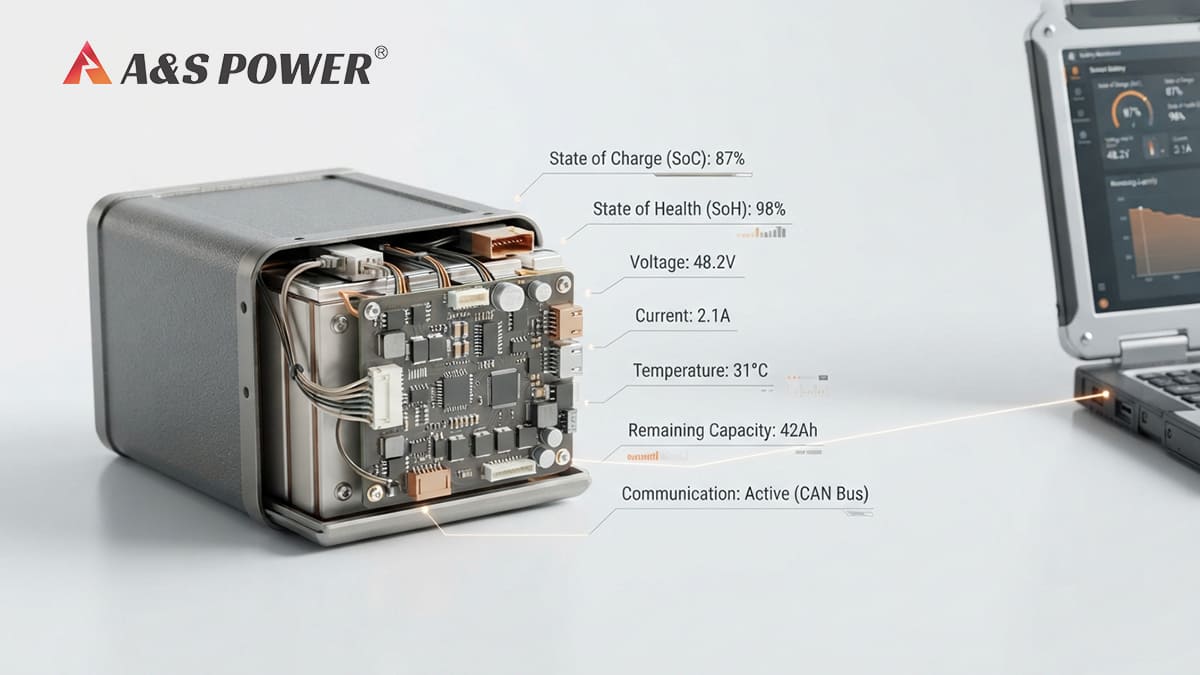
A smart battery is a rechargeable battery pack with integrated electronics that can monitor battery conditions, calculate information such as state of charge (SoC), and communicate battery data to a host device or charger.
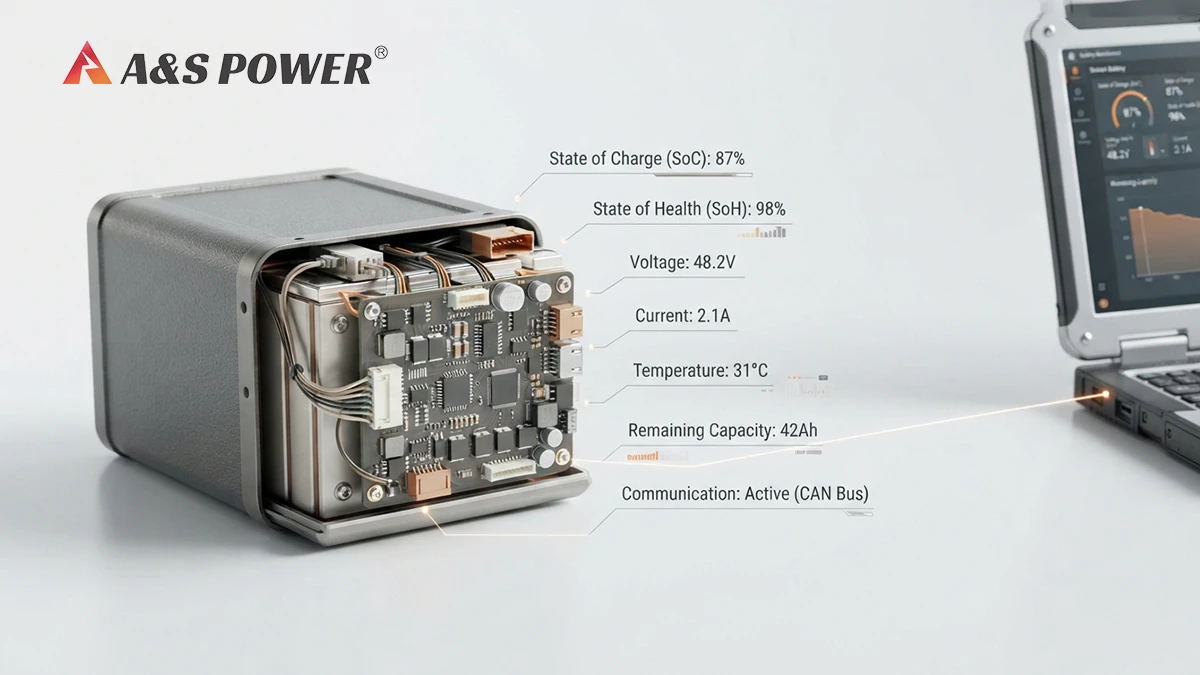
In my experience, the key difference between a conventional battery pack and a smart battery is not simply the presence of a Battery Management System (BMS). A smart battery adds a communication layer that allows the battery and the host system to exchange information. Depending on the design, that information can include voltage, current, temperature, remaining capacity, charging status, battery condition, and fault information.
The Smart Battery System specifications describe a smart battery as a battery equipped with specialized hardware that can provide present, calculated, and predicted battery information to an SMBus host.
That makes a smart battery more than an energy source. It becomes an active part of the device's power-management system.
Introduction
A battery is no longer just a component that stores and supplies energy. In many modern electronic products, the battery also needs to monitor its own condition, communicate with the host device, and provide reliable information for charging and power management. This is where smart battery technology becomes important.
From my perspective as a battery manufacturer, the term “smart battery” is sometimes used too broadly. A battery with a basic protection circuit is not necessarily a smart battery. A true smart battery typically combines battery cells, monitoring electronics, fuel-gauge functions, and a communication interface so that the battery can exchange useful operating data with the device or charger.
This capability is particularly valuable in laptops, medical equipment, GPS trackers, IoT devices, industrial electronics, and other portable products where accurate battery information can affect runtime, charging decisions, and overall system reliability.
In this guide, I will explain what a smart battery is, how its BMS and fuel-gauge system work, what battery data it can provide, how it differs from a conventional battery, and what OEM developers should consider when selecting a custom smart battery pack.
What Is a Smart Battery?
A smart battery is more than a rechargeable energy source. It combines battery cells with monitoring electronics, protection circuitry, fuel-gauge functions, and a communication interface to provide useful battery information to the host device.
A conventional battery typically delivers electrical power through its terminals, while a smart battery can also communicate information about its operating condition. Depending on the system design, a smart lithium battery pack may report:
- Pack voltage
- Charge and discharge current
- Battery temperature
- Remaining capacity
- State of Charge (SoC)
- State of Health (SoH)
- Charging or discharging status
- Fault or protection conditions
- Estimated remaining runtime
- Battery identification or manufacturing information
The Smart Battery Data specification distinguishes between measured information, such as voltage, current, and temperature, and calculated or predictive information derived from battery conditions and operating characteristics.
This ability to monitor, calculate, and communicate battery information is what makes a battery “smart” from a system-design perspective.
How Does a Smart Battery Work?
A smart battery normally consists of several functional layers working together.
1. Battery Cells
The cells store and deliver electrical energy. Depending on the application, a smart battery pack may use lithium-ion, lithium polymer, LiFePO4, or another rechargeable chemistry.
For portable electronics and compact OEM products, lithium-ion and lithium polymer cells are particularly common because they offer useful combinations of energy density, weight, and packaging flexibility.
2. Battery Management System
The BMS is the electronic control layer of the battery pack.
A BMS can monitor cell voltage, pack current, temperature, and other operating parameters. It can also enforce protection limits and, in more advanced systems, estimate SoC and SoH and communicate battery information to external equipment. IEEE describes the BMS as the interface between the electrochemical behavior of the cells and the electrical and software systems using the battery.
Typical BMS functions include:
- Overcharge protection
- Over-discharge protection
- Overcurrent protection
- Short-circuit protection
- Temperature monitoring
- Cell balancing
- Battery status monitoring
- Communication with the host system
However, not every BMS automatically makes a battery a Smart Battery. A basic protection board may protect the cells without providing meaningful data communication to the host.
3. Fuel Gauge
The fuel gauge is another important part of a smart battery.
Its job is to estimate how much usable energy remains in the battery. Instead of simply measuring voltage, a fuel-gauge system can use current measurements, voltage, temperature, battery characteristics, and operating history to estimate remaining capacity.
This is why the battery percentage displayed by a laptop or other smart device does not necessarily correspond directly to instantaneous battery voltage.
For product designers, accurate fuel gauging is especially important when the device needs reliable runtime information.
4. Communication Interface
A smart battery needs a way to exchange information with the host device or charger.
One established approach is the System Management Bus (SMBus). The Smart Battery System specifications define SMBus as the communication path between the smart battery, host, charger, and other compatible devices.
Other battery designs may use interfaces such as I²C, CAN, UART, RS-485, or proprietary communication protocols depending on the application.
The communication interface should therefore be selected as part of the complete system design rather than added at the end of battery development.
Smart Battery vs. Regular Battery
The easiest way to understand the difference is to compare what the battery can do beyond simply supplying power.
| Feature | Conventional Battery Pack | Smart Battery Pack |
|---|---|---|
| Stores electrical energy | Yes | Yes |
| Basic protection | May have it | Typically integrated |
| Voltage monitoring | Limited or external | Integrated |
| Current monitoring | Usually external | Typically integrated |
| Temperature monitoring | May be external | Typically integrated |
| State of Charge information | Usually estimated externally | Can be calculated and reported |
| State of Health information | Usually unavailable | Can be supported |
| Communication interface | Usually no | Yes, depending on design |
| Battery identification | Limited | Can be supported |
| Charger communication | Usually limited | Supported in compatible systems |
| Fault/status reporting | Limited | Can be reported digitally |
The exact functions depend on the battery architecture, electronics, firmware, communication protocol, and host device.
This distinction is important because I would not recommend calling every battery with a protection circuit a “smart battery.” A smart battery should provide meaningful battery information and communication appropriate to the system.
What Information Can a Smart Battery Report?
One of the biggest advantages of a smart battery is that the host system can obtain information directly from the battery.
For example, a battery may report its present voltage and current while also providing calculated information such as remaining capacity or estimated runtime.
| Battery Parameter | What It Tells the Host |
| Voltage | Present electrical potential of the pack |
| Current | Charge or discharge rate |
| Temperature | Thermal operating condition |
| SoC | Estimated remaining charge |
| SoH | Estimated battery condition relative to its expected capability |
| Remaining Capacity | Estimated usable capacity remaining |
| Full Charge Capacity | Estimated capacity when fully charged |
| Cycle Information | Battery usage history, when supported |
| Battery Status | Charging, discharging, full, fault, etc. |
| Manufacturer Data | Battery identification and configuration information |
The Smart Battery Data specification specifically supports measured and calculated battery information, including parameters such as temperature, pack voltage, current and remaining-life estimates.
Why Are Smart Batteries Important?
I see smart battery technology becoming especially valuable when the battery is part of a larger electronic system rather than a standalone power source.
Better Battery Monitoring
A host device can obtain battery information without relying entirely on external measurement circuits.
This can improve the accuracy of battery-status displays and help software make better power-management decisions.
Improved Charging Control
A compatible smart charger can use battery information to adjust charging behavior. The Smart Battery System specifications describe a smart charger as a charger designed to communicate with a smart battery and dynamically adjust charging characteristics according to information provided by the battery.
Better Fault Detection
A smart battery can report abnormal conditions to the host system. This can help the equipment respond appropriately when temperature, voltage, current, or other monitored conditions move outside defined operating limits.
Better Product-Level Power Management
For a portable medical device, GPS tracker, industrial terminal, wearable product, or IoT device, battery information can become part of the product's software logic.
For example, the device may reduce power consumption when the battery reaches a predefined condition or notify the user when charging is required.
Where Are Smart Batteries Used?
Smart battery technology is particularly useful in products where battery status, runtime, safety, and system communication matter.
Common applications include:
- Laptop and portable computers
- Medical and healthcare equipment
- Industrial handheld devices
- GPS trackers
- IoT equipment
- Portable diagnostic instruments
- Robotics
- Drones and intelligent equipment
- Portable communication devices
- Battery-powered test instruments
- Energy storage and industrial systems
The original Smart Battery System architecture was strongly associated with portable computing, but the underlying concept can be applied to many battery-powered systems. The ACPI specification, for example, defines a Smart Battery subsystem involving the battery, charger, system-management components, and host interface.
Smart Battery Does Not Mean the Battery Lasts Forever
This is a common misunderstanding.
A smart battery can monitor and manage battery conditions, but it does not eliminate normal battery aging.
Lithium-based cells still experience capacity loss over time because of operating temperature, charge/discharge conditions, storage conditions, cycle history, and chemistry-related aging.
The advantage of a smart battery is that the system can monitor these conditions more intelligently.
For an OEM product, I therefore look at the smart battery as part of the complete power architecture rather than as a standalone feature.
The cells, BMS, fuel gauge, firmware, communication protocol, charger, connector, and host software all need to work together.
How to Choose a Smart Battery for an OEM Product
When I work through a custom battery requirement, I recommend defining the battery requirements before selecting the cell or electronics.
Define Voltage and Capacity
Start with the device's required operating voltage, energy consumption, and expected runtime.
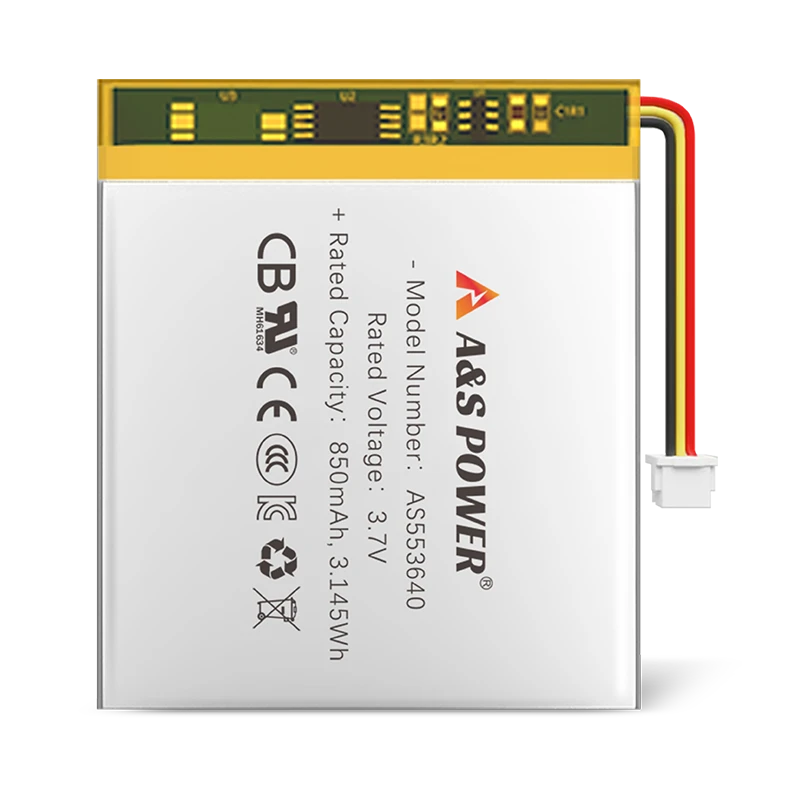
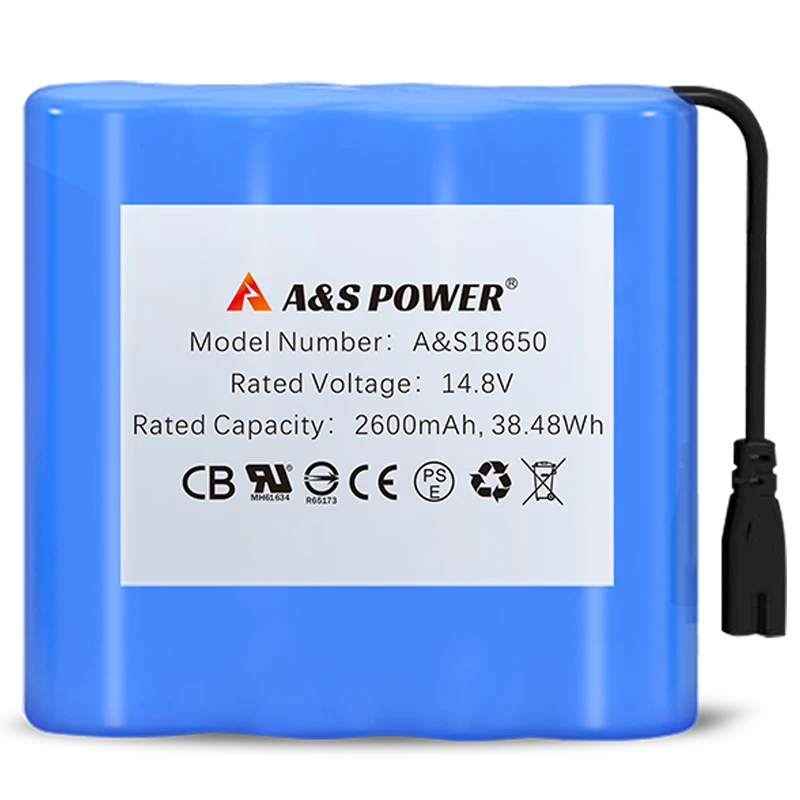
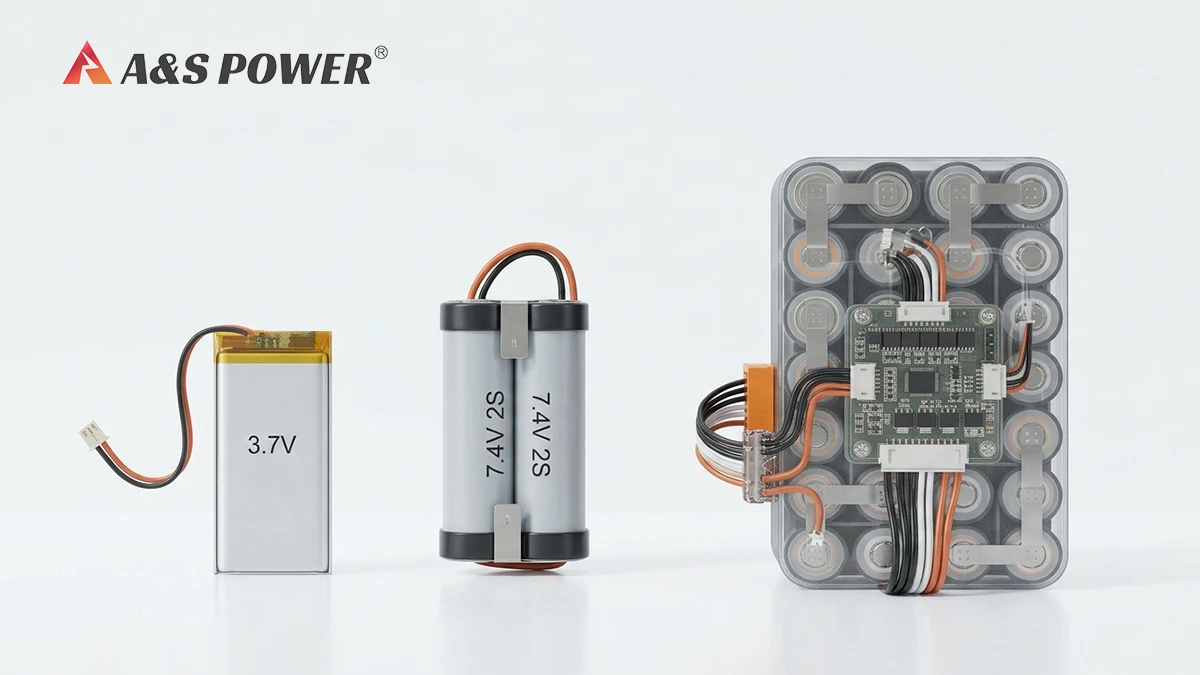
For example, a 3.7V lithium polymer cell may be suitable for some compact electronics, while a multi-cell configuration may be necessary for equipment requiring higher voltage.
Define the Communication Protocol
Do not assume that every device can communicate with every smart battery.
Confirm whether the host requires SMBus, I²C, CAN, UART, RS-485, or another interface.
Define Required Battery Data
Decide which information the device actually needs.
A simple product may only need SoC and basic battery status. A more advanced product may require SoH, temperature, cycle information, fault reporting, battery identification, and detailed charging data.
Match the Charger and Firmware
A smart battery is part of a closed system.
The charger, BMS, fuel gauge, communication protocol, and host software should be designed to work together. Otherwise, adding a communication chip to an existing battery pack may not deliver the expected functionality.
Consider Mechanical Requirements
For compact OEM equipment, the battery also needs to fit the available enclosure.
This is particularly important for custom lithium polymer batteries because dimensions, thickness, connector position, wire length, protection circuitry, and mounting requirements can all be customized around the device architecture.
For manufacturers evaluating a custom battery solution, A&S Power provides information about its custom lithium battery technology and manufacturing capabilities.
Smart Battery vs. Smart BMS
These terms are related, but I would not use them interchangeably.
A smart BMS is the electronic management system inside or associated with a battery pack. It can monitor, protect, calculate, and communicate battery information.
A smart battery is the complete battery solution that uses electronics and communication to interact with the host device or charger.
In simple terms:
Smart BMS = intelligent battery management electronics
Smart Battery = battery cells + management electronics + data/communication + system integration
This distinction becomes particularly important during OEM development because the customer may need a complete battery pack rather than a standalone BMS board.
Conclusion
A smart battery is more than a rechargeable battery with a protection circuit. It is an intelligent battery system capable of monitoring its condition, calculating useful battery information, and communicating that information to the host device or charger.
From my perspective, the most important elements are the battery cells, BMS, fuel gauge, communication interface, firmware, charger, and host-device integration. If these elements are properly matched, a smart battery can give an OEM product better visibility into battery condition, charging status, remaining capacity, and system-level power management.
For companies developing medical equipment, GPS products, IoT devices, industrial electronics, wearables, or other portable products, a custom smart battery can be designed around the actual electrical, mechanical, communication, and safety requirements of the device.
For more information about lithium battery customization, you can also review A&S Power's custom battery solutions and lithium-ion battery products.
FAQs: About Smart Batteries
What is a smart battery?
A smart battery is a rechargeable battery pack with integrated electronics that can monitor battery conditions, calculate information such as SoC, and communicate data to a host device or compatible charger.
Is a smart battery the same as a battery with a BMS?
Not necessarily. A BMS can provide protection and monitoring without providing the communication and battery-data functions normally associated with a Smart Battery.
What does a smart battery BMS do?
A smart BMS can monitor voltage, current, temperature, and other battery conditions while providing protection against abnormal operating conditions. Advanced systems may also estimate SoC and SoH and communicate information to the host.
What is SoC in a smart battery?
SoC means State of Charge. It represents the estimated amount of charge remaining in the battery relative to its usable capacity.
What is SoH in a smart battery?
SoH means State of Health. It is an indicator of the battery's condition or remaining capability compared with a reference or expected condition. The exact calculation method depends on the battery-management design.
Does a smart battery use SMBus?
Many Smart Battery System implementations use SMBus. However, modern battery systems can use other communication interfaces depending on the application and system architecture. The Smart Battery System specifications specifically define SMBus communication between the battery, host, and charger.
Can a lithium polymer battery be made into a smart battery?
Yes. A lithium polymer battery pack can be designed with appropriate protection electronics, fuel-gauge functions, communication hardware, firmware, and connectors to meet a device's smart-battery requirements.
For OEM applications, the electronics and communication requirements should be defined together with the cell voltage, capacity, dimensions, discharge current, charging requirements, and mechanical constraints.
-

 May.2026.08.24What Is a Smart Battery?Learn More
 -
 May.2026.08.24Custom Battery Pack vs. Off-the-Shelf Battery: OEM Cost & Time ComparisonLearn More
 -
 May.2026.08.21Soft Pouch LiPo vs. Hard Plastic Enclosure Lithium Pack: Durability & SafetyLearn More
 -
 May.2026.08.20Custom LiPo Battery vs. Cylindrical 18650 Pack: Which Is Better for Your Device?Learn More
 -
 May.2026.08.19Custom Lithium Battery Pack Voltage & Capacity Selection GuideLearn More