




LiFePO4 vs Lead Acid Batteries
If you want a battery that lasts longer, charges faster, and is lighter, LiFePO4 is usually better than lead-acid for most things. Lead-acid batteries are used in many backup power systems. But LiFePO4 is becoming more popular in portable and car markets. Look at the main differences below:
| Aspect | Lead-Acid Battery | LiFePO4 Lithium Battery |
|---|---|---|
| Weight | Heavy | Lightweight |
| Lifespan | 2-6 years | Up to 10-15 years |
| Charging Time | 6-12 hours | 1-4 hours |
| Environmental | Contains toxic lead | Non-toxic, eco-friendly |
| Cost | Lower upfront | Saves more long-term |
You can use this lifepo4 vs. lead acid batteries guide to help you pick the best battery for what you need.
Key Takeaways
- LiFePO4 batteries last longer. They work for 10-15 years. Lead-acid batteries last only 2-6 years.
- LiFePO4 batteries charge much faster. They need just 1-4 hours to charge. Lead-acid batteries take 6-12 hours.
- LiFePO4 batteries are lighter and smaller. This makes them easy to move and set up.
- LiFePO4 batteries do not need much care. Lead-acid batteries need regular checks and care.
- LiFePO4 batteries are safer to use. They have a lower fire risk. They do not have toxic stuff inside. This makes them better for indoor use.
Understanding the Core Technology: How They Work
What is LiFePO4 (Lithium Iron Phosphate)?
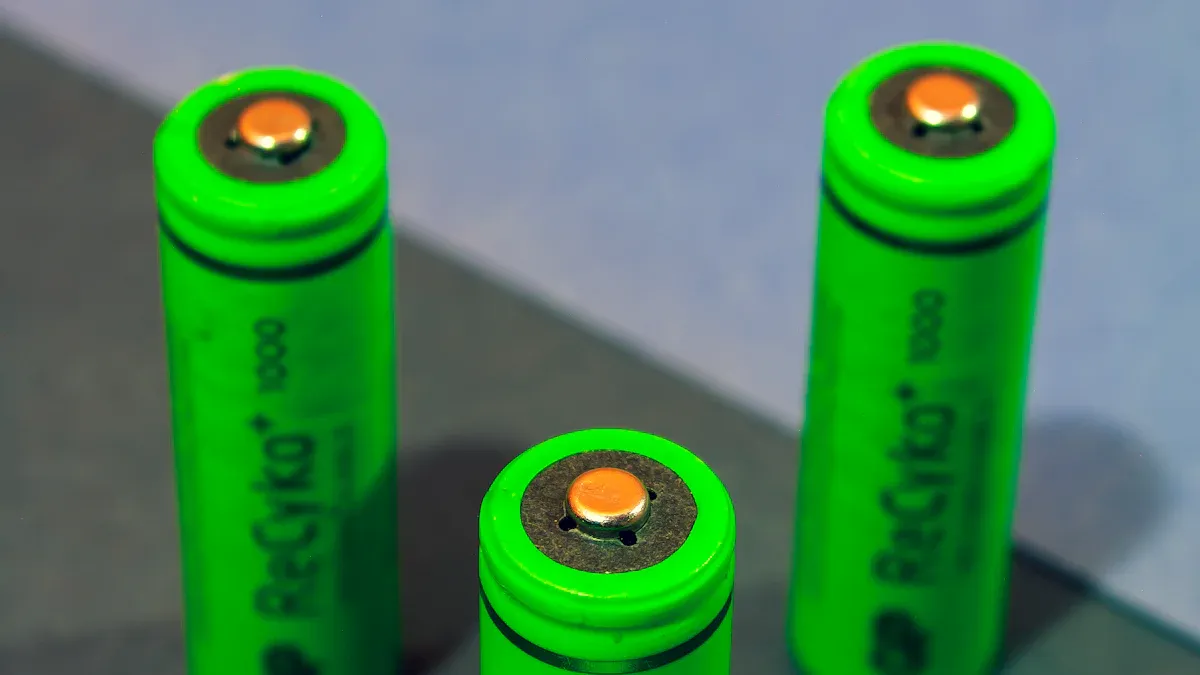
LiFePO4 batteries have lithium iron phosphate in their cathode. This makes the battery stable and safe. It also helps the battery last a long time. You can see how LiFePO4 is different from other lithium-ion batteries in the table below:
| Feature | LiFePO4 | Other Lithium-Ion Batteries |
|---|---|---|
| Chemical Composition | Lithium iron phosphate | Cobalt, nickel, or manganese |
| Thermal Stability | Very high | Lower |
| Cycle Life | 2,000–5,000 cycles | 500–1,500 cycles |
| Energy Density | 90–120 Wh/kg | 150–250 Wh/kg |
| Safety | Very safe, low fire risk | More risk of overheating |
| Environmental Impact | No cobalt or nickel | Uses cobalt and nickel |
LiFePO4 batteries are special because they last longer. They also have a lower chance of catching fire. These batteries are better for the environment. They do not use rare or harmful metals.
The Limitations of Traditional Lead Acid & AGM
Lead acid and AGM batteries have been used for many years. But they have some big problems:
- They are heavy and large because of low energy density.
- They do not last as long, so you must replace them more.
- They need a lot of care, like checking water and cleaning.
When you look at lifepo4 vs. lead acid batteries, you will see a big difference in how much power you can use. Lead acid batteries lose power fast if you use them quickly. This is because of the Peukert effect. For example, a 100 amp hour lead acid battery might only give you about 71 amp hours if you use it fast. Lifepo4 batteries keep almost all their power, even with big loads.
- Lead acid batteries have a Peukert exponent between 1.2 and 1.5. This means they lose power faster when you use them quickly.
- Lifepo4 batteries have a Peukert exponent close to 1.05. They give steady power even if you use them fast.
In real life, lifepo4 vs. lead acid batteries is not just about size or cost. Lifepo4 batteries let you use more of their power. They also waste less energy. This is very helpful for things like solar power or RVs.
Performance Battle: Why Lithium Wins on Efficiency
Usable Capacity and Depth of Discharge (DoD)Cycle Life
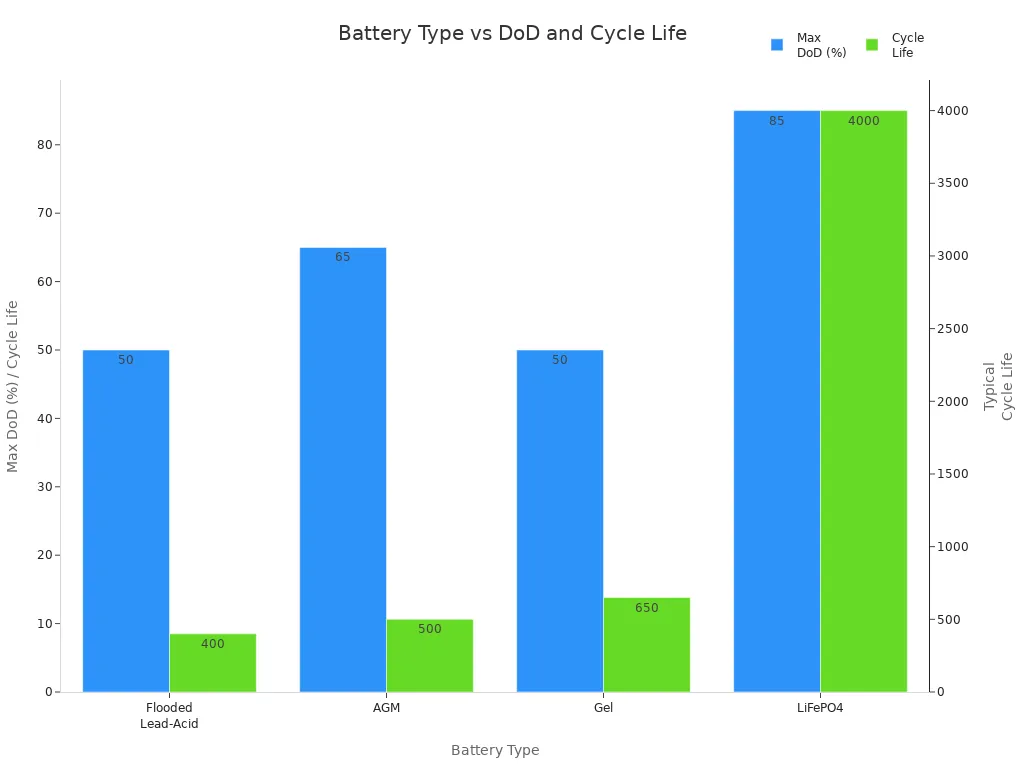
When you look at lifepo4 vs. lead acid batteries, you notice a big difference in how much energy you can use. LiFePO4 batteries let you use almost all the energy inside them. Lead-acid batteries only let you use about half their energy. For example, if you have a 100Ah lead-acid battery, you should only use 50Ah to keep it safe. But with a 100Ah LiFePO4 battery, you can use 80Ah or even more. This means you get more power and better efficiency for what you need.
| Feature | LiFePO4 Batteries | Lead-Acid Batteries |
|---|---|---|
| Depth of Discharge | 80–100% usable capacity | 50% usable capacity |
LiFePO4 batteries also last much longer than lead-acid batteries. Lead-acid batteries usually work for 300-800 cycles. LiFePO4 batteries can last for 3,000-5,000 cycles or even more. This means you will have to replace lead-acid batteries many times before you need to change a lifepo4 battery.
| Battery Type | Recommended Max DoD | Typical Cycle Life |
|---|---|---|
| Flooded Lead-Acid | 50% | 300-500 cycles |
| AGM | 60 - 70% | 400-600 cycles |
| Gel | 50% | 500-800 cycles |
| LiFePO4 | 80-90% | 3000-5000+ cycles |
LiFePO₄ batteries usually last 2,000–5,000 cycles. This gives you up to ten years of use. Lead-acid batteries last 300–500 cycles. You might need to replace them every few years.
The "Peukert Effect" Explained
The Peukert effect shows how batteries lose power when you use them fast. Lead-acid batteries lose a lot of energy if you use them quickly. For example, a 100Ah lead-acid battery might only give you 71Ah if you use it fast. LiFePO4 batteries keep almost all their energy, even if you use them quickly. You get steady power and better results, no matter how fast you use energy.
Weight, Size, and Energy Density
You want a battery that is easy to move and put in place. LiFePO4 batteries are much lighter than lead-acid batteries. For the same amount of energy, a lifepo4 battery can be more than 50% lighter. Lead-acid batteries can weigh up to 350 pounds. LiFePO4 batteries with the same power weigh about 23 pounds. You also save space. Lithium batteries are smaller and fit better in small places.
| Battery Type | Weight (kg) | Dimensions (mm) |
|---|---|---|
| LiFePO4 | 11.5 | 330 × 171 × 215 |
| Lead Acid | 28–37 | 507 × 240 × 174 |
- LiFePO4 batteries are over 50–60% lighter than lead-acid batteries.
- They save about 40–45% of space for the same energy.
- Lithium batteries hold about three times more power for the same weight.
You get better results for things you need to carry. LiFePO4 batteries work well in RVs, boats, and solar systems. You can move them easily and put them in without problems.
Reliability and Warranty Support
You want a battery that works well for a long time. LiFePO4 batteries are very reliable and come with long warranties. Many brands give you up to 10 years of help. Lead-acid batteries often need to be replaced every few years. With lifepo4 batteries, you do not have to worry about battery problems as much.
| Metric | LiFePO4 | Lead Acid |
|---|---|---|
| Depth of Discharge (DoD) | 80-90% | 50% |
| Cycle Life | Several thousand cycles | Few hundred cycles |
| Power Density | 1,000–2,500 W/kg | N/A |
- LiFePO4 batteries charge faster than lead acid batteries.
- They are less affected by changes in temperature.
- You get more usable energy, so they are more efficient.
When you compare how they work, lifepo4 batteries win in almost every way. You get more cycles, better efficiency, lighter weight, and a longer life. The big difference makes lifepo4 vs. lead acid batteries an easy choice for most people.
The Economics: Upfront Cost vs. Total Cost of Ownership (TCO)
Cycle Life Comparison: 300 vs. 4000 Cycles
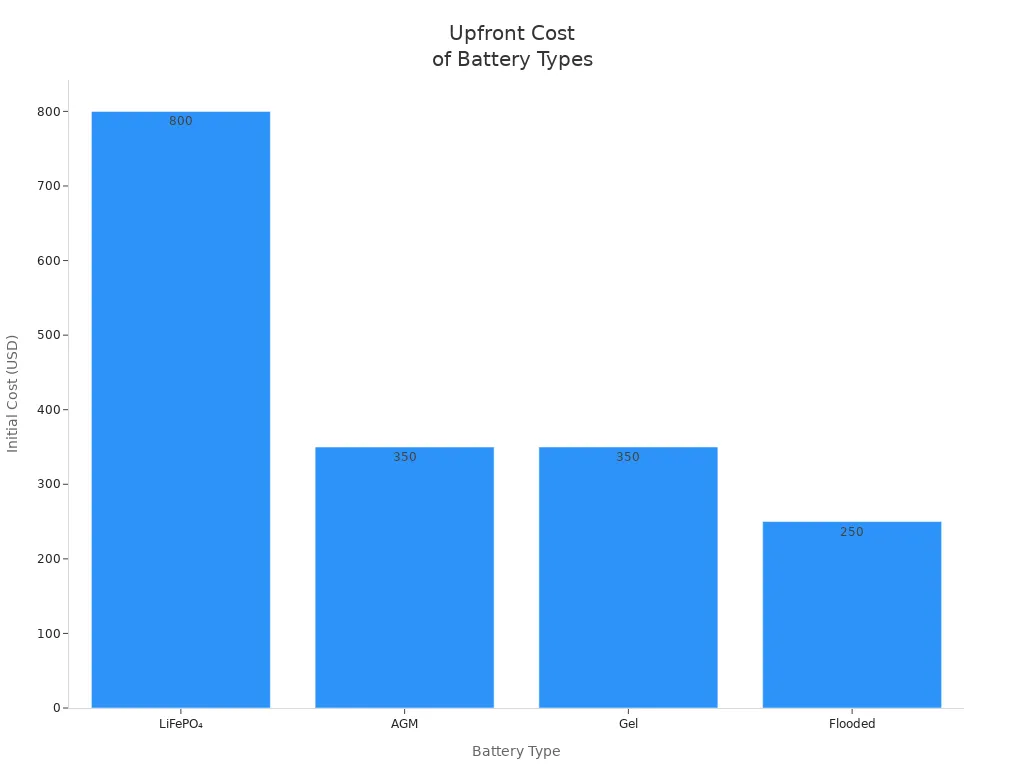
Lead-acid batteries cost less when you buy them. A 100Ah lead-acid battery usually costs $100 to $300. LiFePO4 batteries cost more, between $500 and $800 for the same size.
| Battery Type | Initial Cost (100Ah) |
|---|---|
| Lead Acid | $100 - $300 |
| LiFePO4 | $500 - $800 |
But you should also think about how long each battery lasts. Lead-acid batteries work for about 300 to 600 cycles. LiFePO4 batteries can last from 2,000 to over 6,000 cycles. This means you will need to buy lead-acid batteries many times before you need a new LiFePO4 battery.
| Battery Type | Cycle Life Range |
|---|---|
| LiFePO4 | 2,000 to over 6,000 cycles |
| Lead Acid | ~300 cycles (up to 600 cycles) |
LiFePO4 batteries give you more value because they last longer. Many people use LiFePO4 batteries every day for 10 or even 12 years. Lead-acid batteries often only last 2 to 3 years.
Maintenance and Hidden Costs
You also need to think about taking care of your battery. Lead-acid batteries need you to check them often. You have to add water and clean them. They do not like hot or cold places and need special storage. LiFePO4 batteries are much easier. They almost never need care. They have a battery management system that keeps them safe.
| Aspect | Lead-Acid Batteries | LiFePO4 Batteries |
|---|---|---|
| Monitoring | Regular checks needed | BMS handles safety |
| Watering | Yes | No |
| Storage | Fully charged, top up every 6 months | 50% charge, cycle every 6 months |
Lead-acid batteries can cost more than you think. You spend time and money on care, getting rid of old batteries, and sometimes cooling. Acid leaks and gas can be dangerous for people and the earth. These extra costs make lead-acid batteries less of a good deal.
Calculating Your ROI (Return on Investment)Charging & Maintenance
When you add up the price, replacements, and care, LiFePO4 batteries can save you money. In ten years, you might only need one LiFePO4 battery. But you could need up to eleven lead-acid batteries for the same job. LiFePO4 batteries also use energy better, so you get more power each time you charge.
| Feature | LiFePO4 | Lead-Acid |
|---|---|---|
| Cycle Life | 500 cycles (AGM/Gel) | |
| Replacement Frequency | 1 battery over 10 years | 6–11 replacements |
| Charging Efficiency | 95% | 85% (AGM/Gel) / 80% (Flooded) |
| Maintenance | Maintenance-free | Requires regular maintenance |
| Estimated ROI | Up to 293% over 10 years | N/A |
If you want a battery that lasts longer, needs less work, and saves money, LiFePO4 is a smart choice. You pay more at first, but you save more as time goes on.
Safety and Management: The Role of BMS
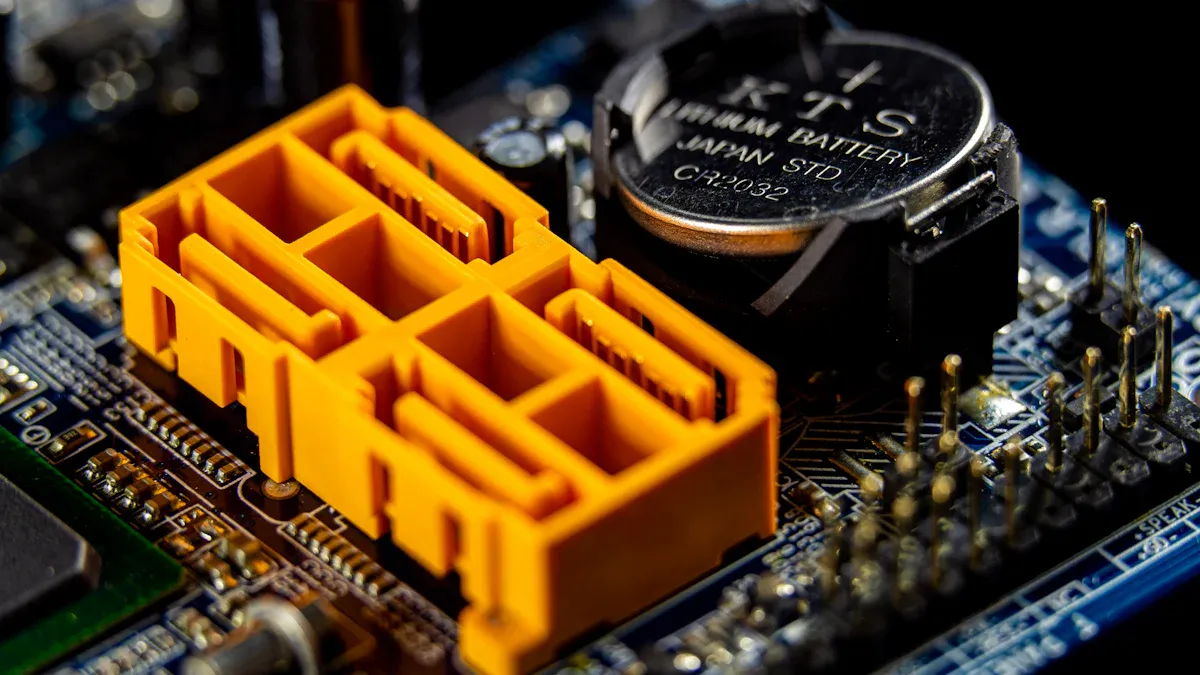
When you pick a battery, safety is very important. LiFePO4 batteries are safer than lead-acid batteries. You do not need to worry about leaks or fires. They also do not have harmful chemicals. Here is how these two batteries are different:
| Feature | LiFePO4 Batteries | Lead-Acid Batteries |
|---|---|---|
| Flammability | Non-flammable | Flammable |
| Thermal Stability | High | Lower |
| Chemical Stability | Chemically stable | Contains hazardous materials |
| Risk of Leakage | Less likely | More likely |
| Toxicity | Non-toxic | Toxic (lead and acid) |
LiFePO4 batteries give you extra safety. They do not have dangerous things like lead or acid. They are less likely to leak or catch fire, even if dropped or poked.
How a Smart BMS Protects Your Battery
A smart Battery Management System, or BMS, is like a guard for your LiFePO4 battery. It checks every cell and keeps the battery safe. Here are some things a BMS does:
- Stops charging if the battery gets too full
- Cuts off power if the battery gets too empty
- Limits current and disconnects if there is a surge
- Watches the temperature and stops charging if it is too hot or cold
- Balances each cell so they all work together
- Keeps voltage at a safe level
| BMS Feature | What It Does |
|---|---|
| Overcharge Protection | Stops charging when cells reach max voltage |
| Over-Discharge Protection | Disconnects load if voltage drops too low |
| Overcurrent/Short-Circuit | Limits current and disconnects during surges |
| Temperature Monitoring | Stops charging in extreme heat or cold |
| Cell Balancing | Keeps all cells at equal voltage for longer life |
| Voltage Protection | Prevents unsafe voltage levels |
You do not need to check water or clean the battery like with lead-acid batteries. The BMS does all the work for you. This system helps your battery last longer and keeps you safe. You can trust your battery to work well, even in hard places like solar, RVs, or backup power.
Tip: A smart BMS keeps your battery safe and makes it last longer. You get more cycles, fewer problems, and less worry about your battery breaking.
LiFePO4 batteries with a BMS can charge faster and give steady power. The BMS stops most battery problems before they happen. You spend less time fixing your battery and more time using it.
You want a battery that lasts a long time and works well. LiFePO4 batteries can be used over 2,000 times. They hold more energy and do not need much care. Lead-acid batteries are cheaper when you buy them. But they do not last as long as LiFePO4 batteries. Look at the table to see the main differences:
| Feature | LiFePO4 | Lead Acid |
|---|---|---|
| Lifespan | 2,000+ cycles | 300 cycles |
| Weight | Lighter | Heavier |
| Maintenance | None | Needed |
Pick lead-acid if you do not want to spend much money or only need backup power sometimes. If you use your battery every day, or for solar or RVs, LiFePO4 is better because it lasts longer and is more reliable. Think about what you need and choose the battery that works best for you.
FAQ
How do I know if LiFePO4 is right for me?
You should choose LiFePO4 if you want a battery that lasts longer, charges faster, and needs less care. It works best for solar, RVs, and daily use.
Can I replace my lead-acid battery with LiFePO4?
Yes, you can swap most lead-acid batteries for LiFePO4. Check your charger and system for compatibility. Some systems may need a new charger.
Do LiFePO4 batteries need special maintenance?
No, you do not need to add water or clean them. The built-in BMS protects the battery. You only need to check connections sometimes.
Are LiFePO4 batteries safe to use indoors?
Yes, you can use LiFePO4 batteries indoors. They do not leak acid or release harmful gases. You get a safer option for your home or RV.
-

 May.2026.09.10What Happens When Battery Charging and Discharging Ports Are Swapped?Learn More
 -
 May.2026.09.10Will the Production Battery Be the Same as the Approved Sample?Learn More
 -
 May.2026.09.08Why Doesn't a 2A LiPo Battery Pulse Trip PCM Over-Current Protection?Learn More
 -
 May.2026.09.08How Long Do Custom Batteries Stay in Production?Learn More
 -
 May.2026.09.07Comprehensive Understanding of 7.4V BatteryLearn More