




18650 Cell or LiPo Battery Cell: Choosing the Best Battery
Quick Answer:
Which is better, an 18650 cell or a LiPo battery cell?
Neither battery format is universally better. I choose 18650 cells when a project benefits from a rigid cylindrical format, established cell dimensions, mechanical durability, and straightforward pack construction. I choose LiPo pouch cells when the product requires a thin profile, lightweight construction, unusual dimensions, or high packaging efficiency.
For OEM products, the better choice is the cell that matches the device's available space, current demand, operating temperature, expected cycle life, mechanical environment, and certification requirements rather than simply choosing the battery with the highest advertised capacity.
Introduction
Choosing between an 18650 cell and a LiPo battery cell is not simply a matter of comparing capacity or asking which battery is "better." In my experience working with lithium battery applications, the right choice depends much more on how the battery needs to fit, perform, and operate inside the final product.
An 18650 cell offers a standardized cylindrical format, rigid construction, and a well-established approach to battery pack design. LiPo battery cells, by comparison, use a pouch-style construction that gives engineers much greater freedom when working with thin, lightweight, or irregularly shaped products. Both can provide reliable lithium-ion power, but they solve different engineering problems.
This distinction becomes especially important in OEM battery development. A GPS tracker, medical device, wearable product, power tool, or industrial electronic device may have completely different requirements for battery dimensions, voltage, capacity, discharge current, weight, thermal management, and protection.
In this guide, I will compare 18650 cells and LiPo battery cells from a practical engineering perspective, including physical design, energy density, discharge performance, safety, packaging efficiency, customization, and typical applications. Rather than treating one format as universally superior, I will explain where each battery type makes the most sense and what I would consider before selecting a cell for a new product.
The goal is simple: choose the battery format that fits the product—not force the product to fit the battery.
18650 Cell vs LiPo Battery Cell: What Is the Difference?
The first point I clarify with customers is that this is not simply a comparison between "lithium-ion" and "lithium-polymer." Modern LiPo cells are generally part of the broader lithium-ion battery family. The practical difference for product designers is often the cell construction and packaging format.
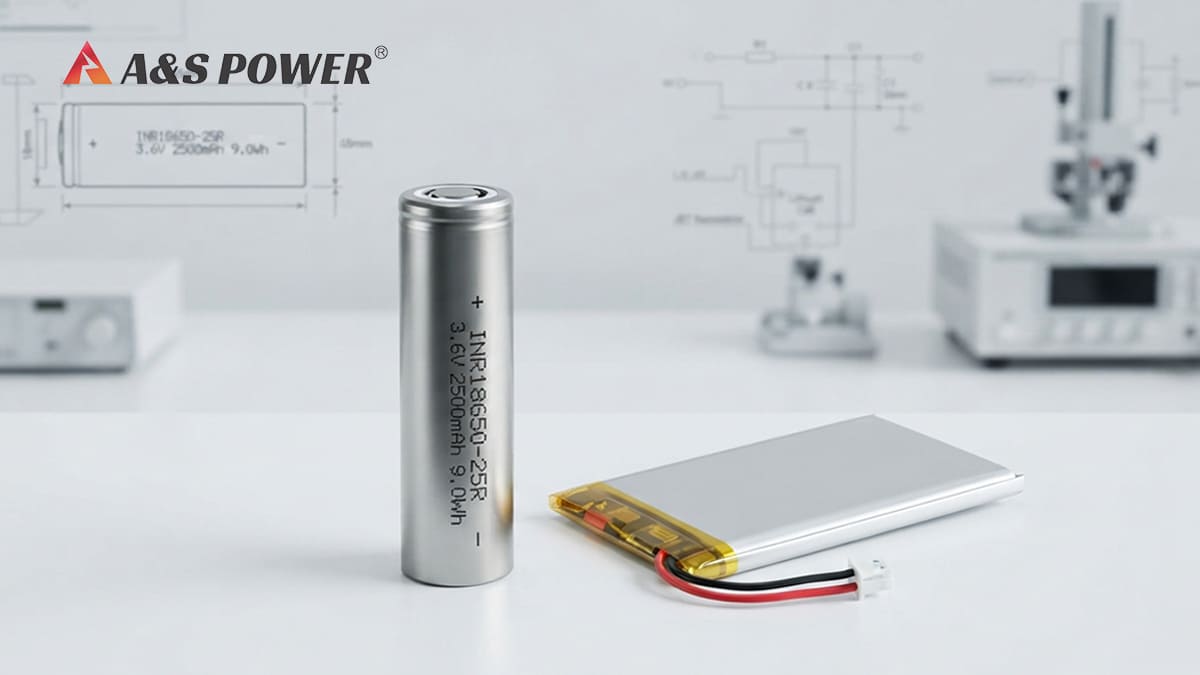
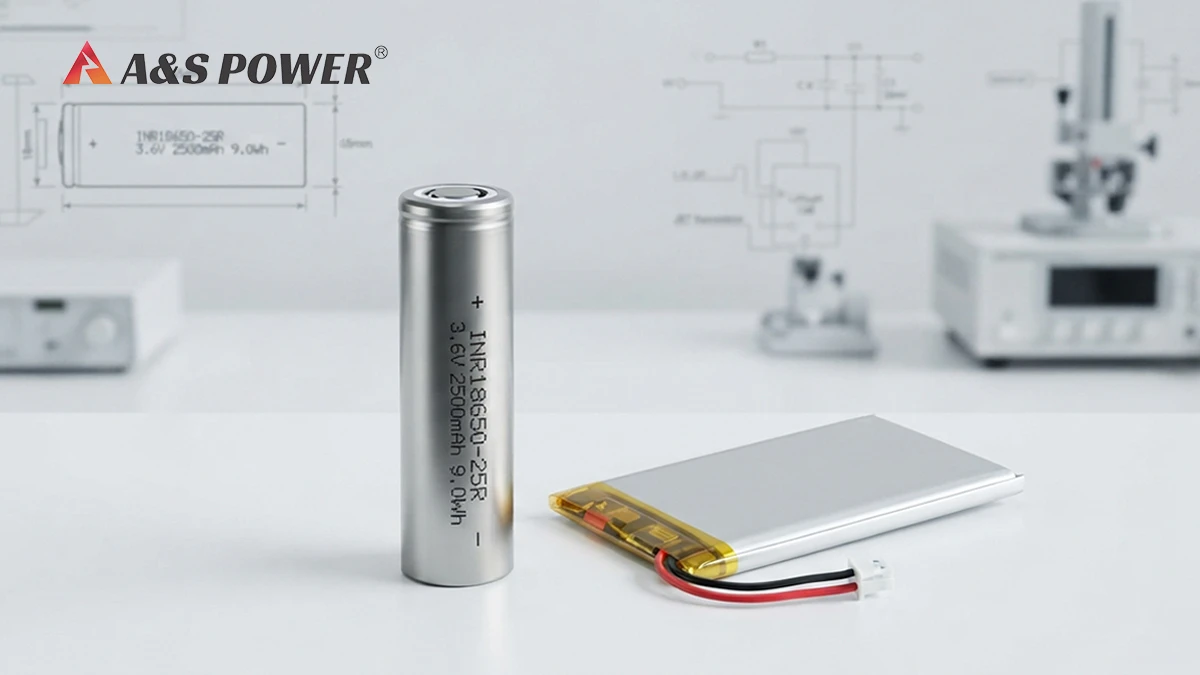
An 18650 is a cylindrical lithium-ion cell with a standardized physical designation of approximately 18 mm in diameter and 65 mm in length. Its rigid metal casing gives the cell a defined shape and provides mechanical protection.
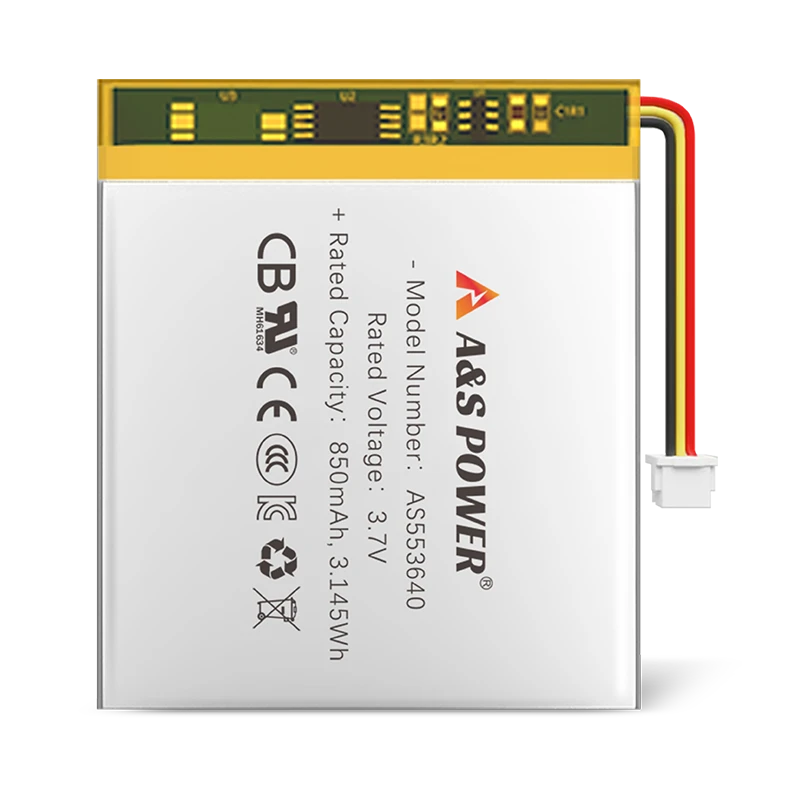
A LiPo battery cell normally uses a flexible laminated pouch enclosure. This allows manufacturers to produce batteries in a wider range of length, width, and thickness combinations. Battery University notes that pouch construction can achieve high packaging efficiency because it eliminates much of the rigid metal enclosure used by cylindrical cells.
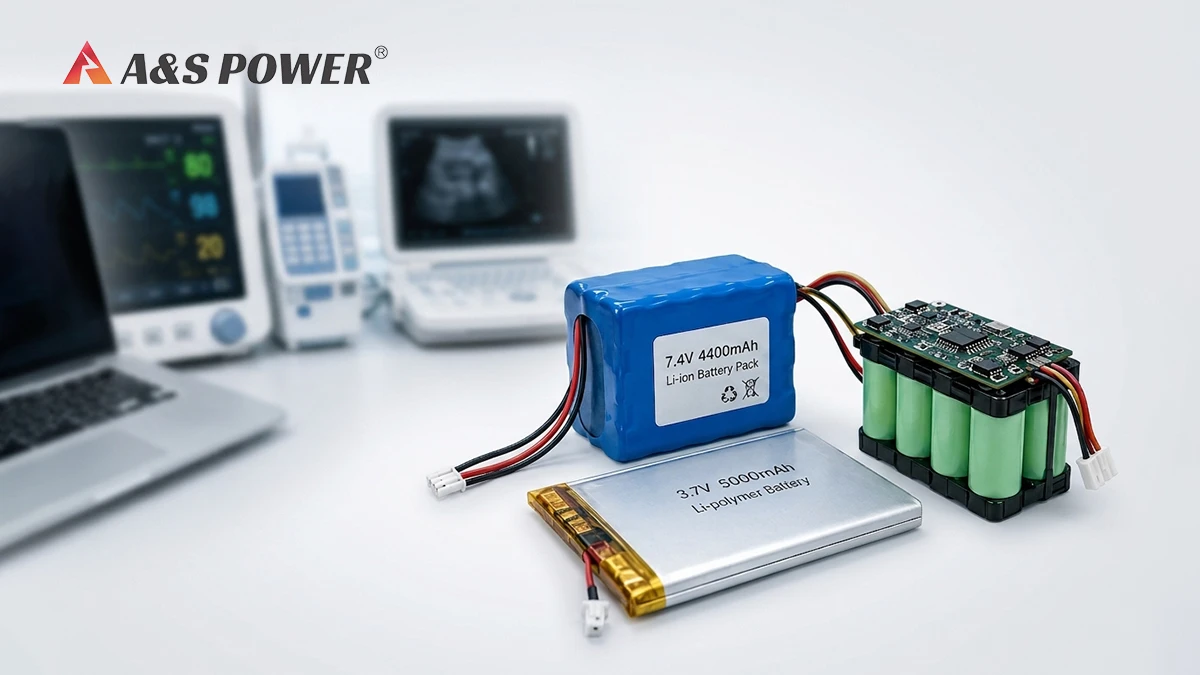
This difference becomes particularly important when I design batteries for medical equipment, GPS devices, wearable electronics, IoT products, and other space-constrained equipment.
Technical Comparison of 18650 and LiPo Cells
The following table provides a practical engineering comparison. Actual performance varies substantially according to cell chemistry, electrode design, manufacturer, capacity, temperature, discharge rate, and operating conditions, so these values should be treated as general design ranges rather than guaranteed specifications.
| Parameter | 18650 Cell | LiPo Battery Cell |
|---|---|---|
| Basic format | Cylindrical | Pouch |
| Typical nominal voltage | Around 3.6–3.7 V | Around 3.7 V |
| Physical shape | Fixed cylindrical format | Flexible/custom rectangular format |
| Space customization | Limited | Excellent |
| Weight | Generally higher due to metal casing | Generally lower |
| Thin-profile design | Limited | Excellent |
| Mechanical protection | Strong rigid enclosure | Requires careful mechanical protection |
| Packaging efficiency | Good, but cylindrical gaps may occur | Very high for custom-shaped spaces |
| High-current capability | Cell dependent | Cell dependent; high-rate designs available |
| Thermal management | Relatively predictable | Requires careful mechanical and thermal design |
| Swelling consideration | Lower visibility because of rigid casing | Pouch expansion must be considered |
| Pack customization | Moderate | Excellent |
| Typical applications | Power tools, battery packs, electronics, energy storage | Wearables, medical devices, GPS, drones, IoT, compact electronics |
The important point is that cell format does not by itself determine performance. A high-quality 18650 designed for high current can outperform a low-rate LiPo pouch cell, while a purpose-built high-discharge LiPo can deliver excellent power in a much smaller package.
When Should You Choose an 18650 Cell?
1. You Need a Rigid and Mechanically Robust Cell
One of the strongest advantages of an 18650 is its cylindrical metal enclosure. It provides a defined physical structure and is less dependent on external compression or enclosure support than a pouch cell.
For equipment that experiences vibration, repeated handling, or mechanical stress, this can simplify the battery compartment design.
Cylindrical cells also maintain their external dimensions more consistently during normal operation. This can make mechanical integration more predictable.
2. Your Product Can Accommodate Cylindrical Cells
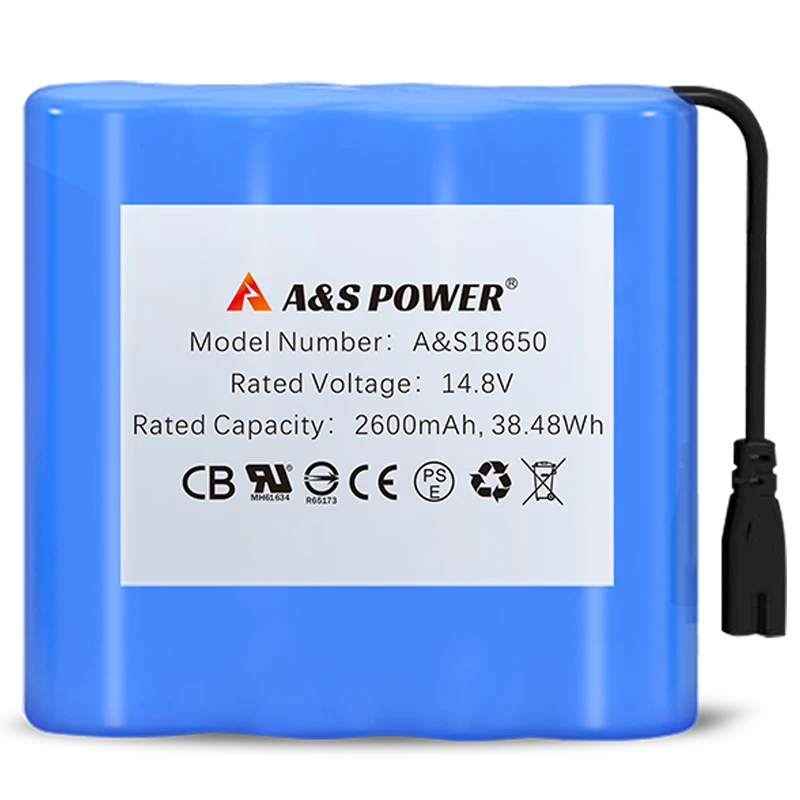
If the enclosure has sufficient depth and width, 18650 cells can be assembled into series and parallel battery packs.
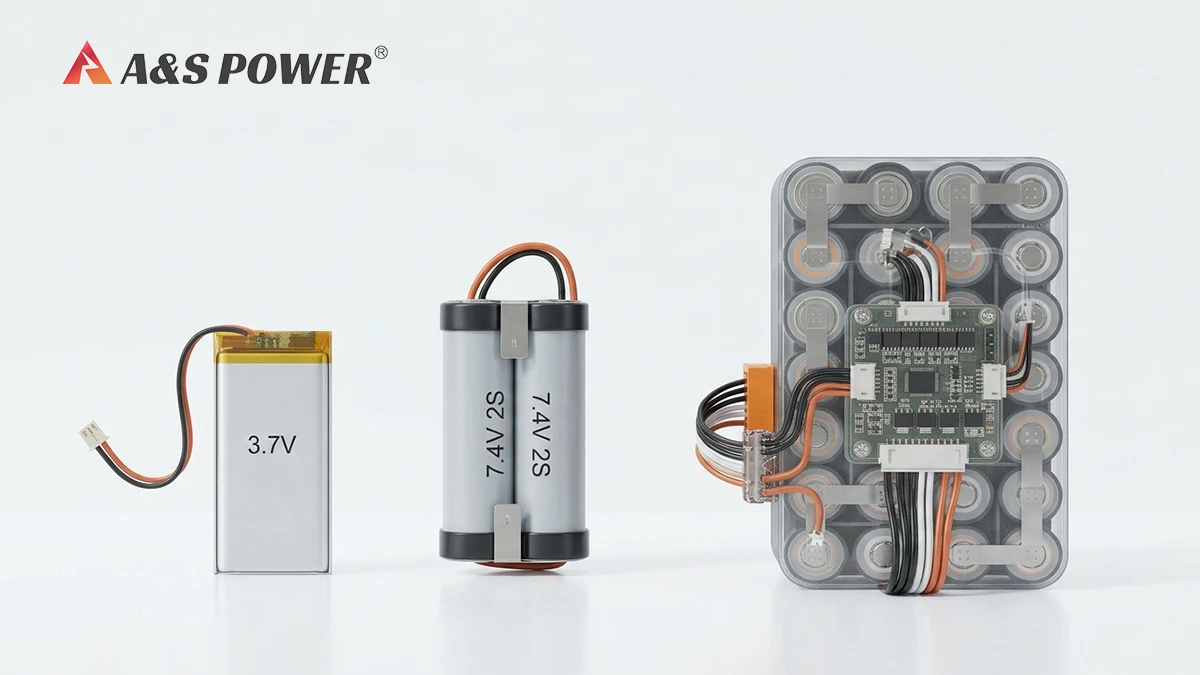
For example, a 1S configuration uses one cell electrically, while a 2S configuration places two cells in series to increase voltage. Parallel configurations increase capacity and current capability.
This modular structure is one reason 18650 cells remain widely used in battery packs.
3. You Prioritize Established Pack Architecture
18650 cells have been used extensively in consumer electronics, power tools, electric mobility, energy storage, and industrial battery packs.
The format is therefore familiar to battery manufacturers and pack engineers, and standardized cylindrical dimensions can simplify sourcing and pack assembly.
When Should You Choose a LiPo Battery Cell?
1. Your Device Has a Thin or Irregular Battery Compartment
This is where LiPo usually has the clearest advantage.
Instead of being restricted to a cylindrical 18 × 65 mm format, a custom pouch cell can be designed around the available enclosure.
For example, a product might require a battery approximately 5 mm thick and 30 mm wide. A pouch cell can be engineered around those dimensional requirements, subject to manufacturing limitations and electrical specifications.
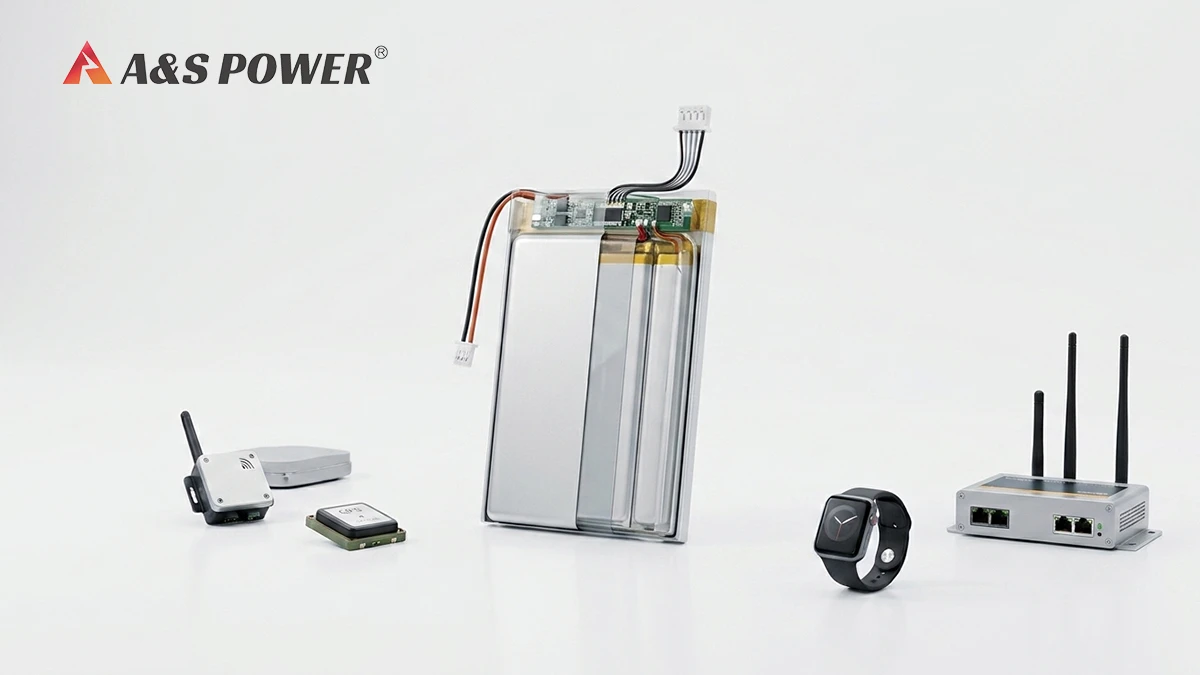
This is especially valuable for wearable electronics, medical monitoring equipment, GPS trackers, smart beauty devices, handheld instruments, and IoT products.
2. Weight and Packaging Efficiency Matter
The flexible pouch construction eliminates the heavy rigid cylindrical shell. Battery University describes pouch cells as lightweight and highly efficient in terms of packaging space.
For a portable product, reducing battery packaging weight can improve the overall user experience.
However, I would not automatically claim that every LiPo cell has higher energy density than every 18650. Energy density depends heavily on the actual chemistry and cell design.
3. You Need a Custom Battery
For OEM development, this is often the deciding factor.
LiPo pouch cells can be customized in terms of:
- Length and width
- Thickness
- Capacity
- Voltage configuration
- Connector
- Wire length
- Protection circuit
- Tabs and terminal arrangement
- Shape and mechanical packaging
That flexibility can allow the battery to occupy otherwise unused space inside a product.
18650 vs LiPo: Energy Density and Capacity
Energy density is often used incorrectly when comparing these two formats.
A battery's energy can be estimated as:
Energy (Wh) = Voltage (V) × Capacity (Ah)
For example, a nominal 3.7 V, 2.6 Ah cell has approximately:
3.7 × 2.6 = 9.62 Wh
But the number printed in mAh does not tell the whole story.
Two cells with the same 3,000 mAh capacity can have different dimensions, weights, internal resistance, discharge characteristics, and usable energy.
Battery University has also pointed out that cylindrical cells can achieve strong gravimetric energy performance, while pouch cells can use available enclosure volume more efficiently.
Therefore, when I compare batteries for an OEM project, I evaluate both:
Wh/kg — gravimetric energy density
and
Wh/L — volumetric energy density
The better metric depends on whether the customer's primary limitation is weight or physical space.
Discharge Performance: Which Battery Is Better?
There is no universal winner.
An 18650 cell designed for power applications can provide substantial continuous and peak current. Likewise, a high-rate LiPo cell can deliver very high current relative to its size.
The correct comparison should therefore use the manufacturer's actual specifications for:
- Continuous discharge current
- Peak discharge current
- Internal resistance
- Maximum operating temperature
- Recommended charge rate
- Recommended discharge rate
For a drone or other high-power device, I may prioritize a high-C-rate LiPo design.
For an industrial battery pack, I may instead prioritize a cylindrical cell with predictable thermal behavior and a suitable continuous discharge rating.
Safety and Reliability Considerations
Safety should not be judged simply by whether the cell is cylindrical or pouch.
Both 18650 and LiPo lithium-ion cells require appropriate charging control, protection, thermal management, mechanical protection, and qualified manufacturing processes.
For portable lithium batteries, IEC 62133-2 specifies safety requirements and tests for portable sealed secondary lithium cells and batteries under intended use and reasonably foreseeable misuse.
For transportation, lithium cells and batteries may also need to meet applicable UN 38.3 transportation testing requirements. U.S. PHMSA guidance explains that lithium battery test-summary requirements are tied to the UN Manual of Tests and Criteria, Part III, Subsection 38.3.
For LiPo pouch cells specifically, mechanical design deserves additional attention because pouch construction can be more vulnerable to puncture and swelling than a rigid cylindrical enclosure. Battery University recommends allowing appropriate space for potential pouch expansion and protecting the cell from mechanical stress and sharp edges.
18650 or LiPo: Which Battery Should You Choose?
I normally use the following decision process when evaluating a new OEM battery project:
| Project Requirement | Recommended Starting Point |
| Cylindrical battery compartment | 18650 |
| Thin product enclosure | LiPo |
| Irregular internal space | LiPo |
| Lightweight wearable product | LiPo |
| Modular cylindrical battery pack | 18650 |
| High-current application | Compare specific high-rate cells |
| Medical handheld equipment | Often LiPo, depending on space and certification |
| GPS tracker | Often LiPo |
| Power tool battery pack | Often 18650 or other cylindrical formats |
| Highly customized OEM battery | LiPo |
| Maximum mechanical robustness | Often 18650 |
This is only a starting point. The final decision should be based on the complete electrical and mechanical specification.
Why Custom Battery Design Matters More Than Cell Format
In real OEM projects, choosing "18650 or LiPo" is only the beginning.
I first look at the product's available battery compartment, operating voltage, average current, peak current, required runtime, charging method, operating temperature, connector, protection requirements, and expected service life.
Then I determine whether the battery should use a standard cylindrical architecture or a customized pouch design.
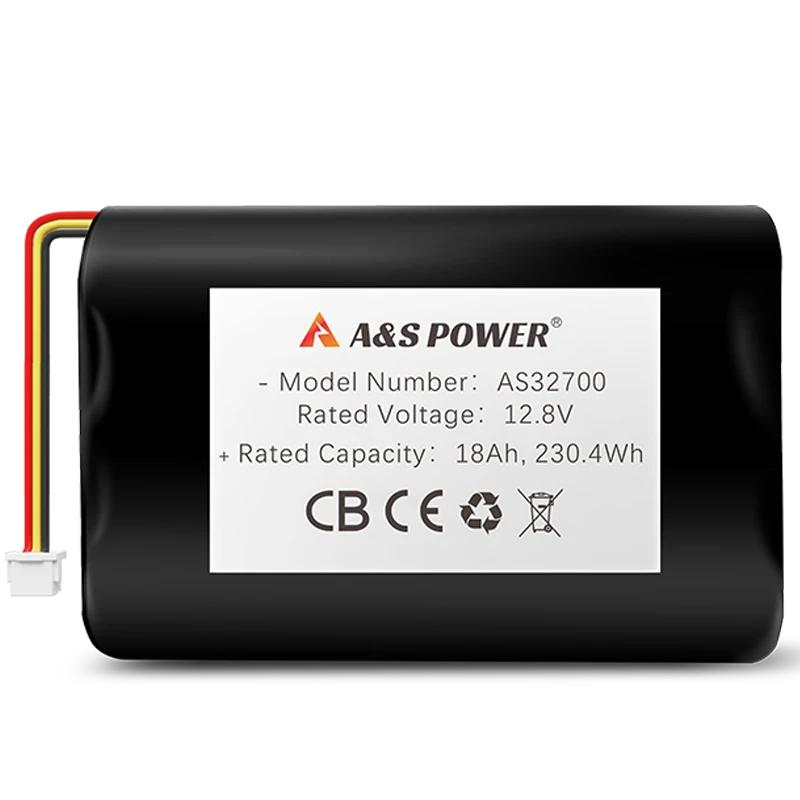
For a custom LiPo battery, the design may include a protection circuit module (PCM), NTC temperature sensing, custom wires, connectors, tabs, and protective packaging.
A good battery specification should therefore describe the complete battery system, not only the cell chemistry.
Conclusion
When choosing between an 18650 cell or LiPo battery cell, I do not recommend making the decision based only on capacity or energy density.
The 18650 format remains an excellent option when a project needs a rigid cylindrical cell, modular pack architecture, predictable mechanical dimensions, and a well-established battery format.
LiPo becomes more attractive when the product requires a thin, lightweight, custom-shaped battery that makes better use of limited internal space.
For OEM manufacturers, the best battery is ultimately the one that satisfies the complete system requirements: voltage, capacity, current, dimensions, weight, thermal conditions, cycle expectations, protection, certification, and production volume.
That is why I treat cell selection as part of the overall product engineering process rather than as a simple comparison between two battery types.
FAQs: 18650 Cell or LiPo Battery Cell
Is an 18650 battery better than a LiPo battery?
Not necessarily. An 18650 can be better for rigid, modular, and mechanically robust battery packs, while LiPo is often better for thin, lightweight, and space-constrained products.
Are 18650 and LiPo batteries both lithium-ion batteries?
Yes, in the broad electrochemical sense, modern LiPo cells are generally part of the lithium-ion battery family. "LiPo" commonly refers to a pouch-style lithium-ion cell using a polymer/gel-based electrolyte system rather than representing an entirely separate battery chemistry.
Which has better energy density, 18650 or LiPo?
There is no universal answer. Energy density depends on the exact cell chemistry and construction. 18650 cells can have strong gravimetric energy density, while LiPo pouch cells can provide excellent packaging efficiency in custom-shaped enclosures.
Which battery is better for a thin electronic device?
A LiPo pouch cell is usually the better starting point because its thickness, length, and width can be customized more freely than a standardized cylindrical 18650 cell.
Can I replace an 18650 battery with a LiPo battery?
Not as a simple drop-in replacement. You must verify nominal voltage, maximum charge voltage, discharge limits, capacity, physical dimensions, connector polarity, protection circuitry, charger compatibility, and thermal requirements.
Which battery is better for OEM products?
For OEM products, I recommend selecting the battery according to the device's electrical and mechanical requirements. LiPo is particularly attractive when customization and compact packaging are important, while 18650 is often attractive when a rigid cylindrical architecture is appropriate.
-

 May.2026.08.19Custom Lithium Battery Pack Voltage & Capacity Selection GuideLearn More
 -
 May.2026.08.18How to Choose Custom Lithium Battery Specs for IoT DevicesLearn More
 -
 May.2026.08.17Custom Medical Battery Design: IEC 62133, BMS & Cost GuideLearn More
 -
 May.2026.08.1718650 Cell or LiPo Battery Cell: Choosing the Best BatteryLearn More
 -
 May.2026.08.14A Complete Guide to 3.7 Volt Battery SizesLearn More