




Soft Pouch LiPo vs. Hard Plastic Enclosure Lithium Pack: Durability & Safety
Quick Answer:
If I am choosing between a soft pouch LiPo battery and a lithium battery pack with a hard plastic enclosure, I do not consider one universally safer or more durable.
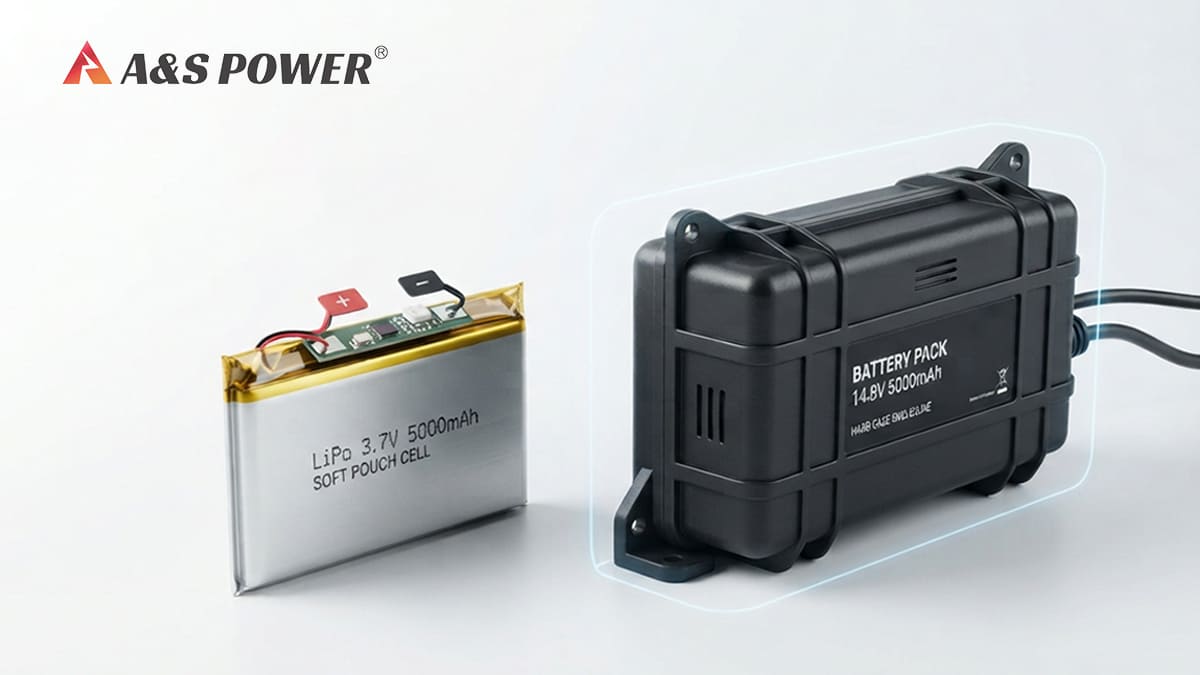
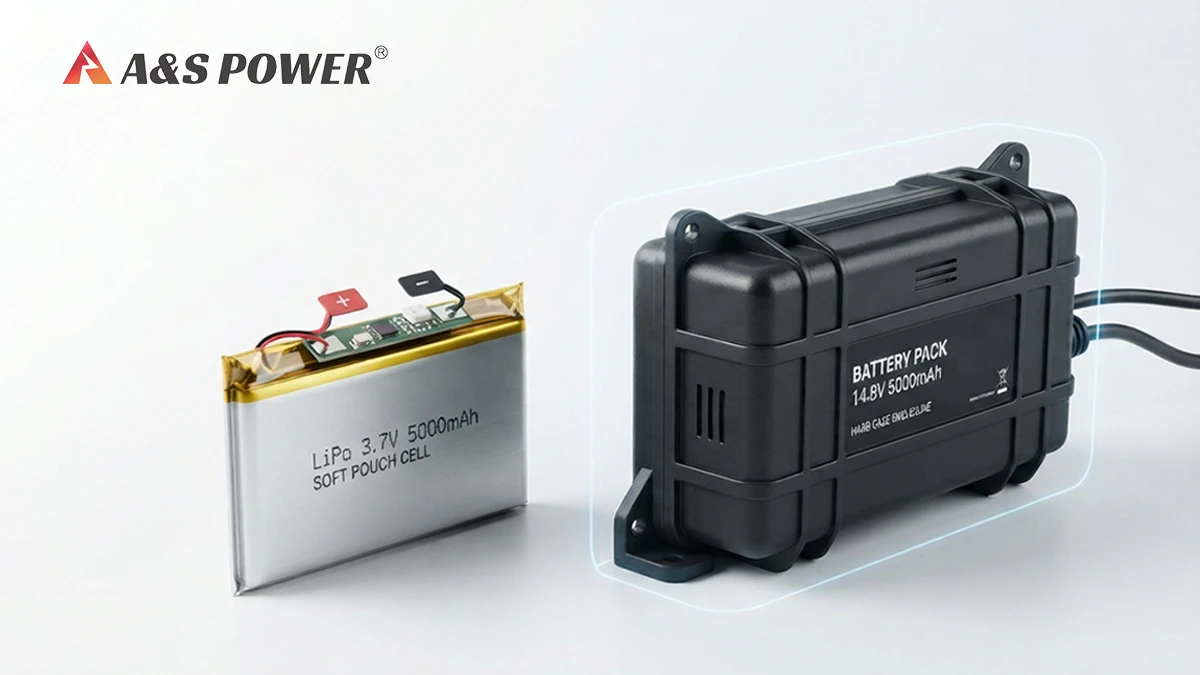
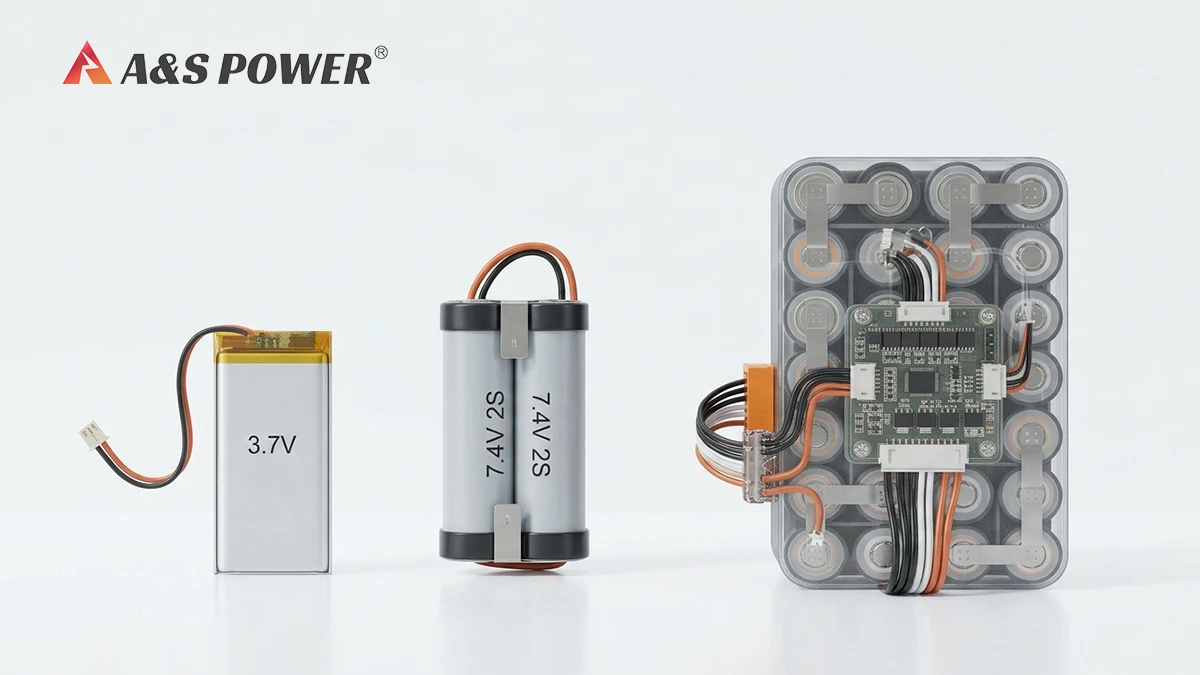
A soft pouch LiPo battery offers lower weight, excellent space utilization, and greater flexibility for compact or irregular product designs. However, the pouch itself provides less mechanical protection than a rigid enclosure.
A hard plastic enclosure adds a physical protective barrier around the battery pack and can improve resistance to impact, compression, abrasion, and handling damage. The trade-off is additional weight, volume, and less flexibility in product integration.
For portable medical devices, wearables, GPS products, IoT equipment, and other space-constrained electronics, I often start with a custom pouch LiPo when the host product can provide adequate mechanical protection. For products exposed to repeated impact or demanding industrial environments, a properly engineered hard-enclosure battery pack may be a better starting point.
The key point is simple: battery safety depends on the complete battery system, not only on whether the battery uses a soft pouch or hard enclosure.
Introduction
When engineers compare lithium battery technologies, capacity, voltage, and energy density usually receive the most attention. In real product development, however, mechanical durability can be equally important.
A battery may have excellent electrical specifications but still create problems during product integration if it is exposed to excessive pressure, vibration, impact, heat, or movement.
This is particularly relevant when comparing a soft pouch LiPo battery with a battery pack protected by a hard plastic enclosure.
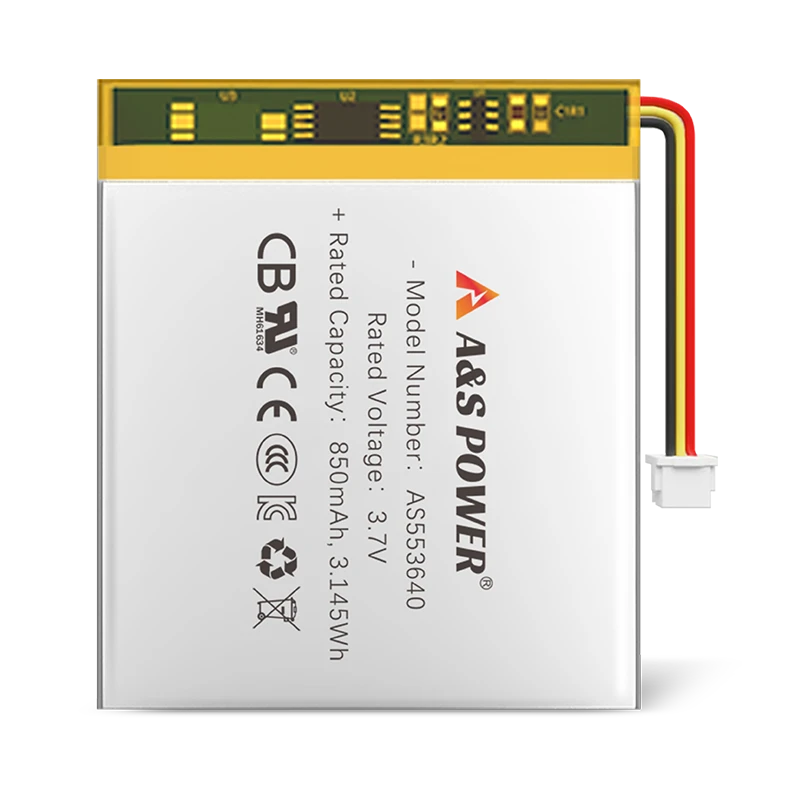
A pouch LiPo cell uses laminated aluminum-plastic film rather than a rigid outer case. This construction allows manufacturers to produce thin, lightweight, and customized battery shapes. It is one reason pouch cells are widely used in portable electronics, wearables, medical devices, GPS trackers, and IoT products.
The trade-off is mechanical protection. The pouch itself is not intended to provide the same structural protection as a rigid housing. Research on pouch cells has therefore paid considerable attention to mechanical deformation, indentation, compression, and other forms of external stress.
A hard plastic enclosure takes a different approach. Instead of relying primarily on the cell packaging, the battery pack uses an external housing to protect the cells, protection circuit, wiring, and other components.
So which design is better?
It depends on the product environment, mechanical requirements, available space, and the way the battery is integrated into the final device.
Soft Pouch LiPo vs. Hard Plastic Enclosure: Key Differences
The following comparison gives me a practical starting point when evaluating battery architecture for an OEM product.
| Design Factor | Soft Pouch LiPo | Hard Plastic Enclosure Pack |
|---|---|---|
| Mechanical protection | Relatively low at cell level | Generally higher at pack level |
| Weight | Lower | Higher |
| Shape flexibility | Excellent | More limited |
| Space utilization | Excellent | Good |
| Impact resistance | Requires external protection | Generally better |
| Puncture resistance | Lower at cell level | Higher when properly enclosed |
| Swelling visibility | Easier to observe | May be less visible |
| Product integration | Excellent for compact devices | Better for rugged products |
| Custom shapes | Highly flexible | More constrained |
| Packaging complexity | Requires careful integration | Requires enclosure components |
| Typical applications | Wearables, medical, IoT, GPS | Industrial and mechanically demanding equipment |
These are engineering tendencies rather than absolute rules.
A poorly designed hard enclosure can still create safety and reliability problems. At the same time, a well-designed pouch LiPo battery installed inside a properly engineered product enclosure can provide a reliable solution.
IEC 62133-2 recognizes that mechanical protection for batteries intended to be built into portable equipment may be provided by the battery case or by the enclosure of the end product. This makes product-level mechanical integration an important part of the overall safety design.
Why Soft Pouch LiPo Batteries Are Popular
Lightweight and Space Efficient
One of the biggest advantages of pouch LiPo technology is packaging efficiency.
Instead of placing the active cell inside a relatively rigid shell, the cell is enclosed by laminated pouch material. This allows manufacturers to reduce unnecessary structural material and use available internal space more efficiently.
For a wearable device or medical monitor, even a small reduction in thickness or weight can influence the final product design.
Pouch batteries can also be customized in length, width, thickness, tab position, wire configuration, and connector arrangement. For OEM applications, this flexibility is particularly useful when the battery must fit a specific product enclosure. Soft-pack lithium polymer battery customization allows manufacturers to better understand the available customization options.
Better for Irregular Product Spaces
A rigid battery enclosure can require the product designer to reserve a specific rectangular compartment.
A pouch cell provides considerably more freedom.
For example, an OEM may need to place a battery around a PCB, display, sensor, antenna, or other internal component. A custom pouch battery can sometimes use otherwise difficult-to-fill areas more efficiently.
This is particularly useful for:
- Wearable electronics
- Medical monitoring equipment
- GPS trackers
- IoT sensors
- Smart beauty devices
- Portable instruments
- Handheld electronics
However, flexible packaging does not mean that the battery should be allowed to move freely inside the product.
Where Soft Pouch LiPo Batteries Need More Protection
The main mechanical limitation of a pouch cell is that the flexible laminate provides less structural protection than a rigid enclosure.
Research into lithium-ion pouch cells has shown that mechanical deformation, indentation, and localized stress can damage internal structures and potentially contribute to internal short-circuit conditions.
For that reason, I pay particular attention to several areas when designing a custom pouch battery.
Puncture and Compression
Sharp edges inside the device should never contact the pouch directly.
The battery should be positioned away from screws, metal brackets, PCB edges, and other potential puncture points.
Proper insulation, cushioning, spacing, and mechanical restraint are important parts of the integration process.
The objective is not simply to prevent visible damage. The battery should also be protected from localized mechanical forces that could affect the internal cell structure.
Swelling and Expansion
Pouch batteries can experience dimensional changes during their service life, including swelling under certain conditions.
I would not design a battery compartment with excessive compression simply because the initial battery dimensions fit tightly.
The mechanical design needs to consider expected dimensional tolerances and long-term operating conditions.
IEC 62133-2 includes requirements related to battery cases and cell compartments accommodating cell dimensional tolerances during charging and discharging.
Bending and Repeated Mechanical Stress
A pouch battery should not be treated as a component that can be repeatedly folded or sharply bent.
During product design, I recommend securing the battery in a controlled position without applying excessive localized pressure.
This is particularly important in handheld devices, wearables, and equipment subject to repeated movement.
Why Use a Hard Plastic Enclosure Lithium Battery Pack?
A hard plastic enclosure changes the mechanical protection strategy.
Instead of asking the pouch material or individual cell housing to resist external forces, the rigid enclosure creates a protective barrier around the complete battery assembly.
This can be useful when the product may experience:
- Frequent drops
- External impact
- Compression
- Rough transportation
- Repeated handling
- Industrial vibration
- Contact with surrounding components
The enclosure can also help maintain the position of cells, wires, connectors, PCM/BMS components, and insulation materials.
However, a plastic housing is not automatically a safety guarantee.
Its material, wall thickness, internal structure, fastening method, thermal behavior, and compatibility with the battery must all be considered.
For OEM projects, I recommend evaluating the battery pack and its mechanical enclosure as a single system rather than treating the enclosure as an independent accessory.
Durability Comparison in Real-World Applications
I normally evaluate durability according to the actual operating environment rather than simply labeling one battery type as “stronger.”
| Application | Preferred Starting Point | Main Reason |
| Smart wearable | Soft pouch LiPo | Thin and lightweight |
| GPS tracker | Custom pouch LiPo | Space efficiency |
| Medical monitor | Protected pouch LiPo | Compact integration |
| IoT sensor | Soft pouch LiPo | Flexible packaging |
| Handheld industrial device | Hard enclosure or protected pouch | Greater mechanical protection |
| Rugged outdoor equipment | Hard enclosure | Better physical protection potential |
| Ultra-thin electronics | Soft pouch LiPo | Minimal packaging thickness |
| Equipment with frequent impact | Hard enclosure | Stronger physical barrier |
The table should be viewed as a starting point, not a universal rule.
For example, a pouch LiPo can be an excellent solution inside a medical device if the device housing has been engineered to protect the battery.
Conversely, placing an exposed pouch battery in a mechanically aggressive environment simply because it saves weight would not be a sound engineering approach.
Which Battery Is Safer?
This is where I avoid making an overly simple claim.
A soft pouch LiPo is not inherently unsafe, and a hard plastic enclosure does not automatically make a lithium battery safe.
Overall battery safety depends on multiple layers of engineering.
These can include:
- Cell chemistry and cell quality
- Charging control
- Overcharge protection
- Over-discharge protection
- Overcurrent and short-circuit protection
- Temperature monitoring
- Mechanical protection
- Thermal management
- Manufacturing quality
- Application-specific safety testing
For multi-cell battery packs, cell matching, voltage monitoring, and balancing may also become important depending on the pack configuration and application.
This is why I recommend evaluating the complete battery system rather than judging safety purely from the enclosure material.
Soft Pouch or Hard Enclosure: How I Choose
My decision process usually starts with the product rather than the battery.
Choose a Soft Pouch LiPo When:
- Internal space is extremely limited.
- Product weight is critical.
- The battery needs a custom shape.
- The device has a well-designed protective enclosure.
- The battery must fit around other components.
- The application is a wearable, medical, IoT, GPS, or portable electronic device.
Consider a Hard Plastic Enclosure When:
- The battery is exposed to significant mechanical impact.
- The product is frequently handled or transported.
- Cells and internal components need rigid positioning.
- The battery assembly needs additional physical separation.
- Product durability is more important than minimum weight or volume.
In some projects, the best solution is actually a custom pouch LiPo battery combined with a carefully engineered product enclosure.
This approach can preserve the weight and space advantages of pouch technology while allowing the host product to provide additional mechanical protection.
What OEM Buyers Should Ask a Battery Manufacturer
Before approving a battery design, I recommend asking the supplier more than just:
“What is the capacity?”
A serious OEM evaluation should cover the complete electrical and mechanical system.
| Question | Why It Matters |
| What cell format is being used? | Determines packaging and mechanical characteristics |
| What protection circuit is included? | Helps control electrical fault conditions |
| How is the battery mechanically secured? | Reduces movement and localized stress |
| Is temperature monitoring required? | Supports thermal protection |
| What certifications apply? | Helps meet target-market requirements |
| How is swelling accommodated? | Important for enclosure design |
| What mechanical tests are performed? | Helps evaluate real-world durability |
| How is production consistency controlled? | Reduces variation between battery batches |
For OEM projects, A&S Power provides custom lithium battery pack solutions covering battery configuration, protection, connectors, and application-specific requirements.
I consider this system-level approach more useful than selecting a cell first and trying to solve mechanical and electrical issues afterward.
Technical References
For battery safety and mechanical protection requirements, I recommend referring to recognized standards and technical research rather than relying only on commercial battery articles.
IEC 62133-2 is an important international safety standard covering portable sealed secondary lithium cells and batteries. It includes requirements related to mechanical protection, battery construction, protection circuits, and other safety considerations.
Peer-reviewed research on lithium-ion pouch-cell mechanical safety is also useful for understanding how indentation, deformation, compression, and internal structural damage can influence battery behavior.
For OEM battery development, the applicable standards should always be confirmed according to the battery configuration, product category, destination market, and intended use.
Technical References
For battery safety and mechanical protection requirements, I recommend referring to recognized international standards and peer-reviewed research rather than relying only on commercial battery articles. These sources provide additional technical background for evaluating lithium battery construction, mechanical protection, and pouch-cell safety.
- IEC 62133-2 — Secondary cells and batteries containing alkaline or other non-acid electrolytes — Safety requirements for portable sealed secondary cells and for batteries made from them, for use in portable applications — Part 2: Lithium systems. This standard addresses safety requirements for portable lithium secondary cells and batteries, including aspects of battery construction, protection, and mechanical safety.
- IEC 62133-2 standard reference — The International Electrotechnical Commission (IEC) is the recognized international standards organization responsible for IEC 62133-2 and other electrical and battery-related standards.
- Peer-reviewed research on lithium-ion pouch-cell mechanical safety — Research into pouch-cell mechanical abuse has examined how indentation, deformation, compression, and localized mechanical damage can affect internal cell structures and potentially contribute to internal short circuits and thermal safety risks.
- Mechanical behavior and safety of lithium-ion batteries — This peer-reviewed research provides technical background on mechanical abuse, deformation, and internal damage mechanisms in lithium-ion cells and is useful for understanding why mechanical protection is important in pouch-cell battery design.
For OEM battery development, the applicable standards and testing requirements should always be confirmed according to the battery configuration, product category, destination market, and intended application.
Conclusion
When I compare soft pouch LiPo vs. hard plastic enclosure lithium packs, I do not see the decision as simply “lightweight versus durable.”
The real engineering question is:
Where should the mechanical protection come from?
A soft pouch LiPo emphasizes lightweight construction, flexible geometry, and efficient use of internal space. A hard plastic enclosure adds a dedicated physical barrier around the battery pack, which can be valuable in mechanically demanding environments.
For compact medical devices, wearables, GPS trackers, IoT products, and portable electronics, I would often start with a custom pouch LiPo because of its space efficiency and design flexibility.
For rugged equipment exposed to impact, compression, vibration, or rough handling, I would give greater consideration to a rigidly protected battery pack.
Ultimately, the safest and most durable battery is not determined by the pouch or enclosure alone.
Cell selection, electrical protection, mechanical design, thermal management, manufacturing quality, and application-specific testing must work together as one battery system.
That is the approach I recommend for OEM battery development: design the battery around the real product environment rather than choosing the battery format first and trying to make the product adapt afterward.
FAQs: About Soft Pouch LiPo vs. Hard Plastic Enclosure Batteries
Is a hard case lithium battery safer than a soft pouch LiPo?
Not automatically. A hard enclosure generally provides greater mechanical protection, but overall battery safety also depends on cell quality, protection circuitry, thermal management, charging control, manufacturing quality, and product integration.
Are soft pouch LiPo batteries durable?
Yes, when properly designed and mechanically protected. The pouch itself is more vulnerable to puncture, crushing, and excessive deformation than a rigid enclosure, so the final device housing plays an important protective role.
Why are LiPo pouch batteries used in medical devices?
Their thin profile, low weight, and customizable dimensions make them suitable for compact medical equipment. The battery still needs appropriate protection, mechanical restraint, thermal management, and applicable safety testing.
Can a pouch LiPo battery be placed inside a plastic enclosure?
Yes. A product enclosure can provide mechanical protection for a pouch battery when the battery is properly integrated and the complete assembly is designed and tested for the intended application.
Which is better for rugged industrial equipment?
A hard-enclosure battery pack may be preferable when the application involves frequent impact, compression, vibration, or rough handling. A protected custom pouch battery can also work when its mechanical design has been validated for the actual operating environment.
Does a hard plastic enclosure prevent lithium battery swelling?
No. An enclosure does not eliminate the electrochemical causes of swelling. It should instead be designed to accommodate expected dimensional changes without creating damaging mechanical pressure.
Related Articles
Soft-Pack Lithium Polymer Battery Customization Guide
Learn how pouch LiPo batteries can be customized for dimensions, protection, connectors, and OEM applications.
18650 Cell or LiPo Battery Cell: Choosing the Best Battery
Compare LiPo and 18650 battery formats based on size, weight, energy density, and application requirements.
Ultra-Thin Lithium Polymer Battery 0.4mm and 0.5mm
Explore ultra-thin LiPo battery options for compact electronics and space-constrained product designs.
Custom Lithium Battery Pack Voltage & Capacity Selection Guide
Understand how to select battery voltage and capacity based on device requirements, runtime, and system design.
-

 May.2026.08.24What Is a Smart Battery?Learn More
 -
 May.2026.08.24Custom Battery Pack vs. Off-the-Shelf Battery: OEM Cost & Time ComparisonLearn More
 -
 May.2026.08.21Soft Pouch LiPo vs. Hard Plastic Enclosure Lithium Pack: Durability & SafetyLearn More
 -
 May.2026.08.20Custom LiPo Battery vs. Cylindrical 18650 Pack: Which Is Better for Your Device?Learn More
 -
 May.2026.08.19Custom Lithium Battery Pack Voltage & Capacity Selection GuideLearn More