




Custom Lithium Battery Pack Voltage & Capacity Selection Guide
Quick Answer:
The correct lithium battery pack voltage should match the device's required operating voltage and charging architecture, while capacity should be selected from the device's energy consumption, required runtime, discharge current, available space, and allowable battery weight. For a custom battery pack, I recommend calculating the required watt-hours first, then selecting the appropriate cell configuration, voltage, capacity, protection circuit, and BMS rather than choosing a battery only by its mAh rating.
Introduction
When I work with OEM customers on a custom lithium battery pack, voltage and capacity are usually the first two specifications discussed. They are also two of the easiest specifications to misunderstand.
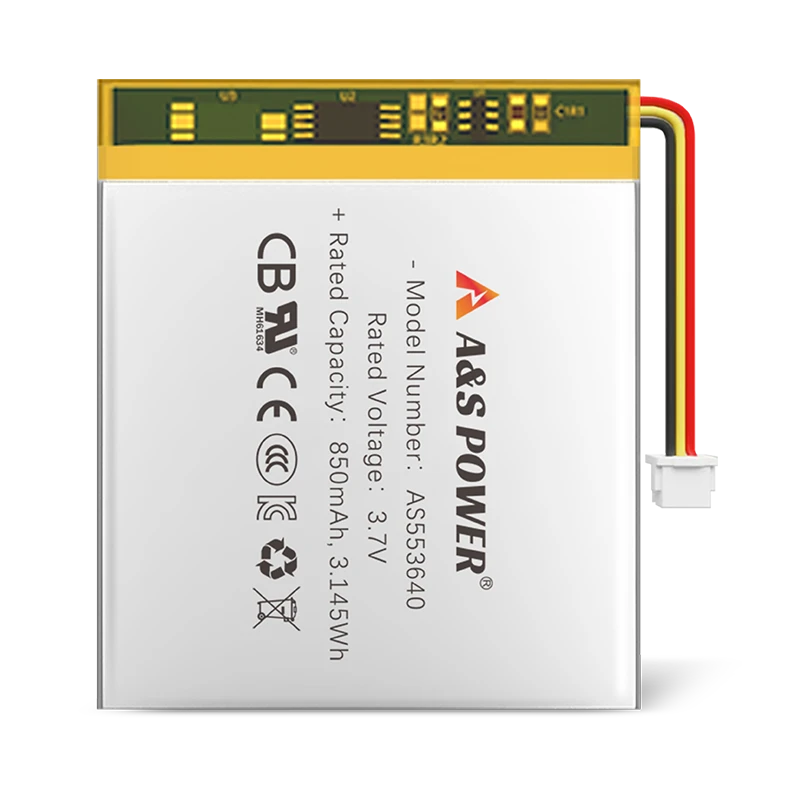
A battery marked 3.7V 5,000mAh and another marked 7.4V 2,500mAh may look very different on a datasheet, but both represent approximately 18.5Wh of nominal energy. This is why I do not recommend selecting a battery simply by comparing mAh.
The better approach is to start with the device's electrical requirements. The battery must provide the correct voltage range, enough energy for the intended runtime, sufficient current for peak loads, and a physical configuration that fits the product.
For OEM projects, voltage and capacity should therefore be treated as part of the complete battery system rather than isolated specifications.
What Do Lithium Battery Voltage and Capacity Actually Mean?
Battery Voltage
Battery voltage describes the electrical potential supplied by the battery pack.
For many common rechargeable lithium-ion and lithium polymer cells, nominal cell voltage is around 3.6V or 3.7V depending on the cell chemistry and manufacturer's specification. Connecting cells in series increases the pack voltage.
For example:
| Configuration | Typical Nominal Voltage* | Main Purpose |
|---|---|---|
| 1S | 3.6–3.7V | Low-voltage electronics |
| 2S | 7.2–7.4V | Higher-voltage devices |
| 3S | 10.8–11.1V | Industrial and portable equipment |
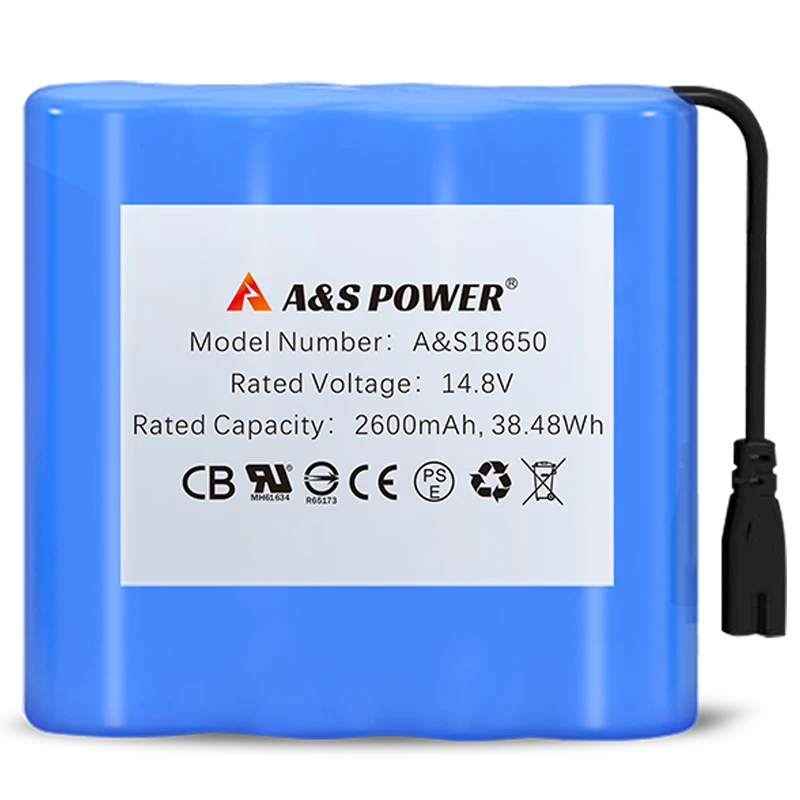
| 4S | 14.4–14.8V | Higher-voltage systems |
| 5S | 18.0–18.5V | Industrial applications |
| 6S | 21.6–22.2V | Higher-power equipment |
*Actual nominal voltage depends on the selected cell chemistry and manufacturer specification.
The important point is that nominal voltage is not the same as the battery's actual voltage at every moment. A rechargeable lithium battery operates across a voltage range during discharge and charging. Therefore, I always recommend checking the equipment's minimum, nominal, and maximum allowable input voltage before finalizing the battery design.
Battery Capacity
Capacity is normally expressed in ampere-hours (Ah) or milliampere-hours (mAh).
For example, 3,000mAh equals 3Ah.
Capacity indicates how much electrical charge a battery can theoretically deliver under specified test conditions. It does not directly tell you how long a device will operate because runtime also depends on voltage, load current, operating conditions, discharge rate, temperature, and battery management.
For this reason, Wh is often more useful when comparing batteries with different voltages.
Use Watt-Hours to Compare Battery Energy
A practical starting formula is:
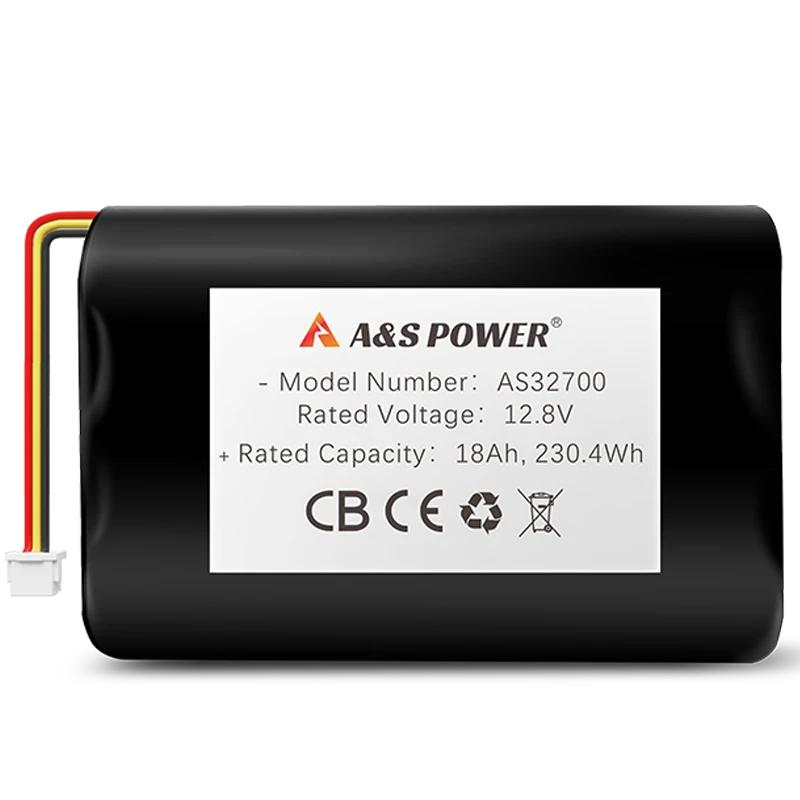
Energy (Wh) = Nominal Voltage (V) × Capacity (Ah)
For example:
3.7V × 5Ah = 18.5Wh
A 7.4V 2.5Ah battery also provides:
7.4V × 2.5Ah = 18.5Wh
Although their voltage and capacity ratings are different, their nominal energy is approximately the same.
This is especially useful when an OEM product is being redesigned. Instead of asking only, "How many mAh do I need?", I normally ask:
- What is the device's average power consumption?
- What is the peak power requirement?
- How many hours of operation are required?
- What voltage does the electronics require?
- How much space and weight can the battery occupy?
These questions provide a much more reliable starting point.
How to Calculate the Required Battery Capacity
If the device's average power consumption is known, a simplified energy calculation is:
Required Energy (Wh) = Average Power (W) × Required Runtime (hours)
Then:
Required Capacity (Ah) = Required Energy (Wh) ÷ Battery Nominal Voltage (V)
For example, if a portable device consumes an average of 4W and needs approximately 6 hours of operating time:
4W × 6h = 24Wh
For a 7.4V battery:
24Wh ÷ 7.4V ≈ 3.24Ah
That does not mean I would automatically specify a 7.4V 3,240mAh pack. The final design must consider conversion losses, usable capacity, temperature, aging, discharge rate, safety limits, and the manufacturer's test conditions.
For an engineering project, it is better to build an appropriate design margin into the battery specification than to treat the calculated value as an exact production requirement.
How Series and Parallel Configurations Affect Voltage and Capacity
The internal cell configuration is one of the most important parts of custom battery pack design.
Series Configuration — Increasing Voltage
Cells connected in series increase voltage.
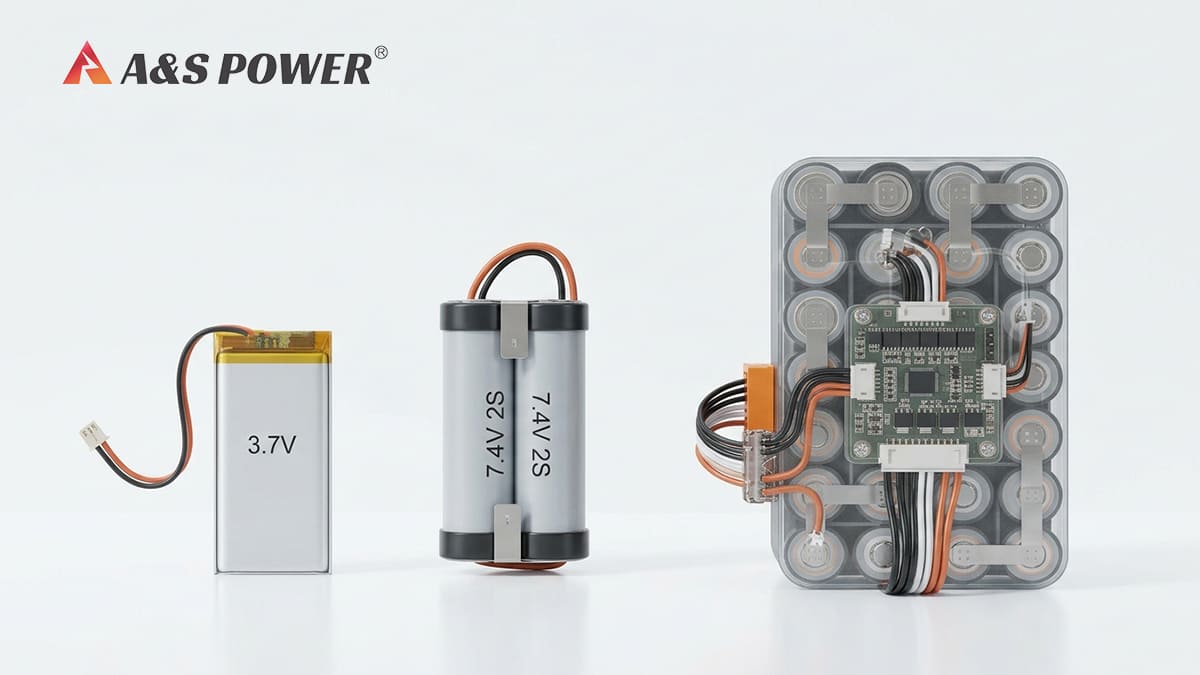
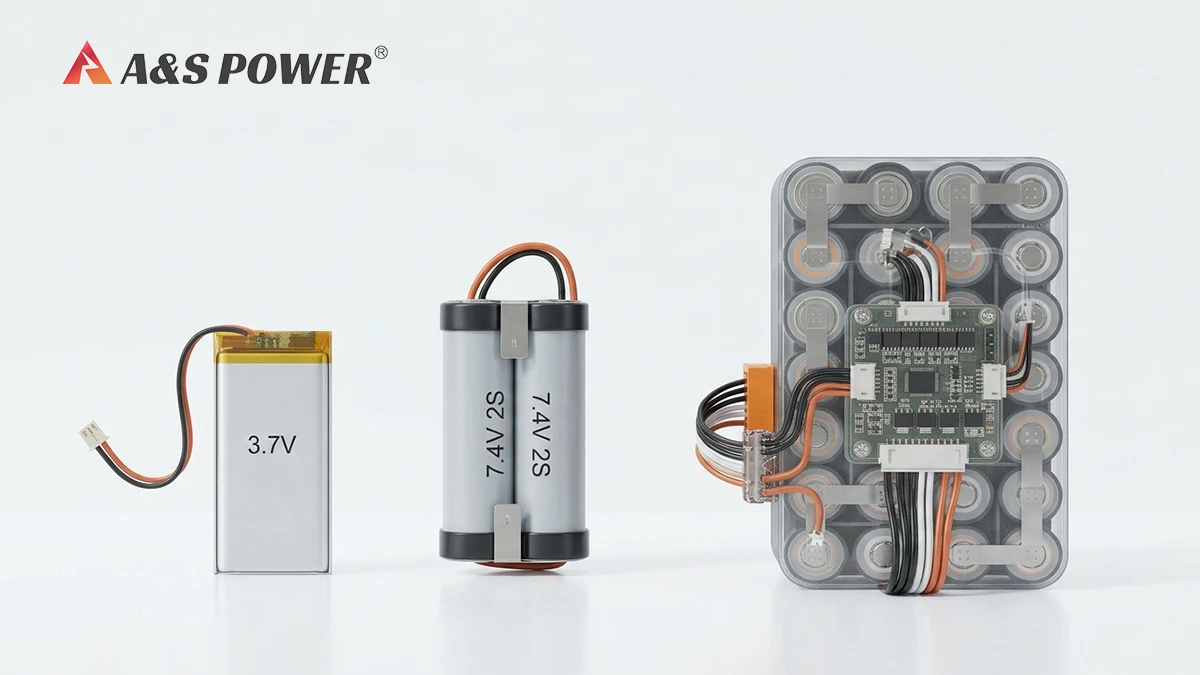
A typical 2S configuration uses two cells connected in series. If each cell has a nominal voltage of 3.7V, the resulting nominal pack voltage is approximately 7.4V.
However, the capacity in Ah remains approximately the same as one cell.
Parallel Configuration — Increasing Capacity
Cells connected in parallel increase capacity while maintaining approximately the same nominal voltage.
For example, two 3.7V 2,500mAh cells connected in parallel produce approximately:
3.7V × 5,000mAh
This makes parallel configuration useful when the application requires longer runtime or greater current capability without increasing nominal voltage.
Series-Parallel Configuration
For higher energy requirements, series and parallel configurations can be combined.
A 3S2P pack, for example, uses six cells arranged as three groups in series with two cells in parallel in each group.
The result is approximately:
11.1V nominal voltage × 2× single-cell capacity
The exact pack specification depends on the selected cell and its electrical characteristics.
A&S Power's custom battery solutions support series and parallel configurations for different voltage and capacity requirements, together with customized protection circuits, connectors, and other electrical components.
Voltage Selection Should Start With the Device, Not the Battery
One common mistake I see in battery projects is selecting a battery voltage first and then trying to make the electronics work around it.
I recommend doing the opposite.
Start with the device's power architecture. Identify the required input voltage, operating range, charging voltage, motor or heating-element requirements, and the specifications of any DC-DC converter.
For example, if the main electronics are designed around a single lithium cell, a 3.7V nominal battery may be appropriate. If the system requires approximately 7.4V nominal, a 2S configuration may be more suitable.
The charger must also match the battery configuration. A battery pack should never be treated as simply a higher-capacity version of a single cell when its series configuration has changed.
Capacity Selection Must Consider Load Current
Capacity alone does not determine whether a battery can power a device successfully.
Suppose a battery has a high mAh rating but cannot safely deliver the required peak current. The device may experience voltage drop, protection activation, unstable operation, or reduced runtime under real-world loads.
Therefore, I normally evaluate:
| Parameter | Why It Matters |
| Average current | Determines typical energy consumption |
| Peak current | Determines short-term power capability |
| Continuous current | Determines sustained load performance |
| Capacity | Determines available charge |
| Nominal voltage | Determines system compatibility |
| Internal resistance | Influences voltage drop and heat |
| Temperature | Affects available performance |
| Cycle requirements | Influences cell selection and design |
This is particularly important for GPS equipment, medical devices, industrial electronics, motors, pumps, wireless equipment, and other products with changing loads.
Do Not Ignore Physical Size and Weight
A theoretical battery specification may be electrically correct but physically impossible to integrate.
During custom battery development, I recommend defining a maximum battery envelope:
Length × Width × Thickness
Then consider:
- Connector location
- Cable exit direction
- Protection PCB or BMS position
- Insulation and mechanical protection
- Clearance from heat-generating components
- Mounting method
- Battery replacement requirements
LiPo pouch cells can be useful when a product requires flexible shapes or thin profiles. Cylindrical Li-ion cells such as 18650 and 21700 are useful when standardized cylindrical formats and mechanical structures are preferred.
A&S Power currently provides both LiPo and Li-ion battery solutions with customization of dimensions, voltage, capacity, connectors, and protection circuits.
BMS and Protection Must Match the Pack Voltage
A custom lithium battery pack is more than a group of cells connected together.
For multi-cell packs, the protection and battery management system must be designed around the actual series/parallel configuration.
Depending on the application, the battery system may require:
- Overcharge protection
- Over-discharge protection
- Overcurrent protection
- Short-circuit protection
- Temperature monitoring
- Cell balancing
- Communication functions
IEC 62133-2 specifies safety requirements and tests for portable sealed secondary lithium cells and batteries, including their intended use and reasonably foreseeable misuse.
For products that will be shipped internationally, transportation compliance also needs to be considered. UN 38.3 addresses testing requirements for lithium cells and batteries before transportation, with the applicable requirements depending on the battery type and transport scenario.
Practical Voltage and Capacity Selection Table
The following table can be used as an initial engineering reference rather than a universal battery specification.
| Application Type | Typical Starting Voltage | Capacity Consideration | Key Design Priority |
| Wearable electronics | 3.7V | Low to medium | Size and weight |
| GPS tracker | 3.7V | Medium | Runtime and standby performance |
| Medical portable device | 3.7–14.8V | Application dependent | Reliability and safety |
| Industrial handheld equipment | 7.4–14.8V | Medium to high | Current capability |
| Robotics | 7.4V+ | High | Peak/continuous current |
| IoT equipment | 3.7V | Low to medium | Runtime and compact size |
| Portable instruments | 3.7–14.8V | Medium to high | Energy and system compatibility |
These ranges are starting points only. The final voltage and capacity should be calculated from the actual electrical requirements of the product.
A Better OEM Battery Specification Checklist
When I receive a new custom battery inquiry, I recommend providing the battery manufacturer with as much of the following information as possible:
- Required nominal voltage
- Minimum and maximum operating voltage
- Target capacity
- Average operating current
- Maximum continuous current
- Peak current and peak duration
- Required operating time
- Maximum battery dimensions
- Maximum battery weight
- Charging method
- Connector type
- Operating temperature
- Expected cycle life
- Protection requirements
- Required certifications
- Annual production quantity
This information makes battery selection much more accurate and reduces unnecessary prototype revisions.
Why Custom Battery Pack Design Is Better Than Choosing by mAh Alone
For an OEM product, the highest-capacity battery is not necessarily the best battery.
A larger capacity can increase physical dimensions, weight, charging time, and cost. A higher voltage can simplify some power architectures but may require different electronics and charging components.
The best design is the one that balances energy, power, size, weight, safety, reliability, and cost.
At A&S Power, our custom battery solutions cover electrical design, cell selection, series/parallel configuration, protection circuits, connectors, and mechanical integration. This approach allows the battery to be developed around the product rather than forcing the product to accommodate an unsuitable standard battery.
Conclusion
Selecting the right custom lithium battery pack voltage and capacity is fundamentally an engineering exercise.
I recommend starting with the device's voltage requirements and power consumption, calculating the required energy in Wh, and then determining the appropriate cell configuration and capacity. From there, the design should be validated against peak current, available space, temperature, charging requirements, BMS functions, safety standards, transportation requirements, and production needs.
For OEM and ODM projects, this process is more reliable than simply selecting a battery based on a high mAh number.
A properly designed custom lithium battery pack should fit the device electrically, mechanically, and operationally while providing a practical balance between runtime, performance, safety, and product cost.
FAQs: About Custom Lithium Battery Pack Voltage & Capacity
What voltage should I choose for a custom lithium battery pack?
The battery voltage should match the device's electrical architecture and allowable input voltage range. Common lithium battery configurations include 3.7V, 7.4V, 11.1V, and 14.8V nominal packs, but the correct choice depends on the application.
How do I calculate lithium battery capacity?
First calculate required energy using average power multiplied by operating time. Then divide the required watt-hours by the battery's nominal voltage to estimate the required Ah capacity. The final specification should also account for operating conditions and design margin.
Is a higher mAh battery always better?
No. Higher capacity generally provides more available energy, but it can also increase battery size, weight, charging requirements, and cost. The battery must also meet the device's voltage and current requirements.
What is the difference between 1S, 2S, and 3S batteries?
The "S" indicates cells connected in series. A 1S pack uses one cell group, 2S uses two groups in series, and 3S uses three. Increasing the series count increases nominal voltage.
Does parallel connection increase battery voltage?
No. Parallel cells generally maintain the same nominal voltage while increasing capacity and current capability, subject to the cell and pack design.
Do I need a BMS for a custom lithium battery pack?
The required protection and battery-management architecture depends on the chemistry, cell configuration, application, and applicable safety requirements. Multi-cell packs commonly require functions such as overcharge, over-discharge, overcurrent, temperature monitoring, and balancing.
What information should I provide to a custom battery manufacturer?
At minimum, provide voltage, capacity or required runtime, average and peak current, battery dimensions, charging requirements, connector requirements, operating temperature, and target quantity. Providing the product's power profile and mechanical drawing can make the engineering process much more accurate.
Can the same capacity be made in different battery sizes?
Yes, depending on the available cell technology and energy-density requirements. Custom LiPo pouch batteries in particular can be engineered in different dimensions, while cylindrical cell packs are constrained by their cell format and pack arrangement. A&S Power provides custom battery dimensions and configurations for OEM applications.
-

 May.2026.08.19Custom Lithium Battery Pack Voltage & Capacity Selection GuideLearn More
 -
 May.2026.08.18How to Choose Custom Lithium Battery Specs for IoT DevicesLearn More
 -
 May.2026.08.17Custom Medical Battery Design: IEC 62133, BMS & Cost GuideLearn More
 -
 May.2026.08.1718650 Cell or LiPo Battery Cell: Choosing the Best BatteryLearn More
 -
 May.2026.08.14A Complete Guide to 3.7 Volt Battery SizesLearn More