



Published: September 16, 2026
Choosing a custom lithium battery manufacturer in China is not simply a matter of comparing unit prices. For an OEM or ODM project, the right supplier must be able to meet your battery specifications, provide appropriate engineering support, control cell and pack quality, manage required certifications, and deliver consistently at the required volume.
This guide explains what buyers should evaluate before selecting a Chinese custom lithium battery manufacturer, from supplier qualification and engineering capabilities to quality control, certifications, pricing, factory audits, and mass production.
Quick Answer: What Should You Look for in a Custom Lithium Battery Manufacturer?
A reliable custom lithium battery manufacturer should be evaluated across at least eight areas:
- OEM/ODM engineering capability
- Battery cell quality and traceability
- Custom battery design capability
- BMS/PCM and protection design
- Quality-control and testing processes
- Relevant product certifications
- Production capacity and lead time
- Transparent commercial terms and after-sales support
For a new project, buyers should not evaluate a supplier based on price alone. A lower quotation may reflect differences in cell grade, BMS configuration, testing requirements, certification scope, MOQ, or production processes.
The best approach is to define your technical requirements first, qualify the supplier, evaluate samples, verify documentation, and then move to pilot or mass production.
1. Define Your Battery Requirements Before Contacting Suppliers
Before asking a manufacturer for a quotation, prepare as much technical information as possible.
A typical custom battery specification should include:
| SpecificationExample | |
|---|---|
| Battery chemistry | Li-ion / LiPo / LiFePO4 |
| Nominal voltage | 3.7V / 7.4V / 12.8V |
| Capacity | 2,000mAh / 10Ah |
| Dimensions | L × W × H |
| Maximum discharge current | Defined according to application |
| Charging current | Required charging specification |
| Connector | JST / Molex / custom connector |
| Cable | Length, gauge and wire configuration |
| BMS/PCM | Protection and communication requirements |
| NTC | Required / not required |
| Operating temperature | Application dependent |
| Certification | UL / IEC 62133 / UN38.3 / CE / etc. |
| Expected annual volume | Estimated demand |
| Application | Medical / wearable / GPS / industrial / consumer electronics |
The more complete your specification is, the easier it is for manufacturers to provide technically comparable quotations.
If you only provide "3.7V 5000mAh battery," different suppliers may quote batteries using different cells, dimensions, discharge capabilities, protection circuits, connectors, and testing requirements.
2. Manufacturer or Trading Company: What Should Buyers Verify?
One of the first questions buyers should ask is whether the supplier is an actual battery manufacturer or primarily a trading company.
This distinction matters because custom battery projects often require engineering changes during development.
What should you check?
| ItemWhat to Verify | |
|---|---|
| Factory | Does the company have a physical production facility? |
| Engineering | Does it have an in-house battery engineering team? |
| Production | Are battery assembly processes performed internally? |
| Testing | What battery testing equipment is available? |
| Quality | Is there a defined QC process? |
| Certifications | Are certificates applicable to the actual battery models? |
| Traceability | Can battery materials and production batches be traced? |
| Customization | Can the supplier modify dimensions, BMS, wires and connectors? |
A supplier that only sources finished battery packs from other factories may have less control over engineering changes, production schedules, quality consistency, and traceability.
However, being a trading company is not automatically a quality problem. The important question is whether the supplier can provide the technical control, documentation, quality assurance, and delivery reliability required by your project.
3. Evaluate the Supplier's OEM/ODM Capability
OEM and ODM are not simply marketing terms.
For a genuine custom battery project, the manufacturer may need to modify:
- Battery dimensions
- Capacity
- Voltage configuration
- Cell selection
- Series/parallel configuration
- BMS/PCM
- Protection parameters
- NTC temperature sensing
- Wires
- Connectors
- Labels
- Battery housing
- Communication functions
- Packaging
A supplier should therefore be able to explain how it moves from your product requirements to a production-ready battery design.
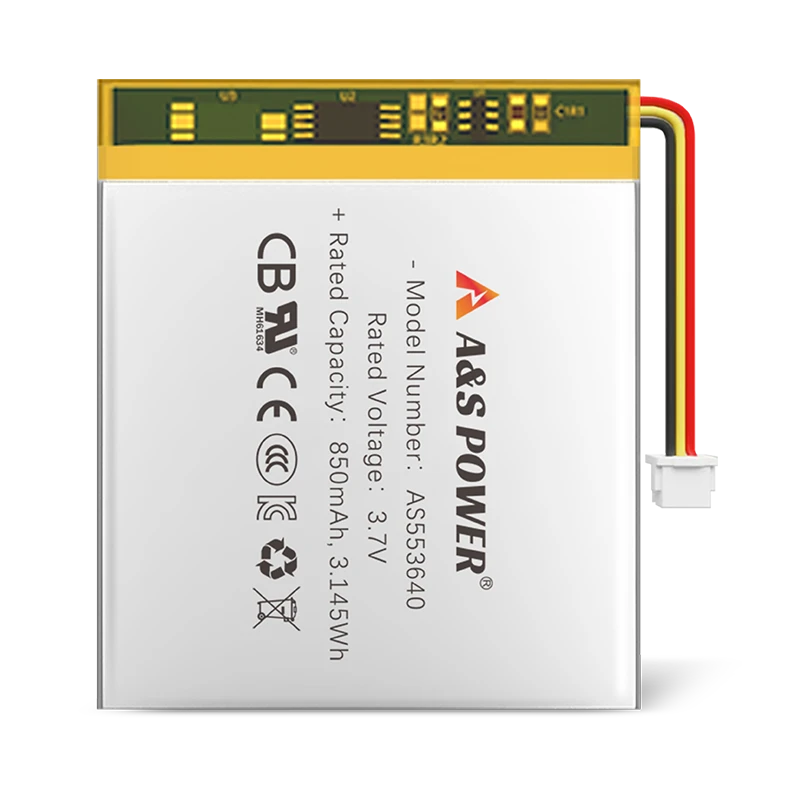
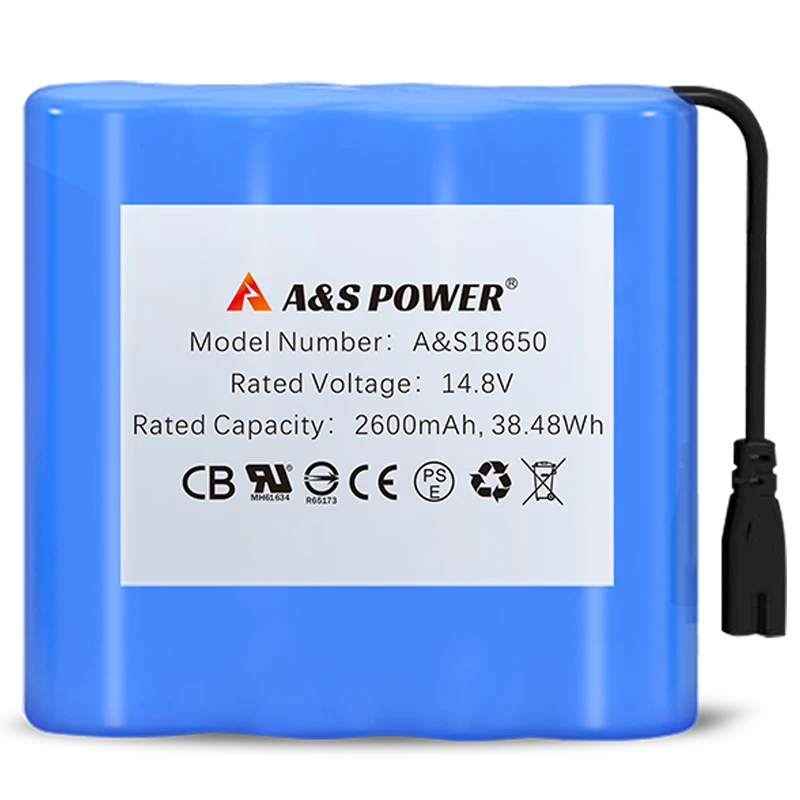
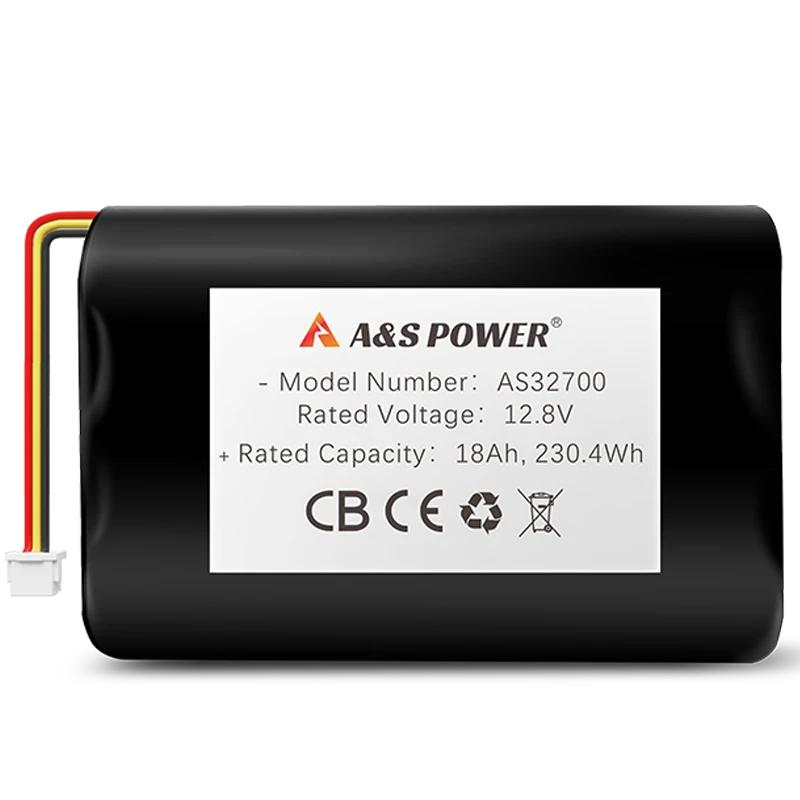
For example, A&S Power's current technical information states that it supports customization of battery size, wires and plugs, voltage, PCM circuit boards, temperature protection and communication functions.
Its product pages also describe customization of voltage, capacity, size, case, connectors, cables and BMS functions.
4. Evaluate Lithium Battery R&D and Engineering Capabilities
Engineering capability becomes particularly important when your battery cannot be replaced by an off-the-shelf model.
Ask the manufacturer:
- Can you design a battery from a mechanical drawing?
- Can you recommend the appropriate cell chemistry?
- Can you optimize capacity within a fixed enclosure?
- Can you design the BMS/PCM?
- Can you integrate NTC temperature sensing?
- Can you customize connectors and cable assemblies?
- Can you support prototype development?
- Can you modify the design after sample testing?
- Can you provide technical drawings and specifications?
- Can you support certification testing for the final configuration?
A&S Power's Technology Strength page currently describes an R&D center with physical, chemical, electrochemical and application-performance testing capabilities, as well as customization of battery cells, PCB, wires, connectors and battery configurations.
For buyers, the important point is not simply whether a supplier claims to have an R&D team. Ask what engineering work the team can actually perform for your project.
5. Verify the Lithium Battery Cells
The battery cell is one of the most important components affecting battery performance, safety, cycle life and cost.
When evaluating a supplier, ask:
What cell manufacturer will be used?
Request the proposed cell brand and model where appropriate.
What cell grade will be used?
Clarify whether the cells are new and what quality-control process is used for incoming cells.
Can the supplier provide cell traceability?
Traceability becomes particularly important for large-volume OEM projects.
Will the same cell specification be maintained during mass production?
A supplier should have a defined process for approving material substitutions.
How are cells matched?
For battery packs using multiple cells, ask how the supplier manages cell consistency and matching.
Do not compare two battery quotations based only on voltage and capacity. A quotation using different cell specifications may not be technically equivalent.
6. Evaluate the BMS or PCM Design
For many battery packs, the protection circuit is as important as the cells themselves.
Depending on the application, the protection system may need to address:
- Overcharge
- Over-discharge
- Overcurrent
- Short circuit
- Over-temperature
- Under-temperature
- Cell balancing
- Charging control
- Communication
For more advanced battery packs, communication may include interfaces such as SMBus, I²C, UART or CAN, depending on the system architecture.
Ask the manufacturer:
What protection functions are included in the proposed BMS?
What are the protection thresholds?
Can the thresholds be customized?
Is cell balancing required?
Does the BMS communicate with the host device?
How is the BMS tested before shipment?
The answer should be based on your actual application rather than a generic BMS specification.
7. Check Quality Control From Cell to Finished Battery Pack
A professional battery manufacturer should have quality controls at multiple stages.
A typical process may include:
Incoming Quality Control → Production Process Control → Battery Assembly → Electrical Testing → Aging/Inspection → Final Quality Control
Incoming Quality Control
The manufacturer should verify incoming materials such as:
- Cells
- PCB/BMS
- Wires
- Connectors
- Protective materials
- Labels
- Packaging components
Process Quality Control
Production inspections may cover:
- Welding
- Assembly
- Insulation
- Wiring
- BMS installation
- Connector assembly
- Dimensions
Final Inspection
Depending on the battery design, final testing may include:
- Voltage
- Capacity
- Internal resistance
- Charging/discharging
- Protection functions
- Appearance
- Dimensions
- Connector polarity
- Communication functions
Ask the supplier what records are generated at each stage and whether production batches can be traced.
8. Verify Certifications and Test Reports
Do not simply ask:
"Do you have CE?"
Instead, ask:
Does the certification or test report apply to the battery model and configuration I am purchasing?
This distinction is important.
Depending on the product and destination market, buyers may encounter requirements involving:
- UL
- IEC 62133
- UN38.3
- CB
- CE
- KC
- BIS
- CCC
- RoHS
- PSE
- Other market-specific requirements
A&S Power's certification database currently lists product certifications including UL2054, UL1642, IEC 62133/CB, CE, KC, UN38.3, BIS, PSE, WERCS, FCC, RoHS and others, with certification records associated with specific battery models.
For example, its certification page provides model-specific information such as voltage, capacity, dimensions and applicable certifications.
Buyers should request:
- Certificate
- Test report
- Model number
- Battery configuration
- Cell information where relevant
- Test standard
- Certificate holder
- Certification scope
- Report date
Do not assume that a certificate for one battery model automatically applies to every battery produced by the same manufacturer.
9. Compare Production Capacity
Production capacity matters when your project moves from prototypes to mass production.
Ask:
- What is the supplier's current production capacity?
- What equipment is used?
- What is the normal production lead time?
- What is the peak production capacity?
- How are urgent orders handled?
- How are production schedules managed?
- Can production capacity support your expected annual volume?
A&S Power's current homepage states 12,000 m² of area, 15 years of ODM/OEM experience, 200+ certified products and a stated daily output of 80,000 pieces.
When evaluating any supplier, however, buyers should verify whether stated capacity refers to cells, battery packs, individual units, or another production metric.
10. Compare MOQ and Pricing Carefully
Price should be evaluated together with the technical specification.
A custom battery quotation may include:
- Battery cells
- BMS/PCM
- Wires
- Connectors
- Assembly
- Testing
- Packaging
- Tooling
- Certification
- Engineering
- Shipping
Two suppliers may quote different prices because they are proposing different technical solutions.
For example:
| Cost FactorPossible Difference | |
|---|---|
| Cell | Brand / model / grade |
| BMS | Basic protection / communication BMS |
| Connector | Standard / customized |
| Housing | Standard / custom |
| Testing | Standard / additional testing |
| Certification | Existing / new certification |
| MOQ | Small batch / mass production |
| Tooling | Existing / new tooling |
Therefore, ask suppliers to quote against the same specification whenever possible.
11. Conduct a Factory Audit When Appropriate
For significant OEM projects, a factory audit can provide information that cannot be obtained from a quotation.
During an audit, consider checking:
Factory
- Production area
- Material storage
- Cell storage
- Assembly lines
- Testing areas
- Finished goods area
Equipment
- Assembly equipment
- Welding equipment
- Testing equipment
- Aging equipment
- BMS programming equipment
Quality
- IQC records
- Production inspection records
- Final inspection records
- Non-conformance records
- Corrective-action records
Traceability
- Material batches
- Production batches
- Finished product records
Management
- Production planning
- Quality management
- Engineering workflow
- Supplier management
The objective is not simply to confirm that a factory exists. The objective is to determine whether its actual processes are consistent with the requirements of your project.
12. Evaluate Samples Before Mass Production
A production sample should not be treated as simply a demonstration product.
It should be evaluated against the final specification.
Check:
- Dimensions
- Weight
- Voltage
- Capacity
- Charging performance
- Discharge performance
- Connector
- Cable length
- BMS/PCM functions
- Temperature protection
- Appearance
- Labeling
- Packaging
For more demanding applications, additional reliability and safety testing may be required according to the product's intended use and applicable standards.
Before approving mass production, make sure the approved sample and the production specification are clearly documented.
13. Check Production Lead Time
Ask the supplier to separate:
Sample lead time
from
Mass-production lead time.
The two are not necessarily the same.
Lead time can be affected by:
- Cell availability
- BMS development
- Tooling
- Connector procurement
- Certification
- Production capacity
- Order quantity
- Packaging requirements
For a new custom project, ask the supplier to provide a realistic timeline covering:
14. Review Warranty and After-Sales Support
Before placing a mass-production order, clarify:
- Warranty period
- Defect definition
- RMA procedure
- Replacement policy
- Investigation process
- Corrective-action process
- Responsibility for confirmed manufacturing defects
- Technical support after delivery
A written agreement is preferable to relying on informal conversations.
A&S Power currently states a 12-month warranty on its website.
For your specific project, confirm the warranty terms in the quotation or supply agreement rather than assuming the website's general warranty applies unchanged to every custom project.
15. Questions to Ask a Chinese Lithium Battery Manufacturer
Before selecting a supplier, buyers can use the following checklist.
Supplier Qualification
- Are you the actual battery manufacturer?
- Where is your production facility?
- Do you have an in-house engineering team?
- What types of OEM/ODM battery projects do you support?
- Can you provide factory audit information?
Technical Capability
- Which battery chemistries do you manufacture?
- Can you customize dimensions and capacity?
- Can you customize wires and connectors?
- Can you design or customize the BMS/PCM?
- Can you support NTC and communication functions?
Quality
- What cell brands and models do you use?
- How do you verify incoming cells?
- How do you control cell consistency?
- What tests are performed on finished battery packs?
- Can you provide quality and test records?
Certification
- Which certifications apply to the proposed battery?
- Can you provide the original test reports?
- Does the certification apply to the exact battery configuration?
Commercial Terms
- What is the MOQ?
- What is the sample cost?
- What is the mass-production price?
- What tooling costs are required?
- What payment terms are available?
Production and Delivery
- What is the sample lead time?
- What is the mass-production lead time?
- What is your production capacity?
- How do you handle urgent production requirements?
After-Sales
- What is the warranty period?
- How do you handle quality issues?
- What technical support is available after delivery?
16. Common Mistakes When Choosing a Battery Supplier
Mistake 1: Choosing the Lowest Price
The lowest quotation is not necessarily the lowest total cost.
A cheaper quotation may use a different cell, simpler protection circuit, different connector, lower testing requirements, or a different certification scope.
Mistake 2: Looking Only at Certifications
A supplier may have many certifications, but buyers should verify whether the certification applies to the battery model and configuration they intend to purchase.
Mistake 3: Not Defining the Specification
Without a clear specification, supplier quotations are difficult to compare.
Mistake 4: Skipping Sample Approval
A mass-production order should not normally be based only on a supplier's catalogue specification.
Mistake 5: Not Checking the Factory
For larger or strategically important projects, an appropriate factory audit can help verify production, quality and engineering capabilities.
Mistake 6: Ignoring BMS Requirements
A battery pack should be evaluated as a complete system rather than simply by voltage and capacity.
17. A&S Power Custom Lithium Battery OEM/ODM Capabilities
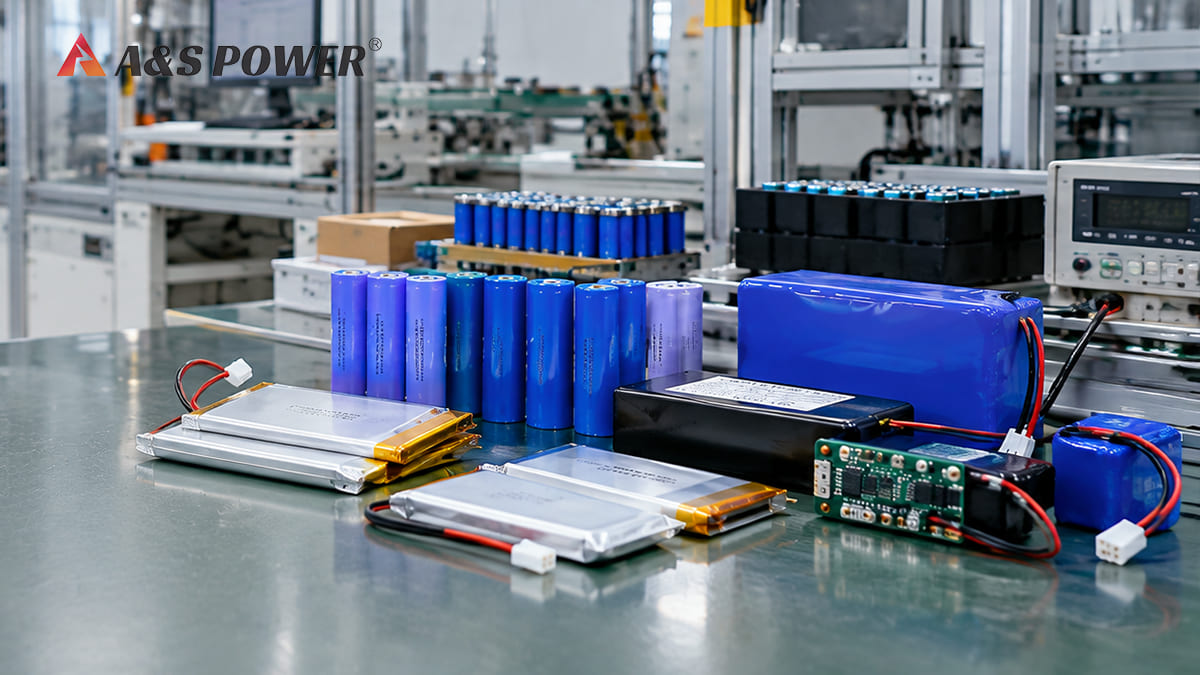
A&S Power provides OEM and ODM rechargeable battery solutions covering lithium polymer batteries, lithium-ion battery packs and LiFePO4 batteries. The company's website currently states support for customized battery dimensions, capacity, voltage, wires, connectors, cases and BMS-related functions.
Its technology page also lists production equipment including automatic rolling, electrolyte injection, tape sticking, slitting, tablet-making, aluminum-plastic film punching, vacuum baking and thermoforming equipment.
For certification, A&S Power provides a model-based certification database covering different battery types, specifications and certification records.
The company states that its batteries are used in applications including medical products, GPS, Bluetooth headsets, portable speakers, consumer electronics, energy storage and other applications.
For a new OEM/ODM project, buyers can provide the required voltage, capacity, dimensions, current, application, connector, BMS and certification requirements so the proposed battery configuration can be evaluated against the application.
18. Custom Lithium Battery Supplier Evaluation Checklist
Before selecting a supplier, buyers can use this checklist:
| Evaluation AreaQuestions to Ask | |
|---|---|
| Manufacturer | Is the supplier a manufacturer or trading company? |
| OEM/ODM | Can it develop a battery according to your specifications? |
| Engineering | Can it support design changes and prototypes? |
| Cells | Are cell source and specifications documented? |
| BMS | Can protection and communication functions be customized? |
| Quality | Are IQC, process inspection and final inspection implemented? |
| Testing | What performance and safety tests are performed? |
| Certification | Does certification apply to the exact model? |
| Capacity | Can production support your expected volume? |
| MOQ | What are prototype and mass-production MOQs? |
| Lead Time | What are sample and production lead times? |
| Factory | Can the production facility be audited? |
| Documentation | Can technical and quality documents be provided? |
| Warranty | What happens when a quality problem occurs? |
| Contract | Are specifications, quality and delivery terms documented? |
19. Final Takeaway
Selecting a custom lithium battery manufacturer should be treated as a supplier-qualification process rather than a simple price comparison.
Before placing a mass-production order, buyers should confirm five things:
1. The manufacturer can build the required battery.
2. The proposed cells, BMS and materials meet the technical requirements.
3. The manufacturer's quality and testing processes are appropriate for the application.
4. Required certifications and documentation apply to the actual battery configuration.
5. The supplier can meet the required MOQ, production schedule, quality requirements and commercial terms.
A structured supplier-evaluation process can reduce the risk of selecting a battery supplier based only on price, marketing claims or catalogue specifications.
Frequently Asked Questions
How do I choose a custom lithium battery manufacturer in China?
Evaluate the manufacturer's engineering capabilities, cell quality, BMS design, quality-control system, certifications, production capacity, MOQ, lead time and after-sales support. Samples and supplier audits can provide additional information before mass production.
What should I ask a lithium battery manufacturer before ordering?
Ask about battery chemistry, cell source, capacity, dimensions, BMS, connectors, certifications, testing, MOQ, sample lead time, mass-production lead time, warranty and quality-control procedures.
How do I verify whether a Chinese battery supplier is a real manufacturer?
Check its factory, production equipment, engineering team, quality system, testing capabilities, production records and ability to explain the manufacturing process. A factory audit can provide additional verification for larger projects.
What certifications are important for lithium batteries?
The applicable certification depends on the battery design, application and destination market. Common standards and requirements may include UL, IEC 62133, UN38.3, CB, CE, KC, BIS, CCC and RoHS. Buyers should verify that the documentation applies to the actual battery configuration.
Can lithium battery manufacturers customize the BMS?
Many OEM/ODM manufacturers can customize BMS or PCM functions, but the available functions depend on the supplier's engineering capabilities and the battery application. Requirements may include protection thresholds, balancing, temperature sensing and communication.
What determines the price of a custom lithium battery pack?
Major factors include cell type and specification, capacity, BMS, wires, connectors, mechanical components, assembly, testing, certification, tooling, order quantity and packaging.
What is the MOQ for a custom lithium battery?
MOQ varies by supplier and project. Prototype quantities may be different from mass-production MOQ. Tooling, certification and material requirements can also affect the minimum economical order quantity.
How long does a custom lithium battery project take?
The timeline depends on design complexity, cell availability, BMS development, tooling, certification, sample approval and order volume. Buyers should request separate timelines for prototype, pilot production and mass production.
Should I audit a lithium battery factory before placing an order?
For significant OEM projects, a factory audit can help verify production capability, quality processes, equipment, material control and traceability. The need for an audit depends on project value, risk and supplier history.
Request a Custom Lithium Battery Quote
Have a battery specification, product drawing or existing battery sample?
Send us your requirements, including:
- Battery chemistry
- Voltage
- Capacity
- Dimensions
- Maximum discharge current
- Connector
- Cable requirements
- BMS/PCM requirements
- Application
- Required certifications
- Estimated order quantity
Our engineering team can review your requirements and propose a suitable OEM/ODM battery configuration.