



Introduction
Battery performance is no longer measured by capacity alone. For product developers, equipment manufacturers, and battery procurement teams, the real challenge is finding a power source that balances energy density, output current, service life, weight, safety, and cost within a specific product design.
NCM lithium batteries have become an important option in applications where high energy storage and a balanced performance profile are required. Commonly called NMC batteries, these rechargeable lithium-ion batteries use a cathode made from nickel, cobalt, and manganese oxides. By adjusting the proportions of these metals, manufacturers can develop cell chemistries suited to different energy and power requirements.
At A&S Power, we recognize that selecting a battery requires more than comparing milliamp-hour ratings. The cell chemistry, pack configuration, battery management system (BMS), operating environment, and charging strategy all influence the final result.
In this guide, I will explain how NCM lithium batteries work, which characteristics give them a competitive advantage, where their limitations matter, and how engineers can determine whether this chemistry is appropriate for a particular product.
Quick Answer: What Makes NCM Lithium Batteries Special?
NCM lithium batteries combine nickel, manganese, and cobalt in the cathode to achieve a practical balance of energy density, power capability, and cycle life. Their composition can be adjusted to emphasize different performance characteristics, making them suitable for electric vehicles, power tools, portable equipment, and custom lithium-ion battery packs.
Their principal advantages are:
- High energy density: More stored energy per unit of mass than many lower-energy-density battery chemistries.
- Flexible performance design: Different nickel, manganese, and cobalt ratios support different energy and power priorities.
- Versatile applications: Suitable for applications ranging from portable electronics to demanding traction systems.
- Rechargeable operation: Appropriate cell and pack designs support repeated charge and discharge cycles.
- Engineering flexibility: Multiple cell formats and pack configurations can accommodate different voltage, capacity, and dimensional requirements.
However, NCM is not automatically the best choice for every project. Lithium iron phosphate (LFP), for example, can offer advantages in thermal stability and cycle-life requirements, depending on the specific cells and operating conditions.
Key Takeaways
- NCM and NMC generally refer to the same family of nickel-manganese-cobalt lithium-ion cathode materials.
- Nickel contributes strongly to capacity and energy-storage potential, while manganese and cobalt help balance structural stability and electrochemical performance.
- Increasing nickel content does not automatically improve every performance metric.
- Actual energy density, discharge current, cycle life, and charging limits depend on the specific cell design.
- A suitable BMS, thermal management strategy, and correct charger remain essential for safe battery operation.
- OEM battery selection should consider the complete battery pack and its intended application, not just the cathode chemistry.
1. What Are NCM Lithium Batteries?
NCM lithium batteries are rechargeable lithium-ion batteries that use a nickel-manganese-cobalt oxide cathode. Their cathode composition is commonly represented by the chemical formula:
Here, x, y, and z represent the relative proportions of nickel, manganese, and cobalt. In a simplified representation, their sum is approximately one, although the exact material composition and manufacturing design can vary.
NCM and NMC are two commonly used abbreviations for this battery chemistry. The terms generally refer to the same family of cathode materials, rather than two fundamentally different battery technologies.
Understanding the Three Key Metals
Nickel (Ni)
Nickel contributes substantially to the cathode's capacity and energy-storage potential. Higher-nickel compositions are often investigated for applications requiring more energy in a limited space. However, increasing nickel content can also introduce challenges involving structural stability, thermal behavior, and long-term degradation.
Manganese (Mn)
Manganese contributes to the structural and electrochemical characteristics of the cathode. Its role helps balance the performance of nickel-rich materials. The actual benefit depends on the composition, crystal structure, and processing methods used.
Cobalt (Co)
Cobalt contributes to the stability and electrochemical behavior of the layered cathode structure. Manufacturers have been developing lower-cobalt compositions to reduce material costs and supply-chain exposure while maintaining practical performance.
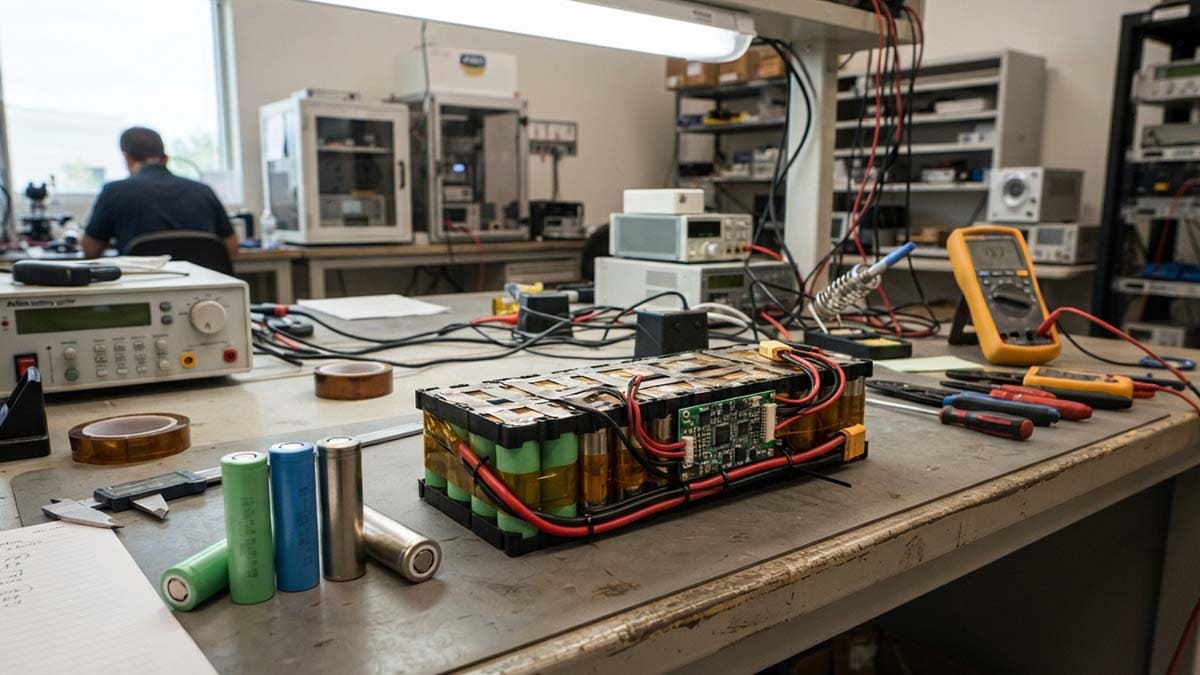
The important point is that these metals work together. NCM performance does not come from maximizing one element in isolation; it comes from balancing the composition with the cell's intended operating conditions. Research from the U.S. Department of Energy also highlights the trade-offs involved in reducing cobalt while maintaining energy density and other performance characteristics. See the U.S. Department of Energy's research on reducing reliance on cobalt in lithium-ion batteries.
2. Superior Performance Characteristics of NCM Lithium Batteries
2.1 High Energy Density for Compact Battery Designs
Energy density is one of the primary reasons engineers consider NCM lithium batteries. It describes how much energy a battery can store relative to its mass or volume.
Gravimetric energy density is expressed in watt-hours per kilogram (Wh/kg), while volumetric energy density is expressed in watt-hours per liter (Wh/L).
For products with strict weight and size limits, higher energy density can provide longer operating time without requiring a proportionally larger battery. This is useful in electric mobility, portable industrial equipment, and compact power systems.
Nevertheless, cathode material energy density and finished battery-pack energy density are not interchangeable. A complete pack includes housings, electrical connections, insulation, protection electronics, and potentially thermal-management components. These parts add weight and volume without directly storing electrochemical energy.
For this reason, engineers should compare finished cells or packs using equivalent test conditions instead of relying solely on cathode-level research figures.
2.2 A Flexible Balance Between Energy and Power
Energy and power describe different aspects of battery performance.
- Energy determines how much work a battery can deliver over time.
- Power determines how quickly that energy can be delivered.
NCM chemistry can be engineered for energy-focused or power-focused applications. An energy-oriented cell prioritizes capacity and runtime, while a power-oriented design may use different electrode structures, internal resistance characteristics, and material choices to support higher current output.
Battery University provides a useful illustrative comparison: some 18650 NMC cells designed for moderate loads offer around 2,800 mAh capacity and 4–5 A output, whereas a power-oriented example offers around 2,000 mAh capacity and 20 A continuous discharge. These are examples of different cell designs, not universal ratings for NCM batteries. See Battery University's overview of lithium-ion battery types.
For OEM product developers, this distinction matters. A battery for a continuously operating monitor has different requirements from one powering a motor that draws a high startup current.
2.3 Competitive Cycle Life
Cycle life describes how many charge-discharge cycles a battery can complete before its capacity or other performance characteristics reach a defined end-of-life threshold.
NCM batteries can provide useful cycle life, but there is no single cycle-life figure applicable to every NCM cell. Results depend on several factors:
- Cathode composition and electrode design
- Charging voltage and charging current
- Discharge depth and load profile
- Operating and storage temperature
- Cell quality and manufacturing consistency
- Battery management and balancing strategy
A battery operated at elevated temperatures or held at a high state of charge for extended periods may age differently from one used under moderate conditions. Repeated high-current operation can also increase heat generation and accelerate degradation if the cell is not designed for that load.
When evaluating a supplier, ask for cycle-life test conditions, including the charge and discharge rates, temperature, depth of discharge, and remaining-capacity threshold. A claim such as "1,000 cycles" is much more useful when the underlying test protocol is disclosed.
2.4 Stable Output and Practical Rechargeability
NCM is a mature lithium-ion cathode family used in applications that require rechargeable energy storage and a useful combination of voltage, capacity, and output capability.
However, voltage stability should not be confused with a perfectly flat discharge curve. Terminal voltage changes with state of charge, current, temperature, and internal resistance. Devices with narrow voltage requirements may therefore need suitable power-conversion circuitry even when the battery itself performs normally.
Charging also requires a compatible charging profile. The upper voltage limit, current limit, temperature range, and termination method must match the selected cell specification. A charging profile suitable for one lithium-ion chemistry or cell model should not automatically be applied to another.
2.5 A Strong Performance-to-Size Balance
NCM can be attractive when product designers need substantial energy storage without the mass or volume of a lower-energy-density alternative.
This is especially relevant when a battery must fit inside an existing enclosure or meet a maximum product weight. A well-selected cell can help engineers balance runtime, output current, packaging space, and overall system cost.
Still, the chemistry alone does not determine the final result. Cell format, electrode loading, pack construction, wiring resistance, BMS design, and cooling requirements all affect usable performance.
3. NCM Battery Performance Data: What the Numbers Mean
The following table summarizes representative technical information for NCM batteries. Values are indicative reference figures, not specifications guaranteed for every commercial product.
| Performance Parameter | Representative Reference | Engineering Interpretation |
|---|---|---|
| Cathode chemistry | Lithium nickel manganese cobalt oxide | Composition can be adjusted for different performance priorities. |
| Typical nominal cell voltage | Approximately 3.6–3.7 V for many conventional NCM cells | Confirm the selected cell's datasheet. |
| Typical upper charge voltage | Often 4.20 V per cell for conventional designs | Some cells differ; never assume the limit. |
| Specific energy | Approximately 150–220 Wh/kg in a Battery University reference table | Actual values depend on cell design and measurement conditions. |
| Cycle life | Approximately 1,000–2,000 cycles in a Battery University reference table | Not a universal warranty or guaranteed service life. |
| Discharge capability | Varies considerably by cell design | Verify continuous and pulse-current ratings separately. |
| Thermal behavior | Depends on composition, state of charge, and cell construction | Requires appropriate protection and thermal design. |
Reference: Battery University, Summary Table of Lithium-Based Batteries. The figures above are published reference values, not a claim that all current NCM cells achieve the same performance.
A useful procurement rule is to request a current datasheet for the exact cell model being evaluated. If two suppliers quote different energy densities or cycle lives, check whether the figures describe the electrode material, individual cell, or complete battery pack.
4. NCM Battery vs. LFP Battery: Which Is Better?
NCM and lithium iron phosphate (LFP) serve overlapping but different design priorities. Neither chemistry is universally superior.
| Selection Factor | NCM Lithium Battery | LFP Lithium Battery |
|---|---|---|
| Energy density | Often advantageous where weight and size are constrained. | Generally lower at the cell level. |
| Thermal stability | Requires careful thermal and electrical protection. | Generally offers stronger thermal stability. |
| Cycle life | Depends on composition and operating conditions. | Often attractive for long-cycle applications. |
| High-current capability | Available in cells designed for power delivery. | Also available in high-power designs. |
| Material considerations | Uses nickel and cobalt in the cathode. | Does not require nickel or cobalt in its cathode. |
| Typical design priorities | Compactness and high energy storage. | Long service life and thermal robustness. |

These are broad tendencies rather than absolute rules. Individual cell specifications, operating conditions, and system design can change the comparison. For a broader overview, consult Battery University's lithium-based battery comparison.
For a portable device with strict weight limits, NCM may be a strong candidate. For a stationary system that prioritizes long service life and thermal robustness, LFP may be more appropriate.
The correct decision starts with the product's load profile, required runtime, operating temperature, safety requirements, expected service life, and total ownership cost.
5. Safety Considerations and Technical Limitations
High performance does not eliminate the need for proper battery protection. NCM batteries contain materials and electrolytes that can present fire and thermal-runaway risks if cells are abused, damaged, improperly charged, or operated outside their specified limits.
Nickel-rich NCM compositions can present additional challenges related to cathode stability, particularly under demanding charging conditions or elevated temperatures. Research into NCM degradation has identified structural changes, particle cracking, and interfacial reactions as mechanisms that can contribute to capacity loss. Further technical discussion is available in the peer-reviewed literature, including research on NMC cathode materials and their performance trade-offs.
For a reliable battery system, I recommend evaluating the following areas.
5.1 Battery Management System (BMS)
A suitable BMS helps monitor and control important battery operating conditions. Depending on the design, its functions may include:
- Overcharge and over-discharge protection
- Overcurrent and short-circuit protection
- Cell-voltage monitoring and balancing
- Temperature monitoring and protective shutdown
- Communication with the host device, where required
The protection thresholds must match the selected cells and pack configuration. A BMS is not a substitute for appropriate cell selection, insulation, mechanical protection, or system-level safety testing.
5.2 Charging and Temperature Control
The charging voltage and current must follow the cell manufacturer's specifications. Charging outside the permitted temperature range can increase degradation or create safety risks.
Designers should also consider heat generated during discharge, especially in applications with sustained high current, frequent acceleration, or limited ventilation. Temperature sensors should be positioned and configured according to the battery design rather than added as a generic feature without validation.
5.3 Cell Matching and Pack Construction
In a multi-cell battery pack, cell consistency, reliable interconnections, insulation, and mechanical integrity all affect performance and safety.
Cell matching and balancing can help manage differences between cells. However, balancing cannot correct a fundamentally unsuitable cell, a defective connection, or an inadequately designed pack.
For OEM applications, these considerations should be addressed during battery development, not only after the first production samples have been assembled.
6. Common Applications of NCM Lithium Batteries
NCM batteries are suitable for a range of applications where energy density, power output, and rechargeable operation must be balanced.
Electric Mobility
Electric vehicles, electric bicycles, and other traction applications may use NCM cells when compact energy storage and suitable power delivery are priorities. The final chemistry selection depends on vehicle range, power demand, thermal management, and service-life requirements.
Power Tools and Industrial Equipment
Cordless tools and portable industrial equipment can benefit from NCM cells designed to deliver the required current while keeping battery weight manageable. Engineers should evaluate both peak and continuous discharge requirements.
Portable Electronics and Professional Equipment
Portable instruments, communication devices, and other battery-powered products may use lithium-ion cells to balance runtime, dimensions, and weight. Cell format and pack construction are particularly important when the battery must fit a fixed enclosure.
Custom OEM Battery Packs
For equipment manufacturers, the main challenge is often integrating the battery into an existing product. Voltage, capacity, dimensions, connector type, current demand, BMS functions, and certification requirements must work together.
At A&S Power, we support OEM and ODM rechargeable battery development through our custom lithium battery solutions. The appropriate chemistry and configuration should be selected against the actual application requirements rather than assumed from a product category alone.
7. How to Choose the Right NCM Battery for an OEM Project
When I evaluate a battery requirement, I start with the product's electrical and mechanical constraints rather than choosing a cell based on capacity alone.
Step 1: Define the Voltage and Energy Requirements
Identify the nominal operating voltage, maximum and minimum voltage accepted by the device, and required operating time.
Battery energy can be estimated using:
For example, a nominal 11.1 V, 5 Ah battery has a nominal energy rating of approximately 55.5 Wh. This is a calculation, not a guarantee of usable energy under every load or temperature.
Step 2: Confirm Continuous and Peak Current
Record the normal operating current, maximum continuous current, and any startup or pulse-current demand. The selected cell, protection circuit, wiring, connectors, and thermal design must all support the intended load.
Step 3: Check Available Installation Space
Define the maximum battery dimensions, permitted weight, connector location, cable length, mounting method, and environmental constraints.
Where space is limited, compare both cell-level and finished-pack energy density. A compact cell does not necessarily produce the smallest complete battery assembly.
Step 4: Establish Service-Life and Safety Requirements
Specify expected operating cycles, depth of discharge, ambient temperature, charging conditions, storage periods, and required protective functions. Identify any applicable product-specific safety or transportation requirements early in development.
Step 5: Validate Samples Before Mass Production
Review the battery datasheet, test samples under representative operating conditions, and confirm that the approved configuration meets the product's requirements.
A&S Power's custom lithium-ion battery manufacturing service supports discussions around voltage, capacity, dimensions, current, and battery-pack configuration. Final cell chemistry, specifications, certification scope, and production feasibility should be confirmed for each project.
8. The Future of NCM Battery Technology
NCM development continues to focus on improving energy storage, extending service life, reducing reliance on cobalt, and managing degradation.
One major research direction is the development of nickel-rich cathodes. These materials can offer attractive energy-storage potential, but they also require careful control of structural and interfacial stability. Researchers are investigating material coatings, doping, particle design, and other approaches to improve performance over repeated cycling.
Another direction is reducing cobalt content while preserving the properties required for commercial use. This work reflects the need to balance electrochemical performance with cost, material availability, manufacturing complexity, and supply-chain considerations. The U.S. Department of Energy's work on lower-cobalt cathode materials provides an example of this research direction.
For battery buyers, these developments are promising, but laboratory progress should not be confused with guaranteed commercial performance. When evaluating a new cell, request verified specifications and test data for the actual commercial product.
The most useful advances will be those that deliver measurable improvements under the operating conditions of the intended application.
Conclusion
NCM lithium batteries offer a compelling combination of energy density, configurable power capability, and practical rechargeable performance. Their flexibility makes them worth considering for electric mobility, industrial equipment, portable products, and custom battery-pack applications.
However, no single cathode chemistry delivers the best result in every category. Nickel content, cell design, charging conditions, temperature, BMS configuration, and manufacturing quality all influence the finished battery's performance and service life.
My recommendation is to select an NCM battery based on the complete product requirement, verify the specifications against the exact cell model, and validate the assembled pack before committing to mass production.
For businesses developing a new battery-powered product, A&S Power's OEM/ODM battery solutions provide a starting point for discussing voltage, capacity, dimensions, protection functions, and other customization requirements.
Frequently Asked Questions
1. What does NCM stand for in lithium batteries?
NCM stands for nickel, cobalt, and manganese, the three principal transition metals in the cathode material. NMC is another common abbreviation for the same family of lithium-ion cathode chemistries.
2. What are the main advantages of NCM lithium batteries?
The main advantages include competitive energy density, flexible energy-versus-power design, and suitability for a wide range of rechargeable applications. Actual performance depends on the specific cell and battery-pack design.
3. Are NCM batteries better than LFP batteries?
Not in every situation. NCM batteries are often attractive when compact, lightweight energy storage is important. LFP batteries generally offer stronger thermal stability and can be advantageous for applications prioritizing long cycle life. The best choice depends on the specific cells and operating conditions.
4. How long does an NCM lithium battery last?
There is no universal cycle-life figure for all NCM batteries. Battery life depends on cell chemistry, charging and discharging conditions, temperature, depth of discharge, and the end-of-life threshold used for testing. Always review the manufacturer's cycle-life test conditions.
5. What is the typical voltage of an NCM lithium battery cell?
Many conventional NCM lithium-ion cells have a nominal voltage around 3.6–3.7 V and an upper charging voltage of 4.20 V. Some designs use different limits, so the exact cell datasheet must determine the permitted charging voltage.
6. Are NCM lithium batteries safe?
NCM batteries can be used safely when properly designed, manufactured, charged, and protected. Appropriate cell selection, BMS functions, temperature monitoring, mechanical protection, and compliance testing are important. No lithium-ion chemistry is completely risk-free.
7. Can NCM lithium batteries be customized for OEM applications?
Yes, subject to cell availability and engineering feasibility. OEM battery packs can be designed around requirements such as voltage, capacity, series-parallel configuration, dimensions, connectors, discharge current, and BMS functions. The final specifications must be validated for the intended product.
8. How do I choose an NCM battery manufacturer?
Evaluate the manufacturer's engineering support, cell traceability, quality-control procedures, pack-design capabilities, test documentation, and ability to support applicable certification requirements. Request samples and verify performance against your product's actual operating conditions before mass production.