




Lithium LiPo Batteries for Beauty Devices
Introduction: Why Power Technology Matters in Modern Beauty Devices
In the global beauty device market—especially within the fast-moving K-beauty ecosystem—battery performance is no longer a hidden technical detail. It directly affects product design, user experience, safety perception, and ultimately brand trust.
As someone who works closely with lithium battery integration for consumer electronics, I see a clear pattern: premium beauty products increasingly rely on lithium polymer (LiPo) batteries as their default power solution. This is not a marketing trend; it is a result of mechanical constraints, user behavior, regulatory expectations, and industrial design evolution.
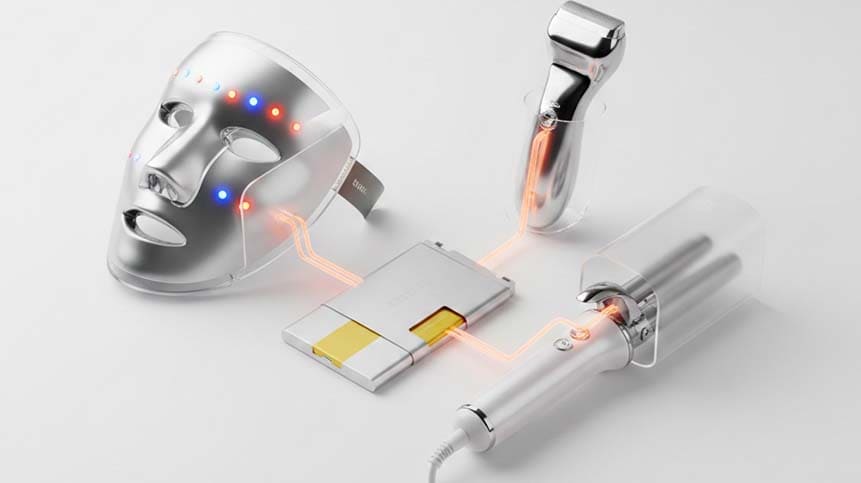
From ultrasonic facial cleansing devices and LED therapy masks to cordless curling irons and sonic toothbrushes, beauty brands need power solutions that are thin, lightweight, safe, and rechargeable, while fitting seamlessly into sleek, waterproof housings.
This article provides a deep, engineering-level yet market-realistic analysis of why lithium LiPo batteries dominate beauty devices today—especially in K-beauty—and how OEMs should select, specify, and integrate them correctly.
Beauty Device Use Cases Powered by LiPo Batteries
Ultrasonic Facial Devices
Ultrasonic facial devices typically operate at high frequencies but relatively low voltages. They require stable current delivery, consistent vibration output, and compact internal layouts.
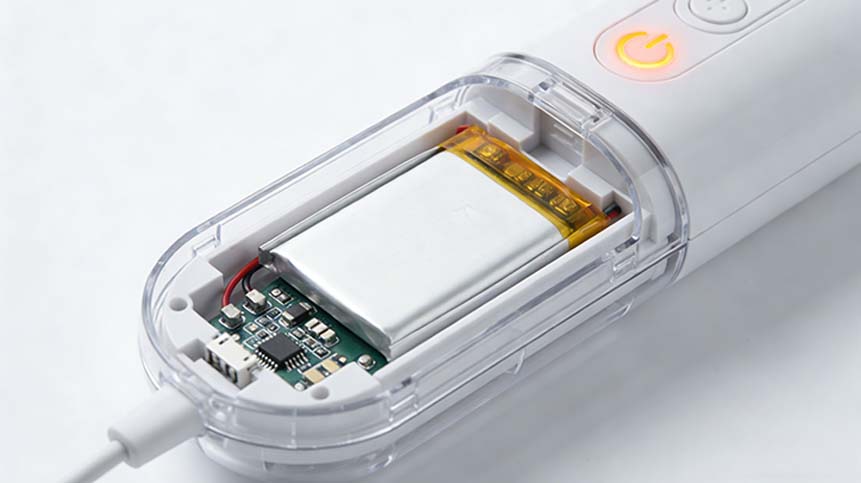
Typical characteristics:
-
Operating voltage: ~3.0–4.2V
-
Power draw: intermittent, pulse-based
-
Runtime expectation: 5–10 sessions per charge
-
Charging: USB or magnetic dock
LiPo batteries are ideal here because:
-
Flat pouch cells fit slim handheld designs
-
Low internal resistance supports ultrasonic motors
-
Lightweight improves ergonomic handling
LED Therapy Masks (Red Light, Blue Light, Multi-Spectrum)
LED therapy masks are one of the fastest-growing categories in K-beauty exports. They require:
-
Distributed power across multiple LED arrays
-
Uniform voltage output
-
Long session times (10–30 minutes)
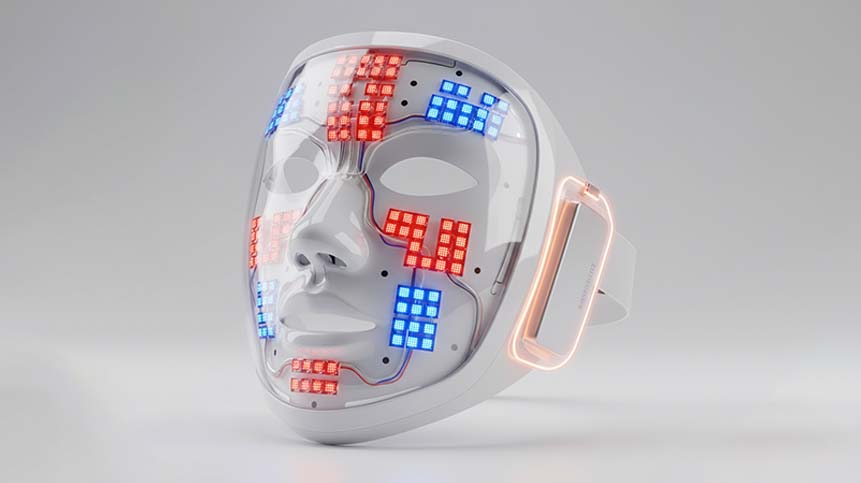
Most premium LED masks use multiple 3.7V Li-ion or LiPo cells connected via a protection circuit. Brands such as LG (Pra.L series) publish charging specifications confirming the real-world use of low-voltage lithium battery packs in these devices.
LiPo advantages include:
-
Ability to custom-shape cells around mask contours
-
Reduced overall weight for wearable comfort
-
Compatibility with smart BMS and safety cut-offs
Cordless Styling Tools (Curling Irons & Hair Tools)
Cordless curling irons require significantly more energy than skincare tools. Heating elements draw higher current, and consumers expect longer runtime with fast recharge.
Typical battery needs:
-
Higher capacity (1500–3000mAh)
-
Stable discharge under thermal stress
-
Thermal protection integration
LiPo batteries outperform alternatives here because:
-
High energy density per volume
-
Better integration with thermal management designs
-
Faster charging capability compared to NiMH or alkaline packs
Sonic Toothbrushes
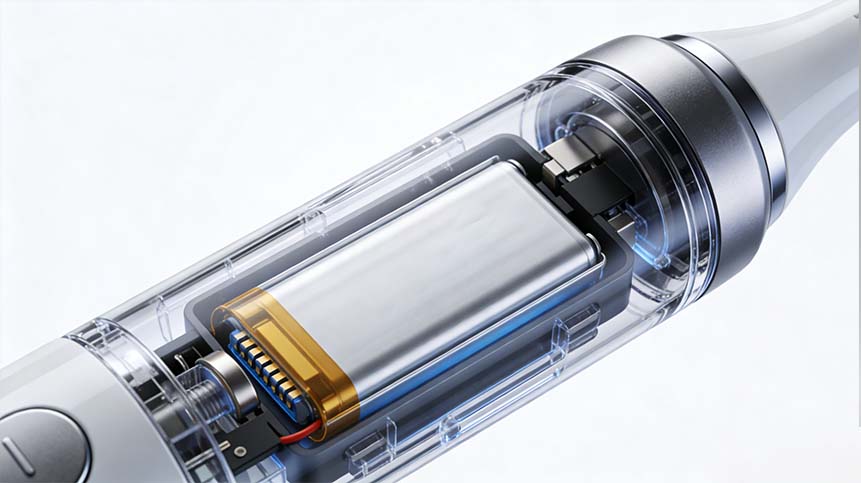
Sonic toothbrushes are a mature category, but battery expectations have increased:
-
Weeks of use per charge
-
IPX7 or higher water resistance
-
Silent and vibration-resistant power supply
LiPo batteries enable:
-
Compact sealed battery compartments
-
Inductive or USB charging designs
-
Reduced weight for better balance
Handheld Misting & Skincare Sprayers
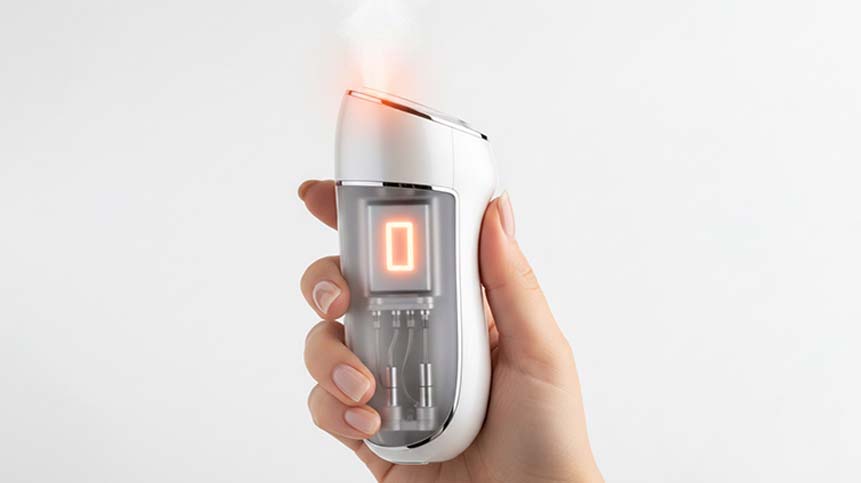
These devices require:
-
Stable pump motor performance
-
Low noise
-
Frequent daily use
LiPo cells offer:
-
High cycle life for daily charging
-
Flexible pouch sizing
-
Easy integration into minimalist industrial designs
Why LiPo Batteries Are the Default Choice for Premium Beauty Devices
Slim Profile & Industrial Design Freedom
Beauty devices compete visually. LiPo batteries, unlike cylindrical cells, can be:
-
Ultra-thin
-
Custom-shaped
-
Placed along curves or flat surfaces
This design freedom allows brands to:
-
Reduce handle thickness
-
Improve weight distribution
-
Maintain sleek, high-end aesthetics
Lightweight for Wearable & Handheld Comfort
Weight directly affects user satisfaction—especially for:
-
Facial masks worn for 20–30 minutes
-
Daily handheld skincare routines
LiPo batteries provide a higher energy-to-weight ratio than most legacy chemistries, making them ideal for wearable beauty technology.
Proven Real-World Use in Premium Brands
LG’s Pra.L beauty devices publicly list:
-
Rated voltages around 3.7V
-
Built-in rechargeable lithium battery packs
-
USB charging specifications
These published specs confirm that low-voltage Li-ion/LiPo solutions are already the industry standard, not experimental technology.
Typical LiPo Battery Specifications for Beauty Devices
Capacity Range & Runtime Matching
| Device Type | Typical Capacity | Runtime Expectation |
|---|---|---|
| Ultrasonic facial device | 300–800mAh | 5–10 sessions |
| LED therapy mask | 800–2000mAh | 2–5 sessions |
| Sonic toothbrush | 600–1200mAh | 2–4 weeks |
| Cordless curling iron | 1500–3000mAh | 30–60 minutes |
| Misting device | 500–1000mAh | 10–20 uses |
Supplier catalogs commonly list standard pouch sizes such as:
-
800mAh
-
1200mAh
-
2000mAh
-
3000mAh
These sizes balance cost, availability, and integration efficiency.
Voltage & Electrical Configuration
-
Nominal voltage: 3.7V
-
Charge voltage: 4.2V
-
Discharge cutoff: ~2.75–3.0V
Most beauty devices operate on a single-cell architecture, simplifying:
-
Charging IC selection
-
Protection circuit design
-
Safety certification
IP Rating, Waterproofing & Mechanical Design Considerations
Many beauty devices—especially skincare and oral care products—require IPX7 or higher.
Key battery-related design factors:
-
Fully sealed battery compartment
-
Moisture-resistant PCM (Protection Circuit Module)
-
Waterproof charging port or inductive charging
LG and other premium brands explicitly reference IPX7 washability in product documentation, confirming market expectations for water-safe lithium battery integration.
Battery selection alone is not enough—mechanical design and charger architecture must match the IP rating.
Safety, Compliance & Regulatory Reality
Beauty devices sold globally must comply with:
From experience, brands that involve battery suppliers early:
-
Reduce certification delays
-
Avoid thermal and swelling issues
-
Improve long-term reliability
LiPo batteries with integrated PCM, NTC temperature sensors, and matched chargers significantly reduce compliance risks.
Selection Tips for OEM & Brand Owners
When choosing a LiPo battery for a beauty device, I recommend evaluating:
-
Real power draw, not marketing runtime
-
Mechanical fit and pouch thickness
-
Charging method (USB-C, magnetic, wireless)
-
Target IP rating
-
Certification roadmap
-
Long-term cycle life under real usage
Over-specifying capacity increases cost and size; under-specifying damages user trust.
FAQ – Lithium LiPo Batteries in Beauty Devices
Q1: Why do most K-beauty devices use 3.7V lithium batteries?
Because 3.7V single-cell lithium systems offer the best balance of safety, size, and compatibility with consumer charging electronics.
Q2: Are LiPo batteries safe for waterproof beauty devices?
Yes—when properly sealed and paired with certified protection circuits, LiPo batteries are widely used in IPX7 beauty products.
Q3: Can LiPo batteries handle heating elements in curling irons?
Yes, provided capacity, discharge rate, and thermal protection are correctly designed.
Q4: How long do LiPo batteries last in beauty devices?
Typically 300–500 full charge cycles, translating to 2–4 years of normal consumer use.
Conclusion: Powering the Next Generation of Beauty Technology
As beauty devices evolve into smarter, more portable, and more design-driven products, lithium LiPo batteries are no longer optional—they are foundational.
From K-beauty innovators to global consumer brands, the real competitive edge lies not just in skincare technology, but in how reliably, safely, and elegantly that technology is powered.
When selected and integrated correctly, LiPo batteries enable beauty brands to deliver:
-
Better user experiences
-
Stronger safety records
-
Higher perceived product value
-
Faster global market entry
Related articles:
3.7V LiPo Battery Applications: an industry guide
Lithium LiPo Battery for Portable Consumer Electronic Devices
Lithium LiPo Battery for Medical and Health Monitoring Equipment
3.7V Lithium Battery Customization: A Complete OEM & Engineering Guide
Custom LiPo Battery: OEM Lithium Polymer Battery Solutions Built for Your Product
-

 May.2026.09.17Meet A&S Power at KES 2026 in Seoul – Custom Lithium Battery SolutionsLearn More
 -
 May.2026.09.16How to Choose a Custom Lithium Battery Manufacturer in China: A Buyer's GuideLearn More
 -
 May.2026.09.15Can VHR-4N Connectors Work With 14 AWG Battery Wires?Learn More
 -
 May.2026.09.14Who Pays UL Battery Certification Maintenance Fees?Learn More
 -
 May.2026.09.11PTC vs PCM: Why Use Both in Lithium Battery Protection?Learn More