




Lithium LiPo Battery for Portable Consumer Electronic Devices
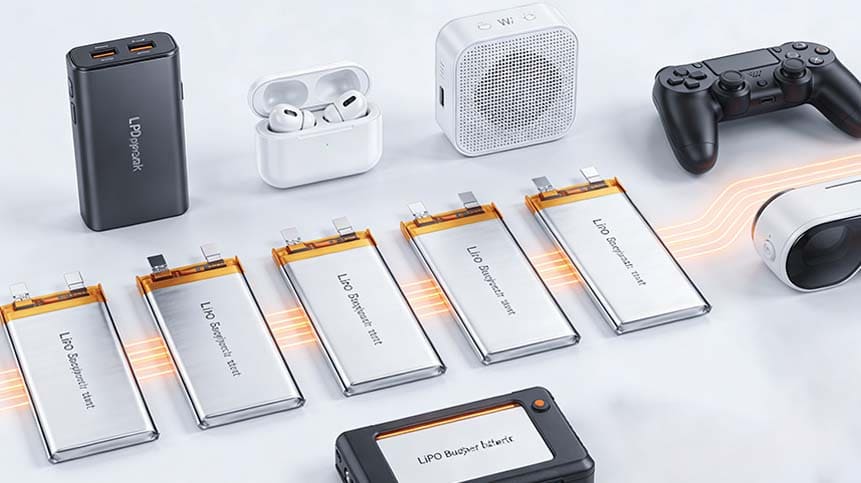
Portable consumer electronic devices have become smaller, lighter, and more power-hungry than ever. From high-capacity power banks and true wireless stereo (TWS) earbuds to handheld gaming accessories and AR/VR battery packs, energy density, form factor flexibility, and safety are no longer optional—they are decisive design factors.
From my experience working with OEMs and product engineers, lithium polymer (LiPo) batteries have become the default energy solution for modern portable electronics. In this guide, I’ll break down why LiPo batteries dominate, where they are used, how to select the right specifications, and what safety and compliance considerations matter most.
This article is written for product designers, sourcing managers, hardware startups, and brand owners looking to optimize battery performance while ensuring long-term reliability and regulatory compliance.
What Is a Lithium LiPo Battery?
A lithium polymer (LiPo) battery is a type of rechargeable lithium-ion battery that uses a polymer-based electrolyte and is typically packaged in a flat aluminum-laminated pouch rather than a rigid cylindrical or prismatic metal can.
Key Characteristics
-
Nominal voltage: 3.7V per cell
-
Flexible pouch format
-
High gravimetric and volumetric energy density
-
Customizable shapes and thicknesses
-
Widely used in compact and portable devices
Unlike cylindrical cells (such as 18650 or 21700), LiPo batteries are designed to fit the product, not the other way around.
Why LiPo Batteries Are Ideal for Portable Consumer Electronics
Flat Pouch Design Enables Slim and Compact Products
One of the strongest reasons manufacturers choose LiPo batteries is the flat pouch form factor. This allows batteries to be embedded into ultra-slim housings such as:
-
TWS charging cases
-
Bluetooth trackers and translators
-
Handheld game accessories
-
AR/VR head-mounted or waist-mounted battery packs
Compared to similarly sized cylindrical cells, a flat LiPo battery can utilize internal space more efficiently, reducing wasted volume.
Higher Energy Density per Usable Volume
While cylindrical cells may offer excellent cycle life, LiPo pouch cells often provide higher usable energy density for irregular or thin enclosures.
For designers, this translates to:
-
Longer runtime without increasing product size
-
More freedom in mechanical design
-
Reduced need for multiple smaller cells
Flexible Pack Architecture for Power Banks
In power bank designs, manufacturers commonly use two approaches:
-
Multiple 3.7V LiPo cells in parallel or series, combined with:
-
Protection circuits (PCM)
-
Boost converters (3.7V → 5V USB output)
-
-
Single high-capacity LiPo cell (e.g., 5,000–10,000mAh) plus a high-efficiency boost circuit
LiPo cells simplify internal layouts and help achieve thinner, lighter power bank designs compared to cylindrical alternatives.
Common Use Cases for LiPo Batteries in Consumer Electronics
Large-Capacity Power Banks
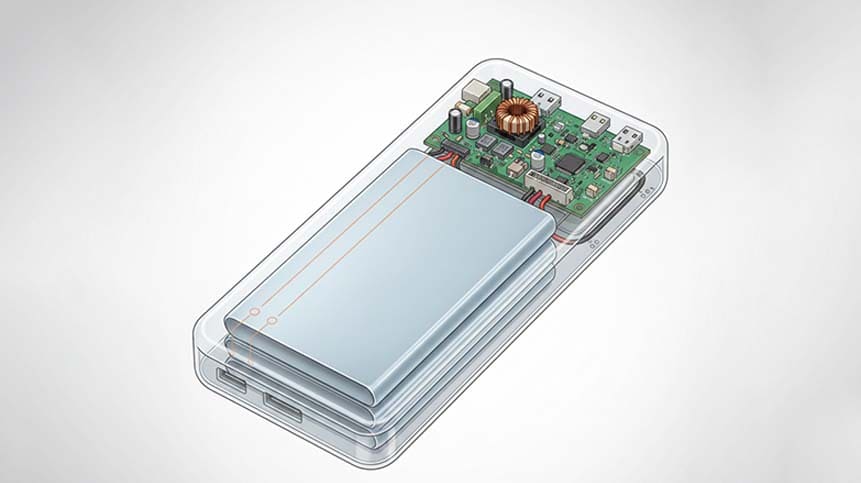
Power banks are among the most demanding consumer applications in terms of safety and reliability.
Typical LiPo configurations:
-
Capacity: 2,000mAh – 10,000mAh
-
Voltage: 3.7V nominal (boosted to 5V output)
-
Multiple safety layers: PCM + IC + thermal protection
Flat LiPo cells allow brands to create credit-card-thin or pocket-sized power banks while maintaining competitive capacity ratings.
TWS Charging Cases and Earbud Chargers
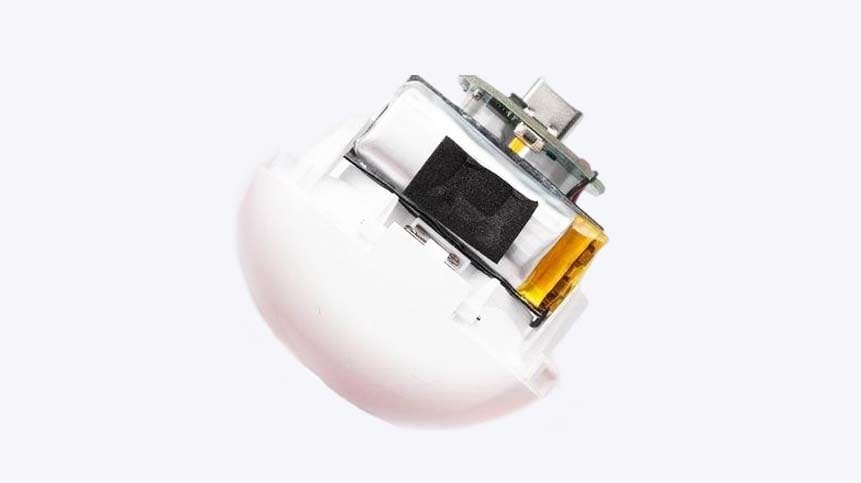
Modern TWS charging cases typically integrate 300mAh to 1,200mAh flat LiPo cells, enabling:
-
3–6 full recharges of earbuds
-
Fast recharge via USB-C
-
Compact, ergonomic case designs
In my experience, cell thickness consistency and cycle stability are more important here than peak discharge rates.
Long-Life Bluetooth Accessories
Devices such as:
-
Bluetooth trackers
-
Translation devices
-
Smart remotes
-
Wearable controllers
require low self-discharge and stable voltage output. LiPo batteries excel at supporting standby-heavy usage profiles, often remaining operational for weeks or months between charges.
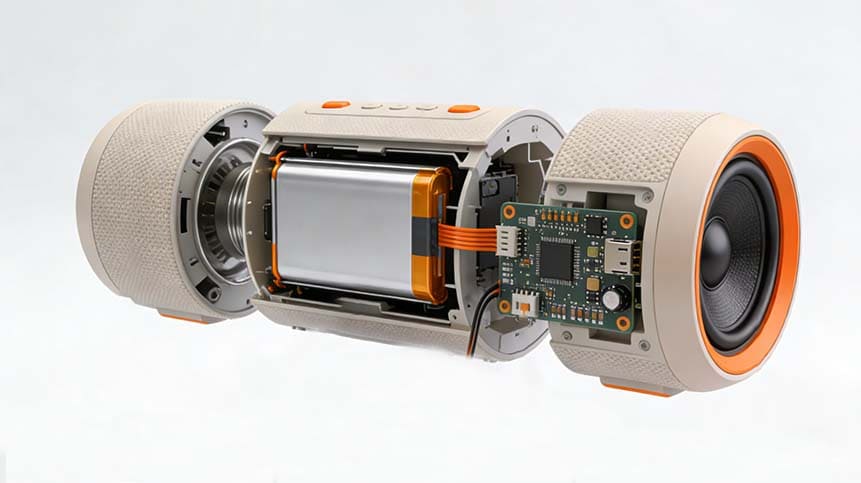
Bluetooth Speakers
Portable Bluetooth speakers rely on LiPo packs for:
-
Moderate to high discharge capability
-
Stable voltage under load
-
Compact internal layout
Capacities typically range from 1,500mAh to 6,000mAh, depending on speaker size and output power.
Handheld Game Consoles and Accessories
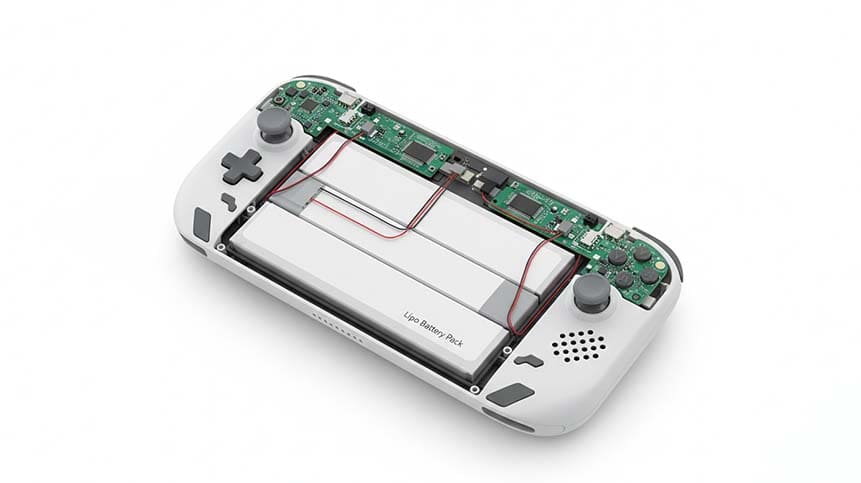
Accessories inspired by devices like Steam Deck—such as external controllers, clip-on battery packs, or cooling modules—frequently use custom-shaped LiPo battery packs.
LiPo advantages here include:
-
Custom voltage and capacity design
-
Balanced weight distribution
-
Efficient thermal behavior in enclosed housings
AR/VR Battery Packs
AR and VR devices demand:
-
High energy density
-
Stable output under variable loads
-
Lightweight form factors
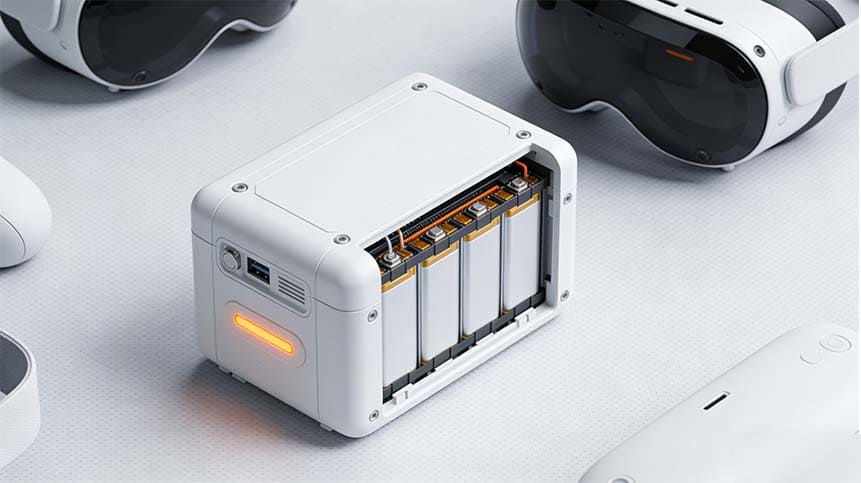
LiPo batteries are commonly used in:
-
Head-mounted auxiliary packs
-
Belt-mounted extended battery modules
-
Modular battery accessories
Typical LiPo Battery Specifications & Selection Tips
Capacity Selection
| Device Type | Typical Capacity Range |
|---|---|
| TWS Charging Case | 300–1200mAh |
| Bluetooth Accessories | 200–1500mAh |
| Bluetooth Speakers | 1500–6000mAh |
| Power Banks | 2000–10000mAh |
| AR/VR Battery Packs | 3000–8000mAh |
Capacity selection should always consider:
-
Target runtime
-
Recharge frequency
-
Available enclosure volume
Voltage Configuration
-
Single cell: 3.7V nominal
-
Series / parallel packs: Used internally, then regulated
-
Boosted output: Commonly 5V for USB-powered devices
For most portable electronics, single-cell LiPo + power management IC offers the best balance of simplicity and safety.
Discharge Rate (C-Rate)
Most consumer electronics use low to moderate discharge rates (0.2C–2C).
High C-rate cells are typically unnecessary and may reduce cycle life if over-specified.
Cycle Life Expectations
Well-designed LiPo battery packs typically achieve:
-
300–500 full cycles to 80% capacity
-
Longer life under partial discharge usage
Safety Considerations and Compliance
Why Safety Architecture Matters
Power banks and portable electronics must pass:
-
Overcharge tests
-
Short-circuit protection
-
Thermal abuse tests
-
Mechanical stress testing
Several high-profile power bank recalls over the past decade have demonstrated that poor cell quality or inadequate protection design can lead to thermal incidents.
This reinforces the importance of:
-
Qualified cell suppliers
-
Verified PCM design
-
Proper pack validation
Essential Protection Components
-
Protection Circuit Module (PCM)
-
NTC temperature sensors
-
Certified power management ICs
-
Proper cell matching and insulation
Common Certifications (Market-Dependent)
-
UL 2054 / UL 1642
-
CE / FCC (product-level)
Practical Design Example
A modern TWS charging case typically uses:
-
1 × 3.7V flat LiPo cell (500–800mAh)
-
Integrated PCM
-
USB-C charging IC
A 10,000mAh power bank may use:
-
2–3 × 3.7V LiPo pouch cells in parallel
-
Boost converter to 5V
-
Multi-layer protection and thermal management
Why We Recommend Custom LiPo Battery Solutions
Off-the-shelf batteries rarely optimize:
-
Internal space usage
-
Mechanical integration
-
Long-term reliability
Custom LiPo battery packs allow:
-
Exact size matching
-
Optimized capacity
-
Tailored protection design
-
Improved product differentiation
FAQ – Lithium LiPo Batteries for Consumer Electronics
Are LiPo batteries safer than lithium-ion batteries?
LiPo batteries are not inherently safer, but when properly designed with quality cells and protection circuits, they are widely used and reliable in consumer electronics.
Why do power banks use 3.7V LiPo cells but output 5V?
LiPo cells operate at 3.7V nominal. Power banks use boost converters to raise the voltage to 5V for USB compatibility.
How long do LiPo batteries last in consumer devices?
Typically 300–500 charge cycles, depending on depth of discharge, temperature, and charging behavior.
Can LiPo batteries be custom-shaped?
Yes. This is one of their biggest advantages and a key reason they are used in slim and compact products.
Related articles:
3.7V LiPo Battery Applications: an industry guide
Lithium LiPo Battery for Beauty Products (K-Beauty & Beyond)
Lithium LiPo Battery for Medical and Health Monitoring Equipment
3.7V Lithium Battery Customization: A Complete OEM & Engineering Guide
Custom LiPo Battery: OEM Lithium Polymer Battery Solutions Built for Your Product
-

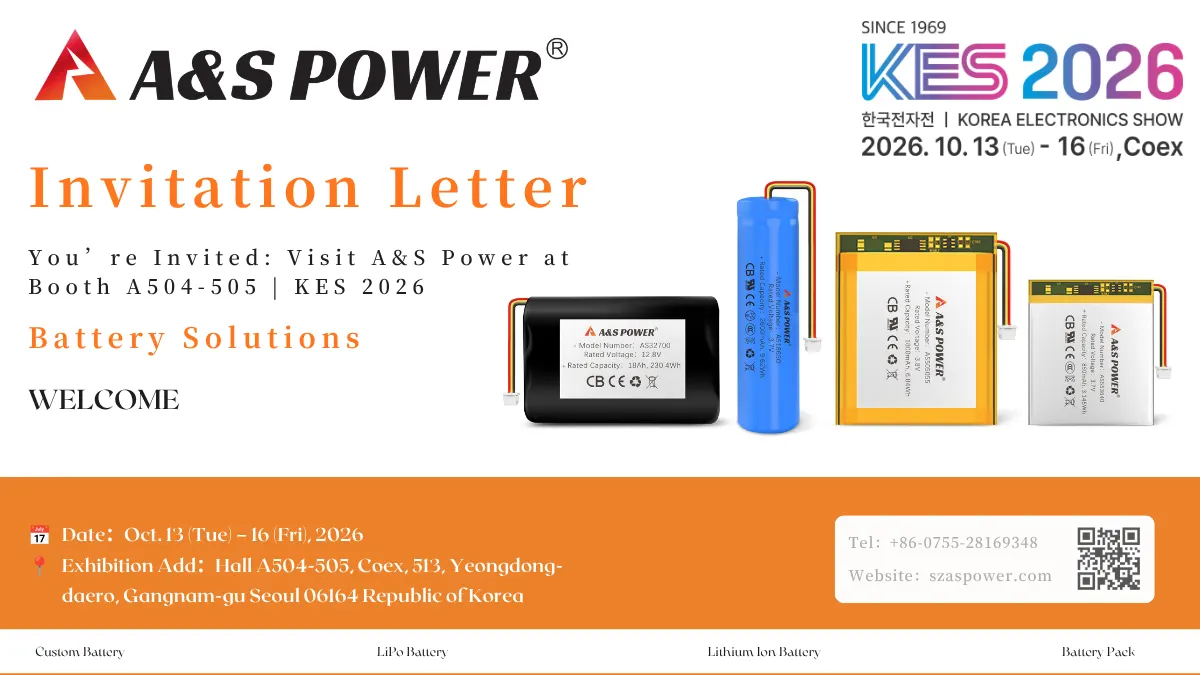 May.2026.09.17Meet A&S Power at KES 2026 in Seoul – Custom Lithium Battery SolutionsLearn More
 -
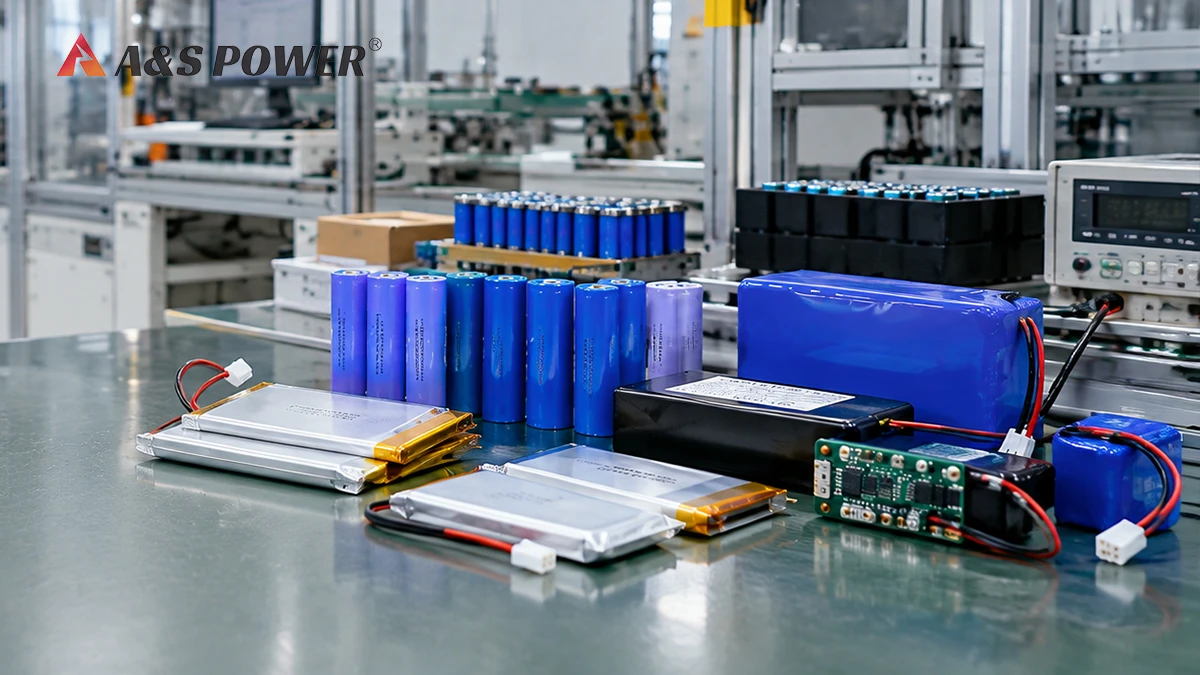 May.2026.09.16How to Choose a Custom Lithium Battery Manufacturer in China: A Buyer's GuideLearn More
 -
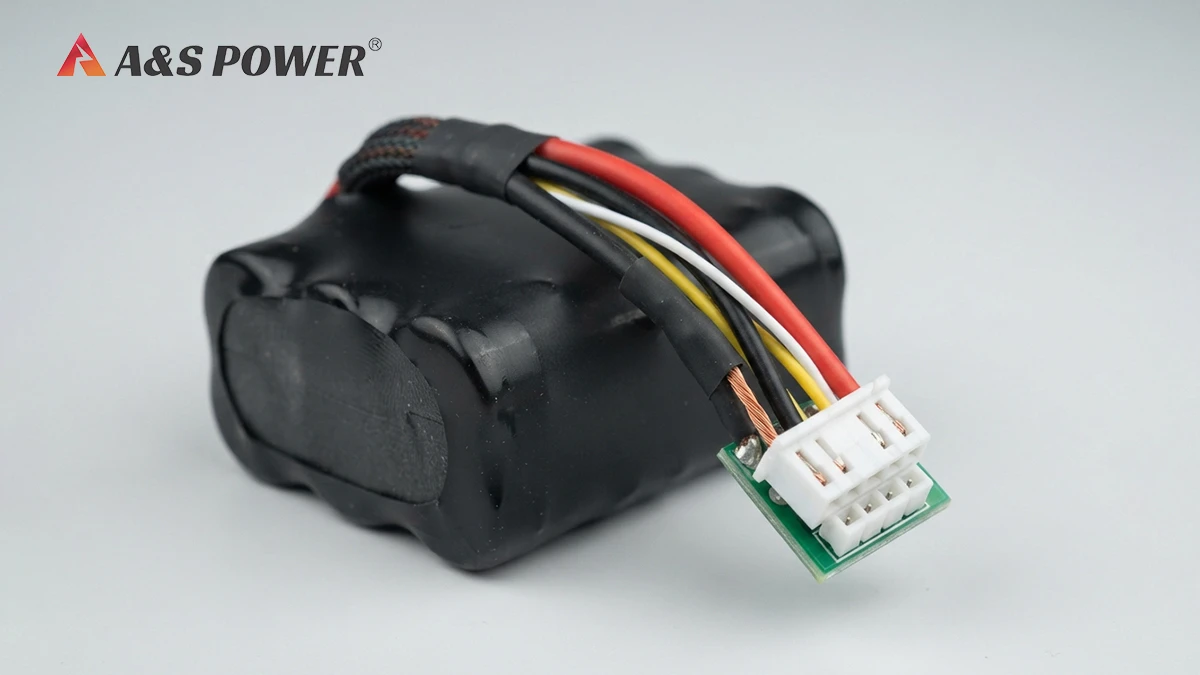 May.2026.09.15Can VHR-4N Connectors Work With 14 AWG Battery Wires?Learn More
 -
 May.2026.09.14Who Pays UL Battery Certification Maintenance Fees?Learn More
 -
 May.2026.09.11PTC vs PCM: Why Use Both in Lithium Battery Protection?Learn More